Tag: physical activity

Hydraulic Brain: Body Motion Linked to Fluid Movement in the Brain

Abdominal contractions are tightly linked to gentle brain movements that help circulate CSF

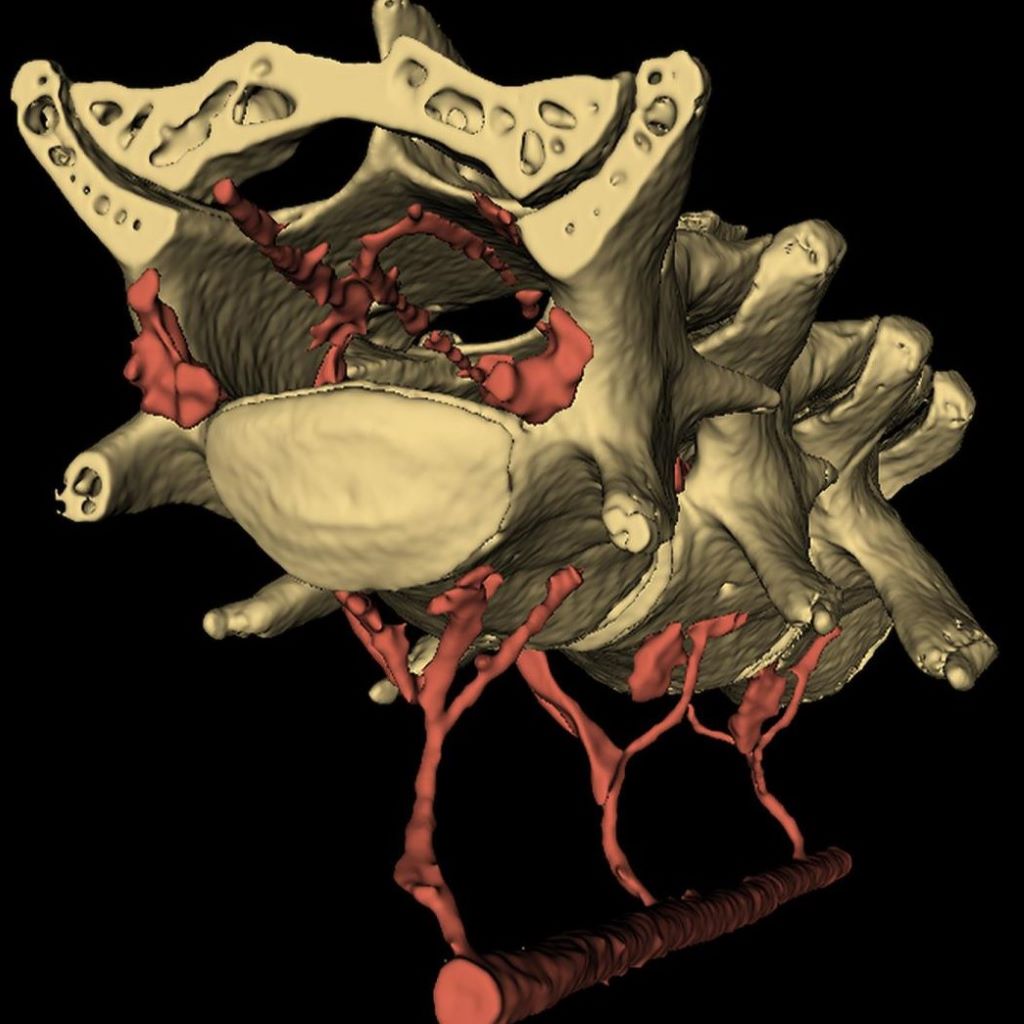
Using microCT scanning, which allows for high-resolution imaging of an organism’s internal structures, and other imaging techniques, researchers found that a network of veins serve as a mechanical connection between the abdominal cavity and the brain. Here, the veins in red run through the interior of a vertebrae and around the spine.  Credit: Provided by Patrick Drew and team/Penn State. All Rights Reserved.

The brain is more mechanically connected to the body than previously appreciated, scientists reported in Nature Neuroscience. Through a study using mice and simulations, the team found a potential biological mechanism underlying why exercise is thought to benefit brain health: abdominal contractions compress blood vessels connected to the spinal cord and the brain, enabling the organ to gently move within the skull. This swaying facilitates the surrounding cerebrospinal fluid to flow over the brain, potentially washing away neural waste that could cause problems for brain function.

According to Patrick Drew, professor of engineering science and mechanics, of neurosurgery, of biology and of biomedical engineering at Penn State, the work builds on previous studies detailing how sleep and neuron loss can influence how and when cerebrospinal fluid flushes through the brain.

“Our research explains how just moving around might serve as an important physiological mechanism promoting brain health,” said Drew, corresponding author on the paper. “In this study, we found that when the abdominal muscles contract, they push blood from the abdomen into the spinal cord, just like in a hydraulic system, applying pressure to the brain and making it move. Simulations show that this gentle brain movement will drive fluid flow in and around the brain. It is thought the movement of fluid in the brain is important for removing waste and preventing neurodegenerative disorders. Our research shows that a little bit of motion is good, and it could be another reason why exercise is good for our brain health.”

Drew, who also holds the title of associate director of the Huck Institutes of the Life Sciences, explained how in a hydraulic system, a pump creates pressure that drives fluid flow. In this case, the pump is the abdominal contraction – which can be as light as the tensing prior to sitting up or taking a step. The contraction puts pressure on the vertebral venous plexus, a network of veins that connect the abdominal cavity to the spinal cavity, causing the brain to move.

The researchers used two-photon microscopy — which allows for high-definition imaging of living tissue — to observe the brain shifting in the moments before the mouse moved, but right after the tightening of the abdominal muscles needed to spur the body into further movement. On the left, the brain, in green, sits during a stationary moment, while the image on the right shows the brain during movement.  Credit: Provided by Patrick Drew and team/Penn State. All Rights Reserved.

The researchers visualised the process in moving mice with two advanced imaging technologies: two-photon microscopy, which allows for high-definition imaging of living tissue, and microcomputed tomography, which enables high-resolution 3D examination of whole organs. They observed the brain shifting in the moments before the mouse moved, but right after the tightening of the abdominal muscles needed to spur the body into further movement.

To confirm that it was abdominal contractions rather than other movement that acted as the pump, the researchers applied gentle and controlled pressure to the abdomens of lightly anaesthetised mice. With no other movement other than a localised mechanical pressure less than a human would experience with a blood pressure cuff, the mice’s brains shifted.

“Importantly, the brain began moving back to its baseline position immediately upon relief of the abdominal pressure,” Drew said. “This suggests that abdominal pressure can rapidly and significantly alter the position of the brain within the skull.”

With the abdominal contraction-brain movement link confirmed, Drew said the next step was to understand the fluid’s movement in the brain and if the brain’s movement could induce fluid flow. However, there previously were no existing imaging techniques to visualize the rapid, nuanced dynamics of such fluid flows.

“Luckily, our interdisciplinary team at Penn State was able to develop these techniques, including conducting the imaging experiments of living mice and creating computer simulations of fluid motion,” Drew said. “That combination of expertise is so important for understanding these types of complicated systems and how they impact health.”

Francesco Costanzo, professor of engineering science and mechanics, of biomedical engineering, of mechanical engineering and of mathematics, led the computational modelling.

“Modelling fluid flow in and around the brain offers unique challenges because there are simultaneous, independent movements, as well as time-dependent, coupled movements. Accounting for all of them requires accounting for the special physics that happens every time a fluid particle crosses one of the many membranes in the brain,” Costanzo said. “So, we simplified it. The brain has a structure similar to a sponge, in the sense that you have a soft skeleton and fluid can move through it.”

By simplifying the geometry of the brain to that of a sponge, Costanzo explained that the team could model how fluid flows through a structure with varied spaces, like wrinkles in the brain, or pores in the sponge.

“Keeping with the idea of the brain as a sponge, we also thought of it as a dirty sponge – how do you clean a dirty sponge?” Costanzo asked. “You run it under a tap and squeeze it out. In our simulations, we were able to get a sense of how the brain moving from an abdominal contraction can help induce fluid flow over the brain to help clear waste products.”

Drew emphasised that while more work is needed to understand the full implications in humans, this study suggests that body movement may help to cycle cerebrospinal fluid around and in the brain, removing waste and helping to protect against neurodegenerative disorders associated with waste buildup.

“This kind of motion is so small. It’s what’s generated when you walk or just contract your abdominal muscles, which you do when you engage in any physical behaviour. It could make such a difference for your brain health,” Drew said.

By Ashley WennersHerron

Source: Pennsylvania State University

Benefits of Physical Activity May Outweigh Risks for Kids with Cardiomyopathy, ICDs

With proper assessment and monitoring, the risk of serious heart events during physical activity may be lower than previously believed for children and adolescents with certain heart conditions, according to a new American Heart Association scientific statement

Photo by Annie Spratt on Unsplash

Physical activity in children and teenagers with cardiomyopathy (conditions that affect the heart muscle’s structure and function, impairing its ability to pump or fill effectively), as well as children with implantable cardioverter-defibrillators (ICDs) may be safer than previous research suggested, according to a new scientific statement from the American Heart Association, published today in the Association’s flagship peer-reviewed journal Circulation.

While physical activity and exercise are essential for childhood development and long-term health, they have been traditionally discouraged among children and adolescents with cardiomyopathies and ICDs (implantable devices that detect life-threatening abnormal heart rhythms and deliver electrical shocks) due to concerns that they could worsen heart function or lead to sudden cardiac death.

“While safety is always paramount, halting all physical activity among children with cardiomyopathy or ICDs has at times led to unintended consequences. The latest research indicates that restricting children’s movement can negatively affect their heart health, physical fitness levels, mental well-being and social development, and quality of life,” said Jonathan B. Edelson, MD, MSCE, chair of the scientific statement writing group, an associate professor of paediatrics and medical director of the sports cardiology program and heart transplant and ventricular assist device programs in the division of cardiology at Children’s Hospital of Philadelphia.

What do parents and caregivers need to know?

Ensuring safe participation in physical activity requires thoughtful, individualized planning and ongoing collaboration among clinicians, families and patients.

  • Personalised approach: Tailored risk assessments based on diagnosis, risk profile, genetic profile and clinical evaluations are critical to better guide decisions about prescribing physical activity for children with different types of cardiomyopathies. Various diagnostic screening tools, such as echocardiograms, cardiac imaging and exercise stress tests, can be used to assess symptoms at rest and with activity. Genetic testing and family screening can also be helpful to assess individual risk.
  • Shared decision-making: Clinicians, families and (when developmentally appropriate) children or adolescents with cardiomyopathy and/or ICDs can work together to balance a patient’s risk, patient- and family-tailored goals and values. It is important for clinicians to disclose when risk evidence is based on adult data.
  • Close follow-up and reassessment: Ongoing monitoring is important to track potential shifts in risk, assess if symptoms progress and evaluate if heart function improves or deteriorates. The recommendations for safe physical activity must evolve as the child grows, activities change and the disease progresses.


Close follow-up and reassessment: Ongoing monitoring is important to track potential shifts in risk, assess if symptoms progress and evaluate if heart function improves or deteriorates. The recommendations for safe physical activity must evolve as the child grows, activities change and the disease progresses.

What types of activities can be considered?

The new scientific statement aims to shift from adopting a one-size-fits-all approach to physical activity limitations to considering ways for youth with heart conditions or an ICD to safely participate in physical activities – from low-intensity daily activities to high-intensity training and sports in select cases – after a detailed individualised risk assessment.

Light-to-moderate intensity exercise (such as walking, light cycling or swimming) may be appropriate to maintain physical fitness, social development and quality of life, with regular monitoring of their condition. Structured physical activity, such as fitness classes, strength training, running, biking, hiking or organised sports programs, may be reasonable for some children and adolescents with heart conditions. For some carefully selected paediatric patients with certain cardiomyopathies, participation in physical activity including competitive sports may be reasonable after expert assessment and shared decision-making discussion about the risks and benefits. Emergency action plans, including AED (automated external defibrillator) access and bystanders trained in CPR, are essential during organised sports. Additional guidance for specific types of cardiomyopathies are detailed in the manuscript.

“Children with cardiomyopathy should not automatically be sidelined from participating in physical activity, including recreational or competitive sports,” Edelson said. “Most children should be physically active – with individualised evaluation, monitoring and planning. Physical activity is important for their long-term health, physical and social development.”

The statement notes more research is needed about childhood cardiomyopathies because most of the findings in the statement are based on observational studies in adults; therefore, findings should be applied cautiously to a paediatric population. In addition, outstanding questions remain, such as how moderate or vigorous exercise may affect the long-term progression and how risk varies across different types of cardiomyopathies.

Source: American Heart Association

Consistency of Physical Activity in Adulthood Linked to 30–40% Lower Risk of Death

But upping physical activity level still linked to 20–25% lower risk of death from any cause
Switching to a more active lifestyle at any point in adulthood may extend lifespan

Photo by Mikhail Nilov

Being consistently physically active in adulthood is linked to a 30–40% lower risk of death from any cause in later life, while upping levels from below those recommended for health is still associated with a 20–25% lower risk, finds a pooled data analysis of the available evidence, published online in the British Journal of Sports Medicine.

The findings prompt the researchers to conclude that switching to a more active lifestyle at any point in adult life may extend the lifespan, and that it’s never too late to start.

Currently, it’s recommended that adults should aim for 150-300 weekly minutes of moderate intensity physical activity, or 75-150 weekly minutes of vigorous intensity physical activity, or a combination of the two, note the researchers.

But while these recommendations were based on the best evidence available, most of it captured measurements of physical activity at only one point in time, which might hide the potential impact of changing patterns during adulthood, they add.

The researchers therefore wanted to find out if differing patterns of physical activity, as well as its cumulative impact during adulthood, might be associated with a lower risk of death from all causes, and specifically from cardiovascular disease and cancer.

They scoured research databases for relevant studies that assessed physical activity at two or more points in time, and included in their review 85 studies published in English up to April 2024, with sample sizes ranging from 357 to 6,572,984 participants.

Fifty nine of the studies looked at long term patterns of physical activity across adulthood; 16 looked at the average benefits of different physical activity levels; and 11 explored the potential impact of cumulative physical activity on risk of death.

To overcome the challenges posed by different analytical methods used, the researchers carried out separate analyses for each of them.

Pooled data analysis of the study results showed that, overall, a higher level of physical activity was associated with lower risks of all the included outcomes.

Consistently active people (32 studies) had around a 30–40% lower risk of dying from any cause, while those who increased their levels of physical activity (21 studies) from below those recommended had a 20-25% lower risk of death from any cause.

Specifically, participants who switched from being physically inactive to being active were 22% less likely to die from any cause than those who remained inactive, while those who increased their leisure time physical activity levels were 27% less likely to do so.

On the other hand, swapping an active lifestyle for an inactive one wasn’t associated with a lower risk of death from any cause.

Generally, the associations observed between a high level of physical activity and a lower risk of death were more evident for cardiovascular disease than for cancer.

Compared with participants who were consistently inactive over time, those who were consistently active, overall, or only in their leisure time, were around 40% and 25% less likely to die from cardiovascular disease and cancer, respectively.

But in general, the evidence for the associations between physical activity patterns and death from a specific cause remained inconclusive, especially for death from cancer.

The pooled data suggested that people who were consistently active or who became active had lower risks of death from any cause, and specifically from cardiovascular disease, when meeting the recommended weekly physical activity levels.

But being consistently physically active and clocking up more than the recommended maximum weekly amount of moderate to vigorous intensity exercise was associated with only a small additional reduction in risk.

Maintaining or increasing physical activity at levels below the recommended weekly amount, however, was associated with appreciable health benefits, indicating that some physical activity is always better than none, say the researchers.

And an average volume of physical activity that met the recommended weekly amount was also associated with a 30–40% lower risk of death from all causes. But more research is needed to confirm this, they add.

The researchers acknowledge some limitations to their findings, including that most of the studies included in the pooled data analyses relied on subjective assessments of physical activity, which may not always have been accurate.

And there were only a few studies that looked at cumulative amounts of physical activity, or cancer deaths.

Nevertheless, the findings have important public health implications, insist the researchers.

“First, our results emphasised the importance of [physical activity] across adulthood, indicating that initiating [it] at any point in adulthood may provide survival benefits.”

They add: “As being consistently active provides greater health benefits than being previously active (ie, no longer maintaining activity), this highlights the importance of sustained [physical activity] over time.

“Future [physical activity] interventions may not only target inactive people, but also support active people to maintain their activity.”

Source: BMJ Group

An Early Night is Linked to More Physical Activity than Burning the Midnight Oil

Photo by Ketut Subiyanto on Unsplash

Going to bed earlier than usual may help to optimise physical activity the following day, Monash University-led research has found.

Published in Proceedings of the National Academy of Sciences (PNAS), the study examined whether sleep duration and sleep timing were associated with the duration of moderate-to-vigorous and overall physical activity the following day.

In the primary study, almost 20 000 participants wore a validated biometric device (WHOOP) for one year, resulting in almost six million nights of data. Objective sleep and physical activity metrics were derived from the wrist-worn device.

The study examined how both typical sleep habits and nightly fluctuations in sleep were linked to next-day physical activity levels.

On average, people who went to bed earlier were more physically active. For example, those with a typical bedtime around 9pm logged about 30 more minutes of moderate-to-vigorous physical activity each day compared to those who regularly stayed up until 1am.

Even compared to those who typically went to bed at 11pm (the average bedtime for the entire sample), the 9pm sleepers recorded nearly 15 additional minutes of daily moderate-to-vigorous physical activity.

Lead author Dr Josh Leota, from Monash University’s School of Psychological Sciences, said the findings suggested individuals with later bedtimes may be at a disadvantage under conventional work schedules.

“Standard 9-to-5 routines can clash with the natural sleep preferences of evening types, leading to social jetlag, poorer sleep quality, and increased daytime sleepiness – which can all reduce motivation and opportunity for physical activity the next day,” Dr Leota said.

Importantly, the study also looked at whether individuals can actively alter this relationship. The researchers found that when people went to sleep earlier than usual but still got their typical amount of sleep, they recorded the highest levels of physical activity the next day.

“These insights carry meaningful implications for public health,” Dr Leota said. “Rather than just promoting sleep and physical activity independently, health campaigns could encourage earlier bedtimes to naturally foster more active lifestyles. A holistic approach that recognises how these two essential behaviours interact may lead to better outcomes for individual and community health.”

An additional validation study involving almost 6000 participants from the All of Us Research Program, using Fitbit data, reinforced these findings, showing the relationships were broadly consistent across diverse populations.

Senior author Dr Elise Facer-Childs, from the Monash University School of Psychological Sciences, said that these findings highlight a powerful relationship between sleep timing and physical activity.

“Sleep and physical activity are both critical to health, but until now we didn’t fully grasp how intricately connected they are in everyday life,” Dr Facer-Childs said.

“Our findings are consistent across different populations, and show that if you can get to sleep earlier than usual whilst keeping your sleep duration the same, you may be more likely to increase your physical activity the following day”, says Dr Facer-Childs.

Read the research paper here: DOI 10.1073/pnas.2420846122

Source: Monash University

For Obesity, Fitness Trackers Miss the Mark – but There’s a Fix

Photo by Kamil Switalski on Unsplash

For many, fitness trackers have become indispensable tools for monitoring how many calories they’ve burned in a day. But for those living with obesity, who are known to exhibit differences in walking gait, speed, energy burned and more, these devices often inaccurately measure activity – until now.

Scientists at Northwestern University have developed a new algorithm that enables smartwatches to more accurately monitor the calories burned by people with obesity during various physical activities.

The technology bridges a critical gap in fitness technology, said Nabil Alshurafa, whose Northwestern lab, HABits Lab, created and tested the open-source, dominant-wrist algorithm specifically tuned for people with obesity. It is transparent, rigorously testable and ready for other researchers to build upon. Their next step is to deploy an activity-monitoring app later this year that will be available for both iOS and Android use.

“People with obesity could gain major health insights from activity trackers, but most current devices miss the mark,” said Alshurafa, associate professor of behavioral medicine at Northwestern University Feinberg School of Medicine.

Current activity-monitoring algorithms that fitness trackers use were built for people without obesity. Hip-worn trackers often misread energy burn because of gait changes and device tilt in people with higher body weight, Alshurafa said. And lastly, wrist-worn models promise better comfort, adherence and accuracy across body types, but no one has rigorously tested or calibrated them for this group, he said.

“Without a validated algorithm for wrist devices, we’re still in the dark about exactly how much activity and energy people with obesity really get each day — slowing our ability to tailor interventions and improve health outcomes,” said Alshurafa, whose team tested his lab’s algorithm against 11 state-of-the-art algorithms designed by researchers using research-grade devices and used wearable cameras to catch every moment when wrist sensors missed the mark on calorie burn.

The findings will be published June 19 in Nature Scientific Reports.

The exercise class that motivated the research

Alshurafa was motivated to create the algorithm after attending an exercise class with his mother-in-law who has obesity.

“She worked harder than anyone else, yet when we glanced at the leaderboard, her numbers barely registered,” Alshurafa said. “That moment hit me: fitness shouldn’t feel like a trap for the people who need it most.”

Algorithm rivals gold-standard methods

By using data from commercial fitness trackers, the new model rivals gold-standard methods of measuring energy burn and can estimate how much energy someone with obesity is using every minute, achieving over 95% accuracy in real-world situations. This advancement makes it easier for more people with obesity to track their daily activities and energy use, Alshurafa said.

How the study measured energy burn

In one group, 27 study participants wore a fitness tracker and metabolic cart – a mask that measures the volume of oxygen the wearer inhales and the volume of carbon dioxide the wearer exhales to calculate their energy burn (in kilocalories/kCals) and resting metabolic rate. The study participants went through a set of physical activities to measure their energy burn during each task. The scientists then looked at the fitness tracker results to see how they compared to the metabolic cart results.

In another group, 25 study participants wore a fitness tracker and body camera while just living their lives. The body camera allowed the scientists to visually confirm when the algorithm over- or under-estimated kCals.

At times, Alshurafa said he would challenge study participants to do as many pushups as they could in five minutes.

“Many couldn’t drop to the floor, but each one crushed wall-pushups, their arms shaking with effort,” he said, “We celebrate ‘standard’ workouts as the ultimate test, but those standards leave out so many people. These experiences showed me we must rethink how gyms, trackers and exercise programs measure success – so no one’s hard work goes unseen.”

Source: Northwestern University

Exercise Activates Cells that Protect Against Alzheimer’s

Photo by Barbara Olsen on Pexels

Using advanced single-nuclei RNA sequencing (snRNA-seq) and a widely used preclinical model for Alzheimer’s disease, researchers from Mass General Brigham and collaborators at SUNY Upstate Medical University have identified specific brain cell types that responded most to exercise. These findings, which were validated in samples from humans, shed light on the connection between exercise and brain health and point to future drug targets. Results are published in Nature Neuroscience.

“While we’ve long known that exercise helps protect the brain, we didn’t fully understand which cells were responsible or how it worked at a molecular level,” said senior author Christiane Wrann, DVM, PhD, a neuroscientist at Massachusetts General Hospital. “Now, we have a detailed map of how exercise impacts each major cell type in the memory centre of the brain in Alzheimer’s disease.”

Brain support cells—astrocytes enriched in the protein cadherin-4 (CDH4)
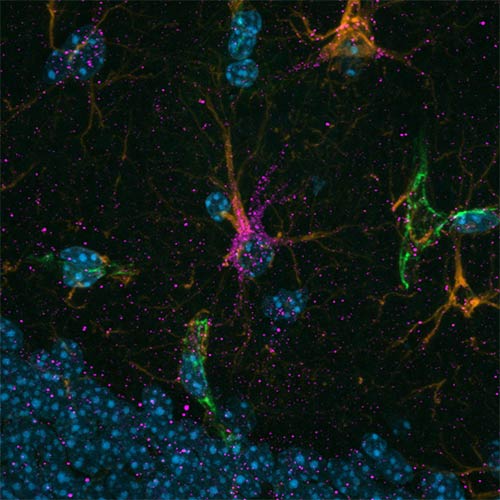
Scientists identified a distinct subtype of brain support cells—astrocytes enriched in the protein cadherin-4 (CDH4), shown in magenta, that seem to protect nerve cells against cell death. In Alzheimer’s disease, these cells become less abundant, but exercise seems to strengthen them. (Image credit: Luis Moreira)

The study focused on a part of the hippocampus – a critical region for memory and learning that is damaged early in Alzheimer’s disease. The research team leveraged single-nuclei RNA sequencing, a relatively new technologies that allow researchers to look at activity at the molecular level in single cells for an in-depth understanding of diseases like Alzheimer’s.

The researchers exercised a common mouse model for Alzheimer’s disease using running wheels, which improved their memory compared to the sedentary counterparts. They then analysed gene activity across thousands of individual brain cells, finding that exercise changed activity both in microglia, a disease-associated population of brain cells, and in a specific type of neurovascular-associated astrocyte (NVA), newly discovered by the team, which are cells associated with blood vessels in the brain. Furthermore, the scientist identified the metabolic gene Atpif1 as an important regulator to create new neurons in the brain. “That we were able to modulate newborn neurons using our new target genes set underscores the promise our study,” said lead author Joana Da Rocha, PhD, a postdoctoral fellow working in Dr Wrann’s lab.

To ensure the findings were relevant to humans, the team validated their discoveries in a large dataset of human Alzheimer’s brain tissue, finding striking similarities.

“This work not only sheds light on how exercise benefits the brain but also uncovers potential cell-specific targets for future Alzheimer’s therapies,” said Nathan Tucker, a biostatistician at SUNY Upstate Medical University and co-senior of the study. “Our study offers a valuable resource for the scientific community investigating Alzheimer’s prevention and treatment.”

Source: Mass General Brigham

The Effect of Physical Fitness on Mortality is Overestimated

Photo by Ketut Subiyanto on Unsplash

Many observational studies have shown that people who exercise more and have good cardiorespiratory fitness early in life are at lower risk of premature death from causes such as cancer and cardiovascular disease. But a new study published in the European Journal of Preventive Cardiology suggests that the association between physical fitness and a reduced risk of mortality may be misleading.

“We found that people with high fitness levels in late adolescence had a lower risk of dying prematurely, for example from cardiovascular disease, compared to those with low fitness levels. But when we looked at their risk of dying in random accidents, we found an almost similarly strong association. This suggests that people with high and low fitness levels may differ in other important ways, which is something that previous studies have not fully taken into account,” says Marcel Ballin, associated researcher in epidemiology and lead author of the study.

Conscription data from over 1 million men

In the study, the researchers leveraged data from 1.1 million Swedish men who were conscripted for military service between the years 1972 and 1995. The men, who were on average 18 years old at the time of conscription, were divided into five groups based on their fitness level at the time. They were then followed until their 60s or until they died. With access to the National Cause of Death Register, the researchers were able to see their cause of death. They subsequently used different methods to study the association between fitness level in late adolescence and premature death.

The researchers started with a traditional analysis of mortality from cardiovascular disease, cancer and from all causes, as in previous observational studies. They adjusted their statistical models for factors such as BMI, age at conscription, year of conscription, and parents’ income and education level. The results showed that the group with the highest fitness level had a 58% lower risk of dying from cardiovascular disease, a 31% lower risk of dying from cancer, and a 53% lower risk of dying from all causes, compared with the group with the lowest fitness level.

Very similar risk of dying in random accidents

Next, the researchers examined how fitness was associated with the risk of dying in random accidents such as car accidents, drownings and homicides. They chose random accidents because they assumed that there ought to be no association between the men’s fitness in late adolescence and the risk of dying in random accidents. This method is called negative control outcome analysis and involves testing the validity of your results for a primary outcome by comparing them with an outcome where no association ought to be found. If, however, an association is found, it may indicate that the groups studied are not actually comparable, and that the study suffers from what is typically referred to as confounding. The researchers found that men with the highest fitness levels had a 53% lower risk of dying in random accidents. Yet, it is unlikely that the men’s fitness would have such a big effect on their risk of dying in random accidents.

These results were also confirmed when the researchers used the sibling comparison design. Using this method, the researchers compared the risk of premature death between siblings with different fitness levels to control for all the factors that the siblings share such as behaviours, environmental factors, and some genetic factors.

“It surprised us that the association with accidental mortality reflected the other associations, even after we controlled for all the factors that siblings share. This underlines how strong the assumptions are that you make in observational studies, since it appears to be very difficult to create comparable groups. The consequences may be that you overestimate the magnitudes of the effects you find,” says Marcel Ballin.

Picture confirmed in other studies

The study is one of the largest of its kind in which researchers used negative control outcomes to investigate whether the associations between fitness and mortality are in fact valid. The results in this study are also supported by other research.

“That the effects of good cardiorespiratory fitness may be overstated might sound controversial to some, but the fact is that if you look at the results from studies others than traditional observational studies, a more nuanced picture does emerge. A number of twin studies for example have found similar results. Some genetic studies also suggest that there are genes that affect both the propensity to be physically active or have a good fitness level, and the risk of developing diseases such as cardiovascular disease.”

Important to base interventions on correct estimates

Marcel Ballin also argues that there are many different reasons for promoting physical activity. However, large-scale interventions or policy changes intended to apply to the entire population must be based on reliable estimates – otherwise there is a risk of expecting effects that have in fact been overestimated.

“Our results should not be interpreted as if physical activity and exercise are ineffective or that you should not try to promote it. But to create a more nuanced understanding of how big the effects of fitness actually are on different outcomes, we need to use several different methods. If we just ask the question in the same way, we will always get the same answer. It’s only when we get the same answer to a question that we have asked in slightly different ways that we can be sure that the findings are accurate,” says Marcel Ballin.

Source: Uppsala University

Any Form of Exercise can Significantly Boost Brain Function

Research findings are good news for couch potatoes

Photo by RDNE Stock project

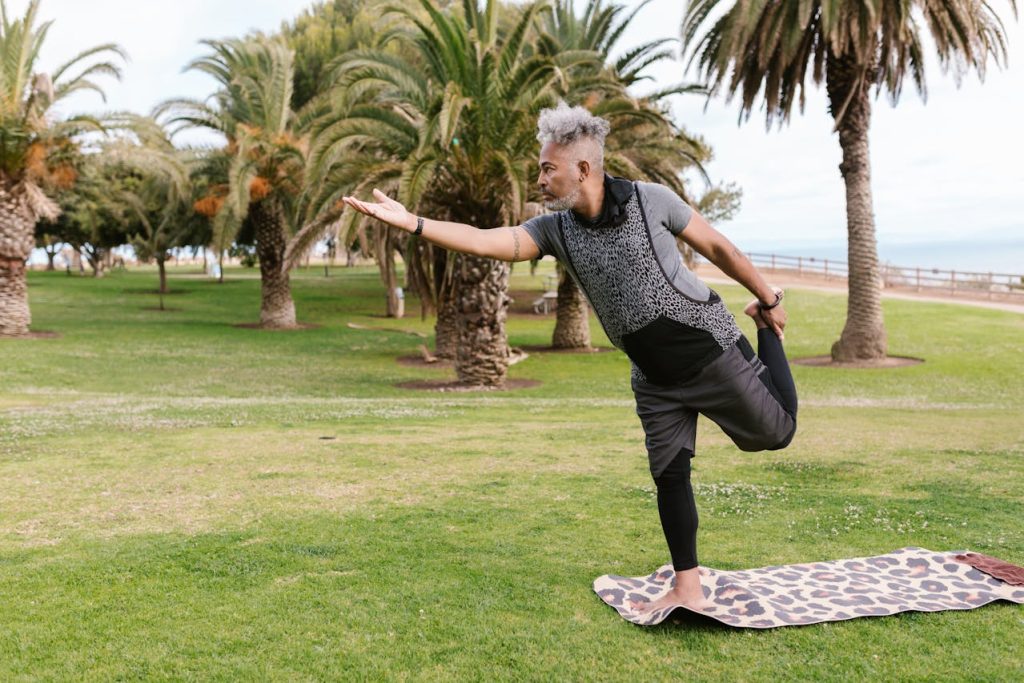
Whether it’s an early morning jog, or a touch of Tai Chi, groundbreaking research from the University of South Australia shows that any form of exercise can significantly boost brain function and memory across children, adults, and older adults.

In the largest, most comprehensive umbrella review to date, researchers found that regular exercise improves general cognition, memory, and executive function in both healthy individuals and those with clinical conditions, reinforcing exercise as an essential, inclusive activity for optimising cognitive health. The review appears in the British Journal of Sports Medicine.

Synthesising findings from 133 systematic reviews, covering 2724 randomised controlled trials and 258 279 participants, the systematic umbrella and meta-meta-analysis found that:

  • low- to moderate-intensity exercise had the greatest benefits for brain function and memory
  • children and adolescents showed the greatest improvements in memory, while people with ADHD saw the biggest gains in executive function
  • yoga, Tai Chi, and exergames (active video games) delivered the most significant cognitive benefits.

Lead researcher, UniSA’s Dr Ben Singh, says the findings provide a comprehensive understanding of how different types, intensities, and durations of exercise influence cognitive function.

“Exercise has a profound effect on physical health, but we also know it benefits brain function. What this study confirms is that even low-intensity exercise – like yoga or walking – can improve cognition, making it accessible to people of all ages and abilities,” Dr Singh says.

“In particular, we found that benefits were delivered quickly – with clear gains within 1-3 months, highlighting that even small bursts of activity can make a big difference. It also signals that trying out new activities could play a key role in keeping the brain engaged and active.

“For children and teens, exercise was especially beneficial for developing memory, while for people with ADHD, it helped improve focus, reduce impulsivity, and enhance executive function.

“We also found that mind-body exercises, like Tai Chi and yoga, had the most significant impact on memory, while exergames – such as Pokémon Go – were highly effective for general cognition. This is an encouraging finding, as it suggests that engaging, low-impact activities can offer real cognitive benefits.”

Senior researcher, Professor Carol Maher says exercise should be encouraged as a cognitive health strategy across all ages and fitness levels.

Cognitive decline and neurodegenerative diseases are growing global health concerns, underscoring the urgent need to identify effective strategies to preserve and enhance cognitive function across the lifespan,” Prof Maher says.

“This study presents compelling evidence that exercise should be integrated into healthcare and education settings to promote cognitive well-being.

“Knowing that even small amounts of exercise can improve memory and brain function – especially for those at higher risk – presents a clear opportunity for exercise to be included in clinical and public health guidelines.”

Source: University of South Australia

Twin Study Offers New Insights into Whether Exercise Extends life

Photo by Robert Ruggiero on Unsplash

In a decades-long study following twins, researchers from the University of Jyväskylä, Finland, investigated the links between long-term leisure-time physical activity and mortality. They also sought to determine whether physical activity can mitigate the increased risk of mortality due to genetic predisposition to diseases. Moreover, they examined the relationship between physical activity and later biological aging. 

The study included 22 750 Finnish twins born before 1958 whose leisure-time physical activity was assessed in 1975, 1981 and 1990. Mortality follow-up continued until the end of 2020.

Moderate activity yields maximum longevity benefits

Four distinct sub-groups were identified from the data, which was based on leisure-time physical activity over the 15-year follow-up: sedentary, moderately active, active and highly active groups. When the differences in mortality between the groups were examined at the 30-year follow-up, it was found that the greatest benefit – a 7% lower risk of mortality – was achieved between the sedentary and moderately active groups. A higher level of physical activity brought no additional benefit. 

When mortality was examined separately in the short and long term, a clear association was found in the short-term: the higher the level of physical activity, the lower the mortality risk. In the long term, however, those who were highly active did not differ from those who were sedentary in terms of mortality.

“An underlying pre-disease state can limit physical activity and ultimately lead to death, not the lack of exercise itself.”

“This can bias the association between physical activity and mortality in the short term”,  says Associate Professor Elina Sillanpää from the Faculty of Sports and Health Sciences. 

Meeting physical activity guidelines does not guarantee a lower mortality risk

The researchers also investigated whether following the World Health Organization’s physical activity guidelines affects mortality and genetic disease risk. The guidelines suggest 150 to 300 minutes of moderate or 75 to 150 minutes of vigorous activity weekly. The study found that meeting these guidelines did not lower mortality risk or alter genetic disease risk. Even for twins who met the recommended levels of PA over a 15-year period, no statistically significant difference in mortality rates was found compared to their less active twin pair.

“The widely observed favorable association between physical activity and mortality are based on observational studies that are prone to bias from different sources.” 

“In our studies, we aimed to account for various sources of biases, and combined with the long follow-up period, we could not confirm that adhering to physical activity guidelines mitigates genetic cardiovascular disease risk or causally reduces mortality”, says postdoctoral researcher Laura Joensuu from the Faculty of Sports and Health Sciences.  

Link between physical activity and biological aging is U-shaped

For the subsample of twins, biological aging was determined from blood samples using epigenetic clocks. Epigenetic clocks allow a person’s biological aging rate to be estimated based on methyl groups that regulate gene expression and are linked to aging process. 

“We found that the association between leisure-time physical activity and biological aging was U-shaped: Biological aging was accelerated in those who exercised the least and the most,” says Sillanpää.

Other lifestyles, such as smoking and alcohol consumption, largely explained the favourable associations of physical activity with biological aging. 

Genetic data were available for 4897 twins. The genetic susceptibility of twins to coronary artery disease, as well as systolic and diastolic blood pressure was assessed using new polygenic risk scores, which sum the genome-wide susceptibility to morbidity. In addition, all-cause and cardiovascular mortality was followed in 180 identical twin pairs. The biological aging rate of 1153 twins was assessed from a blood sample.

Source: University of Jyväskylä

Moderate Exercise Keeps Appetite at Bay

Photo by Ketut Subiyanto on Unsplash

A recent study involving researchers at Murdoch University’s Health Futures Institute has revealed that moderate-intensity exercise can significantly influence appetite-related hormones and perceptions in males with obesity.

The study, titled “Acute effect of exercise on appetite-related factors in males with obesity,” provides new insights into how exercise can aid appetite control and weight management. 

One of the study authors, Associate Professor Timothy Fairchild from Murdoch’s School of Allied Health, said the study confirms their previous work showing the benefits of incorporating regular exercise into daily routines for individuals looking to manage their weight and improve their overall health. 

“People understand that exercise helps ‘burn energy’. A lot of people assume that exercise also increases hunger and energy intake afterwards,” Associate Professor Timothy Fairchild said.  

“We have previously shown, using high-intensity exercise, that this is not the case. 

“This latest study shows that even moderate-intensity exercise can have immediate and beneficial effects on appetite control in males with obesity.” 

The study not only assessed food intake and appetite, but also measured changes in hormones which help to regulate appetite.  

“Despite a strong focus on weight loss drugs in society at present, this study shows that lifestyle factors still have a strong and relevant role in helping people to live their healthiest life,” Associate Professor Fairchild said. 

“In fact, the hormones which have been shown to increase after exercise, are the same hormones which the most successful weight loss drugs are mimicking.”  

“The added benefit of exercise is that you also receive the additional physical and mental health benefits of exercise”.  

The full study can be found in Physiological Reports journal.  

Source: Murdoch University