Tag: 23/4/26

Benefits of Physical Activity May Outweigh Risks for Kids with Cardiomyopathy, ICDs

With proper assessment and monitoring, the risk of serious heart events during physical activity may be lower than previously believed for children and adolescents with certain heart conditions, according to a new American Heart Association scientific statement

Photo by Annie Spratt on Unsplash

Physical activity in children and teenagers with cardiomyopathy (conditions that affect the heart muscle’s structure and function, impairing its ability to pump or fill effectively), as well as children with implantable cardioverter-defibrillators (ICDs) may be safer than previous research suggested, according to a new scientific statement from the American Heart Association, published today in the Association’s flagship peer-reviewed journal Circulation.

While physical activity and exercise are essential for childhood development and long-term health, they have been traditionally discouraged among children and adolescents with cardiomyopathies and ICDs (implantable devices that detect life-threatening abnormal heart rhythms and deliver electrical shocks) due to concerns that they could worsen heart function or lead to sudden cardiac death.

“While safety is always paramount, halting all physical activity among children with cardiomyopathy or ICDs has at times led to unintended consequences. The latest research indicates that restricting children’s movement can negatively affect their heart health, physical fitness levels, mental well-being and social development, and quality of life,” said Jonathan B. Edelson, MD, MSCE, chair of the scientific statement writing group, an associate professor of paediatrics and medical director of the sports cardiology program and heart transplant and ventricular assist device programs in the division of cardiology at Children’s Hospital of Philadelphia.

What do parents and caregivers need to know?

Ensuring safe participation in physical activity requires thoughtful, individualized planning and ongoing collaboration among clinicians, families and patients.

  • Personalised approach: Tailored risk assessments based on diagnosis, risk profile, genetic profile and clinical evaluations are critical to better guide decisions about prescribing physical activity for children with different types of cardiomyopathies. Various diagnostic screening tools, such as echocardiograms, cardiac imaging and exercise stress tests, can be used to assess symptoms at rest and with activity. Genetic testing and family screening can also be helpful to assess individual risk.
  • Shared decision-making: Clinicians, families and (when developmentally appropriate) children or adolescents with cardiomyopathy and/or ICDs can work together to balance a patient’s risk, patient- and family-tailored goals and values. It is important for clinicians to disclose when risk evidence is based on adult data.
  • Close follow-up and reassessment: Ongoing monitoring is important to track potential shifts in risk, assess if symptoms progress and evaluate if heart function improves or deteriorates. The recommendations for safe physical activity must evolve as the child grows, activities change and the disease progresses.


Close follow-up and reassessment: Ongoing monitoring is important to track potential shifts in risk, assess if symptoms progress and evaluate if heart function improves or deteriorates. The recommendations for safe physical activity must evolve as the child grows, activities change and the disease progresses.

What types of activities can be considered?

The new scientific statement aims to shift from adopting a one-size-fits-all approach to physical activity limitations to considering ways for youth with heart conditions or an ICD to safely participate in physical activities – from low-intensity daily activities to high-intensity training and sports in select cases – after a detailed individualised risk assessment.

Light-to-moderate intensity exercise (such as walking, light cycling or swimming) may be appropriate to maintain physical fitness, social development and quality of life, with regular monitoring of their condition. Structured physical activity, such as fitness classes, strength training, running, biking, hiking or organised sports programs, may be reasonable for some children and adolescents with heart conditions. For some carefully selected paediatric patients with certain cardiomyopathies, participation in physical activity including competitive sports may be reasonable after expert assessment and shared decision-making discussion about the risks and benefits. Emergency action plans, including AED (automated external defibrillator) access and bystanders trained in CPR, are essential during organised sports. Additional guidance for specific types of cardiomyopathies are detailed in the manuscript.

“Children with cardiomyopathy should not automatically be sidelined from participating in physical activity, including recreational or competitive sports,” Edelson said. “Most children should be physically active – with individualised evaluation, monitoring and planning. Physical activity is important for their long-term health, physical and social development.”

The statement notes more research is needed about childhood cardiomyopathies because most of the findings in the statement are based on observational studies in adults; therefore, findings should be applied cautiously to a paediatric population. In addition, outstanding questions remain, such as how moderate or vigorous exercise may affect the long-term progression and how risk varies across different types of cardiomyopathies.

Source: American Heart Association
Leadership, Transparency and Culture Shifts Are Key to Improving Public Sector Healthcare Quality

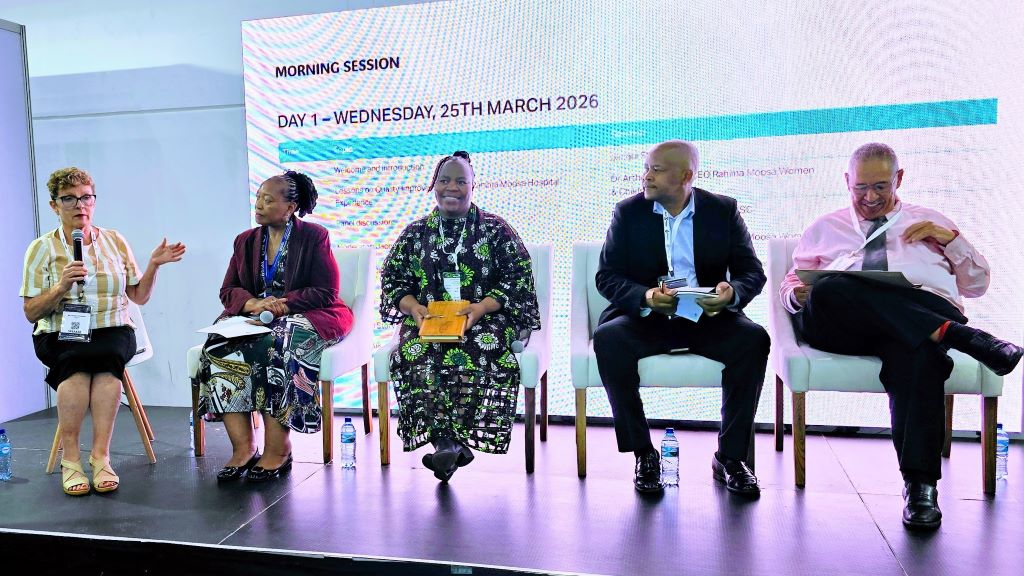
COHSASA CEO, Jacqui Stewart (left), moderates the panel discussing “Quality in the Public Sector”. From left:  Dr Siphiwe Mndaweni, CEO of the Office of Health Standards Compliance (OHSC), Professor Sabelile Tenza, Associate Professor, Patient Safety and Healthcare Quality, North-West University, Professor Sibusiso Zuma, Chair of the Department of Health Studies at UNISA and Dr Arthur Manning, CEO of Rahima Moosa Women and Children’s Hospital.

Strong leadership, functional governance and an honest culture of reporting are among the critical factors needed to improve and sustain quality care in South Africa’s public health sector, experts said during a panel discussion at the Hospital Show Conference hosted by COHSASA in Sandton recently.

The session, moderated by COHSASA CEO Jacqui Stewart, brought together senior voices from regulation, academia and hospital management to unpack the persistent gaps – and opportunities – in public sector healthcare delivery.

Professor Sibusiso Zuma of UNISA set the tone, noting that quality varies widely across public hospitals and is often determined by how effectively leadership teams work together.

“In my experience, the level of care depends on how heads of departments—nursing, pharmacy and clinical leadership , function as a team,” he said. “They need to identify problems  and address them collectively. Management must also be visible, regularly engaging with what is happening on the ground.”

Dr Siphiwe Mndaweni, CEO of the Office of Health Standards Compliance (OHSC), reinforced the central role of leadership and governance structures, drawing on inspection findings.

“Where leadership is weak or absent, quality suffers,” she said. “Infrastructure is another major challenge. Many facilities are old, and maintenance budgets are often diverted elsewhere, meaning planned upkeep simply does not happen.”

She added that even basic resources remain a concern. “Without essentials like soap, effective infection prevention and control is impossible.”

Dr Mndaweni also highlighted shortcomings in clinical governance, linking these directly to rising litigation. “Facilities may have clinical committees on paper, but if they are not meeting to interrogate lapses in care, the system fails.”

Security risks, poor community engagement and underutilised strategic plans further compound the problem. “Too often, documents are developed and then filed away. Facilities lose sight of their strategy and have no real understanding of patient satisfaction.”

However, she noted that where leadership is engaged – actively interacting with staff and patients – outcomes improve significantly.

Responding to questions on balancing regulatory compliance with quality improvement, Dr Arthur Manning, CEO of Rahima Moosa Mother and Child Hospital, argued that compliance should be seen as a starting point rather than an endpoint.

“Standards are a benchmark, but they are not the ceiling,” he said. “Our experience shows that it is possible to move beyond them.”

Professor Zuma agreed, cautioning against a compliance-driven mindset that fades once certification is achieved. “Facilities often put in intense effort to meet regulatory requirements, then step back afterwards,” he said. “Quality improvement cannot be a once-off exercise or confined to a single ‘quality person’. It must be everyone’s responsibility.”

He advocated for broader training in Total Quality Management and regular six-monthly audits involving all staff. “Quality must be continuous,” he said.

Professor Sabelile Tenza of North-West University pointed to a deeper cultural issue undermining progress: performative compliance.

“There is a tendency to be compliant on paper rather than in practice,” she said, citing research in which hospitals borrowed equipment to pass inspections, only to return it afterwards.

She described a culture of concealment, where staff hesitate to report shortages or failures. “There is fear of exposing the truth, even to boards that could advocate for improvements,” she said. “If we remove that fear, we can move forward.”

Professor Tenza also raised concerns about the reporting of adverse events, stressing the need to protect healthcare workers. “Clinicians ask why they should report incidents when they see no feedback or improvement,” she said.

She criticised the gap between policy and practice around “Just Culture” frameworks. “We talk about it, but confidentiality is not adequately protected. Without anonymity, reporting systems will not work “The focus should be on the incident, not the individual,” she said. “That is how  a learning culture is created.”

Although the National Department of Health has developed free online reporting tools, uptake remains low. Professor Tenza said the system needs to be more user-friendly and accessible via mobile devices, with less duplication between paper and digital processes.

“The focus should be on the incident, not the individual,” she said. “That is how systems learn.”

Dr Mndaweni acknowledged that regulation can be perceived as punitive but stressed that enforcement is a last resort. “The OHSC is designed to support compliance and improvement, not punishment,” she said. “But where there is persistent non-compliance, enforcement becomes necessary—even to the point of revoking a facility’s licence to operate.”

She added that the regulator is repositioning itself to play a more active role in quality improvement, rather than acting solely as an enforcer.

Dr Manning rejected the notion that compliance and quality improvement are competing priorities. “Regulatory standards define the minimum acceptable level of care,” he said. “Meeting them should be business as usual. The real goal is to exceed them – there should be no trade-off.”

Study Finds Common Medication Brings Little Relief in Osteoarthritis

Photo by Towfiqu barbhuiya

The University of Tasmania’s Menzies Institute for Medical Research has found that commonly prescribed medication, Diacerein, does not improve knee osteoarthritis symptoms, following a national study.

Diacerein, a medication derived from plants such as rhubarb and aloe vera, has long been recognised for its anti-inflammatory properties and is commonly used to treat osteoarthritis in Europe and Asia.

Led by Associate Professor Dawn Aitken, head of the Musculoskeletal Research Group at Menzies, the DICKENS trial is the largest study globally to investigate Diacerein’s ability to reduce pain in people with knee osteoarthritis who also have inflammation within the joint (effusion synovitis).

“We designed this large trial to test Diacerein in a group of osteoarthritis patients who we thought would have the best chance at benefiting from the drug and found that it did not improve pain or function or decrease local knee inflammation.

“We were hoping that if the drug was effective, it could be included on the Australian Register of Therapeutic Goods (ARTG) as an approved treatment for osteoarthritis in Australia,” Associate Professor Aitken said. “Unfortunately, it’s back to the drawing board to find more effective drug therapies.”

Osteoarthritis is the most common form of arthritis, affecting one in five Australians over the age of 45 and is a major cause of pain, disability, and joint replacement surgery. Despite its widespread burden, very few effective drug treatments exist.

Associate Professor Aitken said the publication of the trial in JAMA Internal Medicine – one of the world’s most prestigious medical journals – highlighted both the significance and rigour of the work.

“While the findings weren’t what we expected or hoped for, publishing this work in JAMA Internal Medicine reinforces the global importance of high-quality research, and we are proud that Menzies is contributing to the global effort to better understand and treat osteoarthritis.”

Associate Professor Aitken is hopeful that other promising drugs in the development stage will become available to bring relief to those suffering chronic pain, but highlighted that non-drug therapies are available.

“Chronic pain has a huge impact on the lives of those who live with it, and the lack of effective drug treatments is frustrating.

“While we currently lack drug treatments for chronic pain, we know that the most effective therapies include education, exercise, weight management and psychological support.”

Despite these findings, patients should not stop taking Diacerein without talking to their treating doctor first.

Source: University of Tasmania

Adcock Ingram Critical Care and Olympus Partner to Expand Medical Innovation in Southern Africa

Ronald Boueri (Olympus Middle East and Africa) and Colin Sheen (Adcock Ingram Critical Care) signing the strategic partnership agreement.

JOHANNESBURG, (Apr. 23, 2026) – Adcock Ingram Critical Care (AICC), a leading manufacturer and supplier of hospital and critical care products in Southern Africa, and Olympus, a global MedTech company committed to advancing endoscopy-enabled care, are strengthening their focus on improving patient care through a strategic partnership.

The partnership will expand access to Olympus’ advanced endoscopy solutions and broader medical and surgical technologies across South Africa and the Southern African region. Through this collaboration, AICC will support healthcare professionals with innovative solutions and services for early detection, diagnosis and minimally invasive treatment, while also strengthening access to clinical support, training and education.

Olympus has appointed Adcock Ingram Critical Care as its authorised distributor in South Africa, reinforcing its commitment to delivering high-quality products, reliable service and strong local support to healthcare professionals and institutions. With a global focus on clinical excellence and a comprehensive medical and surgical portfolio, Olympus continues to partner with organisations that share its aim of improving patient safety and outcomes and elevating the standard of care in targeted disease states.

“We are confident that our collaboration with Adcock Ingram Critical Care in South Africa will enhance service levels, expand market reach, and ensure seamless access to Olympus products and expertise,” says Ronald Boueri, Vice President and Managing Director, Olympus Middle East and Africa. “Most importantly, this partnership will support healthcare professionals with the high standards of quality, service and support they rely on, while contributing to improved patient outcomes and advancing healthcare across the country.”

For decades, AICC has delivered essential medical solutions across a range of therapeutic areas, including hospital care, renal care, transfusion therapies, infusion systems, and advanced wound care. This partnership further strengthens AICC’s ability to connect global innovation with local healthcare needs, ensuring that all South Africans have access to critical, life-enhancing technologies, supported by strong clinical expertise and service.

“This partnership marks an important step forward in our ongoing commitment to improving access to quality healthcare across Southern Africa,” says Colin Sheen, Managing Director of Adcock Ingram Critical Care. “Through our collaboration with Olympus, we are equipping healthcare professionals with innovative solutions that support early detection, accurate diagnosis and minimally invasive treatment, helping to enhance clinical outcomes and strengthen healthcare delivery across the region.”

Combo Pill Shown to Cut Risk of Recurrent Stroke by 39%

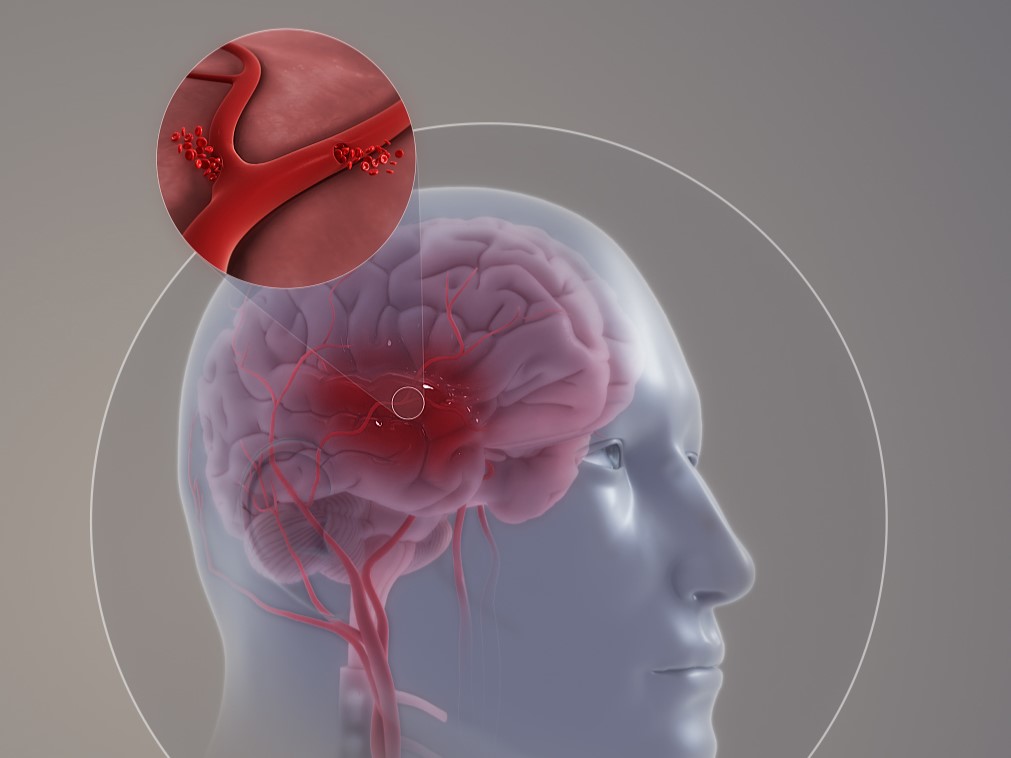
Haemorrhagic stroke. Credit: Scientific Animations CC4.0

Treatment with GMRx2, a single pill combination of three low-dose blood pressure medicines, significantly reduced the risk of another stroke in patients with intracerebral haemorrhage and high blood pressure. Results from the TRIDENT randomised controlled trial, led by The George Institute for Global Health, are published in The New England Journal of Medicine.

Professor Craig Anderson, Principal Investigator and Senior Professorial Fellow at The George Institute, said, “Lowering blood pressure is the only proven method to prevent another stroke, yet achieving good blood pressure control is a real challenge. One big issue is that the number and doses of antihypertensive medications are not increased when needed and doctors and patients struggle with complex pill regimens.

“Our study showed that GMRx2, a once-daily triple combination pill, cut the risk of another stroke by 39%. These findings could translate to important treatment benefits for the millions of people affected by intracerebral haemorrhage worldwide who face a high risk of having another one.”

The international study involved 1670 patients who had experienced intracerebral haemorrhage and had systolic blood pressure (SBP) of 130–160 mmHg. They received GMRx2, a single pill combination containing telmisartan 20mg, amlodipine 2.5mg, and indapamide 1.25mg, or a placebo, alongside standard care.

During an average period of follow-up of three years, stroke occurred in 4.6% of patients receiving GMRx2 compared to 7.4% in the placebo group. This equated to a 39% lower risk of recurrent stroke. Overall, the results showed one stroke was prevented for every 35 patients treated with GMRx2.

The GMRx2 group achieved better blood pressure control, with mean SBP levels 9mmHg lower than the placebo group. Patients treated with GMRx2 also experienced reduced rates of major cardiovascular events (non-fatal stroke, non-fatal heart attack and cardiovascular death) by 33% versus placebo. Serious adverse events were comparable between the treatment and placebo groups, affecting 23.8% and 26.8% of patients, respectively. Concerns of fatigue, dizziness and falls were infrequent and occurred similarly between the GMRx2 and placebo groups.

Almost 17 million people worldwide have experienced intracerebral haemorrhage, and there are over three million new cases each year. Among patients who survive this type of stroke, approximately one quarter will later die from recurrent stroke or cardiovascular disease. The condition disproportionately affects people in low- and middle-income countries (LMICs), where there is often poorer control of high blood pressure. Intracerebral haemorrhage is one of the most dangerous types of strokes, occurring at almost twice the rate in LMICs compared to high-income countries.

Professor Jeyaraj Pandian, President of the World Stroke Organization, said, “TRIDENT is a major advance in showing the enormous benefits of effective blood pressure control after an intracerebral haemorrhage, and a simple and effective strategy in which this can be achieved, with relevance to patients all over the world.”

Professor Anderson added, “These study results have the potential to mark a real shift in how we manage blood pressure following a stroke. This single-pill triple combination helped patients reach target blood pressure levels.

“We hope GMRx2 is approved for this indication by regulatory authorities throughout the world, and if so that it is widely used as an effective approach with the potential to improve the outcome for patients affected by intracerebral haemorrhage, and also ischaemic stroke, across the globe.”

Source: The George Institute for Global Public Health