Day: April 28, 2026

Ablation Superior to Drugs in Treating Persistent AFib

Large international clinical trials show an innovative procedure outperforms drugs for advanced atrial fibrillation

Pexels Photo by Freestocksorg

A minimally invasive heart procedure may be a better first-line treatment than medication for people living with advanced forms of atrial fibrillation (AFib), according to a major international clinical trial led by researchers at the UBC Faculty of Medicine.

For decades, most patients with AFib have been treated with medications first. Procedures like catheter ablation – a minimally invasive technique used to correct faulty electrical signalling in the heart – have typically been reserved for patients whose symptoms persist despite drug therapy. While recent research has suggested ablation may be a more effective initial treatment for early-stage disease, it has also been unclear whether this is true for patients with more advanced disease, who tend to be older, have more underlying health conditions and face higher risks overall.

Published in The New England Journal of Medicine, the new study shows starting with ablation can lead to better outcomes for patients with advanced forms of AFib.

“Traditionally, we’ve taken a stepwise approach, starting with medications and moving to procedures later,” said Dr Jason Andrade, clinical professor at UBC’s faculty of medicine and investigator at the Centre for Cardiovascular Innovation. “What this trial shows is that, even in patients with more advanced AFib, earlier intervention with ablation can provide substantial benefits and better control of the disease.”

A different way to treat the heart

The study focused on patients with persistent AFib, a more serious form in which the abnormal rhythm lasts longer and is more difficult to treat.

Researchers randomly assigned patients to receive either catheter ablation as their initial treatment or standard anti-arrhythmic drug therapy.

During catheter ablation, physicians guide thin, flexible tubes through blood vessels into the heart. Once in place, they eliminate the areas of heart tissue responsible for triggering and sustaining the abnormal electrical signals.

In this study, researchers used a newer technique called pulsed field ablation, which delivers short bursts of electrical energy to precisely target heart tissue.

“You can think of it as resetting the heart’s electrical system,” said Dr. Andrade. “Instead of using heat or freezing, this approach uses carefully controlled pulses to interrupt abnormal signals while minimising damage to surrounding tissue.”

After one year, patients who underwent ablation were significantly more likely to remain free of abnormal heart rhythms than those who started with medication. The overall risk of serious adverse events was similar between the two groups.

“Patients with more advanced atrial fibrillation are inherently more complex,” said Dr Andrade. “Even in this higher-risk group, starting with ablation can offer better control of the condition.”

A decade of reshaping global care

The findings build on more than a decade of research led by Dr Andrade and his team that has helped transform how AFib is treated worldwide.

Earlier landmark trials from this group demonstrated that catheter ablation could be used as a first-line treatment in patients with early-stage AFib. In addition, these studies were the first to demonstrate that catheter ablation was a disease-modifying therapy, significantly slowing the progression of the disease.

Those discoveries helped shift clinical practice globally, with physicians increasingly offering ablation earlier in a patient’s care.

Together, the program of research has redefined how AFib can be treated across its full course, from early to more advanced stages, giving patients and clinicians clearer guidance on when to consider ablation.

“Our goal is to give patients and clinicians the evidence they need to make the best decision for each individual,” said Dr Andrade. “This study fills an important gap for a group of patients where the answer hasn’t been clear.”

Source: The University of British Columbia

Hydraulic Brain: Body Motion Linked to Fluid Movement in the Brain

Abdominal contractions are tightly linked to gentle brain movements that help circulate CSF

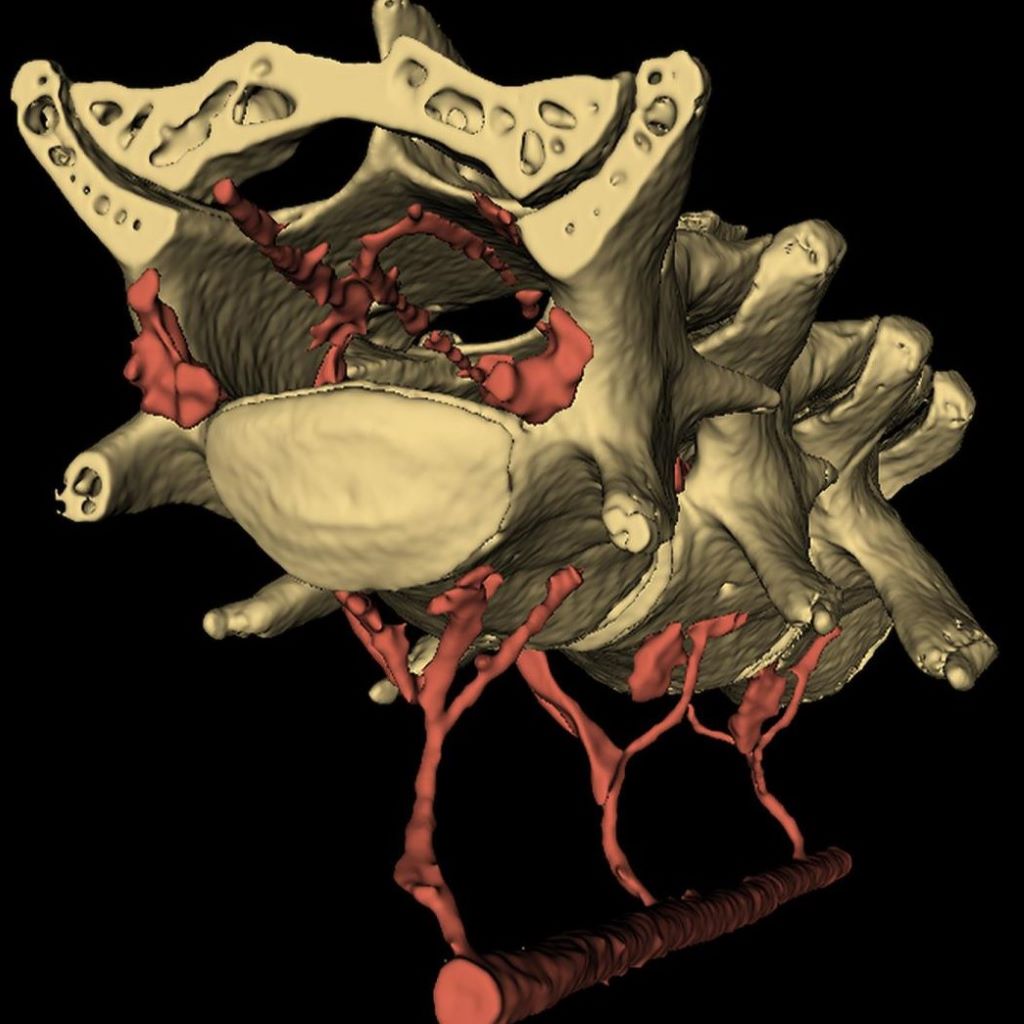
Using microCT scanning, which allows for high-resolution imaging of an organism’s internal structures, and other imaging techniques, researchers found that a network of veins serve as a mechanical connection between the abdominal cavity and the brain. Here, the veins in red run through the interior of a vertebrae and around the spine.  Credit: Provided by Patrick Drew and team/Penn State. All Rights Reserved.

The brain is more mechanically connected to the body than previously appreciated, scientists reported in Nature Neuroscience. Through a study using mice and simulations, the team found a potential biological mechanism underlying why exercise is thought to benefit brain health: abdominal contractions compress blood vessels connected to the spinal cord and the brain, enabling the organ to gently move within the skull. This swaying facilitates the surrounding cerebrospinal fluid to flow over the brain, potentially washing away neural waste that could cause problems for brain function.

According to Patrick Drew, professor of engineering science and mechanics, of neurosurgery, of biology and of biomedical engineering at Penn State, the work builds on previous studies detailing how sleep and neuron loss can influence how and when cerebrospinal fluid flushes through the brain.

“Our research explains how just moving around might serve as an important physiological mechanism promoting brain health,” said Drew, corresponding author on the paper. “In this study, we found that when the abdominal muscles contract, they push blood from the abdomen into the spinal cord, just like in a hydraulic system, applying pressure to the brain and making it move. Simulations show that this gentle brain movement will drive fluid flow in and around the brain. It is thought the movement of fluid in the brain is important for removing waste and preventing neurodegenerative disorders. Our research shows that a little bit of motion is good, and it could be another reason why exercise is good for our brain health.”

Drew, who also holds the title of associate director of the Huck Institutes of the Life Sciences, explained how in a hydraulic system, a pump creates pressure that drives fluid flow. In this case, the pump is the abdominal contraction – which can be as light as the tensing prior to sitting up or taking a step. The contraction puts pressure on the vertebral venous plexus, a network of veins that connect the abdominal cavity to the spinal cavity, causing the brain to move.

The researchers used two-photon microscopy — which allows for high-definition imaging of living tissue — to observe the brain shifting in the moments before the mouse moved, but right after the tightening of the abdominal muscles needed to spur the body into further movement. On the left, the brain, in green, sits during a stationary moment, while the image on the right shows the brain during movement.  Credit: Provided by Patrick Drew and team/Penn State. All Rights Reserved.

The researchers visualised the process in moving mice with two advanced imaging technologies: two-photon microscopy, which allows for high-definition imaging of living tissue, and microcomputed tomography, which enables high-resolution 3D examination of whole organs. They observed the brain shifting in the moments before the mouse moved, but right after the tightening of the abdominal muscles needed to spur the body into further movement.

To confirm that it was abdominal contractions rather than other movement that acted as the pump, the researchers applied gentle and controlled pressure to the abdomens of lightly anaesthetised mice. With no other movement other than a localised mechanical pressure less than a human would experience with a blood pressure cuff, the mice’s brains shifted.

“Importantly, the brain began moving back to its baseline position immediately upon relief of the abdominal pressure,” Drew said. “This suggests that abdominal pressure can rapidly and significantly alter the position of the brain within the skull.”

With the abdominal contraction-brain movement link confirmed, Drew said the next step was to understand the fluid’s movement in the brain and if the brain’s movement could induce fluid flow. However, there previously were no existing imaging techniques to visualize the rapid, nuanced dynamics of such fluid flows.

“Luckily, our interdisciplinary team at Penn State was able to develop these techniques, including conducting the imaging experiments of living mice and creating computer simulations of fluid motion,” Drew said. “That combination of expertise is so important for understanding these types of complicated systems and how they impact health.”

Francesco Costanzo, professor of engineering science and mechanics, of biomedical engineering, of mechanical engineering and of mathematics, led the computational modelling.

“Modelling fluid flow in and around the brain offers unique challenges because there are simultaneous, independent movements, as well as time-dependent, coupled movements. Accounting for all of them requires accounting for the special physics that happens every time a fluid particle crosses one of the many membranes in the brain,” Costanzo said. “So, we simplified it. The brain has a structure similar to a sponge, in the sense that you have a soft skeleton and fluid can move through it.”

By simplifying the geometry of the brain to that of a sponge, Costanzo explained that the team could model how fluid flows through a structure with varied spaces, like wrinkles in the brain, or pores in the sponge.

“Keeping with the idea of the brain as a sponge, we also thought of it as a dirty sponge – how do you clean a dirty sponge?” Costanzo asked. “You run it under a tap and squeeze it out. In our simulations, we were able to get a sense of how the brain moving from an abdominal contraction can help induce fluid flow over the brain to help clear waste products.”

Drew emphasised that while more work is needed to understand the full implications in humans, this study suggests that body movement may help to cycle cerebrospinal fluid around and in the brain, removing waste and helping to protect against neurodegenerative disorders associated with waste buildup.

“This kind of motion is so small. It’s what’s generated when you walk or just contract your abdominal muscles, which you do when you engage in any physical behaviour. It could make such a difference for your brain health,” Drew said.

By Ashley WennersHerron

Source: Pennsylvania State University

Joint Effort is Key to Sustainable Healthcare Reform

By Gale Shabangu, Chairperson, Hospital Association of South Africa (HASA)

Recently, President Cyril Ramaphosa made an important decision: to pause the promulgation of the National Health Insurance (NHI) Act until the Constitutional Court has ruled on the pending challenges to Parliament’s role in passing the Act. In doing so, he affirmed that due process must guide reform.

It is a reminder that healthcare reform is not a race to the finish line, but a journey that requires careful pacing, broad consultation and respect for the voices of South Africans. Reform at this scale is like tending a vast garden: every seed must be planted with foresight, every path cleared with care, so that the harvest nourishes all.

Families already feel the strain of rising costs – electricity, food, borrowing – and medical contributions that climb steadily. Yet even in this pressure, there is resilience. South Africans have always found ways to adapt, to share, to build together. Healthcare reform must honour that spirit, ensuring affordability is not a privilege but a shared foundation.

The private healthcare system is a necessary and valuable part of the scaffolding of our healthcare system, sustaining capacity that millions rely on. Unfinished reforms, such as risk equalisation, mandatory membership, and base benefit packages, remain like bridges half‑built. Completing them would stabilise participation and strengthen the entire ecosystem.

If private participation declines, demand does not vanish – it shifts. Public hospitals, already carrying immense responsibility, would feel the weight. Yet here lies the opportunity: to recognise that public and private healthcare are not adversaries but allies. The public sector anchors universal access; the private sector provides funded capacity that absorbs demand and sustains innovation. Together, they form a single ecosystem, each part vital to the whole.

Healthcare reform is about weaving our systems together into a fabric strong enough to carry us all.

As the President recently noted, readiness is central to bringing legislation into effect. Readiness is not bureaucracy – it is the heartbeat of reform. It signals that change must be feasible, not forced; sustainable, not symbolic. That is a hopeful message, because it means reform will be paced by practicality, not politics.

The path forward is clear and promising: complete outstanding reforms in medical schemes, strengthen risk pooling, invest in primary care and prevention, and sequence structural changes responsibly. These steps are not obstacles – they are stepping stones toward a healthier, more equitable South Africa.

Healthcare reform is a national undertaking and a shared responsibility. Government, funders, providers, employers and civil society are all custodians of this commitment. What matters now is how we act, with realism, collaboration and a clear focus on strengthening what already works.

Equitable access to quality healthcare is our shared goal. Achieving it requires evidence, readiness, and respect for complementarity. With stability, sustainability and collaboration as our compass, South Africa can build a healthcare system that is workable and inspiring – a system that reflects the resilience, dignity and hope of its people.

Healthcare requires stewardship. With stability, sustainability, and collaboration guiding reform, South Africa can build a system that works for everyone. And with optimism guiding reform, I believe we can build a system that works for everyone – today, tomorrow and for generations to come.

Innovative Surgery Cuts Ovarian Cancer Risk by Nearly 80% 

New research shows that Canadian-developed surgical procedure dramatically reduces rates of the most lethal gynaecological cancer

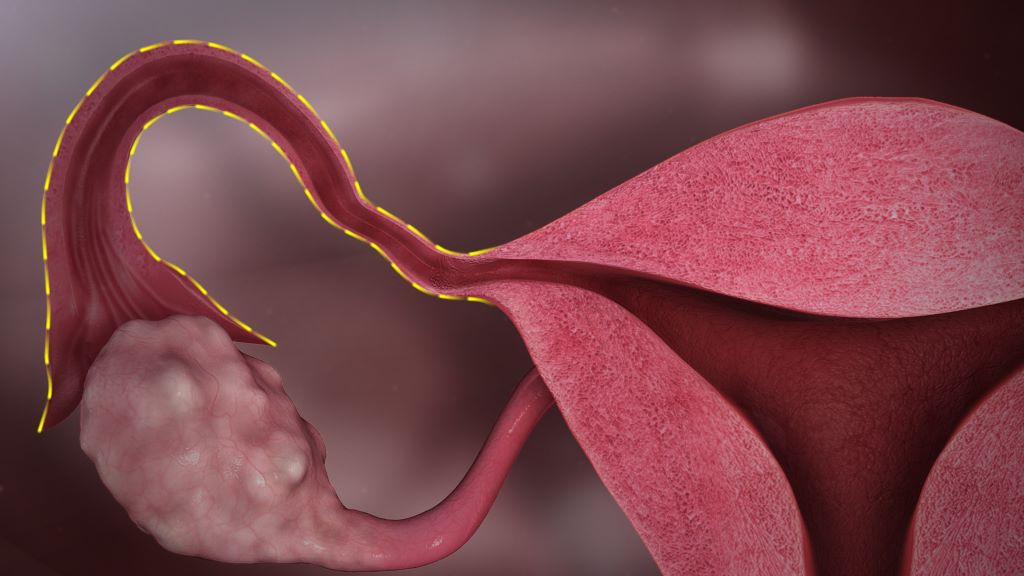
Fallopian Tubes. Credit: Scientific Animations CC4.0 BY-SA

A prevention strategy developed by Canadian researchers reduces the risk of the most common and deadly form of ovarian cancer by nearly 80%, according to a new study published today in JAMA Network Open.

The strategy, known as opportunistic salpingectomy (OS), involves proactively removing a person’s fallopian tubes when they are already undergoing a routine gynaecological surgery such as hysterectomy or tubal ligation, commonly called “having one’s tubes tied”.

British Columbia in Canada became the first jurisdiction in the world to offer OS in 2010, after a team of researchers from UBC, BC Cancer and Vancouver Coastal Health designed the approach when it was discovered that most ovarian cancers originate in the fallopian tubes rather than the ovaries. OS leaves a person’s ovaries intact, preserving important hormone production so there are minimal side effects from the added procedure.

The new study, led by a B.C.-based international collaboration called the Ovarian Cancer Observatory, provides the clearest evidence yet that the Canadian innovation saves lives.

“This study clearly demonstrates that removing the fallopian tubes as an add-on during routine surgery can help prevent the most lethal type of ovarian cancer,” said co-senior author Dr Gillian Hanley, an associate professor of obstetrics and gynaecology at UBC. “It shows how this relatively simple change in surgical practice can have a profound and life-saving impact.”

New hope against a deadly cancer

Ovarian cancer is the most lethal gynaecological cancer. Approximately 3100 Canadians are diagnosed with the disease each year and about 2000 will die from it.

There is currently no reliable screening test for ovarian cancer, meaning that most cases are diagnosed at advanced stages when treatment options are limited and survival rates are low.

The OS approach was initially developed and named by Dr Dianne Miller, an associate professor emerita at UBC and gynaecologic oncologist with Vancouver Coastal Health and BC Cancer. She co-founded B.C.’s multidisciplinary ovarian cancer research team, OVCARE.

“If there is one thing better than curing cancer it’s never getting the cancer in the first place,” said Dr. Miller.

The new study is the first to quantify how much OS reduces the risk of serous ovarian cancer – the most common and deadly subtype of the disease. It builds on previous research demonstrating that OS is safe, does not reduce the age of menopause onset, and is cost-effective for health systems.

The study analysed population-based health data for more than 85 000 people who underwent gynaecological surgeries in B.C. between 2008 and 2020. The researchers compared rates of serous ovarian cancer between those who had OS and those who had similar surgeries but did not undergo the procedure.

Overall, people who had OS were 78% less likely to develop serous ovarian cancer. In the rare cases where ovarian cancer occurred after OS, those cancers were found to be less biologically aggressive. The findings were validated by data collected from pathology laboratories from around the world, which suggested a similar effect.

From B.C. innovation to global impact

Since its introduction in B.C. in 2010, OS has been widely adopted, with approximately 80 per cent of hysterectomies and tubal ligation procedures in the province now including fallopian tube removal.

Globally, professional medical organizations in 24 countries now recommended OS as an ovarian cancer prevention strategy, including the Society of Obstetrics and Gynaecology of Canada, which issued guidance in 2015.

“This is the culmination of more than a decade of work that started here in B.C.,” said co- senior author Dr. David Huntsman, professor of pathology and laboratory medicine and obstetrics and gynaecology at UBC and a distinguished scientist at BC Cancer. “The impact of OS that we report is even greater than we expected.”

The researchers say expanding global adoption of OS could prevent thousands of ovarian cancer cases worldwide each year.

“This is a powerful example of how UBC research is changing clinical practice worldwide and saving lives,” said Dr Sharmila Anandasabapathy, dean of the faculty of medicine and vice-president, health, at UBC. “It speaks to the strength of our researchers and clinicians working together to translate discovery into real-world impact for patients here at home and around the world.”

Extending OS to other abdominal and pelvic surgeries where appropriate could further increase the number of people who could benefit from the prevention strategy. B.C. recently became the first province to expand OS to routine surgeries performed by general and urologic surgeons through a project supported by the Government of B.C. and Doctors of BC.

“Our hope is that more clinicians will adopt this proven approach, which has the potential to save countless lives,” said Dr Huntsman. “Not offering this surgical add-on may leave patients unnecessarily vulnerable to this cancer.”

Brett Goldhawk

Source: University of British Columbia

WHO Prequalifies First-ever Malaria Treatment for Infants

Photo by Ekamelev on Unsplash

Ahead of World Malaria Day on 25 April, the World Health Organization (WHO) has announced a significant step forward in the fight against malaria with the prequalification of the first treatment developed specifically for newborns and young infants weighing between two and five kilograms. The prequalification designation indicates that the medicine meets international standards of quality, safety and efficacy, and will help to expand access to quality-assured treatment for one of the most underserved patient groups.

The newly prequalified treatment, artemether-lumefantrine, is the first antimalarial formulation designed specifically for the youngest malaria patients. Until now, infants with malaria have been treated with formulations intended for older children, which increase the risk of dosing errors, side effects and toxicity. WHO prequalification will enable public sector procurement, contributing to closing a long-standing treatment gap for some 30 million babies born each year in malaria-endemic areas of Africa.

“For centuries, malaria has stolen children from their parents, and health, wealth and hope from communities,” said Dr Tedros Adhanom Ghebreyesus, WHO Director-General. “But today, the story is changing. New vaccines, diagnostic tests, next-generation mosquito nets and effective medicines, including those adapted for the youngest, are helping to turn the tide. Ending malaria in our lifetime is no longer a dream – it is a real possibility, but only with sustained political and financial commitment. Now we can. Now we must.”

New prequalified tests

On 14 April 2026, WHO also prequalified three new rapid diagnostic tests (RDTs) designed to address emerging diagnostic challenges for malaria. The most common malaria RDTs for P. falciparum parasite work by detecting the protein, known as HRP2. But based on reported studies and surveys in 46 countries, some strains of the malaria parasite have lost the gene that makes this protein – so they become “invisible” to HRP2-based RDTs, leading to false-negative results. In countries in the Horn of Africa, up to 80% of cases were missed, leading to delayed treatment, severe illness, and even death.

The new tests address this issue by targeting a different parasite protein (pf-LDH) that the malaria parasite cannot easily shed. They provide a reliable, quality-assured alternative where HRP2-based tests are failing. WHO now recommends that countries switch to these alternative RDTs when more than 5% of cases are missed due to pf-hrp2 deletions. This ensures accurate diagnosis, appropriate treatment, and protects hard-won malaria control gains – especially for the most vulnerable communities.

Source: World Health Organization