Timed Therapy with Intense Light can Benefit Cardiovascular Health
Photo by Stormseeker on Unsplash

Managing circadian rhythms through intense light and chronologically timed therapy can help prevent or treat a variety of circulatory system conditions including heart disease, according to a new study published in Circulation Research.

“The impact of circadian rhythms on cardiovascular function and disease development is well established,” said the study’s lead author Tobias Eckle, MD, PhD, professor of anaesthesiology at the University of Colorado School of Medicine.

“However, translational preclinical studies targeting the heart’s circadian biology are just now emerging and are leading to the development of a novel field of medicine termed circadian medicine.”

The senior author is Professor Tami A. Martino, PhD, distinguished chair in molecular and cardiovascular research at the University of Guelph in Ontario, Canada.

The study reviews current circadian medicine research, focusing on the use of intense light therapy following surgery, utilizsng light to treat cardiac injury, exploring how cardiovascular disease can differ between men and women and administering drugs at specific times of day to coincide with the body’s internal clock to speed healing.

It also urges more aggressive use of this therapy in humans, rather than relying on mostly animal models.

“There are literally millions of patients who could benefit from this,” Eckle said.

“The treatments are almost all low-risk. Some involve using light boxes and others use drugs that are already on the market.”

Circadian rhythms significantly influence how the cardiovascular system operates. Timing is everything. Blood pressure and heart rates follow distinct patterns, peaking during the day and ebbing at night. When this is disrupted, it leads to worse cardiovascular disease outcomes including myocardial infarction and heart failure. Light is critical in maintaining the proper balance and functioning of the body. Shift employees who may work night hours then day hours often have worse cardiac outcomes.

Eckle, who has studied circadian rhythm and health for years, said intense light can help heal the body after heart surgery while protecting it from injury during surgery, including reducing the chances of cardiac ischemia.

According to the researchers, when light hits the human eye it is transmitted to the suprachiasmatic nucleus, a structure in the brain’s hypothalamus that regulates most circadian rhythms in the body.

Intense light stabilizes the PER2 gene and increases levels of adenosine, which blocks electrical signals in the heart that cause irregular rhythms, making it cardiac protective.

Eckle has used light therapy with patients after surgery and seen positive results including lower levels of troponin, a key protein whose elevation can signal a heart attack or stroke.

Given the mounting evidence that intense light and timed drug treatments are effective, he said, it is time to move forward with more clinical trials.

“Circadian rhythms play a crucial role in cardiovascular health, influencing the timing of onset and severity of cardiovascular events and contributing to the healing process from disease,” Eckle said. “Studies in humans are clearly required. Regarding intense light therapy, chronotherapy and restricted feeding are low-risk strategies that should be tested sooner than later.”


Source: University of Colorado Anschutz Medical Campus

Could a Simple Eye Reflex Test Pick up Autism in Children?

Photo by Helena Lopes on Unsplash

Scientists at UC San Francisco that they may have discovered a new way to test for autism by measuring how children’s eyes move when they turn their heads. They found that children with a variant of a gene that is associated with severe autism are hypersensitive to this motion.

The gene, SCN2A, makes an ion channel that is found throughout the brain, including the region that coordinates movement – the cerebellum. Several variants of this gene are also associated with severe epilepsy and intellectual disability.

The researchers found that children with these variants have an unusual form of the reflex that stabilizes the gaze while the head is moving, called the vestibulo-ocular reflex (VOR). In children with autism, it seems to go overboard, and this can be measured with a simple eye-tracking device.

The discovery, published in the journal Neuron, could help to advance research on autism, which affects 1 out of every 36 children in the United States. And it could help to diagnose kids earlier and faster with a method that only requires them to don a helmet and sit in a chair.

“We can measure it in kids with autism who are non-verbal or can’t or don’t want to follow instructions,” said Kevin Bender, PhD, a professor in the UCSF Weill Institute for Neurosciences and co-senior author of the study. “This could be a game-changer in both the clinic and the lab.”

A telltale sign of autism in an eye reflex

Of the hundreds of gene mutations associated with autism, variants of the SCN2A gene are among the most common.

Since autism affects social communication, ion channel experts like Bender had focused on the frontal lobe of the brain, which governs language and social skills in people. But mice with an autism-associated variant of the SCN2A gene did not display marked behavioral differences associated with this brain region.

Chenyu Wang, a UCSF graduate student in Bender’s lab and first author of the study, decided to look at what the SCN2A variant was doing in the mouse cerebellum. Guy Bouvier, PhD, a cerebellum expert at UCSF and co-senior author of the paper, already had the equipment needed to test behaviors influenced by the cerebellum, like the VOR.

The VOR is easy to provoke. Shake your head and your eyes will stay roughly centered. In mice with the SCN2A variant, however, the researchers discovered that this reflex was unusually sensitive. When these mice were rotated in one direction, their eyes compensated perfectly, rotating in the opposite direction.

But this increased sensitivity came at a cost. Normally, neural circuits in the cerebellum can refine the reflex when needed, for example to enable the eyes to focus on a moving object while the head is also moving. In SCN2A mice, however, these circuits got stuck, making the reflex rigid.

A mouse result translates nearly perfectly to kids with autism

Wang and Bender had uncovered something rare: a behaviour that arose from a variant to the SCN2A gene that was easy to measure in mice. But would it work in people?

They decided to test it with an eye-tracking camera mounted on a helmet. It was a “shot in the dark,” Wang said, given that the two scientists had never conducted a study in humans.

Bender asked several families from the FamilieSCN2A Foundation, the major family advocacy group for children with SCN2A variants in the US, to participate. Five children with SCN2A autism and eleven of their neurotypical siblings volunteered.

Wang and Bender took turns rotating the children to the left and right in an office chair to the beat of a metronome. The VOR was hypersensitive in the children with autism, but not in their neurotypical siblings.

The scientists could tell which children had autism just by measuring how much their eyes moved in response to their head rotation.

A CRISPR cure in mice

The scientists also wanted to see if they could restore the normal eye reflex in the mice with a CRISPR-based technology that restored SCN2A gene expression in the cerebellum.

When they treated 30-day-old SCN2A mice – equivalent to late adolescence in humans – their VOR became less rigid but was still unusually sensitive to body motion. But when they treated 3-day-old SCN2A mice – early childhood in humans – their eye reflexes were completely normal.

“These first results, using this reflex as our proxy for autism, point to an early window for future therapies that get the developing brain back on track,” Wang said.

It’s too early to say whether such an approach might someday be used to directly treat autism. But the eye reflex test, on its own, could clear the way to more expedient autism diagnosis for kids today, saving families from long diagnostic odysseys.

“If this sort of assessment works in our hands, with kids with profound, nonverbal autism, there really is hope it could be more widely adopted,” Bender said.

Source: University of California – San Francisco

Smart Moo-ve for Diabetes Treatment: Insulin Produced in Cow’s Milk

Photo by Pixabay on Pexels

An unassuming brown bovine from the south of Brazil has made history as the first transgenic cow capable of producing human insulin in her milk. The advancement, led by researchers from the University of Illinois Urbana-Champaign and the Universidade de São Paulo, could herald a new era in insulin production, one day eliminating drug scarcity and high costs for people living with diabetes.

“Mother Nature designed the mammary gland as a factory to make protein really, really efficiently. We can take advantage of that system to produce a protein that can help hundreds of millions of people worldwide,” said Matt Wheeler, professor in the Department of Animal Sciences, part of the College of Agricultural, Consumer and Environmental Sciences (ACES) at U. of I.

Wheeler is lead author on a new Biotechnology Journal study describing the development of the insulin-producing cow, a proof-of-concept achievement that could be scaled up after additional testing and FDA approval.

Precise insertion of DNA

Wheeler’s colleagues in Brazil inserted a segment of human DNA coding for proinsulin – the protein precursor of the active form of insulin – into cell nuclei of 10 cow embryos. These were implanted in the uteruses of normal cows in Brazil, and one transgenic calf was born. Thanks to updated genetic engineering technology, the human DNA was targeted for expression – the process whereby gene sequences are read and translated into protein products – in mammary tissue only.

“In the old days, we used to just slam DNA in and hope it got expressed where you wanted it to,” Wheeler said. “We can be much more strategic and targeted these days. Using a DNA construct specific to mammary tissue means there’s no human insulin circulating in the cow’s blood or other tissues. It also takes advantage of the mammary gland’s capabilities for producing large quantities of protein.”

When the cow reached maturity, the team unsuccessfully attempted to impregnate her using standard artificial insemination techniques. Instead, they stimulated her first lactation using hormones. The lactation yielded milk, but a smaller quantity than would occur after a successful pregnancy. Still, human proinsulin and, surprisingly, insulin were detectable in the milk.

“Our goal was to make proinsulin, purify it out to insulin, and go from there. But the cow basically processed it herself. She makes about three to one biologically active insulin to proinsulin,” Wheeler said. “The mammary gland is a magical thing.”

The insulin and proinsulin, which would need to be extracted and purified for use, were expressed at a few grams per liter in the milk. But because the lactation was induced hormonally and the milk volume was smaller than expected, the team can’t say exactly how much insulin would be made in a typical lactation.

Conservatively, Wheeler says if a cow could make 1 gram of insulin per liter and a typical Holstein makes 40 to 50 litres per day, that’s a lot of insulin. Especially since the typical unit of insulin equals 0.0347 milligrams.

“That means each gram is equivalent to 28,818 units of insulin,” Wheeler said. “And that’s just one liter; Holsteins can produce 50 liters per day. You can do the math.”

The team plans to re-clone the cow, and is optimistic they’ll achieve greater success with pregnancy and full lactation cycles in the next generation. Eventually, they hope to create transgenic bulls to mate with the females, creating transgenic offspring that can be used to establish a purpose-built herd. Wheeler says even a small herd could quickly outcompete existing methods – transgenic yeast and bacteria – for producing insulin, and could do so without having to create highly technical facilities or infrastructure.

“With regard to mass-producing insulin in milk, you’d need specialized, high-health-status facilities for the cattle, but it’s nothing too out of the ordinary for our well-established dairy industry,” Wheeler said. “We know what we’re doing with cows.”

An efficient system to collect and purify insulin products would be needed, as well as FDA approval, before transgenic cows could supply insulin for the world’s diabetics. But Wheeler is confident that day is coming.

“I could see a future where a 100-head herd, equivalent to a small Illinois or Wisconsin dairy, could produce all the insulin needed for the country,” he said. “And a larger herd? You could make the whole world’s supply in a year.

Source: University of Illinois College of Agricultural, Consumer and Environmental Sciences

Steroid Drugs Used for HRT could be Repurposed to Combat E. coli and MRSA

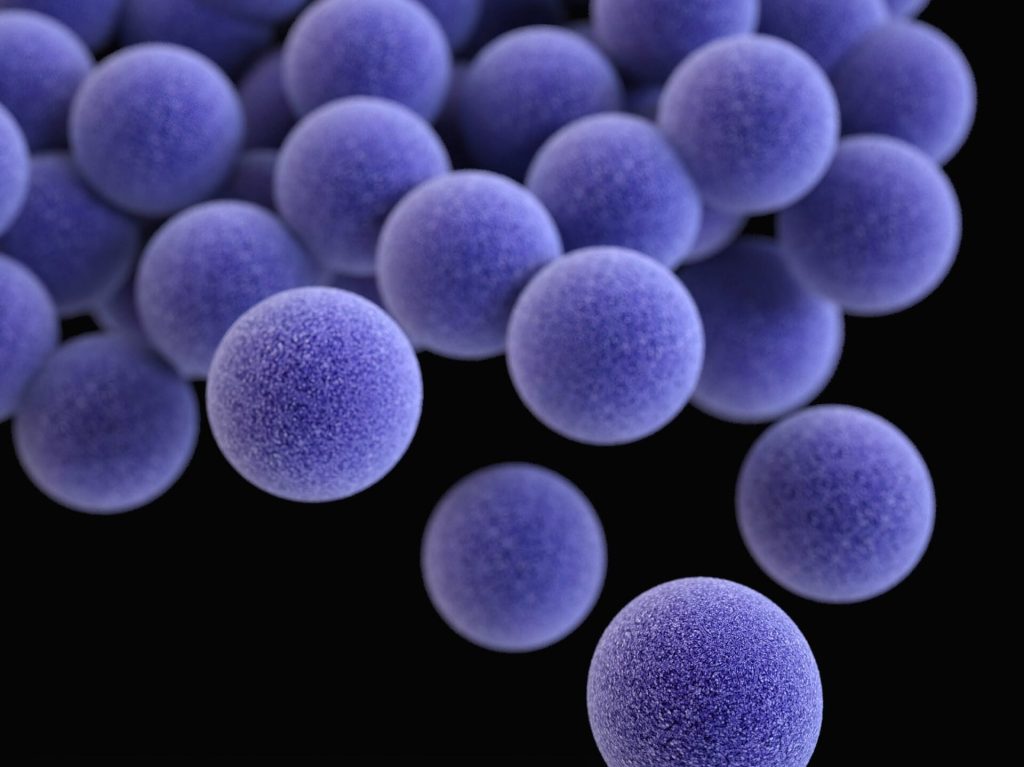
Methicillin resistant Staphylococcus aureus (MRSA) – Credit: CDC

Researchers from the University of Kent’s School of Biosciences have combined computational and microbiology laboratory approaches to identify existing drugs that can be repurposed to combat antibiotic-resistant bacterial infections, instead of developing new ones.

This research, which has been published in the Journal of Infectious Diseases, revealed that a class of steroid drugs currently used in hormone replacement therapy (HRT) can also stop the growth of antibiotic-resistant E. coli and effectively kill MRSA.

These drugs are particularly good at binding to a protein complex, cytochrome bd, which is important for the growth and survival of a range of disease-causing bacterial species. The researchers made an in silico screening for drugs that could inhibit bd activity, and identified quinestrol, ethinyl estradiol and mestranol, then evaluated their effectiveness in vitro.

The steroid drugs ethinyl estradiol and quinestrol inhibited E. coli bd-I activity. The IC50 of quinestrol for inhibiting oxygen consumption in E. coli bd-I-only membranes as 0.2µg/mL, although residual activity remained at around 20% at higher concentrations Quinestrol exhibited potent bactericidal effects against S. aureus but not E. coli.

It is expected that steroids may provide an alternative to conventional antibiotics that are becoming increasingly ineffective.

Dr Mark Shepherd, Reader in Microbial Biochemistry at Kent and the corresponding author on the paper, said: “These exciting developments will help to advance research into new antimicrobials, and we are enthusiastic to use our powerful experimental approach to discover drugs that can target other bacterial proteins and combat a wide range of antibiotic-resistant infections.”

Source: University of Kent

Researchers 3D-print Functional Human Brain Tissue

AI-generated image illustrating 3-D tissue printing

A team of scientists has developed the first 3D-printed brain tissue that can grow and function like typical brain tissue. This has important implications for scientists studying the brain and working on treatments for a broad range of neurological and neurodevelopmental disorders, such as Alzheimer’s and Parkinson’s disease.

“This could be a hugely powerful model to help us understand how brain cells and parts of the brain communicate in humans,” says Su-Chun Zhang, professor of neuroscience and neurology at UW-Madison’s Waisman Center. “It could change the way we look at stem cell biology, neuroscience, and the pathogenesis of many neurological and psychiatric disorders.”

Printing methods have limited the success of previous attempts to print brain tissue, according to Zhang and Yuanwei Yan, a scientist in Zhang’s lab. The group behind the new 3D-printing process described their method today in the journal Cell Stem Cell.

Instead of using the traditional 3D-printing approach, stacking layers vertically, the researchers went horizontally. They situated brain cells, neurons grown from induced pluripotent stem cells, in a softer “bio-ink” gel than previous attempts had employed.

“The tissue still has enough structure to hold together but it is soft enough to allow the neurons to grow into each other and start talking to each other,” Zhang says.

The cells are laid next to each other like pencils laid next to each other on a tabletop.

“Our tissue stays relatively thin and this makes it easy for the neurons to get enough oxygen and enough nutrients from the growth media,” Yan says.

The results speak for themselves – which is to say, the cells can speak to each other. The printed cells reach through the medium to form connections inside each printed layer as well as across layers, forming networks comparable to human brains. The neurons communicate, send signals, interact with each other through neurotransmitters, and even form proper networks with support cells that were added to the printed tissue.

“We printed the cerebral cortex and the striatum and what we found was quite striking,” Zhang says. “Even when we printed different cells belonging to different parts of the brain, they were still able to talk to each other in a very special and specific way.”

The printing technique offers precision – control over the types and arrangement of cells – not found in brain organoids, miniature organs used to study brains. The organoids grow with less organisation and control.

“Our lab is very special in that we are able to produce pretty much any type of neurons at any time. Then we can piece them together at almost any time and in whatever way we like,” Zhang says. “Because we can print the tissue by design, we can have a defined system to look at how our human brain network operates. We can look very specifically at how the nerve cells talk to each other under certain conditions because we can print exactly what we want.”

That specificity provides flexibility. The printed brain tissue could be used to study signaling between cells in Down syndrome, interactions between healthy tissue and neighboring tissue affected by Alzheimer’s, testing new drug candidates, or even watching the brain grow.

“In the past, we have often looked at one thing at a time, which means we often miss some critical components. Our brain operates in networks. We want to print brain tissue this way because cells do not operate by themselves. They talk to each other. This is how our brain works and it has to be studied all together like this to truly understand it,” Zhang says. “Our brain tissue could be used to study almost every major aspect of what many people at the Waisman Center are working on. It can be used to look at the molecular mechanisms underlying brain development, human development, developmental disabilities, neurodegenerative disorders, and more.”

The new printing technique should also be accessible to many labs. It does not require special bio-printing equipment or culturing methods to keep the tissue healthy, and can be studied in depth with microscopes, standard imaging techniques and electrodes already common in the field.

The researchers would like to explore the potential of specialization, though, further improving their bio-ink and refining their equipment to allow for specific orientations of cells within their printed tissue..

“Right now, our printer is a benchtop commercialised one,” Yan says. “We can make some specialised improvements to help us print specific types of brain tissue on-demand.”

Source: University of Wisconsin-Madison

Liver Immune System Quickly ‘Eats up’ LDL Cholesterol

Colourised electron micrograph image of a macrophage. Credit: NIH

A new study reveals that immune cells in the liver react to high cholesterol levels and eat up excess cholesterol that can otherwise cause damage to arteries. The findings, published in Nature Cardiovascular Research, suggest that the response to the onset of atherosclerosis begins in the liver.

Immediate response from the liver

In the current study, researchers from Karolinska Institutet wanted to understand how different tissues in the body react to high levels of LDL, commonly called ‘bad cholesterol’, in the blood.

To test this, they created a system where they could quickly increase the cholesterol in the blood of mice.

“Essentially, we wanted to detonate a cholesterol bomb and see what happened next,” says Stephen Malin, lead author of the study and principal researcher at the Department of Medicine, Solna, Karolinska Institutet.

“We found that the liver responded almost immediately and removed some of the excess cholesterol.”

However, it wasn’t the typical liver cells that responded, but a type of immune cell called Kupffer cells that are known for recognising foreign or harmful substances and eating them up. The discovery made in mice was also validated in human tissue samples.

“We were surprised to see that the liver seems to be the first line of defence against excess cholesterol and that the Kupffer cells were the ones doing the job,” says Stephen Malin.

“This shows that the liver immune system is an active player in regulating cholesterol levels, and suggests that atherosclerosis is a systemic disease that affects multiple organs and not just the arteries.”

Several organs could be involved

The researchers hope that by understanding how the liver and other tissues communicate with each other after being exposed to high cholesterol, they can find new ways to prevent or treat cardiovascular and liver diseases.

“Our next step is to look at how other organs respond to excess cholesterol, and how they interact with the liver and the blood vessels in atherosclerosis,” says Stephen Malin. “This could help us develop more holistic and effective strategies to combat this common and deadly disease.”

Source: Karolinska Institutet

Researchers Uncover Protein that Enables Sensation of Cold

Photo by Ian Keefe on Unsplash

University of Michigan researchers have identified the protein that enables mammals to sense cold, filling a long-standing knowledge gap in the field of sensory biology. The findings, published in Nature Neuroscience, could help unravel how we sense and suffer from cold temperature in the winter, and why some patients experience cold differently under particular disease conditions.

“The field started uncovering these temperature sensors over 20 years ago, with the discovery of a heat-sensing protein called TRPV1,” said neuroscientist Shawn Xu, a professor at the U-M Life Sciences Institute and a senior author of the new research.

“Various studies have found the proteins that sense hot, warm, even cool temperatures – but we’ve been unable to confirm what senses temperatures below about 60 degrees Fahrenheit (15.5°C).”

In a 2019 study, researchers in Xu’s lab discovered the first cold-sensing receptor protein in Caenorhabditis elegans, a species of millimetre-long worms that the lab studies as a model system for understanding sensory responses.

Because the gene that encodes the C. elegans protein is evolutionarily conserved across many species, including mice and humans, that finding provided a starting point for verifying the cold sensor in mammals: a protein called GluK2 (short for Glutamate ionotropic receptor kainate type subunit 2).

For this latest study, a team of researchers from the Life Sciences Institute and the U-M College of Literature, Science, and the Arts tested their hypothesis in mice that were missing the GluK2 gene, and thus could not produce any GluK2 proteins. Through a series of experiments to test the animals’ behavioural reactions to temperature and other mechanical stimuli, the team found that the mice responded normally to hot, warm and cool temperatures, but showed no response to noxious cold.

GluK2 is primarily found on neurons in the brain, where it receives chemical signals to facilitate communication between neurons. But it is also expressed in sensory neurons in the peripheral nervous system.

“We now know that this protein serves a totally different function in the peripheral nervous system, processing temperature cues instead of chemical signals to sense cold,” said Bo Duan, U-M associate professor of molecular, cellular, and developmental biology and co-senior author of the study.

While GluK2 is best known for its role in the brain, Xu speculates that this temperature-sensing role may have been one of the protein’s original purposes. The GluK2 gene has relatives across the evolutionary tree, going all the way back to single-cell bacteria.

“A bacterium has no brain, so why would it evolve a way to receive chemical signals from other neurons? But it would have great need to sense its environment, and perhaps both temperature and chemicals,” said Xu, who is also a professor of molecular and integrative physiology at the U-M Medical School. “So I think temperature sensing may be an ancient function, at least for some of these glutamate receptors, that was eventually co-opted as organisms evolved more complex nervous systems.”

In addition to filling a gap in the temperature-sensing puzzle, Xu believes the new finding could have implications for human health and well-being. Cancer patients receiving chemotherapy, for example, often experience painful reactions to cold.

“This discovery of GluK2 as a cold sensor in mammals opens new paths to better understand why humans experience painful reactions to cold, and even perhaps offers a potential therapeutic target for treating that pain in patients whose cold sensation is overstimulated,” Xu said.

Source: University of Michigan

Common Respiratory Viruses Trigger Most Cases of Intussusception in Children

Photo by Andrea Piacquadio on Unsplash

Viral infections trigger more cases of intussusception in young children than previously thought, according to a new study. The research, led by Murdoch Children’s Research Institute (MCRI) and published in Clinical Infectious Diseases, found that during the COVID lockdowns, hospital admissions for intussusception, a medical emergency involving obstruction of the intestine, among young children significantly decreased.

For the study, 12 years of data was analysed across Victoria, NSW and Queensland. A total of 5589 intussusception cases were recorded between January, 2010 and April, 2022. Of those, 3179 were children under the age of two.

During the lockdown periods, Victoria and NSW experienced a decline in hospital admissions for intussusception among children under two by 62.7% and 40.1%, respectively. The rate of intussusception cases has now returned to normal levels.

MCRI and Monash University researcher Dr Ben Townley said the magnitude of the decline supported that common respiratory diseases such as colds, the flu and respiratory syncytial virus (RSV), were behind a significant proportion of intussusception cases.

“Reductions in intussusception hospital admissions were seen in all age groups, however most occurred in children less than two years of age,” he said.

“Intussusception is the leading cause of acute bowel obstruction in infants and young children and without prompt diagnosis and management, can be fatal.

“Countries with prolonged COVID lockdowns and suppression strategies saw reductions in common respiratory viruses, which influenced the drop in intussusception admissions.”

Victoria experienced the greatest lockdown duration, with Melbourne having six lockdown periods, for a total of 263 days. Greater Sydney had 159 days and Brisbane had 18 days in lockdown.

MCRI Professor Jim Buttery said the decrease in intussusception cases was greater than expected given previous research into the causes of the condition.

“Our analysis found commons viruses play a larger role than previously recognised in triggering intussusception,” he said.

Professor Buttery said the findings raised the possibility that emerging vaccines like the new RSV vaccines may help prevent intussusception.

“When a new vaccine against common childhood respiratory viruses is introduced, we may find there are some unexpected benefits, like protecting more children from intussusception,” he said.

Researchers from Sydney Children’s Hospital Network, University of Melbourne and Queensland Health also contributed to the findings.

Source: Murdoch Childrens Research Institute

We Need to Fight for Sleep Equity in SA, Say Leading Researchers

By Ufrieda Ho for Spotlight

Photo by Andrea Piacquadio

Research into the link between disordered sleep and disease show an outsized burden on the most vulnerable. It’s sounding alarms for sleep equity to have a place on the public health agenda, reports Ufrieda Ho.

Scientists are increasingly connecting the dots on how a lack of sleep places a disproportionate health burden on at-risk population groups, including people living with HIV, women, informal workers, the elderly and the poor.

This year’s World Sleep Day on 15 March focuses on sleep equity. Researchers say that tackling sleep inequity and raising awareness for the importance of sleep as a pillar of good health could help stave off several looming public health pressures.

The lack of healthy sleep is linked to cardiovascular disease, obesity, hypertension, diabetes, mental health conditions and dementia. In South Africa, understanding the connection between sleep and HIV is also key to managing the health of the large ageing population of people living with the disease.

Karine Scheuermaier is associate professor at the Wits University Brain Function Research Group. The country’s oldest sleep laboratory founded in 1982 is based at the university’s medical school in Parktown, Johannesburg.

“Society understands the role of exercise and diet in good health but somehow sleep has not had the same kind of awareness or priority, even if sleep is linked to how well your body functions and your chances of developing disease,” she says. “We do everything else at the expense of sleep. Sleep is somehow a symbol of laziness in a work-driven society and we need to change this thinking.”

Sleep inequity in SA

Sleep inequity is linked to socio-economic realities, she says. Sleep inequity might affect the person who lives in an environment where safety and security is neglected or where there is a high threat of gender-based violence. It could also be having to navigate apartheid city planning that forced black people to live far from job hubs. This legacy means today many workers still wake up early to face long work commutes daily. There could also be inequity in division of labour in households, when one person wakes up to take care of children or elderly family members in the home.

Living in overcrowded informal settlements also presents disturbances for good sleep, including high levels of noise and bright floodlights as street lighting. Those who work in unregulated or informal sectors, including shift work or digital platform workers, like e-hailing drivers, are prone to lose out on quality sleep.

clinic that does clinical work, research, and training. Chandiwana says homing in on the intersection of HIV and sleep is critical in a South African context.

“The average person living with HIV who has started antiretroviral treatment on time should live as long as a person who doesn’t have HIV. But what we know is that the person with HIV is on average, living 16 years less of good health. They are more likely to develop type II diabetes, mental health issues, obesity, and heart disease – and we know poor sleep is linked to this,” she says.

Chandiwana says sleep science is still a relatively new field of medicine and the nascent research is still looking to better understand how sleep deprivation triggers immune pathways and chronic inflammation in people living with HIV, even those who are healthy and respond positively on treatment.

A current study at the clinic is looking into the intersection of obesity, sleep apnoea, and women living with HIV. Chandiwana says because so much is unknown, the issue of sleep equity extends to support and funding for more locally appropriate sleep research. Medical school curricula needs to change and more avenues to train people in sleep research needs to be established, she says.

“We have very little African data on sleep disorders and disordered sleep,” she says. She argues we need better data on things like how many people are affected by poor sleep, a better understanding of what is causing it and what it means, and then we need to present these findings to public health authorities to look at it as a public health issue.

“We do have specific challenges in our country. If you are trying to explain to someone, who isn’t South African, how the impact of load-shedding affects sleep or how living in a shack affects sleep, it’s not always easy to do,” she says.

Chandiwana says countries in the global North are already counting insufficient quality sleep as an economic cost measured in loss of productivity, efficiency, safety and society’s well-being. They are also changing public health policies accordingly. South Africa and the rest of the continent stand to be left behind, she says.

How to get better sleep in SA

Chandiwana says: “There is no lab in South Africa that does sleep studies for people in the public sector and no place in the public sector for people to even be diagnosed for a sleep disorder – so services are extremely limited. With something like sleep apnoea, we can’t offer patients in the public sector the gold standard intervention of CPAP [continuous positive airway pressure, which is a device of a face mask, a nose piece, and a hose that delivers a steady flow of air pressure to keep airways open while someone sleeps] because this is financially out of reach. Instead, we have to work with patients to help them lose weight and do positional therapy like training them to sleep on their backs.”

Other ways to get better sleep without costly intervention or sleeping tablets, the two scientists say, include getting exercise, not having food, stimulants or alcohol two to three hours before bedtime, limiting screen time of all kinds in the hour around bedtime, getting exposure to the early morning sunlight each day, keeping sleeping areas dark, quiet and at a comfortable temperature, and developing fixed sleep routines and sleep time rituals – like brushing your teeth, putting on pyjamas, reading for a short period and then going to sleep.

Ultimately, Chandiwana suggests it all comes back to building awareness that healthy sleep is part of health rights.

“We have to fight for sleep equity and we need people to know that sleep is not elitist – it’s not just reserved for some,” she says, “and we should not be accepting poor sleep as the norm”.

Republished from Spotlight under a Creative Commons licence.

Source: Spotlight

News24 Awards Name Bestmed as ‘Medical Scheme of the Year’

The News24 Business Awards – focused on areas such as costs, client service and claims – has named the largest self-administered medical scheme in SA as the nation’s best

Photo by National Cancer Institute on Unsplash

Bestmed Medical Scheme, the fourth largest open medical scheme and the largest self-administered medical scheme in the country, has been honoured with the News24 Medical Scheme of the Year award, at the 2024 News24 Business Awards.

These awards recognise client satisfaction scores surveyed from more than 4 000 subscribers, along with their assessment of the offering, among other criteria, and cover multiple sectors, including banking, insurance, and healthcare.

Focused on a range of criteria, including customers’ satisfaction with key issues like costs, and client service and claims, the awards also consider the company’s transparency / communication with clients, overall contribution to South Africa, shareholder value creation and business performance. These elements are also evaluated by News24’s financial reporters, as well as fund managers and analysts – with results ultimately audited by an actuarial consultant.

This year, Bestmed took the coveted Medical Scheme Award notably because of the outstanding feedback from its clients in a survey of thousands of News24 readers, especially when it came to its claim process and communication. News24 journalists also gave Bestmed a very high score for how easy it is to understand what is covered and for value for money.

“Bestmed is truly proud to be named Medical Scheme of the Year, particularly based on criteria that are so client-focused,” says Leo Dlamini, CEO and Principal Officer of Bestmed Medical Scheme. “These awards celebrate the best in corporate South Africa, and we are pleased to have been recognised for our efforts in this space. We have always believed in great member experience, value for money offerings and making a difference in the communities in which we operate.”

Awards of this nature are nothing new to the Scheme, which has received many similar accolades in recent years. Bestmed was voted, for a second successive time, as the leader in the South African medical scheme industry when it comes to customer satisfaction, according to the most recent SA Customer Satisfaction Index (SA-csi). Last year, Bestmed also received the Board of Health Funders’ Titanium Award for Excellence in Creating Access to Quality Healthcare – this, for the third consecutive time. Bestmed was also voted first in 2020 and 2022, and second in 2023, for customer experience in the Ask Afrika Orange Index® benchmark’s medical aid category.

“Members are at the centre of everything that we do. Our ‘Personally Yours’ promise is a commitment to consistently providing our members with the highest quality service, while also offering value for money. This award affirms our conviction and energises us to maintain the focus on member experience and value-for-money offerings. This will continue to set Bestmed apart as a healthcare funder of choice,” concludes Dlamini.

About Bestmed

Bestmed Medical Scheme is the largest self-administered medical scheme in South Africa. Bestmed’s “Personally Yours” philosophy leads the way in the medical aid industry. Bestmed’s membership offerings include 14 unique plans, designed to suit the needs of members. Beneficiaries have access to a network of more than 18 000 healthcare professionals countrywide. The Scheme’s head office is based in Tshwane (Gauteng). Bestmed has satellite offices in Nelspruit, Durban, Cape Town, Gqeberha (Port Elizabeth) and Polokwane.  For more information visit www.bestmed.co.za