Spiralling Costs Squeezing Medical Schemes – and Where does This Leave NHI?

Photo by Towfiqu barbhuiya on Unsplash

Pressure from ageing populations, stagnant growth and growing medical costs will mean that medical aid schemes will make above-inflation rate hikes, reveals Momentum Health marketing officer Damian McHugh. He made the comments at Momentum Health Solutions’ virtual Healthcare Insights Summit on Tuesday (30 July), where he also noted that the same demands on medical funds are serving to put NHI even further out of reach, estimating a budget of some R1.3 trillion.

If one take’s McHugh’s figures and projects into the coming years, these above-inflation hikes make the target an ever increasing-one, steadily sending the current estimates even further from the realms of affordability. This is a situation which national health schemes of far wealthier countries are now encountering.

This comes as the Council for Medical Schemes advised the 1st of August of inflation plus “reasonable utilisation estimates” resulting in a recommendation to keep under 8.5%. But it given the pressures on medical aid schemes, this is unlikely to be adhered to, as last year already saw increases in excess of this.

Medical aid cost pressures

The CMS acknowledged that above-inflation medical cost increases are inevitable due to “unique industry factors such as technological advancement, the ageing population, and the increasing prevalence of chronic diseases.”

Last year, Discovery Health Medical Scheme (DHMS) announced a weighted average increase of 7.5%, for 2024 – but its comprehensive “premium” segment rose by 13%. Both Momentum and BestMed announced weighted increases of 9.6% for 2024, while Bonitas managed to contain its increases to 6.9% (though its comprehensive cover rose to 9.6%). MediHelp surged to 15.96%, though it justified this increase as its options were the lowest-priced on the market.

Medical aid scheme growth is slow, at best around 0.5% per annum, while there is considerable pressure on subscriber income. Low income brackets only spend around 4% on healthcare, while middle and high income brackets spent 6% and 7%, respectively.
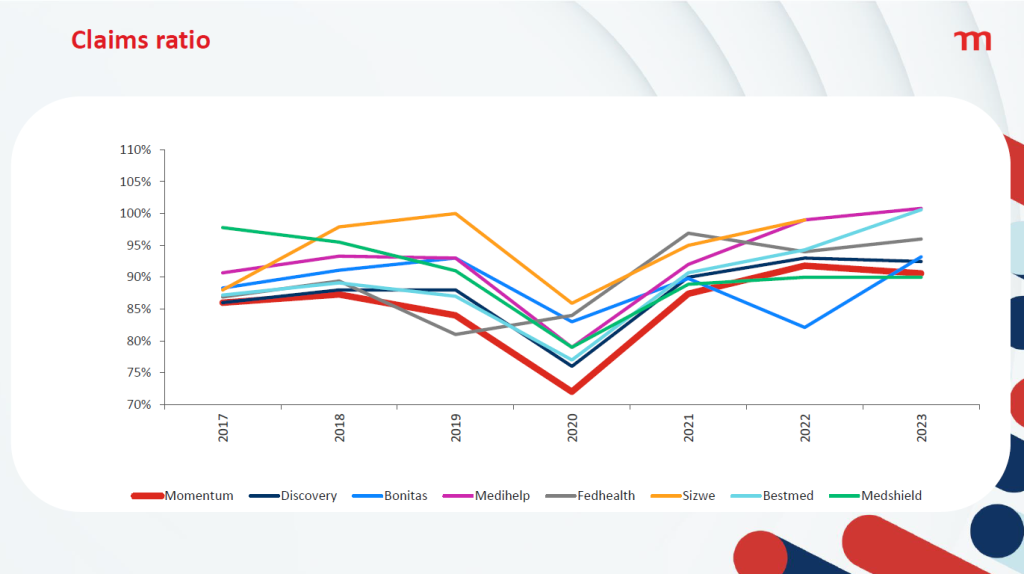
But with claims on the increase, many medical aids are having to tap into reserves and reducing solvency. Many medical aids are running close to 100% claims ratio – obviously a very bad situation for them to find themselves in.

These cost pressures result in a reduction in benefits, with the burden being shifted by reducing day-to-day benefits and members moving to Efficiency Discount Options (EDOs) – in turn, reducing the risk contribution income received by the schemes.

Rate hikes inevitable

In its recommended guidelines for 2025 released in Circular 35 of 2024, the CMS advised that medical aid schemes limit their contribution increases in line with CPIThis was based on the Reserve Bank’s latest inflation forecast which expects headline inflation to average 4.4% and 4.5% in 2025 and 2026, respectively. With last year’s estimated of an additional 3.2% to 3.8%, that works out to about 8.5%. But the CMS noted that medical aid schemes have historically had increases in excess of CPI+4%.

The COVID pandemic bucked the trend, resulting in – though many medical aid schemes saw record profits as procedures were deferred. Price increases were deferred, with increases kept below inflation for 2021 and 2022, with an uptick in 2023.

McHugh pointed out that growth in medical aid schemes has remained largely flat, and the ageing of the insured lives was linked to increasing claims costs as health problems became more complex. He revealed that claims costs per life had risen from about R15 000 in 2017 to R21 000 in 2022. This, spread across the population of South Africa, would require an NHI budget of R1.3 trillion.
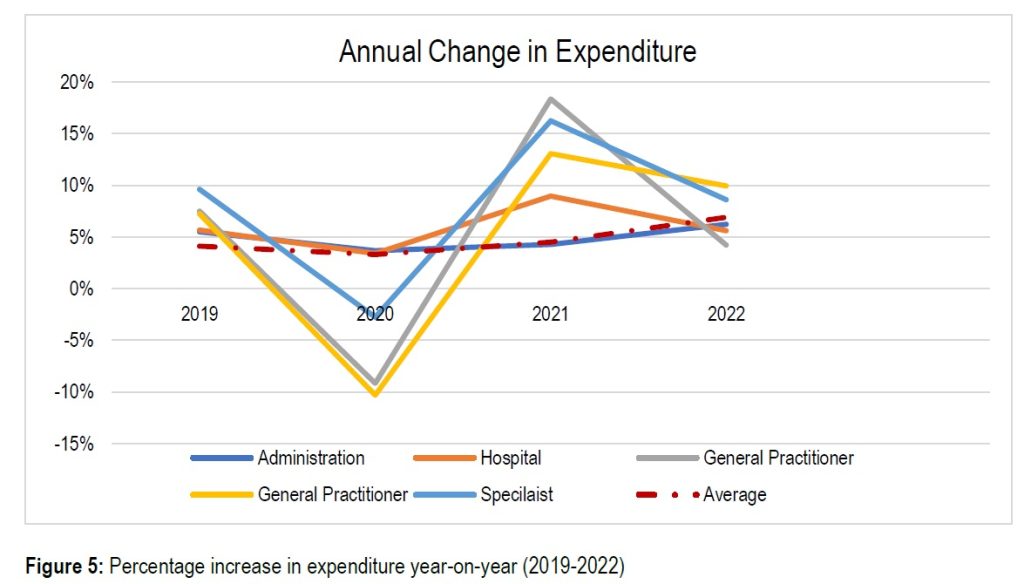
Source: CMS Circular 35 of 2024

Breaking down the expenditures, McHugh said that medical schemes spent 37% on hospitals and 28% on specialists, while medicine accounted for 16% and GPs a mere 5%. The CMS also noted that hospitals and specialists had seen greater relative increases than other areas. For the essential coverage of hospitals, medicines, GPs, and dentists, that would amount to R363 billion.

Looking ahead with a little maths

One can take simple compound interest to McHugh’s figures, and even applying the CMS’ best-case “reasonable utilisation estimate” of 3.2%, for say 20 years from will mean that costs rise by 87% in today’s rands. That means the NHI’s ‘basic’ coverage would rise to R682 billion and the full coverage amounting to an incredible R2.4 trillion.

But this nothing special to South Africa. The UK’s NHS costs have similarly grown, at 3.6% per annum in real terms. And that growth has to come out of the GDP: from 3.6% of the GDP in 1949-50 to 8.2% in 2022-23, with a surge to 10.5% in the COVID pandemic.

The UK has now put measures in place to constrain cost growth to 1%, but it remains to be seen whether this will be effective without compromising service delivery. How South Africa can even contemplate an NHI where, 20 years from now, private scheme medical costs run to R39 000 per person in the best case scenario.

While McHugh did not mention the recent High Court blow to the NHI Act that found a key part of it unconstitutional, he described the legal challenge process that would see that part sent back to the National Assembly and the president.

McHugh however struck a note of optimism, noting that the public-private partnerships of the COVID pandemic showed a way forward for NHI and universal healthcare in South Africa. The 2024 elections bring the possibility of the same historic benefits for the population as the 1994 ones.
The Truth About Bone Marrow Stem Cell Donation

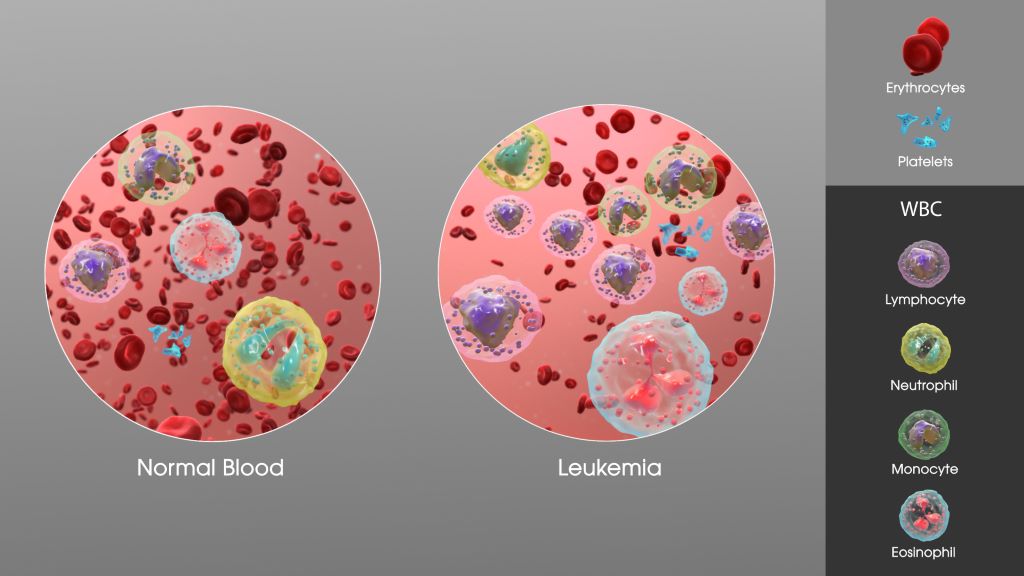
SAG Leukaemia. Credit: Scientific Animations CC0

While thousands of South Africans have registered as potential bone marrow stem cell donors, a critical challenge looms: donor attrition. These dropout rates, ranging from 23% to 56%, can significantly delay finding a suitable match for blood cancer patients in desperate need of a potentially life-saving transplant. This can unfortunately impact their chances of survival.

The good news is that donating stem cells is a safe and relatively simple process. With Bone Marrow Stem Cell Donation and Leukaemia Awareness Month taking place between 15 August and 15 October 2024, DKMS Africa aims to address some misconceptions that might deter registered donors from following through with donations.

Palesa Mokomele, Head of Community Engagement and Communications, unpacks these below:

Myth 1: Donating stem cells is a painful surgical procedure.

Fact: For over 90% of donors the process entails Peripheral Blood Stem Cell (PBSC) collection, a non-surgical procedure similar to donating blood. During PBSC, donors will rest comfortably while a needle is placed in each arm. Blood is drawn from one arm, passed through a machine that separates the stem cells, and the remaining blood is returned to the body through the other arm. While not painful, some donors may experience mild side effects like headaches, fatigue, or muscle aches, which typically resolve quickly.

For a small percentage of donors (around 2%), stem cells might be collected directly from the bone marrow in the pelvic bone. This minimally invasive procedure is performed under general anaesthesia. Although some donors experience temporary discomfort or soreness at the extraction site, the feeling is usually comparable to a bruise.

Myth 2: Donating takes too long and disrupts my life too much.

Fact: While the donation process involves some steps, it’s designed to be manageable. You’ll likely have a briefing call to explain the process, a health check to confirm your suitability, and an informative session about donation itself. The actual donation typically takes less than a day (4-6 hours) for the PBSC method.

For the bone marrow donation method, a hospital stay is involved, but it’s usually just three days. This includes check-in on day one, the procedure on day two, and discharge on day three.

Myth 3: Donating stem cells means missing a lot of work. 

Fact: The good news is that most donors can get back to work quickly. For PBSC donation, donors will likely be able to return within two days. If they donate bone marrow, a bit more recovery time is needed, so they should plan for about one week of leave.

Myth 4: My boss won’t be okay with me taking time off to donate.

Many employers are incredibly supportive of staff who donate stem cells. In our experience, most react positively to this selfless act. If your company doesn’t offer paid leave for donation, DKMS has a financial assistance programme that deals with lost wage compensation.

Myth 5: Donating stem cells will cost me money.

Fact: Donation is completely free of charge for the donor. DKMS covers all donation-related expenses, including travel, meals, and accommodation if needed. Financial support is also provided for a companion to join them at the hospital. The donor’s health insurance will never be involved, and DKMS handles the costs of any follow-up care that might be necessary.

“Seventeen-year-old Anele who was diagnosed with Acute Lymphoblastic Leukaemia (ALL), a type of cancer that affects the production of healthy blood cells, is just one of many patients in need of a stem cell transplant from a matching donor,” says Mokomele. “His father, Lawrence, is devastated, with his son now hanging on for dear life, waiting for that one person to be a match.”

“Every registered donor brings hope to a patient battling blood cancer. By staying committed to the cause, you help to ensure a readily available pool of potential matches, increasing a patient’s chance of receiving a transplant. Let’s give them a second chance at life!” she concludes.

Register today at https://www.dkms-africa.org/register-now

For more information, contact DKMS Africa on 0800 12 10 82.

COVID PPE Supplier Must Face the Music, Court Rules

Pro Secure fails in bid to stop Special Investigating Unit going after it to recover millions of rands

Photo by J Castellon on Unsplash

A company accused of unlawfully benefiting from a multi-million rand contract to supply personal protective equipment (PPE) during the Covid pandemic, has failed in a bid to quash a summons issued against it by the Special Investigating Unit to recover the money.

Pro Secure raised several objections to the formulation of the case against it in the papers. But Special Tribunal Judge Kate Pillay has dismissed the company’s objections and ordered the company to pay the costs.

The SIU investigation uncovered irregularities in the Limpopo Department of Health’s appointment of service providers including Pro Secure, Clinipro and Ndia Business Trading, which resulted in about R182-million irregular and wasteful expenditure. The SIU initiated action against Pro Secure, alleging the company had made “secret profits”, and also instituted civil proceedings against the former head of health in the province, Dr Thokozani Florence Mhlongo.

In October 2022, the SIU secured an order from the Special Tribunal, effectively freezing Mhlongo’s pension fund until the outcome of the civil action against her. Mhlongo resigned in June that year while facing disciplinary charges.

In its application to the Tribunal, Pro Secure challenged the SIU’s legal standing, the fact that the Limpopo health department was not a party to the SIU action. Pro Secure also claimed that there was no allegation that its bid for the contract was not lawful.

Judge Pillay found there was no substance to any of the company’s arguments.

She said the particulars of claim in the civil action set out how Pro Secure had received a payment “significantly exceeding their initial bid”.

She said that according to the SIU, the request for quotation sent by the department was for 5000 automated hand sanitisers. Pro Secure had submitted a quote for 5000 white electronic hand disinfectant dispensers and for 5000 liquid sanitisers, the total amount being just over R7-million. Ultimately, the company had delivered 30 000 dispenser holders at R420 per unit and 900 000 litres of hand sanitiser at R170 a litre and had been paid almost R162-million.

In a statement, SIU spokesperson Kaizer Kganyago said: “This ruling supports the SIU’s stance on the irregular procurement of PPE by the Limpopo Department of Health during the pandemic.”

Republished from GroundUp under a Creative Commons Attribution-NoDerivatives 4.0 International License.

Read the original article

Most Anticoagulant Dosing Problems Emerge after Initial Prescription

Photo by Towfiqu Barbhuiya on Unsplash

Direct oral anticoagulant (DOACs), such as rivaroxaban and apixaban, are under- or over-prescribed in up to one in eight patents, finds a new study. These prescribing issues can have life threatening consequences, and they most often occur after a provider writes the initial prescription, according to a Michigan Medicine-led study in Thrombosis and Haemostasis

“Direct oral anticoagulants may be viewed as simpler to manage than traditional blood thinners, like warfarin, but our results highlight why providers need to be consistently monitoring anticoagulant medications before a patient experiences thrombotic or bleeding harms,” said Geoffrey Barnes, MD, MSc, senior author and associate professor of cardiology-internal medicine at U-M Medical School.

At hospitals across Michigan, off-label dosing of DOACs was relatively common among patients being treated for atrial fibrillation and venous thromboembolism, when blood clots form in the veins. 

Researchers evaluated five years of prescribing data from 2018–2022 through the Michigan Anticoagulant Improvement Initiative, a statewide quality improvement collaborative funded by Blue Cross Blue Shield and Blue Care Network of Michigan. 

Nearly 70% of the alerts to off-label dosing occurred during a follow up visit compared to the time of the initial prescription, according to the study results  

When prescribers were contacted about the dosing issue, they made changes three-quarters of the time. 

However, only 18% of dosing alerts resulted in contact to a prescriber. 

“While many clinical decision support tools are designed to ensure accurate medication dosing at the time of an initial prescription, few address the need for ongoing monitoring,” said first author Grace C. Herron, a fourth-year student at U-M Medical School. 

“Any health system that aims to improve safe and effective DOAC prescribing must address the ongoing prescribing period which can last months to years.”

Direct oral anticoagulants became available in 2010 and quickly gained popularity because, unlike conventional blood thinners, they do not require routine monitoring to test their effectiveness. 

However, these medications have their own complicated dosing schemes that can vary based on factors such as kidney function and select interactions between drugs. 

“The hospital systems in the Michigan Anticoagulation Quality Improvement Initiative are leading national efforts to develop, implement and test anticoagulation stewardship teams that ensure patients are always receiving the safest and most appropriate blood thinner possible,” Barnes said. 

“The nurses and pharmacists on these teams play a critical role in helping to monitor for any prescription issue that might develop, even months or years after a patient starts on a blood thinner medication.”

Source: University of Michigan

Lesser-known Cannabinoid Relieves Stress in Clinical Trial

Photo by Harrison Haines on Pexels

A lesser-known cannabinoid that is gaining in popularity, Cannabigerol (CBG), was shown to effectively reduce anxiety in a clinical trial – without the intoxication typically associated with whole plant cannabis. It may even have some memory enhancing effects, according to a new study in Scientific Reports.

For the study, Carrie Cuttler, an associate professor of psychology at Washington State University, and colleagues conducted the first human clinical trial investigating the acute effects of CBG on anxiety, stress and mood.

The research revealed that 20mg of hemp-derived CBG significantly reduced feelings of anxiety at 20, 45 and 60 minutes after ingestion compared to a placebo. Stress ratings also decreased at the first time point compared to the placebo. The findings align with survey data from a previous study led by Cuttler that indicated 51% of CBG users consume it to decrease anxiety, with 78% asserting its superiority over conventional anxiety medications.

“CBG is becoming increasingly popular, with more producers making bold, unsubstantiated claims about its effects,” Cuttler said. “Our study is one of the first to provide evidence supporting some of these claims, helping to inform both consumers and the scientific community.”

For the study, Cuttler’s team at WSU and colleagues at the University of California, Los Angeles, conducted a double-blind, placebo-controlled, experimental trial with 34 healthy cannabis users. The participants completed two sessions over Zoom during which they provided baseline ratings of their anxiety, stress and mood.

They then ingested either 20mg of hemp-derived CBG or a placebo tincture mailed to them ahead of time. The participants then rerated their mood, stress, anxiety and other variables such as feelings of intoxication and whether they liked how the drug made them feel at three different time points post-ingestion. Additionally, they reported on potential side effects like dry eyes and mouth, increased appetite, heart palpitations and sleepiness.

The sessions were repeated a week later with the participants taking the alternate product prior to completing the same assessments. The design ensured that neither the participants nor the research assistants knew which product was administered.

Surprising outcomes

One of the most surprising outcomes was CBG’s effect on memory. Contrary to expectations based on THC’s known effects on memory, CBG significantly enhanced the ability to recall lists of words. Participants were able to recall more words after taking 20mg of CBG than after taking a placebo.

“We triple-checked to ensure accuracy, and the enhancement was statistically significant,” Cuttler said.

Furthermore, the study found that CBG did not produce cognitive or motor impairments, or other adverse effects commonly associated with THC, the psychoactive ingredient in cannabis. Participants in the experimental group reported low intoxication ratings and minimal changes in symptoms like dry mouth, sleepiness and appetite. Contrary to previous self-report surveys where users touted CBG’s antidepressant effects, the participants in the current study did not report significant mood enhancement after taking CBG.

While the research is promising, Cuttler cautions the results should be interpreted carefully due to the study’s limitations. The use of experienced cannabis users, the modest dose of CBG and the timing of assessments might have influenced the findings. Additionally, the study’s remote nature, conducted via Zoom, and lack of physiological measurements further constrain the conclusions.

“We need to avoid claims that CBG is a miracle drug. It’s new and exciting, but replication and further research are crucial,” Cuttler said. “Ongoing and future studies will help build a comprehensive understanding of CBG’s benefits and safety, potentially offering a new avenue for reducing feelings of anxiety and stress without the intoxicating effects of THC.”

Moving forward, Cuttler and her team are designing a new clinical trial to replicate their findings and include physiological measures such as heart rate, blood pressure and cortisol levels. They also plan to extend the research to non-cannabis users. Additionally, Cuttler is planning a study on CBG’s effects on menopause symptoms in women.

Source: Washington State University

Even for Olympic Athletes, Performance Suffers Under Stress

Photo by Yogendra Singh on Unsplash

The 2020 Tokyo Olympics were unique not just for taking place during the COVID pandemic but for being the first athletic event to measure and broadcast competitors’ heart rates as world-class archers took a shot at Olympic gold. Analysis of these biometric data by Yunfeng Lu (Nanjing University) and Songfa Zhong (National University of Singapore, New York University Abu Dhabi) in Psychological Science provides empirical support for something sports fans have long suspected: When athletes feel the pressure, their performance suffers. 

“We found that high contactless real-time heart rate is associated with poor performance,” said Lu and Zhong in an interview. “This suggests that even the best professional athletes are negatively influenced by psychological stress, even though they are generally well trained to cope with pressure.” 

Olympic archery includes several types of individual and team-based competitions, but for this study, Lu and Zhong focused on cisgender individual competitions for which heart-rate data were available. During these competitions, the heart rates of 122 male and female archers were broadcast as they took 2247 shots. The World Archery Federation, in collaboration with Panasonic, measured athletes’ heart rates using high-frame-rate cameras that are designed to detect skin reflectance and can determine a person’s heart rate 96% as accurately as a pulse oximeter or electrocardiogram. 

During each match, individual archers shot a set number of arrows at a target, with a 20s time limit for each shot. Archers could earn a maximum of 10 points for a perfect bulls-eye shot, with points decreasing the farther an arrow landed from the centre of the target. 

Lu and Zhong found that athletes whose heart rates were higher before taking a shot consistently scored lower on those shots. While archers’ age and gender were not found to significantly influence the relationship between stress and performance, a number of factors related to the nature of the competition did. 

Increased heart rate was more likely to reduce the performance of lower-ranking archers and of all archers who shot second in a match or who had a lower score than their opponent at that point in the match. There was also a stronger relationship between stress and performance closer to the end of each match, possibly due to the increase in pressure as athletes progressed in the competition, the authors wrote. 

“Elite athletes usually receive training to manage psychological stress, but our results suggest that they continue to be subject to the influence of psychological stress,” wrote Lu and Zhong. 

In addition to offering evidence for the link between stress and performance in a real-life setting, this research demonstrates that heart rate captured by high-frame-rate cameras can serve as a reliable source of biometric data, according to Lu and Zhong, particularly in situations like the COVID pandemic in which researchers and participants may be unable to meet in person.  

“This method could become increasingly important in diverse settings, ranging from sports and business to mental health and medicine,” the researchers wrote. “In this regard, our study can be viewed as a proof of concept by showing that contactless real-time heart rates captured psychological stress.” 

In future work, this technology could be used to observe how psychological stress influences athletic performance across different sports, Lu and Zhong said. The researchers would also like to further investigate how contactless real-time heart rate can be incorporated into behavioural studies in laboratory and field settings. 

Source: Association for Psychological Science

The Arms and Torso of Human Males Evolved to Throw a Punch

Photo by Hermes Rivera on Unsplash

In the animal kingdom, males develop specialised weapons such as deer antlers for competition when winning a fight is critical. Humans do too, according to new research from the University of Utah. Males’ upper bodies are built for more powerful punches than females’, says the study, published in the Journal of Experimental Biology, suggesting that fighting may have long been a part of our evolutionary history.

“In mammals in general,” says professor David Carrier of the School of Biological Sciences, “the difference between males and females is often greatest in the structures that are used as weapons.”

Assembling evidence

For years, Carrier has been exploring the hypothesis that generations of interpersonal male-male aggression long in the past have shaped structures in human bodies to specialise for success in fighting. Past work has shown that the proportions of the hand aren’t just for manual dexterity- they also protect the hand when it’s formed into a fist. Other studies looked at the strength of the bones of the face (as a likely target of a punch) and how our heels, planted on the ground, can confer additional upper body power.

“One of the predictions that comes out of those,” Carrier says, “is if we are specialised for punching, you might expect males to be particularly strong in the muscles that are associated with throwing a punch.”

Jeremy Morris, then a doctoral student and now an assistant professor at Wofford College, designed an experiment with Carrier, doctoral student Jenna Link and associate professor James C. Martin to explore the sexual dimorphism, or physical differences between men and women, of punching strength. It’s already known that males’ upper bodies, on average, have 75% more muscle mass and 90% more strength than females’. But it’s not known why.

“The general approach to understanding why sexual dimorphism evolves,” Morris says, “is to measure the actual differences in the muscles or the skeletons of males and females of a given species, and then look at the behaviours that might be driving those differences.”

Cranking through a punch

To avoid potential hand injury from a using punching bag, the researchers instead rigged up a hand crank that would mimic the motions of a punch. They also measured participants’ strength in pulling a line forward over their head, akin to the motion of throwing a spear. This tested an alternative hypothesis that males’ upper body strength may have developed for the purpose of throwing or spear hunting.

Twenty men and 19 women participated. “We had them fill out an activity questionnaire,” Morris says, “and they had to score in the ‘active’ range. So, we weren’t getting couch potatoes, we were getting people that were very fit and active.”

But even with roughly uniform levels of fitness, the males’ average power during a punching motion was 162% greater than females’, with the least-powerful man still stronger than the most powerful woman. Such a distinction between genders, Carrier says, develops with time and with purpose.

“It evolves slowly,” he says, “and this is a dramatic example of sexual dimorphism that’s consistent with males becoming more specialised for fighting, and males fighting in a particular way, which is throwing punches.”

They didn’t find the same magnitude of difference in overhead pulling strength, lending additional weight to the conclusion that males’ upper body strength is specialised for punching rather than throwing weapons.

Breaking a legacy of violence

It’s an uncomfortable thought to consider that men may be designed for fighting. That doesn’t mean, however, that men today are destined to live their ancestor’s violent lives.

“Human nature is also characterized by avoiding violence and finding ways to be cooperative and work together, to have empathy, to care for each other, right?” Carrier says. “There are two sides to who we are as a species. If our goal is to minimise all forms of violence in the future, then understanding our tendencies and what our nature really is, is going to help.”

Source: University of Utah

Each Gram of Sugar Dropped from a Diet Slows Biological Aging

Photo by Sharon Mccutcheon on Unsplash

Researchers at UC San Francisco have found a link between following a diet that is rich in vitamins and minerals, especially one without much added sugar, and having a younger biological age at the cellular level.

They looked at how three different measures of healthy eating affected an “epigenetic clock” – a biochemical test that can approximate both health and lifespan – and found that the better people ate, the younger their cells looked. Even when people ate healthy diets, each gram of added sugar they consumed was associated with an increase in their epigenetic age.

“The diets we examined align with existing recommendations for preventing disease and promoting health, and they highlight the potency of antioxidant and anti-inflammatory nutrients in particular,” said Dorothy Chiu, PhD, a postdoctoral scholar at the UCSF Osher Center for Integrative Health and first author of the study, appearing in JAMA Network Open. “From a lifestyle medicine standpoint, it is empowering to see how heeding these recommendations may promote a younger cellular age relative to chronological age.”

The study is one of the first to show a link between added sugar and epigenetic aging, and the first to examine this link in a heterogenous group of women – both Black and white – in midlife. Most studies on the topic have involved older white participants.

The study helps deepen our understanding of why sugar is so detrimental to health, said study co-senior author Elissa Epel, PhD, a UCSF professor in the Department of Psychiatry and Behavioral Sciences.

“We knew that high levels of added sugars are linked to worsened metabolic health and early disease, possibly more than any other dietary factor,” Epel said. “Now we know that accelerated epigenetic aging is underlying this relationship, and this is likely one of many ways that excessive sugar intake limits healthy longevity.”

Women in the study reported consuming an average of 61.5 grams of added sugar per day, though the range was large: from 2.7 to 316 grams of added sugar daily. A bar of milk chocolate has about 25 grams of added sugar, while a can of cola has about 39 grams. The US Food and Drug Administration recommends adults consume no more than 50 grams of added sugar per day.

A nutrient-based approach

For the cross-sectional study, researchers analysed food records from 342 Black and white women with a mean age of 39 years from Northern California. Then, they compared their diets with epigenetic clock measures, which were derived from saliva samples.

Researchers scored the women’s diets to see how they compared to a Mediterranean-style diet rich in anti-inflammatory and antioxidant foods and then to a diet linked to lower risk for chronic disease.

Finally, they scored the women’s diets against a measure they created called the “Epigenetic Nutrient Index (ENI),” which is based on nutrients (not foods) that have been linked to anti-oxidative or anti-inflammatory processes and DNA maintenance and repair. These include Vitamins A, C, B12 and E, folate, selenium, magnesium, dietary fibre and isoflavones.

Adherence to any of the diets was significantly associated with lower epigenetic age, with the Mediterranean diet having the strongest association.

The researchers examined sugar intake separately and found that consuming foods with added sugar was associated with accelerated biological aging, even in the presence of an otherwise healthy diet.

“Given that epigenetic patterns appear to be reversible, it may be that eliminating 10 grams of added sugar per day is akin to turning back the biological clock by 2.4 months, if sustained over time,” said co-senior author Barbara Laraia, PhD, RD, a UC Berkeley professor in the Food, Nutrition and Population Health program. “Focusing on foods that are high in key nutrients and low in added sugars may be a new way to help motivate people to eat well for longevity.”

Source: University of California San Francisco

Transforming South Africa’s Healthcare Sector: The Essential Role of Leadership

Dr Ali Hamdulay

By Dr Ali Hamdulay – CEO, Metropolitan Health Corporate

South Africa’s healthcare sector, a sophisticated and ever-changing industry, is central to the health and prosperity of our communities. Its effective operation, however, hinges on the strength and direction of its leadership.

Leadership, given the broad healthcare landscape, is far from a singular role; it’s a complex undertaking that requires comprehensive understanding of the wide medical ambit, the regulatory environment, compassion, and a forward-thinking mindset. Leaders are the primary builders of healthcare infrastructure, moulding it to encourage innovation, prioritise patient-focused care, and maintain the highest ethical standards.

Attracting and retaining skilled healthcare workers is a critical role that leadership in South Africa’s healthcare landscape must play. This includes attracting and retaining a diverse range of healthcare professionals such as doctors, nurses, and specialists. Leaders are responsible for creating a conducive work environment that not only draws in skilled workers but also motivates them to stay and thrive. Furthermore, leaders are advocates for healthcare workers, ensuring they have the necessary resources and support to carry out their roles effectively.

The rise of technology has ushered in substantial shifts in the healthcare sector. From telemedicine and AI diagnostics to electronic health records, technology has revolutionised how we provide care. Integrating these innovations into the healthcare system, though, is a challenging task that demands visionary leadership.

Leaders must understand these technologies, evaluate their potential advantages and risks, and oversee their implementation in a manner that enhances patient care without jeopardising privacy and security. Teams must also be equipped with the necessary skills to adapt to these changes and effectively implement new procedures.

A pivotal role of a healthcare leader is to champion health equity. Despite progress in healthcare, disparities in access and outcomes remain. Leaders play a crucial role in creating pathways to eradicate these disparities and to ensure that everyone, irrespective of their background, has access to quality healthcare. This involves understanding the social determinants of health, implementing policies that promote equity, and establishing an inclusive and respectful culture within the healthcare environment.

This cannot be done without support.

Leadership isn’t solely about leading; it’s also about inspiring others to lead. By exemplifying excellence and integrity, leaders can inspire their teams to aspire to the same standards. They can cultivate a culture of continuous learning and improvement, encouraging everyone to contribute their ideas and expertise.

A resilient healthcare system is anchored by robust leadership. It requires a mix of knowledge, skills and attitudes, a thorough understanding of the healthcare landscape, the ability to make critical decisions, the vision to embrace innovation, the empathy to advocate for health equity, and the charisma to inspire others.

We must elevate both individual and group thinking within our operating environments if we are to make meaningful progress in establishing a healthcare sector that prioritises access and quality. This approach contributes to a resilient healthcare workforce—one that can adapt to the dynamic landscape and is essential for the sector’s long-term viability and the overall health of South Africa’s population. By embracing this combination of collective and individual thinking, we propel the sector forward across businesses, the healthcare industry, and the nation as a whole.

Navigating the intricacies of the healthcare sector, particularly in the dawn of South Africa’s Government of National Unity, underscores the critical role of strong and reliable leadership. This fresh political landscape brings with it a wave of optimism. It has the potential to catalyse transformative change in our healthcare sector, from policy reforms and resource reallocation to the introduction of initiatives aimed at enhancing healthcare quality.

In our journey towards a more equitable and efficient healthcare system in South Africa, the focus on public-private partnerships must remain steadfast. These partnerships are instrumental in leveraging the strengths of both sectors to deliver better healthcare outcomes. They foster innovation, improve service delivery, and enhance accessibility, making them a crucial component of a robust healthcare system.

During this era of change, leadership is our compass guiding us towards quality access to healthcare for all. The role of leadership in ensuring progress and maintaining stability cannot be overstated. It is the driving force behind a healthcare sector that truly serves its people.

The future of South Africa’s healthcare sector is promising, but it requires the collective effort of all stakeholders. As a business, we recognise the critical role of nurturing our emerging leaders through mentoring and coaching. Our partnerships ensure continuity and preserve the essential skill and knowledge base of our healthcare workforce. These partnerships are key in establishing a healthcare system that is accessible to all and provides quality care.

As we commemorate Nelson Mandela Day, let us honour his unwavering commitment to justice, equality, and compassion. Our responsibility lies not only in the present but also in shaping a legacy for future generations. Let us build a healthcare system that echoes Mandela’s vision—a system that ensures access for all and equips our leaders to carry forth their roles with purpose and resilience.

Body Appreciation Varies Across Cultures

Body appreciation levels are associated with internalisation of thin ideals and with sociocultural pressure, which vary by culture and age

Photo by I Yunmai on Unsplash

People from different cultures show both similarities and differences in how body appreciation, sociocultural pressure, and internalisation of thin ideals vary, according to a study published July 31, 2024 in the open-access journal PLOS ONE by Louise Hanson from Durham University, UK, and colleagues.

Body image is a multifaceted and complex phenomenon encapsulating how we think, behave, and feel about our body. To date, most body image research has focused on young, White, Western women, and has focused on negative rather than positive body image.

By contrast, Hanson and colleagues examined body appreciation, encapsulating positive thoughts and feelings regarding one’s own body. They also included participants not only from Western countries (ie, Australia, Canada, United Kingdom, United States of America), but also China and Nigeria. A final sample of 1186 women completed the questionnaires and were included in the analysis.

The results did not reveal significant difference in body satisfaction between women of different ages, but there was significant variation between cultures. Black Nigerian women had the highest body appreciation, followed by Eastern Asian Chinese women, with White Western women reporting lowest body appreciation. The findings suggest that ethnicity and culture are important influences on body appreciation and might act as protective factors that promote positive body image.

High internalisation of the thin ideal, and high perceived pressure about appearance from family, peers, and the media, were associated with lower body appreciation. Internalisation varied by age in some cultures: older White Western and Black Nigerian women reported lower thin-ideal internalisation than younger women, but Chinese women experienced the same thin-ideal internalisation across the lifespan.

For women from all cultures, older women reported lower perceived sociocultural pressure than younger women. White Western women experienced more perceived pressure from the media than Black Nigerian and Chinese women, but Chinese women reported the most pressure from peers. The results also showed that Black Nigerian women reported the lowest sociocultural pressure overall, and that Chinese women reported the most pressure.

The authors suggest that future studies should include more women in older age groups to obtain a fully representative picture of women’s body appreciation across the lifespan. In addition, further development of measurement tools is necessary for future research in cross-cultural contexts. According to the authors, the results of the current study could be used to target positive body image interventions to each culture. Further research may be required to develop effective interventions for each group.

The authors add: “We found that body appreciation was relatively stable across all ages and sociocultural pressure was evident in all cultures. However, the extent to which this pressure was experienced and where it came from differed across cultures.”

Provided by PLOS