Tag: prescribing

Why Pharmacists Still Can’t Prescribe ARVs, Months After Court Gave the Green Light

Specially trained pharmacists will soon be allowed to dispense antiretrovirals without a doctor’s script. Photo by National Cancer Institute on Unsplash

By Catherine Tomlinson

A Supreme Court of Appeal ruling in October 2025 cleared the way for specially trained and permitted pharmacists to dispense antiretroviral medicines without a doctor’s script. Seven months later, no pharmacists are yet providing these services. Spotlight explores the reasons for the delay.

After a three-and a half year court battle between a group of private doctors and the South African Pharmacy Council (SAPC), the Supreme Court of Appeal (SCA) cleared the way for the SAPC to implement pharmacist-initiated management of antiretroviral treatment (PIMART) in October 2025.

The SAPC welcomed the ruling with a bullish press conference promising rapid implementation of PIMART. “The South African Pharmacy Council, together with stakeholders and the Department of Health, will work with speed to ensure that PIMART-trained pharmacists join other primary healthcare practitioners in providing primary care in relation to HIV and Aids,” said Mogologolo Phasha, president of the SAPC, at the time.

Vincent Tlala, CEO and Registrar of the SAPC, also in October 2025, said that the SAPC aimed to issue an e-note inviting pharmacists to apply for the PIMART permits in November. However, seven months later, this has still not happened and no pharmacists in the country are yet permitted to provide PIMART services.

What is PIMART?

PIMART stands for pharmacist-initiated management of antiretroviral treatment. It is a form of task-shifting that allows pharmacists to provide some limited HIV services that are currently only provided by doctors and nurses. The programme seeks to better utilise pharmacists in the country’s HIV response and relieve some of the burden on overcrowded and under resourced public clinics. It will also offer a route into treatment for people who are not willing or able to visit clinics.

It is intended that, under the PIMART programme, pharmacists that have completed a dedicated training programme and have received a special permit from the Director-General of Health will be authorised to provide first-line antiretroviral treatment to people with uncomplicated HIV without a doctor’s script. They will also be allowed to dispense HIV prevention medicines without a doctor’s script – this includes both pre-exposure prophylaxis (PrEP) and post-exposure prophylaxis (PEP). PrEP is taken prior to sex to prevent potential infection while PEP is taken shortly after a possible HIV exposure to prevent infection.

Why is PIMART needed?

PIMART was proposed by the SAPC in response to a request from the health department for the SAPC to design an intervention to enable pharmacists to take on a greater role in the country’s HIV response.

South Africa has adopted the UNAIDS 95-95-95 targets that aim to ensure that 95% of people living with HIV know their status, 95% of people diagnosed with HIV are on treatment, and 95% of people on treatment are virally suppressed (and therefore cannot transmit HIV onwards).

According to new estimates from Thembisa, the leading mathematical model of South Africa’s HIV epidemic, 7.9 million people are living with HIV in South Africa. Ninety six percent of people living with HIV know their status, yet only 82% of people who know they are HIV positive are on antiretroviral treatment.

While South Africa’s health system should be commended for the fact that around 6.2 million people are taking HIV treatment, it is concerning that 1.7 million people living with HIV are not yet on treatment. In recognition of this problem, the health department has launched the “Close the Gap” campaign.

The thinking behind PIMART is that pharmacies can help close the gap by providing an important third option to people who are disinclined or unable to access HIV treatment from public clinics or private sector doctors.

More urgent than ever following US funding cuts

While PIMART was always intended to help identify patients falling through the gaps between South Africa’s public and private health sectors and to link them to care, the need for this third option is now more urgent than ever. US funding cuts over the last 15 months or so have led to the closure of many NGO-run clinics that previously provided HIV treatment and prevention services to populations at high risk of HIV who often face stigma at traditional health facilities. These groups include sex workers, men who have sex with men, and people who inject drugs.

In addition to expanding access to HIV treatment, PIMART aims to increase access to PrEP and PEP to prevent new HIV infections. While the full impact of US funding cuts on these services remains unclear, the cuts likely contributed to the slight decline in PrEP use in South Africa seen in 2025, following seven years of steady growth in PrEP uptake.
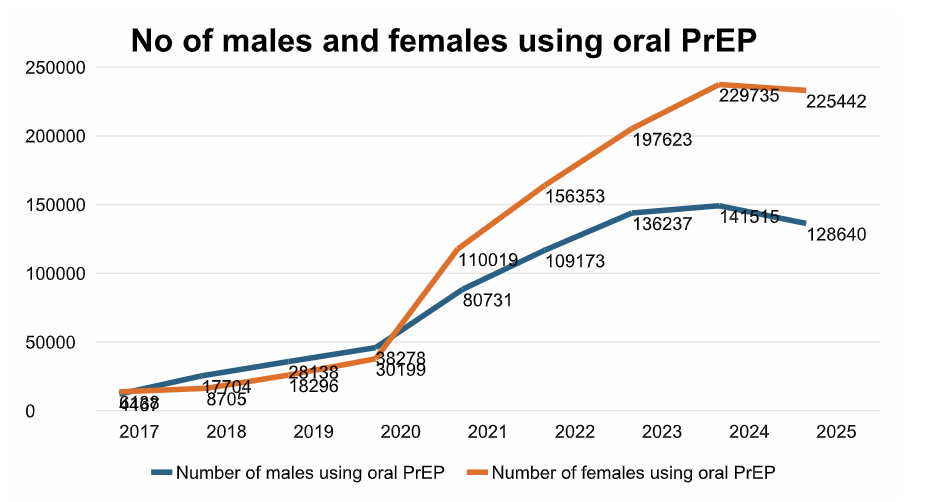
Graph by Spotlight. Data courtesy of the Thembisa model.

Finger pointing and lack of accountability

Seven months after the Supreme Court of Appeal ruled that the SAPC could implement PIMART and the SAPC promised to move rapidly in implementing PIMART, pharmacists have still not been invited to apply for permits and no PIMART permits have yet been issued to pharmacists.

When asked why the programme remains unimplemented, the SAPC pointed to the Southern African HIV Clinicians Society’s (SAHCS) PIMART training course as the cause of the delay.

SAHCS is the only entity in the country providing PIMART training to pharmacists. In October 2025, Mokoena said several groups had expressed interest in becoming accredited to provide PIMART training. However, on 14 May 2026, Tlala told Spotlight: “While we have invited existing providers of pharmacy education in South Africa to offer (the course), the South African Pharmacy Council is yet to receive applications for the accreditation of the PIMART supplementary training course.”

He added: “Currently, the Southern African HIV Clinicians Society are the only approved provider for the PIMART short course.”

So, what’s going on with SAHCS’ PIMART training?

PIMART used to be on a very different timeline before it got tangled up in the court processes that led to the October 2025 SCA judgment. Back in July 2021, Spotlight reported that the launch of PIMART was imminent, and indeed, that was roughly the timeline the SAHCS training had been working toward.

In fact, the SAHCS has offered a PIMART training course for pharmacists that want to provide PIMART services since 2019. Professor Natalie Shellack, chairperson of the SAPC Education Committee, said in October 2025 that this course was developed jointly by SAHCS and SAPC.

Over a thousand pharmacists have completed SAHCS’s original PIMART training course as continuous professional development (CPD) training. But after the October 2025 SCA ruling, Lizeth Kruger, Dischem’s Clinical Executive, told Spotlight that due to the time lapse between the initial training and court ruling, Dischem pharmacists “will need to do a refresher course to ensure compliance and up-to-date knowledge”.

While SAHCS’s PIMART course has not yet been accredited by the SAPC as a PIMART course, it is accredited as a CPD course for pharmacists. Tlala told Spotlight in May that it has not been accredited as a PIMART course because of an identified “gap” in the course.

“The gap identified between the short course and the approved qualification standard meant that the approved provider of the short course, the Southern African HIV Clinicians Society, had to conduct a gap analysis and develop a bridging course to enable pharmacists trained in the short course to access the full PIMART scope of services,” said Tlala.

In response to questions about the “gap” in their training course identified by the SAPC, SAHCS’s CEO Dr Fiona Storie told Spotlight on 19 May: “SAHCS has completed a full review and update of the PIMART training course in line with the requirements for accreditation as a supplementary training course (i.e. not just a CPD accredited course).”

“As PIMART training was originally provided from 2019, there is a need for pharmacists to undergo refresher training since the field of HIV medicine is evolving and clinical recommendations change over time,” said Storie. She added: “SAHCS’ recommendation is that pharmacists undertake the newly updated PIMART training course as either a refresher/bridging course or, if not previously trained, as a new course.”

“SAHCS is engaging with SAPC to finalise the accreditation of the updated PIMART course as a refresher course and a new supplementary training course to make it available as soon as possible,” Storie said.

Limiting PIMART’s scope

Tlala told Spotlight that because of the “gap” in SAHCS’s training course, the SAPC has asked the Director-General of Health to grant limited scope PIMART permits.

“The Director-General: Health has been requested to issue a limited scope permit granting PIMART-trained pharmacists’ access to those services fully addressed in the short course previously delivered by the South African HIV Clinicians Society,” he said.

The health department confirmed to Spotlight that this request was received on 23 April 2026.

Neither the SAPC nor the Department of Health responded to Spotlight’s requests for clarification on which PIMART services the SAPC had proposed for inclusion in the limited-scope permits.

Angela Tembo, director of pharmacy health at the research centre Ezintsha, told Spotlight that she understands that the limited scope permits that the SAPC has requested the Director-General of Health to grant “will be limited to HIV prevention (PrEP and PEP) and not treatment”.

“Our understanding is that the delays [in implementing PIMART] relate to ongoing discussions around training requirements, accreditation processes, and the practical implementation pathway following the SCA ruling,” she added.

Tlala said as soon as the Director-General of Health approves the limited-scope permits, the SAPC will publicly communicate the launch of the PIMART programme and the services that may be accessed under such a permit.

“The full PIMART scope of services will only be available once the Southern African HIV Clinicians Society has finalised and submitted a bridging course following gap analysis or, alternatively, once another training provider is accredited to provide the PIMART Supplementary Training course,” he added.

Republished from Sptolight under a Creative Commons licence.

Read the original article.
Leucovorin Prescriptions in US for Children with Autism Surged After Public Attention

National study found use of the drug rose sharply following major media coverage and later White House promotion, despite limited large-scale evidence for autism treatment

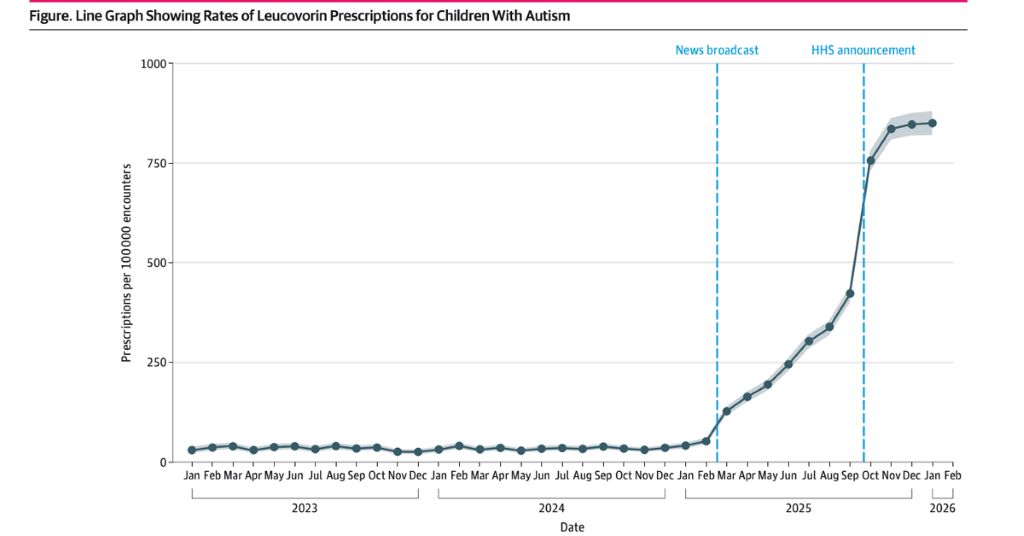
Leucovorin prescriptions for children with autism rose more than 2000% by late 2025. Courtesy of UC San Diego Health Sciences.

Researchers from the University of California San Diego found that prescriptions for leucovorin, a drug sometimes used off-label for autism spectrum disorder (ASD), rose sharply among children after widespread media attention and public statements from White House officials. The study, published May 18, 2026 in JAMA Network Open, analysed national electronic health record data and found prescribing rates increased more than 2000% compared with prior years.

“Families of children with autism are often searching for therapies that might improve communication and quality of life, especially when treatment options are limited,” said Joshua Rothman, MD, clinical assistant professor of pediatrics at the UC San Diego School of Medicine and first author of the study. “What this study shows is how quickly information shared through news coverage, social media and public figures can influence real-world prescribing patterns, even before large clinical trials establish whether a treatment is truly safe and effective for broad use.”

Leucovorin, also known as folinic acid, is a biologically active form of folic acid. Small clinical trials have suggested that some children with autism and folate-related deficiencies may experience improvements in verbal communication after taking the medication. However, researchers note that large-scale studies confirming the drug’s effectiveness and long-term safety for children with ASD have not yet been completed.

To better understand prescribing trends, the researchers analysed records from the Epic Cosmos database, which includes more than 300 million patient records from over 1800 hospitals and 41 500 clinics across all 50 states and Washington, D.C. The study focused on 838 801 children with autism who accounted for more than 11.9 million outpatient encounters between January 2023 and January 2026.

For roughly two years, leucovorin prescribing rates remained relatively stable, averaging about 34 prescriptions per 100 000 outpatient encounters among children with autism. Rates then began climbing steadily in early 2025 before surging later that year. By August 2025, prescribing rates had risen to 335 prescriptions per 100 000 encounters. In November 2025, rates climbed again to more than 835 prescriptions per 100,000 encounters.

The researchers observed that the initial rise in prescribing coincided with a February 2025 national television news segment featuring a family who reported dramatic language improvements in their child after treatment with leucovorin. Interest in the medication expanded further after White House officials publicly promoted leucovorin in September 2025 as part of broader autism-related initiatives.

“Families of children with autism are often searching for therapies that might improve communication and quality of life, especially when treatment options are limited. What this study shows is how quickly information shared through news coverage, social media and public figures can influence real-world prescribing patterns, even before large clinical trials establish whether a treatment is truly safe and effective for broad use.”

— Joshua Rothman, MD, clinical assistant professor of paediatrics at the UC San Diego School of Medicine and first author of the study

“The timing was striking,” Rothman said. “The increases began after a widely viewed media story and accelerated again after federal officials publicly discussed the medication. It highlights how rapidly clinical practice can shift when a treatment captures public attention.”

The study does not determine whether leucovorin improves symptoms of autism, nor does it evaluate patient outcomes after treatment. Researchers also cautioned that prescriptions recorded in the database could not always be linked to a confirmed medical indication.

Still, the authors say the rapid increase in use raises important questions for clinicians, policymakers and families. In March 2026, the US Food and Drug Administration approved leucovorin for cerebral folate transport deficiency, an ultra-rare genetic neurological disease associated with specific genetic changes, but the drug was not approved for autism spectrum disorder.

Researchers say the findings underscore the need for continued monitoring of prescribing trends and for larger randomised clinical trials evaluating whether leucovorin is beneficial for specific groups of children with autism.

“We now have a real-world example of how public attention can accelerate adoption of a therapy before the evidence fully catches up,” Rothman said. “The next step is making sure we generate the rigorous data needed to help families and clinicians make informed decisions.”

Read the full study: Rates of Leucovorin Prescriptions for Children With Autism

Source: University of California – San Diego

Most Anticoagulant Dosing Problems Emerge after Initial Prescription

Photo by Towfiqu Barbhuiya on Unsplash

Direct oral anticoagulant (DOACs), such as rivaroxaban and apixaban, are under- or over-prescribed in up to one in eight patents, finds a new study. These prescribing issues can have life threatening consequences, and they most often occur after a provider writes the initial prescription, according to a Michigan Medicine-led study in Thrombosis and Haemostasis

“Direct oral anticoagulants may be viewed as simpler to manage than traditional blood thinners, like warfarin, but our results highlight why providers need to be consistently monitoring anticoagulant medications before a patient experiences thrombotic or bleeding harms,” said Geoffrey Barnes, MD, MSc, senior author and associate professor of cardiology-internal medicine at U-M Medical School.

At hospitals across Michigan, off-label dosing of DOACs was relatively common among patients being treated for atrial fibrillation and venous thromboembolism, when blood clots form in the veins. 

Researchers evaluated five years of prescribing data from 2018–2022 through the Michigan Anticoagulant Improvement Initiative, a statewide quality improvement collaborative funded by Blue Cross Blue Shield and Blue Care Network of Michigan. 

Nearly 70% of the alerts to off-label dosing occurred during a follow up visit compared to the time of the initial prescription, according to the study results  

When prescribers were contacted about the dosing issue, they made changes three-quarters of the time. 

However, only 18% of dosing alerts resulted in contact to a prescriber. 

“While many clinical decision support tools are designed to ensure accurate medication dosing at the time of an initial prescription, few address the need for ongoing monitoring,” said first author Grace C. Herron, a fourth-year student at U-M Medical School. 

“Any health system that aims to improve safe and effective DOAC prescribing must address the ongoing prescribing period which can last months to years.”

Direct oral anticoagulants became available in 2010 and quickly gained popularity because, unlike conventional blood thinners, they do not require routine monitoring to test their effectiveness. 

However, these medications have their own complicated dosing schemes that can vary based on factors such as kidney function and select interactions between drugs. 

“The hospital systems in the Michigan Anticoagulation Quality Improvement Initiative are leading national efforts to develop, implement and test anticoagulation stewardship teams that ensure patients are always receiving the safest and most appropriate blood thinner possible,” Barnes said. 

“The nurses and pharmacists on these teams play a critical role in helping to monitor for any prescription issue that might develop, even months or years after a patient starts on a blood thinner medication.”

Source: University of Michigan

Deprescribing Efforts Shows that PPI Risks are Less than Expected

Photo by Towfiqu Barbhuiya on Unsplash

Whether it’s costs, safety risks or “pill fatigue” they’re trying to reduce, many health systems and clinics have started working on ways to encourage deprescribing of medications that patients may not need. Now, a new study published in the BMJ shows the potential promise, and pitfalls, of a massive effort to reduce overuse of proton pump inhibitors (PPIs), widely prescribed for heartburn.

The findings also reveal that some of the feared risks from PPIs may be overblown.

The U.S. study tracks the impact of an intervention that imposed limits on PPI prescription size and refills for patients without a documented reason to be on the medication, discontinued old prescriptions, and provided education to patients and clinicians on alternatives.

The effort was carried out in one region of the Veterans Health Administration system, called VISN 17, and involved a quarter of a million patients, making it one of the largest ever studies on deprescribing.

Key findings

In all, the intervention led to a massive reduction in PPI use: a nearly 30% reduction in prescriptions of PPIs compared to other VA regions.

But the drive to reduce potentially unnecessary PPI use had one unintended consequence: a drop in prescribing to veterans who actually have an ongoing need to take PPIs because their other medicines carry a high risk of gastrointestinal bleeding. Strong evidence shows that PPIs are effective for preventing gastrointestinal bleeding and they are recommended in clinical guidelines.

Reassuringly, no matter the reason for taking PPIs, the deprescribing effort didn’t lead to increases in health care visits with gastrointestinal diagnoses. Nor did it lead to increases in gastrointestinal bleeding in patients at high risk, which suggests that the deprescribing initiative itself was safe.

Interestingly, the rate of purported negative PPI effects, such as kidney disease, stroke, heart attack or pneumonia, didn’t go down in VISN17 relative to the other regions. Hip fractures, another risk linked with PPIs in past studies, only went down by a small percentage.

This supports evidence from other high-quality studies that suggest PPIs may be a marker of patients at risk for certain adverse outcomes, but that the drugs are unlikely to be the cause.

For this reason, the main benefits to deprescribing PPIs have more to do with cost and hassle of taking more pills than clinical risk reduction.

More about the study

The new VA-funded study uses data from multiple years before and after VISN 17 implemented its PPI deprescribing program for most veterans living in Texas, and parts of New Mexico and Oklahoma.

It was led by a multi-institutional team that includes investigators from University of Michigan and the VA Center for Clinical Management Research (CCMR) in Ann Arbor; the University of Pennsylvania and the VA Center for Health Equity Research and Promotion (CHERP) in Philadelphia; and the Yale School of Medicine and VA Center for Pain Research, Informatics, Multi-morbidities, and Education (PRIME).

“This intervention worked so well because it was involuntary to some degree – refills could no longer be on autopilot for patients without a clear indication for the medication,” says Jacob Kurlander, MD, MS, first author of the study and a gastroenterologist at Michigan Medicine, U-M’s academic medical center, and the Lieutenant Colonel Charles S. Kettles VA Ann Arbor Medical Center. “At the same time, what we saw is that is that patients who benefit from PPIs for bleeding prevention – which is sometimes overlooked by doctors – got swept up in this effort, too.”

This signals that deprescribing efforts need to take even more care to ensure providers don’t allow a patient who has a need for the drug to inadvertently go off it, Kurlander said.

“Our findings also suggest that PPIs may not be as harmful as some have feared,” he adds.

Before the VISN 17 program started, about 26% of veterans across the country who got their primary care from a VA provider were prescribed a PPI in a six-month period.

By the end of the study period in 2019, only about 15% of veterans in VISN 17 had a PPI prescription, compared with about 22% of those in the other regions.

This means PPI prescribing dropped by 30% within VISN 17, and that there was more than a 7% absolute reduction in PPI use between VISN 17 and other regions by the end of the study period.

The researchers even connected veterans’ VA records with their Medicare data in case they received care outside the VA, and also used information from death certificates to look for causes of cardiovascular-related death. There were no differences between VISN 17 and the other regions.