Author: ModernMedia

Airway Immune Response Kicks out Virus-infected Cells
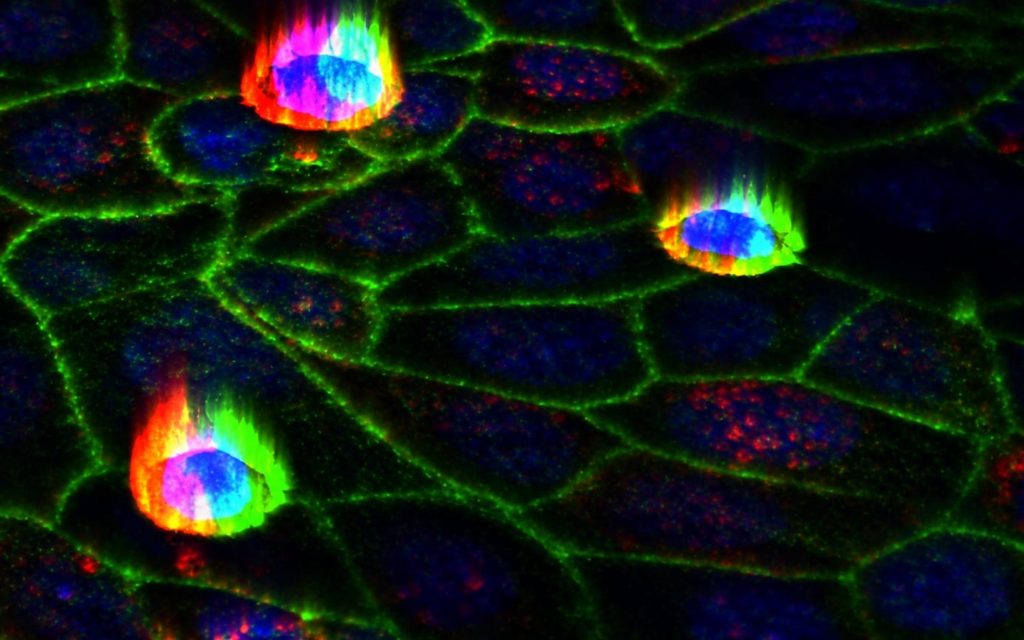
3D reconstruction of rhinovirus-infected human airway epithelial cells. Virus-infected cells (multicoloured) can be seen protruding from the epithelial layer during cell extrusion. Credit: Faith Fore. An AI-assisted editing tool was used to sharpen this image.

The epithelium, a layer of cells that forms a protective barrier between the body and the outside world, was the first organised tissue to evolve. Epithelial cells lining our airways are mainly seen as a structural barrier, but cell biologist Jody Rosenblatt, who runs a lab at the Crick and King’s College London, believes their evolutionary history suggests they’re playing a much more active role in infections.

“The airway lining is the body’s first physical barrier against inhaled threats like viruses,” says Jody. “It would make sense for it to take direct action.”

To investigate this, Jody’s team studied rhinoviruses, which are the leading cause of the common cold. They usually cause mild illness, but they can cause more serious respiratory disease in young children, older people, people with weakened immune systems and those with chronic lung conditions such as asthma or COPD.

Their new study, published today in Science Advances, shows that airway cells respond to rhinovirus infection by physically pushing infected cells out of the tissue, in a process the researchers have named ‘virus-induced cell extrusion’ or ‘VICE’.

As first author and Postdoctoral Research Fellow Faith Fore explains, “We studied rhinovirus infection in human epithelial cells grown in the lab, and we observed that when the cells were able to work together as a healthy layer, they could remove infected cells and limit infection within the tissue.

“But when we experimentally disrupted the barrier by breaking down junctions between epithelial cells, more virus particles built up in the epithelial layer. We also observed virus-induced cell extrusion in mouse lung tissue, supporting the relevance of the mechanism in a more complex tissue environment.”

The researchers also observed that VICE happens in two distinct waves. The first begins rapidly, before the virus has fully entered the cell, involving the cell’s ability to sense mechanical changes, while a second wave occurs later, triggered by the virus replicating inside the cell, leading to cell death. “These two waves allow the epithelial cells to kick into action straight away, without the need for signals from immune cells that have recognised the virus,” says Jody.

A ‘double-edged defence’

This early defence mechanism helps remove most infected cells from the airway lining within 24 hours, maintaining the integrity of the barrier. But, there’s a downside. “The expelled cells remain alive and infectious, potentially allowing the virus to reach new cells,” explains Faith. The team confirmed this by adding extruded airway cells to healthy cells in a dish, which subsequently were infected with the virus after just six hours.

Faith continues, “The airway gets rid of the infected cell, but it doesn’t destroy the virus. Because the expelled cells can still infect new cells, it creates a double-edged defence. Extrusion helps the tissue clear the immediate infection, but the expelled cells remain a potential source of viral spread.”

An overlooked mechanism

Jody believes that this mechanism should be taken into account when assessing responses to infections. It may have been overlooked because some commonly used laboratory models do not recreate the cell-to-cell junctions that the team has now shown are required for VICE to occur. 

“Understanding these fundamental tissue defence mechanisms could change how we think about the earliest stages of viral infection.”

Jody Rosenblatt
Principal Group Leader

“Our study suggests that cells lining our tissues possess evolutionarily ancient mechanisms for protecting themselves,” she says. “Understanding these fundamental tissue defence mechanisms could change how we think about the earliest stages of viral infection.”

Faith agrees, “We typically think of the cells lining our airways as a simple physical barrier, leaving the heavy lifting of clearing infections to the immune system. What we found is that the epithelium itself actively fights back by physically throwing out infected cells.” 

The researchers are now planning to investigate how widespread this defence mechanism is across respiratory viruses, what determines whether extrusion protects the airway or promotes viral spread, and how viruses might evade or exploit the response.

Scientists Discover New Gene Boosting the Resistance of C. Diff

Credit: Desirel Ng

Antibiotic resistance is supercharging dangerous gut bacteria to withstand even hospital-grade disinfectants intended to kill them.

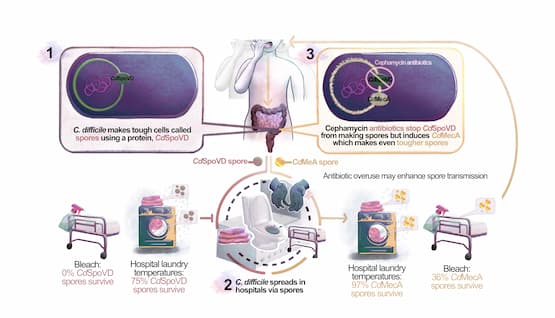
New research from Monash University, published in Nature Communications, reveals the bacteria Clostridioides difficile has picked up a key gene that gives its dormant spores a free pass against antibiotics and cleaning products.

Its spores act like plant seeds, waiting patiently to activate and spread in the right environment, like the human gut.

This is particularly dangerous given this bacterium is commonly found in hospitals and causes diarrhea that can be deadly for already unwell patients.

Lead researcher Professor Dena Lyras, Interim Dean of the Monash Sub-Faculty of Biomedical and Psychological Sciences and Director of Monash Biomedicine Discovery Institute, said the new research is a crucial step forward in what is a dynamic race against antimicrobial resistance.

“Antibiotics are helping bacteria evolve in ways we hadn’t anticipated,” Professor Lyras said.

“Our new research shows just how sophisticated their evolution is, with the potential to have disastrous impacts on humans.

“They are not only better at building tolerance to drugs we develop, but making new versions of themselves that can survive better in particular environments, like surfaces where cleaning products are commonly applied.”

Antimicrobial resistance occurs when bacteria stop responding to antibiotics leading to infections that can be hard or impossible to treat.

The World Health Organization lists this phenomenon as a major global health threat and estimates that it contributes to millions of deaths every year.

This new research, the first to uncover a link between antibiotic resistance and bacterial spores, shows that when Clostridioides difficile picks up this antibiotic resistance gene, the antibiotic block no longer works.

Instead, the bacteria is able to make even tougher spores that can survive hospital grade cleaning products and high laundry temperatures.

The antibiotic resistance gene produces a protein that replaces a key spore-building protein, allowing the bacteria to keep making spores.

First author Dr Yogitha Srikhanta, a Post-Doctoral Research Fellow at Monash Biomedicine Discovery Institute, said targeting the spores could be the key to unlocking a solution.

“Spore survival matters because spores are the main way these pathogens spread between people and through hospitals, homes, and the environment,” Dr Srikhanta said.

“A resistance gene that changes how spores are built could make infections harder to control and help resistant strains spread more easily.

“We are now investigating ways to deal with this new type of antibiotic resistance.”

Read the research paper: http://doi.org/10.1038/s41467-026-75594-5

Source: Monash University

Genetic Analysis Reveals Potential Benefit of Aspirin for Reducing Dementia Risk

Photo by Kampus Production

Low-dose aspirin was associated with a 70 per cent lower risk of dementia among older people with a particular genetic profile, a new Monash University analysis has found, raising the possibility of a more personalised approach to dementia prevention.

The research, published in Alzheimer’s & Dementia: The Journal of the Alzheimer’s Association, analysed genetic data from the landmark ASPREE Trial (Aspirin in Reducing Events in the Elderly), screening genetic scores in more than 13 500 individuals to investigate whether a person’s genes influenced aspirin’s effect on reducing dementia risk.

The strongest finding was linked to genetics that influence platelet count.

Researchers ranked participants according to their platelet-related genetic score.

Among participants in the highest 20 per cent for a platelet count genetic score, only 1 per cent of those taking aspirin developed dementia, compared with 3.3 per cent of those receiving placebo.

This represents about a 70 per cent lower relative risk associated with aspirin use.

However, aspirin also increased the risk of serious bleeding in this group.

Major bleeding occurred in 4.4 per cent of those taking aspirin, compared with 2.1 per cent receiving placebo.

Lead author Dr Peter Fransquet, Research Fellow at Monash’s School of Public Health and Preventive Medicine, said the findings could open the door to a more personalised approach to dementia prevention.

“Previous trials found aspirin didn’t prevent dementia when everyone was considered together,” Dr Fransquet said.

“Our findings suggest there may be more to the story.

“In people with this particular genetic profile, we saw substantially fewer cases of dementia among those taking aspirin.

“It raises the possibility that genetics could one day help us identify who may benefit from a preventive treatment, rather than taking a one-size-fits-all approach.”

Dementia Australia estimates 446 500 Australians are living with dementia in 2026.

It projects this will rise to more than one million by 2065.

While scientists have previously identified a link between platelet activation and aggregation and dementia, the role of a person’s overall platelet count has been less clear.

“What’s particularly interesting is that the signal wasn’t linked to the established genetic risk factors for Alzheimer’s disease and dementia,” Dr Fransquet said.

“Instead, it’s pointing us towards platelet biology and gives us a new avenue to investigate.

“We now need to confirm the finding in other studies and ultimately test it in a trial designed specifically for people with this genetic profile.

“People shouldn’t start taking aspirin to prevent dementia on the basis of this study without consulting with their doctor, particularly given the increased risk of serious bleeding.

“If it holds up, the fact that aspirin is already cheap and widely available could make personalised dementia prevention a real possibility.”

Source: Monash University

REM and Deep Sleep, not Just Total Sleep Time, Associated with Disease Risk

Large study used wrist-worn accelerometer data to map associations between real-world sleep patterns and the incidence of more than 1000 health conditions

Photo by Cottonbro on Pexels

Greater amounts of REM and deep sleep were associated with lower risks of dozens of diseases, and less than 5 hours of total sleep was associated with high risks of disease, according to a new study published September 17th in the open access journal PLOS Medicine by Shengzhi Sun of Capital Medical University, China, and colleagues.

There remains limited understanding of how sleep stages and other real-world sleep patterns relate to health outcomes. In part, that is because self-reported sleep measures often show poor correlation with objective assessments, making it difficult to capture real-world sleep patterns.

In the new study, researchers analysed data from 95 559 UK Biobank participants who wore wrist accelerometers for seven consecutive days and nights. The researchers used a deep-learning algorithm to calculate sleep stages (REM, deep, and light sleep), total sleep duration, wakefulness after sleep onset, and night-to-night sleep irregularity. Participants were followed for a median of 8.9 years, and health records were available to test for associations with more than 1000 disease outcomes.

Greater REM sleep (per interquartile range, 47.6 minutes) was associated with a lower risk of 83 diseases, including heart failure (hazard ratio 0.74), dementia (hazard ratio 0.54), and Parkinson’s disease (hazard ratio 0.20), while greater deep sleep was linked to lower risk of 7 conditions, including type 2 diabetes and major depressive disorder. Greater sleep irregularity and wakefulness after sleep onset were each linked to higher risk of several conditions, including anxiety and substance use disorders. Total sleep duration showed a non-linear relationship with disease risk for many conditions, with the lowest risk concentrated in a 6-to-8-hour window; people sleeping less than 5 hours faced the most elevated clinical vulnerability, with an increased risk of 37 conditions. However, as an observational study, this research cannot establish that sleep patterns directly cause disease risk.

“The findings provide additional evidence supporting the role of a 6-8 hours’ sleep duration as a health safeguard for middle-aged and older adults, likely attributable to more favourable distributions of sleep stages,” the authors say. “Maintaining a sleep duration of 6-8 hours can effectively reduce the risk of multiple diseases, providing new insights for health promotion and preventive practice.”

The authors add, “Phenome-wide association analysis identified 156 significant associations between sleep patterns and incident diseases after Bonferroni correction.”

“Sleep duration exhibited significant non-linear associations with 86 disease phenotypes, with the minimum-risk duration for the majority of these conditions (69 phenotypes) precisely concentrated within a 6-8 hour window.”

Provided by PLOS

Rare Pregnancy Infections Linked to Autism

Photo by Anna Hecker on Unsplash

Infections that, in rare cases, can be transmitted from the pregnant woman to the foetus are linked to an increased risk of autism and intellectual disability in the child. This is shown by a study from the Karolinska Institute published in JAMA Pediatrics.

”It is important to emphasise that it is unusual for these infections to be transmitted from mother to child. They account for a very small proportion of all cases of autism in the population, but for those children who are actually affected, we see a clearly elevated risk of both autism and intellectual disability,” says Reneé Gardner, a researcher at the Department of Global Public Health at Karolinska Institutet, who contributed to the study. 

The researchers have investigated how so-called TORCH infections affect children’s later development. TORCH is a group of infections that can be transmitted from a pregnant woman to the foetus and includes, amongst others, cytomegalovirus, rubella, toxoplasma and herpesvirus. Unlike many common infections, these pathogens can sometimes cross the placenta and directly infect the foetus.

Were followed for three decades

The study included 3.7 million people born in Sweden between 1987 and 2021. Of these, 975 had been diagnosed with a congenital TORCH infection. The researchers followed the participants for up to three decades to investigate whether the infections were linked to later diagnoses and educational outcomes.

The results show that children with a congenital TORCH infection were approximately three times more likely to be diagnosed with autism later in life and more than seven times more likely to be diagnosed with an intellectual disability compared with children without the infection. The risk of severe to profound intellectual disability was up to 30 times higher.

However, despite the high relative risks, the significance of these infections at a population level is limited, as they are rare in newborns. The researchers estimate that congenital TORCH infections may be linked to approximately 1.2 per cent of all cases of severe intellectual disability, whilst around 0.034 per cent of all cases of autism in Sweden can be explained by these infections. They also estimate that approximately one in five children born with a TORCH infection may later develop autism.

”It has long been known that these infections can cause intellectual disability. However, the link to autism has been less clear in previous research, which has often been based on small patient groups. This study is the largest to date in this field and is based on national register data covering almost the entire population of Sweden,” says Hugo Sjöqvist, a PhD student and lead author of the study.

To better determine whether the associations were due to the infections themselves, the researchers also compared children who had had a TORCH infection with their own siblings who had not had the infection. The results were similar in the sibling comparisons, which suggests that the associations cannot be explained solely by factors shared within families.

The researchers found no clear links between TORCH infections and other neuropsychiatric conditions, such as ADHD or obsessive-compulsive disorder. However, an impact on academic performance was observed. Even children who had not been diagnosed with autism or an intellectual disability had, on average, lower grades than their peers without the infection.

“Our results suggest that certain infections transmitted to the foetus during pregnancy may have long-term effects on brain development. Although these congenital infections are rare, some of them can be prevented, which makes them important from a public health perspective,” says Reneé Gardner.

The researchers particularly emphasise the importance of preventive measures. For example, the study points out that rubella has virtually disappeared in Sweden following the introduction of national vaccination programmes. According to the researchers, the results underline the importance of maintaining vaccination programmes and other strategies to prevent infections that can be transmitted from the pregnant woman to the foetus.

The research was funded by the Swedish Research Council. Co-author David Mataix-Cols states that he has received author’s fees from UpToDate Inc and that he is a partner in Scandinavian E-Health AB, which is unrelated to the publication.

Publication

”Congenital TORCH infections and neurodevelopmental outcomes: A population- and sibling-based cohort study”, Hugo Sjöqvist, Christina Dalman, David Mataix-Cols, Reneé M Gardner, Håkan Karlsson. JAMA Pediatrics, online 21 September 2026, doi: 10.1001/jamapediatrics.2026.4229.

Facts on how TORCH infections can be prevented

• T = Toxoplasma: Avoid raw or undercooked meat, wash vegetables, and take care when handling cat faeces. 

• O = Other (including infections such as syphilis): Screening during pregnancy and antibiotic treatment. 

• R = Rubella: Vaccination before pregnancy (MMR vaccine). 

• C = Cytomegalovirus (CMV): Good hand hygiene; avoid contact with young children’s saliva and urine. 

• H = Herpes simplex (HSV): Identification and treatment of infection during pregnancy; sometimes a caesarean section is performed in the event of active genital herpes prior to delivery.

Source: Karolinska Institutet

Major Trial Examines Artificial Sweeteners in Soft Drinks

Photo by Breakingpic on Pexels

Researchers at the University of Liverpool have conducted the longest and most comprehensive randomised controlled trial on non-nutritive sweetened (NNS) soft drinks.

Non-nutritive sweeteners are low- or no-calorie alternatives to sugar used to sweeten foods and drinks. The 104-week clinical trial shows NNS beverages ie, diet beverages are equivalent to water for long term weight management.

Professor Jo Harrold, Dean of Psychology at the University of Liverpool alongside Professor Jason Halford, Professor, Biological Psychology & Health Behaviours at the University of Leeds (formerly of the University of Liverpool) conducted the peer-reviewed research funded by the American Beverage Association. The research team was independent of the funder and had full control over the analysis and reporting of their findings.

The major new study was published in the British Journal of Nutrition and provides long-term clinical evidence that NNS beverages – specifically those containing aspartame, acesulfame potassium (acesulfame‑K), and sucralose – are equivalent to water in supporting weight loss and long‑term weight maintenance.

The SWITCH trial followed 493 adults with overweight or obesity through a structured behavioural weight management programme. Participants were randomised to consume either water or commercially available diet beverages, daily, with sweeteners provided at levels well within established European Food Safety Authority (EFSA) safety thresholds.

Overall, the results do not support concerns that NNS beverages disrupt appetite regulation or have long term metabolic harm.

Key outcomes include:

  • Equivalent weight loss between NNS beverages and water at 104 weeks (−4.8 kg vs −3.7 kg; nonsignificant difference).
  • Sustained weight reduction over two years in both groups, even during the final unassisted year.
  • Decrease in waist and hip circumference and improvement in body composition, and several metabolic biomarkers in both groups.
  • No clinically meaningful difference in effects such as blood pressure and cholesterol, associated with long-term consumption of either aspartame, acesulfame‑K, or sucralose or water.
  • Sugar intake decreased in both groups, with slightly greater reductions in the NNS group.

Importantly, the findings directly address recent World Health Organization (WHO) guidance, which advised against using non-sugar sweeteners for weight control due to uncertainty in observational studies. The SWITCH trial provides long-duration, randomised controlled evidence which can be used to inform global guidelines.

Professor Joanne Harrold, said: “The University of Liverpool is one of the UK’s leading research-intensive higher education institutions, with a key focus on public health. These latest findings show that concerns about sweeteners disrupting appetite or causing weight gain are not supported when tested in a rigorous, long-term randomised trial. We hope this evidence informs future WHO guidance and public health policy.

The effectS of non-nutritive sWeetened beverages on appetITe during aCtive weigHt loss (SWITCH) trial was conceived and designed by researchers in the context of the need to reduce sugar in the diet and to address questions about the potential effects on appetite regulation of using sweeteners as a substitute. This latest published work continues from previously published evidence in the International Journal of Obesity in 2023.

Professor Jason Halford, University of Leeds and University of Liverpool, concluded: “This study provides the long‑term clinical evidence that has been missing from international discussions. For people trying to manage their weight, non‑nutritive sweetened beverages offer an effective alternative to sugar‑sweetened drinks – and perform equivalently to water over two years.”

Source: University of Liverpool

Blood Test Trends may Help Identify Patients at Increased Risk of Cancer

Among patients with unexplained weight loss, changes over time in routine blood test results were associated with overall and site-specific cancer diagnoses

Photo: Pixabay

Blood test trends alongside unexplained weight loss can improve triage for cancer testing, according to a study by Brian Nicholson and colleagues from the University of Oxford, UK, published September 17th in the open access journal PLOS Medicine.

Abnormal blood test results, such as low haemoglobin or increased platelet counts, can provide clues about a patient’s risk of developing cancer. However, monitoring trends over repeat tests could provide further clues in some instances, by identifying cancer-related changes in blood test results that do not appear abnormal. Assessing patterns in blood test abnormalities and trends alongside unexplained weight loss could enhance cancer risk assessment and support earlier diagnosis.

In this study, researchers examined trends in blood test results among patients with unexplained weight loss, a common non-specific symptom associated with multiple cancer types. The goal was to determine whether trends in 26 commonly used blood tests in primary care could improve cancer risk stratification compared to abnormalities on single blood tests.

Among the more than 275 000 patients included in the study, nearly 14 000 were subsequently diagnosed with cancer within six months, allowing researchers to relate abnormalities on single tests and trends over repeat blood tests to cancer diagnosis. Overall, 23 blood test trends were associated with overall cancer risk. Several abnormalities were also associated with specific cancer types. After accounting for age and sex, several blood test trends were more discriminative for cancer diagnosis than individual abnormal test results. For example, trends in white blood count and neutrophils were linked to lung cancer while trends in red blood cell count, haematocrit, and platelet-to-lymphocyte ratio were associated with prostate cancer.

The findings suggest that monitoring changes in routine blood test results in patients with unexplained weight loss could identify patients in primary care who would benefit from additional cancer testing.

Author Brian Nicholson adds, “We show how blood test results are made more accurate for cancer by adding patient age and sex. This relatively simple calculation could easily be performed at the laboratory.”

Author Pradeep Virdee states, “In some instances, monitoring how a patient’s blood test results change over time could offer further value. We plan to assess how well blood test abnormalities and trends inform cancer risk in patients with other types of non-specific symptoms, such as fatigue and vomiting.”

Provided by PLOS

Sunflower Month’s Hope that Lasts: The Baby who Inspired a Donor

Photo by William Fortunato on Pexels

A chance encounter in a hospital waiting area led to a remarkable full-circle moment when a South African stem cell donor unknowingly saved the life of the very child who inspired her to join the registry.

In October 2022, Petro was walking into a hospital in Centurion for a routine check-up when she stopped to speak to a grandmother sitting near the entrance with a baby on her lap. The little girl, just a few months old, was receiving treatment for leukaemia. Petro went in for her appointment, went home, and could not stop thinking about her.

“That was quite a powerful meeting, realising that this was a really sick baby, and that her life depended on having a life-saving stem cell transplant,” she recalls. Within days, she had ordered a swab kit and joined the South African stem cell registry.

The little girl was Lydia.

Her family had first noticed something was wrong after noticing a yellow cast on her skin in a photograph taken with her older brother, something that nobody had registered in the day-to-day. At four months old, Lydia was diagnosed with Infant Acute Lymphoblastic Leukaemia and admitted to hospital the same day. Long blocks of chemotherapy followed, along with recurring infections her weakened immune system could no longer fight, and a week in intensive care with pneumonia.

“When Lydia was diagnosed, our whole world changed,” her mother, Estelle, remembers.

Her medical team had been clear from the start that a stem cell transplant offered the best chance of survival. Towards the end of 2022, the family received the news they had been hoping for: a donor match had been identified. Shortly before the scheduled transplant, the planned donation was unable to proceed.

“This broke my heart,” Estelle shares. “It felt like we were back at the beginning again, and that was painful.”

The search resumed with no guarantee it would end differently. Only 30% of patients needing a transplant find a compatible donor within their own family. For Lydia, that meant her chances depended on an unrelated donor somewhere in the world whose tissue type matched hers.

When the call came, Petro was nearing 50 and half expected to be told she no longer qualified. “I was actually quite happy and honoured, because I knew this is it,” she explains. “I knew there was a patient on the other side who really needed this as a life-saving measure.”

She describes the donation process as straightforward. “It was nothing more than a blood donation times two, basically. It’s a few hours out of your day.” 

Lydia was admitted for her transplant in February and spent nearly seven weeks in isolation with her mother. Gradually, signs of recovery emerged. She began eating again. She started to put on weight.

Months later, once the confidentiality period had lapsed, Petro joined a WhatsApp call with Lydia’s family. She began telling them why she had registered: the hospital in Centurion, the baby, and the grandmother at the entrance. As she spoke, she noticed the family starting to smile. The grandmother was on the call too.

“Lydia’s mother told me that they were that patient, they were that family,” she says. “I was absolutely flabbergasted. What are the odds of that happening?”

Her own family took it just as hard. “My mother cries every time we talk about Lydia,” Petro adds. “She remembers seeing her at the hospital when she was so tiny.”

Lydia is now four years old. She has caught up on developmental milestones she had missed and has not been readmitted since the transplant. “She will always have a special place in my heart,” Petro says. “She’s got her whole life in front of her.”

The cost behind every match 

None of it happens without a swab kit, and a swab kit is not free. Signing up costs the person registering nothing, but every entry carries a cost, most of it in the laboratory tissue typing that turns two cheek swabs into a searchable set of markers. This year, Sunflower Month is being marked under the theme Hope That Lasts, with every financial contribution helping to fund another registration through the laboratory and onto the registry, where a searching medical team can find it.

Held each September, the initiative dates back to 1999 and the founding of The Sunflower Fund, after two young South Africans, Darren Serebro and Chris Corlett, were diagnosed with leukaemia. Corlett painted a picture during treatment and called it Sunflowers of Hope. Following their passing, a vision to grow the registry so patients would have a better chance of finding a match. More than two decades later, Lydia became one of those patients, diagnosed with the same illness.

South Africans between the ages of 17 and 55 who are in good health can register as stem cell donors at no cost.

Petro has one message for anyone weighing it up. “Take that responsibility seriously and really commit. You can mean the difference between life and death for a patient.”

Palesa Mokomele, Head of Community Engagement and Communications at DKMS Africa, says the gap between a willing volunteer and a usable match is a financial one. “Every contribution puts another swab through the laboratory and another name on the registry. If you are eligible, order a kit. If you are not, fund one. And say something about it to the people you know, because Petro only registered because a stranger at a hospital told her what was happening. This year’s theme is a reminder that something you do today can make a difference years from now, perhaps for someone you have never even met.”

Underweight Patients Face 92% Increased Mortality Risk After Emergency General Surgery

Researchers analysing data from more than 334 000 patients find that underweight patients face the highest risk of death

Photo by Piron Guillaume on Unsplash

Underweight patients are more likely to die after emergency general surgery than patients who are normal weight or overweight, and patients who are both frail and underweight face an even higher risk of death and other adverse clinical outcomes, according to new research findings. The study drew on the American College of Surgeons National Surgical Quality Improvement Program (ACS NSQIP®) database, which covers more than 334 000 adults who had emergency general surgery between 2019 and 2024. 

The research will be presented at the American College of Surgeons (ACS) Clinical Congress 2026 in Washington, Sept. 26-29, where thousands of surgeons will convene to advance surgical quality, patient safety, and access to care. 

“Our study shows that patients who are both underweight and frail have the worst outcomes. We also saw that frailty reduces the positive impact of the obesity paradox – the finding that patients who are overweight, but not at the extremes of obesity, tend to have better outcomes. That protective effect is lost if a patient is frail,” said lead study author Ellen Cohn, MD, MPH, a third-year general surgery resident at the University of Chicago.  

“What we take away from this study is that risk can be mitigated. We can make real-world changes to body mass index (BMI), and physical therapy can reduce frailty. What is unique about our study is that we were able to look at the impact of BMI and frailty together,” she said. 

Using the ACS NSQIP database, researchers identified all adults, age 18 and older, in the U.S. who had emergency general surgery procedures between 2019 and 2024. ACS NSQIP is the leading nationally validated, risk-adjusted, outcomes-based program to measure and improve the quality of surgical care in hospitals. More than 600 hospitals participate in the ACS NSQIP adult program, which began enrolling private sector hospitals beginning in 2004.  

The ACS NSQIP data allowed researchers to evaluate the relationship between BMI and level of frailty on outcomes including death, hospital length of stay, and readmission rates 30 days after initial admission, as well as the interaction between BMI and frailty and their combined associated risk on these outcomes. Frailty was assessed on a scale with values from one to five, with one indicating patients who had one comorbidity such as diabetes or chronic obstructive pulmonary disease and five indicating patients who had five diseases and were severely frail.  

Study Results 

Among 334 278 patients included in the analysis, 37.6% were frail, more than one in three. 

After adjusting for clinical factors, underweight patients had the highest risk of death, with 92% increased odds compared with normal-weight, non-frail patients. In contrast, obese patients had lower odds of death than normal-weight patients: 43% lower at a BMI of 30.0–34.9 and 27% lower at 35.0–39.9. At a BMI of 40 or higher, there was no significant difference. 

Frailty alone was associated with 59% increased odds of death. 

Compared to patients who were normal weight and not frail, those who were both underweight and frail had the worst outcomes across all measures: 9.8% mortality, 15.8% readmission rates, an average length of stay of 8.2 days, and an 88.5% discharge-to-home rate. For comparison, non-frail patients had a discharge to home rate of 96.9% and normal weight patients 90.3%. 

Frailty reduced the protective effect of obesity on mortality. People who were both frail and obese faced 22% increased odds of death, whereas those who were obese but not frail remained 7% less likely to die after emergency general surgery. 

“While the focus of our study was on underweight and frail patients, we were surprised to find that obese patients did better,” said study co-author Justin S. Hatchimonji, MD, assistant professor of surgery in the section of trauma and acute care surgery at the University of Chicago.  

“I think recognizing the importance of not only underweight status, but also frailty, helps emergency general surgeons plan for postoperative outcomes and think about how to best manage these patients over the long term.” 

Dr. Cohn said the findings can be used to improve postoperative outcomes regardless of frailty scores.  

“Thinking about older patients, it’s important to focus on what we can affect: nutrition, making sure protein goals are met, bone health, and vitamins,” she said. “Keeping patients healthy that way can have a bigger impact on outcomes than the other comorbidities that make up the frailty score. We know that you can change underweight status and as a result get a better outcome.” 

A limitation of the study is that a large database study cannot prove cause and effect, only an association.

Source: American College of Surgeons

UP Researchers Say SA’s Genetic Diversity is Reshaping the Future of Medicine

Photo by Sangharsh Lohakare on Unsplash

Being part of a genetically diverse South Africa means recognising that our differences are not obstacles to be managed, but powerful lenses through which we can better understand health and disease. Professor Michael Pepper, Director of the Institute for Cellular and Molecular Medicine at the University of Pretoria, notes that South Africa is uniquely positioned to address this gap.

A patient arrives at a public clinic in Gauteng for diabetes treatment and responds well to standard medication. Her sister is treated for the same condition at a nearby facility, and despite identical diagnoses and treatments, their outcomes diverge sharply. In South Africa’s overstretched health system, such differences are common and point to a deeper issue: how biology is shaped by both genetic inheritance and experience.

South Africa’s diversity is often framed culturally and politically, but it is also biological. The population reflects some of the oldest human lineages, shaped by centuries of migration and admixture across African, European, Asian and other ancestries. This genetic variation is further shaped by unequal exposure to environmental and social factors, such as nutrition, infectious disease, pollution and access to healthcare, all of which influence health outcomes.

Much of modern biomedical knowledge is based on studies conducted in relatively genetically homogeneous populations in Europe and North America. While these have enabled major medical advances, findings do not always translate directly to South African contexts. Genetic risk variants and treatment responses observed in one population may differ in another, highlighting a gap between global knowledge and local reality.

“Our genetic diversity allows researchers to observe how the manifestation of diseases such as cancer, hypertension, diabetes and HIV is the result of multiple biological determinants, rather than a single one,” says Prof Pepper.

This has practical implications. South Africa faces a dual burden of infectious diseases like HIV and tuberculosis alongside rising non-communicable diseases such as cancer, cardiovascular disease and metabolic disorders. Many patients experience both, often compounded by socio-economic inequality. Understanding how genetics interacts with the environment (including infection) is essential for effective disease management.

At research centres such as the Institute for Cellular and Molecular Medicine, scientists are studying how genetic variation influences immune responses, cellular repair mechanisms and treatment outcomes.

“The aim is to advance precision medicine that works across diverse real-world populations, not just narrow genetic groups,” Prof Pepper says.

South Africa’s diversity also has global scientific value. Findings from its population can reveal disease mechanisms that remain hidden in more genetically uniform settings. In this way, local diversity becomes a source of international scientific insight and the common good.

Yet the impact of this research depends on inclusion. When diverse students, clinicians and researchers participate in science, the questions asked and interpretations made become more grounded in real-world contexts. This shapes not only what science discovers, but who it ultimately serves.

Why this research matters

South Africa’s healthcare system remains under strain, facing deep inequities and a growing burden of chronic disease. Yet within its population lies an underused scientific advantage: the ability to illuminate how disease truly behaves across human diversity. Recognising this does not simplify the country’s healthcare challenges, but it does offer a clearer lens through which to address them. In a system striving for equity, that perspective is not optional. It may be one of the most powerful tools we have. This research helps to address UN SDG 3: Good Health and Wellbeing.

This article first appeared in RE.SEARCH 15: Belonging. Read more here.