
Omega-3 and Low-dose Aspirin Similar to Antibiotics’ Effect Against Severe Periodontitis
Study shows that combining the two compounds with conventional treatment may be a promising alternative, reducing the need for antibiotics.
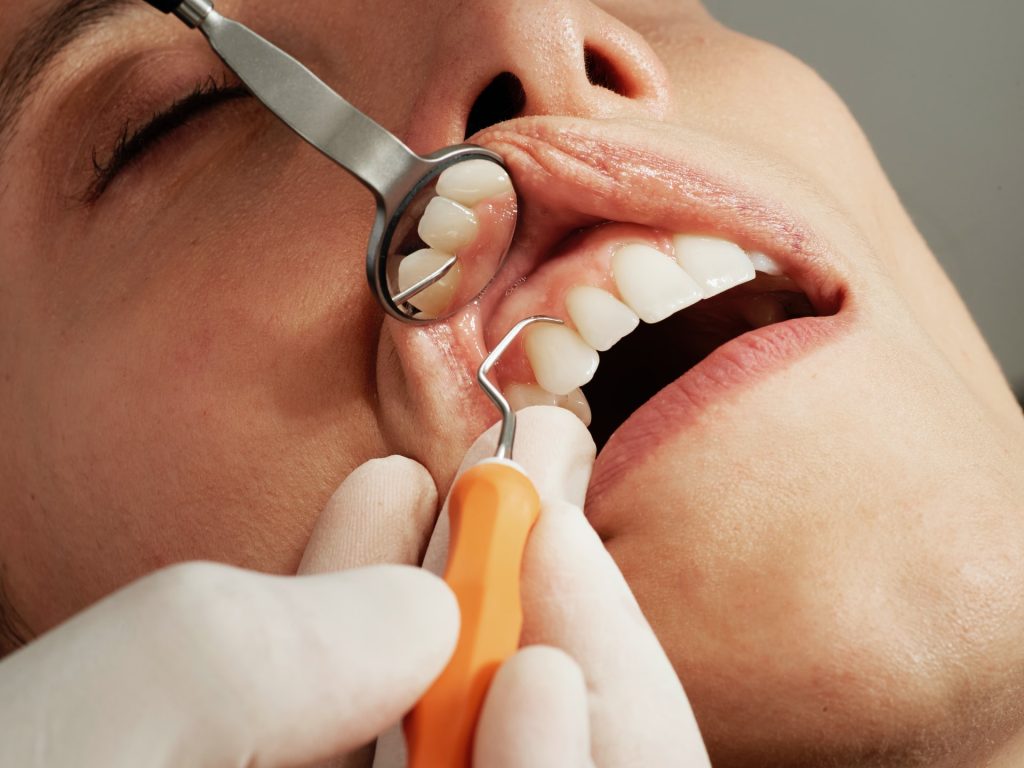
By Fernanda Bassette | Agência FAPESP – A combination of omega-3 and low-dose acetylsalicylic acid (ASA) produced results comparable to antibiotics in treating severe periodontitis. This conclusion is based on a study conducted by researchers affiliated with Albert Einstein Israelite Hospital, Guarulhos University (UNG), the University of Taubaté (UNITAU), and the Ribeirão Preto School of Dentistry at USP (FORP-USP) in Brazil, as well as Harvard University in the United States. The findings were published in May in the Journal of Periodontology and suggest a promising therapeutic alternative for some patients by reducing the need for antibiotics. These findings are particularly relevant in the context of growing global concern about bacterial resistance.
Supported by FAPESP (projects 20/05874-2 and 20/05875-9), the study followed 109 patients with advanced periodontitis over the course of one year. Advanced periodontitis is a chronic inflammatory disease caused by the accumulation of bacteria beneath the gums, affecting the tissues that support the teeth. If left untreated, it can lead to tooth mobility, bone loss, and even tooth loss.
“Patients with severe disease have very deep pockets, which act as reservoirs for bacteria associated with the disease. It’s a very challenging condition to treat,” says dental surgeon Nídia Cristina Castro dos Santos, the first author of the study and a professor and researcher at Einstein.
For the study, participants were randomly assigned to one of four groups. All underwent subgingival instrumentation – popularly known as scaling – which is considered the standard treatment for periodontitis. However, they received different complementary therapies.
The control group received placebos of the antibiotics, omega-3, and ASA in capsules identical to those used for the active treatments. A second group received a combination of the antibiotics metronidazole and amoxicillin, considered the therapy with the strongest scientific evidence for severe cases of the disease, administered three times a day for 14 days. The third group took three grams per day of omega-3, in addition to a daily dose of aspirin for six months. The fourth group received a combination of the two strategies simultaneously: antibiotics for two weeks and the omega-3 and ASA protocol for six months. Participants were reevaluated after three, six, and twelve months.
By the end of the follow-up period, about 58% of patients who were treated with antibiotics had met the researchers’ established clinical goal of having no more than four remaining deep periodontal pockets. Among those who received omega-3 and ASA, the percentage was virtually the same: 57.7%. In contrast, in the group that received only scaling and a placebo, the rate was 23.1%. Combining the two strategies, antibiotics and supplementation, didn’t provide any additional benefits.
“The use of antibiotics isn’t considered the gold standard of treatment. Although metronidazole and amoxicillin yield good results in the most severe cases, their use should be evaluated on a case-by-case basis due to risks related to bacterial resistance and possible adverse effects,” says Castro dos Santos.
These results reinforce a line of research that has been underway for some time. In a previous study also supported by FAPESP and published in the journal Scientific Reports, the researchers observed that omega-3 supplementation reduced inflammation and bone loss caused by periodontal disease in rats, especially when combined with physical exercise. Although the study was conducted in an animal model, it already indicated the nutrient’s potential in inflammatory processes related to oral health (read more at agencia.fapesp.br/54990).
According to Castro, omega-3 differs from traditional anti-inflammatory drugs in that it contributes to the production of molecules involved in the natural resolution of inflammation and tissue repair, rather than blocking certain inflammatory pathways. Low-dose ASA, on the other hand, was used because it enhances the formation of these mediators. The researchers hypothesised that this strategy would help the body better control the chronic inflammatory process characteristic of periodontitis.
“We imagined that the combination of antibiotics and omega-3 would be most effective in controlling periodontitis in these patients. We also believed that the results for the group that used omega-3 with ASA would be slightly lower than those for the antibiotic group. The result was surprising because the two therapies performed very similarly, paving the way for it to become a treatment option for these patients,” says Castro.
Another finding that caught the researchers’ attention was the persistence of the observed benefits. Even six months after supplementation ended, patients continued to show results similar to those recorded at the end of treatment. According to Castro, this suggests that modulating the inflammatory response may produce lasting effects, although the mechanisms involved are still being investigated.
For dental surgeon Magda Feres, the lead author of the study and a full professor at the Harvard School of Dental Medicine and the Graduate Program in Dentistry at UNG, the results suggest that modulating the inflammatory response may represent a viable alternative for selected patients. “The combination of omega-3 and low-dose aspirin achieved clinical benefits comparable to those of the metronidazole and amoxicillin protocol, opening up a real alternative for those who can’t take antibiotics, especially patients with allergies or intolerance to these medications,” she says.
The researcher adds that the results are especially significant in light of growing concerns about antibiotic resistance, which is considered one of the main threats to global public health. “Demonstrating that it’s possible to treat severe periodontitis by modulating the body’s own response is new and relevant information that helps preserve antibiotics for when they are truly indispensable,” says Feres.
However, the authors emphasise that the results do not imply an immediate change in clinical practice. The study was conducted on patients without significant systemic or oral diseases. Further research is needed to confirm the findings in different populations and to identify which groups can truly benefit from each approach.
According to Feres, some of the answers may come from microbiological analyses currently underway. These analyses are investigating how these therapies influence the composition of bacteria in periodontal pockets. Preliminary data suggest a reduction in disease-associated species and an increase in microorganisms related to gum health. “It’s an important step forward, but not the end of the story. Therefore, the message is one of cautious optimism: we have a promising, scientifically plausible alternative to antibiotics in select cases. Routine replacement will require more evidence,” she concludes.
The article “Immunomodulators, associated or not with systemic antibiotics, to treat periodontitis: A 1-year multicenter, placebo-controlled, double-blind, randomized clinical trial” can be read at aap.onlinelibrary.wiley.com/doi/10.1002/jper.70081.
Source: FAPESP