Author: ModernMedia

Why Heart Attacks in the Morning Have Worse Outcomes

Human heart. Credit: Scientific Animations CC4.0

It has long been known that heart attacks occurring in the morning are typically more serious than those that happen at night. While daily variations in stress hormone levels and blood pressure affect cardiac health, these are only part of the picture. There is also the diurnal variation in immune response involved: neutrophils, the body’s ‘first responders’, cause more inflammatory damage in the morning, causing havoc even as they neutralise pathogens.

“They’re the first sentinel, but they come fully loaded,” said Douglas Mann, MD, professor at Washington University School of Medicine in St Louis. “They’re shooting at everything and dumping a lot of toxic granules on the environment. They are indiscriminate in terms of their ability to destroy, and they take out healthy cells in the process.”

But exactly why they are more damaging at night has been a mystery. Now, researchers have found the reason behind this diurnal difference in destructiveness, and also how to tweak the ‘internal clocks’ of these white blood cells so that they cause less damage during sterile inflammation while still protecting against pathogens. Their findings are reported in the Journal of Exploratory Medicine, and are summarised in JAMA news.

Finding the pattern

The researchers, from Spain and Yale University, discovered that the timing of heart attacks significantly affects their severity due to a ‘neutrophil clock’ controlled by circadian rhythms. Neutrophils are more active during the day (activated by the Bmal1 protein) and less active at night (inhibited by the CXCR4 receptor).

Analysing more than 2000 patients with ST-segment elevation myocardial infarction, the researchers found that those who had an MI in the morning suffered worse cardiac damage than those who had them at night. Mouse experiments confirmed this pattern and showed that genetically disabling the Bmal1 protein reduced daytime neutrophil activity, protecting against severe cardiac injury.

This suggests a treatment strategy of tricking neutrophils into remaining in their nighttime inactive state, allowing doctors to reduce inflammation and lessen heart attack damage during daytime hours without compromising the immune system’s ability to fight infections.

Reducing cardiac damage without compromising the immune system

Mice engineered to have high levels of CXCR4 were given a drug compound, ATI2341, which bound to CXCR4 receptors. When heart attacks were induced, the mice showed reduced tissue damage. To test the neutrophils’ pathogen-fighting ability, they were also infected with Staphylococcus aureus or Candida albicans, but the mice were able to overcome the infection – the treated mice even tolerated the Candida infection better than the controls.

Mann explained why controlling the neutrophils was a better option. “Prior trials have tried to neutralise neutrophils or reduce neutrophil numbers entirely,” Mann noted. “But when you get rid of neutrophils, you’re also handcuffing the immune system. Before, it was considered an inevitability that neutrophils killing off infection also meant damaging a lot of tissue.”

The crucial question is of course whether this research in mice can translate to humans.

Luigi Adamo, MD, PhD, director of cardiac immunology at Johns Hopkins University who was not involved in the study, said that the study, one of the first use immune circadian rhythms to modulate inflammation, “offers new insight into neutrophils and a new way to look at this cardiac damage that might even apply to other types of sterile inflammation.”

Adamo struck a note of caution: the extremely low success rate in animal-to-human translation in cardioimmunology. “Immune cells are not always the same when you go from mice to humans,” he said.

Treatment implementation is a major obstacle

Even if this neutrophil clock alteration could be applied to humans, it would be difficult to administer since heart attacks strike without warning.

“If everyone took one of these drugs in the morning when they woke up, maybe it would make heart attacks less severe, but ‘preventive’ means you’re giving it chronically, and I don’t know what would happen with long-term stimulation of that receptor and other cell types,” Mann said. “Their data support the acute application, but in the long term, that’s a whole different story.”

As systemic treatment, the off-target effects of ATI2341 would need to be explored. He also struggled to envision a potential therapeutic solution.

“Today, when you have a heart attack, in most places with hospitals and well-developed health care systems, the patient gets an angioplasty,” Mann said. “The only time this drug could be given would be at the time of reperfusion, when you’re blowing up the balloon and opening up the clot.” Typically, ideal reperfusion timing is within two hours – but neutrophils probably do their damage within a matter of 30 minutes, Mann explained. “It’s a race against time, and I’m curious if [the researchers] can demonstrate that.”

Source: JAMA

EthiQal Launches Recognition Programme to Support Practitioners

The newly launched, first of its kind, EthiQal Recognition Programme strives to acknowledge professional conduct that reflects a commitment to the delivery of excellent patient care and the reduction of medicolegal risk.

It is aimed at specialist clinicians in private practice and is based on a point system where defined activities qualify for set points that over time convert to premium refunds.

The Programme underpins EthiQal’s pledge to promoting high-quality healthcare, supporting practitioners in building successful, safe practices and managing their medicolegal risk, and aligning individual practitioners’ professional indemnity premiums with their unique insurance risk.

How the Programme works and which activities qualify for point collection are outlined in the Recognition Programme Benefit Guide, with the formal details of the Programme defined in the Terms and Conditions and Benefit Rules documents, which can all be viewed on the EthiQal website: https://ethiqal.co.za/

For more information about EthiQal, click here [https://ethiqal.co.za/contact/] complete the form, and an Advisor will call you back.

Existing EthiQal policyholders can register here:  https://f.insdi.com/ethiqal/ethiqal-reward-and-recognition-program/t?share=dcdb74b1-32a8-4f82-84dc-987066828e32

by completing the online enrolment form. Registration on the Programme is voluntary and requires policyholder enrolment and consent.

For questions about the Programme, contact your Financial Advisor or broker, or email:  recognition@ethiqal.co.za

Novel Laser Therapy Device Shows Promise in Prostate Cancer Clinical Trial

Credit: Darryl Leja National Human Genome Research Institute National Institutes Of Health

Because treatment of the whole prostate can lead to long-term side effects in patients with prostate cancer, interest in minimally invasive, focal treatment options has been growing for certain patients. A clinical trial published in BJU International generated promising results for a type of focal therapy, which directly targets the cancer and spares the remainder of the unaffected prostate gland.

The ProFocal Laser Therapy for Prostate Tissue Ablation (PFLT-PC) trial is the first pivotal trial of ProFocal®, a novel, cooled laser focal therapy device for prostate cancer treatment.

In the 100-participant trial, 84% of patients had no clinically significant prostate cancer on their 3-month post-treatment biopsy. The treatment provided similar cancer-related outcomes to those that have been reported for other focal therapy devices, but with an improved safety profile and low rates of incontinence.

“This new technology is very promising with excellent cancer control while preserving patients’ quality of life,” said corresponding author Jonathan Kam, MD, of Nepean Hospital, in Australia. “Traditional radical prostatectomy and radiotherapy for prostate cancer results in very high rates of incontinence and erectile dysfunction. With this new technology, patients can have their prostate cancer treated with very low risk of suffering the side effects associated with traditional prostate cancer treatments.”

Source: Wiley

How the Brain’s ‘Memory Replay’ Goes Wrong in Alzheimer’s Disease

Mouse brain section highlights amyloid plaques, seen as bright green flecks (due to staining). Credit: Shipley et al.

Memory dysfunction in Alzheimer’s disease may be linked to impairment in how the brain replays our recent experiences while we are resting, according to a new study in mice by UCL scientists. The researchers say their findings, published in Current Biology, could help scientists develop drug treatments targeting this impaired brain function, or help design new tests for early diagnosis.

Co-lead author Dr Sarah Shipley (UCL Cell & Developmental Biology) said: “Alzheimer’s disease is caused by the build-up of harmful proteins and plaques in the brain, leading to symptoms such as memory loss and impaired navigation – but it’s not well understood exactly how these plaques disrupt normal brain processes.

“We wanted to understand how the function of brain cells changes as the disease develops, to identify what’s driving these symptoms.

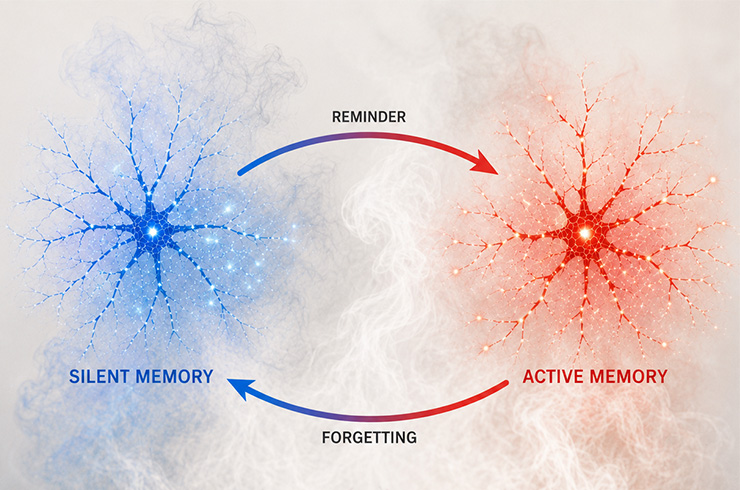
“When we rest, our brains normally replay recent experiences – this is thought to be key to how memories are formed and maintained. We found this replay process is disrupted in mice engineered to develop the amyloid plaques characteristic of Alzheimer’s, and this disruption is associated with how badly animals perform on memory tasks.”

The replay process, which occurs in the brain’s hippocampus, involves place cells firing in rapid sequences during rest. Place cells – discovered by Nobel prize-winning UCL neuroscientist Professor John O’Keefe – are neurons (brain cells) that represent specific locations. When we visit somewhere, particular place cells fire, and as we move the cells fire in a sequence. Later, when we rest, these cells reactivate in the same sequence, helping memories become ingrained.

For the study, the researchers were testing how well mice performed in a simple maze task, while monitoring their brain activity with sets of electrodes that could simultaneously track roughly 100 individual place cells.

In mice with amyloid pathology, the replay process was fundamentally altered. Surprisingly, replay events occurred just as frequently as in healthy mice, but their structure was disorganised. The normal, coordinated patterns of place cell activity that should reinforce memories were scrambled. The researchers also found that place cells in affected mice became less stable over time, with individual neurons no longer reliably coding the same locations, particularly after rest periods – precisely when replay should be strengthening these representations.

This disruption had consequences on memory tasks: affected mice performed worse in the maze, appearing to forget where they had already been and revisiting corridors that led nowhere.

Co-lead author Professor Caswell Barry (UCL Cell & Developmental Biology) said: “We’ve uncovered a breakdown in how the brain consolidates memories, visible at the level of individual neurons. What’s striking is that replay events still occur – but they’ve lost their normal structure. It’s not that the brain stops trying to consolidate memories; the process itself has gone wrong.

“We hope our findings could help develop tests to detect Alzheimer’s early, before extensive damage has occurred, or lead to new treatments targeting this replay process. We’re now investigating whether we can manipulate replay through the neurotransmitter acetylcholine, which is already targeted by drugs used to treat Alzheimer’s symptoms. By understanding the mechanism better, we hope to make such treatments more effective.”

Source: University College London

Mediterranean Diet Linked to Reduced Risk for All Stroke Types

Photo by Charlotte Karlsen on Unsplash

Following a Mediterranean diet is associated with a lower risk of all types of stroke among women, according to a study published on February 4, 2026, in Neurology® Open Access, an official journal of the American Academy of Neurology. The study does not prove that the Mediterranean diet is the cause of the lower risk of stroke; it only shows an association.

The diet was associated with a lower risk of stroke overall, as well as ischaemic stroke and haemorrhagic stroke. The Mediterranean diet includes a high intake of vegetables, legumes, fruits, fish and healthy fats such as olive oil, and a low intake of dairy products, meats and saturated fatty acids.

“Our findings support the mounting evidence that a healthy diet is critical to stroke prevention,” said study author Sophia S. Wang, PhD, of City of Hope Comprehensive Cancer Center in Duarte, California. “We were especially interested to see that this finding applies to haemorrhagic stroke, as few large studies have looked at this type of stroke.”

The study involved 105 614 women with an average age of 53 at the start of the study who had no history of stroke. The participants filled out a questionnaire at the start of the study about their diet. Participants were given a score of zero to nine based on how closely they followed the Mediterranean diet. People received one point if they consumed above the overall average in the population in these categories: whole grain cereals, fruits, vegetables, legumes, olive oil and fish, plus drinking a moderate amount of alcohol.

They also received one point if they consumed a below-average amount of red meat and dairy products. A total of 30% of participants had scores of six to nine – the highest group. And 13% had scores of zero to two, the lowest group.

The participants were followed for an average of 21 years. During that time, 4083 strokes occurred, with 3358 ischaemic strokes and 725 haemorrhagic strokes. For ischaemic strokes, there were 1058 among the 31 638 people in the highest group compared to 395 cases among the 13 204 people in the lowest group.

For haemorrhagic stroke, there were 211 strokes among those in the highest group, compared to 91 among the lowest group. When researchers adjusted for other factors that could affect stroke risk, such as smoking, physical activity and high blood pressure, they found that those in the highest group were 18% less likely to have a stroke than those in the lowest group. They were 16% less likely to have an ischaemic stroke and 25% less likely to have a haemorrhagic stroke.

“Stroke is a leading cause of death and disability, so it’s exciting to think that improving our diets could lessen our risk for this devastating disease,” said Wang. “Further studies are needed to confirm these findings and to help us understand the mechanisms behind them so we could identify new ways to prevent stroke.”

A limitation of the study is that people reported their own diet information, so they may not have remembered correctly.

Source: American Academy of Neurology

SA has a “Bogus Doctor” Problem

Under South African law, no one may practise medicine unless they have the proper training and are officially registered. Photo by Usman Yousaf on Unsplash

By Elna Schütz

Bogus medical practitioners threaten the health of patients and undermine trust in doctors. The problem might be growing, but so is the fight against it.

“If you’re in the hands of an unqualified person, you’re as well as dead, and we think it is not fair for the country,” Dr Magome Masike tells Spotlight.

He is the Registrar of the Health Professions Council of South Africa (HPCSA), which is responsible for the registration of medical doctors and other health professionals in South Africa.

The controversy over bogus doctors gained widespread attention in late 2023 when it was discovered that ‘TikTok doctor’ Matthew Lani lied about being a medical doctor. In his videos, Lani was often seen in scrubs and wearing a stethoscope, impersonating a medical doctor. Although he was arrested at Helen Joseph Hospital in Johannesburg, the National Prosecuting Authority eventually decided not to prosecute.

The term bogus doctor has become a shorthand for any medical practitioner who is working without being properly qualified or registered by the HPCSA. In practice, being “bogus” can also apply to physiotherapists, interns, or anyone else practising medicine.

The misrepresentation may include using fraudulent certificates, using another practitioner’s registration, or being suspended or erased from the register. It can involve someone who studied but did not fully qualify, or has not kept up to date with their registration. Masike gives the example of the child of a registered practitioner who decides to take on their parent’s practice after their death without themselves being registered.

It is an ongoing problem. In the beginning of February, the HPCSA says it facilitated the arrest of a woman working at a medical facility in Midrand, north of Johannesburg, allegedly without being correctly registered to practice medicine.

Bogus qualifications are part of the larger problem of healthcare fraud. According to research in a report by risk management services firm D-Finitive, it is estimated that this fraud overall costs African countries more than USD50 billion in 2012. In the South African private sector, that comes to about R22-28 billion a year. The report explains that beyond bogus practitioners, there is a problem with similar fraud, like doctors billing more clients than is realistic, manipulating diagnostic and procedural codes, or deceased doctors billing the government for decades after their death. At times, this type of fraud is reportedly executed by syndicates.

“While the majority of practitioners are honest and committed to patient care, it takes only a small number of bad actors, whether unregistered impostors or credentialed professionals abusing the system, to inflict widespread damage,” says Dr Katlego Mothudi, Managing Director of the Board of Healthcare Funders (BHF).

A substantial problem

Masike says that from March 2024 to February 2025, 49 bogus practitioners were caught and arrested. From April to December 2025, that number was at 17. Even though these numbers do not suggest a year-on-year increase, Masike says that overall, the numbers are increasing.

The HPCSA’s annual report for 2024/2025 shows that 589 investigations into unregistered persons were concluded in the year in question. Over the past five years, 3 708 complaints were received.

The majority of bogus practitioners who have been caught were operating in economic hubs of the Western Cape, Gauteng, and KwaZulu-Natal, Masike says. “Bogus people want money, so they go where there’s money,” he explains. However, while the trend tends urban, he says rural communities also fall prey to scammers.

“A notable pattern is that many of these individuals use or forge the details of legitimately registered practitioners,” Masike says.

It is, of course, unclear how many unlicensed practitioners are not yet caught. “We can tell you the problem is bigger than we think,” Masike says. The problem, he says, is sector-wide and stretches across different health professions, with most of these illegal practices occurring in the private sector. Masike adds that bogus doctors often work with a network of others, for example, those who supply unregistered or fake medicines.

Mothudi also says that the problem is growing. “Medical schemes are seeing a rise in suspicious provider activity picked up through claims analysis and credential verification processes,” he says. This may include practitioners misrepresenting their registration status, practising outside their approved scope, or using the registration details of legitimate practitioners to submit claims.

Risk to patients

Catching and prosecuting bogus practitioners is crucial because they can pose a direct danger to unsuspecting patients. “Unregistered medical doctors, like other health professionals, pose severe risks to patients, including serious physical harm, injury, and misdiagnosis which may lead to death, due to their lack of necessary training, ethical standards and relevant qualifications,” warns Foster Mohale, the spokesperson for the National Department of Health.

Dr Zanele Bikitsha, National Vice Chairperson of the South African Medical Association, cautions that if bogus doctors are performing procedures, it will likely be in settings that are not appropriate or sterile.

“They’re not going to go to a registered facility, because they know they’ll be caught, so this puts patients in danger as well.”

While some operate on a cash basis, Mothudi says that submitting claims to medical schemes is attractive because it allows for much larger and repeatable payouts. “In some cases, bogus practitioners submit claims using stolen, borrowed or fraudulently obtained practice numbers belonging to legitimately registered healthcare professionals,” he says. “In other instances, they collude with registered providers who allow their credentials to be misused in exchange for payment.”

Knowing the signs

While the HPCSA undertakes compliance inspections, there are some clear signs that might help the public spot a bogus practitioner. Firstly, it is a legal requirement to have registration information easily visible in a practitioner’s practice and on the letterhead of documents or prescription notes.

Members of the public can also look up a doctor’s credentials. All registered practitioners should be listed in the HPCSA’s digital register online, which is publicly searchable. With as little as the practitioner’s surname, the system lets users search for registered practitioners.

Masike points out that a trained doctor tends to take an extensive medical history and make a systemic or wide-reaching inquiry. He recommends that patients look out for how doctors speak and whether they use and are able to explain medical terminology.

Complaints can be filed with the HPCSA’s Inspectorate, including anonymously. Their call centre is at 0123389300/1 and they can be e-mailed at office@hpcsa.co.za. Suspicious practitioners may also be reported to hospitals, the Department of Health, SAMA or other medical organisations.

Processing the problem

Complaints typically lead to an investigation by the HPCSA Inspectorate, which works together with other entities, such as the South African Health Products Regulatory Authority (SAHPRA), the Office of Health Standards Compliance, the Special Investigating Unit (SIU), and the South African Police Service.

Masike explains that the investigation tends to lead to a clandestine operation and involves the police arresting the suspects. He adds that police recently assigned specific staff members to focus on these cases. He says that once the case goes to court, there is a conviction rate of around 77%, although this may have changed. “Many of the cases from 2023 to 2025 remain before the courts, and therefore updated conviction statistics are not yet available.”

Practising medicine without proper training and registration is in contravention of Section 17(1) of the Health Professions Act, 56 of 1974. Typical sentences for such fraud include fines, such as R12 000, or around two years imprisonment. In one 2017 case, a man who had treated almost a thousand patients over six years was sentenced to 20 years’ imprisonment by the Mahikeng High Court in the North West.

Bikitsha says there are other systemic changes that could help catch the problem earlier on. “If you are still paper-based, you are at risk,” she says, referring to the way that hospitals and institutes tend to verify the qualifications of most interns, locums and medical practitioners. She argues that upgrading to biometrics and digital systems would decrease the risk of fraud.

Another step forward is simply to increase public awareness and education, so that patients know the risks.

Masike concurs. “We need society to stand up to this,” he says. “We need a participating community to get rid of this malaise, otherwise it will continue forever.”

Republished from Spotlight under a Creative Commons licence.

Read the original article.

New Research Sheds Light on the Biological Roots of Anxiety

The largest genetic study of anxiety disorders to date has identified 58 genetic variants associated with anxiety, most of which have not been identified before now.

Photo by Joice Kelly on Unsplash

In the largest genetic study of anxiety disorders to date, new research from the Institute of Psychiatry, Psychology & Neuroscience (IoPPN) at King’s College London, in partnership with Texas A&M and the Institute of Psychiatric Phenomics and Genomics (IPPG) at LMU Munich, has identified 58 genetic variants associated with anxiety, most of which have not been identified before now.

The research, published in Nature Genetics, confirmed that, rather than being driven by a single “anxiety gene”, anxiety disorders are influenced by numerous genetic variants from across the genome, with each contributing a small effect.

The researchers compared the genetic data of 120 000 people diagnosed with an anxiety disorder to almost 730 000 people without.

Their analysis of the data notably highlighted the role of several genes involved in GABAergic signalling; a key system that regulates brain activity.

“Anxiety disorders arise from the interplay of genetic vulnerability and life experience. At a time when rates of anxiety are rising rapidly in our young people, by identifying robust genetic signals offering novel insight into the biological foundations of these debilitating disorders, this research helps move the field toward more precise and effective approaches to prevention and care.” 

Professor Thalia Eley, Professor of Developmental Behavioural Genetics at King’s IoPPN and one of the study’s senior authors

While the research provides a biological basis for anxiety, the researchers do not advocate for the use of genetic testing to diagnose anxiety.

Professor John Hettema, from the Department of Psychiatry at Texas A&M University Naresh K. Vashisht College of Medicine, another of the study’s senior authors said, “Anxiety disorders and their underlying sources of genetic risk have been understudied compared to other psychiatric conditions, so this study substantially advances this critical knowledge.”

Prof Jürgen Deckert, Julius Maximilians University, Würzburg, Germany wrote “The results of the study provide evidence for a role of several previously unknown molecular pathways in the etiology of anxiety, beyond the previously identified GABAergic system. They will provide the basis for future studies in cell culture, animal models and humans which will contribute to a better understanding of the neurobiology of anxiety and as a consequence to innovative and individualized therapies.”

Genome-wide association study of major anxiety disorders in 122,341 European ancestry cases identifies 58 loci and highlights GABAergic signaling (DOI 10.1038/s41588-025-02485-8) (Eley, Mattheisen, Hettema et al) was published in Nature Genetics.  

Source: King’s College London

How Does Lifetime Alcohol Consumption Affect Colorectal Cancer Risk?

Results from a cancer screening trial indicate that consistent heavy alcohol intake and higher average lifetime drinking are associated with increased risk.

Photo by Apolo Photographer on Unsplash

Studies have demonstrated a link between alcohol consumption and an elevated risk of colorectal cancer. New research now reveals that higher lifetime alcohol consumption is also associated with a higher risk, especially for rectal cancer, and that quitting drinking can lower a person’s risk. The findings are published by Wiley online in CANCER, a peer-reviewed journal of the American Cancer Society.

When investigators analysed data on US adults enrolled in the National Cancer Institute (NCI) Prostate, Long, Colorectal, and Ovarian (PLCO) Cancer Screening Trial who did not have cancer at baseline, they observed that 1679 colorectal cancer cases occurred among 88 092 participants over 20 years of follow-up.

Current drinkers with an average lifetime alcohol intake of ≥ 14 drinks per week (heavy drinkers) had a 25% higher risk of developing colorectal cancer and a 95% higher risk of developing rectal cancer compared with those with an average lifetime alcohol intake of < 1 drink per week (light drinkers).

When further considering drinking consistency, heavy drinking throughout adulthood was linked to a 91% higher risk of colorectal cancer compared with consistent light drinking. In contrast, no evidence of increased colorectal cancer risk was observed among former drinkers, and former drinkers had lower odds of developing noncancerous colorectal tumours, or adenomas (which may go on to become cancerous) than current drinkers averaging < 1 drink per week, suggesting that alcohol cessation may lower individuals’ risks. These data were limited, however.

The association between alcohol consumption and increased risks observed in this and other studies might be explained by carcinogens produced from alcohol metabolism or alcohol’s effects on gut microbes. Additional studies are needed to test whether these mechanisms are involved.

“Our study is one of the first to explore how drinking alcohol over the life course relates to both colorectal adenoma and colorectal cancer risk. While the data on former drinkers were sparse, we were encouraged to see that their risk may return to that of the light drinkers,” said co–senior author Erikka Loftfield, PhD, MPH, of the NCI, part of the National Institutes of Health.

Source: Wiley

New Device Sprays Antibiotics Deep into Wounds

The new device sprays mist to treat deep wound infections without causing kidney damage

Hongmin Sun demonstrating the new device.

A University of Missouri researcher has unveiled a safer, smarter way to fight drug-resistant infections. Hongmin Sun, an associate professor in the School of Medicine, demonstrated that a spray-mist device can deliver last-resort antibiotics directly into infected tissue without the harmful side effects often caused by delivery via the bloodstream.

In a recent study, researchers worked with an industry partner to use a needle-free device to treat methicillin-resistant Staphylococcus aureus (MRSA), a dangerous bacterium that has become resistant to many common antibiotics.

The device successfully delivered the common last-resort antibiotic vancomycin deep into infected tissue without typical side effects such as kidney damage. Unlike topical creams or ointments that are easily wiped away or bloodstream delivery that risks organ damage, the spray-mist technology pushed the medicine through the skin to successfully treat the infection.

Sun collaborated with former Mizzou researcher Lakshmi Pulakat, now a professor of medicine at Tufts University, and Droplette Inc. to use the patented device for antibiotic delivery. The findings pave the way for future clinical trials as researchers seek FDA approval.

The team is hopeful the spray-mist device might one day be used in wound care in challenging settings.

“Whether it’s people with diabetic foot ulcers or soldiers hurt in battle, we wanted to come up with a new approach to treat these severely infected wounds in a more targeted way,” Sun said. “This can be a game-changing therapy for treating those with severely infected wounds.”

Pulakat said the technology is an example of compassionate care.

“This method of delivering last-resort antibiotics could prevent countless amputations and help save lives,” she said. “Dr. Sun is an internationally recognized expert in the field of pathogenic microbiology, and our collaboration with an industry partner has helped make this translational research possible.”

The study, “Preventing nephrotoxicity of vancomycin and attenuating deep tissue infections by methicillin-resistant Staphylococcus aureus via needle-free drug delivery by the Droplette micromist technology device” was published in Military Medicine.

By Brian Consiglio

Source: University of Missouri

Exposure to Burn Injuries may have Played Key role in Shaping Human Evolution

Photo by sena keçicioğlu

Humans’ exposure to high temperature burn injuries may have played an important role in our evolutionary development, shaping how our bodies heal, fight infection, and sometimes fail under extreme injury, according to new research.

For more than one million years, the control of fire has powered human success, from cooking and heating to technology and industry, driving genetic and cultural evolution and setting us apart from all other species. But this relationship has also exposed humans to high temperature injuries at a scale unmatched in the natural world. 

Humans burn themselves – and survive burns – with a frequency likely much greater than any other animal. Most animals avoid fire completely, while in contrast, humans live alongside fire and most humans will experience minor burns throughout their lives. 

A new study published in BioEssays, led by Imperial College London researchers, suggests that this increased exposure to burn injuries may have driven notable genetic adaptations which differentiated humans from other primates and mammals. This may also explain both beneficial and maladaptive responses to severe burn injury. 

Burn injuries exist on a spectrum of severity, with most small injuries healing on their own while severe burns can lead to lifelong disability or death. Burns damage the skin, the body’s main protective barrier against infection, sometimes over large areas of the body. The longer the skin is damaged, the greater the risk that bacteria can enter the body and cause overwhelming infection. 

The researchers argue that natural selection would have favoured traits that helped humans survive small to moderate burns. These may include faster inflammation, faster wound closure (to prevent infection) and stronger pain signals. 

However, while these traits are helpful for less severe injuries, they can become harmful for large burns, which may explain why modern humans can experience extreme inflammation, scarring, and organ failure from major burns. 

Using comparative genomic data across primates, the researchers found examples of genes associated with burn injury responses which show signs of accelerated evolution in humans. These genes are involved in wound closure, inflammation and immune system response – likely helping to rapidly close wounds and fight infection; a major complication after burn injury, particularly before the widespread use of antibiotics. 

These findings support the theory that exposure to burn injuries may have been a notable force on the evolution of humans. 

Dr Joshua Cuddihy, lead author for the study, and Honorary Clinical Lecturer in Imperial’s Department of Surgery and Cancer, said: “Burns are a uniquely human injury. No other species lives alongside high temperatures and the regular risk of burning in the way humans do.  

“The control of fire is deeply embedded in human life — from a preference for hot food and boiled liquids to the technologies that shape the modern world. As a result, unlike any other species, most humans will burn themselves repeatedly over their lifetime, a pattern that likely extends back over a million years to our earliest use of fire.

“Our research suggests that natural selection favoured traits that improved survival after smaller, more frequent burn injuries. However, those same adaptations may have come with evolutionary trade-offs, helping to explain why humans remain particularly vulnerable to the complications of severe burns.”

The control of fire has powered human success for more than one million years

The research was developed through a collaboration between burn injury experts, evolutionary biologists, and genetics experts at Imperial, Chelsea and Westminster Hospital NHS Foundation Trust, and Queen Mary University of London.

The study’s novel perspective on human evolution, which could reshape our understanding of modern burn care and human biology, was made possible through interdisciplinary collaboration between clinicians and researchers. 

Professor Armand Leroi, Professor of Evolutionary Developmental Biology in Imperial’s Department of Life Sciences, said: “What makes this theory of burn selection so exciting to an evolutionary biologist is that it presents a new form of natural selection – one, moreover, that depends on culture. It is part of the story of what makes us human, and a part that we really did not have any inkling of before.”

Yuemin Li, PhD student at Queen Mary University of London, said: “Our study provides compelling evidence that humans have unique adaptive mutations in several key genes associated with burn injury response. 

“These findings could allow us to explore in future research how genetic variations in different groups impact burn injury response, potentially explaining why some patients heal well or poorly after a burn.” 

Unlike other wounds from cuts or bites which would have also led to infections, the increased lifetime risk of burns experienced by humans and their hominin ancestors is unique as they are the only species to regularly experience burn injuries and survive them. 

The researchers’ findings could change how we study burn injuries, design treatments, and interpret complications of burns. It may also explain why translating results on burn injuries from animal models to humans is often ineffective. 

Declan Collins, Consultant in Plastic and Reconstructive Surgery at Chelsea and Westminster Hospital NHS Foundation Trust, said: “Understanding the evolutionary drivers that cause genetic change is an important step in burn research that will influence the way in which we look at scar formation and wound healing. 

“The genetic basis for scarring variation in humans and response to tissue injury is still poorly understood, and this work will provide new angles for future research.” 

Burn Selection: How Fire Injury Shaped Human Evolution’ by Joshua Cuddihy et al. is published in Bioessays.

By Conrad Duncan

Source: Imperial College London