The Cervical Cancer Screening and Prevention Clinic at Helen Joseph Hospital in Johannesburg was forced to shut down in mid-May after losing all its funding from the US President’s Emergency Plan for AIDS Relief (PEPFAR). Photos: Elna Schütz
Hundreds of cervical cancer patients will likely be referred to overburdened hospitals following the closure of the Cervical Cancer Screening and Prevention Clinic at Helen Joseph Hospital in Johannesburg.
Following over 20 years of operations, the clinic was forced to shut down in mid-May after losing all its funding from the US President’s Emergency Plan for AIDS Relief (PEPFAR). It relied on some financial reserves to taper its activities over several months. Most clinic staff have been let go.
The clinic served women who were referred from across Johannesburg and as far as Springs. A significant part of that group lives with HIV.
“Many of these women are from underserved communities with limited access to specialist care,” says Dr Mark Faesen, Specialist Gynaecologist with the Clinical HIV Research Unit (CHRU).
The clinic offered critical cervical cancer screening and follow-up services, including Pap smears and colposcopies – a cervical examination for abnormalities. The clinic was managing around 1,400 patients annually. “It served as a clinical and research hub, preventing many cancers,” Faesen says.
We spoke to Zinhle (name changed) who was screened at the clinic after feeling ill for a year and who sought help at four different hospitals.
“When I got [to this clinic], I was received with a warm welcome,” she says, emphasising that every step of the process was explained to her and she was made to feel comfortable. “Where else are we supposed to go?”
Zinhle says she is deeply upset that she can no longer be treated at the clinic if she needs it again.
Faesen says the clinic’s closure will put immense pressure on other public hospitals offering these services, like Rahima Moosa or Chris Hani Baragwanath. This is likely to lead to longer waiting times for screening, diagnosis and treatments. “Early detection is important,” Faesen says. “Without timely diagnosis, outcomes are far poorer.”
Lorraine Govender, the National Manager of Health Programmes at the Cancer Association of South Africa (CANSA) says they are deeply concerned by the closure, as it is a serious setback in the ongoing fight against the disease.
Cervical cancer is the second most common cancer in women in South Africa, and results in the most deaths. It is curable if diagnosed and treated early. A Human Papillomavirus (HPV) vaccination also reduces the risk of cervical cancer. While low screening rates and backlogs in treatment have been long-standing across the country, Johannesburg appears to be particularly burdened. The shutdown of this clinic adds to a larger shortage of screening and treatment in Gauteng.
The Department of Health has previously stated that while it has improved vaccination efforts against cervical cancer, “screening and treatment are lagging behind”. The national health policy calls for women aged 30 to 50 to be screened at least three times in their lives. Women living with HIV should be screened at least every three years.
Cervical cancer screening services are limited and overwhelmed at most public hospitals, Faesen says. “The funding cuts have a knock-on effect: increasing patient loads at the few remaining colposcopy clinics.”
Lorraine Govender, the National Manager of Health Programmes at the Cancer Association of South Africa (CANSA) says they are deeply concerned by the closure, as it is a serious setback in the ongoing fight against the disease.
“Cervical cancer is both preventable and treatable when detected early, making continued access to screening services vital … The closure of this Johannesburg clinic must be a call to action,” Govender says.
Faesen stresses the urgent need for increased funding for decentralised screening services to fill the gaps created by clinics like the one at Helen Joseph Hospital. “Equipping more public sector sites with colposcopy capability and training personnel is also essential.”
New research has found that those who consume a diverse range of foods rich in flavonoids, such as tea, berries, dark chocolate, and apples, could lower their risk of developing serious health conditions and have the potential to live longer.
The study was led by a team of researchers from Queen’s University Belfast, Edith Cowan University Perth (ECU), and the Medical University of Vienna and Universitat Wien.
The findings reveal that increasing the diversity of flavonoids within your diet could help prevent the development of health conditions such as type 2 diabetes, cardiovascular disease (CVD), cancer and neurological disease.
Flavonoids are found in plant foods like tea, blueberries, strawberries, oranges, apples, grapes, and even red wine and dark chocolate.
The study in Nature Food followed over 120 000 participants aged 40–70 for over a decade. It is the first study of its kind to suggest that there is a benefit to consuming a wide range of flavonoids beyond that of simply consuming a high quantity.
ECU Research Fellow, first author and co-lead of the study Dr Benjamin Parmenter, made the initial discovery that a flavonoid-diverse diet is good for health.
“Flavonoid intakes of around 500mg a day was associated with a 16% lower risk of all-cause mortality, as well as a ~10% lower risk of CVD, type 2 diabetes, and respiratory disease. That’s roughly the amount of flavonoids that you would consume in two cups of tea.”
Dr Parmenter added, however, that those who consumed the widest diversity of flavonoids, had an even lower risk of these diseases, even when consuming the same total amount. For example, instead of just drinking tea, it’s better to eat a range of flavonoid-rich foods to make up your intake, because different flavonoids come from different foods.
“We have known for some time that higher intakes of dietary flavonoids, powerful bioactives naturally present in many foods and drinks, can reduce the risk of developing heart disease, type 2 diabetes, and neurological conditions like Parkinson’s,” study co-lead Professor Aedín Cassidy from the Co-Centre for Sustainable Food Systems and Institute for Global Food Security at Queen’s said.
“We also know from lab data and clinical studies that different flavonoids work in different ways, some improve blood pressure, others help with cholesterol levels and decrease inflammation. This study is significant as the results indicate that consuming a higher quantity and wider diversity has the potential to lead to a greater reduction in ill health than just a single source.”
Professor Tilman Kuhn from the Medical University of Vienna, Universitat Wien and Queen’s University Belfast was also a co-lead author, noted that the importance of diversity of flavonoid intake has never been investigated until now, making this study very significant as the findings align with popular claims that eating colourful foods are invaluable to maintain good health.
“Eating fruits and vegetables in a variety of colours, including those rich in flavonoids, means you’re more likely to get the vitamins and nutrients you need to sustain a healthier lifestyle,” he said.
The first-ever dietary guidelines for flavonoids were released recently recommending increasing the consumption of flavonoids to maintain health.
“Our study provides inaugural evidence that we may also need to advise increasing diversity of intake of these compounds for optimal benefits,” Dr Parmenter said.
“The results provide a clear public health message, suggesting that simple and achievable dietary swaps, such as drinking more tea and eating more berries and apples for example, can help increase the variety and intake of flavonoid-rich foods, and potentially improve health in the long-term,” Professor Cassidy added.
A new way of thinking about Alzheimer’s disease has yielded a discovery that could be the key to stopping the cognitive decline seen in Alzheimer’s and other neurodegenerative diseases.
University of Virginia School of Medicine scientists have been investigating the possibility that Alzheimer’s is caused, at least in part, by the immune system’s wayward attempts to fix DNA damage in the brain. Their research reveals that an immune molecule called STING drives the formation of the harmful plaques and protein tangles thought responsible for Alzheimer’s. Blocking the molecule protected lab mice from mental decline, the researchers say.
An important player in the brain’s immune system, STING also may be a key contributor to Parkinson’s disease, amyotrophic lateral sclerosis (ALS or Lou Gehrig’s disease), dementia and other memory-robbing conditions. That means that developing treatments to control its activity could have far-reaching benefits for many patients facing now-devastating diagnoses.
“Our findings demonstrate that the DNA damage that naturally accumulates during aging triggers STING-mediated brain inflammation and neuronal damage in Alzheimer’s disease,” said researcher John Lukens, PhD, director of UVA’s Harrison Family Translational Research Center in Alzheimer’s and Neurodegenerative Diseases. “These results help to explain why aging is associated with increased Alzheimer’s risk and uncover a novel pathway to target in the treatment of neurodegenerative diseases.”
Alarming Trends in Alzheimer’s
Alzheimer’s is a growing problem, with researchers working frantically to find ways to better understand and treat the condition.
The causes of Alzheimer’s remain murky, but scientists are increasingly coming to appreciate the role of the immune system in the disease’s development. STING is part of that immune response; the molecule helps direct the clearance of viruses and stressed cells harboring DNA damage.
While STING is an important defender of the brain, it can also become hyperactive and cause harmful inflammation and tissue damage. That had Lukens and his team eager to determine what part it could be playing in Alzheimer’s. Blocking the molecule’s activity in lab mice, they found, helped prevent Alzheimer’s plaque formation, altered the activity of immune cells called microglia and redirected the workings of important genes, among other effects.
“We found that removing STING dampened microglial activation around amyloid plaques, protected nearby neurons from damage and improved memory function in Alzheimer’s model mice,” said researcher Jessica Thanos, part of UVA’s Department of Neuroscience and Center for Brain Immunology and Glia (BIG Center). “Together, these findings suggest that STING drives detrimental immune responses in the brain that exacerbate neuronal damage and contribute to cognitive decline in Alzheimer’s disease.”
Promising Treatment Target
While scientists have been investigating other molecules thought to be important in Alzheimer’s, STING makes for a particularly attractive target for developing new treatments, the UVA Health researchers say. That’s because blocking STING appears to slow both the buildup of amyloid plaques and the development of tau tangles, the two leading candidates for the cause of Alzheimer’s. Other molecules lack that robust involvement, and, further, could be targeted only at very specific – and very limited – stages in the disease’s progression.
“We are only beginning to understand the complex role of innate immune activation in the brain, and this is especially true in both normal and pathological aging,” Thanos said. “If we can pinpoint which cells and signals sustain that activation, we will be in a much better position to intervene effectively in disease.”
While Lukens’ pioneering research has opened new doors in the fight against Alzheimer’s, much more work will need to be done to translate the findings into treatments. For example, scientists will need to better understand STING’s roles in the body – such as in the immune system’s response to cancer – to ensure any new treatment doesn’t cause unwanted side effects.
But those are the types of big questions that Lukens and his collaborators at the Harrison Family Translational Research Center are eager to tackle as part of their efforts to fast-track new treatments and, eventually, they hope, cures.
“Our hope is that this work moves us close to finding safer and more effective ways to protect the aging brain, as there is an urgent need for treatments that can slow or prevent neuronal damage in Alzheimer’s,” Lukens said. “Shedding light on how STING contributes to that damage may help us target similar molecules and ultimately develop effective disease-modifying treatments.”
An animated jellyfish floats through water in the PainWaive game.
Image: PainWaive
The first trial of an interactive game that trains people to alter their brain waves has shown promise as a treatment for nerve pain – offering hope for a new generation of drug-free treatments.
You’re staring at a jellyfish drifting through inky black water on a screen. As your mind calms, the water turns turquoise. Nothing else seems to change, but the headset you’re wearing has picked up a subtle shift in your brainwaves and the game responds by altering the imagery. Now, for the first time, you can see your brain activity change. And by seeing it, you can practice making it happen again.
The game is part of PainWaive, a drug-free treatment for nerve pain developed by UNSW. Combining a game-like app and a brain-monitoring headset, PainWaive teaches users how to regulate the abnormal brain activity linked to chronic nerve pain, offering a potential in-home, non-invasive alternative to opioids.
The study compared hundreds of measures across participants’ pain and related issues like pain interference before, during and after four weeks of interactive game play. Their brain activity was tracked via EEG (electroencephalogram) headsets, with the app responding in real time to shifts in brainwave patterns.
Three out of the four participants showed significant reductions in pain, particularly nearing the end of the treatment. Overall, the pain relief achieved by the three was comparable to or greater than that offered by opioids.
“Restrictions in the study’s size, design and duration limit our ability to generalise the findings or rule out placebo effects,” Dr Hesam-Shariati says.
“But the results we’ve seen are exciting and give us confidence to move to the next stage and our larger trial.”
The PainWaive project builds on UNSW Professor Sylvia Gustin’s seminal research into changes in the brain’s thalamus – a central relay hub in the brain – associated with nerve (neuropathic) pain.
“The brainwaves of people with neuropathic pain show a distinct pattern: more slow theta waves, fewer alpha waves, and more fast, high beta waves,” Prof. Gustin says.
“We believe these changes interfere with how the thalamus talks to other parts of the brain, especially the sensory motor cortex, which registers pain.
“I wondered, can we develop a treatment that directly targets and normalises these abnormal waves?”
The challenge was taken up by an interdisciplinary team at UNSW Science and Neuroscience Research Australia (NeuRA), led by Prof. Gustin and Dr Hesam-Shariati, and resulted in PainWaive.
The four participants in its first clinical trial received a kit with a headset and a tablet preloaded with the game app, which includes directions for its use. They were also given tips for different mental strategies, like relaxing or focusing on happy memories, to help bring their brain activity into a more “normal” state.
The user data, meanwhile, was uploaded to the research team for remote monitoring.
“After just a couple of Zoom sessions, participants were able to run the treatment entirely on their own,” says Dr Hesam-Shariati.
“Participants felt empowered to manage their pain in their own environment. That’s a huge part of what makes this special.”
Initially, Dr Hesam-Shariati says, the team planned to use existing commercial EEG systems, but they were either too expensive or didn’t meet the quality needed to deliver the project. Instead, they developed their own.
“Everything except the open-source EEG board was built in-house,” says Dr Hesam-Shariati. “And soon, even that will be replaced by a custom-designed board.”
Thanks to 3D printing, Prof. Gustin says, the team has cut the cost of each headset to around $300 – a fraction of the $1000 to $20 000 price tags of existing systems.
The headset uses a saline-based wet electrode system to improve signal quality and targets the sensorimotor cortex.
“We’ve worked closely with patients to ensure the headset is lightweight, comfortable, and user-friendly,” says Prof. Gustin.
“Owning the technology offers us the potential to one day offer PainWaive as a truly affordable, accessible solution for at-home pain management, especially for those with limited access to traditional treatments.”
The team is currently focussed on a randomised controlled trial of the PainWaive technology, aiming to recruit 224 people with nerve pain following spinal cord injury.
It’s part of more than a dozen active collaborations between UNSW Science and the Centre for Pain IMPACT at NeuRA, all building on Prof. Gustin’s foundational research into the brain.
Among these is a clinical trial of an eHealth therapy, called Pain and Emotion Therapy, that was shown to reduce chronic pain by retraining the brain to process emotions more effectively.
Another major project, Project Avatar, is inspired by Prof Gustin’s discovery that half of people with complete spinal cord injuries still have touch signals reaching the brain – though the brain can’t identify them.
The trial uses immersive virtual reality and real-world touch stimulation to help the brain relearn how to feel.
“Many of our team are clinician-scientists, and we’re focused on developing practical treatments that can be integrated into the healthcare system,” says Prof Gustin.
“It’s incredibly inspiring to see results that help unlock the brain’s potential to heal itself and bring back hope to people living with pain.”
The researchers are now calling for participants to register their interest in two upcoming trials of the neuromodulation technology: The Spinal Pain Trial, investigating its potential to reduce chronic spinal pain, and the StoPain Trial, exploring its use in treating chronic neuropathic pain in people with a spinal cord injury.
Around the world and across cultures, singing to babies seems to come instinctively to caregivers. Now, new findings published in Child Development support that singing is an easy, safe, and free way to help improve the mental well-being of infants. Because improved mood in infancy is associated with a greater quality of life for both parents and babies, this in turn has benefits for the health of the entire family, the researchers say. The study also helps explain why musical behaviours may have evolved in parents.
“Singing is something that anyone can do, and most families are already doing,” says Eun Cho, DMA, postdoctoral researcher at the Yale Child Study Center, and co-first author of the study. “We show that this simple practice can lead to real health benefits for babies.”
“We don’t always need to be focusing on expensive, complicated interventions when there are others that are just as effective and easy to adopt,” adds Lidya Yurdum, a PhD student in psychology at the University of Amsterdam, affiliated with the Child Study Center, and co-first author.
Increased singing improves infants’ moods
The new study included 110 parents and their babies, most of whom were under the age of 4 months. The researchers randomly assigned the parents into two groups, encouraging one group to sing to their infants more frequently by teaching the parents new songs, providing karaoke-style instructional videos and infant-friendly songbooks, and sending weekly newsletters offering ideas for incorporating music into daily routines.
For four weeks, these parents received surveys on their smartphones at random times throughout the day. Parents answered questions related to infant mood, fussiness, time spent soothing, caregiver mood, and frequency of musical behavior. For instance, parents were asked to rate how positive or negative their baby’s mood was within the last two to three hours before receiving the survey. The 56 parents in the control group also received an identical intervention in the four weeks following the initial experiment.
The researchers found that parents were successfully able to increase the amount of time they spent singing to their babies. “When you ask parents to sing more and provide them with very basic tools to help them in that journey, it’s something that comes very naturally to them,” says Yurdum.
Not only did the parents sing more frequently, but they also chose to use music especially in one context in particular: calming their infants when they were fussy. “We didn’t say to parents, ‘We think you should sing to your baby when she’s fussy,’ but that’s what they did,” says Samuel Mehr, EdD, an adjunct associate professor at the Child Study Center, and director of The Music Lab. Mehr is also the study’s principal investigator. “Parents intuitively gravitate toward music as a tool for managing infants’ emotions, because they quickly learn how effective singing is at calming a fussy baby.”
Most surprisingly, the responses to the survey showed that increased singing led to a measurable improvement in infants’ moods overall, compared to those in the control group – in other words, parents who sang more rated their babies’ moods as significantly higher. Importantly, improved mood was found in general, not just as an immediate response to music.
While singing did not significantly impact caregivers’ moods in this study, Mehr believes that there could be follow-on effects on health in young families. “Every parent knows that the mood of an infant affects everyone around that infant,” says Mehr. “If improvements to infant mood persist over time, they may well generalize to other health outcomes.”
Follow-up study to further explore singing’s benefits
The team believes that the benefits of singing may be even stronger than the current study shows. “Even before our intervention, these participating families were particularly musical,” Yurdum explains. “Despite that, and despite only four weeks of the intervention, we saw benefits. That suggests that the strength of singing to your babies would likely be even stronger in a family that does not already rely on music as a way of soothing their infants.”
The Child Study Center researchers are currently enrolling parents and babies under 4 months old in a follow-up study, “Together We Grow,” which will investigate the impact of infant-directed singing over an eight-month period.
Although the researchers did not see an improvement in caregiver mood within four weeks, they are intrigued to see if singing can help alleviate stress or conditions such as postpartum depression in the long term. They are also interested in exploring whether singing might have benefits beyond mood in infants, such as improved sleep.
Previous work from The Music Lab has shown that infant-directed music is universal in humans, and that humans can even infer context of songs – such as whether it is for dancing or a lullaby – in foreign languages and from other cultures. For Mehr, the new findings make sense in light of these basic science results. “Our understanding of the evolutionary functions of music points to a role of music in communication,” says Mehr. “Parents send babies a clear signal in their lullabies: I’m close by, I hear you, I’m looking out for you – so things can’t be all that bad.”
Social grooming between two chimpanzees in the Budongo Forest. Photograph by Dr Elodie Freymann.
Researchers monitoring chimpanzee communities in the Budongo Forest, Uganda, noticed that individuals were helping each other with wound care and hygiene. Some of the chimpanzees even used fresh, chewed leaves from plants known for their traditional medicinal uses and bioactive properties to treat their own and their companions’ wounds. Remarkably, they helped individuals they were genetically related to and individuals they weren’t, despite the potential risk from being exposed to pathogens. Researchers believe these findings could help us understand the cognitive and social foundations of healthcare.
Researchers studying chimpanzees in Budongo Forest, Uganda, have observed that these primates don’t just treat their own injuries, but care for others, too – information which could shed light on how our ancestors first began treating wounds and using medicines. Although chimpanzees elsewhere have been observed helping other community members with medical problems, the persistent presence of this behaviour in Budongo could suggest that medical care among chimpanzees is much more widespread than we realised, and not confined to care for close relatives.
“Our research helps illuminate the evolutionary roots of human medicine and healthcare systems,” said Dr Elodie Freymann, research affiliate at the School of Anthropology and Museum Ethnography, Oxford University, first author of the article in Frontiers in Ecology and Evolution. “By documenting how chimpanzees identify and utilise medicinal plants and provide care to others, we gain insight into the cognitive and social foundations of human healthcare behaviours.”
The researchers studied two communities of chimpanzees in the Budongo Forest – Sonso and Waibira. Like all chimpanzees, members of these communities are vulnerable to injuries, whether caused by fights, accidents, or snares set by humans. About 40% of all individuals in Sonso have been seen with snare injuries.
The researchers spent four months observing each community, as well as drawing on video evidence from the Great Ape Dictionary database, logbooks containing decades of observational data, and a survey of other scientists who had witnessed chimpanzees treating illness or injury. Any plants chimpanzees were seen using for external care were identified; several turned out to have chemical properties which could improve wound healing and relevant traditional medicine uses.
During their direct observational periods, the researchers recorded 12 injuries in Sonso, all of which were likely caused by within-group conflicts. In Waibira, five chimpanzees were injured – one female by a snare, and four males in fights. The researchers also identified more cases of care in Sonso than in Waibira.
“This likely stems from several factors, including possible differences in social hierarchy stability or greater observation opportunities in the more thoroughly habituated Sonso community,” said Freymann.
The researchers documented 41 cases of care overall: seven cases of care for others – prosocial care – and 34 cases of self-care. These cases often included several different care behaviours, which might be treating different aspects of a wound, or might reflect a chimpanzee’s personal preferences.
“Chimpanzee wound care encompasses several techniques: direct wound licking, which removes debris and potentially applies antimicrobial compounds in saliva; finger licking followed by wound pressing; leaf-dabbing; and chewing plant materials and applying them directly to wounds,” said Freymann. “All chimpanzees mentioned in our tables showed recovery from wounds, though of course we don’t know what the outcome would have been had they not done anything about their injuries.
“We also documented hygiene behaviours, including the cleaning of genitals with leaves after mating and wiping the anus with leaves after defecation – practices that may help prevent infections.”
Of the seven instances of prosocial care, the researchers found four cases of wound treatment, two cases of snare removal assistance, and one case where a chimpanzee helped another with hygiene. Care wasn’t preferentially given by, or provided to, one sex or age group. On four occasions, care was given to genetically unrelated individuals.
“These behaviours add to the evidence from other sites that chimpanzees appear to recognise need or suffering in others and take deliberate action to alleviate it, even when there’s no direct genetic advantage,” said Freymann.
The researchers call for more research into the social and ecological contexts in which care takes place, and which individuals give and receive care. One possibility is that the high risk of injury and death which Budongo chimpanzees all face from snares could increase the likelihood that these chimpanzees care for each other’s wounds, but more data is needed to explore this.
“Our study has a few methodological limitations,” cautioned Freymann. “The difference in habituation between the Sonso and Waibira communities creates an observation bias, particularly for rare behaviours like prosocial healthcare. While we documented plants used in healthcare contexts, further pharmacological analyses are needed to confirm their specific medicinal properties and efficacy. Also, the relative rarity of prosocial healthcare makes it challenging to identify patterns regarding when and why such care is provided or withheld. These limitations highlight directions for future research in this emerging field.”
For years, Florida Tech’s Catherine Talbot, assistant professor of psychology, has worked to understand the sociality of male rhesus monkeys and how low-social monkeys can serve as a model for humans with autism. Her most recent findings show that replenishing a deficient hormone, vasopressin, helped the monkeys become more social without increasing their aggression – a discovery that could change autism treatment.
Currently, the Centers for Disease Control and Prevention report that one in 36 children in the United States is affected by autism spectrum disorder (ASD). That’s an increase from one in 44 children reported in 2018. Two FDA-approved treatments currently exist, Talbot said, but they only address associated symptoms, not the root of ASD. The boost in both prevalence and awareness of the disorder prompts the following question: What is the cause?
Some rhesus monkeys are naturally low-social, meaning they demonstrate poor social cognitive skills, while others are highly social. Their individual variation in sociality is comparable to how human sociality varies, ranging from people we consider social butterflies to those who are not interested in social interactions, similar to some people diagnosed with ASD, Talbot said. Her goal has been to understand how variations in biology and behaviour influence social cognition.
In their paper published in the journal PNAS, Talbot and researchers with Stanford, the University of California, Davis and the California National Primate Research Center explored vasopressin, a hormone that is known to contribute to mammalian social behaviour, as a potential therapeutic treatment that may ultimately help people with autism better function in society. Previous work from this research group found that vasopressin levels are lower in their low-social rhesus monkey model, as well as in a select group of people with ASD.
Previous studies testing vasopressin in rodents found that increased hormone levels caused more aggression. As a result, researchers warned against administering vasopressin as treatment, Talbot said. However, she argued that in those studies, vasopressin induced aggression in contexts where aggression is the socially appropriate response, such as guarding mates in their home territory, so the hormone may promote species-typical behaviour.
She also noted that the previous studies tested vasopressin in “neurotypical” rodents, as opposed to animals with low-social tendencies.
“It may be that individuals with the lowest levels of vasopressin may benefit the most from it – that is the step forward toward precision medicine that we now need to study,” Talbot said.
In her latest paper, Talbot and her co-authors tested how low-social monkeys, with low vasopressin levels and high autistic-like trait burden, responded to vasopressin supplementation to make up for their natural deficiency. They administered the hormone through a nebulizer, which the monkeys could opt into. For a few minutes each week, the monkeys voluntarily held their face up to a nebulizer to receive their dose while sipping white grape juice – a favorite among the monkeys, Talbot said.
After administering the hormone and verifying that it increased vasopressin levels in the central nervous system, the researchers wanted to see how the monkeys responded to both affiliative and aggressive stimuli by showing them videos depicting these behaviors. They also compared their ability to recognize and remember new objects and faces, which is another important social skill.
They found that normally low-social monkeys do not respond to social communication and were better at recognizing and remembering objects compared to faces, similar to some humans diagnosed with ASD. When the monkeys were given vasopressin, they began reciprocating affiliative, pro-social behaviors, but not aggression. It also improved their facial recognition memory, making it equivalent to their recognition memory of objects.
In other words, vasopressin “rescued” low-social monkeys’ ability to respond prosocially to others and to remember new faces. The treatment was successful – vasopressin selectively improved the social cognition of these low-social monkeys.
“It was really exciting to see this come to fruition after pouring so much work into this project and overcoming so many challenges,” Talbot said of her findings.
One of Talbot’s co-authors has already begun translating this work to cohorts of autism patients. She expects more clinical trials to follow.
In the immediate future, Talbot is examining how other, more complex social cognitive abilities like theory of mind – the ability to take the perspective of another – may differ in low-social monkeys compared to more social monkeys and how this relates to their underlying biology. Beyond that, Talbot hopes that they can target young monkeys who are “at-risk” of developing social deficits related to autism for vasopressin treatment to see if early intervention might help change their developmental trajectory and eventually translate this therapy to targeted human trials.
A cortical neuron treated with JRT, a synthetic molecule similar to the psychedelic drug LSD. Drugs like JRT might enable new treatments for conditions such as schizophrenia, without the hallucinations and other side effects of psychedelics. (Photo credit: Lee E. Dunlap, Institute for Psychedelics and Neurotherapeutics, UC Davis)
University of California, Davis, researchers have developed a new, neuroplasticity-promoting drug closely related to LSD that harnesses the psychedelic’s therapeutic power with reduced hallucinogenic potential.
The research, published in PNAS, highlights the new drug’s potential as a treatment option for conditions like schizophrenia, where psychedelics are not prescribed for safety reasons. The compound also may be useful for treating other neuropsychiatric and neurodegenerative diseases characterised by synaptic loss and brain atrophy.
To design the drug, dubbed JRT, researchers flipped the position of just two atoms in LSD’s molecular structure. The chemical flip reduced JRT’s hallucinogenic potential while maintaining its neurotherapeutic properties, including its ability to spur neuronal growth and repair damaged neuronal connections that are often observed in the brains of those with neuropsychiatric and neurodegenerative diseases.
“Basically, what we did here is a tire rotation,” said corresponding author David E. Olson, director of the Institute for Psychedelics and Neurotherapeutics and a professor of chemistry, and biochemistry and molecular medicine at UC Davis. “By just transposing two atoms in LSD, we significantly improved JRT’s selectivity profile and reduced its hallucinogenic potential.”
JRT exhibited powerful neuroplastic effects and improved measures in mice relevant to the negative and cognitive symptoms of schizophrenia, without exacerbating behaviours and gene expression associated with psychosis.
“No one really wants to give a hallucinogenic molecule like LSD to a patient with schizophrenia,” said Olson, who is also co-founder and chief innovation officer of Delix Therapeutics, a company that aims to bring neuroplastogens to the market. “The development of JRT emphasises that we can use psychedelics like LSD as starting points to make better medicines. We may be able to create medications that can be used in patient populations where psychedelic use is precluded.”
Testing JRT’s potential
Olson said that it took his team nearly five years to complete the 12-step synthesis process to produce JRT. The molecule was named after Jeremy R. Tuck, a former graduate student in Olson’s laboratory, who was the first to synthesise it and is a co-first author of the study along with Lee E. Dunlap, another former graduate student in Olson’s laboratory.
Following JRT’s successful synthesis, the researchers conducted a battery of cellular and mouse assays that demonstrated the drug’s neuroplastic effects and improved safety profile relative to LSD.
Key findings included:
JRT and LSD have the exact same molecular weight and overall shape, but distinct pharmacological properties.
JRT is very potent and highly selective for binding to serotonin receptors, specifically 5-HT2A receptors, the activation of which are key to promoting cortical neuron growth.
JRT promoted neuroplasticity, or growth between cellular connections in the brain, leading to a 46% increase in dendritic spine density and an 18% increase in synapse density in the prefrontal cortex.
JRT did not produce hallucinogenic-like behaviors that are typically seen when mice are dosed with LSD.
JRT did not promote gene expression associated with schizophrenia. Such gene expression is typically amplified with LSD use.
JRT produced robust anti-depressant effects, with it being around 100-fold more potent than ketamine, the state-of-the-art fast-acting anti-depressant.
JRT promoted cognitive flexibility, successfully addressing deficits in reversal learning that are associated with schizophrenia.
“JRT has extremely high therapeutic potential. Right now, we are testing it in other disease models, improving its synthesis, and creating new analogues of JRT that might be even better,” Olson said.
A more effective treatment for schizophrenia
Olson emphasised JRT’s potential for treating the negative and cognitive symptoms of schizophrenia, as most current treatments produce limited effects on anhedonia — the inability to feel pleasure — and cognitive function. Clozapine is the one exception, but it has side effects, and is not first-line drug of choice for people with severe schizophrenia.
Olson and his team are currently testing JRT’s potential against other neurodegenerative and neuropsychiatric diseases.
Neisseria gonorrhoeae Bacteria Scanning electron micrograph of Neisseria gonorrhoeae bacteria, which causes gonorrhea. Captured by the Research Technologies Branch (RTB) at the NIAID Rocky Mountain Laboratories (RML) in Hamilton, Montana. Credit: NIAID. Photo by National Institute of Allergy and Infectious Diseases on Unsplash
By Catherine Tomlinson
Two new antibiotics offer hope for people with gonorrhoea that is resistant to currently available drugs. Yet, it might be years before the people who need these medicines can get them. Spotlight unpacks why these new antibiotics are important and what needs to happen before they can be used in South Africa.
Gonorrhoea is a sexually transmitted infection known for its ability to quickly mutate to evade the antibiotics used to treat it. Its symptoms include pain when urinating and genital discharge, but many people don’t notice any symptoms at all. If gonorrhoea is not treated, it can cause serious problems including infertility, chronic pain and complications in babies who risk developing infections that can cause eye damage and blindness.
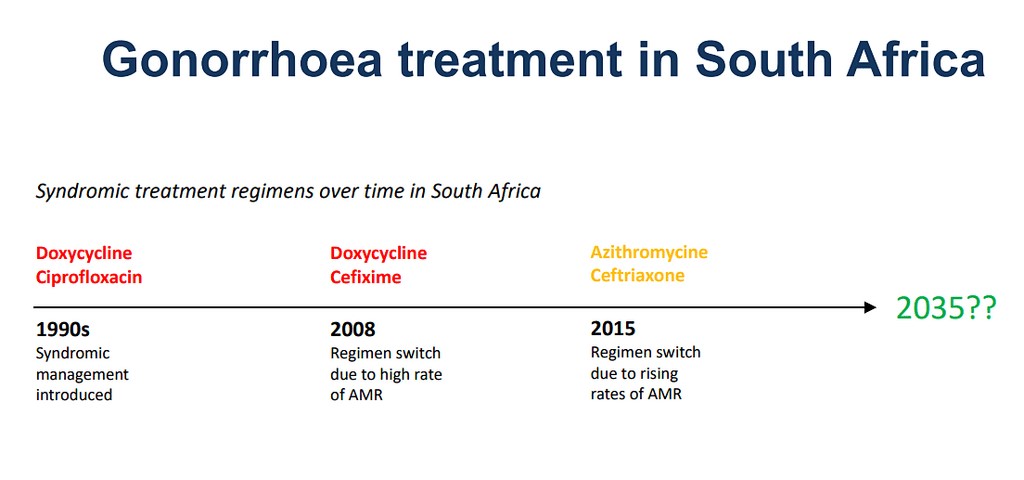
Gonorrhoea treatment has been something of a cat-and-mouse game as the bacteria continuously developed resistance against the antibiotics used to treat it. From the 1990s to the early 2000s, the antibiotic ciprofloxacin was used to treat gonorrhoea in South Africa, sometimes combined with another one called doxycycline. But as high levels of ciprofloxacin resistance emerged, South Africa replaced this course of therapy with a regimen of cefixime and doxycycline. Gonorrhoea treatment was changed again in 2015, due to concerns regarding the emergence of cefixime-resistance.
The treatment regimen adopted in 2015 remains the standard of care in South Africa and much of the world today. It involves an intermuscular injection of ceftriaxone, combined with oral azithromycin pills. Although, some countries now recommend using high dose injectable ceftriaxone on its own, due to high levels of azithromycin resistance.
While most gonorrhoea cases are still treatable with ceftriaxone, the emergence of ceftriaxone-resistant gonorrhoea has been identified as a major global health threat.
“The last effective drug we have, ceftriaxone, already indicates increasing gonococcal resistance. Without new antibiotics, we will have no easy treatment options. This is a great concern that will have a major impact in disease control efforts,” warned the World Health Organization (WHO).
This is why two new antibiotics, zoliflodacin and gepotidacin, are considered such a big deal. They are the first new medicines developed for gonorrhoea in over 30 years. Both are in new classes of antibiotics, which is to say they attack the bacterium in a different way than previous medicines. Because of this, they have little cross resistance with existing treatments and therefore offer important treatment options for people for whom the old medicines no longer work.
How widespread is ceftriaxone-resistance in South Africa?
How urgently we need access to the new medicines in South Africa will depend largely on how many people here are resistant to ceftriaxone. Unfortunately, we don’t have a clear picture of drug-resistant gonorrhoea in the country.
South Africa introduced a syndromic management approach for sexually transmitted infections (STIs) in the mid-1990s, as recommended by the WHO. This means that people reporting STI symptoms at health facilities are treated according to their symptoms, rather than results of a lab test.
This approach to STIs helps to reduce the cost burden of laboratory diagnosis and allows for immediate treatment initiation without waiting for laboratory results since some patients are “lost” over this period as they do not return to health facilities for their test results and treatment.
A challenge with treating STIs according to symptoms rather than laboratory results is that many STIs present with similar symptoms. This can lead to misdiagnosis and incorrect treatment as well as asymptomatic infections going undiagnosed and untreated.
Thus, without lab testing, combined with routine STI screening to identify asymptomatic cases, it is difficult to understand the true burden of gonorrhoea in the country or to measure the extent of drug resistance.
A systematic review, however, indicates that while azithromycin resistance is a challenge in South Africa, there was not yet evidence of ceftriaxone resistance as of 2022.
The National Institutes of Communicable Diseases (NICD) classified ceftriaxone-resistant gonorrhoea a notifiable condition in 2017, meaning that any diagnosed cases must be reported to it. The NICD did not respond to a query from Spotlight as to whether there have been any confirmed cases of ceftriaxone-resistant gonorrhoea in South Africa to date.
While South Africa is not yet facing a ceftriaxone-resistance crisis, experts are of the view that it is only a matter of time before this public health challenge reaches our borders, as global cases are increasing and the drug-resistant strain is transmittable.
Some access to zoliflodacin
Given the risk of a ceftriaxone-resistance crisis, it is important that the two new antibiotics, zoliflodacin and gepotidacin, become available here as soon as possible. These new antibiotics have quite different histories.
Zoliflodacin was developed by GARDP – a non-profit organisation working to accelerate the development of new antibiotics – together with the private biopharmaceutical company Innoviva.
In November 2023, GARDP shared the results of its phase 3 trial of zoliflodacin, which took place in South Africa, Thailand, Belgium, the Netherlands and the United States. It tested the effectiveness of a single dose of oral zoliflodacin compared with the current standard of care treatment for gonorrhoea, which is an injection of ceftriaxone combined with oral azithromycin.
The trial showed that a single dose of zoliflodacin works just as well as the standard of care. The results have not yet been published in a peer-reviewed journal.
Zoliflodacin has also “been shown to be active against all multidrug-resistant strains of Neisseria gonorrhoeae (the gonorrhoea bacteria), including those resistant to ceftriaxone, the last remaining recommended antibiotic treatment”, GARDP’s R&D Project Leader for STIs, Pierre Daram, told Spotlight.
He added that Innoviva is in the process of applying to get the greenlight to use zoliflodacin in the United States. At the same time, GARDP is planning to apply for approval in some of its own regions, starting with Thailand and South Africa.
GARDP is also working on a programme to make the unregistered drug available for patients who have no other treatment options.
“The zoliflodacin managed access programme is about to be activated,” Daram said. “The aim is to provide early access to zoliflodacin, prior to regulatory approval in a country, in response to individual patient requests by clinicians and whereby certain regulatory and clinical criteria are met.” South Africa will be one of the countries covered under this programme, said Daram.
He explained that individual patient requests for treatment will be received from treating clinicians through an online platform. “Based on information provided by the clinician and certain pre-determined regulatory and clinical criteria being met, GARDP will make a case-by-case decision as to whether zoliflodacin will be made available.” Daram added: “Consideration is given to both clinical as well as diagnostic criteria for documentation of treatment failure.”
Access to gepotidacin remains uncertain
Shortly after results for zoliflodacin were announced, GlaxoSmithKline (GSK) also shared positive findings for their new antibiotic in treating gonorrhoea. In April 2024, the company reported that a phase 3 trial showed that taking two doses of oral gepotidacin worked just as well as the standard treatment.
The results of this trial, which was conducted in Australia, Germany, Mexico, Spain, the United Kingdom, and the United States, were published in the Lancet medical journal in May.
While gepotidacin represents an important new treatment option for gonorrhoea, there is no indication that it will be available in South Africa any time soon.
Gepotidacin has not yet been registered for the treatment of gonorrhoea but was approved in March in the United States for treating uncomplicated urinary tract infections (UTIs) in women and girls over 12. The medicine will thus have a much larger market in the US than if it was only registered for treating gonorrhoea.
The price that GSK will charge for gepotidacin has not yet been disclosed, but a spokesperson told Spotlight it is set to be launched in the US in the second half of 2025.
“[T]he price in the US will be disclosed when the product will be commercialized,” said the GSK spokesperson.
The company did not respond to Spotlight’s questions regarding the company’s plans to register and market gepotidacin in South Africa.
What happens next?
With the launch of the zoliflodacin managed access programme, clinicians in South Africa will soon be able to apply for the medicine for patients that are resistant to existing drugs. Given that ceftriaxone-resistance is rare in the country, the number of patients in the country that will be eligible for zoliflodacin is likely to be small.
Securing broader access to zoliflodacin or gepotidacin, potentially for use as a first line gonorrhoea treatment appears to be a long way off. While GARDP is planning to file for registration of zoliflodacin in South Africa, GSK has not indicated whether they will follow suit for gepotidacin.
Providing the new antibiotics for first line gonorrhoea treatment could expand delivery and uptake, as the new drugs are both oral tablets and would remove the need for an injection to treat gonorrhoea, said Professor Nigel Garrett, who is the Chief Scientific Officer at the Desmond Tutu Health Foundation.
If zoliflodacin and gepotidacin are approved and made affordable in South Africa, they could also play a vital role in strengthening the country’s efforts to preserve the long-term effectiveness of other antibiotics.
Ceftriaxone “is a really important drug to keep, [to] make sure that there isn’t too much resistance against it,” Garret told Spotlight. He explained that the medicine is needed to treat sepsis occurring in hospitals, as well as meningitis.
Aortic valve narrowing (aortic stenosis) with concomitant cardiac amyloidosis is a severe heart disease of old age that is associated with a high risk of death. Until now, treatment has consisted of valve replacement, while the deposits in the heart muscle, known as amyloidosis, often remain untreated. An international research consortium led by MedUni Vienna and University College London has shown for the first time that combined treatment consisting of heart valve replacement and specific drug therapy offers a significant survival advantage for patients. The study results have been published in the European Heart Journal.
As part of the study conducted by the research team led by Christian Nitsche (MedUni Vienna) and Thomas Treibel (University College London), data from 226 patients with aortic stenosis and concomitant cardiac amyloidosis from ten countries were examined. Aortic stenosis is a narrowing of the heart valve that directs blood from the left ventricle into the bloodstream. In cardiac amyloidosis, misfolded proteins are deposited in the heart muscle. Both diseases occur in older people and often together. Until now, it was unclear whether treating amyloidosis in addition to valve surgery would benefit patients.
The analysis now published showed that both aortic valve replacement and treatment with the drug tafamidis for amyloidosis were associated with a significantly lower risk of death. The survival benefit was highest in patients who received both forms of treatment. “Our results even show that patients with both conditions who received valve replacement and specific amyloidosis therapy had similar long-term survival rates to people with aortic stenosis without amyloidosis,” emphasises study leader Christian Nitsche.
Targeted tests necessary
Both aortic stenosis and cardiac amyloidosis impair the heart’s pumping function and can lead to death if left untreated. Targeted therapy can slow the progression of amyloidosis, while valve replacement treats the mechanical stress caused by the narrowed heart valve. Around ten percent of patients with aortic stenosis also have amyloidosis, but this is often not diagnosed in everyday clinical practice. “Our findings also suggest that patients with severe aortic valve stenosis should be screened for amyloidosis so that we can offer them targeted life-prolonging treatment options,” emphasises Christian Nitsche.