Day: August 28, 2026

SA is One Step Closer to a New TB vaccine, but There is a Lot of Work Ahead

By Russell Rensburg

Russell Rensburg is the Divisional Director of the Rural Health Advocacy Project which hosts the TB Accountability Consortium. (Photo: Supplied)

In March 2024, a pivotal clinical trial was launched to evaluate what might well become the first new tuberculosis vaccine on the market in more than a century. As anticipation mounts for the trial to deliver results, Russell Rensburg argues that we need to start preparing for a rollout of the jab, but that we should think of preparation more widely than just the technicalities of regulatory approval and drug supply.

Over the past few weeks, there have been ongoing discussions about a potential new TB vaccine coming to South Africa.

The leading new vaccine candidate M72/AS01E TB or M72 for short is currently being evaluated in a large phase three clinical trial that started in March 2024. The trial has been running ahead of schedule and it is possible that results might be ready in the next year. If those results are positive, registration with the South African Health Products Regulatory Authority should follow quite soon after.

As all this happens, preparations for possible future manufacturing of the jab are already underway. In July, the Serum Institute of India announced an agreement with the Gates Medical Research Institute to prepare for large-scale production should the trial be successful and the vaccine approved.

And at the same time South Africa’s National Department of Health has started to engage in discussions about the roadmap for a possible vaccine rollout.

The optimism is high, and rightly so. It’s the first time in more than 100 years that we have reached this point with a new TB vaccine. Given the size of South Africa’s population at approximately 63 million people, its share of TB deaths worldwide is striking. WHO data shows that of the over 1.2 million TB deaths, around 54 000 were reported in South Africa. The idea that a new jab can arrest the alarming death rate of this curable disease and change the trajectory of TB in the country is exciting.

But the point that we are at should also prompt an urgent question. If a new TB vaccine proves successful, will South Africa actually be ready to use it?

For a country carrying one of the world’s highest TB burdens, a successful vaccine could fundamentally change our response to the disease. But the regulatory approvals that we will hopefully see next year or the year after would only be the beginning.

Getting community buy-in

To effectively roll out this vaccine, South Africa would need the buy-in of communities who trust that this vaccine could help them and are willing to encourage their fellow community members to take it up.

This negotiation could be harder than we think.

The country does not have to wait for the vaccine to be approved to begin this work. The opportunity to start building the community trust already exists. How? With the current rollout of a new TB test.

The National Department of Health is implementing a demonstration project to assess the health system’s readiness to introduce a new near point-of-care TB diagnostic test into the public healthcare system. The test would mean that people can get TB tests done at the clinic and get a result virtually immediately.

Many of South Africa’s TB deaths are due to late diagnosis. The new test presents the opportunity to shorten the gap between testing and diagnosis (samples don’t have to be sent off to labs) and could result in earlier initiation into care, which will potentially contribute to reduced mortality.

The near point-of-care testing sites are being deployed across the country in district hospitals, community health centres and primary healthcare clinics.

But a very important part of that work is not simply understanding whether the health system is ready for this diagnostic approach, it’s how communities are engaged and mobilised to understand and use it.

Testing community engagement

The community mobilisation and demand-creation component allows us to work directly with communities to understand what it takes to introduce a new TB intervention in a way that does not simply place a new technology into the health system and assume that people will use it.

Alongside measuring diagnostic performance, we should be deliberately testing models of community engagement: working with community health workers, TB survivors, civil society organisations and trusted local leaders; building people’s understanding of TB; listening to their concerns; identifying misinformation early; and understanding which messages, platforms and messengers people trust.

If we do this well, when a TB vaccine eventually becomes available, we will not be starting the conversation from zero. We will already have communities that have been part of the journey of TB innovation, systems for listening and responding to their concerns, and trusted people who can help communities navigate new information. That is what genuine vaccine preparedness should look like. It is not only preparing the regulatory pathway, procurement systems and cold chain. It is preparing the people and communities for whom the vaccine is ultimately intended.

Yet community engagement is too often treated as something that happens at the end of the process: develop the intervention, approve it, procure it and then ask civil society to persuade people to use it.

Trust cannot be manufactured through a communications campaign launched three months before rollout. Trust in a vaccine is inseparable from trust in the health system delivering it. That is why community investment should be considered part of vaccine preparedness itself—not an optional communications budget added later.

The civil society bridge

Civil society has a particularly important role here. Government develops policy, researchers generate evidence and health workers deliver services. Civil society often provides the bridge between those systems and communities.

Community organisations understand local languages, stigma, misinformation, barriers to accessing care and, importantly, the questions people may be reluctant to ask government or healthcare providers.

We should therefore begin strengthening community systems now: building the capacity of trusted community leaders; developing TB vaccine literacy; establishing mechanisms for community-led monitoring; and integrating conversations about vaccination into existing TB, HIV and primary healthcare services.

This is not about convincing people to take a vaccine that has not yet been approved. It is about creating the conditions in which people can eventually make informed decisions.

Ultimately, the measure of success will not be how quickly South Africa approves or procures a new TB vaccine. It will be whether the people who stand to benefit from it understand it, trust the systems delivering it, and are able and willing to access it.

The scientific breakthrough may happen in a laboratory. But whether it changes the trajectory of TB in South Africa will be decided in our communities.

– Rensburg is divisional director of the Rural Health Advocacy Project, which hosts the TB Accountability Consortium.

Disclosure: This piece was published by Spotlight – health journalism in the public interest. The Gates Medical Research Institute mentioned in this article is a non-profit organisation and subsidiary of the Gates Foundation. Spotlight receives funding from the Gates Foundation but is editorially independent – an independence that the editors guard jealously. Spotlight is a member of the South African Press Council.

Prostate Medication Linked to Fewer Complications After Heart Attack

Pexels Photo by Freestocksorg

Patients treated with medication for benign prostatic hyperplasia at the time of a severe acute heart attack experienced fewer serious complications from the attack, according to a study from the University of Gothenburg.

Men likely suffer from more extensive heart attacks than women. Studies have shown that male sex hormones, such as testosterone, intensify inflammation during an acute heart attack and lead to a larger area of ​​damage.

Inflammation is a key factor in the extent of heart damage when an acute heart attack is treated with balloon angioplasty, one of the most common methods for rapidly opening blocked vessels that supply blood to the heart muscle.

Protected after heart attack

The registry study, published in JAMA Network Open, shows that Swedish patients treated with finasteride for benign prostatic hyperplasia faced a lower risk of serious complications following an acute heart attack compared to patients matched to be as similar as possible in all respects other than the use of this specific drug.

Finasteride belongs to the class of drugs known as 5-alpha-reductase inhibitors, which reduce the size of an enlarged prostate. The drug blocks an enzyme that converts testosterone into dihydrotestosterone, a more potent and biologically active form of testosterone.

Among those treated with finasteride, the risk of serious complication was 20.8 percent, compared to 24.3 percent among the matched controls. Serious complications included, for example, cardiac arrest, severe signaling disturbances affecting heart rhythm and pumping ability, severely impaired left ventricular function, or death within 30 days.

Greater insight into the impact

The link between finasteride treatment and less severe complications following a heart attack aligned with the researchers’ hypothesis. However, no significant difference was observed for patients treated with hormone medication for prostate cancer.

Hannah Colldén, a pharmacist and researcher at the University of Gothenburg, comments:

“This result contributes to the exciting field of research into how sex hormones can affect the heart, for instance during a heart attack, but it has no direct impact on patient treatment at present.”

The study is based on the SWEDEHEART quality registry and national registers, including all men who suffered a severe acute heart attack, specifically an ST-elevation myocardial infarction (STEMI), and underwent balloon angioplasty. Those treated with drugs affecting male sex hormones (androgen-modulating agents) were matched with similar individuals who had also suffered a heart attack but did not receive that treatment.

Study: Androgen-Modulating Drugs and Severe Complications After ST-Elevation Myocardial Infarction

Source: University of Gothenburg

Cancer Biosimilars Associated with Lower Costs for Insurers and Patients

Analysis of more than 14 000 patient-drug pairs found biosimilar use was associated with lower costs and declining use of original branded biologic drugs

Photo by mohamad azaam on Unsplash

Biologic drugs play an important role in treating cancers such as breast cancer and lymphoma, but their high costs can add to the financial burden of cancer care. Now, lower-cost versions known as biosimilars are gaining ground, and a new study led by researchers at the UCLA Health Jonsson Comprehensive Cancer Center suggests their growing use is associated with lower costs for both insurers and patients.

The findings, published in JAMA Oncology, show that patients with cancer who exclusively used biosimilars had average monthly costs that were $3820 (R61 502) lower for insurers and $39.50 (R636) lower out of pocket compared with patients who exclusively used the original branded biologic drugs. The results provide evidence that market competition enabled by entry of biosimilars may help reduce the cost of cancer biologic drugs.

Why it matters

Cancer treatment can place a significant financial burden on patients, with financial hardship associated with medication nonadherence and poorer health outcomes. The high and rising cost of anticancer medications, particularly biologic drugs, which are complex medicines made using living cells, is one contributor to this burden. Previous research has estimated that financial toxicity may affect as many as half of patients with cancer in the United States.

Biosimilars were introduced as one potential way to address the high cost of biologic medicines. Unlike generic versions of conventional drugs, biosimilars are highly similar to, but not identical to, their originator products and have no clinically meaningful differences from them. A federal policy enacted in 2009 was designed to establish an abbreviated regulatory pathway for biosimilars in the US market to increase competition, lower prices and improve access to biologic treatments. By the end of 2024, 13 biosimilars were available for three major cancer biologics: bevacizumab, rituximab and trastuzumab. These drugs are used to treat cancers including breast cancer, lymphoma, colorectal cancer, lung cancer and ovarian cancer.

Previous studies have found that biosimilar competition in other therapeutic areas can lower prices and increase use of these lower-cost alternatives. However, less was known about how biosimilar entry across these three major cancer drugs affected the prices and market share of the original branded biologics and, importantly, whether those changes translated into lower costs for insurers and patients. The new study sought to address this gap by examining the economic impact of biosimilar use in real-world cancer care.

What the study did

Researchers conducted a retrospective cohort study using health insurance claims data to examine the use and costs of three cancer biologics after biosimilars became available for each. They analysed data from 14,655 patient-drug pairs involving people with cancer who initiated bevacizumab, rituximab or trastuzumab between 2020 and 2023. The study included patients with commercial insurance and Medicare-related coverage and tracked their treatment and costs for 12 months after they began treatment with a biologic.

The researchers grouped patients based on whether they exclusively used a biosimilar, exclusively used the originator, switched from the originator to a biosimilar, or switched from a biosimilar to the originator. They compared monthly costs paid by insurers and patients’ out-of-pocket payment, calculated as the sum of deductibles, copayments and coinsurance. They also examined changes in the average sales price and market share of the originators and their biosimilars from before biosimilar entry through 2024 to assess how the introduction of biosimilars affected the market dynamics.

What they found

Among the patient-drug pairs, 59.4% of patients exclusively used a biosimilar during the first 12 months of treatment, while 32.5% exclusively used the originator. About 6.9% of patients switched from the originator to a biosimilar, and 1.2% switched from a biosimilar to the originator. This suggests that biosimilars were adopted primarily by patients starting treatment rather than through switching patients who were already receiving the originator.

Patients who exclusively used biosimilars were associated with substantially lower monthly costs for insurers. After adjusting for differences among patients and treatment patterns, average monthly payer costs were $8,959 (R144 230) for patients who exclusively used biosimilars, compared with $12 779 (R205 751) for those who exclusively used the originator, a difference of $3820 (R61 502) per month. Patients who exclusively used biosimilars also had lower average monthly out-of-pocket costs, $118.90 (R1950) compared with $158.40 (R2550) for those who exclusively used the originator, a savings of $39.50 (R636) per month.

The researchers also found that biosimilar entry was associated with lower prices and declining market share for the originators. The average sales price of the three originators declined by 3.8% per year after biosimilars entered the market, while their market share decreased by about 30% annually among patients with commercial insurance and 31.5% in Medicare Part B. The average sales price of the 12 biosimilars included in the study declined by 12.4% per year.

What this means for patients

The findings suggest that biosimilars could help reduce some of the financial burden associated with cancer treatment for patients while creating savings for the healthcare system.

“Although the savings were substantially greater for insurers than for patients, even modest reductions in out-of-pocket costs may be meaningful for people facing the financial challenges of cancer care – savings that can be used toward other treatment-related expenses or cover living expenses,” said Tina Shih, PhD, director of the Cancer Health Economics Research Program at the UCLA Health Jonsson Comprehensive Cancer Center, professor of Health Economics in the Department of Radiation Oncology, and senior author of the study. 

The study also points to treatment initiation as an important opportunity to expand biosimilar use. Because most patients in the study who received biosimilars started treatment with them, rather than switching from an original biologic, decisions about which drug to use when treatment begins may play an important role in increasing access to lower-cost and equally efficacious alternatives. 

“The FDA has continued to take regulatory actions aimed at further unlocking biosimilar competition recently,” said Xiaoyu Liu, PhD, first author of this study. Our study findings offered further evidence to support patients, providers and insurers in their consideration of biosimilars.”

Source: UCLA Health

New AI Tool Predicts Hip Fracture Risk Better than Current Screening

A tool developed using data on more than 3.5 million adults in Sweden can identify individuals at high risk of hip fracture using registry data, with no in-person assessment

Taokinesis, Pixabay Image by Dr. Manuel González Reyes from Pixabay

A machine-learning tool built from Swedish national health registry data can predict hip fracture risk with high accuracy and no in-person assessment, and identifies far more at-risk individuals than current clinical screening practices, according to a study published August 27thin the open access journal PLOS Medicine by Kristian Axelsson and Mattias Lorentzon of the University of Gothenburg, Sweden, and colleagues.

Hip fractures are associated with substantial disability, illness, and death in older adults, but existing risk prediction tools typically require in-person patient assessment, including measurements like body mass index and lifestyle information, making large-scale screening difficult.

Researchers analysed nationwide registry data from 3 542 647 individuals aged 50 and older in Sweden, following them for up to ten years. During the study period, 142 327 of the participants sustained a hip fracture. Using more than 100 000 variables drawn from diagnoses, medications, procedures, and demographic and socioeconomic data, the research team developed and tested a deep-learning approach called FRACTURE-ML.

When tested on data from a separate group of people, not included in the original model development, FRACTURE-ML showed good discrimination of people who went on to fracture their hip from those who didn’t with an area under the curve (AUC) of 0.89 one year ahead, and only slightly worse with AUC 0.85 when predicting five years ahead. A simplified version using just 35 variables performed nearly as well. Compared with the current screening methods used in Swedish clinical practice, FRACTURE-ML identified nearly seven times more people at risk of hip fracture within two years (sensitivity 0.84 versus 0.12), with only a modest reduction in specificity (0.79 versus 0.98).

Because the model relies solely on registry data, it lacks information on lifestyle factors such as smoking and alcohol use, which may also affect fracture risk. The authors note that validation in other countries and studies testing real-world implementation are still needed.

“The findings show that it is possible to predict hip fracture risk at the population level without direct patient interaction,” lead author Kristian Axelsson says. “This approach could help target preventive measures more efficiently and potentially reduce the number of hip fractures.”

Mattias Lorentzon adds, “FRACTURE-ML accurately identified people at high risk of hip fracture using routinely collected healthcare and population data, without requiring an in-person clinical assessment. This could make large-scale screening more efficient and help preventive care reach people before a hip fracture occurs.”

“Hip fractures have serious consequences for independence, health and survival. A tool that can identify high-risk individuals directly from existing data could support earlier intervention and potentially reduce the burden of hip fractures across the population,” the authors say.

“One important finding was that a reduced model using only 35 predictors performed nearly as well as the much larger machine-learning model. This suggests that strong predictive performance may be achievable with a comparatively practical and interpretable tool.”

“By using information already available in national registers, FRACTURE-ML could help shift hip-fracture care from reacting after an injury to preventing the injury in the first place.”

“Machine learning performed very well, but carefully developed traditional statistical models achieved similar accuracy. The key advance may therefore be less about a particular algorithm and more about making better use of comprehensive, routinely collected data.”

Provided by PLOS

Keto Diet Delivers Added Liver Benefits Beyond Weight Loss

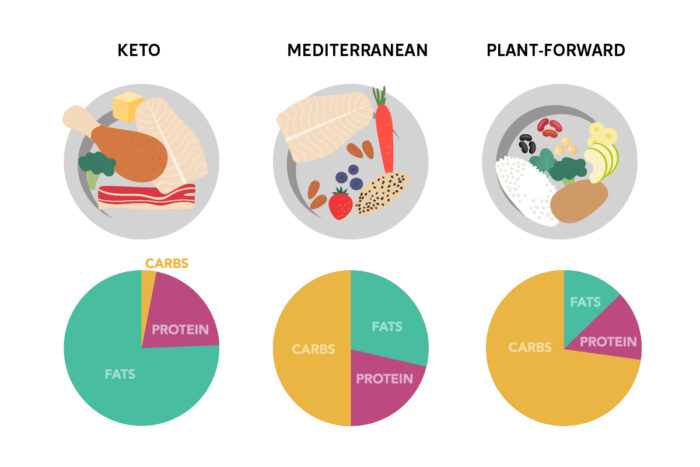
WashU Medicine researchers led a clinical trial testing three diets with different proportions of carbohydrates, fats and proteins and found all of them improved metabolic health, but a very low-carb ketogenic diet had additional benefits for liver health and blood sugar control. Credit: Katie Gertler/WashU Medicine

There is no shortage of popular diets to try, and they can generally produce weight loss if followed to the letter. But are all diet plans created equal in terms of reducing the cardiometabolic risks that come with obesity, such as Type 2 diabetes and liver disease?

A randomised clinical trial from Washington University School of Medicine in St. Louis suggests they aren’t, even when they lead to identical amounts of weight loss. Comparing three commonly recommended diet plans, the researchers found that losing weight on any of them improved overall metabolic health in adults with obesity who also had elevated blood sugar and excess fat in their liver – which are important risk factors for developing diabetes. But limiting carbohydrates through a ketogenic diet offered additional benefits for liver health and blood sugar control.

The findings appear August 27 in Cell Metabolism.

“For patients with obesity, prediabetes and fatty liver disease, weight loss induced by a very low-carbohydrate diet provides additional therapeutic effects on glucose and lipid metabolism that should further help prevent the progression to more severe metabolic diseases than weight loss alone,” said Samuel Klein, MD, the Danforth Professor of Medicine and Nutritional Science at WashU Medicine and the study’s senior author. “But all three diets – despite vastly different macronutrient makeups, from very low carbohydrates to very high carbohydrates – successfully improved metabolic health through weight loss alone.”

Which diet best improves metabolic and liver health?

Obesity affects roughly four in 10 Americans, most of whom also face metabolic health risks, including insulin resistance, which leads to prediabetes, and fat buildup in the liver. If left untreated, these problems can progress to Type 2 diabetes, chronic liver disease and cardiovascular events, among other irreversible conditions. While weight loss is the gold standard for reducing obesity-related health risks, it hasn’t been clear which type of diet, in terms of its protein, fat and carb content, works best to improve metabolic health.

To explore that question, the researchers, including first author Max C. Petersen, MD, PhD, an assistant professor of medicine in the John T. Milliken Department of Medicine at WashU Medicine, and Gordon I. Smith, PhD, an associate professor of medicine in the department, randomly assigned 55 adults with metabolically unhealthy obesity – meaning obesity with prediabetes and fatty liver – to follow one of three diets for around five months: a low-carbohydrate, high-fat ketogenic diet; a high-carbohydrate, low-fat, plant-forward diet; or a Mediterranean diet balanced between the two. Participants received 100% of their food throughout the study and attended weekly meetings with a study dietitian to support adherence to the assigned diet.

Across all three groups, participants lost an equal amount of weight, shedding about 10% of their total starting weight, and boosted insulin sensitivity in muscle cells by roughly 50% from baseline. The comparable restoration of insulin sensitivity across diet groups suggests that the weight loss itself was the important factor in combatting muscle insulin resistance – not the combination of fat and carbohydrates used to get there.

“Many metabolically unhealthy patients also are candidates for GLP-1 medicines, which have been very useful tools for helping people lose weight. But our results show that choice of diet remains important because it has an impact on specific health outcomes that go beyond weight loss alone.”

Max C. Petersen, MD, PhD, WashU Medicine

But this wasn’t the case for liver health. The researchers found that sensitivity to insulin in liver cells – which regulates how well the liver suppresses glucose production – improved two to three times more on the ketogenic diet compared with the other diets, though all three groups saw improvement. They also found that the ketogenic diet reduced fat inside the liver by 67% compared to 45% for the other two diets after five months.

“Fatty liver disease affects about 75% of adults with obesity worldwide and has become the fastest-growing cause of chronic liver disease and liver cirrhosis,” said Petersen. “Our study shows that for people with obesity and fatty liver disease, a low-carbohydrate ketogenic diet could help reduce that statistic.”

The ketogenic diet also provided greater improvements in blood sugar control than the other plans did, lowering 24-hour blood glucose measurements by 20% from baseline compared to 8% on the other diets. Insulin levels in the blood throughout the day also decreased by 74% on the low-carbohydrate diet compared to 44% and 27% on the Mediterranean and high-carbohydrate diets, respectively. This sharp decline in insulin reflects the decreased need for insulin to regulate blood glucose when consuming a very-low carbohydrate diet, so the pancreas doesn’t need to overproduce insulin to get a response.

Half of the participants on the low-carbohydrate diet reversed their prediabetes, compared to 29% of participants on the Mediterranean diet and 7% on the high-carbohydrate diet.

“Weight loss – even just a moderate amount – is universally beneficial in people who are metabolically unhealthy,” said Petersen. “Many metabolically unhealthy patients also are candidates for GLP-1 medicines, which have been very useful tools for helping people lose weight. But our results show that choice of diet remains important because it has an impact on specific health outcomes that go beyond weight loss alone.”

In future studies, the researchers are interested in understanding the fundamental mechanisms responsible for the metabolic benefits of weight loss, including the effects of GLP-1 medicines.

Abeeha Shamshad contributed to this story.

Source: University of Washington Medicine