Tag: hip fractures

New AI Tool Predicts Hip Fracture Risk Better than Current Screening

A tool developed using data on more than 3.5 million adults in Sweden can identify individuals at high risk of hip fracture using registry data, with no in-person assessment
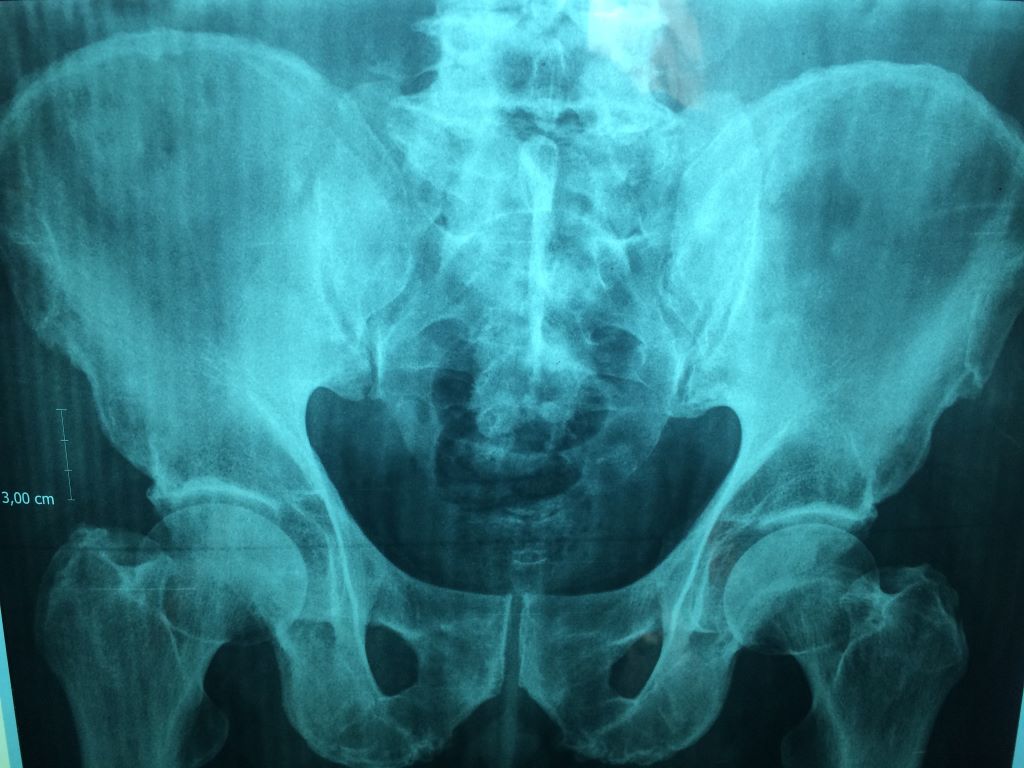
Taokinesis, Pixabay Image by Dr. Manuel González Reyes from Pixabay

A machine-learning tool built from Swedish national health registry data can predict hip fracture risk with high accuracy and no in-person assessment, and identifies far more at-risk individuals than current clinical screening practices, according to a study published August 27thin the open access journal PLOS Medicine by Kristian Axelsson and Mattias Lorentzon of the University of Gothenburg, Sweden, and colleagues.

Hip fractures are associated with substantial disability, illness, and death in older adults, but existing risk prediction tools typically require in-person patient assessment, including measurements like body mass index and lifestyle information, making large-scale screening difficult.

Researchers analysed nationwide registry data from 3 542 647 individuals aged 50 and older in Sweden, following them for up to ten years. During the study period, 142 327 of the participants sustained a hip fracture. Using more than 100 000 variables drawn from diagnoses, medications, procedures, and demographic and socioeconomic data, the research team developed and tested a deep-learning approach called FRACTURE-ML.

When tested on data from a separate group of people, not included in the original model development, FRACTURE-ML showed good discrimination of people who went on to fracture their hip from those who didn’t with an area under the curve (AUC) of 0.89 one year ahead, and only slightly worse with AUC 0.85 when predicting five years ahead. A simplified version using just 35 variables performed nearly as well. Compared with the current screening methods used in Swedish clinical practice, FRACTURE-ML identified nearly seven times more people at risk of hip fracture within two years (sensitivity 0.84 versus 0.12), with only a modest reduction in specificity (0.79 versus 0.98).

Because the model relies solely on registry data, it lacks information on lifestyle factors such as smoking and alcohol use, which may also affect fracture risk. The authors note that validation in other countries and studies testing real-world implementation are still needed.

“The findings show that it is possible to predict hip fracture risk at the population level without direct patient interaction,” lead author Kristian Axelsson says. “This approach could help target preventive measures more efficiently and potentially reduce the number of hip fractures.”

Mattias Lorentzon adds, “FRACTURE-ML accurately identified people at high risk of hip fracture using routinely collected healthcare and population data, without requiring an in-person clinical assessment. This could make large-scale screening more efficient and help preventive care reach people before a hip fracture occurs.”

“Hip fractures have serious consequences for independence, health and survival. A tool that can identify high-risk individuals directly from existing data could support earlier intervention and potentially reduce the burden of hip fractures across the population,” the authors say.

“One important finding was that a reduced model using only 35 predictors performed nearly as well as the much larger machine-learning model. This suggests that strong predictive performance may be achievable with a comparatively practical and interpretable tool.”

“By using information already available in national registers, FRACTURE-ML could help shift hip-fracture care from reacting after an injury to preventing the injury in the first place.”

“Machine learning performed very well, but carefully developed traditional statistical models achieved similar accuracy. The key advance may therefore be less about a particular algorithm and more about making better use of comprehensive, routinely collected data.”

Provided by PLOS

Increased Risk of Hip Fractures for Women on Vegetarian Diets

Source: Unsplash

Middle-aged women on vegetarian diets have a significantly higher risk of hip fractures than those on diets that include fish or meat, according to a long-term study publish in BMC Central. This risk remained even after accounting for the differences in available nutrient intake and body mass index.

Hip fractures greatly impact quality of life and and health outcomes, and carry a significant financial burden, with an average of $44 000 estimated to spent in the 12 months following a hip fracture. The growing trends of meat-free diets have prompted concern over their impact on hip fracture rates.

While increased intake of vegetable proteins has been associated with lower hip fracture risk, vegetarian diets have also been characterised by lower dietary intakes of nutrients that boost bone mineral density (BMD) and which are more abundant in animal products. Examples include total protein, calcium, vitamin D, vitamin B12, and ω-3 fatty acids, though the relationship with BMD is complex.

The researchers drew on data from the United Kingdom Women’s Cohort Study (UKWCS), and included 26 318 participants aged 35–69 who were classed into regular meat-eaters (> 5 servings/week), occasional meat-eaters (< 5 servings/week), pescatarians (eating fish but no meat) and vegetarians.

On average, vegetarians and pescetarians had a lower BMI (23.3 for both) than regular meat-eaters (25.2). At recruitment, regular meat-eaters had the highest prevalence of CVD, cancer, or diabetes (10.2%), and vegetarians the lowest (5.8%). A higher proportion of vegetarians reported never drinking alcohol. Regular meat-eaters reported the highest absolute dietary intakes of protein, vitamin D, and vitamin B12, whilst vegetarians reported the lowest. Calcium intakes were similar across the diet groups.

Before adjustments, compared with regular meat-eaters, vegetarians (hazard ratio 1.40) but not occasional meat-eaters (1.03) or pescatarians (1.04) had a greater hip fracture risk. Adjustment for confounders slightly attenuated these associations in the adjusted model, but the higher risk in vegetarians remained and was statistically significant: vegetarians 1.33; occasional meat-eaters 1.00; pescatarians 0.97.

However, even after adjustment for factors such as reported differences in nutrient intake and lower BMI, which is a known risk factor in hip fractures, the relative risk difference remained. This suggests that other, as yet unknown, factors related to the diets may be involved.

Psychological Resilience Aids Faster Return to Walking after Hip Fracture

Carers help an old man to walk
Photo by Kampus Productions on Pexels

In a study of 210 community-dwelling older adults who had surgery following hip fracture, participants who reported feeling high levels of psychological resilience were later able to walk faster and longer than those feeling less resilient. The results, published in the Journal of the American Geriatrics Society, will help the development of interventions such as targeted exercise programmes.

Walking capacity is a critically important outcome following hip fracture, in that it serves both as a surrogate measure of functional ability and physical health more globally, as well as a predictor of future survival, institutionalisation, social interaction and community engagement. Moreover, poor recovery after hip fracture causes considerable suffering for patients and imposes a financial burden on the social and health care sector. In 29%–50% of cases, older adults with hip fracture do not reach their pre-fracture levels of functioning a year after the fracture. Poorer pre-fracture function, greater cognitive impairment, greater co-morbidity burden, poorer social support, and poorer nutrition, have been identified as predictors for diminished post-fracture recovery.

Psychological resilience was measured through a questionnaire provided at the start of the study, and they assessed walking capacity at the start as well as 16 weeks later.

“We believe these results support opportunities to improve walking capacity following hip fracture in older adults by devising multicomponent interventions combining targeted exercise with psychological resilience-enhancing programmes,” said corresponding author Richard H. Fortinsky, PhD, of the University of Connecticut School of Medicine and the UConn Center of Aging.

Source: Wiley