

A tool developed using data on more than 3.5 million adults in Sweden can identify individuals at high risk of hip fracture using registry data, with no in-person assessment
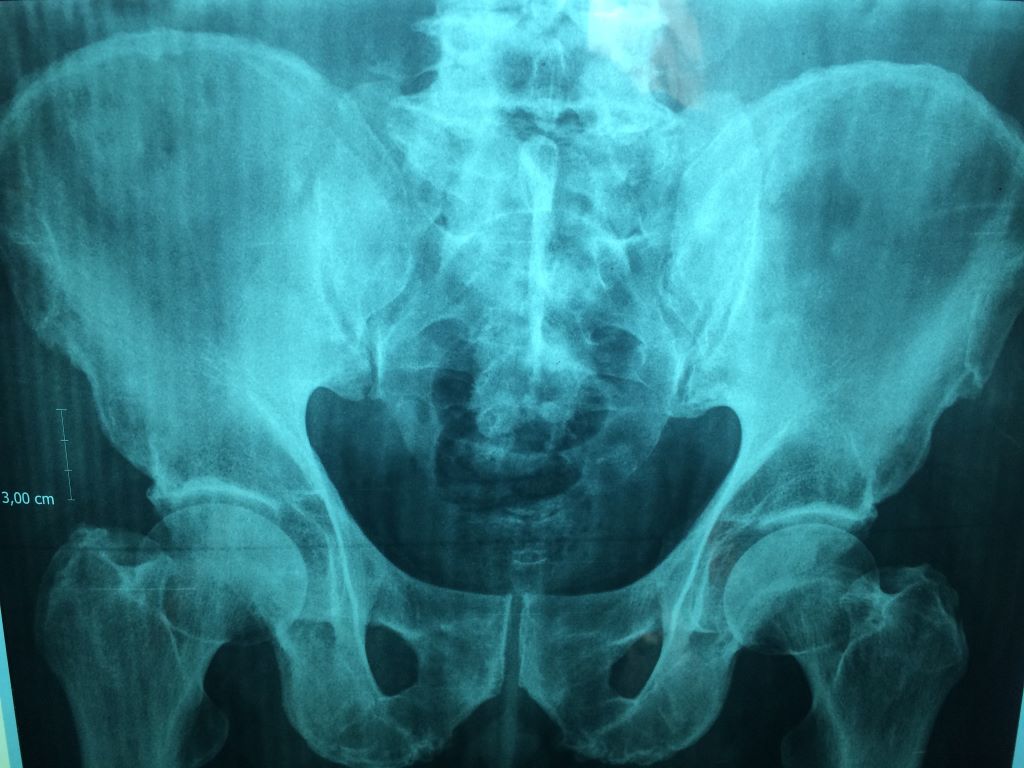
A machine-learning tool built from Swedish national health registry data can predict hip fracture risk with high accuracy and no in-person assessment, and identifies far more at-risk individuals than current clinical screening practices, according to a study published August 27thin the open access journal PLOS Medicine by Kristian Axelsson and Mattias Lorentzon of the University of Gothenburg, Sweden, and colleagues.
Hip fractures are associated with substantial disability, illness, and death in older adults, but existing risk prediction tools typically require in-person patient assessment, including measurements like body mass index and lifestyle information, making large-scale screening difficult.
Researchers analysed nationwide registry data from 3 542 647 individuals aged 50 and older in Sweden, following them for up to ten years. During the study period, 142 327 of the participants sustained a hip fracture. Using more than 100 000 variables drawn from diagnoses, medications, procedures, and demographic and socioeconomic data, the research team developed and tested a deep-learning approach called FRACTURE-ML.
When tested on data from a separate group of people, not included in the original model development, FRACTURE-ML showed good discrimination of people who went on to fracture their hip from those who didn’t with an area under the curve (AUC) of 0.89 one year ahead, and only slightly worse with AUC 0.85 when predicting five years ahead. A simplified version using just 35 variables performed nearly as well. Compared with the current screening methods used in Swedish clinical practice, FRACTURE-ML identified nearly seven times more people at risk of hip fracture within two years (sensitivity 0.84 versus 0.12), with only a modest reduction in specificity (0.79 versus 0.98).
Because the model relies solely on registry data, it lacks information on lifestyle factors such as smoking and alcohol use, which may also affect fracture risk. The authors note that validation in other countries and studies testing real-world implementation are still needed.
“The findings show that it is possible to predict hip fracture risk at the population level without direct patient interaction,” lead author Kristian Axelsson says. “This approach could help target preventive measures more efficiently and potentially reduce the number of hip fractures.”
Mattias Lorentzon adds, “FRACTURE-ML accurately identified people at high risk of hip fracture using routinely collected healthcare and population data, without requiring an in-person clinical assessment. This could make large-scale screening more efficient and help preventive care reach people before a hip fracture occurs.”
“Hip fractures have serious consequences for independence, health and survival. A tool that can identify high-risk individuals directly from existing data could support earlier intervention and potentially reduce the burden of hip fractures across the population,” the authors say.
“One important finding was that a reduced model using only 35 predictors performed nearly as well as the much larger machine-learning model. This suggests that strong predictive performance may be achievable with a comparatively practical and interpretable tool.”
“By using information already available in national registers, FRACTURE-ML could help shift hip-fracture care from reacting after an injury to preventing the injury in the first place.”
“Machine learning performed very well, but carefully developed traditional statistical models achieved similar accuracy. The key advance may therefore be less about a particular algorithm and more about making better use of comprehensive, routinely collected data.”
Provided by PLOS
