Photoreceptor cells in the retina. Credit: Scientific Animations
Cedars-Sinai investigators working to optimise a cell-based treatment for retinitis pigmentosa have uncovered how transplanted neural stem cells interact with host retinal cells to preserve vision. The findings, published in Nature Communications, may guide future research toward strategies to treat degenerative eye disease.
“We used single-cell analysis to show that neural stem cells can protect vision in several ways, including providing protective proteins, restoring retinal cells to a healthier state, reducing cellular stress, and maintaining retinal integrity,” said Clive Svendsen, PhD, executive director of the Board of Governors Regenerative Medicine Institute and co-corresponding author of the study.
Investigators transplanted neural stem cells into the retinas of laboratory rats with retinal degeneration. Previous studies have shown the transplants significantly reduced vision loss in the animals for up to 180 days, the equivalent of about 20 years in humans. In this study the team examined interactions between the transplanted cells and diseased retinal cells to better understand the neural stem cells’ protective effects.
“Our study reveals that the interaction between neural stem cells and host retinal cells dynamically changes over time,” said Shaomei Wang, MD, PhD, professor of Biomedical Sciences and co-corresponding author of the study. “Through a better understanding of this process, we may be able to develop more powerful approaches to treat eye diseases in the future.”
Investigators are now evaluating the use of neural stem cells engineered to express key protective proteins identified in this study to further improve the host retinal environment.
Additional Cedars-Sinai authors includeSaba Shahin, Shaughn Bell, Bin Lu, Hui Xu, Jason Chetsawang, Stephany Ramirez, Jorge S. Alfaro, Alexander Laperle and Soshana Svendsen.
Other authors include Somanshu Banerjee and Vivek Swarup.
An analysis led by Mass General Brigham investigators found slower aging in older adults after two years of a daily multivitamin, with greater benefits for those who began the trial with accelerated biological age.
‘Biological age’, age on a cellular level, can differ from chronological age. Using data from a large randomised clinical trial of older adults, researchers at Mass General Brigham evaluated the effects of taking a daily multivitamin over the course of two years on five measures of biological ageing and found a slowing equivalent to about four months of ageing. The benefits were increased in those who were biologically older than their actual age at the start of the trial. Their results are published in Nature Medicine.
“There is a lot of interest today in identifying ways to not just live longer, but to live better,” said senior author Howard Sesso, ScD, MPH, associate director of the Division of Preventive Medicine in the Mass General Brigham Department of Medicine. “It was exciting to see the benefits of a multivitamin linked with markers of biological ageing. This study opens the door to learning more about accessible, safe interventions that contribute to healthier, higher-quality ageing.”
Epigenetic clocks estimate biological ageing based specific sites in our DNA that regulate gene expression (known as DNA methylation) and change naturally as we get older, helping track mortality and the pace of ageing. This study, which uses data from the well-established COcoa Supplement Multivitamins Outcomes Study (COSMOS), analysed DNA methylation data from blood samples of 958 randomly selected healthy participants with an average chronological age of 70.
The study participants were randomised to take a daily cocoa extract and multivitamin; daily cocoa extract and placebo; placebo and multivitamin; or placebos only. Samples were analysed for changes in five epigenetic clocks from the start of the trial and at the end of the first and second years. Compared to the placebo only group, people in the multivitamin group had slowing in all five epigenetic clocks, including statistically significant slowing seen in the two clocks that are predictive of mortality. The changes equated to about four months less biological ageing over the course of two years. Additionally, people who were biologically older than their actual age at the start of the trial benefited the most.
“We plan to do follow-up research to determine if the slowing of biological ageing – observed through these five epigenetic clocks, and additional or new ones – persists after the trial ends,” said co-author and collaborator Yanbin Dong, MD, PhD, director of Georgia Prention Institute, Medical College of Georgia at Augusta Univeristy.
Further studies are also needed to determine how improvements in biological aging may explain reductions in clinical outcomes. The COSMOS team plans to investigate how the effects of a daily multivitamin on biological aging may extend to different outcomes they have seen evidence of benefits for, such as improvements in cognition and reductions in cancer and cataracts.
“A lot of people take a multivitamin without necessarily knowing any benefits from taking it, so the more we can learn about its potential health benefits, the better,” said Sesso. “Within COSMOS, we are fortunate and excited to build upon a rich resource of biomarker data to test how two interventions may improve biological aging and reduce age-related clinical outcomes.”
Depression and other psychological factors may be linked to the risk of postoperative confusion in older adults. This is shown in a new systematic review from Karolinska Institutet, published in the British Journal of Anaesthesia. The study summarises results from more than 6700 patients.
Older individuals undergoing surgery face an increased risk of developing cognitive complications, such as postoperative delirium. Delirium is characterised by sudden changes in attention and awareness, and can lead to longer hospital stays and reduced functioning. The new study analyses 30 previously published works in which researchers examined whether preoperative psychological factors, such as depression, anxiety, stress, and personality traits, may influence these complications.
Depression most common
The review identified four groups of psychological factors. Depression was the most common and appeared in nearly all studies. In the statistical meta-analysis, no clear association between depression and delirium was observed, but when the researchers used alternative statistical synthesis methods, they found evidence suggesting that psychological factors play a role.
“Our results show that depression is the most consistently reported psychological risk factor, even though the pooled statistical analyses did not demonstrate a significant effect,” says Anahita Amirpour, PhD at the Department of Neurobiology, Care Sciences and Society. “At the same time, we saw that anxiety, stress, and personality traits may also play a role, although the research base there is more limited.”
Postoperative delirium
In total, the study included 6714 patients from 16 different countries. Postoperative delirium was the most common outcome measure and occurred in between 9 and 55% of patients, depending on the study. Very few studies examined other cognitive complications, such as long-term effects on memory and attention.
The researchers emphasise that the results should be interpreted with caution. Many of the included studies varied greatly in how they measured both psychological factors and cognitive outcomes, and only two studies examined time periods extending beyond the immediate postoperative phase.
Peptides have become one of the skincare industry’s most popular ingredients. It’s no wonder why, with evidence showing these powerful molecules hold the secret to healthier, firmer and more radiant skin.
But out of the many peptides that exist, one in particular has been gaining attention lately in the beauty industry: copper peptides.
It’s not surprising that copper peptides are garnering so much attention. This peptide is special because of its ability to multitask – with research showing that not only does it help make the skin firmer and more supple, it also protects the skin from damage.
The human body naturally produces many types of peptides. Each supports vital body functions, acting like tiny building blocks of life. Many help form the foundation of essential proteins – such as collagen and elastin, which help keep skin healthy and youthful.
The three main types of peptides in cosmetics are: carrier peptides, signal peptides and neurotransmitter-inhibiting peptides.
Carrier peptides aid in wound repair by physically transporting important minerals into the cells to initiate repair.
Signal peptides can prevent ageing by stimulating the activation of the skin’s fibroblasts – specialised skin cells that produce substances such as collagen, a protein which helps maintain the skin’s elasticity.
Neurotransmitter-inhibiting peptides act like botulinum toxin, relaxing facial muscles by blocking the signals that make them contract. This may reduce wrinkles.
Copper peptides are actually a type of carrier peptide. They’re produced naturally by your body. But as we age, the concentration of copper peptides in our bodies drops. Applying synthetic, lab-made versions – found in creams, serums and masks – can help replenish these molecules and help your skin.
Copper peptides were first discovered in 1973. Research found that these molecules aided wound healing, which is why the first commercialised carrier peptide in 1985 was designed to deliver copper into wounded tissue.
After gaining research attention for this role, further studies examined what other functions copper peptides had on the skin. Researchers found that they had anti-ageing, anti-inflammatory and renewing properties and also supported hair growth.
Copper peptides act as little helpers that tell your skin cells to repair and rebuild themselves. They do this by boosting collagen and elastin, key proteins that keep your skin feeling smooth and firm.
Copper peptides have been also found to reduce inflammation and calm skin redness, too. But perhaps most crucially, they have been found to act as antioxidants, fighting damage caused by pollution and the sun’s ultraviolet rays.
On top of that, copper peptides improve wound healing. This is why they’re often used after cosmetic treatments – such as face and neck lifts and micro-needling – that can damage the skin. Copper infused wound dressings are also used to help chronic wounds heal faster.
Overall, skin cell studies have shown that copper peptides increase collagen production, improve skin thickness and skin elasticity. Clinical trials and lab tests confirm these benefits, making copper peptides one of the most researched anti-ageing ingredients.
For best results, you might want to try applying it twice a day – first in the morning so it can act as a potent antioxidant, then in the evening so it can replenish collagen overnight.
Copper peptides can also penetrate the skin more effectively when delivered with microneedles, which makes them even more useful in advanced skincare products.
Copper peptides v other peptides
Other peptides do work well on the skin – such as palmitoyl-based peptides and acetyl hexapeptide-8 peptide – both of which fight wrinkles. But these both work differently to copper peptides.
Palmitoyl peptides signal the skin to make more collagen, while acetyl hexapeptide-8 relaxes facial muscles to reduce expression lines, acting like a less expensive version of botulinum toxin.
Copper peptides stand out among these other peptides because they can do the work of multiple peptides in one. Copper peptides boost collagen, improve skin healing and fight oxidative stress. This appears to make them better at preventing the signs of ageing.
Some skin cell studies show they work even better when combined with other well known skincare ingredients, such as hyaluronic acid (which boosts hydration).
Copper peptides themselves can also cause, in a few people, some skin irritation and mild allergic reactions. If you find you experience these symptoms after using copper peptides, stop use immediately.
Copper peptides are more than just a trend – they’re backed by science. They help keep skin healthy and speed up healing. They might even play a role in future cancer treatments.
Research has shown copper peptides turn on genes that tell damaged cancer cells to shut themselves down and stop replicating. They’ve also been shown to fix other genes that control cell growth and repair.
If you’re curious about skincare, copper peptides may be worth incorporating into your daily routine. Just remember that good, healthy skin also needs other measures – such as sunscreen, hydration and a healthy lifestyle.
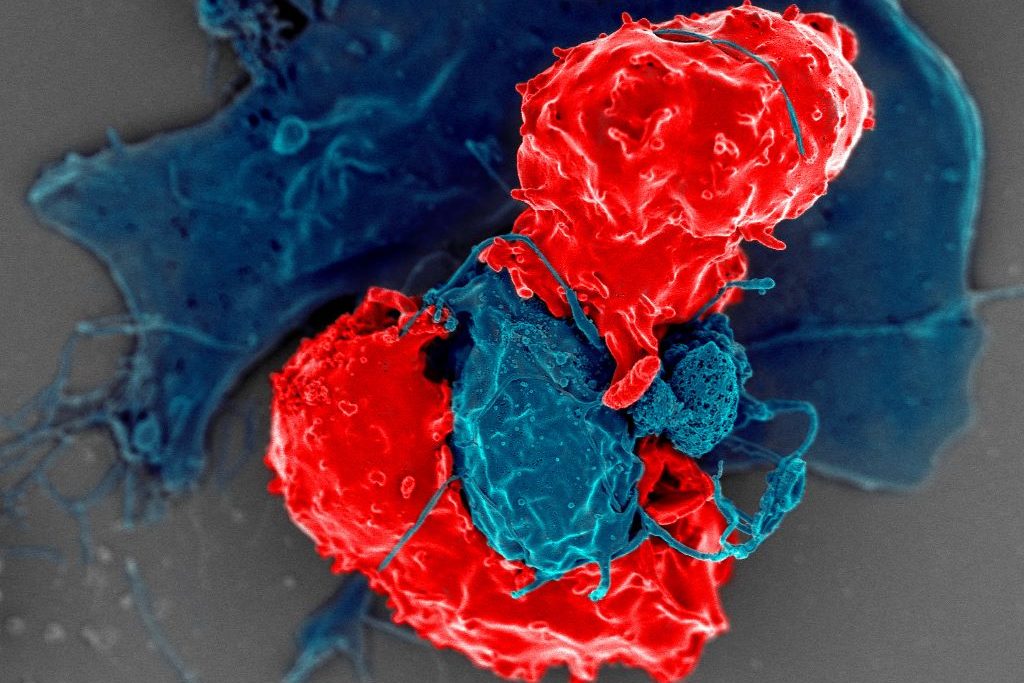
Scanning electron microscope image of T regulatory cells (red) interacting with antigen-presenting cells (blue). T regulatory cells can suppress responses by T cells to maintain homeostasis in the immune system. Credit: National Institute of Allergy and Infectious Diseases/NIH
Cedars-Sinai Health Sciences University investigators have identified for the first time a protein’s role as a “dimmer switch” that can calm an overactive immune system and restrain harmful inflammation. The protein, Butyrophilin 2A2 (BTN2A2), interacts with a key molecule that controls the strength of T-cell responses.
The findings, published inNature Communications, define a unique pathway that helps balance immune activity and could be harnessed to limit damage caused by a variety of autoimmune diseases.
In laboratory mice, loss of BTN2A2 led to exaggerated immune reactions and an increase in damaging kidney inflammation called glomerulonephritis. Treatment with BTN2A2 reduced disease severity by increasing immune-regulating T cells and lowering inflammation.
Supporting laboratory experiments in human T-cells demonstrated similar immune-calming effects.
“Glomerulonephritis remains a leading cause of chronic kidney disease and kidney failure worldwide, with limited treatment options,” said Ananth Karumanchi, MD, co-corresponding author of the study and director of the Renovascular Research Center at Cedars-Sinai. “Our findings provide a strong foundation for future studies aimed at modifying immune-driven kidney disease rather than simply managing its symptoms. The pathway could also be targeted in a range of autoimmune and inflammatory diseases including rheumatoid arthritis, multiple sclerosis, inflammatory bowel disease, and transplant rejections.”
Other Cedars-Sinai authors include Shafat Ali, Anders H. Berg, Michifumi Yamashita, Ambart E. Covarrubias, Jordan Mundell, Pranali N. Shah, Ruan Zhang, Vincent Dupont, Bong-Ha Shin, Shen Yang, Madhusudhanarao Katiki, Ramachandran Murali, Margareta D. Pisarska, Ravi Thadhani, Peter S. Heeger and Stanley C. Jordan
An analysis of biomarkers in patient blood samples could help with early detection of cachexia, or cancer wasting syndrome, according to new research published in Cancers. The study by Cedars-Sinai Health Sciences University investigators, explores biologic signals detectable in the blood that could be used to design future strategies for assessing patient risk and developing therapies aimed at mitigating fatigue and muscle and fat loss experienced by many patients with cancer.
“We found that in patients with advanced non-small cell lung cancer, cachexia biomarkers change over time,” said Kamya Sankar, MD, co-medical director of the Thoracic Disease Research Group at Cedars-Sinai Cancer and corresponding author of the study. “And treatments targeting one of the early cachexia biomarkers we identified, an inflammatory protein called GDF-15, are already under evaluation in clinical trials.”
Investigators measured the blood of 27 patients with non-small cell lung cancer at two different time points. In patients with early cachexia, they found higher levels of inflammatory proteins such as GDF-15. In patients with later-stage cachexia, they found increased mitochondrial DNA, which comes from the parts of cells that convert food into energy.
Larger, prospective studies are required to validate the clinical benefit of these biomarkers, but they could serve as the basis for risk assessment of patients and may inform design of future clinical trials of therapies for cancer-associated cachexia, Sankar said.
Additional Cedars-Sinai authors include Elham Kazemian, Nicole Lorona, Carlos D. Cruz-Hernández, Mitra Mastali, Akil A. Merchant, Jennifer Van Eyk, Karen L. Reckamp, Neil A. Bhowmick, and Jane C. Figueiredo.
Other authors include Alex K. Bryant and Puneeth Iyenga
Biologics may be more effective with earlier treatment initiation, especially among children with early polysensitisation or multiple early-childhood risk factors, according to the results of a new study published in Annals of the American Thoracic Society. Screening for these risk factors may help inform targeted early initiation of biologics for asthma.
Robust real-world data on the effectiveness of biologic therapies in children with severe asthma remain limited, particularly across different ages and early-life risk profiles. This evidence gap constrains precision in treatment decisions and clinical guidance.
Children with moderate to severe asthma requiring biologic therapy are most affected, especially those initiating biologic treatment at younger ages and those with early indicators of allergic disease or high-risk asthma histories.
Initiating biologic therapy earlier in childhood – particularly in children with significant early-life risk factors and allergic sensitisation – is associated with greater reductions in severe asthma exacerbations in real-world practice.
Findings highlight the importance of treatment timing and patient history when optimizing outcomes with asthma biologics.
Risks of delayed treatment initiation
Delayed initiation of biologic therapy until adolescence or failure to account for early-childhood risk profiles may reduce potential treatment benefit. These findings highlight the risk of suboptimal outcomes when treatment timing or patient selection does not align with underlying disease risk.
Clinicians should prioritise earlier identification and risk-stratified initiation of biologics in children with severe asthma, particularly those with high early-life risk burden, to maximise treatment benefits.
Study findings support development of care pathways that incorporate earlier, risk-stratified biologic initiation. Decision-making algorithms may benefit from integrating age at treatment initiation and early-life risk indicators, such as polysensitisation and high early disease burden, to better identify children most likely to benefit and reduce severe exacerbations.
Future research may also explore the role of clinical artificial intelligence in supporting these approaches. Clinical AI tools could help identify high-risk paediatric patients earlier and guide treatment timing and patient selection by detecting patterns in real-world clinical data, potentially improving precision in biologic therapy use.
People who use drugs with anticholinergic effects, including certain antidepressants, drugs for urinary incontinence and common antihistamines, are at higher risk of developing cardiovascular disease. This is shown in a new study from Karolinska Institutet published in BMC Medicine.
Anticholinergic drugs reduce the effect of the neurotransmitter acetylcholine and are commonly prescribed to middle-aged and older people. This large group of drugs includes antihistamines used for allergic conditions, anxiety or insomnia, drugs for urinary incontinence, and certain antidepressants, where tricyclic antidepressants have a strong anticholinergic effect, whereas SSRIs have a weaker effect. A high cumulative use of these drugs, referred to as anticholinergic burden (see fact box), has previously been linked to impaired cognitive ability.
May affect heart regulation
The new study suggests that the drugs may also affect the parasympathetic nervous system and thereby the regulation of the cardiovascular system. The results show that it may be important to monitor the total drug burden in everyday clinical practice.
The study included more than 500 000 people in Stockholm who were 45 years of age or older and had no prior cardiovascular disease, except for hypertension, at the start of the study. The researchers followed the participants for up to 14 years and analysed how the use of anticholinergic drugs was associated with the development of cardiovascular disease.
“Many of these drugs are used by older people and by people with multiple medical conditions. We wanted to investigate whether the total exposure had any significance for the risk of developing cardiovascular disease over time,” says Nanbo Zhu, postdoctoral researcher at the Department of Neurobiology, Care Sciences and Society, Karolinska Institutet.
71 per cent higher cardiac risk
The study showed that the risk of cardiovascular disease increased in line with how much anticholinergic medication the participants used each year. Those with the highest exposure had a 71% higher risk of a cardiovascular event than people who did not use anticholinergic medication at all. The association was seen for all types of cardiovascular disease but was particularly clear for heart failure and various forms of arrhythmia.
“Our results indicate that the cumulative drug burden can affect heart regulation, not only in the short term but also over the long term. This does not mean that the drugs should always be avoided, but that exposure should be monitored carefully,” says Hong Xu, assistant professor at the Department of Neurobiology, Care Sciences and Society.
The researchers point out that the study is observational, meaning it cannot establish a causal relationship. Other factors, such as underlying diseases, may also influence the associations.
The work was carried out within the Stockholm CREAtinine Measurements project in collaboration between several research groups at Karolinska Institutet and Region Stockholm. The study was funded by the Swedish Research Council, the Center for Innovative Medicine Foundation, and other foundations.
Some researchers report assignments for the pharmaceutical industry, which are disclosed in the scientific publication.
Anticholinergic drugs in the study were identified based on the Anticholinergic Cognitive Burden (ACB) scale, a tool used in research and clinical contexts. The scale covers a wide range of different drugs that are scored between 1 and 3, depending on how much the drug blocks the neurotransmitter acetylcholine. The consumption of these drugs is added up to estimate a patient’s anticholinergic burden. The drugs included in ACB are listed in table S1 in the study’s supplementary information.
Every day in South Africa, 30 people are shot dead. Another 43 are shot and survive. That is more than one person shot every 20 minutes, around the clock, every single day of the year.
Those numbers are staggering, but they don’t begin to convey the cascade of harm that extends beyond the bodies that take the bullets.
Consider this experience of Professor Sithombo Maqungo, head of orthopaedic trauma at Groote Schuur Hospital. A grandmother admitted with a fractured hip is scheduled for urgent surgery on Friday morning. As she is being prepped for theatre, a gunshot victim is rushed in, bleeding out. He dies, but the grandmother’s surgery is postponed as the weekend’s trauma cases overwhelm the unit. By Monday, her condition has deteriorated — blood clots, pressure sores, pneumonia. She dies. Her death certificate will not record “gunshot wound” as the cause. But she is, without question, a victim of gun violence.
This is the ripple effect of gun violence. One shooting does not claim one life. It consumes blood supplies, monopolises theatre time, depletes Intensive Care Unit beds, exhausts healthcare teams, and drives skilled professionals — paramedics, nurses, surgeons — out of a system that can no longer support them.
South Africa’s healthcare system is treating gun violence, it is not preventing it. And that distinction matters enormously.
Young men are the primary victims and perpetrators of gun violence, but women are increasingly killed with guns. After declining, following the Firearms Control Act of 2000, gun-related femicide has surged — rising 84% between 2017 and 2020/21. By 2020/21, firearms accounted for more than one-third of all femicides, the highest proportion recorded.
Failures in firearm oversight and the growth in licensed guns have contributed to this reversal.
South Africa’s own evidence shows that regulation works. When the Act was properly enforced between 2000 and 2010 — guided by a five-pillar strategy that tightened regulations and reduced the availability of firearms — gun deaths halved, from 34 people shot dead daily to 18, while a woman died at the hands of an intimate partner every eight hours rather than every six hours because fewer women were shot and killed.
As oversight weakened through under-resourcing, corruption and policy drift, deaths rose again.
Today, licence applications are 66% higher than in 2016, with a record 166,603 new applications in 2024/25 alone — expanding the pool of legally held guns that leak into criminal hands or are used to commit crimes.
Illegal guns don’t come from nowhere
A common misconception is that tightening firearm laws is pointless because most crime guns are unlicensed. But illegal guns do not appear from nowhere: virtually every firearm in criminal circulation was once legally manufactured and legally owned before it was lost, stolen, or sold into the illegal market. In South Africa, civilians are by far the biggest source of this leakage. Over the past 20 years, civilians have lost or had stolen an average of seven guns for every one lost or stolen by the police, according to South African Police Service annual reports. In 2024/25 alone, civilians reported the loss or theft of 7,895 firearms — 22 a day — and this is almost certainly an underestimate, since some owners do not report losses for fear of being charged with negligence (police reported the loss/ theft of 572 service guns in this time).
Legal guns are also used directly to commit crimes, particularly in domestic violence, where murder-suicides involving licensed firearms are well documented.
Controlling legal gun ownership is not separate from addressing gun crime — it is the primary mechanism for doing so.
The public health approach
A key question in response to South Africa’s gun violence crisis is why gun violence remains outside the core public health frameworks — and what would change if it were treated as the preventable health crisis it is.
A public health approach treats guns the way we treat other products that harm health — like alcohol and tobacco — moving the response upstream from treating wounds to preventing them by tightening controls over availability.
It would give healthcare workers, overwhelmed by the relentless flood of trauma, the ability to recognise that gunshot wounds are not inevitable but a preventable crisis dependent on political will and policy intervention.
It would create concrete opportunities for the health system to play a proactive role in prevention — screening for firearm access during domestic violence consultations to support gun removal from high-risk situations; linking young gunshot victims in surgical wards with gang exit programmes; using admission and forensic pathology data to identify violence hotspots and inform targeted policing.
It would make the true costs of gun violence visible to policymakers and the public — revealing how much is spent managing a preventable crisis on limited resources and overstretched facilities that could instead go towards primary healthcare, cancer treatment, or diabetes care. And crucially, it grounds the debate in evidence rather than ideology — vital in a post-truth world where beliefs, opinions, and hearsay are routinely presented as fact.
This approach would also recognise that firearms are a product sold for profit that harms people’s health. Just as taxes on alcohol and tobacco reflect their social costs and reduce consumption, firearms, ammunition and shooting activities should be subject to equivalent measures. This would generate revenue that could fund the very health services overwhelmed by the consequences of gun violence.
This sharpens the policy response too. South Africa’s Firearms Control Amendment Bill, currently at Nedlac, proposes strengthening limits on who can own firearms, the type and number of firearms and ammunition rounds that can be held, and for which purposes.
Treating gun violence as a public health crisis strengthens the case for these reforms: it positions the Bill not as a security measure but as a health measure, demanding the same urgent political commitment we would expect for any leading cause of preventable death and injury.
International framework
None of this can happen in isolation. South Africa needs international frameworks, evidence, and solidarity — and that is where the World Health Organisation (WHO) comes in.
On 10 February 2026, the Global Coalition for WHO Action on Gun Violence launched with more than 100 organisations across 40 countries, including a range of South African organisations spanning healthcare, child and women’s rights, legal advocacy, violence prevention, and research. The coalition’s formation was accompanied by a stark finding: not one of the World Health Assembly’s 3,200-plus adopted resolutions explicitly mentions firearms.
This is a profound gap. The WHO sets global standards that shape national health policy across 194 member states. When it fails to treat gun violence as a health priority, countries like South Africa are left without the international frameworks, evidence, and technical guidance they need to act.
The WHO has done this before, with other contested, politically sensitive issues — tobacco, HIV/AIDS, alcohol, violence against women — each time moving them from marginal concerns into mainstream public health priorities with measurable results. A resolution on road safety catalysed legislative reform in more than 100 countries. The Framework Convention on Tobacco Control contributed to lasting reductions in global tobacco use. The same is possible for gun violence.
The coalition is calling on the WHO to take ten key actions, including strengthening guidance on gun-related healthcare and supporting countries to use health systems as sites of gun violence prevention. South Africa — with some of the highest rates of gun violence in the world and a documented track record of evidence-based intervention — is uniquely placed not just to support this coalition, but to lead it by sponsoring a World Health Assembly resolution on firearm violence.
Our health professionals are close to breaking point. The surgeon who cannot cope with the relentless toll and resigns — leaving already stretched colleagues even more depleted. The paramedics who quit working in a war zone they never enlisted in. The medical students who leave the profession early, unable to bear the accumulated trauma of what they witness.
Gun violence is not inevitable. It is preventable. Treating it as a public health crisis is the only rational response to the evidence we already have.
Claire Taylor is from Gun Free South Africa, and Dean Peacock is from the Global Coalition for WHO Action. Views expressed are not necessarily those of GroundUp.
For GPs, solutions for treating osteoarthritis are frustratingly limited – it’s like the weather, everyone talks about it but nobody does anything about it. While standard care can relieve symptoms, there is currently no way to regenerate the actual lost cartilage in the joints. Some experimental treatments have proven successful in animal models and in petri dishes, but those are still many years away from being approved and available on the market.
But what if there was a currently available drug that could be repurposed? Since overweight and obesity worsen osteoarthritis symptoms by placing excess strain on weight-bearing joints, GLP-1 agonists such as semaglutide have proven that they can help by promoting rapid weight loss, as demonstrated by the STEP-9 trial.
Research into GLP-1s has now revealed that they may offer a whole constellation of other benefits, such as a potential reduction in stroke risk. Now, it appears that GLP-1 agonists may have a direct effect on osteoarthritis independent of weight loss. In our podcast, we look at a recently published article in Cell Metabolism that suggests that GLP-1 agonists might go beyond just the weight loss – promote actual cartilage regrowth by jumpstarting the joint cells’ energy processing pathways. We also explore some of the caveats of potentially using GLP-1 agonists in this way, such as a lack of understanding of the long term effects, as well as the well-documented occurrence of muscle loss.