Month: March 2026

NHI Pause Should be Used to Build Stronger Healthcare Foundations

By Haseena Majid and Mogie Subban

Universal health coverage cannot succeed with fragmented systems, weak data, and largely symbolic participation. A recent court-ordered pause to NHI implementation offers a chance to build the foundations properly, argue Dr Haseena Majid and Professor Mogie Subban.

Implementation of the NHI Act has been delayed following a High Court order, by agreement between the parties, prohibiting the proclamation or implementation of its provisions until the Constitutional Court rules on challenges related to public participation.

Beyond the legalities, the pause reveals something more consequential. Universal health coverage cannot succeed on fragile administrative foundations.

If the NHI is to deliver equity, efficiency and quality care, the state must first confront the structural weaknesses that continue to shape large parts of South Africa’s health system. These include fragmented governance across national, provincial and local levels that weakens coordination and accountability; persistent shortages of health professionals that leave facilities understaffed and overburdened; and weak information systems that limit the state’s ability to track performance, allocate resources effectively and plan services based on reliable data.

The NHI Act can mandate pooled financing and new purchasing arrangements, but financing reform alone cannot fix fragmented governance, uneven data systems or inconsistent coordination between stakeholders. When reforms are layered onto unstable administrative systems, the result is not transformation but increased risk.

The eye health example

Eye health illustrates this challenge clearly. This is because it depends on coordination across many parts of the health system including clinics, skilled cadres such as optometrists and ophthalmologists, hospitals, NGOs and screening programmes. When these stakeholders do not work together effectively, patients fall through the gaps.

South Africa’s burden of chronic disease is rising, and with it preventable vision loss. The International Diabetes Federation estimates that around 2.3 million people in South Africa aged 20–79 live with diabetes, a condition that can affect the eyes and lead to vision loss and blindness if not detected early. Studies in South Africa have reported high rates of diabetic eye disease, including prevalence estimates of 39% in a tertiary diabetes clinic in Durban and around 25% in primary care settings in Tshwane.

These figures are not simply about eye disease. They reflect gaps in chronic disease coordination, screening coverage and referral systems. When diabetic eye screening is inconsistent, when referral pathways are unclear and when health data are incomplete, preventable vision loss becomes far more likely.

Cataract surgery, one of the most effective medical procedures available, is rightly prioritised. Yet provincial reporting continues to show significant surgical backlogs. While numbers fluctuate, the pattern remains consistent: demand continues to outpace coordinated capacity.

Vision challenges are also increasing as the population ages. A KwaZulu-Natal study reported presbyopia prevalence of 77% among examined adults. As the population grows older, near-vision impairment becomes not only a clinical concern but also one that affects productivity, mobility and independence.

Taken together, diabetes-related eye disease, cataracts and age-related vision decline illustrate a predictable and growing demand for eye-care services. The burden is clear, but the health system response remains uneven.

Only around 6–7% of optometrists practice in the public sector, while the majority work in private urban settings. Across the country, eye-care services are delivered through a mix of public facilities, private practitioners, NGOs, outreach surgical programmes and school screening initiatives. Yet there is no single national picture showing who is providing which services, where those services are located, and how well they are functioning. Government therefore does not consistently have a clear view of which partnerships are active, which communities are overserved or neglected, what equipment is functioning at facilities, or how the workforce is distributed relative to need. This is not a minor administrative gap, instead it is a governance failure with real consequences.

No clear view

Government cannot plan for what it cannot see. Data gaps and poor system visibility are creating blind spots that will paralyse even the best financing reforms. Without clear stakeholder mapping and infrastructure audits, planning becomes reactive. Procurement decisions become distorted and workforce deployment misaligned. Funding reform under the NHI may change how services are purchased, but if the underlying service network remains fragmented, inefficiencies will simply be redistributed.

The consequences extend beyond clinics. Children with uncorrected vision problems struggle at school. Adults with untreated diabetic eye disease risk losing income and economic stability. Older persons waiting for cataract surgery may lose mobility and independence. When health systems fail to coordinate care, the costs are first absorbed by households and later by the state through disability, preventable complications and lost productivity.

The NHI Act aims to improve equity and purchasing efficiency. But efficiency depends on knowing where services exist and where they are missing. Equitable access depends on understanding how infrastructure and human resources are distributed. Quality oversight depends on reliable data that allows performance to be monitored. What the NHI pause ultimately exposes is unfinished work in health-system governance. South Africa does not lack policy ambition. The country is widely recognised for progressive health policy. The challenge lies in fragmented implementation, limited visibility of service networks and uneven coordination across institutions.

A strategic choice

The Department of Health now faces a strategic choice. It can wait for the courts to resolve the legal process, or it can use this moment to strengthen the operational foundations needed for equitable reform.

Eye health presents a practical place to begin. It may not command the urgency of oncology, emergency medicine or infectious disease management, but that is precisely why it offers an opportunity to test workable solutions. Even under the best financing model, sustainable eye care depends on coordinated collaboration between public facilities, private practitioners, NGOs and community networks. A focused national pilot could map eye care services geographically, combining stakeholder mapping with infrastructure audits and workforce distribution analysis. This would strengthen planning in eye health while providing the system visibility that large-scale purchasing reforms like NHI depend on. The efficiency gaps are already known. What is needed now is coordinated implementation. If government can demonstrate that fragmented service environments can be mapped and coordinated within eye health, it will create a practical reform model for other strained areas of the health system.

Universal health coverage will not be secured simply by moving money differently. It will be secured by making the system visible, coordinated and accountable. The current pause has given us more time. What matters now is whether it is used to build the governance foundations that real reform requires.

*Dr Majid is a Postdoctoral Research Fellow at the College of Law and Management Studies, University of KwaZulu-Natal. Professor Subban is Academic Mentor and Public Governance Expert, at the College of Law and Management Studies, University of KwaZulu-Natal.

Note: Spotlight aims to deepen public understanding of important health issues by publishing a variety of views on its opinion pages. The views expressed in this article are not necessarily shared by the Spotlight editors.

Republished from Spotlight under a Creative Commons licence.

Read the original article.

Power Outages Linked to More Emergency Hospital Visits for Older Adults

In 2018, 4246 excess hospitalisations occurred among adults over 65 in the US due to power outages

Photo by Camilo Jimenez on Unsplash

Adults over age 65 experience greater numbers of emergency hospitalisations for cardiovascular and respiratory diseases during and after power outages, reports a new study by Heather McBrien of Columbia Mailman School of Public Health, US, and colleagues, published March 12th in the open-access journal PLOS Medicine.

In the US, power outages are becoming increasingly common and longer-lasting due to severe weather events associated with climate change. Studies from New York State have suggested that power outages likely lead to more hospitalisations for cardiovascular and respiratory disease in older adults – due to air conditioners, heaters, phones and medical devices, like oxygen tanks, losing power. Previously, however, researchers did not have sufficient data for national studies of the impacts of power outages on health.

In the new study, researchers identified outages nationwide that occurred in 2018 and used data from 23 million Medicare patients to estimate daily rates of emergency hospitalisations. They found that power outages lasting longer than eight hours were associated with increases in the number of older adults hospitalised for cardiovascular and respiratory disease. Hospital visits for respiratory disease were most likely the day of the outage, while visits for cardiovascular issues were more common the day after. They estimate that 4246 additional hospitalisations occurred in 2018 among adults over age 65 due to power outages.

The researchers conclude that improving the reliability of electric grids would be a key opportunity to support community health and protect older adults. Other interventions, like backup batteries for medical devices and cellphones, or generators for air conditioners and heaters, could also protect the health of vulnerable individuals. In the current study, researchers examined power outages at the county level, but future studies looking at outages and health at the level of the individual could lead to a more accurate understanding of the associated health risks.

The authors add, “We found that across the United States, power outages were related to increased risk of hospitalizations among older adults for cardiovascular and respiratory causes.”

“The risk of hospitalisation for respiratory disease was highest the day of power outage, and for cardiovascular disease it was highest the day after power outages.”

“We find evidence that the larger the proportion of people affected by power outage, the higher the risk of hospitalization for older adults.”

“Power outages are increasing due to climate change-related severe weather and an aging grid. Finding ways to prevent power outages could protect the health of older adults.”

“While our studies keep finding so many downstream consequences of climate change that lead to hospitalisation and death, including this study on power outages, [the US] government continues to repeal regulations protecting the public.”

Provided by PLOS

Psychological Study Shows that Multitasking has Limits

Photo by Fakurian Design on Unsplash

Even with highly extensive training, the human brain is not really capable of performing two tasks simultaneously. Moreover, even the smallest deviations from trained routines can have a significant impact on how quickly and successfully people complete tasks simultaneously. This is shown by a new study conducted by Martin Luther University Halle-Wittenberg (MLU), the FernUniversität in Hagen and the Medical School Hamburg. It was recently published in the Quarterly Journal of Experimental Psychology.

In three experiments, the researchers investigated how people perform two tasks simultaneously that involve different senses: participants were asked to indicate the size of a circle that was briefly displayed with their right hand and simultaneously to say whether a sound played at the same time was high, medium or low. The speed at which the participants completed the tasks and the number of mistakes they made were measured. The tasks were repeated over a period of up to twelve days. The results showed that the more often the test subjects completed the test, the faster they solved both tasks without errors.

Earlier studies with similar findings had therefore suggested that so-called dual-task costs, ie, performance losses when working on two tasks simultaneously, could almost completely disappear after extensive practice. “This phenomenon, known as virtually perfect time sharing, has long been considered evidence of true parallel processing in the brain and proof that our brain is capable of unlimited multitasking. The results of our study clearly contradict this assumption,” says psychologist Professor Torsten Schubert from MLU.

The new study shows that the underlying cognitive processes still do not run completely in parallel. What’s more, even the smallest changes to the tasks caused the error rate to rise and the participants to take longer to complete the tasks. “Our brain is very adept at sequencing processes so that they no longer interfere with each other. However, this optimisation has its limits. In particularly challenging situations, our cognitive apparatus therefore tires very quickly and becomes error prone,” Schubert continues.

The study also provides new impetus for safety research. “Our results show why multitasking can often be risky in everyday life, despite routine, for example when driving and talking on the phone at the same time. This is also relevant for professions with complex activities where several tasks have to be performed in parallel, such as air traffic controllers or simultaneous translators,” says Professor Tilo Strobach from the Medical School Hamburg. Professor Roman Liepelt from the FernUniversität in Hagen adds: “Our study sheds new light on the limits of human information processing. Understanding such cognitive bottlenecks is crucial for improving work processes, learning environments and safety measures in everyday life.”

The results were published in the Quarterly Journal of Experimental Psychology.

Tom Leonhardt

Source: Martin Luther University Halle-Wittenberg

Gut Bacteria Regulate the Four Sections of the Colon

Source: CC0

The gut microbiome drives a process vital for protecting the colon against tissue injury, according to the findings of a study co-led by Cedars-Sinai Health Sciences University investigators. The discovery, published in Cell, has important implications for understanding how a wide variety of intestinal disorders may develop.

“Our research opens the door to treatments that focus on restoring key molecular signals in vulnerable regions of the colon,” said Ophir Klein, MD, PhD, executive director of Cedars-Sinai Guerin Children’s, executive vice dean of Children’s Health, and the David and Meredith Kaplan Distinguished Chair in Children’s Health. Klein is the senior author of the study.

Prior research has shown that the four sections of the colon – ascending, transverse, descending and sigmoid – have different functions and risks for disease, but it wasn’t clear why these variations exist.

In this study, the investigators showed that the identity of distinct regions of the colon are regulated by the gut microbiome. They identified nicotinic acid, a molecule produced by certain bacteria in the gut microbiome, as a main driver of these regional differences in the colon’s sections. Nicotinic acid, also known as niacin, part of the vitamin B3 family, helps the body convert food into energy and supports the health of cells.

The researchers compared laboratory mice with and without a microbiome. They found that production of nicotinic acid by bacteria in the upper colon activates a protective mechanism in colon cells. In mice without a microbiome, minimal nicotinic acid was produced, and cells in the upper colon became more vulnerable to damage and disease.

Investigators also studied human colon tissue samples. They found that the different sections of the human colon showed regional characteristics similar to patterns observed in mice. And in samples from human patients with the autoimmune disorder Crohn’s disease, this protective mechanism was reduced.

“Our work highlights the importance of studying host microbiome interactions with careful attention to specific colon regions, rather than treating the colon as a uniform organ,” said Jeremie Rispal, PhD, a postdoctoral scholar at the University of California, San Francisco, and the first author of the study. “We learned that the microbiome controls regional differences and tissue protection.”

Further study will be needed to confirm the precise mechanisms behind this protective effect and to determine how these findings might be used in new therapies for intestinal disorders.

Source: Cedars-Sinai Medical Center

How do GLP-1 Agonists Improve Pancreatic Beta Cell Health?

Salk Institute researchers find protein that connects GLP-1 agonist drugs to long-term, broad genomic responses that can promote pancreatic health and resilience

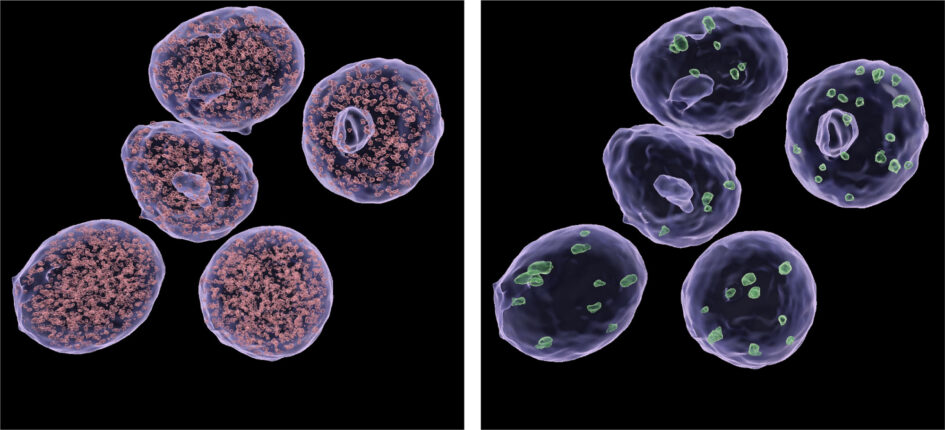
Small (left) and large (right) condensates of the Mediator complex inside nuclei of a pancreatic beta cell-derived cell line. Salk researchers discovered that GLP-1s interact with the multi-protein complex called Mediator to cause a broad genomic response.
Click here for a high-resolution image.
Credit: Salk Institute

GLP-1s are building a reputation as “wonder drugs.” First characterised for their ability to improve insulin release and treat diabetes, the drugs were later found to promote weight loss and improve cardiovascular health. In addition to these surprising bonus benefits is the ability of GLP-1 drugs to improve pancreatic beta cell health. But how, exactly, are they doing that?

Salk Institute researchers are burrowing down into the mechanistic details behind how GLP-1 drugs promote viability and stress resistance in pancreatic beta cells. Since cellular performance adaptations arise from gene expression changes, the team screened for regulatory proteins that can flip “on” advantageous gene programs during prolonged GLP-1 use. They identified a protein called Med14, part of a larger protein complex called Mediator, that was enabling the GLP-1-dependent changes in gene expression that lead to pancreatic health benefits.

The study was published in Proceedings of the National Academy of Sciences on March 4, 2026, and was funded by federal research grants from the National Institutes of Health and private philanthropy.

“The broad salutary effects of GLP-1 drugs in diabetes, cardiovascular disease, and obesity have sparked a wave of exciting scientific research at the mechanistic level. We’re left wondering,  ‘How are GLP-1s causing these effects?’” asks senior author Marc Montminy, MD, PhD, a biochemist, physiologist, and distinguished professor emeritus at Salk. “We were able to single out a protein, Med14, whose activation downstream of GLP-1 helps reprogram pancreatic beta cell gene expression to improve the cells’ viability and insulin production.”

What are GLP-1 drugs?

Often simply called “GLP-1 drugs” or “GLPs,” glucagon-like peptide-1 receptor agonists work by mimicking a hormone our bodies naturally make. The hormone, called glucagon-like peptide-1, helps regulate blood sugar.by promoting the secretion of insulin. They do so by attaching to corresponding GLP-1 receptors on pancreatic beta cells, which then produce and release insulin into the body.

But GLP-1 drugs differ in one significant way from their natural counterpart: Unlike human-made GLP-1 hormones that appear and disappear quickly around mealtimes, artificial GLP-1 receptor agonists can stick around much longer. The Salk researchers suspect this longer-term presence may explain some of the “wonder drug” benefits of GLP-1 drugs. But what, exactly, on the molecular level, are GLP-1 drugs doing when they stick around? And how does their staying power turn into effects like lower risk of stroke or improved osteoarthritis?

“The fact that these drugs based off our hormones are stable seems to be important to the longer-term effects we’re witnessing in pancreatic beta cells and other tissues,” says first author Sam Van de Velde, PhD, a staff scientist in Montminy’s lab. “To understand how we are getting these longer-term effects, we need to study these drugs on a longer time scale – and that’s exactly what we did.”

How do GLP-1 drugs influence pancreatic health?

When the hormone GLP-1 finds a pancreatic beta cell, the ensuing chain of signals, proteins, and gene expression changes that lead to insulin secretion is very well documented. On the other hand, the mechanisms and changes on the longer-term GLP-1 drug scale are poorly understood.

So, the researchers set out on a molecular fishing expedition in a pancreatic beta cell line. The team was hoping to hook a protein (or proteins) that, post-GLP-1 activation, had a particular chemical modification called phosphorylation. And that’s exactly what they found in Med14.

Med14 is a subunit in a multi-protein complex called Mediator, which is a well-described general regulator of gene expression throughout the genome. To confirm whether Med14 was an integral link between GLP-1 drugs and ultimate changes in gene expression and pancreatic beta cell behavior, the researchers decided to mutate Med14, making the protein resistant to phosphorylation.

The gene expression patterns associated with prolonged GLP-1 drug exposure disappeared in a Med14 mutant pancreatic beta cell line and in beta cells of a Med14 mutant mouse model. With working Med14, the helpful gene programs were activated – supercharging pancreatic beta cells to grow and better handle sugar-rich environments after meals.

How else might GLP-1 drugs affect the body?

None of the Salk team’s experiments were conducted in humans, yet the relevance remains. For example, some of the genes regulated by Med14 phosphorylation are known to be linked to type 2 diabetes susceptibility in humans.

“Our findings unexpectedly reveal that phosphorylation of just a small part of the Med14 protein plays a significant role in the response to GLP-1 drugs – and in the metabolic response to hormones more broadly,” says Reuben Shaw, PhD, a professor and holder of the William R. Brody Chair at Salk, and director of the National Cancer Institute-Designated Salk Cancer Center. “Now there are many new questions to answer, from validating our findings in human tissues to seeing whether Med14 has a similar role in other cells and organs.”

The team is especially curious about the effects of prolonged GLP-1 exposure beyond pancreatic beta cells. One of the messenger molecules between GLP-1 and Med14, called cAMP, is a commonly used messenger molecule in many other situations that don’t include GLP-1. With that in mind, could other drugs or hormones activate genetic programs similar to GLP-1? And what’s going on in other metabolically intensive tissues, like fat?

The questions keep coming for the so-called “wonder drug,” and Salk scientists are enthusiastically working to answer them.

Source: Salk Institute

Scientists Discover a Gut Bacterium Linked to Muscle Strength

Photo by Jonathan Borba on Unsplash

Ageing naturally weakens our muscles, but a new study published in the journal Gut have found a gut bacterium that may help turn the tide. The researchers Leiden University Medical Center and the Universities of Granada and Almería, found that Roseburia inulinivorans is linked to stronger muscles in both people and mice. The discovery hints at the potential for new probiotics to support muscle strength and healthy ageing.

While exercise and good nutrition remain important for maintaining muscle strength, scientists are now turning their attention to a lesser‑known player: the gut. “The bacteria living in our intestines help us process nutrients, regulate inflammation and manage energy,” Patrick Rensen, professor at the division of Endocrinology, notes. “All of these processes are essential for keeping our muscles healthy as we age.”

A gut bacterium linked to stronger muscles

In their new work, the researchers identified one particular gut bacterium, Roseburia inulinivorans, that appears to be linked to stronger muscles across the lifespan. “When we compared young adults aged 18 to 25 with older adults aged 65 and above, we noticed clear differences,” postdoc Borja Martínez-Téllez says. “Older adults who carried this bacterium had 29 percent stronger handgrip strength than those who didn’t.” In young adults, higher levels of Roseburia inulinivorans were associated with stronger muscles and better overall fitness. “It was remarkable to see the same pattern in both age groups,” Martínez-Téllez adds.

Testing the bacterium in mice

To find out whether this link was more than coincidence, the researchers carried out a series of experiments in mice. “We wanted to understand whether this bacterium actually causes improvements in muscle strength,” Rensen explains. After clearing the mice’s gut bacteria using antibiotics, they introduced human strains of Roseburia inulinivorans for eight weeks.

“The results were striking,” Rensen says. “The mice became 30 percent stronger, developed larger muscle fibres and produced more fast‑twitch fibres.”

The team also found that the bacterium changed how the muscles used certain building blocks and activated energy‑related pathways inside the muscle. “These metabolic changes may help explain why the muscles grew stronger,” according to Martínez-Téllez.

From discovery to potential probiotic treatment

Another key observation is that levels of Roseburia inulinivorans naturally decline with age. “This could partly explain why muscle strength drops as we get older,” Martínez-Téllez says. “If this bacterium supports muscle metabolism, then restoring it might one day help preserve muscle function later in life.”

Together, the findings suggest that Roseburia inulinivorans could become a future probiotic, developed into a safe, supplement‑like product aimed at preventing age‑related muscle‑wasting conditions. “A nutraceutical approach – using food‑based or naturally derived products – could offer a gentle and non‑invasive way to support healthy ageing,” Martínez-Téllez explains.

The researchers however caution that considerable work needs to be done before these findings can be turned into a treatment for humans.

Source: Leiden University Medical Center

How Body’s ‘Cold Sensor’ Works – and Why Menthol Tricks it

First-ever molecular snapshots show the body’s “cold sensor” in action, with implications for treating pain, migraines, and dry eye

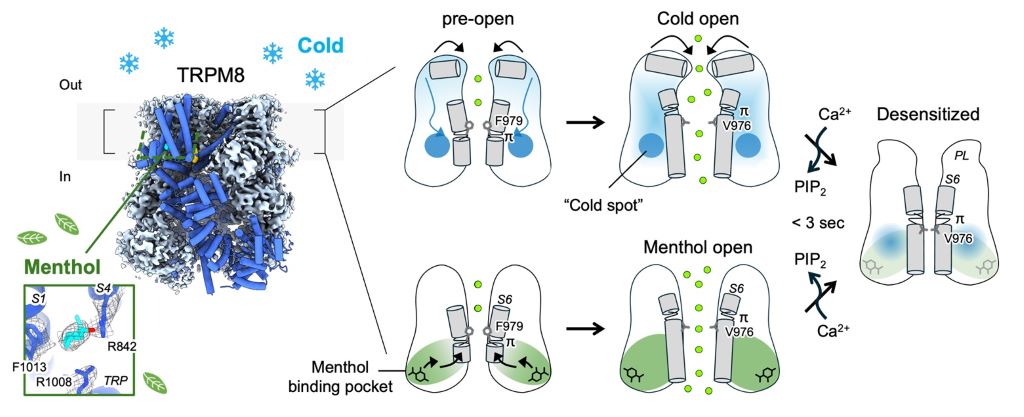
Using cryo-electron microscopy, researchers captured multiple conformational snapshots of the cold sensing channel, TRPM8, as it transitions from closed to open.

When you step outside on a winter morning or pop a mint into your mouth, a tiny molecular sensor in your body springs into action, alerting your brain to the sensation of cold. Scientists have now captured the first detailed images of this sensor at work, revealing exactly how it detects both actual cold and the perceived cool of menthol, a compound derived from mint plants. The research was presented at the 70th Biophysical Society Annual Meeting in San Francisco from February 21–25, 2026.

The study focused on a protein channel called TRPM8. “Imagine TRPM8 as a microscopic thermometer inside your body,” said Hyuk-Joon Lee, a postdoctoral fellow from Seok-Yong Lee’s laboratory at Duke University. “It’s the primary sensor that tells your brain when it’s cold. We’ve known for a long time that this happens, but we didn’t know how. Now we can see it.”

TRPM8 sits in the membranes of sensory neurons innervating the skin, oral cavity, and eyes. It responds to cold temperatures – roughly between 8°C and 28°C – by opening up and allowing ions to flow into the cell, which triggers a nerve signal to the brain. It’s also the reason menthol, eucalyptus, and certain other compounds produce that characteristic cooling sensation.

“Menthol is like a trick,” Lee explained. “It attaches to a specific part of the channel and triggers it to open, just like cold temperature would. So even though menthol isn’t actually freezing anything, your body gets the same signal as if it were touching ice.”

Using cryo-electron microscopy – a technique that images flash-frozen proteins with an electron beam – Lee and colleagues captured multiple conformational snapshots of TRPM8 as it transitions from closed to open. They discovered that cold and menthol activate the channel through shared yet distinct allosteric networks: cold primarily triggers changes in the pore region (the part that actually opens to let ions through), while menthol binds a different part of the protein and induces shape changes that propagate to the pore.

“When cold is combined with menthol, the response is enhanced synergistically,” Lee said. “We used this combination to capture the channel in its open state – something that hadn’t been achieved with cold by itself.”

The findings have medical implications. When TRPM8 doesn’t function properly, it has been linked to conditions including chronic pain, migraines, dry eye and certain cancers. Acoltremon, a drug that activates TRPM8, is an FDA-approved eye drop for dry eye disease. As a menthol analogue, it works by activating the cooling pathway to stimulate tear production and soothe irritated eyes.

The researchers also identified what they call a “cold spot” – a specific region of the protein that is uniquely important for sensing temperature and helps prevent the channel from becoming desensitised during prolonged cold exposure.

“Previously, it was unclear how cold activates this channel at the structural level,” Lee said. “Now we can see that cold triggers specific structural changes in the pore region. This gives us a foundation for developing new treatments that target this pathway.”

The work offers the first molecular definition of how cold and chemical stimuli are integrated to create the sensation of coolness – answering a fundamental question in sensory biology that has puzzled scientists for decades.

Source: Biophysical Society

“Two-for-one” C-section and Tummy Tuck Idea Alarms Surgeons

Photo by Jonathan Borba on Unsplash

The ‘mommy makeover’ is trending, and a growing number of patients are now asking whether cosmetic procedures such as a tummy tuck, liposuction, or breast augmentation can be performed at the same time as a Caesarean section. But surgeons warn that combining elective cosmetic surgery with a C-section can sharply escalate risk during an already vulnerable period for the body.

Professor Chrysis Sofianos, a triple-board certified plastic surgeon and Academic Head of the Division of Plastic and Restorative Surgery at the University of the Witwatersrand, says procedures such as a tummy tuck should only be considered once the body has adequately recovered after childbirth – typically around six months after delivery, depending on individual healing.

“Our practice is seeing a growing number of patients ask whether body-contouring surgery can be performed while they are already in theatre for a C-section. But this reflects a dangerous misunderstanding of surgical safety and postpartum physiology.

“While the idea may appear efficient or financially attractive, pairing medically necessary obstetric surgery with elective cosmetic procedures significantly increases operative risk at a time when the patient is physiologically vulnerable.”

Combining surgeries and compounding risks

C-sections account for around 75% of private sector hospital births in South Africa. Professor Sofianos notes that because there is often an overlap between women accessing private medical care and those who may later consider elective cosmetic procedures, more patients are likely to ask whether these operations can be combined.

“However, the more important question is whether they should. And the simple answer is no,” he says. “A C-section is already a major abdominal operation. Introducing additional surgical trauma before the body has recovered would introduce excessive strain and substantially raise the risk of complications.”

Pregnancy and the immediate postpartum period are associated with a hypercoagulable state, meaning the blood has an increased tendency to clot. Postpartum women therefore face a markedly elevated risk of venous thromboembolism, particularly in the first six weeks after delivery. Prolonging operative time and increasing tissue disruption may further elevate this risk by contributing to immobility, tissue stress, and inflammatory response.

A C-section on its own carries recognised complications, including haemorrhage, infection, anaesthetic complications, and clotting risk. Adding abdominoplasty (tummy tuck) can introduce additional risks such as bleeding, fluid accumulation, wound breakdown, delayed healing, and blood clots.

Liposuction also introduces risks, such as fluid imbalance, internal injury, infection, and, in rare but serious cases, fat embolism – a potentially life-threatening condition in which fat enters the bloodstream and compromises vital organs.

The false economy of combining procedures

Professor Sofianos also notes that combining procedures rarely provides the financial or practical advantages patients may assume.

“There is a common a misconception that theatre and anaesthetic fees can be consolidated if surgeries are combined into a single session. In reality, longer operative times, greater monitoring requirements, and the potential for complications may result in far higher medical costs. More importantly, financial reasoning should never supersede patient safety.”

He adds that the combined recovery period can also be far more demanding than patients anticipate.

“Recovery after a C-section already places significant physical, emotional, and psychological demands on a new mother. Adding major cosmetic surgery to that recovery period can complicate mobility, wound care, and pain management at a time when the patient must also care for a newborn.

“A more intensive recovery process may further require extended postoperative care, closer medical oversight, and additional support at home, all of which can add to the existing financial burden.”

Finally, he warns that operating during the immediate postpartum period might not produce the optimal long-term aesthetic result a patient may be looking for, and could expose them to unnecessary revision surgery later.

“Medically and ethically, I do not believe combined C-section and ‘mommy makeover’ surgeries should ever be considered. No responsible surgeon should minimise the compounded risks associated with performing such procedures. Ultimately, safe, staged care remains the gold standard for medical care, or allowing the body to recover fully before elective cosmetic surgery is undertaken.”

Reducing Sodium in Everyday Foods may Yield Heart-health Benefits Across Populations

Credit: Pixabay CC0

Lowering sodium in packaged and prepared foods could significantly improve cardiovascular health and prevent many cases of heart disease, stroke and deaths in the general population in France and the U.K., according to two new research studies published in Hypertension, an American Heart Association journal.

Consuming too much sodium is a major risk factor for hypertension, also known as high blood pressure, which can lead to health complications such as heart attack, stroke, chronic kidney disease, dementia and other forms of cardiovascular disease, according to the American Heart Association.

To address the global concern about excessive sodium consumption many countries have implemented salt-reduction strategies to improve public health and reduce health costs.

Two studies – one in France involving salt-reduction targets for baguettes and other bread products in 2025, and the other in the United Kingdom focusing on 2024 goals for takeaway and packaged foods – estimated the potential impact on the general population if those salt-reduction targets were met. The projections calculated in these two studies indicate that minor adjustments in sodium content to some of the most common prepared foods in each country would require no effort from people to change their eating habits, yet may produce significant public health benefits.

“This approach is particularly powerful because it does not rely on individual behaviour change, which is often difficult to achieve and sustain. Instead, it creates a healthier food environment by default,” said Clémence Grave, M.D., lead author of the study from France and epidemiologist and public health physician at the French National Public Health Agency, headquartered in Saint-Maurice near Paris.

The World Health Organization recommends adults should consume less than 2,000 milligrams (mg) of sodium per day, however, global intake is much higher. The American Heart Association recommends daily intake of no more than 2300mg of sodium a day – equal to about 1 teaspoon of table salt; but also says the ideal limit is no higher than 1500 mg per day for most adults, especially for those with high blood pressure.

Sodium reduction in bread (France)

In 2019, France set a national public health goal to reduce salt consumption by 30%. In 2022, a voluntary agreement was signed between the government and bread producers to lower salt content by 2025. Bread, especially the baguette, is a culturally and nutritionally central food in France, yet it can be high in salt– traditionally contain about 25% of total daily recommended intake of salt. By 2023, most breads made in France already met the new sodium standards.

To understand the potential impact of the agreement on public health, researchers used national data and a mathematical model to estimate how many cases of cardio-cerebrovascular disease (conditions and diseases that affect both the heart and the brain’s blood vessels), kidney disease and dementia could be prevented if the salt-reduction targets met full compliance.

The analysis found that with bread consumption remaining the same and sodium-reduction targets fully met, less salt in baguettes and bread would decrease daily intake by 0.35 g per person, leading to slightly lower blood pressure across the population.

“This salt-reduction measure went completely unnoticed by the French population – no one realised that bread contained less salt,” Grave said. “Our findings show that reformulating food products, even with small, invisible changes, can have a significant impact on public health.”

Sodium reduction in packaged foods and take-out meals (United Kingdom)

For the study in the U.K., researchers used national survey data to estimate the amount of salt people consumed from pre-prepared packaged and take-out meals. They then estimated daily sodium intake if all relevant food categories met the 2024 sodium-reduction targets.

Sales-weighted average and maximum salt content targets were set for 84 grocery food categories – including bread, cheeses, meats, and snacks – and, for the first time, 24 out-of-home categories such as burgers, curries, and pizza. The modelling also covered how these changes could affect heart disease, stroke, quality of life and health care costs.

The research found that fully meeting the sodium reduction goals could have reduced average salt intake from about 6.1 g to 4.9g per day – translating to an estimated average of 17.5% less salt consumed per person per day. Men would experience slightly larger reductions than women because they tend to consume more salt in general.

Even this small, daily reduction in salt would lower blood pressure modestly across the population, and the improvements could add up.

Source: American Heart Association

Family Dinners May Reduce Substance Use Risk for Many Adolescents

Regular bonding over meals may help prevent kids from using alcohol, cannabis, and e-cigarettes, but those with significant stress or trauma need additional support

Photo by Vanessa Loring on Pexels

Anew study from researchers at Tufts University School of Medicine finds that regular family dinners may help prevent substance use for a majority of US adolescents, but suggests that the strategy is not effective for youth who have experienced significant childhood adversity.

The findings provide important insights for practitioners looking to help families prevent substance use, as well as for researchers aiming to develop interventions that better account for adolescents’ unique experiences.  

For the study, published January 19 in the Journal of Aggression, Maltreatment & Trauma, researchers analysed online survey data from 2090 US adolescents ages 12 to 17 and their parents. Participants from around the country were asked about the quality of their family meals – including communication, enjoyment, digital distractions, and logistics – as well as adolescents’ alcohol, e-cigarette, and cannabis use in the previous six months.

The researchers then examined how these patterns differed based on adolescents’ experiences of household stressors and exposure to violence, as reported by both the children and parents. Instead of counting each adverse experience equally, the researchers created a weighted score based on how strongly the different experiences are linked to substance use in prior research and this national sample.

Higher family dinner quality was associated with a 22% to 34% lower prevalence of substance use among adolescents who had either no or low to moderate levels of adverse childhood experiences. 

“These findings build on what we already knew about the value of family meals as a practical and widely accessible way to reduce the risk of adolescent substance use,” said Margie Skeer, the study’s lead author, professor and chair of the Department of Public Health and Community Medicine at the School of Medicine.  

“Routinely connecting over meals – which can be as simple as a caregiver and child standing at a counter having a snack together – can help establish open and routine parent-child communication and parental monitoring to support more positive long-term outcomes for the majority of children,” added Skeer. “It’s not about the food, timing, or setting; it’s the parent-child relationship and interactions it helps cultivate that matter.”

Adverse childhood experiences reported by participants in the study included parents being divorced; a family member being diagnosed with a substance-use disorder; someone in the family having a mental-health disorder; the adolescent witnessing violence; the adolescent often being teased about their weight; a parent using non-prescribed drugs daily; or the adolescent experiencing sexual or physical dating violence.  

The study found that family meals offered little protection for adolescents whose adversity score reached the equivalent of four or more experiences – a population that encompasses nearly one in five U.S. high school students younger than 18, according to a study of the most recent Youth Risk Behavior Survey data.  

“While our research suggests that adolescents who have experienced more severe stressors may not see the same benefits from family meals, they may benefit from more targeted and trauma-informed approaches, such as mental health support and alternative forms of family engagement,” said Skeer.  

She added that future research should explore whether other supportive routines – beyond shared meals or outside the family environment – can help protect adolescents exposed to highly stressful or traumatic childhood experiences. 

Source: Tufts University