Year: 2025

Sanofi Steps up Investment in SA Healthcare with New Leadership and Stronger Local Partnerships

Photo by Sora Shimazaki

Sanofi has reaffirmed its commitment to South African healthcare with the appointment of two senior leaders and a renewed focus on supporting healthcare professionals, expanding local partnerships, and improving access to essential treatments in key areas such as vaccines, immunology, and rare diseases.

“This is a new chapter for Sanofi in South Africa,” says Jean-Baptiste Bregeon, Sanofi South Africa’s Country Lead and Head of Vaccines. “We are focused on making a real impact through practical support for healthcare professionals, expanding access to important medicines and vaccines, and strengthening our ties with partners across the system.”

Focused leadership

Bregeon brings over 20 years of international experience, with senior roles in commercial and clinical operations across the Middle East, North Africa, and Eurasia. As former General Manager for North Africa at Sanofi Vaccines, he led efforts to improve vaccine access and build local capacity. He has also advised Sanofi’s global leadership on operational strategy and commercial planning.

Bregeon will oversee Sanofi’s overall strategy in the country and lead its vaccine division, which remains a core part of the company’s healthcare offering.

Lenisha Maharaj, newly appointed Head of Pharma for South Africa, Namibia and Botswana, is a seasoned Pharmaceutical Executive with over 20 years’ experience in the pharmaceutical and healthcare sectors. At Sanofi, she will oversee growth across the general medicines and specialty care portfolios, supporting both primary and specialist care.

“Sanofi understands the realities that healthcare professionals face,” says Maharaj. “Our goal is to support them with the right tools, training, and access to innovative treatments so they can keep delivering high-quality care.”

Strengthening partnerships and access

A key part of Sanofi’s long-term strategy is to build strong, lasting partnerships. Its collaboration with Biovac, a local vaccine manufacturer, is a core example. This will help to boost domestic vaccine production capacity and reduce reliance on global supply chains. Such public-private partnerships support healthcare resilience as well as local economic and scientific development.

Beyond vaccines, Sanofi is investing in other areas that have a direct impact on healthcare professionals and the patients they serve:

  • Clinical trials in South Africa: Expanding its local clinical research footprint to increase representation of African patients in global trials and ensure that treatment decisions are informed by local data.
  • Access to innovative medicines: Working to bring advanced treatments in rare diseases and immunology to South Africa, along with patient support programmes and diagnostic assistance, to help doctors and patients navigate access challenges.
  • Medical education and digital engagement: Offering CPD-accredited education, clinical webinars, and digital tools to help healthcare professionals stay updated on the latest treatment protocols and deliver more streamlined care.
  • Policy engagement and system support: Actively involved in discussions with policymakers and funders to help shape health policies that improve medicine access and promote fair, sustainable healthcare.

Supporting healthcare professionals

Sanofi says it recognises the ongoing pressures facing South African healthcare workers, from dealing with supply shortages and reimbursement hurdles to managing the growing burden of chronic and complex diseases.

“We see our role as being part of the solution,” says Bregeon. “We are here to support healthcare professionals, not only by ensuring a reliable supply of medicines, but by providing the training, tools, and partnerships they need to do their jobs effectively.”

The company is also prioritising engagement with healthcare professionals through regular updates, field team support, and opportunities for joint problem-solving around system-level challenges.

Sanofi says it is committed to staying in close conversation with the healthcare community and building a more resilient, inclusive, and patient-focused system.

“We want to work with doctors, nurses, pharmacists, policymakers and funders to build something long-term,” Bregeon adds. “We believe that by working together, we can improve outcomes for patients and strengthen the foundation of healthcare in this country.”


Pembrolizumab–Axitinib Duo Extends Survival in Advanced Kidney Cancer

Photo by Robina Weermeijer on Unsplash

A two-drug combination for treating advanced kidney cancer had sustained and durable clinical benefit in more than five years of follow-up, according to a study published August 1 in Nature Medicine

The study reports final clinical data and biomarker analyses from the Phase 3 KEYNOTE-426 trial, which compared the drug combination pembrolizumab plus axitinib versus the single drug sunitinib for patients with previously untreated advanced clear cell renal cell carcinoma, the most common type of kidney cancer.

“KEYNOTE-426 was the first trial to combine a PD-1 inhibitor immunotherapy (pembrolizumab) with a VEGF receptor inhibitor antiangiogenic drug (axitinib) in the first-line setting for advanced renal cell carcinoma. It therefore has the longest follow-up duration among the various trials comparing these types of drug combinations,” said Brian Rini, MD, a medical oncologist at Vanderbilt-Ingram Cancer Center, Professor of Medicine and the study’s lead and corresponding author. 

Immunotherapy drugs like pembrolizumab stimulate the immune system to kill tumour cells. VEGF receptor inhibitors like axitinib and sunitinib block angiogenesis — the development of blood vessels that tumours need to grow and spread. Pembrolizumab plus axitinib and other immunotherapy-antiangiogenic drug combinations are now standard first-line treatments for advanced kidney cancer. 

“Before the development of antiangiogenic drugs and immunotherapies, advanced renal cell carcinoma had a very poor prognosis. These drug combinations have dramatically improved treatment options and outcomes for patients,” said Rini. 

The first interim analysis of outcomes from KEYNOTE-426, published Feb. 16, 2019, in the New England Journal of Medicine, demonstrated that trial participants treated with pembrolizumab plus axitinib had longer overall and progression-free survival, and higher objective response rates compared to those taking sunitinib. The median follow-up was 12.8 months. 

Now, with a median follow-up of 67.2 months, the current analysis confirms and extends the interim analysis and provides valuable information about biomarkers that could help guide treatment decisions. 

The study in Nature Medicine reports that pembrolizumab plus axitinib had longer overall survival (47.2 months versus 40.8 months for sunitinib) and longer progression-free survival (15.7 months versus 11.1 months for sunitinib). The objective response rate was 60.6% for pembrolizumab plus axitinib and 39.6% for sunitinib. 

The researchers reported a variety of associations between the expression of biomarkers and outcomes (overall survival, progression-free survival, objective response rate). The biomarkers they evaluated included an 18-gene T-cell-inflamed expression profile, angiogenesis signature, and PD-1 ligand expression. 

“There is an unmet need for biomarkers that are predictive of patient outcomes following treatment with available first-line therapies for advanced renal cell carcinoma,” Rini said. “Although our analysis showed potential clinical utility of some RNA signatures in identifying patients who are likely to benefit the most from each treatment, further prospective clinical studies are needed.” 

Pembrolizumab plus axitinib is a first-line treatment option for patients with advanced renal cell carcinoma regardless of biomarker subtypes, he noted. 

Source: Vanderbilt University Medical Center

Bubonic Plague Treatment Proven Highly Effective and Safe in Global First

Scanning electron micrograph of Yersinia pestis, which causes bubonic plague, on proventricular spines of a Xenopsylla cheopis flea. Credit: NIAID

Researchers from the UK and Madagascar, in collaboration with Madagascar’s health services and national plague programme, have conducted the world’s first rigorous clinical trial of treatments for bubonic plague.

The IMASOY trial provides the first robust evidence of the efficacy and safety of two treatment regimens. They also found that a ten-day course of an oral antibiotic (ciprofloxacin) is a highly effective and safe alternative to existing treatment with injectable antibiotic requiring hospitalisation.

Plague has scourged humanity for millennia. Though cases have been declining, it remains a high-threat pathogen of pandemic potential, due to its widespread animal reservoir and potential for being weaponised via deliberate release. Most continents see sporadic cases of bubonic plague every year, with Madagascar reporting approximately 80% of global cases. Bubonic plague is a life-threatening disease with mortality ranging from 15-25%.

The results from the trial, published in the New England Journal of Medicine, are the outcome of a hugely ambitious clinical trial conducted over the last five years in rural Madagascar.

With many cases occurring in remote villages and with outbreaks being unpredictable, the team deployed dozens of research assistants, and trained over 230 local doctors and nurses and 1300 village health workers. The trial was embedded within Madagascar’s national health service and was conducted with the support of the Ministry of Public Health.

Several treatment options are included in the current international and national guidelines, but none of them have been rigorously tested in humans. Regulatory approval has been based solely on data from animal studies and human safety data.

Researchers designed the IMASOY trial to test two treatments for plague. Patients were randomly allocated to receive either a ten-day oral regimen of ciprofloxacin (an antibiotic tablet which can be taken at home), or a regimen requiring three days’ injectable gentamicin followed by seven days’ ciprofloxacin, (with the intravenous (IV) therapy requiring patients to be hospitalised).

450 patients with clinically suspected bubonic plague were enrolled between 2020-2024 at 47 sites in 11 districts in Madagascar and treated with either regimen. Of these, 222 plague infections were confirmed by laboratory testing.

Key findings:
•    Both regimens were found to be highly effective and safe, with overall treatment success rates of about 90% and an overall mortality rate of about 4%.
•    A ten-day ciprofloxacin regimen has many advantages over a regimen requiring three days of injectable antibiotics. It alleviates bed space (particularly in health centres with minimal bed availability for the surrounding villages), reduces healthcare worker workload, and is much cheaper – costing about one-tenth of the current treatment regimen, depending on the route of administration.

With funding from Wellcome and the UK Foreign, Commonwealth, and Development Office, researchers from the University of Oxford, Institut Pasteur de Madagascar, Centre Hospitalier Universitaire Joseph Raseta Befelatanana, Centre d’Infectiologie Charles Mérieux, London School of Hygiene and Tropical Medicine, along with Madagascar’s health services and national plague programme, collaborated through the International Severe Acute Respiratory and emerging Infection Consortium (ISARIC) to fill this gap in knowledge.

Piero Olliaro, Professor at the Pandemic Science Institute, University of Oxford and senior author of the study said: ‘Despite its deadly history, we’ve had little clinical evidence on treating bubonic plague – until now. Thanks to the patients and healthcare workers in the trial, we now have real-world proof of effective, safe treatment. Ongoing data analysis will deepen our understanding of the disease, including risk factors, symptoms, and diagnostics.’

Mihaja Raberahona, physician at CHU Joseph Raseta Befelatanana and researcher at the Centre d’Infectiologie Charles Mérieux Madagascar said: ‘In Madagascar, where plague cases occur in remote rural locations with limited healthcare infrastructure, taking a straightforward oral antibiotic is vastly preferable to a treatment requiring injections. It alleviates healthcare worker workload and is also much cheaper – costing about one-tenth of the current treatment regimen.’

Rindra Vatosoa Randremanana, Medical epidemiologist at Institut Pasteur de Madagascar said: ‘The trial was a massive operational undertaking. Many patients were in remote villages and the unpredictable nature of the outbreaks made the research very challenging. Recruiting the 450 patients, of whom about half were confirmed with bubonic plague, took five plague transmission seasons and an army of research assistants, doctors and community health workers. We are hugely grateful to everyone who took part.’

The impact of this study is far-reaching. As a result of the trial, the researchers will be working with national and international bodies like the World Health Organization (WHO) to provide the evidence that may be required to update clinical guidelines, thereby translating the results into practice and saving lives.

The full paper, ‘Ciprofloxacin versus Aminoglycoside-Ciprofloxacin for Bubonic Plague‘, is published in the New England Journal of Medicine.

Source: University of Oxford

When Should Preventive Mastectomy be Offered in High Breast Cancer Risk?

Photo by National Cancer Institute on Unsplash

More women at higher risk of breast cancer should be offered a mastectomy, according to researchers at Queen Mary and London School of Hygiene and Tropical Medicine.

A new analysis, published in JAMA Oncology, has found that the surgical technique was a cost-effective way of reducing the likelihood of developing breast cancer compared to breast screening and medication. Current guidelines on who is offered mastectomy may need to be revised to reflect these new findings. 

Clinicians currently use personalised risk prediction models which combine genetic and other data to identify those women who are at a higher risk of developing breast cancer (BC). Subsequent treatment options – including mammograms, MRI screening, surgery, and medication – are then offered dependent on each woman’s level of risk. 

Risk reducing mastectomy (RRM) is recommended for women at high risk, but in practice this surgery is only clinically offered to those carrying faults (called pathogenic variants) in genes that are known to increase the likelihood they will develop the disease (BRCA1/ BRCA2/ PALB2 PV). 

Professor Ranjit Manchanda from Queen Mary University of London, Dr Rosa Legood from London School of Hygiene and Tropical Medicine, along with colleagues from Manchester University and Peking University created a new economic evaluation model to accurately predict the level of risk that would make RRM a more cost-effective treatment. 

For their model, researchers used guidelines from the National Institute for Health and Care Excellence (NICE) to determine whether a treatment is considered cost-effective. Their model showed that mastectomy was a cost-effective treatment for women aged 30 or above who have a lifetime breast cancer risk greater than or equal to 35%. Offering RRM to women in this cohort could potentially prevent 6,500 of the 58,500 cases of breast cancer that are diagnosed every year in the UK. 

Professor Manchanda, Professor of Gynaecological Oncology at Queen Mary and  Consultant Gynaecological Oncologist, said: “We for the first time define the risk at which we should offer RRM. Our results could have significant clinical implications to expand access to mastectomy beyond those patients with known genetic susceptibility in high penetrance genes- BRCA1/ BRCA2/ PALB2 – who are traditionally offered this. This could potentially prevent can potentially prevent ~6500 breast cancer cases annually in UK women. We recommend that more research is carried out to evaluate the acceptability, uptake, and long-term outcomes of RRM among this group”.. 

Dr Legood, Associate Professor in health economics at the London School of Hygiene & Tropical Medicine, said: “Undergoing RRM is cost-effective for women 30-55 years with a lifetime breast cancer risk of 35% or more. These results can support additional management options for personalized breast cancer risk prediction enabling more women at increased risk to access prevention.”  

Dr Vineeth Rajkumar, Head of Research at Rosetrees, said: “Rosetrees is delighted to fund this truly groundbreaking research that could have a positive impact on women worldwide.” 

The researchers used data from women aged between 30 and 60 with varying lifetime breast cancer risks between 17% and 50%, and who were either undergoing RRM or receiving screening with medical prevention according to currently used predictive models. 

NICE deems a treatment cost-effective if it typically brings one additional year of health for no more than £20 000–£30 000 per patient (known as the ‘willingness to pay’ threshold, or WTP). The researchers’ model used a threshold of £30 000/Quality Adjusted Life Year. 

Source: Queen Mary University London

RSV Infection Significantly Affects Cardiac Risks of Older Adults

Photo by Anna Shvets

Respiratory syncytial virus (RSV) is a well-known cause of infections in children, but it’s understudied in older individuals. In a retrospective study published in the Journal of the American Geriatrics Society, adults aged 65 and older hospitalised for RSV in Ontario, Canada experienced significantly higher rates of adverse outcomes such as longer length of hospital stay, transfer to intensive care, and 30-day mortality, compared with patients hospitalised with influenza, urinary tract infection, or fracture.

Interestingly, RSV hospitalisation was also associated with higher rates of heart failure and atrial fibrillation up to 1-year post-discharge, regardless of prior cardiovascular conditions.

“Unlike other respiratory viruses, immunity against RSV tends to decline relatively quickly. This means that a previous infection will not afford the same long-term protection as it might for influenza or COVID-19,” said corresponding author Chris Verschoor, PhD, HSN, Foundation Research Chair in Healthy Aging at Health Sciences North Research Institute. “Our findings reinforce the importance of RSV vaccination in older adults and suggest that monitoring for signs of heart disease following an RSV illness may be pragmatic.”

Source: Wiley

Does Metformin Possibly Help Prevent Dementia?

Created with Gencraft. CC4.0

New research in Diabetes, Obesity and Metabolism reveals that metformin, a medication traditionally prescribed to treat diabetes, is linked to lower risks of dementia and early death.

In the study by investigators at Taipei Medical University that included 452,777 adults with varying degrees of overweight and obesity, 35,784 cases of dementia and 76,048 deaths occurred over 10 years. Metformin users exhibited significantly lower risks of both dementia and all-cause death than nonusers.

The benefits of metformin were seen across all categories of overweight, obesity, and severe obesity, with 8–12% lower risks of dementia and 26–28% lower risks of death.

“Although our study results are promising for metformin’s effects on dementia and mortality, further research is required to explore the mechanisms involved,” said co-corresponding author Chiehfeng Chen, MD, PhD, MPH.

Source: Wiley

“Skin in a Syringe” a Step Towards a New Way to Heal Burns

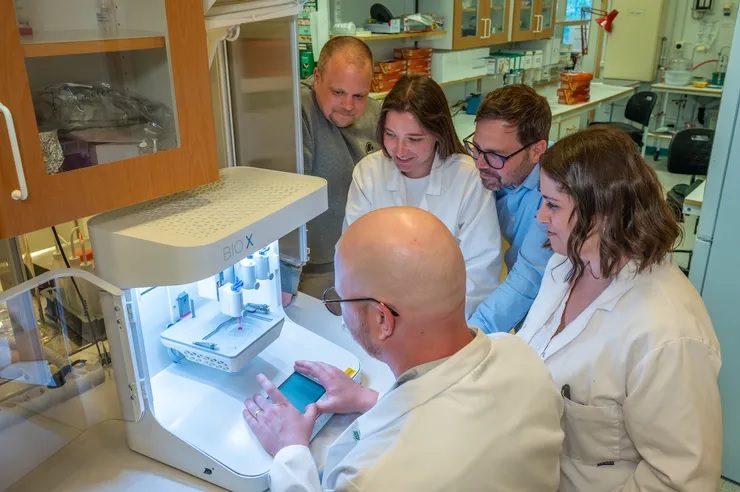
Researchers in fields such as regenerative medicine and materials science have collaborated to develop a gel containing living cells that can be 3D-printed into a transplant. Photographer: Magnus Johansson

Finding a way to replicate the skin’s complicated dermis layer has long been a goal of healing burn wounds, as it would greatly reduce scarring and restore functionality. Researchers at Linköping University have developed a gel containing living cells that can be 3D-printed onto a transplant, which then sticks to the wound and creates a scaffold for the dermis to grow.

Large burns are often treated by transplanting a thin layer of the top part of the skin, the epidermis, which is basically composed of a single cell type. Transplanting only this part of the skin leads to severe scarring.

“Skin in a syringe”

Beneath the epidermis is the dermis, which has the blood vessels, nerves, hair follicles and other structures necessary for skin function and elasticity. However, transplanting also the dermis is rarely an option, as the procedure leaves a wound as large as the wound to be healed. The trick is to create new skin that does not become scar tissue but a functioning dermis.

“The dermis is so complicated that we can’t grow it in a lab. We don’t even know what all its components are. That’s why we, and many others, think that we could possibly transplant the building blocks and then let the body make the dermis itself,” says Johan Junker, researcher at the Swedish Center for Disaster Medicine and Traumatology and docent in plastic surgery at Linköping University, who led the study published in Advanced Healthcare Materials.

The most common cell type in the dermis, the connective tissue cell or fibroblast, is easy to remove from the body and grow in a lab. The connective tissue cell also has the advantage of being able to develop into more specialised cell types depending on what is needed. The researchers behind the study provide a scaffold by having the cells grow on tiny, porous beads of gelatine, a substance similar to skin collagen. But a liquid containing these beads poured on a wound will not stay there.

The researchers’ solution to the problem is mixing the gelatine beads with a gel consisting of another body-specific substance, hyaluronic acid. When the beads and gel are mixed, they are connected using what is known as click chemistry. The result is a gel that, somewhat simplified, can be called skin in a syringe.

“The gel has a special feature that means that it becomes liquid when exposed to light pressure. You can use a syringe to apply it to a wound, for example, and once applied it becomes gel-like again. This also makes it possible to 3D print the gel with the cells in it,” says Daniel Aili, professor of molecular physics at Linköping University, who led the study together with Johan Junker.

3D-printed transplant

In the current study, the researchers 3D-printed small pucks that were placed under the skin of mice. The results point to the potential of this technology to be used to grow the patient’s own cells from a minimal skin biopsy, which are then 3D-printed into a graft and applied to the wound.

“We see that the cells survive and it’s clear that they produce different substances that are needed to create new dermis. In addition, blood vessels are formed in the grafts, which is important for the tissue to survive in the body. We find this material very promising,” says Johan Junker.

Blood vessels are key to a variety of applications for engineered tissue-like materials. Scientists can grow cells in three-dimensional materials that can be used to build organoids. But there is a bottleneck as concerns these tissue models; they lack blood vessels to transport oxygen and nutrients to the cells. This means that there is a limit to how large the structures can get before the cells at the centre die from oxygen and nutrient deficiency.

Step towards labgrown blood vessels

The LiU researchers may be one step closer to solving the problem of blood vessel supply. In another article, also published in Advanced Healthcare Materials, the researchers describe a method for making threads from materials consisting of 98 per cent water, known as hydrogels.

“The hydrogel threads become quite elastic, so we can tie knots on them. We also show that they can be formed into mini-tubes, which we can pump fluid through or have blood vessel cells grow in,” says Daniel Aili.

The mini-tubes, or the perfusable channels as the researchers also call them, open up new possibilities for the development of blood vessels for eg, organoids.

Source: Linköping University

Podcast: Could Infrared Light Have Deeper Biological Effects than Believed?

Light transmission through the hand from an 850nm LED source. Because the tissues are relatively
thin compared with the thorax it was possible to map the spectrum here against known biological absorbers.
The images clearly show that deoxygenated blood is a key absorber. Also, bone can not be seen and hence is
relatively transparent at these longer wavelengths. Source: Jeffery et al., Scientific Reports, 2025.

In this podcast, we explore how some infrared wavelengths of sunlight can penetrate the human body – even through clothing – and have a systemic positive impact on physiological functions. Sounds like something out of science fiction, but a recent article published in Scientific Reports has demonstrated this effect in humans.

In this study, exposing the torsos of human participants to 830–860nm infrared light was found to boost mitochondrial function and ATP production. There were notable improvements in vision, despite the eyes being shielded from the infrared light. If infrared light is indeed beneficial, what does this mean for our current way of life, indoors and illuminated by LED lights – which notably lack infrared light?

Less Is More: Low-Dose Olanzapine Curbs Chemo-Induced Nausea Without the Sedation

A recent clinical trial demonstrates 5mg olanzapine’s safety and efficacy for chemotherapy-induced nausea and vomiting

Researchers from Japan found that a 5mg dose of olanzapine, taken after chemotherapy, significantly reduces nausea and vomiting in breast cancer patients, while minimising sedation and cutting costs. This patient-centred approach could reshape global standards for antiemetic care. Credit: Prof Mitsue Saito from Juntendo University, Japan

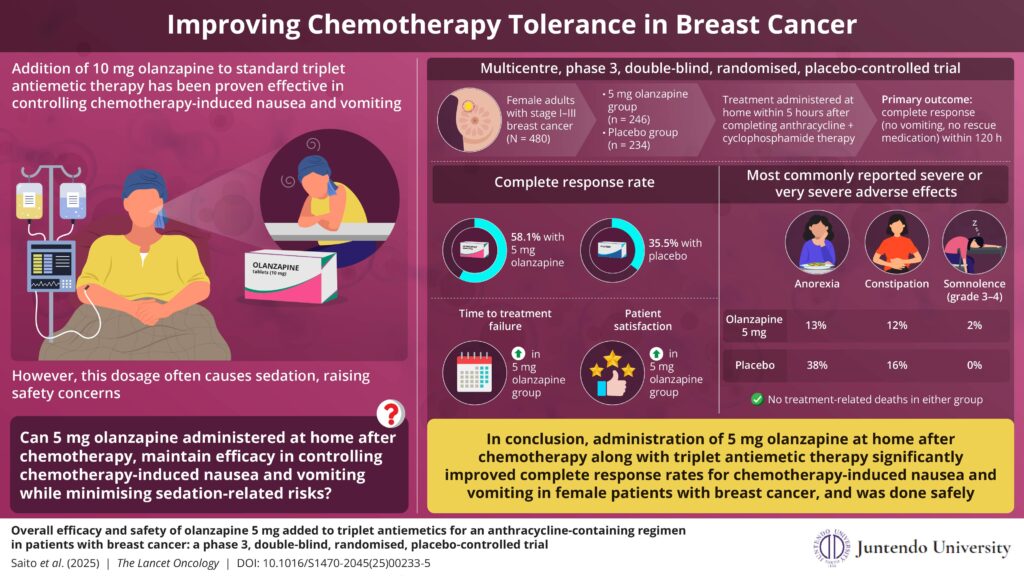
Chemotherapy-induced nausea and vomiting can severely impact patients’ quality of life and treatment adherence. In a major clinical trial, researchers from Japan tested whether a low, 5mg dose of olanzapine taken at home after chemotherapy could reduce these side effects without causing heavy sedation. The study found that this approach significantly improved outcomes compared to placebo, offering a safer, more affordable strategy that could reshape supportive cancer care, especially in outpatient and resource-limited settings.

Chemotherapy-induced nausea and vomiting are among the most distressing side effects of anti-cancer treatment, particularly for those receiving highly emetogenic regimens such as anthracycline plus cyclophosphamide combinations. This major side effect compromises a patient’s quality of life and willingness to continue therapy. Therefore, there is a crucial need to devise an effective antiemetic management approach for optimizing cancer care and patient well-being.

Against this backdrop, a new study, led by Professor Mitsue Saito and Dr. Hirotoshi Iihara from Japan, was made available online on June 17, 2025, and published in Volume 26, Issue 7 of the journal The Lancet Oncology on July 1, 2025, examined whether a 5mg dose of olanzapine taken at home after chemotherapy could reduce nausea and vomiting in patients with breast cancer while minimising the sedative effects associated with the standard 10mg dose.

“While multiple studies have examined 10mg of olanzapine and confirmed its effectiveness for nausea control, at this dose it often causes sedation, raising safety concerns,” explains lead author Prof Saito. “Beyond the commonly observed sedation, olanzapine at the 10 mg dose can cause serious adverse effects, including sedative effects such as daytime sleepiness and loss of consciousness.”

“The study was inspired in part by three patients with breast cancer who attended an antiemetic guideline meeting at MASCC 2015 in Copenhagen. They spoke about the burdensome sedative side effects of olanzapine, a concern that helped shape the trial’s patient-centred design,” says Prof Saito.

This phase 3, double-blind, placebo-controlled trial enrolled 500 female patients with breast cancer in Japan receiving outpatient anthracycline plus cyclophosphamide-based chemotherapy. Participants were randomly assigned to receive either olanzapine 5mg or placebo in combination with standard triplet antiemetic therapy (palonosetron, dexamethasone, and an NK-1 receptor antagonist). The olanzapine 5mg was taken at home after chemotherapy to help avoid sedation during hospital travel or treatment.

“This study uniquely investigates the timing of olanzapine 5mg administration, given within 5 hours post-chemotherapy administration and before the evening meal, to reduce sedation during hospital visits and transportation. This approach takes into account the onset of nausea and vomiting reported in previous studies. Among highly emetogenic chemotherapies, there is a significant difference between cisplatin, which usually requires hospitalisation for treatment, and other chemotherapies such as anthracycline-based regimens that are typically administered on an outpatient basis,” says Dr Iihara. The primary endpoint of the study was to investigate the proportion of patients achieving complete response, defined as no vomiting and no rescue medication use during the overall phase (0–120 hours post-anthracycline plus cyclophosphamide initiation).

The results demonstrated significant improvement, with 58.1% of patients in the olanzapine 5mg group achieving a complete response during the first 5 days after chemotherapy, compared to only 35.5% in the placebo group. Benefits also extended to delayed nausea and vomiting across a 7-day observation period.

While some patients reported drowsiness, the incidence of severe or very severe concentration impairment was low, occurring in 10% of patients in the olanzapine 5mg group vs 14% in the placebo group. Additionally, no major adverse events were observed in either group, indicating that there were no treatment-related deaths in either group.

The olanzapine 5mg dose offers an important financial and clinical advantage over the commonly used 10mg. By reducing side effects and cost, this strategy may make antiemetic treatment more accessible, particularly in lower-resource settings.

These new findings suggest that an olanzapine 5mg regimen, especially when administered after chemotherapy, can be just as effective, with fewer side effects. Although the study focused on Japanese women with breast cancer, the results are expected to influence international practices and future guideline updates.

In addressing both physical and financial toxicity and putting patients’ voices at the centre of the research, this trial represents more than a treatment tweak. It’s a step toward more humane, equitable cancer care.

Source: Juntendo University

Scientists Grow Novel ‘Whole-brain’ Organoid

Image from Pixabay.

Johns Hopkins University researchers have grown a novel whole-brain organoid, complete with neural tissues and rudimentary blood vessels, in an advance that could usher in a new era of research into neuropsychiatric disorders such as autism.

“We’ve made the next generation of brain organoids,” said senior author Annie Kathuria, an assistant professor in JHU’s Department of Biomedical Engineering who studies brain development and neuropsychiatric disorders. “Most brain organoids that you see in papers are one brain region, like the cortex or the hindbrain or midbrain. We’ve grown a rudimentary whole-brain organoid; we call it the multi-region brain organoid (MRBO).”

The research, published in Advanced Science, marks one of the first times scientists have been able to generate an organoid with tissues from each region of the brain connected and acting in concert. Having a human cell-based model of the brain will open possibilities for studying schizophrenia, autism, and other neurological diseases that affect the whole brain – work that typically is conducted in animal models.

To generate a whole-brain organoid, Kathuria and members of her team first grew neural cells from the separate regions of the brain and rudimentary forms of blood vessels in separate lab dishes. The researchers then stuck the individual parts together with sticky proteins that act as a biological superglue and allowed the tissues to form connections. As the tissues began to grow together, they started producing electrical activity and responding as a network.

Much smaller compared to a real brain – weighing in at 6 million to 7 million neurons compared with tens of billions in adult brains – these organoids provide a unique platform on which to study whole-brain development.

The researchers also saw the creation of an early blood–brain barrier formation, a layer of cells that surround the brain and control which molecules can pass through.

“We need to study models with human cells if you want to understand neurodevelopmental disorders or neuropsychiatric disorders, but I can’t ask a person to let me take a peek at their brain just to study autism,” Kathuria said. “Whole-brain organoids let us watch disorders develop in real time, see if treatments work, and even tailor therapies to individual patients.”

Using whole-brain organoids to test experimental drugs may also help improve the rate of clinical trial success, researchers said. Roughly 85% to 90% of drugs fail during Phase 1 clinical trials. For neuropsychiatric drugs, the fail rate is closer to 96%. This is because scientists predominantly study animal models during the early stages of drug development. Whole-brain organoids more closely resemble the natural development of a human brain and likely will make better test subjects.

“Diseases such as schizophrenia, autism, and Alzheimer’s affect the whole brain, not just one part of the brain. If you can understand what goes wrong early in development, we may be able to find new targets for drug screening,” Kathuria said. “We can test new drugs or treatments on the organoids and determine whether they’re actually having an impact on the organoids.”

Source: Johns Hopkins Medicine