Briefly blocking interleukin-10 (IL-10) when administering the BCG vaccine for tuberculosis vastly improves long-term protection in mice, researchers reported in the Journal of Immunology. The finding, if it continues to hold true in nonhuman primates and clinical trials, has the potential to save millions of lives.
“We are very excited that we can reverse BCG’s waning effectiveness by combining it with a host-directed therapy into one dose, which makes it very practical for the clinic,” said senior author Joanne Turner, PhD.
The study builds on research showing the effect of IL-10 on TB, which normally helps dampen excessive inflammation during infection, but Dr Turner’s previous work showed that IL-10 overall actually drives infection.
The researchers combined the BCG vaccine with an antibody that blocks IL-10 activity for about one week. Since the antibody targets the host, not the pathogen, that makes it a “host-directed therapy.” They gave the mixture to mice in one shot, waited six weeks to ensure the IL-10 blocker was no longer present and the BCG protection had been generated, and then exposed the mice to TB. Those mice controlled TB infection for nearly a year, which is significant for mice with normal lifespans of about two years. In contrast, mice given only the BCG vaccine lost control of TB infection within two months and had significant inflammation and damage in the lungs. Notably, the mice given the vaccine/IL-10 blocker had higher levels of various long-term memory immune cells, which are critical for ongoing TB control.
“This shows that the early development of an immune response is key for controlling TB infection in the long run, and that IL-10 inhibits the development of that long-term immunity,” Dr Turner said. “But by briefly blocking IL-10 at the same time as giving the vaccine, it allows the vaccine and immune system to do their jobs, creating those long-lasting memory immune cells.”
The researchers plan to move to nonhuman primates and then human clinical trials if those are successful. The team is optimistic, especially since the BCG vaccine is already in widespread use and the IL-10 blocker is being tested against other diseases.
After a staggering increase of R24.9 billion in claims from COVID, South African life insurers are faced with little option but to implement a premium hike on policies for the unvaccinated. Death rates among unvaccinated people could remain elevated even as the pandemic eases, despite the lower severity of Omicron.
The Association for Savings and Investment SA (Asisa) provided death claims data from 1 April 2021 to 30 September 2021, a period which covered the third COVID wave (May to September). Compared to the same pre-pandemic period in 2019, there was a 53% surge in claims was reported, with a more than doubling of value of death claims. There were 565 522 claims, totalling R44.42 billion, compared to the pre-pandemic period’s 369 892 claims of R19.53 billion.
Though deaths were greatly reduced in the fourth wave, with Asisa acknowledging “anecdotal evidence” showing reduced severity from the Omicron variant, there was still “overwhelming evidence” that COVID mortality risks are far higher for the unvaccinated. Asisa’s data reflects that of the South African Medical Research Council (SAMRC), which shows a huge increase in the number of excess deaths over that period.
This information comes as the government debates easing lockdown measures even as various institutions warn of an impending fifth wave, which according to Absa bank could come as early as next month. However, Absa noted that its life claims were much reduced over the fourth wave as compared to the third, and therefore expects the fifth wave to be less severe.
Hennie de Villiers, the deputy chair of Asisa’s life and risk board committee, said that the importance of life insurance cover had been clearly demonstrated. “The reality is that most of us know at least one person who lost his or her life due to COVID. We also know of many more people who lost their income during the pandemic, highlighting the importance of having access to savings.”
He cautioned that, “While the death rate has been lower during the fourth wave than in previous waves due to vaccinations and the emergence of the Omicron variant, death claims rates have not yet returned to pre-pandemic levels. Also, less than 50% of our adult population has been vaccinated.
“There is overwhelming evidence that the risk of severe illness or death is significantly lower in those who are fully vaccinated.”
He added in a later statement that if the situation does not change and vaccinations are not embraced by the country, insurers may have “little choice but to adjust premiums in line with the higher risk presented by someone who is not vaccinated and therefore more likely to die from COVID”.
De Villiers said a “staggering” 1.59-million death claims were received in the 18 months from 1 April 2020 to 30 September, with life insurers paying out benefits of R92 billion.
Group life insurance premiums have already increased for the unvaccinated, De Villiers pointed out. Employers with mandatory vaccination policies are meanwhile benefitting from preferential rates.
When unvaccinated status is combined with age and comorbidities, premium increases, this resulted in premium increases of as much as 100% and in some cases coverage was even declined.
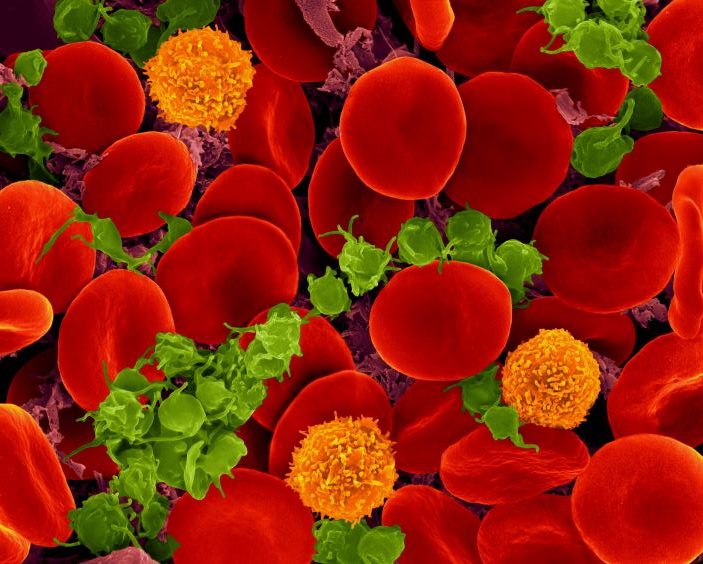
Scanning electron microscope image of red blood cells, platelets (green) and T cells (orange). . Image courtesy of Dennis Kunkel, Dennis Kunkel Microscopy, Inc. Part of the exhibit Life:Magnified by ASCB and NIGMS.
New research shows that platelets at a wound site can sense where they are within a blood clot they are and that they can remodel their surroundings accordingly.
Platelets are key to initiating wound healing and the formation of blood clots (thrombus). Fibroblasts are connective tissue cells that are essential for the later stages of wound healing. Fibroblasts invade the clot that has been formed and produce vital proteins, including fibronectin, that then form a structural framework to build the new tissue needed to heal.
This new study, published in Science Advances, indicates that platelets can also form a provisional fibronectin matrix in their surroundings, similar to what fibroblasts do in the later stages of wound healing. This has potential implications for how the integrity of blood clots might be maintained during vascular repair.
Commenting on the discovery, lead author Dr Ingmar Schoen said: “We have identified an additional unexpected role for the most prominent platelet adhesion receptor. Our results show that platelets not only form the clot but also can initiate its remodelling by erecting a fibrous scaffold. This finding challenges some existing paradigms in the field of wound healing, which is dominated by research on fibroblasts.”
The researchers made use of super-resolution microscopy, a powerful imaging technique which enables much finer resolution of structures inside or around cells in vitro. To develop this finding further, in vivo observation of this platelet behaviour will be necessary.
“Without super-resolution microscopy, this discovery would not have been possible,” Dr Schoen noted.
Researchers are investigating novel stem cell approaches that could lead to treatments for early retinal vascular dysfunction in diabetic patients, which could help prevent diabetic retinopathy.
Diabetic complications cause major metabolic disturbances that damage the cardiovascular, visual, peripheral nerve and renal systems through harming small and large microvessels that feed these tissues. New treatments are needed to treat the growing number of people who develop such retinal vascular dysfunction.
Research strategies include identifying and using new methods to differentiate or mature human induced pluripotent stem cells (hiPSCs) into the specific mesoderm subset of cells that display vascular reparative properties.
“Vascular diseases afflict hundreds of millions of people in the world,” said Chang-Hyun Gil, MS, PhD, a postdoctoral fellow in the Department of Surgery and co-first author of the study. “In this study, we focused on the retinal vessel in type 2 diabetes. Our results demonstrate the safe, efficient and robust derivation of hiPSC-derived specific mesoderm subset for use as a novel therapy to rescue ischemic tissues and repair blood vessels in individuals with vascular diseases. The results provide a foundation for an early phase clinical trial.”
In the study, published in Science Advances, investigators genetically reprogrammed diabetic and non-diabetic peripheral blood cells into hiPSCs and matured the cells into special blood vessel reparative cells. Upon injection into animal models with type 2 diabetic murine (T2D) retinal dysfunction, results showed significant improvement in visual acuity and electroretinograms with restoration of vascular perfusion. They hypothesised that hiPSC-derived vascular reparative cells could work as endothelial precursors that will display in vivo vessel reparative properties in these diabetic subjects.
“Unlike the use of embryonic stem cells (ESCs), genetically engineered hiPSCs do not carry the ethical challenges ESCs possess that limit their possible usage, and hiPSCs are being increasingly recognised as a viable alternative in study design and application as a cell therapy for human disorders,” Dr Gil said.
Researchers converted hiPSC into a specific mesoderm subset that was enriched to generate endothelial cells with vessel reparative properties similar to endothelial colony forming cells (ECFC).
Dr Gil said certain mesoderm subsets were better able to differentiate into ECFC and form functional blood vessels in vivo. and that mesoderm populations corrected vasodegeneration of injured retinal vessels. Tests showed enhanced function of neural retina and improved vision.
To deal with malaria’s growing resistance to existing drugs, researchers are exploring new areas of the deadly parasite’s life cycle. Research published in PLOS Pathogens has identified key processes the malaria parasite uses to remodel blood cells it hides inside.
Senior author Paul Gilson, an associate professor at Burney University, said the growing resistance to antimalarial medicines needs to be addressed soon to avoid serious treatment failures in the future.
“It’s only a matter of time before resistance becomes so bad that current measures perhaps become worthless,” he said.
“Current drugs tend to target very similar things. By discovering new targets and developing drugs to these, we can hopefully overcome resistance.
“Our research identifies processes in the parasites that are essential for its survival. And the more we understand about those processes, the better position we’re in to develop new treatments to block those processes.”
The research, A/Prof Gilson explains, looked into the nature of malaria parasites, particularly their need to renovate their host blood cells to grow rapidly and to escape the immune system.
The dynamic is analogous to an international arrivals terminal in need of better security.
“The renovations are carried out by special exported proteins made by the parasite that are only allowed to travel into the blood cell if they have the right passport,” he said.
“We used to think that gateways around the parasite called PTEX acted like immigration officers at the airport only allowing exported proteins with the right passports to pass through.
“What this study now shows is that the immigration officers appear to leave the airport and travel inside the parasites to check the exported protein passports not long after they are first made.
“The officers then pair up with their exported proteins and take them to the airport to let them go straight through into the blood cells.”
A/Prof Gilson said that hopefully, a greater understanding of the ways parasite proteins enter and modify blood cells could result in new drugs that block exported proteins from carrying out essential renovations to their blood cells.
The COVID pandemic has disrupted and set back malaria elimination programs in several countries, making the need for new drug developments to combat the disease all the more vital.
“Many countries only have very limited resources, and it’s estimated that there’s been quite a big increase in the number of malaria cases around the world because so much effort has been diverted to combat COVID,” he said.
Even though COVID has taken the global spotlight, A/Prof Gilson said that malaria is still a major issue. In 2020 there were an estimated 241 million cases of malaria worldwide, with an estimated 627 000 deaths, according to World Health Organization figures.
A/Prof Gilson said that over recent years significant inroads have been made in eliminating malaria, pointing out that annual death rates were in the millions at the start of the 21st century.
“We can’t let COVID undermine all the great work that’s been achieved over the years, as we aim to one day totally eliminate malaria.”
“Research into new drugs to combat malaria parasites, which are becoming resistant to existing drugs, is a crucial part of these efforts.”
Home-based, self-administered tests for influenza are comparable in accuracy to rapid diagnostic tests in clinical settings, according to a study reported in JMIR Public Health and Surveillance.
“Home tests are a valuable tool to support the management of influenza and other respiratory infections,” explained senior author Matthew J. Thompson, professor at the University of Washington School of Medicine in Seattle.
“The tests facilitate earlier diagnoses and reduce the time from the onset of symptoms to patients seeking appropriate care,” he said.
More than 600 residents in the Seattle area participated in the 2020 study conducted between February and the end of May. Participants received influenza testing kits in the mail. After swabbing their noses, they either recorded the results through an app, or returned the kits to the lab of Lea Starita, assistant professor of genome sciences at the UW School of Medicine and a study co-author.
The researchers found that self-test’s sensitivity and specificity test were comparable with those of influenza rapid diagnostic tests used in clinical settings. They noted that false-negative results were more common when the self-test was administered after 72 hours of the appearance of symptoms, but were not related to inadequate swab collection or severity of illness.
“This study underscores the imperative of expanding access to testing and lowering the costs,” said Barry Lutz, associate professor of bioengineering and another co-author of the paper.
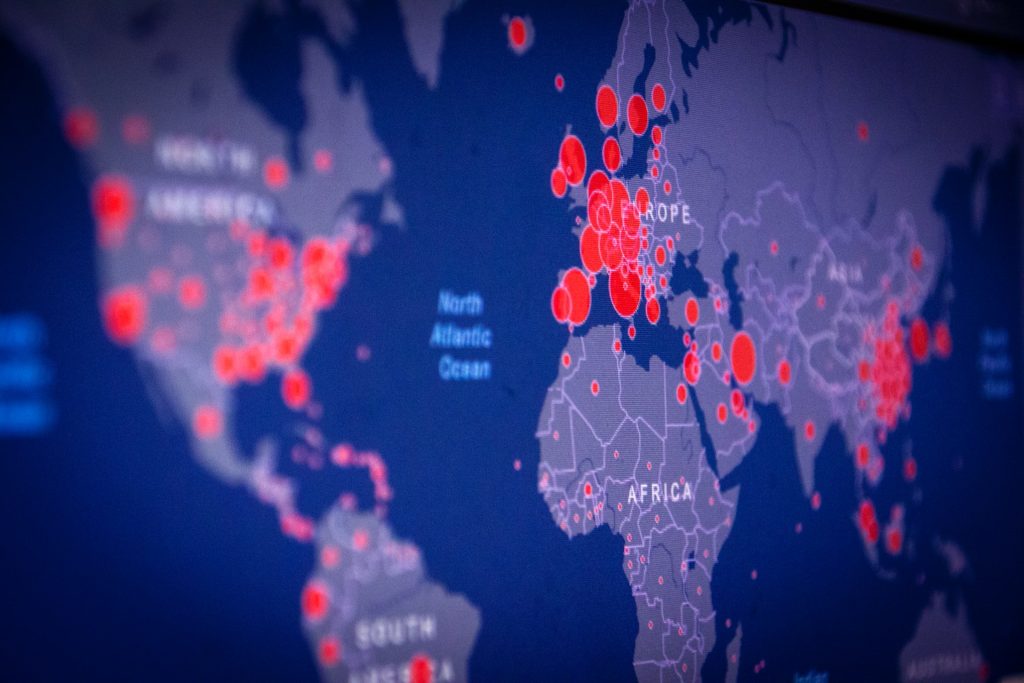
COVID heat map. Photo by Giacomo Carra on Unsplash
According to an analysis of excess mortality published in The Lancet, COVID’s global death toll could be as much as three times higher than official estimates.
From the start of 2020 to the end of 2021, official estimates of the global deaths directly attributed to COVID-19 5.9 million, however this new estimate puts excess deaths at a staggering 18.2 million.
The highest number of excess deaths were reported for India (4.07 million), more than eight times its 489 000 reported COVID deaths, followed by the U.S. (1.13 million), where the official count reached 824,000 by the end of 2021. According to the study, the excess mortality rate in the US (179.3 per 100 000) was about on par with Brazil (186.9 per 100,000). South Africa’s mortality rate was 293·2 per 100 000, just below the rate for Southern Sub-Saharan Africa (308.6 per 100 000). Sub-Saharan Africa’s mortality rate was 101.6 per 100 000, as a result of significant regional variation.
First author Haidong Wang, PhD, of the University of Washington, said in a statement: “Understanding the true death toll from the pandemic is vital for effective public health decision-making. Studies from several countries including Sweden and the Netherlands, suggest COVID-19 was the direct cause of most excess deaths, but we currently don’t have enough evidence for most locations.”
The massive undertaking derived models using all-cause mortality reports for 74 countries and territories and 266 subnational locations, which included 31 locations in low and middle-income countries. These locations reported all-cause death from 2020-2021, and up to 11 years prior. Excess mortality reports were also obtained for the 9 South African provinces 12 Indian states.
Overall, the global rate of estimated excess mortality from COVID was 120.3 deaths per 100 000. A total of 21 countries exceeded 300 per 100 000, with Bolivia having the highest mortality rate at 734.9 per 100 000. Bulgaria, Eswatini, North Macedonia, and Lesotho had the next highest mortality rates. Iceland had the lowest excess mortality rate (-47.8 per 100 000). Australia, Singapore, New Zealand, and Taiwan also had negative excess mortality rates.
Behind India and the U.S. for most excess deaths were Russia (1.07 million), Mexico (798 000), Brazil (792 000), Indonesia (736 000), and Pakistan (664 000). These seven countries were noted to account for more than half of the excess deaths globally during the study period.
Changes in mortality rates also reflected the impact of other diseases suppressed by the same measures that limited the spread of COVID. The researchers wrote: “The most compelling evidence to date of a change in cause-specific mortality in the pandemic period is the decrease, especially in the Northern Hemisphere, in flu and respiratory syncytial virus (RSV) deaths seen in the months of January to March, 2021,” they added. “Given the scarce and inconsistent evidence of the effect of the COVID-19 pandemic on cause-specific deaths, and the extremely scarce high-quality data on causes of death during the pandemic, our excess mortality estimates reflect the full impact of the pandemic on mortality around the world … not just the deaths directly attributable to SARS-CoV-2 infection.”
Limitations included different modelling strategies being used to estimate excess mortality rate, and excess mortality rate by week or month was not estimated.
On Sunday 13 March, the World Health Organization released a statement condemning recent attacks on hospitals and other healthcare facilities in Ukraine, which it called “horrific”. It also called for an immediate end of all such attacks, which are killing and injuring both patients and health care workers, as well as threatening vital health services.
“To attack the most vulnerable – babies, children, pregnant women, and those already suffering from illness and disease, and health workers risking their own lives to save lives – is an act of unconscionable cruelty,” the organisation said.
WHO’s Surveillance System for Attacks on Health Care (SSA) has documented 31 attacks on health care since the outset of the war that started with the Russian invasion on 24 February, now in its third week. These include 24 incidents of damage to or destruction of health care facilities, and five cases of ambulances.
In one incident, a maternity hospital was hit by a Russian air strike, causing three deaths including a child.
There have been 12 deaths and 34 injuries as a result of these attacks, and impaired access to and availability of essential health services, the WHO stated. Since attacks are ongoing, this is expected to continue.
The organisation also stresses that such attacks also directly impact the needs of vulnerable groups, and the health care needs of pregnant women, new mothers, younger children and older people inside Ukraine are rising even as violence curtails health care access.
“For example, more than 4,300 births have occurred in Ukraine since the start of war and 80 000 Ukrainian women are expected to give birth in next three months. Oxygen and medical supplies, including for the management of pregnancy complications, are running dangerously low,” the WHO statement read. WHO warned that Ukraine’s health care system is “clearly under significant strain” and a collapse would be a “catastrophe”. It stresses that “every effort must be made” to prevent this.
“International humanitarian and human rights law must be upheld, and the protection of civilians must be our top priority.
They call for international humanitarian and human rights laws to be upheld, with the protection of civilians as a top priority. Aid and health care workers must be able to continue and strengthen service delivery, and health services should be provided at border crossing, to provide prompt care and referral for children and pregnant people. Care should be unimpeded, with access to civilians in all areas of the conflict, and health care and services should be protected from attacks.
WHO stated that, in the wake of COVID’s huge strain, “such attacks have the potential to be even more devastating for the civilian population.” As such, it called for an urgent ceasefire.
“Finally, we call for an immediate ceasefire, which includes unhindered access so that people in need can access humanitarian assistance. A peaceful resolution to end the war in Ukraine is possible.”
By uncovering the subtle difference between two varieties of a protein, researchers from the Pennsylvania may have discovered how to eliminate the weight gain side effects of thiazolidinediones, which were once widely-used diabetes drugs. These findings, published in Genes & Development, could lead to more effective treatment from modified thiazolidinediones, which many likely avoid in its current form due to side effects.
“One small, undiscovered difference between the two forms of a single protein proved to be extremely significant,” said study senior author Mitchell Lazar, professor at the University of Pennsylvania. “Our findings suggest a way to improve on the mechanism of action of thiazolidinedione drugs, which holds promise for eliminating the side effect of weight gain.”
After their introduction in the 1990s, thiazolidinediones, which include rosiglitazone, soon enjoyed widespread use in diabetes. Since then, they have fallen out of favour due to their side effects. This has led some researchers to investigate whether new compounds could be developed that retain these drugs’ therapeutic effects while having fewer side effects.
In their study, Prof Lazar and his team approached this problem by studying thiazolidinediones’ target, PPARgamma (PPARγ), a protein which helps control fat cell production. The scientists examined two lines of mice: One greatly deficient in one form of the protein, PPARγ1, the other greatly deficient in PPARγ2. In the mice, the scientists showed that activating PPARγ1 or PPARγ2 with a thiazolidinedione had an anti-diabetic effect in each case, protecting mice from the metabolic harm of a high-fat diet.
However, the researchers discovered that activation of these two forms has subtly different downstream effects on gene activity. Specifically, in the PPARγ1-deficient mice (in which most of the present PPARγ takes the form of PPARγ2), the thiazolidinedione treatment caused no weight gain.
The finding therefore suggests that it may be possible to realize the benefits of thiazolidinediones without the weight gain side effect, by selectively activating PPARγ2 and not PPARγ1.
“We’re now studying in more detail how PPARγ1 and PPARγ2 work and how they differ, in the hope of finding ways to selectively activate PPARγ2,” Prof Lazar said.
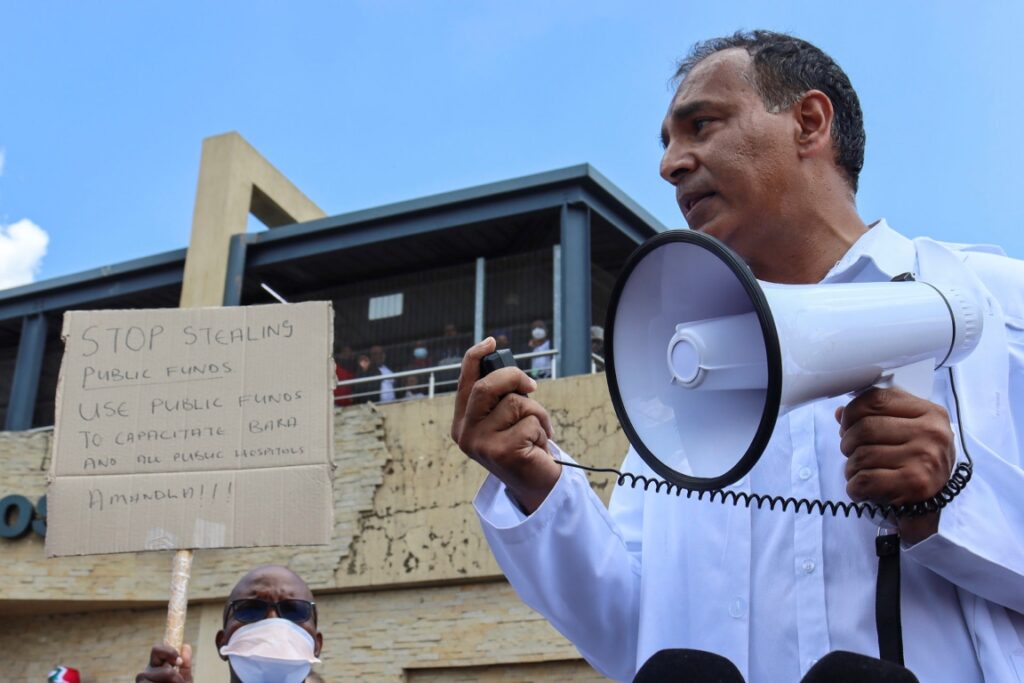
10 March 2022: Shabir Madhi addresses the crowd outside Baragwanath hospital. Credit: Nation Nyoka
Despite falling struggling staff and falling patient care at Baragwanath Hospital, the contracts of 800 support staff will not be renewed, writes Nation Nyoka for New Frame.
Budget cuts at the Gauteng Department of Health mean that it will not renew the contracts of more than 800 COVID support staff at Chris Hani Baragwanath Academic Hospital, south of Johannesburg, on 31 March.
A picket was held outside the hospital on Thursday 10 March after it emerged that suppliers hadn’t been paid for services such as bread delivery and biohazardous waste removal.
Chief executive Nkele Lesia said on 11 March that the picket was less about the COVID staff and more about staff shortages. But she offered no plan to address the inadequate number of hospital personnel. Lesia said the COVID staff knew their contracts were not going to be renewed.
“Those 800 posts may have been created for COVID-19, but it provides us an opportunity to redress this imbalance that exists with this hospital having been chronically understaffed,” said Shabir Madhi, a vaccinology professor and the dean of health sciences at the University of the Witwatersrand (Wits). “We can’t just remove the staff – we need to incorporate them into the system so that we can have this hospital better staffed to ensure better quality of patient care.”
He said the issue goes beyond staff shortages. “If we remove them, we will find that the permanent staff come under greater pressure and burn out. They are going to resign, creating a greater disaster. Poor planning on the part of the government is not an excuse to punish patients and healthcare workers.”
Gauteng member of the executive council for health Nomathemba Mokgethi said the department is unable to absorb the temporary staff because of budget constraints. But she extended her appreciation for their help and support during the waves of COVID.
A chronic situation
Madhi said neglect and the inadequate management and training of healthcare workers over the past two years will materialise as a heavier burden from chronic diseases, which have been on the back-burner as the healthcare industry prioritised COVID.
“For the next two to three years, we need to expect high levels of people ending up in hospital dying not because of COVID. With COVID, there has unquestionably been a disruption in the care of patients with other conditions because people haven’t been able to access facilities. People have been delayed in the diagnosis, and for some time they probably delayed with the treatment,” he said.
Mokgethi and her team did not offer a plan to handle diseases that have been neglected either.
Madhi said training has been hampered and Baragwanath – one of the biggest academic teaching hospitals on the Wits circuit – needs to function properly for students to learn comprehensively. “It is going to impact patient care in the years to come, so the disaster we sit upon today is just the beginning of a further rot of the system if we don’t reverse it immediately.”
Mmampapatla Ramokgopa, chairperson of the hospital’s medical advisory committee, said resilient and hard-working staff who have gone the extra mile are what has kept Baragwanath going.
“We have doctors and nurses pushing patients because there are no porters. The same with cleaning. You find nurses and doctors scrubbing the floors because there are not enough cleaners. Sometimes patients delay to get into theatres because the cleaners are not there. They dig into their pockets and make contributions to buy either bread or flour to make bread,” said Ramokgopa.
Patient care at risk
The department denied that Gauteng hospitals have run out of food, saying other types of food are being served at Baragwanath. It did admit that the hospital, along with other facilities, experienced “a short supply of bread in the recent past” and that the issue had been resolved.
Madhi said the hospital and surrounding area were compromised when the department failed to pay the service provider who removes biohazardous waste. The department said on 11 March that it had paid the relevant service providers to collect the waste and supply bread.
“The fact that we are in a province where patients are not provided something as basic as bread for two weeks speaks volumes about the incompetence and uncaringness of those responsible for the management of this facility … at the level of the province,” said Madhi.
Ramokgopa said the committee has raised these matters over time. People who have worked at the hospital for years have a collective memory of its legacy and they are eager to engage and find solutions.
National Union of Public Service and Allied Workers branch secretary Monwabisi Somi said employees are providing much-needed staff for an institution that is under strain, and the COVID workers need to be absorbed. “We’ve also got the issue of telephone lines that have not been working for some time in some units, which compromises communication. This is to the detriment of patient care,” he said.
Lerato Madyo, the provincial department’s acting chief financial officer, said its finances are healthy but it is dealing with a backlog of unprocessed invoices from previous years. The department owed service providers R4.2 billion at the end of January.
Madhi said what is happening in state healthcare facilities is compromising the future care of people in South Africa. “It is undermining our ability to provide adequate training to healthcare workers.”