Tag: South Africa

SA Doctors Report SARS-CoV-2 Mutations in a Patient with HIV
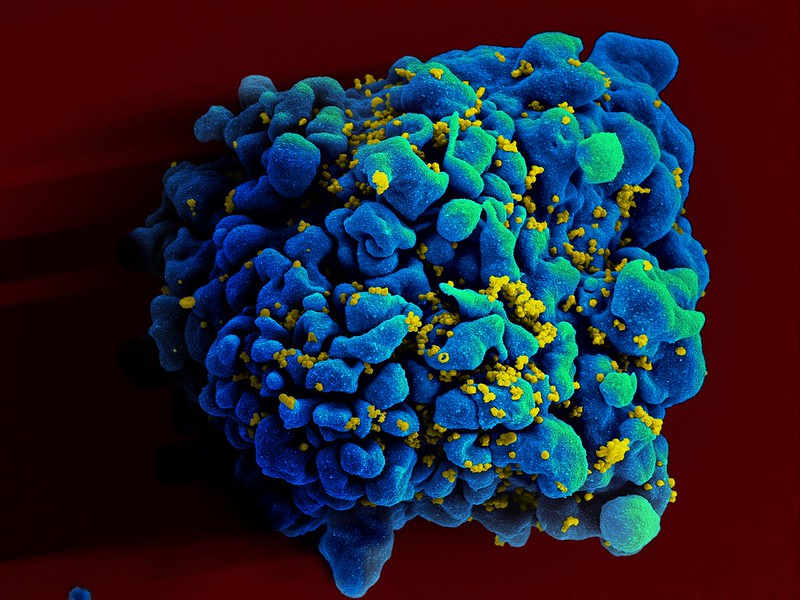
HIV Infecting a T9 Cell. Credit: NIH

In an article awaiting peer review, doctors in South Africa report on the case of a 22-year-old female with uncontrolled advanced HIV infection and a SARS-CoV-2 infection that lasted 9 months, during which time the virus accumulated more than 20 additional mutations. Antiretroviral therapy suppressed HIV and cleared the coronavirus within 6–9 weeks. 

One hypothesis for novel variants is that they arise in severely immunocompromised individuals. Being unable to clear the virus because of a weakened immune response results in a persistent infection, letting mutations accumulate – some of which may allow immune evasion. In one case, SARS-CoV-2 in a female leukaemia patient developed seven mutations over three months of infection.

The authors describe a case of persistent SARS-CoV-2 infection, lasting for at least 9 months, in a severely immunocompromised woman with HIV that had challenges with adherence to antiretroviral therapy.

In mid-September 2021, a female in her 20s was admitted to a tertiary hospital in Cape Town with a one-week history of sore throat, malaise, poor appetite and dysphagia. The patient was infected with HIV at birth. In January 2021, her antiretroviral therapy (ART) regimen had been changed to tenofovir, emtricitabine and efavirenz, but she had difficulty adhering. In August 2021 she moved from rural KwaZulu-Natal to Cape Town. She stated that she had not received a COVID vaccination.

“On physical examination, the patient was wasted but had no palpable lymph nodes,” the authors report. “She was awake and lucid, with no focal neurological deficits. She was not in respiratory distress with an oxygen saturation of 98% on room air. The cardiovascular and abdominal examinations, renal function, white cell count and liver enzymes were without abnormalities. Her CD4 count was 9 cells/μL and her plasma HIV viral load 4.60 log10 viral RNA copies/mL, indicating advanced HIV infection, poorly controlled by ART.

“During a prolonged hospital stay the patient experienced multiple complications requiring treatment. Following adherence counselling, antiretroviral therapy was reinitiated with a new regimen of tenofovir/efavirenz/dolutegravir a week after admission.” 

The patient tested positive for COVID on 25 September 2021, with genomic sequencing indicating the Beta variant. However, in October, the patient later revealed that she had tested positive for COVID in January 2021. On 25 November 2021, the patient’s HIV viral load was <50 copies/ml and a PCR test was negative for COVID. While there was no CD4 count performed, suppressed HIV replication and clearance of the SARS-CoV-2 infection suggest her immune system had recovered to some degree.

Phylogenetic analysis showed that the samples indicated an ongoing infection instead of re-infections. During the 9 months of infection, the virus acquired at least 10 mutations in the spike glycoprotein and 11 other mutations over and above the lineage-defining mutations for Beta.

The authors consider it unlikely that the novel variant described spread into the general population, and stress that it does not prove that any of the other novel variants originated from an immunocompromised host in this fashion.

Increased vigilance is warranted to benefit affected individuals and prevent the emergence of novel SARS-CoV-2 variants. They ascribed the detection of the case to good connections between sequencing laboratories, routine diagnostic laboratories and frontline clinicians.

The authors concluded that their experience “reinforces previous reports that effective ART is the key to controlling such events. Once HIV replication is brought under control and immune reconstitution commences, rapid clearance of SARS-CoV-2 is achieved, probably even before full immune reconstitution occurs. This underscores the broader point that gaps in the HIV care cascade need to be closed which will benefit other conditions and public health problems, too, including COVID.”


Netcare Seeking a Buyer for Bougainville Hospital

Credit: Netcare

Netcare is looking for a buyer for its 60-bed Netcare Bougainville Hospital in Pretoria West, which first opened its doors in 1997.

Commenting on the development, Johan Smal, regional director of Netcare’s North East region said that unless a suitable buyer was found, the hospital would close its doors on 30 April 2022.

In outlining the reasons for the closure of the facility, Smal said that Netcare’s hospital division continually conducted strategic reviews of its asset portfolio in which Netcare Bougainville Hospital was identified as an under-performing facility for a sustained period.

“The hospital’s under-performance has prevailed from before COVID and this was further exacerbated by the adverse effects of the pandemic, in the past 24 months. These and other circumstances have rendered it uneconomical to retain Netcare Bougainville Hospital in the current business environment.”

“We have been in consultation with staff, doctors and facility management to notify them that the hospital may have to close. In addition the Department of Health, unions and other key stakeholders have been kept firmly updated on developments,” he added.

Sydney Masalla, general manager of Netcare Bougainville Hospital has confirmed that there are at present only three resident specialists on site at the hospital who also work at other facilities.

“In addition we have only 37 active staff members with whom we are in discussion regarding viable alternative employment options.”

Smal concluded by thanking patients, doctors, staff as well as healthcare service providers for their support through the years stating that they were an integral part of the history of Netcare Bougainville Hospital and the greater South African landscape.

“I am confident that we will continue working together, as we have in the past, in other Netcare facilities – this is therefore not farewell,” he concluded.

National Treasury Proposes e-Cigarette Tax

Photo by Toan Nguyen on Unsplash

The National Treasury is proposing to impose a tax on both the non-nicotine and nicotine solutions in e-cigarettes (EC), and is asking for public comment by 7 February 2022.

The National Treasury published a draft discussion paper in December 2021 on the proposed taxation of e-cigarettes (ECs). The National Treasury defines e-cigarettes as battery powered devices that do not burn or use tobacco leaves but vaporise e-liquid solutions for inhalation.

In its discussion paper, the Treasury notes the uncertainty of e-cigarettes’ health risks, so it seeks stakeholder engagement on its proposal for the taxation of ECs.

The National Treasury proposes to introduce a specific excise tax on both the non-nicotine and nicotine solutions used in ECs and intends to use its existing policy guidelines applicable to other excisable products to do so. For example, traditional tobacco products are subject to excise duties at a rate of 40% of the price of the most popular brand in each tobacco category. 

For EC users, that would mean paying R2.03 per mL of EC solution nicotine-containing nicotine and R0.87 per mL of nicotine-free EC solution, if the draft proposals are accepted and become legislation. It is also proposed that EC products with a higher nicotine content will attract a higher duty rate.
Certain stakeholders may question that the Treasury’s proposed EC tax extends to nicotine-free liquids, as it does not necessarily support the government’s stated policy intention of reducing the consumption of tobacco products. The use of ECs as a means of quitting tobacco products is well established, with a Cochrane review showing that nicotine-containing ECs resulted in increased odds of quitting than nicotine-free ECs. 
It could also generate a knock-on illicit trade in e-cigarettes, as has  already happened in the tobacco sector.

Manufacturers and importers who would be taxed on ECs will need stringent certifications by accredited laboratories, which use either South African National Accreditation or International Laboratory Accreditation Cooperation (ILAC) approved methodologies.  Where such certifications are not available, a penalty rate of duty is being proposed.

Comments on the draft discussion document are due by 7 February 2022.

Source: Webber Wentzel

Nitazoxanide Flops in South African COVID Trial

Photo by Artem Podrez on Pexels

Interim analysis of a South African clinical trial has revealed that nitazoxanide, an oral antiparasitic agent with antiviral properties, was ineffective in improving outcomes in ambulatory patients with mild-to-moderate COVID.

Funded by the South African Medical Research Council (SAMRC), the study was performed at four sites in South Africa. The primary goal of the trial was to evaluate the effectiveness of nitazoxanide (1g twice daily for 7 days) in reducing the progression from mild to severe COVID in ambulatory patients. Progression to severe disease was defined as hospitalisation or death. The trial underwent an interim analysis at 67% of the recruitment target (290 participants), and the data was reviewed by an independent data and safety monitoring board (DSMB). Following the interim analysis, the DSMB recommended halting recruitment of the trial on the grounds of futility.

No significant difference was seen in serious adverse events, which included all causes of hospitalisation and death, between the nitazoxanide and the placebo groups [12/144 (8.3%) vs 10/146 (6.8%)]. Hospitalisation and death specifically due to COVID showed the same pattern [7/144 (4.9%) vs 8/146 (5.5%)].

Principal investigator Prof Keertan Dheda from the University of Cape Town (UCT) and the London School of Hygiene and Tropical Medicine, said that the results of the trial, although disappointing, contributes to the growing body of evidence, clarifying what works and what doesn’t for the treatment of COVID. Thus, clarifying what does not work is as important as finding effective therapies so that clinically useful management algorithms can be developed.

Nitazoxanide is a low-cost broad-spectrum antiviral drug with an extensive safety record. Originally developed as antiparasitic, it seemed promising against SARS-CoV-2 in the lab but the real world test did not show any benefit. It is still possible that nitazoxanide may be of benefit at higher doses (greater than the dose used in the trial, which was already twice the normal dose), however this will most likely cause an increase in intolerable gastrointestinal side effects. “The next step will be to focus on formally publishing the data in a peer reviewed journal and to evaluate secondary objectives of the study, including assessing the efficacy of nitazoxanide in reducing the duration of illness, reducing SARS-CoV-2 viral load, and its efficacy, if any, in preventing COVID in close contacts,” said Prof Dheda.

Prof Dheda concluded that nitazoxanide could have a less than 30% benefit which may be detectable in a larger study. However, it is questionable whether such an effect size is clinically relevant given the number needed to treat to prevent disease progression, adverse events, cost and that other therapies have emerged (eg paxlovid) with an efficacy benefit of greater than 80%.

SAMRC President and CEO, Prof Glenda Gray said although the study did not meet its primary endpoint, the results are an important addition into the scientific repository. “COVID and HIV in their very nature are unique and complex viruses which have posed unprecedented challenges for vaccine development, globally – however, the knowledge gained from this trial will help us advance our pursuit of effective therapies and vaccines for both COVID and HIV alike,” said Prof Gray.

Prof Gray, who also has led numerous trials in search of effective HIV and COVID vaccines, said COVID poses substantial challenges for those living with HIV which evades the immune system. “Until an effective vaccine has been found, all people living with HIV should take all recommended preventive measures to minimise their exposure to COVID,” concluded Prof Gray.

Source: South African Medical Research Council

Mediclinic and Discovery Sound Warnings over NHI Bill

Photo by Markus Winkler on Unsplash

Private hospital group Mediclinic has warned that the government’s proposed National Health Insurance (NHI) system will threaten public health in South Africa, and bring about the destruction of private healthcare and medical aid cover.

The NHI Bill is currently undergoing a public consultation process, with a number of healthcare, civil society and political groups presenting on why the new system should or should not be introduced.

The Bill as it stands will have a direct impact on access to healthcare services in South Africa. Mediclinic notes that there are insufficient resources to implement it; private-sector hospitals will be curtailed; and medical aids will be eroded.

The financial and human resources necessary to effectively implement the NHI scheme is a legitimate concern, Mediclinic said. It pointed out South Africa’s low doctor- and nurse-to-population ratios are low compared to peer countries.

“Everyone’s right of access to health care services would be threatened if the existing health care delivery system is uprooted and the NHI scheme envisaged in the Bill cannot be effectively implemented,” it said.

Private healthcare is an integral part of the healthcare system with everything from hospital beds to staff at risk if replaced by the NHI.

The Bill’s key components threaten the private hospital sector, with the contracting and reimbursement frameworks proposed in it unable to accommodate private hospital participation.

Additionally, the NHI Fund will create a monopoly by acting as the single purchaser of health care services in South Africa, capable of harming the competition and eroding private sector resources.

Medical scheme provider Discovery said that current private health care funding amounts to R212 billion, some 44% of the total healthcare spend. If the government were to finance this through direct taxation, this would equate to 4.1% of GDP, an unfeasible amount.

Mediclinic also warned that medical aid in South Africa would be significantly eroded under the NHI, meaning only the bare basics for South Africans needing medical care, and expensive treatments being unavailable. It gave the example of a patient with chronic renal failure receiving haemodialysis treatment currently covered by a medical scheme, and showed that the patient would be placed on a long waiting list for this life-saving treatment since it was covered (but not properly funded) by the NHI.

Source: BusinessTech

NICD Warns of Malaria Being Misdiagnosed as COVID

Mosquito
Photo by Егор Камелев on Unsplash

The National Institute for Communicable Diseases has warned that, as South Africa enters its peak malaria season, cases of malaria are being misdiagnosed as COVID. Both malaria and COVID have similar non-specific early symptoms such as fever, chills, headaches, fatigue and muscle pain. Undiagnosed and untreated malaria rapidly progresses to severe illness and can be fatal.

Speaking at a media briefing on Wednesday, principal NICD medical scientist Dr Jaishree Raman said that Gauteng has seen a slight increase of malaria cases recently. 

Dr Raman noted that COVID “has pulled resources from the malaria programmes, reducing active surveillance and case investigation, which is reducing the ability [to] classify cases accurately.”

However, the NICD does not know the exact source of the malaria. “Data cleaning and case classification is ongoing, so at the moment, we cannot say whether the uptick in cases is due to locally-acquired or imported malaria,” she said.

The NICD advises that any individual that prevents with fever or ‘flu-like illness, if they reside in a malaria-risk area in Limpopo, KwaZulu-Natal and Mpumalanga or have travelled to a malaria-risk area, especially Mozambique, in the past six weeks, must be tested for malaria by blood smear microscopy or malaria rapid diagnostic test. If they test positive for malaria, the patient must be started on malaria treatment, immediately.

The NICD also advises patients to remember to inform their healthcare provider of their recent travel, especially to neighbouring countries and malaria risk areas in South Africa.  

‘Taxi malaria’, transmitted by hitch-hiking mosquitoes, should be considered in a patient with unexplained fever who has not travelled to a malaria-endemic area, but is getting progressively sicker, with a low platelet count.

Source: NICD

SA Healthcare Bolstered With Vaccine Lab Investment and Loans

Photo by Louise Reed on Unsplash

Last week, South African healthcare received a double shot in the arm with the opening of a local vaccine manufacturing facility and the approval of a World Bank loan to bolster social safety nets and health systems.

On Wednesday, President Cyril Ramaphosa and health technology billionaire Dr Patrick Soon-Shiong officially opened a new vaccine manufacturing facility in Brackenfell, Western Cape.

The South African-born entrepreneur has been strongly supporting local healthcare, with R3 billion invested to help SA share vaccine technology with the rest of Africa. His company, ImmunityBio, is developing a T-cell based universal COVID vaccine, currently in Phase III trials in SA. The same adenovirus vector technology it uses is also being tested in cancer vaccines.

“It has been a dream of mine, since I left the country as a young physician, to bring state-of-the-art, 21st century medical care to SA and to enable the country to serve as a scientific hub for the continent,” Dr Shoon-Siong had previously said. The technology transfer will help “establish much-needed capacity and self-sufficiency.”

The hub will transfer technology, know-how and materials for DNA, RNA, adjuvant vaccine platforms and cell therapies to SA.

“There is no reason we couldn’t make 500 million doses a year,” said Dr Soon-Shiong, who is also a Wits alumnus. “Subject to the raw material being available.”

He said he wants to tap the country’s expertise on prevalent diseases such as HIV and cervical cancer. “There are fantastic scientists with deep knowledge about these diseases,” he said. “More so than in America because they see these patients every day.”

President Ramaphosa and Dr Soon-Shiong also launched the Coalition to Accelerate Africa’s Access to Advanced Healthcare, which aims to drive the development of innovative therapeutics and ensure the continent is prepared for future pandemics.

The coalition aims to manufacture a billion doses of the COVID vaccine by 2025 and to develop treatments for conditions including cancer, COVID, tuberculosis and HIV.

South Africa also received approval from the World Bank for a US$750 million COVID relief loan aimed at reducing the worst of the pandemic’s impact on the poor.

“The World Bank budget support is coming at a critical time for us and will contribute towards addressing the financing gap stemming from additional spending in response to the COVID crisis,” said Dondo Mogajane, Director General of the National Treasury. “It will assist in addressing the immediate challenge of financing critical health and social safety net programs whilst also continuing to develop our economic reform agenda to build back better.”

Meanwhile, Health Minister Dr Joe Phaahla warned that South Africa will likely enter a fifth wave when cold temperatures in May, though what COVID variants may drive it remain to be seen.

SA Scientists Criticise Developed Nations’ ‘Scepticism’ over Omicron

Image by Quicknews

South African scientists have criticised developed nations for ignoring early evidence that Omicron was “dramatically” milder than the previous strains of the coronavirus, an attitude which could be construed as “racism”.

“It seems like high-income countries are much more able to absorb bad news that comes from countries like South Africa,” said Prof Shabir Madhi, vaccinologist at Wits University.

“When we’re providing good news, all of a sudden there’s a whole lot of scepticism. I would call that racism.”

Prof Salim Karim, former head of the South African government’s COVID advisory committee and vice-president of the International Science Council concurs.

“We need to learn from each other. Our research is rigorous. Everyone was expecting the worst and when they weren’t seeing it, they were questioning whether our observations were sufficiently scientifically rigorous,” he said, though he acknowledged that Omicron’s high number of mutations may have led to an overabundance of caution.

But by early December, anecdotal evidence was already indicating that Omicron caused far fewer hospitalisations than the Delta Wave, despite being more transmissible.

“The predictions we made at the start of December still hold. Omicron was less severe. Dramatically. The virus is evolving to adapt to the human host, to become like a seasonal virus,” said Prof Marta Nunes, senior researcher at the Vaccines and Infectious Diseases Analytics department at Wits

“It didn’t take even two weeks before the first evidence started coming out that this is a much milder condition. And when we shared that with the world there was some scepticism,” Prof Karim added.

While some have argued that Africa’s pandemic experience is different due to factors such as its younger population, any advantage South Africa has is outweighed by poor health, with excess deaths during COVID at 480 per 100 000, one of the highest in the world. Prof Madhi points out a high prevalence of comorbidities such as obesity and HIV.

A majority of those excess deaths are probably due to the pandemic, many SA scientists believe. Half occurred during the Delta wave, but only 3% transpired during the Omicron wave so far, Prof Madhi pointed out.

The government chose not to tighten restrictions during the fourth wave, and criticised the reimposition of travel bans coming from South Africa. South African scientists have mostly welcomed this, even though the WHO continues to warn that Omicron should not be considered “mild”.

“We believe the virus is not going to be eradicated from the human population. We must now learn how to live with this virus and it will learn how to live with us,” said Prof Nunes.

The low death rate from Omicron indicates a different phase of the pandemic. “I’d refer to it as a convalescent phase,” said Prof Madhi. The government has already effectively stopped quarantining and contact tracing.

Source: BBC News

SA’s Top 10 Health Topics to Watch in 2022

Photo by Towfiqu barbhuiya from Pexels

Spotlight highlights the country’s top 10 health topics to keep an eye on in 2022.

1. COVID prosecutions
Former health minister Dr Zweli Mkhize resigned amid allegations of wrongdoing in the Digital Vibes scandal, and hit back at the findings of the Special Investigations Unit, which had also implicated a number of top health department officials. Whether Health Minister Dr Joe Phaahla  will take decisive action against those found guilty will be an important litmus test. Last year, Dr Phaahla assured the public that the department “is going to thoroughly and decisively act to ensure nothing is swept under the carpet”.

2. The NHI Bill
Public hearings on the National Health Insurance Bill will be done by the end of January, with feedback in February and final report by April 1. It then goes to the National Council of Provinces for a similar stakeholder process, and before the end of 2022 it could be signed into law.
To date, public inputs on the Bill were mostly on governance issues. A critical point this year is whether MPs will take these inputs on board and make significant changes to the bill, or whether they will simply force through the bill largely unchanged.

3. Medico-legal claims
With R74 billion in medico-legal claims against the state, the State Liability Bill is back on Parliament’s agenda. Instead of government departments paying a lump sum for successful medical negligence claims, the Bill proposes a new settlement structure of separate payments to relieve budgetary pressure on hospitals. Since the necessary final report from the South African Law Reform Commission is months away, Spotlight does not think the Bill will be passed this year – and first prize would be to prevent medico-legal claims from happening.

4. Healthcare budget cuts
Unfortunately, there is still no end in sight to continued budget cuts to healthcare. Employing more nurses could reduce medico-legal claims, but in fact there is a growing shortage of nurses. Even th Office of Health Standards Compliance is also hamstrung by inadequate funding, with only 61 inspectors to cover more than 5000 public healthcare facilities, putting off private sector inspections until next year.

5. HIV prophylaxis
With the extremely promising results of injectable pre-exposure prophylaxis (PrEP) for HIV, there is still a process to go through before it will be made available in South Africa this year. COVID has shown that processes can be sped up if there is the will, but whether there is the same drive to treat HIV remains to be seen. As such, PrEP will most likely only be available in public healthcare facilities by the end of 2023.

6. An end to the COVID pandemic
While South Africa is heading towards living with COVID as an endemic disease, it is impossible to predict what surprises the coronavirus will have in store for the world this year in the form of new variants. However, according to Director of the Medical Research Council, Professor Glenda Gray, the winter months will give us an idea of the direction the pandemic will take with a fifth wave. Vaccination will remain key to reducing its severity.

7. SA’s TB programme
COVID severely set back SA’s TB programme, but 2022 should see the arrival of a number of delayed initiatives. These include rollout of the relatively new 3HP prevention pills, the results of new X-ray detection technology and  consequent possible changes to screening and testing, and an update to the Thembisa HIV model which will now include TB.

8. The National Mental Health Policy Framework
The new National Mental Health Policy Framework and Strategic Plan are expected to be finalised this year. However, as with the NHI, funding remains a problem. Only 5% of the current health budget goes to mental health services, and it only provides for one in 10 of those in need.

9. Improved procurement legislation
As illustrated by the government’s COVID procurement debacle, an overhaul is needed. Draft Public Procurement Bill proposes a single regulatory framework for all goods and services procured by government departments and has the potential to strengthen and streamline procurement processes. However, Spotlight notes that critically important pieces of legislation can simply vanish, as did the Medical Schemes Amendment Bill of 2018.

10. No-fault compensation fund
The COVID vaccine injury no-fault compensation fund has quietly fallen off the radar, with no payouts made to date. However, the NICD again urged people to report adverse events with the vaccine.

Source: Spotlight

‘No NGOs Were Ready’, Life Esidimeni Inquest Reveals

Photo by Tingey Injury Law Firm on Unsplash

The former Gauteng deputy director-general for mental health services, Hannah Jacobus, has the process to move Life Esidimeni patients was rushed. She was being cross-examined by the State’s Advocate Willem Pienaar.

The much-delayed inquest meant to determine any criminal liability for the deaths of 144 mental health patients in the 2016 Life Esidimeni disaster continued virtually on Monday.

Jacobus’ role was in downscaling of patients at Life Esidimeni for cost savings, and says there was no indication of it closing at the time. When its closure was announced, these downscaling plans were not implemented and there was no timeframe given for when patients were to move out.

The former deputy DG admitted to writing false licences for NGOs, under pressure from then head of Gauteng mental health services, Dr Makgoba Manamelashe. However, Jacobus maintained that while she assessed their suitability, she ultimately did not issue any licences.

Dr Manamela signed licences authorising inexperienced‚ underfunded‚ poorly equipped NGOs to look after patients with profound mental illnesses.

After the Gauteng health department terminated the contract with Life Esidimeni, NGOs were used to care for the 1712 patients.

Dr Manamela admitted to Solidarity advocate Dirk Groenewald that the NGOs to which she gave authority did not comply with the legal requirements. In 2017,  it was found that patients were transferred to NGOs that had been issued “unlawful and knowingly fraudulent” licences.

Many NGOs were subsequently found to be entirely unprepared for the patients they received, some lacking sufficient food, water, medication, staff or blankets.  According to Jacobus, the process have only been completed by 2020 according to the downscaling schedule.

“From December 2015 to the end of March 2016 [is not] a sufficient period to determine and appoint suitable NGOs to receive mental healthcare [patients]. No NGOs were ready by the end of March. We needed more time,” she said.

Source: Times Live