Speaking to the media on Friday, Dr Joe Phaahla said that vaccinations had “uncontestably” lowered the rate of hospitalisations as seen by reduced hospital admissions in the fourth wave. saying that there has been a decoupling between new infections and hospital admissions and deaths. An article awaiting peer review on the medRxiv preprint server shows evidence of this in Cape Town.
Vaccinations were still lower than expected, despite a renewed vaccination drive from 17 December, a situation he attributed to people focussing on their festivities. As of Thursday, 45.5% of all SA adults had received at least one dose, with just under 40% being fully vaccinated. However, only 31.6% of 18–34 year olds have been vaccinated. About one million doses have been administered to the newly opened 12–17 year age group.
In an interview with eNCA, Dr Phaahla said that he concurs with experts that COVID is heading towards becoming an endemic disease, emphasising that South Africa is prepared for this. A new dashboard is to be unveiled which will show the number of vaccinated and unvaccinated in hospitals.
Dr Phaahla has also said that the issue of mandatory vaccinations is currently being deliberated by the government and that an announcement will be made in due course. In the US, the Supreme Court blocked President Biden’s vaccine mandate for large companies, which is seen as a significant blow to his administration’s COVID response plan.
The NICD’s Dr Michelle Groome said that almost 99% of all COVID cases sequenced are caused by Omicron. Gauteng, has exited the fourth wave with a low rate of new cases (1.4 cases per 100 000) and slight (2.2%) increase, likely attributable to increased testing. All other provinces had observed a decrease in weekly incidence of new cases, save Northern Cape (21.9 per 100 000, 18.3% increase). A 14.3% positivity rate was seen as of 13 January, down from highs above 35% in mid-December.
Test positivity rate had fallen from 25–30% in the last week of 2022 to 14% on Thursday.
South Africa’s easing of COVID regulations at the end of 2021 set a new trend in how countries are choosing to manage the pandemic. In an article for The Conversation, Wits University’s Professor Shabir Madhi and colleagues reflect on the boldness – and the risks.
In a significant departure, the government is choosing a new, more pragmatic approach while keeping an eye on severe COVID and threats to health systems. This reflects a willingness to “live with the virus” without causing further damage to the economy and livelihoods, especially in a resource-constrained country.
Prof Madhi and colleagues hope that “the government continues to pursue this approach and doesn’t blindly follow policies that are not feasible in the local context, and ultimately yield nominal benefit.”
This more nuanced approach is a stark contrast to reflexive restrictions in response to rising case rates, suggesting the government has listened to commentary saying that the focus should be on whether health systems are under threat.
A high level of population immunity guides this approach. A sero-survey in Gauteng, just prior to the onset of the Omicron wave indicated that 72% of people had been infected over the course of the first three waves. Sero-positivity was 79% and 93% in COVID unvaccinated and vaccinated people aged over 50: a group that had previously made up a high percentage of hospitalisations and deaths.
The sero-survey data show that immunity against severe COVID in the country has largely evolved through natural infection over the course of the first three waves and prior to the advent of vaccination. This has, however, come at the massive cost of 268 813 deaths based on excess mortality attributable to COVID
Antibody presence is a proxy for underlying T-cell immunity which appears to play an important role in reducing the risk of infection progressing to severe COVID. Current evidence indicates that such T cell immunity, which has multiple targets and even more so when induced by natural infection, is relatively unaffected even by Omicron’s many mutations and likely lasts more than a year. This sort of underpinning T-cell immunity protecting against severe disease should provide breathing space for at least the next 6–12 months, and possibly further.
Despite Omicron’s anti-spike evasion, vaccine and natural infection induced T-cell immunity has been relatively preserved. This could explain the uncoupling of case rate to hospitalisation and death rates. Omicron’s mutations also appear to make it predisposed to infecting the upper rather than the lower airway, reducing the likelihood of progressing to severe disease.
In the meantime, they stress that greater vaccine uptake is ensured, along with boosters for high-risk groups.
Additionally, since low test rates mean only 10% of infections are actually documented in SA , isolation and quarantine are ineffective and a more pragmatic approach is necessary, the authors argued.
As the average person in South Africa could have 20 close contacts per day, contact tracing is of little value, and even symptomatic cases are most infectious in the pre-symptomatic and early symptomatic phase. The fact that three quarters of the SA population were infected over the course of the first three waves demonstrates how ineffective contact tracing and quarantine is. They recommend that certain non-pharmacological interventions should be gradually dropped, especially hand hygiene and superficial thermal screening, while outdoor events should be allowed. Rather, government focus should remain on masking in poorly ventilated spaces and ensuring proper ventilation.
Mandatory vaccinations are still on the radar, since as well as the added risk to others that unvaccinated pose, there is the greater pressure they place on the health systems when they are hospitalised for COVID.
Attention also needs to be given to the management of incidental COVID infections in hospitals. The Department of Health guidance needs to be adapted to manage these patients with the appropriate level of care for the primary reason they were admitted. And patients with severe COVID disease require additional care and expertise to improve their outcomes.
Finally, an evaluation of both vaccination status and underlying immune deficiency needs to become a key element of the workup of hospitalised patients with severe COVID.
The authors stressed the need to minimise hospitalisations and deaths, without damaging livelihoods. SA’s Omicron wave death rate is about a tenth that of Delta, on par with pre-COVID seasonal influenza deaths – 10 000 to 11 000 per annum. TB caused an estimated 58 000 deaths in 2019.
While future variants are unpredictable, there is a trend towards lower rates of hospitalisation and death, especially if vaccine coverage can be increased to 90%, particularly in the over-50 age group. Omicron’s high infection rate will likely also contribute to future protection against COVID.
They note that while there is a risk of new variants, failure to change the pandemic mindset is another risk, as Omicron signals the end of COVID’s epidemic phase.
Past practices have had little effect, the authors concluded, and it is something that the SA government appears to have realised. Despite all the severe lockdowns, SA still suffered a high COVID death rate of 481 per 100 000.
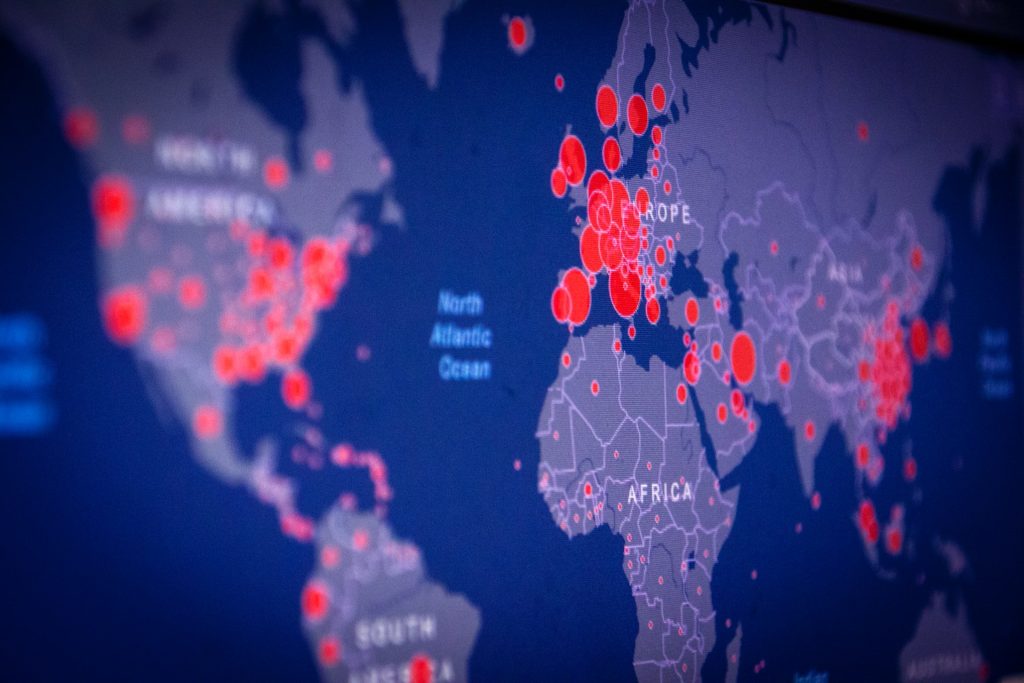
COVID heat map. Photo by Giacomo Carra on Unsplash
South Africa may have gotten off more lightly from Omicron due to widespread immunity from previous infection combined with vaccine coverage, researchers think, which may not bode well for other countries which have not completed their vaccination nor seen the worst COVID surges.
The South African Medical Research Council in collaboration with Discovery Health on Tuesday last week presented data from a large study showing that South Africans infected with Omicron are, on average, less likely to be hospitalised, and recover faster, compared to the other variants.
Their study looked at more than 200 000 COVID cases in South Africa during a Delta-driven surge in September and October, and the start of the Omicron-driven surge in November, as that variant began increasing rapidly. About a quarter of the people in the study already have a chronic illness, putting them at higher risk of severe COVID.
The researchers found a hopeful trend: The risk of hospitalisation for adults dropped 30% during the early days of the Omicron surge from the levels seen there in September and October.
“The hospital admissions during omicron, standing at 58 per 1000 infections, are the lowest of the four COVID waves, and one-third of what we experienced during the delta surge,” said Discovery Health CEO Ryan Noach.
Why was this so? One explanation could be the immunity from COVID recovery present in the population. South Africa had experienced three huge COVID surges with low vaccination rates compared to the US and Europe.
When the Omicron variant appeared, only about a quarter of the population were vaccinated but the vast majority of residents had likely already been infected with previous variants of SARS-CoV-2. This was based on the excess mortality rate observed in the country through the pandemic, and so it is thought that South Africans likely had some immunity granted by infection.
“Thus, Omicron enters a South African population with considerably more immunity than any prior SARS-CoV-2 variant,” concluded Dr Roby Bhattacharyya, an infectious disease specialist, and epidemiologist William Hanage in a recent working paper. This means that most Omicron cases are likely to be reinfections, rather than first infections. Other countries will not have as broad a ‘coverage’ of vaccination and previous infection as South Africa. Around 125 million Americans are unvaccinated, and a recent study estimated that about 20% of Americans had been infected with COVID from the start of the pandemic, up to August, 2021.
The data therefore suggest that a minimum of 20% of Americans who are completely ‘naive’, as scientists term it, when it comes to exposure to SARS-CoV-2.
Wastewater monitoringhas shown that COVID infections are falling in Gauteng, indicating that the Omicron wave may have peaked, while the World Health Organization warns that the variant should not be taken lightly despite its mildness.
The findings align with comments by Health Minister Joe Phaahla on Friday that the Omicron-driven wave may be peaking in the province.
Despite Gauteng’s peaking, cases are on the rise in seven of the nine provinces and last week the country saw a new high in cases. Of the infections confirmed on Thursday, Gauteng accounted for 27%, down from 72% of new infections on December 3.
However, the surge of Omicron will likely not be confined to Gauteng. “Early indications are that we might have reached the peak in Gauteng,” Dr Phaahla said in an online media briefing. “But there is a corresponding, rapid increase of cases in the other big provinces.”
He also noted a 70% increase in hospitalisations, though he stressed that this was off of a low base rate. Meanwhile, the WHO has warned that countries should not take the Omicron variant likely in spite of its apparent low severity.
“Countries can – and must – prevent the spread of Omicron with the proven health and social measures. Our focus must continue to be to protect the least protected and those at high risk,” said Dr Poonam Khetrapal Singh, Regional Director of the WHO South-East Asia Region.
Omicron should not be dismissed as mild, she cautioned, adding that even if it does cause less severe disease, the sheer number of cases could once again overwhelm health systems. Hence, health care capacity including ICU beds, oxygen availability, adequate health care staff and surge capacity need to be reviewed and strengthened at all levels.
The overall threat posed by Omicron largely depends on three key questions – its transmissibility; how well the vaccines and prior SARS-CoV-2 infection protect against it, and how virulent the variant is as compared to other variants.
From what we know so far, Omicron appears to spread faster than the Delta variant which has been attributed to the surge in cases across the world in the last several months, Dr Singh said.
She added that emerging data from South Africa suggests increased risk of re-infection with Omicron, and said that there is still limited data on Omicron’s limited severity. Further information is needed to fully understand the clinical picture of those infected with Omicron, and more information is expected in the coming weeks.
Her statements echo those of WHO chief Tedros Adhanom Ghebreyesus, who earlier last week warned that health systems could still be overwhelmed by cases.
With the COVID test positivity rate climbing above 30%, President Cyril Ramaphosa is widely expected to address the nation in the coming days. Health Minister Dr Joe Phaahla said on Friday that the National Coronavirus Command Council would be meeting on Tuesday or Wednesday to discuss new restrictions in the face of surging infections.
The main concern is centred around the large number of gatherings that will take place over the festive period: under Level 1 lockdown rules, gatherings of up to 750 individuals are permitted indoors. The Bureau for Economic Research issued a report saying that data so far indicates that there are fewer hospitalisations and less severe disease with the Omicron variant, in line with observations made since the start of the variant’s outbreak.
A partial ban on alcohol sales seems likely, according to a source cited by City Press: “He is considering proposing to the NCCC and cabinet a few adjustments, which include banning the sale of alcohol on weekends and public holidays until mid-January. Don’t be surprised when we have a family meeting before Thursday. He is serious about protecting the country.”
He initially had no plans to address the nation, sources said, but was motivated to change his view in light of the increasing rate of transmission.
Meanwhile, the UK appears set to scrap its controversial red list, which had been widely viewed as unfairly targeting South Africa. The red list amounted to a virtual travel ban, with travellers forced to pay £2285 (R48 400) per person for a ten day stay in often substandard quarantine accommodation. However, it will come too late for many people who have cancelled travel plans.
In a windfall for South Africans, the cost of PCR testing has been revised downward to R500 from R850 as of Sunday following a complaint lodged with the Council for Medical Schemes against private pathology laboratories, alleging the pricing for COVID PCR tests was unfairly inflated. Pricing for rapid antigen tests is said to be next on the list for the Competition Commission.
On Sunday, a technical glitch caused the National Health Laboratory Service to delay release of a large portion of test results. The glitch meant that initially 18 035 cases were released initially, which rose to over 37 000 after the correction.
The cause was put down to IT difficulties with various laboratories.
In a news release by Netcare, the company’s CEO Dr Richard Friedland said that more than three weeks after the discovery of the new Omicron variant in South Africa, data across its hospitals and primary healthcare facilities are demonstrating important early trends.
“Having personally seen many of our patients across our Gauteng hospitals, their symptoms are far milder than anything we experienced during the first three waves,” commented Dr Friedland.
“Approximately 90% of COVID patients currently in our hospitals require no form of oxygen therapy and are considered incidental cases. While we fully recognise that it is still early days, if this trend continues, it would appear that with a few exceptions of those requiring tertiary care, the fourth wave can be adequately treated at a primary care level.”
Rates of community transmission and hospital admission possibly decoupled During the first three waves, the rate of hospital admissions rose in tandem with the rate of community transmission (the number of people testing positive). Dr Friedland noted that, in the first three waves of the pandemic, Netcare treated 126 000 COVID patients across its 49 acute hospitals, of which 55 000 (44%) patients required admission and 26% of these patients were treated in High Care and Intensive Care (ICU). Significantly, all COVID patients admitted were sick and required some form of oxygen therapy. The high admission rate, as well as the high percentage of patients requiring ICU or High Care indicates the severity of cases during the first three waves.
“As of today we have 337 COVID positive patients admitted (72% in the Gauteng area and 18% in KwaZulu-Natal). Of these patients approximately 10% (33 patients) are on some form of oxygenation versus 100% in the first three waves. Eight of these patients (2%) are being ventilated and of these, two are primary trauma cases that are also COVID positive.”
Netcare’s policy is to test all patients for COVID before or on admission. Patients admitted for other primary diagnoses or surgical procedures who test positive for COVID] but do not require any form of oxygenation are considered to be incidental COVID cases, which currently accounts for 90% of COVID cases now in Netcare hospitals.
“During the first three waves, when the overall community positivity rate breached 26% across South Africa, we were inundated with COVID admissions to hospital. Within Netcare we had over 2000 COVID patients in hospitals during the first wave, over 2 250 patients in hospital during the second wave and over 3000 patients in hospital during the third wave. At present the 337 patients represent a fraction compared to previous waves,” said Dr Friedland.
“The very rapid rise in community transmission as compared to previous waves may partially explain this relatively low hospital admission rate. However, there does appear to be a decoupling in terms of the rate of hospital admissions at this early stage in the evolution of the fourth wave,” suggested Dr Friedland.
Majority of patients unvaccinated Dr Friedland added that of a total of 800 COVID positive patients that were admitted since 15 November, 75% of patients were unvaccinated. Netcare has seen seven deaths over this period in this group of patients, of which four may be ascribed to COVID. These four patients were 58 to 91 years of age and had significant co-morbidities. Of these patients, three were not vaccinated.
Dr Friedland observed that COVID patients admitted since 15 November are on average younger than those seen during the first three waves. Over 71% are under 50, with an average age of 38.5. This compares to only 40% below 50 in the first three waves, with an average age of 54.
Virtually all patients have presented with mild to moderate flu-like symptoms, including a blocked or runny nose, headache and a scratchy or sore throat and have been treated symptomatically.
Dr Friedland reiterated that the best way to support South Africa remains to take COVID extremely seriously and to be as cautious as ever.
As President Cyril Ramaphosa warns that the long-expected fourth wave is upon the country, a legal battle against mandatory vaccination is brewing even as Omicron rates create an unprecedented surge, likely driven through re-infections.
Omicron, detected by South African scientists only two weeks ago, is now dominating in most provinces. However, he stressed that the country had been prepared for a fourth wave, having long been predicted by modellers. He reiterated the call for more vaccinations and to observe social distancing as much as possible over the festive season.
Vaccine mandates are now on the cards, which are expected to be introduced in early 2022. Civil rights groups including Afriforum and Sakeliga have threatened legal action if the government moves ahead on its plans to introduce vaccine mandates.
Afriforum called vaccine mandates a violation of personal freedoms, and cited Ramaphosa’s statement February this year saying that nobody in the country would be forced to take a vaccination.
As of Monday evening, reported test positivity rate now stands at 26.4%, which is well above the 10% ‘level of concern’ which had been reached a week ago.. In the third wave, it took about a month to go from this level to 25%.
At this stage, there is only anecdotal evidence around Omicron’s severity which suggests milder disease.
Prof Dame Sarah Gilbert, one of the creators of the Oxford/AstraZeneca vaccine, echoed the warning that vaccine effectiveness may be reduced against Omicron, noting its spike protein contained mutations known to increase the transmissibility of the virus. She cautioned that “there are additional changes that may mean antibodies induced by the vaccines, or by infection with other variants, may be less effective at preventing infection with Omicron.
“Until we know more, we should be cautious, and take steps to slow down the spread of this new variant.”
Preliminary results published in a preprint paper awaiting peer reviewsuggest that the re-infection hazard ratio for Omicron is 2.39, with a possible range of 1.88–3.11 falling within the 95% confidence interval. By contrast, they found that the Beta and Delta variants proliferated primarily as a result of increased transmissibility, not immune escape.
In the face of a renewed global surge in COVID cases, Pfizer has ramped up production of Paxlovid, even while the efficacy of Merck’s molnupiravir appears to be less than believed.
Pfizer is now expecting to make 80 million courses of Paxlovid by the end of 2022, Pfizer CEO Albert Bourla told CNBC, a significant increase over its earlier planned capacity of 50 million courses.
This news came after Merck reported the risk reduction in hospitalisation and death from its COVID antiviral, molnupiravir, fell from 50% in the interim analysis to 30% in the final analysis. The reduction cameafter results were updated with participants that became evaluable after the interim analysis. This drop has led to predictions of increased demand for Paxlovid, which has shown an 89% risk reduction in outpatients.
The increase in production comes just in time to fight the Omicron variant, for which South Africa is now better prepared, according to experts.
‘No red flags’ According to Professor Salim Abdool Karim, director of the Centre for the Aids Programme of Research in South Africa, the numbers appear to be on the rise across all continents, but as yet there are “no red flags” he said.
Omicron has been identified by South African scientists as a major driver of the spike in cases in Gauteng.
“We have been amazed at how fast the numbers are going up,” he said. “But we were not caught with our pants down. We expected and prepared for a fourth wave. [The scientists] gave us the best fighting chance by giving us information early. We didn’t know exactly when it would come and what it would look like,” Prof Karim said, speaking to the Daily Maverick.
While a number of mutations enable the variant to escape immunity, a clear picture of Omicron’s nature won’t emerge for two to four weeks, he cautioned.
Speaking about travel bans imposed on South Africa by Mauritius, Rwanda, Egypt and the Seychelles, President Cyril Ramaphosa said ahead of a West African tour: “I am concerned. Out of due respect to them, they have their own reasons. We would like to have a discussion with them in a way we prefer that they do not react like our former colonisers who are very quick to close Africa down,” Ramaphosa told journalists.
EU accelerates child vaccinations EU President von der Leyen has said that vaccines for children aged five to 11 will be available in the bloc by December 13, a week ahead of schedule and that she is pushing for the consideration of mandatory vaccination. This comes amidst news that Omicron was detected in the Netherlands before its first detection in South Africa. Meanwhile, in Asia, South Korea has reported its first five cases of Omicron.
The emergence of the Omicron SARS-CoV-2 variant which has resulted in renewed lockdowns and travel bans around the world, which have been criticised by the WHO. In contrast, South Africa will stick to an adjusted Level 1 lockdown for the time being, though pushing for mandatory vaccinations. Business and civil society groups had warned that increasing restrictions would have provoked backlash as recent election campaign events had effectively ignored them.
Many nations around the world have reacted quickly to the new variant, which has a large number of mutations compared to the Delta variant. The UK’s decision to suspend flights from South Africa as well as nine other African countries has provoked criticism from a number of quarters, including President Cyril Ramaphosa. The sudden move has caught many travellers by surprise, including a Welsh rugby team which had two members test positive, one of which was for Omicron. They will have to self-isolate before they are able to return, depending on flight availability.
Japan and Israel have taken the more extreme steps of closing their borders to foreigners. The first cases of Omicron that were recorded in Botswana were revealed to be in visiting diplomats, although which country they came from has not been revealed.
The World Health Organization criticised the imposition of travel restrictions, acknowledging that although they may play a role in slightly reducing the spread of COVID, they still place a heavy burden on lives and livelihoods. It pointed out that if restrictions are implemented, they should not be unnecessarily invasive or intrusive, and should be scientifically based, under international law, the International Health Regulations. It notes South Africa followed International Health Regulations, and informed WHO as soon as its national laboratory identified the Omicron variant.
“The speed and transparency of the South African and Botswana governments in informing the world of the new variant is to be commended. WHO stands with African countries which had the courage to boldly share life-saving public health information, helping protect the world against the spread of COVID,” said Dr Matshidiso Moeti, WHO Regional Director for Africa. “On the eve of a special session on pandemic preparedness I urge all countries to respect their legal obligations and implement scientifically based public health actions. It is critical that countries which are open with their data are supported as this is the only way to ensure we receive important data in a timely manner.”
Although a full picture of the new variant’s severity is still two or three weeks away, Angelique Coetzee, chair of the South African Medical Association, told the AFP she had recently seen around 30 patients at her Pretoria practice who tested positive for COVID but had unfamiliar symptoms.
“What brought them to the surgery was this extreme tiredness,” she said, something she said was unusual for younger patients. Most were men under 40, and just under half were vaccinated. Other symptoms included mild muscle aches, a “scratchy throat” and dry cough, she said. Just a few had a slightly high temperature. These very mild symptoms stand in contrast to other variants, which typically result in more severe symptoms.
The National Institute for Communicable Diseases (NICD), yesterday confirmed that a new COVID variant, B.1.1.529, has been detected in South Africa. Initially detected in Botswana, 22 cases of variant B.1.1.529 have been recorded in the country following genomic sequencing. More cases are being confirmed as sequencing results come out.
Detected cases and positivity rates are increasing quickly, particularly in Gauteng, North West and Limpopo. The UK government has acted rapidly to temporarily suspend all inbound flights from South Africa and neighbouring countries, and impose quarantines for recent arrivals.
“It is not surprising that a new variant has been detected in South Africa,” commented Prof Adrian Puren, NICD Acting Executive Director, adding that, “Although the data are limited, our experts are working overtime with all the established surveillance systems to understand the new variant and what the potential implications could be. Developments are occurring at a rapid pace and the public has our assurance that we will keep them up to date.”
‘Warp speed’ effort to track and understand variant Dr Michelle Groome, Head of the Division of Public Health Surveillance and Response at the NICD said that provincial health authorities remain on high alert and are prioritising the sequencing of COVID positive samples. A top priority is to track the variant more closely as it spreads: it was first identified in Botswana this month and has turned up in travellers to Hong Kong from South Africa. Scientists are also trying to determine the variant’s properties such as vaccine evasion and disease severity.
“We’re flying at warp speed,” said Penny Moore, Wits University virologist, whose lab is gauging the variant’s immunity evasion ability. While there are anecdotal reports of reinfections and cases in vaccinated individuals, “at this stage it’s too early to tell anything,” Moore cautioned.
“There’s a lot we don’t understand about this variant,” Richard Lessells, an infectious disease physician at the University of KwaZulu-Natal, said at a press briefing organised by South Africa’s health department on 25 November. “The mutation profile gives us concern, but now we need to do the work to understand the significance of this variant and what it means for the response to the pandemic.”
The variant’s apparent sharp rise in Gauteng is cause for alarm. Cases increased rapidly in the province in November, particularly in schools and among young people, according to Lessells. Genome sequencing and other genetic analysis found that the B.1.1.529 variant was responsible for all of 77 of the virus samples they analysed from Gauteng, collected between 12 and 20 November. Analysis of hundreds more samples are in the works. A previous variant, C.1.2, appeared in South Africa and had concerning mutations, but ultimately failed to replace Delta over the winter.
Fortunately, the variant has a spike mutation easily detected by fast genotyping tests as opposed to genome sequencing, according to Lessells. Preliminary data from these tests suggest that B.1.1.529 is spreading much wider than Gauteng. “It gives us concern that this variant may already be circulating quite widely in the country,” Lessells said.
Are vaccines effective against it? As happened with the Beta variant, a similar effort is starting to study B.1.1.529. Moore’s team, which provided some of the initial data on Beta’s immunity-dodging, has begun work on B.1.1.529. They plan to test the virus’s ability to evade infection-blocking antibodies, as well as other immune responses. The variant harbours a high number of mutations in regions of the spike protein that antibodies recognise, potentially dampening their potency.
“Many mutations we know are problematic, but many more look like they are likely contributing to further evasion,” said Moore. There are even hints from computer modelling that B.1.1.529 could evade immunity conferred by T cells, Moore added. Her team hopes to have its first results in two weeks.
“A burning question is does it reduce vaccine effectiveness, because it has so many changes,” said Aris Katzourakis, who studies virus evolution at the University of Oxford, UK.
Researchers in South Africa will also study the disease severity of B.1.1.529, Lessells said, which is “the really key question”.