Amid skyrocketing youth unemployment, healthcare, a vast sector which touches all of our lives at some point, seems a sensible space for young people to set their sights on for opportunities. From clinical sciences to pharmacy, there is a myriad of careers in the healthcare ecosystem, but there are also factors preventing this potential from being unleashed, writes Bada Pharasi, CEO of The Innovative Pharmaceutical Association South Africa (IPASA).
A career in health has long been seen as a symbol of success in South Africa. The no-nonsense nurses in our communities, the hard-working doctors and the knowledgeable pharmacists have long represented those who had “made it”.
For many of us, these were the lucky ones who had found a career path that was both rewarding and respected. This has also been the way that South Africans view the myriad of the less visible jobs in healthcare (lab technicians, pharmacist assistants, dieticians, the list is endless).
Bada Pharasi, Chief Executive Officer of IPASA
As South Africa grapples with the highest unemployment rate1 in the world, with youth unemployment being the biggest concern (currently at more than 60%2), it’s not difficult to see why the healthcare system with its vast range of careers would present a solution. Careers in health not only benefit young people looking for a start in life, but they also build South Africa’s capacity to provide care for millions who desperately need it.
As young people search for the stepping stones to long, rewarding careers, many will be advised by well-intentioned family and friends to seek a future in healthcare. And it’s not bad advice.
As a sector that can generate employment opportunities at both ends of the value chain – from highly skilled specialists in technology and research to those who operate in palliative or frail care environments2 – the recent effects of the Covid-19 pandemic underscored the essential value and role that healthcare workers play in bolstering South Africa’s socio-economic and overall health resilience.
Human resource gaps in healthcare are clear
In 2020, the Hospital Association of South Africa suggested that there was a shortage of between 26 000 and 62 000 professional nurses and this shortage is expected to increase to between 305 000 and 340 000 by 2030 as the country’s population continues to grow. Alarmingly, estimates suggest that only 26 ,000 will be trained by then3.
South Africa also has less than one doctor per 1000 patients4. In a country with serious disease burdens, the situation is far from ideal.
The need for long-term planning
A challenge often cited when posts are frozen in healthcare is funding. While there are undoubtedly funding constraints in the healthcare system, it seems unlikely that the addition of funds will solve the challenge. It’s worth rethinking the way the human resources pipeline in South Africa is structured and where the bottlenecks lie.
South Africa’s history of inequality, which is deeply entrenched in the country’s healthcare system, has created the twin challenge of a shortage of skills and inadequate capacity to manage and distribute those skills to where they’re most needed. There are also policy bottlenecks that can hinder progress.
For instance, while complementing the qualification with some kind of work experience and community service spent in the public sector is an applaudable initiative, it becomes counterproductive when there aren’t enough posts in the public sector to place people coming out of training institutions. This, in turn, limits the number of professionals who can qualify, adding incrementally to the shortage of personnel every year.
Similarly, the cap on the number of personnel that the Nursing Council can accredit per year may limit the number of posts needed, but it doesn’t help address the shortage of nurses in South Africa.
The burden of disease in South Africa, coupled with the uneven spread of healthcare facilities means that it’s also a singularly challenging environment to work in. This means that retention policies, and initiatives that prioritise the well-being of healthcare workers are also important considerations.
It’s worth noting that over the past few decades, there have been a number of well-considered human resources strategies for the healthcare system in South Africa5. Unfortunately, these have suffered from inadequate implementation. This long-term planning and implementation is critical.
Ultimately, it means ensuring that we’re able to encourage young people to take up these worthy careers with the guarantee that once they qualify, their skills will be put to good use.
As the National Department of Health prepares to move South Africa toward the National Health Insurance scheme, the question of staffing becomes even more critical. It’s going to call for long-term strategies that will need to be implemented over generations.
South African scientists – notably, the team headed by Professor Tulio de Oliveira – were thrown into the global spotlight through their pivotal role in detecting and monitoring the emergence of new variants of SARS-CoV-2 – the Beta variant in 2020 and Omicron in 2021. De Oliveira is now at the University of Stellenbosch, but for much of the pandemic headed the KwaZulu-Natal Research Innovation and Sequencing Platform (KRISP).
The country’s advanced genomic sequencing capabilities and proactive surveillance efforts allowed for the early identification of the variants and the discoveries played a crucial role in alerting the global scientific community to the potential for viral mutations and the need for enhanced monitoring.
Now, scientists worldwide believe it is critical to continue investing in genomics to support disease control in public health in South Africa and the broader continent.
What is genomics?
The World Health Organization (WHO) defines genomic surveillance as “the process of constantly monitoring pathogens and analysing their genetic similarities and differences”. It is done through a method known as whole genome sequencing, which determines the entire genetic makeup of specific organisms or cell types. This method is also able to detect changes in areas of genomes, which can help scientists to establish how specific diseases form. The results of genomic sequencing can also be used in diagnosing and treating diseases.
Genomic sequencing enables scientists to read the DNA and RNA of pathogens and understand what they are and how they spread between people – and to develop vaccines and other measures to deal with them.
The US Centers for Disease Control (CDC) explains, “All organisms (bacteria, vegetable, mammal) have a unique genetic code, or genome that is composed of nucleotide bases (A, T, C, and G). If you know the sequence of the bases in an organism, you have identified its unique DNA fingerprint or pattern. Determining the order of bases is called sequencing. Whole genome sequencing is a laboratory procedure that determines the order of bases in the genome of an organism in one process.
“Scientists conduct whole genome sequencing by following these four main steps:
DNA shearing: Scientists begin by using molecular scissors to cut the DNA, which is composed of millions of bases (A’s, C’s, T’s, and G’s), into pieces that are small enough for the sequencing machine to read.
DNA barcoding: Scientists add small pieces of DNA tags, or bar codes, to identify which piece of sheared DNA belongs to which bacteria. This is similar to how a bar code identifies a product at a grocery store.
DNA sequencing: The bar-coded DNA from multiple bacteria is combined and put in a DNA sequencer. The sequencer identifies the A’s, C’s, T’s, and G’s, or bases, that make up each bacterial sequence. The sequencer uses the bar code to keep track of which bases belong to which bacteria.
Data analysis: Scientists use computer analysis tools to compare sequences from multiple bacteria and identify differences. The number of differences can tell the scientists how closely related the bacteria are, and how likely it is that they are part of the same outbreak…”
Time to expand
At a recent conference held at Stellenbosch University’s new state-of-the-art Biomedical Medical Research Institute, de Oliveira stressed that African and other experts should now build on their success in COVID-19 genomics to expand to other pathogens such as influenza, H5N1, and climate-amplified pathogens.
John Sillitoe, the Director of the Genomic Surveillance Unit at the Wellcome Sanger Institute in the United Kingdom, agreed.
“It is important now to focus on endemic diseases so we can improve our understanding and control of endemic diseases. We should also be looking at TB, particularly with the increased prevalence in drug resistance and reduced response to drugs. For other African countries, malaria should be a key focus area. We know that drug resistance now is spreading into Africa from South East Asia and understanding the right combination of drugs to use is something that is easily identifiable through genomic surveillance.”
But surveillance is also about being ready for the next pandemic.
“There’s that classic line that, ‘diseases take no notice of national borders’,” Sillitoe said in an interview. “So, it is really important that we can get as wide a picture of surveillance as possible to identify something new emerging as soon as possible.”
Marco Salemi, Professor of Experimental Pathology at the Department of Pathology, Immunology, and Laboratory Medicine at the University of Florida College of Medicine, said Africa and the world need to be “proactive, rather than reactive” in the battle against future epidemics. He said the world is currently focused on monitoring the COVID-19 pandemic. “But we forget this is this huge reservoir of pathogens out there which we know so little about and which can become more and more of a threat, especially because of climate change – so we need to understand more about all these pathogens in the wild, in animals, and their potential to jump to humans, especially with the rate of globalisation on the planet … Events of zoonotic transmissions will become more and more frequent. We need to face it.”
Building capacity
De Oliveira is of the view that Africa could, in the next few years, potentially, “leapfrog over the rest of the world” in genomic surveillance, thanks to its success in COVID-19 genomics and its experience in using genomics to monitor other pathogens over the past 20 years.
We won’t be starting from scratch.
The use of genomics in infectious diseases started in the mid-eighties during the HIV epidemic, when scientists realised HIV was a complex virus that existed in many different sub-types. Scientists around the world started using genomic tools to sequence the HIV virus, track its origin, and trace the way the virus disseminated.
Genomics has, however, changed dramatically since the 1980s.
“There have been many attempts… to use genomics for public health purposes, but the key factor that was always missing was the ability to generate DNA sequencing in real-time,” said Salemi. “Real-time means there is an epidemic, with cases happening today – and we need to generate sequences within one or two days and then to analyse the genomic data and then to have actionable information that can be immediately transmitted to the public health authorities so that they can act within a few days.”
“Now the technological and computational limitations of the past few years have been overcome, and, as was clearly shown during the COVID-19 pandemic, we have machines that can generate literally thousands of sequences, like coronavirus sequences, in less than one day, or even within a few hours. At the same time, we have high-performance computer clusters, and super calculators that are capable of analysing this data in a very short time,” he said.
These technical advances would, of course, be of little value without people to use them and develop them further.
“Investment has been made on the continent in infectious disease surveillance and genomics surveillance specifically, and so we have lots of experts on the continent who know a lot about infectious diseases and how viruses work, and why it’s important to look at the genomics to trace when there is going to be a new outbreak,” says Professor Zané Lombard, Principal Medical Scientist in the Division of Human Genetics at the University of the Witwatersrand. “South Africa’s role during COVID-19 showcased what can happen quickly and effectively for public health interventions if you have the right experts with the right platform and expertise and infrastructure in place to do that kind of surveillance.”
De Oliveira and his team have worked closely with the Africa Centres for Disease Control and Prevention (Africa CDC) to scale genomic surveillance on the continent and have actively collaborated with other African countries to share expertise, resources, and genetic data in a bid to foster a continent-wide approach to genomic surveillance.
They have also helped set up large genomics facilities in Zimbabwe, Mozambique, and Botswana.
The Africa CDC, through its Pathogen Genomics Initiative (Africa PGI), has, for the past few years, been building a continent-wide genomic disease surveillance network. In 2019, when the PGI started its work, only seven of the African Union’s 55 member states had public health institutions with the equipment and staff to do genetic sequencing. Today, 31 African nations are able to do genetic sequencing for surveillance of COVID, malaria, cholera, Ebola, and other diseases.
De Oliveira said the continent’s experience in genomic surveillance of pathogens in Africa evolved to “unheard-of” levels during COVID. “We’ve been trying to advance genomic surveillance in Africa for the past two decades, and when the pandemic came, we had the right expertise to deal with viruses and respiratory pathogens such as tuberculosis, so we were able to pivot for SARS-CoV-2. In the end, South Africa and Africa became an example to follow for the whole world.
“All the investments we have made in genomic surveillance for COVID can now be leveraged and advanced to other areas of genomics in Africa… including for rare diseases, for cancer diagnostics, and human genomics. Finally, we have the tools and the equipment, as well as the support, to do advanced genomics in Africa, as we have dreamt of doing for the last twenty years.”
What it means in practical terms
Asked what it means, practically, to build capacity for genomics research, Lombard said one aspect is the establishment of strong laboratories. “Historically, if infrastructure was not available locally, researchers would partner with international labs and send their samples to have their sequencing done there. The problem with that was that expertise in using [that] technique was not being built locally,” she said. “It is really important to train the right people who know how to do the laboratory experiments but also to interpret the data correctly.
“It’s not only about building the infrastructure in the labs but also about training the individuals and making sure there are job opportunities locally for them,” she said.
Turning to the machines used in genomics, Lombard said, “The most popular machine these days is called a next-generation sequencer. These can read the whole DNA sequence of a virus.”
Salemi added, “Some of these sequencers are very large and some are even little portable boxes. Some can sequence thousands of samples at a time, while others are capable of sequencing a few dozen samples at a time. The samples, depending on the virus (or pathogen) being tested for, are taken from blood samples, nasal swabs, or sputum from patients, from faeces, urine, or from the skin.
“The BMRI (at Stellenbosch University) – which has the largest sample storage capacity in the southern hemisphere – can store five million samples at minus 80 degrees. If someone wants to build a lab that includes top-of-the-line computational capacity, it will cost anything from $40 million (over 700 million), but to start a small operation to do a few hundred sequences of a virus every week, $100 000 to $200 000 (roughly R17 million to R34 million) is enough, which has been done in many different African countries during the pandemic.”
Training is key
While all the scientists interviewed agreed that laboratories are important in building capacity for genomics research, they stressed that what is really needed is to train more individuals.
“More people need to be trained in genomics but also in bioinformatics, which is a really important component of this work. The technology component is becoming very smart and automated, but the data being generated is becoming more and more complex, with bigger data sets. Dealing with these,” Lombard said, “requires special data analysis skills and bioinformatics skills. The field of bioinformatics will need investment so that we can deal with the deluge of data that will come out.”
She said South African and other African universities are taking this skills need seriously, with many initiatives to offer undergraduate and post-graduate training programmes in these areas.
Salami agreed. “The most important part of building capacity is the human training. I find it naïve and sad when I hear politicians talking about building top-of-the-line laboratories, when, what they really need to do is to start building human capacity. Africa is an amazing reservoir (from which to build these skills) because 50 percent of the continent [are] people who are less than 30 years old. There are about 27 excellent laboratories all over Africa. We need to start creating a strong next generation of scientists.”
In support of this, de Oliveira is trying to raise 100 million dollars to implement real-time genomic research to enable the African continent to respond to new epidemics.
He said during COVID, the Network for Genomics Surveillance was founded and funded by the Department of Science and Innovation and the South African Medical Research Council (SAMRC). This funding was until 2021.
The Centre for Epidemic Response and Innovation, which is led by de Oliveira and forms part of the BMRI, is funded by the Africa CDC, the WHO, the Rockefeller Foundation, and the Elma Foundation. These funders support the work in South Africa and in other African countries, as well as the SA government. The BMRI was mostly funded by Stellenbosch University to the effect of R900 million, while the Department of Higher Education provided about R300 million. CERI occupies one floor of the BMRI.
In de Oliveira’s words, “This truly is the genome era for Africa.”
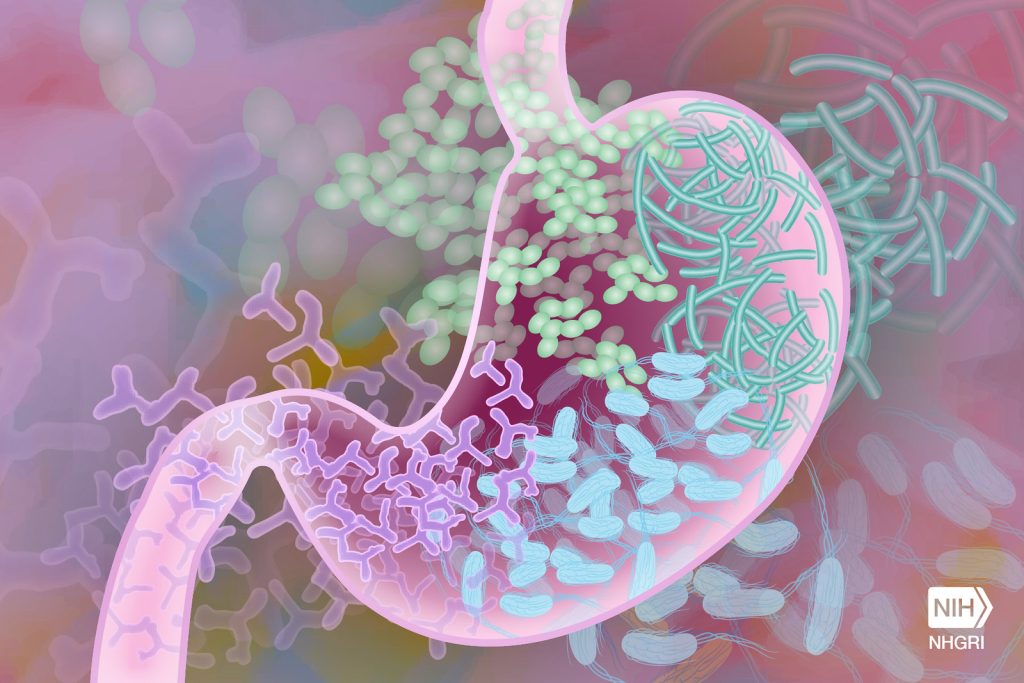
Gut Microbiome. Credit Darryl Leja National Human Genome Research Institute National Institutes Of Health
Diarrhoeal disease outbreaks are on the increase in South Africa owing to unsafe or unhygienic water sources, which is being compounded by the effects of loadshedding.1 Equally, the deadly floods that affected particularly the Eastern Cape and KwaZulu-Natal in April last year damaged an already ailing sewerage and water system, with millions of litres of untreated sewage spilling onto beaches, rivers, harbours and the ocean in and around Durban.2
This has resulted in an increased incidence of gastroenteritis, which is caused by intestinal infection owing to the contamination of food, water or hands.3 Acute-onset vomiting and diarrhoea is second only to respiratory illnesses as a cause of childhood deaths worldwide.3
Diarrhoea accounts for 19% of deaths of under-fives in South Africa and for 46% on the African continent.4 Acute diarrhoea has several risks and complications, and may lead to life-threatening dehydration and electrolyte disturbances.3 When diarrhoea is not halted, there is a risk of disturbed digestion and absorption of nutrients with nutritional deterioration.3
Guidelines published in the South African Medical Journal (SAMJ) state that acute diarrhoea is predominantly a problem of fluids and feeding – both being heavily dependent on the caregiver’s understanding and reactions.3
It is vital that healthcare practitioners and caregivers understand the ‘what’ and the ‘how’ of oral rehydration therapy (ORT) and re-feeding, and that they are given guidance on the need to seek further help in the event of the following:3
• Ongoing vomiting despite small fluid sips, especially if associated with abdominal distension or pain
• Persisting fever after 24 hours of ORT
• Increasing lethargy and failure to feed
• Deteriorating hydration and failure to pass urine
• Presence of blood in the stools
• Diarrhoea persisting for more than 1 week.
Momeena Omarjee, Consumer Healthcare Country Head: Scientific Affairs, at Sanofi South Africa, outlines an ambitious campaign by Sanofi in partnership with non-profit organisation (NPO), Save the Children, to impact over 2 000 000 lives by 2025, through education on hygiene and nutrition and improved access to water.
“Sanofi is committed to ensuring that no child dies of a preventable disease. Since October 2022, Sanofi has donated 15 water tanks and 14 hand-washing stations to Early Childhood Development centres in KwaZulu-Natal communities in need, to ensure access to clean, drinkable water. This will help to curb the prevalence of diarrhoea and diarrhoea-associated deaths in children under five, which are entirely avoidable,” says Omarjee.
“Children living in poverty-stricken environments are approximately 10 times more likely to die from diarrhoea than their more privileged counterparts.5 Providing adequate access to clean, drinkable water and quality early childcare and development will impact the lives and health of so many vulnerable children,” says Omarjee.
Several studies have shown that probiotics shorten the duration of diarrhoea and prevent recurrence of other episodes.6 Furthermore, probiotics can prevent diarrhoea from infection in infants with malnutrition.6
The World Gastroenterology Organisation states that oral administration of probiotics shortens the duration of acute diarrheal illness in children by approximately 1 day.7 There is also evidence of efficacy in adults or children who are receiving antibiotic therapy, for prevention of antibiotic-associated diarrhoea.7
“Healthcare professionals should encourage parents to give children a daily, regular probiotic, which could go a long way in preventing diarrhoea and illness,” concludes Omarjee.
Wittenberg, DF. 2012. Management guidelines for acute infective diarrhoea/gastroenteritis in infants. SAMJ, vol. 102, No. 2.
Awotione, O.F., et al. 2016. Systematic review: Diarrhoea in children under five years of age in South Africa (1997-2014). Tropical Medicine and International Health, 21(9), 1060-1070.
Chola, L., et al. 2015. Reducing diarrhoea deaths in South Africa: costs and effects of scaling up essential interventions to prevent and treat diarrhoea in under five children. BMC Public Health, 15, 394.
Solis, B. et al. 2002. Probiotics as a help in children suffering from malnutrition and diarrhoea. European Journal of Clinical Nutrition, 56, S57-59.
By Martin Versfeld, Prelisha Singh, Glenn Penfold & Robert Appelbaum, Partners at Webber Wentzel
With the National Health Insurance Bill having recently been approved by the National Assembly, many questions and concerns about the practical implementation of the scheme remain unresolved.
The National Health Insurance Bill (the Bill) was recently adopted by the Parliamentary Portfolio Committee on Health and was approved by National Assembly on 14 June 2023. It will now be tabled before the National Council of Provinces.
The Bill provides for the establishment of the National Health Insurance Fund (the Fund) aimed at promoting the laudable purpose of universal access to quality health care. It is envisaged that the Fund will purchase health care services and products from accredited health care service providers and health establishments (including hospitals) (which we refer to, collectively, as “service providers”), including private service providers that choose to contract with the Fund.
Many stakeholders and experts have raised concerns that the National Health Insurance (NHI) scheme envisaged in the Bill is simply unaffordable, particularly as it would require an extensive administrative apparatus. A related concern is the extent to which the NHI will rely on the public health care system to deliver services, and the capacity of that system to provide an acceptable quality of services. Given the dire state of public health care in our country, it is surprising that the Government persists with plans to spend vast resources on implementing the NHI. Those resources would greatly improve the delivery of quality health care – and universal access to that care – if they were deployed directly in the public health sector.
In view of the questions about the affordability of the NHI, the provisions of the Bill providing for the income of the Fund are of particular interest. Clause 49 states that the Fund’s chief source of income will be money appropriated annually by Parliament. This must be appropriated from collections of, among others, general tax revenue, a payroll tax and a surcharge on personal income tax. This taxation regime is, however, difficult to reconcile with clause 2, which states that the Fund will be funded through “mandatory prepayment” (a term that is defined as “compulsory payment for health services before they are needed in accordance with income levels”), and clause 55(1)(t), which empowers the Minister to make regulations on “all fees payable … to the Fund”.
One of the challenges in interrogating the NHI scheme envisaged in the Bill is that it leaves many of the key issues to be determined later. For example, the extent of the benefits to be covered by the Fund and the rate of reimbursement – both of which are crucial to assessing both the affordability of the NHI and its impact on the provision of quality health care – are not yet known (eg see clause 10(1)(g)). The Bill also leaves a broad range of matters for the Minister of Health (the Minister) to prescribe through regulations. These matters include the rules on portability, which will allow patients to be treated by service providers other than those with whom they are registered (clause 7(2)(b)); the referral pathways between service providers (clause 7(2)(d)(ii)); the coding systems to be employed (clause 39(5)(b)); the relationship between the Fund and medical schemes (clause 55(1)(n)); and “the scope and nature of prescribed health care services and programmes and the manner in, and the extent to which, they must be funded” (section 55(1)(w)).
The Bill’s preamble states that its purposes include to “create a single framework … for the public funding and public purchasing of health care services, medicines, health goods and health related products” and to “eliminate the fragmentation of health care funding”. A key question that arises is what role medical schemes will continue to play and, indeed, whether they will be able to continue to exist. Clause 33 of the Bill stipulates that, once the Minister has determined that the NHI has been fully implemented, medical schemes “may only offer complementary cover to services not reimbursable by the Fund”. Similarly, clause 6(o) states that users of health care services are entitled to “purchase health care services that are not covered by the Fund through a complementary voluntary medical insurance scheme”. In other words, medical schemes may not cover health care services that are covered by the Fund. Since the Fund is intended ultimately to cover a comprehensive range of benefits, the Bill envisages that the businesses of medical schemes will shrink dramatically which may, of course, threaten their continued existence. This regime is likely to face constitutional challenge, including on the basis that it infringes: (a) the right to access health care services, by forcing many people who currently access private medical care via medical scheme funding to rely on what is currently a woefully inadequate public health care system; (b) the property rights of medical schemes and their administrators; and (c) the right to freedom of trade, occupation and profession.
Another crucial issue is how the Bill will regulate accredited service providers. Clause 39(2) imposes onerous requirements for accreditation, including the submission of a “budget impact analysis”. One area of concern, as mentioned above, is that the Bill does not clarify how reimbursement rates will be determined. Clause 10(1)(g) simply states that the Fund must set payment rates annually “in the prescribed manner and in accordance with the provisions of this Act”. Given its importance to sustainable access to health care, one would at least have expected the Bill to make clear that the payment rates must be set at a level that allows providers to cover their efficient costs and make a reasonable return. Another cause for concern is that clause 38(6) envisages that an accredited service provider must procure health-related products (including medicines and medical devices) according to the Fund’s formulary, and that suppliers listed in the formulary must deliver directly to the service provider or establishment. To the extent that this clause requires private service providers to procure from suppliers chosen by the Fund, this blurs the line between public and private procurement, reduces competition, and unduly restricts private service providers in the conduct of their business.
The role that the Bill contemplates for the Minister is also potentially problematic. For example:
Clauses 4(1) and 7(1) provide that the Fund must purchase health care services “in consultation with the Minister” (which our courts have held means that the Minister’s concurrence is required). It is wholly impractical to require the Minister to concur in the purchase of health care services.
It is unclear to us why the Minister must agree on detailed issues that require the application of clinical judgement, such as the benefits to be determined by the Fund’s Benefits Advisory Committee and the formulary to be employed by the Fund (clauses 25(5)(c) and 38(5)).
While seeking to secure universal access to quality health care is generally supported and rightly so, the Bill represents an over-hasty effort to fundamentally restructure the country’s public health service with potentially devastating consequences for healthcare providers and consumers alike.
Despite significant advances over the last 30 years, surgical research is still limited to comparing the benefit of one technique over another. It can be founded on assumptions that a new device or approach is always better – leading to poorly evaluated devices and procedures having negative effects on patients.
Writing in The Lancet, experts from the NIHR Global Health Research Unit for Global Surgery GlobalSurg Collaborative – a programme backed by funding from the NIHR (National Institute for Health and Care Research) – propose three priority areas for surgery:
Access, equity, and public health must be recognised as crucial issues for surgery.
In 2015, five billion people did not have access to safe and affordable surgical care. Of those who did, 33 million individuals faced catastrophic health expenditure in payment for surgery and anaesthesia. During the COVID-19 pandemic, over 28 million cases of elective surgery are likely to have been cancelled. Surgery has a key role in addressing the most important and growing global health challenges, such as trauma, congenital anomalies, safe childbirth, and non-communicable diseases.
Inclusion and diversity must improve in both surgical research and the profession.
Women, minoritised groups, and patients from low-income and middle-income countries remain under-represented in clinical practice and major research work. Advancing inclusion and diversity will ensure a research agenda that delivers pragmatic, simple, and context-specific research that reflects the needs of all patients.
Climate change is the greatest global health threat facing the world.
Surgical theatres are some of the most energy and resource intense areas of a hospital. Surgical practice relies on many single-use, non-biodegradable products as well as anaesthetic gases that have a large environmental footprint. Moving towards net-zero operating practices could reduce health-sector carbon emissions and allow surgeons and policy makers to reassess how surgery fits into a wider health system.
Comment co-author Dmitri Nepogodiev, from the University of Birmingham, said: “Richard Horton, Editor-in-Chief of The Lancet, once described surgical research as ‘a comic opera performance’. That was in 1996 and things have changed significantly since then.
“However, truly improving lives requires surgical researchers to use the next quarter of a century to tackle the most pressing questions on equity and access, the role of surgery in public health, and sustainability.
“Despite the problems of large waiting lists and an economic squeeze on health systems, surgeons must focus on these priority areas — placing surgery as a leader in medical specialties and demonstrating its value as a fundamental element of universal health care.”
The experts note that large, randomised controlled trials with well-defined endpoints are now more usual in surgical research, whilst exploration into the placebo effect, has led to a fundamental re-examination of the benefits of some surgical procedures and whether they benefit patients at all.
Surgeons and anaesthetists have developed successful international collaborative research efforts that have enabled rapid recruitment of participants and globally relevant studies and trials, while following internationally set standards of clinical trial practice. Surgeons can now provide reliable answers to crucial questions in operative surgery, and their research has improved patient care and resource use in health systems.
Minister of Health Dr Joe Phaahla has confirmed the arrest of 124 fake doctors as a result of a crackdown by the Health Professions Council of South Africa (HPCSA), reports IOL. He revealed the information in a response to a parliamentary question.
He said that the doctors were able to avoid the system by taking cash payments, or working in the practices of registered doctors. Dr Phaahla noted that it was a criminal offence to practice medicine without being registered.
The arrests came as a result of the HPCSA establishing an Inspectorate to crack down on illegal practising medical workers. The Inspectorate currently has offices in all of South Africa’s provinces save Northwest and Northern Cape.
(I) No person shall be entitled to practise within the Republic– (a) the profession of a medical practitioner, dentist, psychologist or as an intern; or (b) except in so far as it is authorized by the provisions of the Nursing Act, 1957 (Act No. 69 of 1957), the Chiropractors Act, 1971 (Act No. 76 of 1971), the Pharmacy Act, 1974, and sections 32, 33, 34 and 39 of this Act, for gain any other profession the practice of which mainly consists of- (i) the physical or mental examination of persons; (ii) the diagnosis, treatment or prevention of physical or mental defects, illnesses or deficiencies in man; (iii) the giving of advice in regard to such defects, illnesses or deficiencies; or (iv) the prescribing or providing of medicine in connection with such defects, illnesses or deficiencies, unless he is registered in terms of this Act.
Methicillin resistant Staphylococcus aureus (MRSA) bacteria, the bane of hospital infection control strategies. Image by CDC on Unsplash.
Governments around the world must do more to tackle the growing threat of antimicrobial-resistant infections, new research suggests – with South Africa falling quite short in the rankings.
The review, published in The Lancet Infectious Diseases, assessed national action plans developed by more than 100 countries to tackle the threat from antimicrobial resistance (AMR). It comprehensively graded international AMR efforts and national action plans and generate comparable quantitative results across countries and regions.
National action plans focus on designing policies to curb AMR and devising tools to implement the policies – but they do not adequately factor in monitoring and evaluation.
The new research, carried out by experts at the universities of Leeds, Edinburgh and Hamburg, is the first large-scale analysis of these plans. They were designed after encouragement from the World Health Organisation, which has declared AMR one of the top 10 public health threats facing humanity.
Lead author Jay Patel, undergraduate dental student in the University of Leeds’ School of Dentistry, said: “Our analysis showed that countries were highly focused on designing AMR policies, and thinking about what tools would be required to implement those, but they generally did not consider how they would monitor and evaluate the impact of those efforts.
“This suggests that the international response may be inadequate to meet the scale and severity of AMR. This is particularly concerning in low and middle-income countries, where action plan activities often lack sustainable funding – relying instead on funds from foreign donors and philanthropies.
“The available evidence also suggests that simply developing a national action plan may not necessarily mean a country is more prepared to respond to the threat of AMR.
“Our study shows that the global response to AMR, and preparedness for the predicted challenges of AMR, require improvement in all locations around the world.”
The research team says governments across the world must strengthen their responses to AMR.
In 2017, the World Health Organization encouraged member states to develop national action plans stipulating how countries would tackle AMR. More than 100 countries have produced action plans, with several being implemented – but there had been no global analysis of the contents of these plans.
The 114 action plans, which were created in 2020-21, were evaluated against 54 elements, such as education, stewardship, and accountability, and each awarded a score out of 100. A mean score out of 100 for each country’s plan was then taken from these results.
The findings
At 43 points for AMR governance, South Africa falls far short of the top score of 85, and rather closer to the lowest score of 29. Reproduced from The Lancet. Figure 2b, Patel et al., 2023. (Open Access)
Norway’s response was the highest scoring with 85, followed by the USA with 84 and the UK with 83. The lowest scoring countries were Ukraine and Sierra Leone with 29 points each, and Barbados and Micronesia with 28 points. With 43 points, South Africa trailed behind Brazil, Namibia, Rwanda and Egypt – and received 0 for research and development as well as the effectiveness of its monitoring and evaluation.
The study found that across all plans, there was a greater focus on policy design and implementation tools, but efforts to monitor and evaluate activities are generally poorly-considered.
Of all areas evaluated, accountability and feedback mechanisms were the joint-lowest scoring, followed by education.
Training and professional education across human health, veterinary, and agricultural sectors were insufficient in many countries, with several lacking a sustainable workforce strategy to deliver antimicrobial stewardship policies.
Countries scored well on participation, demonstrating a shared awareness that AMR can only be successfully addressed through engagement with multiple sectors spanning human, animal and environmental health. Infection prevention and control was frequently recognised as a critical objective.
People in South Africa who fall ill with tuberculosis (TB) often also have other health issues. HIV, which drives much of the TB epidemic in South Africa, is the most obvious co-infection, but people who fall ill with TB are also more likely to have diabetes and mental health problems than the general public.
Another issue that is often mentioned at conferences and in journal articles, but that doesn’t often make the headlines, is the complex set of links between TB and liver problems. With the World Health Organization estimating that in the region of 300 000 people fall ill with TB in South Africa every year, the scale of the issue is likely to be substantial, although we do not have particularly good data on liver problems in South Africa, and even less so on people experiencing TB and liver problems together.
Complex interactions
Broadly speaking, the link between TB and the liver can be divided into two categories. First, there are the liver-related side effects of some TB treatments, and second, there is the interaction between TB and liver conditions such as viral hepatitis. In some cases, TB itself can also cause liver problems directly.
Start with hepatitis. Dr Louisa Dunn, Think TB Provincial TB Technical Lead in KwaZulu-Natal, explains that hepatitis is a general term meaning inflammation of the liver. She says that there are many causes of hepatitis, such as infections, alcohol, or an overdose of certain medications. There is also autoimmune hepatitis, where a person’s own immune system is attacking the liver. “Even lifestyle can cause inflammation in the liver from a build-up of fatty tissue, which is more common in people who are overweight and obese,” she says.
Infection with hepatitis B virus (HBV) and hepatitis C virus (HCV) are thought to cause significant illness and death in South Africa. According to a study published in 2022, over 1.9 million people in South Africa are living with chronic HBV infection – earlier research put the number at 3.5 million. HBV can be treated and there is an effective childhood vaccine for it that has been used in South Africa since 1995.
Estimates for HCV are less certain than for HBV – an estimate of 400 000 chronic infections was quoted in an HBV and HCV investment case for South Africa. Highly effective cures for HCV infection have been developed over the last decade, although access to these cures remains limited. The Department of Health published viral hepatitis treatment guidelines in December 2019.
Given these numbers, some people in South Africa would simply, by chance, get both TB and hepatitis. But since there are common risk factors, co-infection will be higher than what one would expect purely through chance. HIV infection, for example, increases both a person’s risk of TB and HCV.
“There is no data from South Africa about viral hepatitis and TB co-infection that I am aware of,” says Dr Andrew Scheibe, a Technical Advisor for TB HIV Care and an infectious disease specialist at the University of Pretoria. He points out that people who use drugs and other groups of people who are marginalised, including people experiencing homelessness or people in prison, are at increased risk for these co-infections. The risk of HCV transmission is particularly high when people who inject drugs share needles.
In addition, as Dunn points out, TB itself can also cause hepatitis.
Hepatotoxicity
The picture is further complicated by the fact that several of the medicines used to cure TB have liver-related side effects. Drug-sensitive TB is treated with a combination of four different medicines, while drug-resistant TB is treated with anything from three to eight different medicines.
“Medications used to treat both drug-sensitive and drug-resistant TB can cause hepatitis through drug-induced liver toxicity (hepatotoxicity),” says Dunn. “The presence of other risk factors may further increase the risk of hepatitis in TB patients. These risk factors could be alcohol use, older age, malnutrition, co-infection with HIV or viral Hepatitis B, and taking other potentially hepatotoxic drugs with TB treatment.”
Wieda Human, project coordinator and communications officer at TB advocacy group TB Proof says 3 to 28% of people with TB may experience hepatotoxicity and other side effects. “Those who are already infected with the hepatitis B infection are at an increased risk for hepatotoxicity,” she says.
She refers to a study done in Ethiopia that found having hepatitis B and hepatitis C infection made having TB disease more severe. “This study also found that people with TB who have hazardous alcohol use have a 1.5 times increased risk of developing hepatitis C,” says Human.
What it means for treatment
Dunn says although it is less straightforward to treat a person with TB and hepatitis than a person with just TB, it is important to understand treatment is still available. “It involves establishing the cause for hepatitis and treating this where possible, for instance, treating a viral hepatitis [and TB] co-infection at the same time or [providing] support to reduce alcohol intake. It may involve closer monitoring and follow-up, changes to medications, including stopping treatments either permanently or temporarily, and using alternative more ‘liver-friendly’ treatment regimens,” she says.
“If the hepatitis is stable, then TB can be treated,” Scheibe says. He explains hepatitis B requires long-term treatment (there is no cure), while hepatitis C can be cured with direct-acting antivirals (recently registered in SA, but not yet on the Government Essential Medicines List, so not easily available in the public sector). He says HCV treatment may be delayed until the TB is cured.
No routine screening
South Africa’s National Strategic Plan for HIV, TB, and STIs 2023-2028 under Goal 2 sets out to reduce viral hepatitis morbidity through scale-up of prevention, diagnostic testing, and treatment. However, according to Dunn, screening for viral hepatitis infections, such as HBV, is not part of the current drug-sensitive or drug-resistant TB guidelines.
But she says everyone should be assessed for symptoms and risk factors for liver disease at the start of TB treatment – a sentiment Scheibe shares. According to them, these screenings are however performed at diagnosis of HIV infection before a person is commenced on antiretroviral treatment for HIV, as chronic hepatitis B infection has specific implications for HIV treatment.
“During [TB] treatment, it is critical that clinicians assess people for signs and symptoms that may suggest hepatitis at each visit and educate them on recognising these side effects as well,” says Dunn. “This includes loss of appetite, feeling tired and unwell, nausea, vomiting, abdominal pains, yellowing of the eyes and skin, and darkening of urine.”
Treatment guidelines for drug-induced liver injury are available here. The guidelines focus on the management of suspected drug-induced rash, kidney injury, and liver injury for patients on TB treatment and or antiretroviral treatment.
Scheibe adds that people at high risk for HCV should receive TB screening regularly due to potential exposure to TB (eg if living in closed settings with many people in contexts of high TB prevalence and /or with HIV co-infection).
Limpopo MEC for Health Dr Pophi Ramathuba has failed in her attempt to put a stop to a Health Professions Council of South Africa (HPCSA) inquiry into comments she made to a Zimbabwean patient when she visited Bela Bela Hospital last year.
A disciplinary inquiry had been set down for July to probe complaints against her emanating from the conversation which was widely broadcast.
While Pretoria High Court Judge Anthony Millar, in his judgment refusing to grant Ramathuba an interdict, did not detail the complaints, it is public record that she told the patient that Zimbabweans were putting a huge strain on the provincial health system.
She said: “You are killing my health system. It’s unfair.”
Ramathuba brought the application in her capacity as the MEC for health, in two parts, divided into Part A and Part B.
Part A was for an interdict pending Part B – a review application in which she would seek an order declaring the decision of the HPCSA issued against her on 9 February 2023 as unconstitutional, unlawful and invalid, and declaring that the HPCSA lacks jurisdiction over the conduct of the applicant as an MEC.
Only Part A was considered by Judge Millar this week and he ruled on Friday.
In his judgment, he said many complaints had been laid against Ramathuba with the HPCSA as a result of the conversation.
Ramathuba disputed the complaints, both in her capacity as the MEC for Health and as a medical practitioner.
“It is not in issue that the applicant has at all material times been registered as a health professional and remains so and the HPCSA is the custodian of the medical profession,” Judge Millar wrote.
The judge explained that the HPCSA has a two stage complaints procedure. The first is a preliminary inquiry, which may result in the complaint being resolved. If it is not, it is referred to a formal inquiry.
Judge Millar said a preliminary committee had considered the complaints at a meeting at the end of January. The committee had resolved that the applicant was guilty of unprofessional conduct but that it was only a “minor transgression” and that she should be cautioned for unprofessional behaviour, unbecoming of a medical professional for “shouting at a patient’s bedside as the patient was vulnerable at the time”.
The HPCSA, in a letter to Ramathuba, said the acceptance of this penalty would not constitute a conviction and would not be reflected against her name. The matter would be regarded as finalised.
But Ramathuba refused to accept the finding. She wrote to the HPCSA in February this year, challenging it on the basis that it had no jurisdiction over her.
The HPCSA disagreed with this, and set the formal hearing dates.
“The applicant does not want the inquiry to proceed or to attend it … she says she conducted the conversation in her capacity as an MEC and not as a medical practitioner,” Judge Millar said.
“The crisp question is, is the applicant in her capacity as MEC a separate persona from the applicant as a medical practitioner. The office of the MEC is a political one whereas her status as a medical practitioner is a professional one.
“The holding of political office and remaining registered as a medical practitioner are not mutually exclusive. The one hallmark of both is that the individual concerned accepts that they are, and subject themselves to being accountable for their actions.
“It seems to me to be a wholly contrived and self-serving assertion that conduct is determined depending upon ‘which hat a person is wearing at the time’,” the judge said.
“This is simply not consistent with our constitutional values or the law. There is to my mind no distinction to be drawn between the different offices a person holds and their conduct.”
He said Ramathuba had maintained her registration with the HPCSA so she had no right to avoid its jurisdiction. If she had de-registered then the situation would be different.
“Her refusal to accept the finding of the preliminary committee means that the entire matter will serve before a different committee … she will have the opportunity to raise whatever challenge she wishes at the inquiry.
“Delaying the matter unnecessarily ending a review does not serve the interests of any of the parties.”
Judge Millar dismissed the application and ordered Ramathuba to pay the HPCSA’s costs.
The Hospital Association of South Africa (HASA) has added its objections to the proposed National Health Insurance (NHI) Bill to the growing volume of objections from professional medical organisations. In common with them, HASA strongly supports universal health coverage but stands against the NHI Bill in its current form.
Their statement reads: “We believe that approving the Bill without substantive consideration of the many valid and significant recommendations and contributions made by many participants during the Parliamentary hearing is deeply regrettable and a missed opportunity by the Committee.”
Chief among their objections were the potential for corruption and mismanagement in the centralisation of medical funds as well as the many legal objections to the Fund.
Despite serious, credible concerns being raised at every turn, the NHI Bill continues to progress, with Parliamentary Portfolio Committee for Health recently giving the Bill its approval on 26 May, moving it forward to debate within the National Assembly. To support healthcare professionals, Quicknews will be running a series of articles discussing the Bill and providing resources to help them take positive action to protect healthcare services for all of their patients. The Gauteng e-toll saga has already shown that ill-conceived and damaging legislation can be brought down if there is sufficient, coordinated public opposition.
With HASA’s statement, three of the largest medical associations in South Africa have now spoken out against the controversial bill. The South African Medical Association (SAMA) and South African Private Practitioners Forum (SAPPF) have both unequivocally stated their opposition to the Bill as it is currently formulated.
In addition to other risks, South Africa faces a potential exodus of healthcare professionals. Indeed, the UK’s National Health Service has for some time been actively poaching nurses and midwives from lower-income countries like South Africa.
HASA urges National Assembly and the National Council of Provinces in their deliberations on the Bill “to insist on a multi-payer model to mitigate against the concentration of risk, an iterative rollout based on milestones rather than dates and to pay heed to the nation’s concerns that the proposed National Health Insurance Fund is susceptible to theft and corruption by proposing and approving alternate and appropriate governance structures.”