Tag: 9/4/26

New Global Study Estimates that Modern Hip Replacements Could Last at Least 30 Years

New global study using data from the National Joint Registry, estimates that modern hip replacements could last at least 30 years

Photo by DanR. CC BY-NC-SA-2.0

A major international study led by researchers who have used extensive data from the NJR estimates that modern total hip replacements, those using today’s more advanced bearing surfaces, are likely to last over 30 years in 92% of patients. This new finding marks a significant improvement in long term implant longevity and durability, compared with previous generations of medical implant devices.

Published on 26 February 2026, the research represents the largest and most contemporary analysis of hip replacement conducted to date. The study was a global collaboration including data contribution from eight joint registries. The data of just under two million hip replacement procedures were analysed, with the NJR accounting for almost two-thirds of that data. Registry data were combined with evidence from 29 long term clinical studies, across 18 countries.

Data was included from adult patients undergoing primary hip replacement with contemporary bearing surfaces: highly cross‑linked polyethylene (XLPE), ceramic‑on‑XLPE, or third‑ and fourth‑generation ceramic‑on‑ceramic articulations. Only implants that are still in routine clinical use were included, ensuring the study reflects modern practice, rather than historic device performance. Across all registries, cases were followed for a minimum of 10 years, with implant survival tracked until first all‑cause revision. All three material types demonstrated similarly high survivorship.

The results of the study provide patients with reassurance in consideration of the commonly asked question “How long will my hip replacement last?”  It is encouraging to know that modern hip replacements could last decades.

With regard to previous research on implant longevity, a 2019 study into hip replacement longevity which was supported by the NJR, suggested that over half, ie. 58% of hip replacements lasted 25 years, but those estimates were based on some implants made of materials that are no longer widely used. In 2022, another review of NJR data was conducted to enable further understanding of implant longevity, which produced the paper: ‘How long revised and multiply-revised hip replacements last?’ You can read more on that here.

You can read the recent Lancet paper here: Survivorship of modern total hip replacement to 30 years: systematic review, meta-analysis, and extrapolation of global joint registry data – The Lancet

Source: National Joint Registry

Depression Can Reduce Income for Years

Study shows that income remains lower for up to 10 years after diagnosis

Photo by Sydney Sims on Unsplash

A diagnosis of depression in connection with hospital treatment can have long-term consequences for personal finances. This is shown in a new registry-based study from the Department of Public Health, University of Southern Denmark, which follows nearly five million people in Denmark over time.

The study found that income is around 10% lower 10 years after diagnosis compared with people without depression, and the gap does not disappear. At the same time, the income loss for depression is greater than for several physical illnesses such as stroke and breast cancer.

Mental illness has the greatest financial impact

The study compares depression, alcohol use disorder, stroke and breast cancer. Income falls after illness in all four groups, but the decline is greatest for mental disorders.

“We see that mental disorders affect not only health, but also people’s economic life course to a considerable extent,” says Emily K. Johnson, PhD Student at the Danish Centre for Health Economics, Department of Public Health, University of Southern Denmark.

She is first author of the study, which has been published in JAMA Health Forum.

“The income loss grows over time and can still be measured 10 years later. Even though mental disorders are more common in women, losses are generally greater for men,” Emily K. Johnson explains.

Not just a temporary loss

While earlier studies have often focused on short-term sick leave, the new study shows that income loss persists and in many cases grows over time.

– It is not only about being away from work for a period. We see changes in the entire income trajectory, says Emily K. Johnson.

This may, among other things, reflect reduced ability to keep a job, change jobs or progress in a career.

May reinforce social inequality

Income loss is greatest among people in the middle of working life, when earnings would normally be increasing. At the same time, the loss grows over time for younger people.

“If you are affected early in your career, you may lose your footing in the labour market. That can be difficult to recover later,” says Emily K. Johnson.

People outside the labour market are also hit particularly hard. For them, illness may make it even harder to enter employment. The findings therefore suggest that illness can reinforce existing social inequality.

Income falls before the illness is registered

Income already begins to decline in the years before people receive a diagnosis of depression in hospital care. This suggests that the consequences begin before the illness is formally registered and treated.

The study includes people who had contact with a hospital, either as inpatients or outpatients, including psychiatric hospital care. People treated only by their general practitioner or by private psychologists or psychiatrists are not included.

“This suggests that the course of illness starts earlier and that the consequences for working life emerge gradually,” Emily K. Johnson explains. Job loss, income loss and poor mental health can reinforce one another over time,

The study is based on Danish registry data and includes all non-retired residents aged 18 to 65 between 2000 and 2018. People with illness were compared with similar people without a diagnosis, matched on factors including age, sex, education and income, and baseline health.

Income was measured as disposable income, meaning post-tax income including wages, transfers and capital income.

Can inform health policy priorities

According to the researchers, the findings can help improve decision-making in health and social policy.

“Priority setting should not be based only on how many people become ill, but also on how illness affects people’s working lives and finances, especially for those early in their careers,” says Emily K. Johnson.

The study adds new knowledge by comparing mental and physical illnesses using the same method, making it possible to assess their relative consequences.

Limitations

The study includes only people who had contact with a hospital and therefore does not cover everyone with depression. At the same time, it cannot establish cause and effect with certainty, especially in the case of mental disorders which are difficult to measure. In addition, only people who survive the course of illness are included in the analyses of income over time.

By Marianne Lie Becker

Source: University of Southern Denmark

Are Stress Hormone Levels Elevated in Double-shift Workers?

Photo by SJ Objio on Unsplash

Levels of cortisol, often referred to as the “stress hormone,” typically peak in the early morning hours, preparing the body for the day’s challenges by increasing alertness and energy levels, and gradually decline throughout the day, reaching their lowest point around midnight. New research in Nursing Open found an approximately two-fold increase in salivary cortisol levels at midnight in nurses working double shifts compared with those working single shifts. 

The study included 52 female nurses, working in rotating shifts. The elevated salivary cortisol levels observed in double-shift workers at midnight suggest that prolonged work schedules are associated with alterations in normal cortisol patterns. 

“Our findings indicate that extended shift schedules may be associated with alterations in the circadian pattern of cortisol, reflecting increased physiological strain in nurses working prolonged hours,” said corresponding author Fadime Ulupınar, RN, MSc, of Erzurum Technical University, in Turkey.  

Source: Wiley

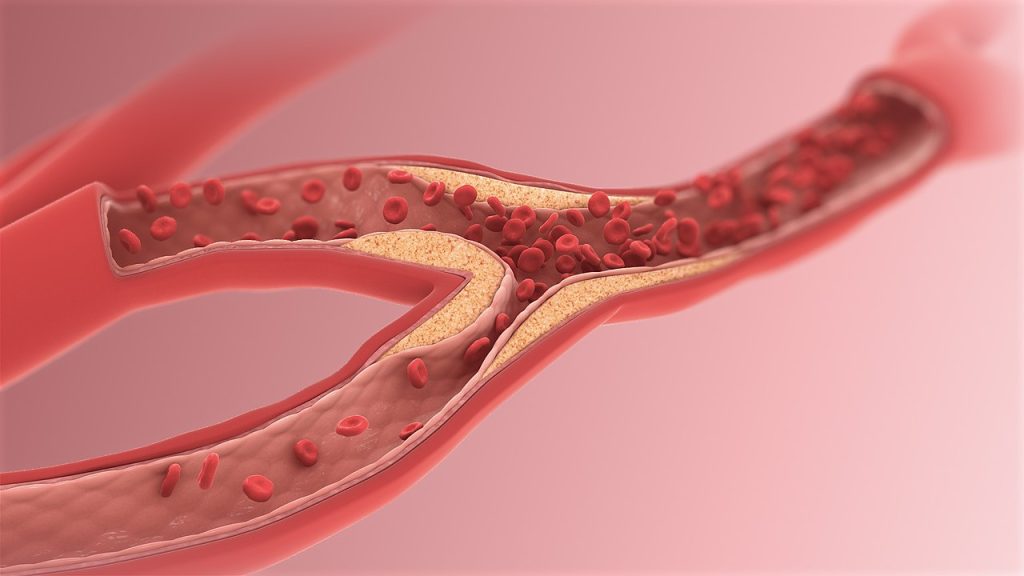
Lipid Lowering: Why 70mg/dL May Not Be Low Enough

Image by Scientific Animations, CC4.0

Current clinical guidelines stress that lower LDL cholesterol levels significantly reduce the risk of major cardiac events. Essential strategies for treatment include heart-healthy lifestyle changes and pharmacological interventions using statins, ezetimibe, and PCSK9 inhibitors. Early intervention is vital, as the cumulative exposure to high cholesterol over time – often termed “LDL years” – determines the onset of vascular disease. But a major question has remained as to whether more aggressive lip-lowering targets is worth the potential side effects such as kidney damage.

Now, a new clinical trial published in NEJM provides evidence that an intensive target of less than 55mg/dL is superior for preventing secondary complications. In the Ez-PAVE trial, researchers in South Korea investigated whether this more intensive provided better protection than the conventional goal of less than 70mg/dL. The study found that patients in the intensive group experienced a significant reduction in cardiovascular events over a three-year period. The researchers conclude that their findings support stricter lipid-lowering guidelines, which can safely and effectively improve long-term patient outcomes.