Researchers at the University of Tsukuba in Japan have discovered that oestrogen receptor (ER) β, expressed in the lateral septum of the limbic system, plays a crucial role in suppressing anxiety-like behaviour by male mice in social situations. Publishing their findings in Neuroscience, they also reported that the distribution and expression region of ERβ differs from that of ERα.
Oestradiol, a sex steroid hormone, plays an essential role in social behaviour, including regulating social anxiety, which is anxiety experienced when unknown individuals are encountered.
In males, testosterone secreted by the testes is converted to oestradiol in the brain, and the oestradiol binds to two types of oestrogen receptors (ERs), ERα and ERβ, to regulate social behaviour. However, its neuroendocrine basis has not been understood. In this study, the role of ERα and ERβ expressed in the lateral septum (LS), which regulates social anxiety, was investigated using male mice.
The researchers first investigated the expression of ERα and ERβ in the LS using genetically modified male mice. ERβ-expressing cells in the mice were labelled with red fluorescent protein, which revealed that the distributions of ERα and ERβ are different.
Furthermore, the researchers investigated the knockdown effects of ERα or ERβ gene expression in the LS of male mice during situations of social and nonsocial anxiety. The results show that social anxiety increases with the inhibition of ERβ expression.
Additionally, ERα- and ERβ-positive cells in the LS projected into different regions of the hypothalamus.
Thus, the researchers concluded that ERα- and ERβ-expressing cells in LS are distinct cell populations with different localisations and neuronal projections, and the ERβ population plays a crucial role in neural circuitry that regulates anxiety-like behaviour in social situations.
A recent has study found that Paxlovid (Nirmatrelvir-ritonavir) did not reduce the risk of developing long COVID for vaccinated, non-hospitalised individuals during their first COVID infection. The study also revealed a higher proportion of individuals with acute symptoms rebound and test-positivity than previously reported.
Paxlovid treatment for acute COVID has been shown to be effective for high-risk unvaccinated individuals. But the effect of the treatment on long COVID risk, including whether it protects vaccinated people from getting long COVID, has been less clear.
The research team selected a group of vaccinated people from the UCSF Covid-19 Citizen Science study who had reported their first positive test for COVID-19 between March and August of 2022 and who were not hospitalised.
Some of these participants reported taking oral Paxlovid treatment during the acute phase of their COVID infection, while others did not.
In December of 2022, they were invited to answer a follow-up survey with questions about long COVID, COVID rebound symptoms and how long they continued to test positive.
Researchers found the two groups were similar. About 16% of those treated with Paxlovid had long COVID symptoms compared to 14% of those who were not treated with the medication.
Commonly reported symptoms included fatigue, shortness of breath, confusion, headache, and altered taste and smell.
Those who took Paxlovid and then went on to develop long COVID reported as many long COVID symptoms as those who were not treated with Paxlovid.
A small percentage of people developed severe long COVID, and those who had received Paxlovid were just as likely to have severe Long COVID symptoms as those who did not.
Among individuals who experienced symptomatic improvement during Paxlovid treatment, 21% reported rebound symptoms.
And among those with rebound symptoms, 10.8% reported one or more Long COVID symptom compared to 8.3% without rebound symptoms.
For participants who repeated antigen testing after testing negative and completing treatment, 25.7% reported rebound test positivity.
In total, 26.1% reported rebound symptoms or test positivity.
“We found a higher proportion with clinical rebound than previously reported but did not identify an effect of post-treatment rebound on long COVID symptoms,” said study first author Matthew Durstenfeld, MD, MAS, a cardiologist and UCSF assistant professor of Medicine.
“Our finding that Paxlovid treatment during acute infection is not associated with lower odds of long COVID surprised us, but it is consistent with two other rigorously conducted studies finding no difference in post-COVID conditions between 4 and 6 months after infection.”
The authors note that the study may have been impacted by limitations arising from its observational nature with researchers relying on patient self-reporting of treatment and Long COVID symptoms.
Maternal suicide is an alarming public health issue and the second most common cause of death during the postnatal period. New research from Karolinka Institutet in Sweden shows that mothers with clinically diagnosed perinatal depression had a three times higher risk of suicidal behaviour compared to mothers without perinatal depression. The findings were published in JAMA Network Open.
Some 13–36% of maternal deaths are attributable to suicide, and the consequences are devastating to the newborn and the family. Maternal suicide is linked to a complex interplay of risk factors, including history of psychiatric disorders, socioeconomic disparities, and inadequate access to healthcare service. It is of paramount importance to identify high-risk populations for preventing maternal suicide and suicidal attempt.
Our findings suggest that women with clinically diagnosed PND are at an increased risk of suicidal behavior, particularly within one year after PND yet throughout 18 years of follow-up. This highlights the pressing need for vigilant clinically monitoring and prompt intervention for this vulnerable population to prevent such devastating outcomes, regardless of pre-pregnancy history of psychiatric disorders.
Hang Yu, PhD student
In this nationwide population-matched cohort study with a maximal follow-up of 18 years, 86 551 women with PND from 2001 to 2017 and 865 510 unaffected women individually matched on age and calendar year at delivery. Sibling comparison was employed to account for familial confounding. It was found that women with a clinical diagnosis of PND have an elevated risk of suicidal behaviour compared to population-matched women or their full sisters without PND. Attenuated yet still substantially elevated risks were observed when comparing with full sisters without PND who share partial genetic and familial environmental factors with affected women. Importantly, such excess risk was apparent among women regardless of their history of psychiatric disorders, suggesting that PND is linked to an added risk of suicidal behaviour beyond that the risk associated with psychiatric disorders occurring before the perinatal period. Moreover, the risk elevations were particularly high shortly after the PND diagnosis, and despite of the rapid decline over time, remained throughout 18 years of follow-up.
On the 2nd of January 2024, Simphiwe*, needing emergency oral healthcare, turned to the Cala District Hospital in the Eastern Cape. However, she was confronted with a note on the door that read, “Dear Community Members, starting from the 18th of December 2023 to the 12th of January 2024 there is no dentist. The dentist will start working on the 15th of January 2024.”
Many such notices hang in front of oral health clinic doors, mostly where dentists work alone to respond to the myriad of emergency oral health needs within their catchment area. Having previously worked alone at a provincial government funded hospital in the rural Eastern Cape, similar notices would be placed on the door to the oral health clinic I operated, until such time as a colleague joined me at the facility.
Oral diseases affect more than 3 billion people globally, while in Africa, it affects an estimated 400 million people.
Oral diseases and conditions that affect people include trauma-related oral injuries, oral cancers, dental decay, and periodontal disease amongst others.
While dental decay remains the most common form of oral disease, untreated, it can lead to life-threatening complications. The closure of dental services at any oral health clinic may subject people to the risk of developing conditions such as Ludwig’s angina, a life-threatening condition that is linked to delayed access to care.
Fewer than 200 dentists
The Eastern Cape is predominantly a rural province, with most of the province’s 7.2 million people largely depending on public healthcare services for the majority, if not all their healthcare needs. The province employs fewer than 200 dentists, a majority of whom are concentrated in the more urban/peri-urban centres.
Cala, a rural town in the province’s Sakhisizwe Local Municipality, is home to an estimated 63 000 people and Cala District Hospital provides access to oral health services to this population. The hospital’s closed dental clinic over the festive period deprived the people of Cala of much-needed care.
It is well known that the festive period results in an increased need for emergency healthcare, including oral healthcare services. People often present with jaw fractures, tooth fractures -often a result of violence or accidents associated with an increase in alcohol consumption -, oral pain and sepsis. While the festive period may result in the increased need for managing these conditions, these are the usual conditions, amongst others, that are managed in many public oral health clinics in most provinces.
Oral health professionals, in particular dentists, are trained to manage the complete spectrum of general oral diseases and often refer to dental specialists for complex and specialised management. In a province like the Eastern Cape, characterised by a dire shortage of dental specialists, dentists are the last defence for many of the people in the province.
A significant portion of dentists in the province work alone, with limited options to manage their leave, often leaving clinics closed in their absence.
However, the closure of dental clinics without a detailed and well-communicated plan is unacceptable and places the lives of populations in danger. At times, people have been known to resort to harmful and dangerous home practices to relieve themselves of their anguish.
We need a plan
A comprehensive plan must be put in place for efficient management and referral of emergency oral healthcare cases during the festive period so that we avoid a repeat of this year’s unacceptable situation at Cala District Hospital 12 months down the line. People in need of oral health services must be made aware of where they can access such services without any delay.
Beyond this, there is a need to invest in building adequate human resource capacity for oral health in the province, to ensure that services are readily available. A mix of oral health professionals and the prioritisation of “lone dentist” clinics for community service placements should help alleviate some of the problems in the system.
It is concerning that the challenges faced in the Eastern Cape is very similar to those in other parts of the country. Fewer than 3000 dentists are working in the public healthcare sector nationwide. With such numbers it is unlikely that what happened to Simphiwe was an isolated incident. Her experience should serve as an important case study, highlighting the significant problems faced by communities and oral health professionals.
Those responsible for managing oral healthcare services in South Africa must take note and recognise that the continued deprioritisation and neglect of the population’s oral health cannot be allowed to continue. We must work together to ensure that oral health is given the attention it deserves as a critical aspect of general health and well-being.
*Dr Vava is the President of the Public Oral Health Forum, a network of public oral health professionals striving for oral health equity, dignity and well-being for all.
Increased sedentary time in childhood can raise cholesterol levels by two thirds as an adult, but a new study has found light physical activity may completely reverse the risks and is far more effective than moderate-to-vigorous physical activity.
The study was published in The Journal of Clinical Endocrinology & Metabolism. Researchers used data from the University of Bristol study Children of the 90s (also known as the Avon Longitudinal Study of Parents and Children), which included 792 children aged 11 years who were followed up until the age of 24.
Results from this study found that accumulated sedentary time from childhood can increase cholesterol levels by two thirds (67%) by the time someone reaches their mid-twenties. Elevated cholesterol and dyslipidaemia from childhood and adolescence have been associated with premature death in the mid-forties and heart problems such as subclinical atherosclerosis and cardiac damage in the mid-twenties.
Healthy lifestyles are considered important in the prevention of dyslipidaemia and one of the primary ways of lowering cholesterol, apart from diet, is movement behaviour. For the first time, this study objectively examined the long-term effects of sedentary time, light physical activity, and moderate-to-vigorous physical activity on childhood cholesterol levels.
The World Health Organization currently recommends children and adolescents should accumulate on average 60 minutes of moderate-to-vigorous physical activity a day and reduce sedentary time but have limited guidelines for light physical activity. Yet this new study and other recent studies has found light physical activity – which includes exercises such as long walks, house chores, or slow dancing, swimming, or cycling – is up to five times more effective than moderate-to-vigorous physical activity at promoting healthy hearts and lowering inflammation in the young population.
Dr Andrew Agbaje from the University of Exeter led the study and said: “These findings emphasise the incredible health importance of light physical activity and shows it could be the key to preventing elevated cholesterol and dyslipidaemia from early life. We have evidence that light physical activity is considerably more effective than moderate-to-vigorous physical activity in this regard, and therefore it’s perhaps time the World Health Organization updated their guidelines on childhood exercise — and public health experts, paediatricians, and health policymakers encouraged more participation in light physical activity from childhood.”
During the research, accelerometer measures of sedentary time, light physical activity, and moderate-to-vigorous physical activity were collected at ages 11, 15, and 24 years. High-density lipoprotein cholesterol, low-density lipoprotein cholesterol, triglyceride, and total cholesterol were repeatedly measured at ages 15, 17, and 24 years. These children also had repeated measurement of dual-energy X-ray absorptiometry assessment of total body fat mass and muscle mass, as well as fasting blood glucose, insulin, and high sensitivity C-reactive protein, with smoking status, socio-economic status, and family history of cardiovascular disease.
During the 13-year follow-up, sedentary time increased from approximately six hours a day to nine hours a day. Light physical activity decreased from six hours a day to three hours a day while moderate-to-vigorous physical activity was relatively stable at around 50 minutes a day from childhood until young adulthood. The average increase in total cholesterol was 0.69 mmol/L. It was observed without any influence from body fat.
An average of four-and-a-half hours a day of light physical activity from childhood through young adulthood causally decreased total cholesterol by (-0.53 mmol/L), however, body fat mass could reduce the effect of light physical activity on total cholesterol by up to 6%. Approximately 50 minutes a day of moderate-to-vigorous physical activity from childhood was also associated with slightly reduced total cholesterol (-0.05 mmol/L), but total body fat mass decreased the effect of moderate-to-vigorous physical activity on total cholesterol by up to 48%. Importantly, the increase in fat mass neutralised the small effect of moderate-to-vigorous physical activity on total cholesterol.
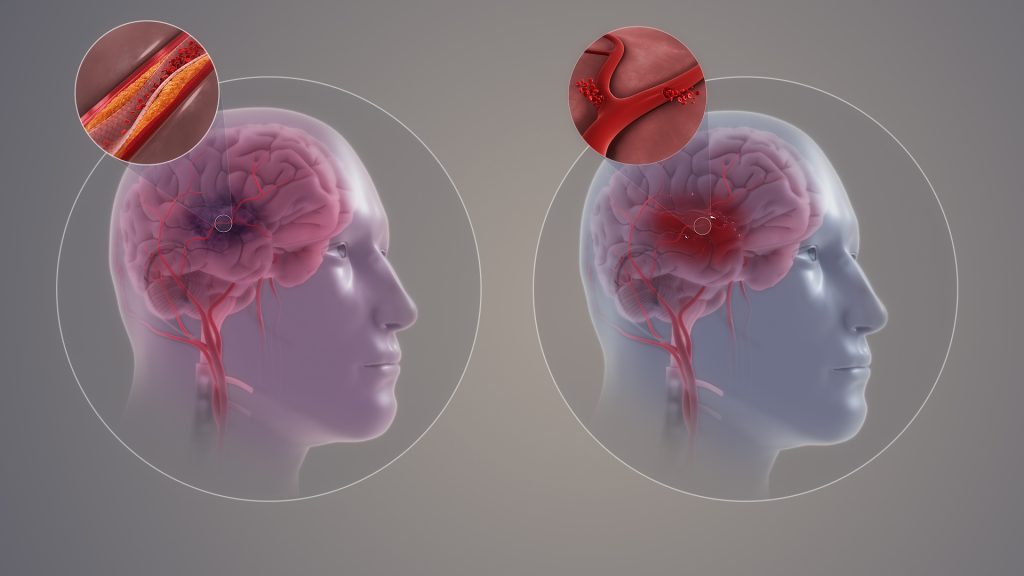
Ischaemic and haemorrhagic stroke. Credit: Scientific Animations CC4.0
Early neurological deterioration (END) within the first 48 hours after acute ischaemic stroke (AIS) onset is relatively common, and is a predictor of poor outcomes. Treatment options are limited and unproven, but but a clinical trial has shown that the anticoagulant argatroban was safe and effective in improving outcomes. The results were published in JAMA Neurology.
Apart from straightforward causes, such as intracerebral haemorrhage and malignant oedema, the mechanism of END remains mostly unclear. Interventions for unexplained END can include plasma volume expansion, induced hypertension, and intensified antithrombotic therapy, but none has been formally proved so far.
The direct thrombin inhibitor argatroban is rapid acting, short acting, and has low bleeding rates, which could help prevent thrombus propagation and provide additional benefit after stroke/TIA. Argatroban has been associated with a reduction in ischaemic stroke damage but the safety and efficacy of argatroban is not well established for AIS treatment, and evidence is lacking for the effect of argatroban in patients with AIS and END.
Researchers conducted a randomised clinical trial that initially included 628 patients, average age 65 and 400 (63.7%) male. Eligible patients were adults with AIS who experienced END, which was defined as an increase of 2 or more points on the National Institutes of Health Stroke Scale within 48 hours from symptom onset.
Patients were randomly assigned to the argatroban group and control group within 48 hours of symptom onset. Both groups received standard therapy based on guidelines, including oral mono or dual antiplatelet therapy. The argatroban group received intravenous argatroban for 7 days (continuous infusion at a dose of 60mg per day for 2 days, followed by 20mg per day for 5 days) in addition to standard therapy.
The results showed that good neurological function at 90 days in those randomised to receive argatroban plus antiplatelet compared with antiplatelet alone was observed in 80.5% vs 73.7%)of participants, a statistically significant difference.
The authors concluded that the trial “shows that the combination of argatroban and antiplatelet therapy resulted in a significantly greater likelihood of good functional outcome at 90 days in patients with END after AIS, with no additional risk of major intracranial or extracranial haemorrhage.”
When 67-year-old Larry Christian suffered a sudden loss of balance, he was diagnosed with a haemorrhagic stroke, and referred to the University of Delaware’s Physical Therapy Clinic for rehabilitation.
“Initially, I had a lot of balance problems that we worked pretty intensely to correct,” Christian said.
He enrolled in a clinical trial at UD, led by co-investigator Darcy Reisman, professor and chair of the Department of Physical Therapy, that sought to explore whether high-intensity interval training (HIIT) aids in improved gait post-stroke. UD was one of three sites selected for the clinical trial led by primary investigator and associate professor Pierce Boyne of the University of Cincinnati. Sandra Billinger, professor and vice chair of stroke translation research at the University of Kansas Medical Center, is also a co-investigator and represents the third site involved in the clinical trial.
Now, seven years later, Christian is walking better.
“Participating in this study got me to a point where I could walk better and even take a walk outside,” Christian said. “I’ve been pretty healthy all my life, and while I can’t play volleyball anymore, walking again made me feel great.”
Christian is among the lucky ones. Among 7 million stroke survivors in the US, fewer than 10% have adequate walking speed and endurance to complete normal daily activities like grocery shopping.
Reisman said the results of the multi-million-dollar, five-year clinical trial showed HIIT helped more people than just Christian. The results, published in JAMA Neurology, show that chronic stroke survivors who engaged in high-intensity exercise with bursts of maximum-speed walking alternated with recovery periods saw a significant difference in their walking capacity over 12 weeks. The improvements were so dramatic Boyne and Reisman have secured a clinical trial grant renewal to triple the size of their study to 165 participants.
She added HIIT looks different for each stroke survivor, and the optimal exercise program for each person with stroke remains unknown.
“We want them to train at the fastest possible speed, which varies from person to person,” Reisman said. “But we don’t want them running.”
For those already walking at a reasonably fast pace, research associate Henry Wright in Reisman’s lab will add an incline or a weighted vest or wrap a bungee cord around their waist to create resistance.
“It’s self-reported data, but participants tell me they have more energy, or they’re able to do more around the house, or they’re not winded when they go shopping,” Wright said. “By the end of the training, I can see their walking is smoother, they’re getting farther on clinical testing, and it’s rewarding to see their gains.”
The results from the initial clinical trial showed Reisman and collaborators that HIIT was feasible and safe in a small group of stroke survivors, who saw sustained gains in walking capacity, more so than patients engaged in moderate-intensity exercise.
However, further study of the intervention in larger populations is crucial to change the standard of care.
“Many physical therapists were trained during a time when patients with neurologic conditions, particularly stroke, were treated with kid gloves, partly because they say stroke is the heart attack of the brain,” Reisman said. “It’s common they also have cardiovascular conditions, so people tend to be extra careful with those patients in terms of pushing them.
“But what we know now is at least moderate-intensity, and likely high-intensity interval training, is essential not only for stroke survivors’ cardiovascular system but also for their brain,” Reisman said. “The evidence shows that intensity is linked to the release of neurotrophins in the brain that help the brain remodel after a stroke.”
Kiersten McCartney, a physical therapist obtaining her doctorate in biomechanics and movement science, worked on the clinical trial with Reisman. She spent the 2022 Winter Session at Magee Rehabilitation Hospital in Philadelphia, helping them implement moderate-to-high-intensity exercise and saw the benefits first-hand.
“I’ll never be able to say there’s no risk of heart attack. Even the fittest people can have a heart attack when exercising,” McCartney said. “Still, the data points to the idea that you’re doing more harm than good by not engaging your patients with stroke in high-intensity exercise when we talk about those longer-term outcomes.”
The HIIT-Stroke Trial 2 will continue to examine dosing to confirm whether a full 12 weeks of vigorous exercise is needed to see significant improvements in walking. Reisman and collaborators will identify whether differences in sex and other factors played a role in rehabilitation. If the five-year study results are similar and show significant gains from high-intensity interval exercise in a larger population, investigators would next work with NIH Strokenet to launch a nationwide clinical trial in people with stroke.
“We’ve known about the value of moderate-intensity exercise for more than a decade, and it’s still not the standard of care,” Reisman said. “If we find that HIIT is the optimal intervention, the next phase would be the knowledge translation phase, where we’d systematically develop a methodology to get HIIT into clinics.”
For HIIT to work as an intervention, Reisman said therapists will need the proper tools. She’s been pushing for commercially available heart rate monitors, placed around the chest during exercise, to be the standard of care in clinics for years.
“They’re already a standard of care for people in the community,” Reisman said. “Getting them into clinics is imperative so PTs can monitor patients’ heart rate the entire time they exercise. That constant monitoring gives therapists data on how a person is responding beyond visible signs and symptoms, and in turn, more peace of mind.”
But beyond tools and training, Reisman said, it comes down to evidence and education.
“If we have hundreds and hundreds of stroke survivors who’ve gone through our high-intensity exercise intervention, and we’ve seen no major adverse events – that will help,” Reisman said. “The more data we have to show therapists, the better we can implement this intervention that will change lives.”
In the event of an accident or an attack, members of the public can save lives by performing first aid measures until the arrival of emergency medical services. But those people willing and able to serve as first responders will also need access to first aid equipment.
“There must also be certain equipment available to manage major bleeding. The question then is where this equipment should be placed, so that people who want to help can quickly access bleeding control kits,” says Carl-Oscar Jonson, adjunct senior associate professor at the Department of Biomedical and Clinical Sciences at Linköping University and head of research at the Center for Disaster Medicine and Traumatology in Linköping.
The first recommendations
Until now, there have been no guidelines for where such bleeding control kits should be located to ensure maximal utility. The current study, published in the journal Disaster Medicine and Public Health Preparedness, now contributes research-based recommendations.
“We found that the largest number of lives saved correlated with bleeding control kits being placed in two or more locations on the premises, but most importantly they shouldn’t be placed at entrances. We also concluded that the equipment must be accessible within 90 seconds’ walking distance,” says Anna-Maria Grönbäck, doctoral student at the Department of Science and Technology at Linköping University, who was involved in developing the simulation.
This means that bleeding control kits should not be placed at entrances, which is often the case with automated external defibrillators (AEDs). The reason for this is that they may be difficult to reach in a situation where many people have to be evacuated at once, such as in the case of attack or major accident. According to attack statistics, roughly 20 injured people will need first aid including a bleeding control kit each. It may be helpful to locate bleeding control kits in the same places as clearly marked AEDs, as long as not located at the entrances.
Bomb consequences simulated
The recommendations are based on conclusions reached by the research team by developing a computer-based simulation of an explosion in a large shopping centre with thousands of simultaneous visitors. In their simulation, the researchers have looked at what happens right after an explosion. The majority of the simulated people try to get out of the premises and move towards the exits. Simulated people close to the blast suffer varying degrees of injury and start bleeding.
In the simulation, some individuals help those injured by applying direct pressure to reduce bleeding, or by trying to find equipment. It is a race against time. Depending on how long it takes to get the equipment, the simulated casualty may die from blood loss.
To find the best strategy for the placement of bleeding control kits, the researchers tested four different scenarios in their simulation. They weighed together the outcomes of the many simulated courses of events for each scenario and compared them to understand which placement of equipment saved the largest number of lives.
People who have more disrupted sleep in their 30s and 40s may be more likely to have memory and thinking problems a decade later, according to new research published in Neurology. The study does not however prove that sleep quality causes cognitive decline, it only shows an association.
“Given that signs of Alzheimer’s disease start to accumulate in the brain several decades before symptoms begin, understanding the connection between sleep and cognition earlier in life is critical for understanding the role of sleep problems as a risk factor for the disease,” said study author Yue Leng, PhD, of the University of California, San Francisco.
“Our findings indicate that the quality rather than the quantity of sleep matters most for cognitive health in middle age.”
The study involved 526 people, average age of 40, who were followed for 11 years. Researchers looked at participants’ sleep duration and quality, and had them perform cognitive tests.
Participants wore a wrist activity monitor for three consecutive days on two occasions approximately one year apart to calculate their averages. Participants slept for an average of six hours.
Participants also reported bedtimes and wake times in a sleep diary and completed a sleep quality survey with scores ranging from zero to 21, with higher scores indicating poorer sleep quality. A total of 239 people, or 46%, reported poor sleep with a score greater than five. Participants also completed a series of memory and thinking tests.
Researchers also looked at sleep fragmentation, which measures repetitive short interruptions of sleep. They looked at both the percentage of time spent moving and the percentage of time spent not moving for one minute or less during sleep. Added together, participants had an average sleep fragmentation of 19%.
Researchers then divided participants into three groups based on their sleep fragmentation score. Of the 175 people with the most disrupted sleep, 44 had poor cognitive performance 10 years later, compared to 10 of the 176 people with the least disrupted sleep.
After adjusting for age, gender, race, and education, people who had the most disrupted sleep had more than twice the odds of having poor cognitive performance when compared to those with the least disrupted sleep.
There was no difference in cognitive performance at midlife for those in the middle group compared to the group with the least disrupted sleep.
“More research is needed to assess the link between sleep disturbances and cognition at different stages of life and to identify if critical life periods exist when sleep is more strongly associated with cognition,” Leng said.
“Future studies could open up new opportunities for the prevention of Alzheimer’s disease later in life.”
The amount of time people slept and their own reports of the quality of their sleep were not associated with cognition in middle age.
Low-carbohydrate diets of mostly plant-based proteins and fats with healthy carbohydrates such as whole grains were associated with slower long-term weight gain than low-carbohydrate diets of mostly of animal proteins and fats with unhealthy carbohydrates like refined starches, according to a new study led by Harvard T.H. Chan School of Public Health. The study was published in JAMA Network Open.
“Our study goes beyond the simple question of, ‘To carb or not to carb?'” said lead author Binkai Liu, research assistant in the Department of Nutrition. “It dissects the low-carbohydrate diet and provides a nuanced look at how the composition of these diets can affect health over years, not just weeks or months.”
While many studies have shown the benefits of cutting carbohydrates for short-term weight loss, little research has been conducted on low-carbohydrate diets’ effect on long-term weight maintenance and the role of food group quality.
Using data from the Nurses’ Health Study, Nurses’ Health Study II, and Health Professionals Follow-up Study, the researchers analysed the diets and weights of 123 332 healthy adults from 1986 to 2018.
Each participant provided self-reports of their diets and weights every four years.
The researchers scored participants’ diets based on how well they adhered to five categories of low-carbohydrate diet: total low-carbohydrate diet (TLCD), emphasising overall lower carbohydrate intake; animal-based low-carbohydrate diet (ALCD), emphasising animal-based proteins and fats; vegetable-based low-carbohydrate diet (VLCD), emphasising plant-based proteins and fats; healthy low-carbohydrate diet (HLCD), emphasising plant-based proteins, healthy fats, and fewer refined carbohydrates; and unhealthy low-carbohydrate diet (ULCD), emphasising animal-based proteins, unhealthy fats, and carbohydrates coming from unhealthy sources such as processed breads and cereals.
The study found that diets comprised of plant-based proteins and fats and healthy carbohydrates were significantly associated with slower long-term weight gain. None of these diets strictly excluded animal or dairy products.
Participants who increased their adherence to TLCD, ALCD, and ULCD on average gained more weight compared to those who increased their adherence to HLCD over time.
These associations were most pronounced among participants who were younger (< 55 years old), overweight or obese, and/or less physically active.
The results for the vegetable-based low carbohydrate diet were more ambiguous: Data from the Nurses’ Health Study II showed an association between higher VLCD scores and less weight gain over time, while data around VLCD scores from the Nurses’ Health Study and Health Professionals Follow-up Study were more mixed.
“The key takeaway here is that not all low-carbohydrate diets are created equal when it comes to managing weight in the long-term,” said senior author Qi Sun, associate professor in the Department of Nutrition.
“Our findings could shake up the way we think about popular low-carbohydrate diets and suggest that public health initiatives should continue to promote dietary patterns that emphasise healthful foods like whole grains, fruits, vegetables, and low-fat dairy products.”