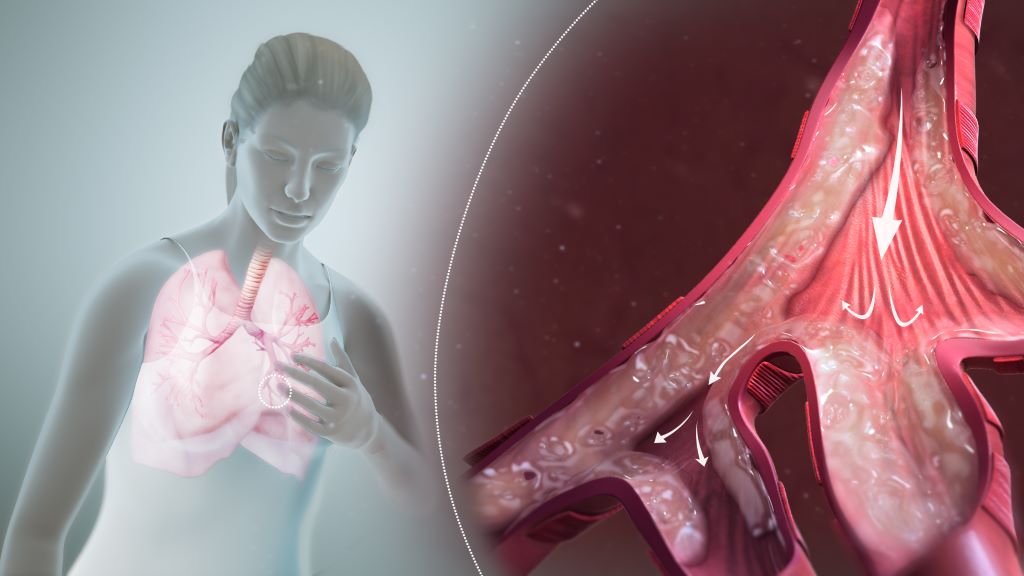
Researchers have discovered how part of the body’s immune system could better combat a leading cause of death for people with cystic fibrosis (CF).
A team led by The University of Queensland’s Professor Peter Sly and Dr Abdullah Tarique has identified how macrophages – the white blood cells that fight infection in the body – function differently in people with CF, compared to others.
“Macrophages play a critical role in fighting infection, especially in the lungs,” Professor Sly said.
“They’re the ‘Pac-Man’ cells that find and ‘gobble up’ bacteria and pathogens such as mycobacterium abscessus (MABS).
“We found people with CF have multiple defects in their macrophages that leave them more vulnerable to infection, even when taking the most effective CF drug treatment available.”
Professor Sly said MABS posed the biggest infection risk for people with CF.
“MABS is resistant to many antibiotics which makes treatment complex and often unsuccessful,” he said.
“The infection can exclude a patient from being eligible for a lung transplant and is a leading cause of death for people with CF.
“And because of antibiotic resistance, MABS infections are increasing at alarming rates.”
Professor Sly said in people with CF, macrophages aren’t as efficient at both recognising and killing off bugs in the body.
“CF involves a defect in the CFTR protein, the channel on the cell’s surface responsible for transporting ions and chlorine in and out of cells,” he said.
“That lack of chlorine transport means macrophages don’t activate their killing functions to ‘eat’ the bugs.
“A second important mechanism in macrophages is also deficient – the zinc transport of proteins.
“Zinc is a potent antibacterial mechanism used to poison bacteria, but with less zinc and less zinc transporter proteins in CF macrophages, they’re less able to fight the infection.”
Professor Sly said a third defect – in the mitochondria – is perhaps the most significant.
“Mitochondria are the batteries or power packs of cells, and produce things called reactive oxygen species to kill bacteria.
“In CF, not only are macrophages less able to make these reactive oxygen species, but they’re also not able to keep reproducing them to increase their mitochondrial mass when infected.”
The research also examined treatments for CF and found even the most effective drug doesn’t boost macrophage’s ability to kill MABS.
“Elexacaftor-tezacaftor-ivacaftor (ETI) has been revolutionary in CF treatment by improving lung function in many people, meaning fewer exacerbations and hospitalisations,” Professor Sly said.
“But it doesn’t fix this part of the immune system, which is why people with CF still get these infections.
“Our findings show we now need to accelerate research into different mechanisms of increasing macrophage function, to identify and initiate killing strategies for MABS.
“This could significantly reduce the impact of these infections for people with CF.”
Read the research in Proceedings of the National Academy of Sciences.
New research presented at this year’s European Congress on Obesity in Istanbul, Turkey (12-15 May) shows the use of the new GLP-1 class of obesity drugs in people with asthma is associated with a 26% fall in the number of asthma exacerbations and a 14% drop in use of asthma inhaler reliever use. The study is by Simon Høj and Dr Kjell Erik Julius Håkansson Copenhagen University Hospital, Copenhagen Denmark and colleagues.
Glucagon-like peptide-1 receptor agonists (GLP-1 RAs) are now widely used to treat overweight, obesity and type 2 diabetes (T2DM), with growing evidence of benefits that extend beyond blood sugar control.
In asthma, where overweight, obesity and metabolic dysfunction can lead to increased severity of symptoms and adverse events such as acute exacerbations, the authors suggest that GLP-1 RAs may improve asthma outcomes through weight loss, modulation of airway inflammation, and improvements in metabolic functions. Reductions in occurrence of asthma exacerbations are likely to reduce systemic corticosteroid exposure (a common treatment for acute asthma exacerbations orally or intravenously) and thus may reduce the risk of corticosteroid exposure-associated adverse events such as osteoporosis or new-onset T2DM. As such, as the clinical use of GLP-1 RAs expands, reliable estimates of their impact on asthma control are needed for individuals living with both asthma and overweight, obesity or T2DM.
The researchers conducted a nationwide self-controlled cohort study using linked Danish health registers. Adult individuals with a prior asthma diagnosis or ≥2 asthma inhaler prescriptions redeemed within 12 months) were included on the date of their first GLP-1 RA dispensing (index date). Eligible individuals had continuous registration data for at least 12 months before and after the index date.
Individuals with COPD or patients with severe asthma treated with new and relatively expensive biologic drugs within 12 months before or after the index date were excluded. Overweight or obesity was defined using ICD-10 codes for those conditions. Those who had no evidence of T2DM – with no diagnosis recorded or no evidence of other first line diabetes drugs prescribed – were also placed in the with obesity/overweight group. Those with a T2DM diagnosis or prescriptions recorded for first line diabetes drugs such as metformin were placed in the T2DM group.
The primary outcome was exacerbations, defined as an inpatient asthma hospital contact(s) and/or systemic oral or intravenous corticosteroid course(s). Secondary outcomes were the use of rescue medication (inhaled short-acting β2-agonists), inhaled corticosteroid exposure, and chest infection events defined as redemption of antibiotics commonly used for lower airway infections
The cohort comprised 27,523 individuals (mean age 54 years, 66% female) with asthma and comorbid overweight or obesity (49%) or T2DM (61%) and 26% recorded as having both conditions. Around 50% of the GLP-1 prescriptions were liraglutide, 48% semaglutide, and 2% others (exenatide, dulaglutide, lixisenatide).
Compared with the year before GLP-1 RA treatment, GLP-1 RA treatment was associated with a 26% lower exacerbation rate overall; and 28% lower in men compared with 23% lower in women. When stratified according to GLP1 RA treatment indication, the analysis showed individuals with asthma and comorbid overweight or obesity and individuals with asthma and comorbid T2DM had similar effect estimates – a 22% reduction in those with overweight or obesity and a 26% reduction in those with T2D.
Reliever medication use fell by 14% overall, suggesting fewer symptoms despite daily inhaled corticosteroid exposure also decreasing by 23% (inhaled corticosteroids are used to prevent exacerbations and treat symptoms in asthma). Furthermore, pneumonia events were reduced by 10%. People also living with allergic rhinitis saw similar decreases (23%) in exacerbations to those living without allergic rhinitis (28%). The authors are also working on updated analyses to show differences between men and women for these specific outcomes.
The authors conclude: “In this nationwide cohort of over 27,000 individuals with asthma and also overweight, obesity or type 2 diabetes, use of GLP-1 drugs was associated with significant reductions in exacerbation burden as well as reliever use, exposure to inhaled corticosteroids and pneumonia events, irrespective of whether the drugs were being used to treat obesity or type 2 diabetes.”
The authors explain that their study did not have access to clinical records (just if people had used GLP-1 and hospital admissions), so data on BMI and weight loss for participants were not available.
But Dr Håkansson says: “There’s a high chance that the weight loss is a major contributor to these results. A common symptom in both asthma and obesity is shortness of breath, and the presence of excess fatty tissue creates a pro-inflammatory state in the body in general. There’s also evidence from other studies suggesting that the inflammation caused by excess adipose tissue is distinct from the ‘classic’ asthma inflammation which often is driven by allergies or cells called eosinophils.”
And he adds: “As the use of GLP-1 therapies increase, researchers are finding an increasing number of effects outside of weight loss.”
A once-nightly oral pill helped control obstructive sleep apnoea in a large, phase 3 clinical trial presented at the 2026 ATS International Conference. The drug, called AD109, is the first therapy to treat OSA by addressing its underlying mechanisms and targeting the neuromuscular causes of airway collapse. The trial results will be published in the American Journal of Respiratory and Critical Care Medicine.
The trial, called SynAIRgy, showed that patients who took AD109 had fewer breathing interruptions during sleep, less oxygen deprivation, and improved blood oxygen levels overall. More than 40 percent of patients saw their OSA disease severity category improve, and 18 percent achieved complete disease control.
“These results provide encouraging evidence that targeting neuromuscular dysfunction can translate into meaningful clinical outcomes, aligning with our evolving understanding of the disease biology,” said first author Patrick John Strollo, MD, a sleep medicine physician at the University of Pittsburgh Medical Center.
Continuous Positive Airway Pressure (CPAP) is the gold standard treatment for OSA, but many patients are unable to tolerate treatment. AD109 could help fill that gap with an easier treatment option, Dr Strollo said.
“In many other chronic diseases, such as cardiovascular disease, asthma, or type 2 diabetes, it would be unthinkable for the majority of diagnosed patients to remain untreated or undertreated. Yet that remains the reality in OSA,” he said. “An oral pill that targets the underlying neuromuscular drivers of airway collapse during sleep could help address this gap and broaden the range of effective options for patients who remain untreated today.”
AD109 combines two medications, aroxybutynin and atomoxetine, which work together to support muscles in the throat and prevent the airway from sagging or collapsing during sleep.
For the trial, which ran for six months at 69 sites across the U.S. and Canada, researchers enrolled 646 adults with mild to severe OSA who couldn’t tolerate or refused CPAP.
Patients taking AD109 saw their apnea-hypoxia index, which measures the number of breathing interruptions per hour, decrease by about 44 percent, compared with 18 percent in the placebo group. Oxygen desaturation index (the number of times during the night that blood oxygen drops) and hypoxic burden (oxygen deficiency) also improved in the AD109 group.
Importantly, improvements were observed consistently across a broad range of patients, including those with varying severity levels and body types.
Along with improved outcomes, the drug showed an acceptable safety profile with mild, expected side effects. The most common side effects were dry mouth, nausea, insomnia, and difficulty urinating. Around 21 percent of patients discontinued therapy due to side effects.
Dr Strollo noted that the results will be published alongside a companion mechanistic review by ATS in the American Journal of Respiratory Cell and Molecular Biology.
“Together, these peer-reviewed articles connect late-stage clinical outcomes with the biological mechanisms that drive the disease, targeted by the mechanism of action of AD109, providing a more complete and integrated view of OSA and strengthening confidence in the approach,” he said.
AD109 has received Fast Track designation from the FDA for the treatment of OSA, recognising the significant unmet need for effective, well-tolerated pharmacologic therapies for OSA. Apnimed has submitted its New Drug Application (NDA) for AD109 to the FDA. Based on FDA feedback, Apnimed expects a potential PDUFA target action date in 1Q 2027, subject to FDA acceptance of the NDA for review.
Join our podcast as we unpack a study exploring the potential of the asthma medication formoterol as a novel treatment for Metabolic Dysfunction-Associated Steatohepatitis (MASH), a severe liver condition often linked to diabetes.
The researchers used experiments involving high-fat diet mice and human liver cell cultures to show that this beta 2 adrenergic receptor agonist effectively reduces liver fat accumulation. It does so by stimulating mitochondrial biogenesis and enhancing metabolic efficiency. In addition, a massive retrospective analysis of nearly 60 000 patients revealed that those using long-acting versions of these drugs experienced significantly lower rates of liver complications and reduced mortality.
A new national cohort study from Latvia, conducted in collaboration with researchers from the clinical tuberculosis infrastructure (ClinTB) at the German Center for Infection Research (DZIF) at the Research Center Borstel, Leibniz Lung Center (FZB), provides important insights into the treatment of multidrug-resistant tuberculosis (MDR-TB). The study shows that long-term disease-free survival rates are significantly higher than previous standard indicators suggest. The results, published in the renowned journal The Lancet Regional Health Europe, are based on the analysis of data from 1299 adult patients treated between 2005 and 2021.
Multidrug-resistant tuberculosis poses a significant challenge to healthcare systems worldwide. Whilst the effectiveness of treatment is traditionally assessed on the basis of treatment outcomes at the end of therapy, the new study shows that these criteria underestimate the actual long-term success of treatment. According to WHO standard definitions, only 4.8% of patients in Latvia were considered cured. However, during long-term follow-up, 76.9% of those affected remained permanently relapse-free.
The researchers linked clinical data with national registry information for long-term follow-up, enabling them, for the first time, to systematically evaluate long-term treatment outcomes in a former European country with a high incidence of MDR-TB. A key factor in treatment success was the use of at least three effective drugs in the individual treatment regimen.
Furthermore, the analysis showed that very short treatment durations of less than nine months, using the treatment options available at the time, were associated with an increased risk of relapse or death. Treatment durations of between ten and seventeen months, however, achieved comparable results to longer courses of treatment. After the end of the observation period, MDR-TB treatments became more effective. Today, the treatment duration for MDR-TB has aligned with the six months required for drug-sensitive tuberculosis.
“The study underscores the importance of long-term follow-up in MDR-TB and suggests that tuberculosis control programmes should broaden their measures of success. Including recurrence-free survival rates allows for a more realistic assessment of the quality of care and the actual benefit to patients,” says Sophie Meier, a medical PhD student at the FZB and the University of Lübeck under DZIF researcher Professor Christoph Lange.
“The findings also support the role of expert panels, known as consilia, in selecting treatments and assessing treatment success for MDR-TB. In Latvia, the decisions made by the consilium were significantly superior to the results obtained by applying WHO definitions for MDR-TB treatment outcomes. Consilia are also an element of effective ‘antimicrobial stewardship’ against the development of new antibiotic resistance,” says PD Dr Thomas Brehm from the FZB and University Medical Center Hamburg-Eppendorf (UKE), DZIF researcher and senior author of this study.
The findings of this study provide important impetus for future treatment strategies for MDR-TB and support the use of individualised treatment regimens with sufficiently effective drugs. Prospective studies are now required to test these findings in the context of new, shortened treatment regimens using modern active substances. If necessary, the definitions of treatment outcomes for MDR-TB will need to be revised.
A study conducted at the University of São Paulo shows that the pathogen can persist in these tissues for long periods, be transmitted unexpectedly, and trigger new outbreaks of the disease.
The rhinovirus can infect B lymphocytes, which produce antibodies, and CD4 T cells, which conduct the local immune response (image: PDB/Wikimedia Commons)
By Karina Toledo | Agência FAPESP – A study conducted at the University of São Paulo (USP) in Brazil reveals that tissues such as the tonsils and adenoids can serve as hiding places for the rhinovirus, which causes the common cold and is responsible for most respiratory infections worldwide.
Using samples from 293 children who underwent surgery to remove these tissues, the study showed that the pathogen can infect immune cells known as lymphocytes and remain there for long periods without causing symptoms. This allows the virus to potentially be transmitted to others without warning.
“The virus has a ‘date’ with the child population. Every year, about two or three weeks after school starts in temperate regions, there’s a rhinovirus outbreak. And children pass it on to their parents and grandparents. We’ve always wondered: What does the start of school have to do with it? Well, children gather in closed spaces, and some of them with the virus in their throats can spark an outbreak at school, even if they’re asymptomatic,” comments rhinovirologist Eurico de Arruda Neto, a professor at the Ribeirão Preto School of Medicine (FMRP-USP) and coordinator of the research, supported by FAPESP (projects 13/06380‐0, 13/16349‐2 and 17/25654‐4).
As the researcher explains, it was already known that the rhinovirus infects the epithelium (the outermost layer of the mucosa) of the nose and throat, hijacks the cellular machinery to multiply, and causes the host cell to rupture once this process is complete, releasing progeny capable of generating new infections. For this reason, scientists consider it a lytic virus, one that causes cell lysis, or rupture. This rapid and destructive cycle quickly draws the attention of the immune system, which, in most cases, eliminates the virus from the body within about five to seven days.
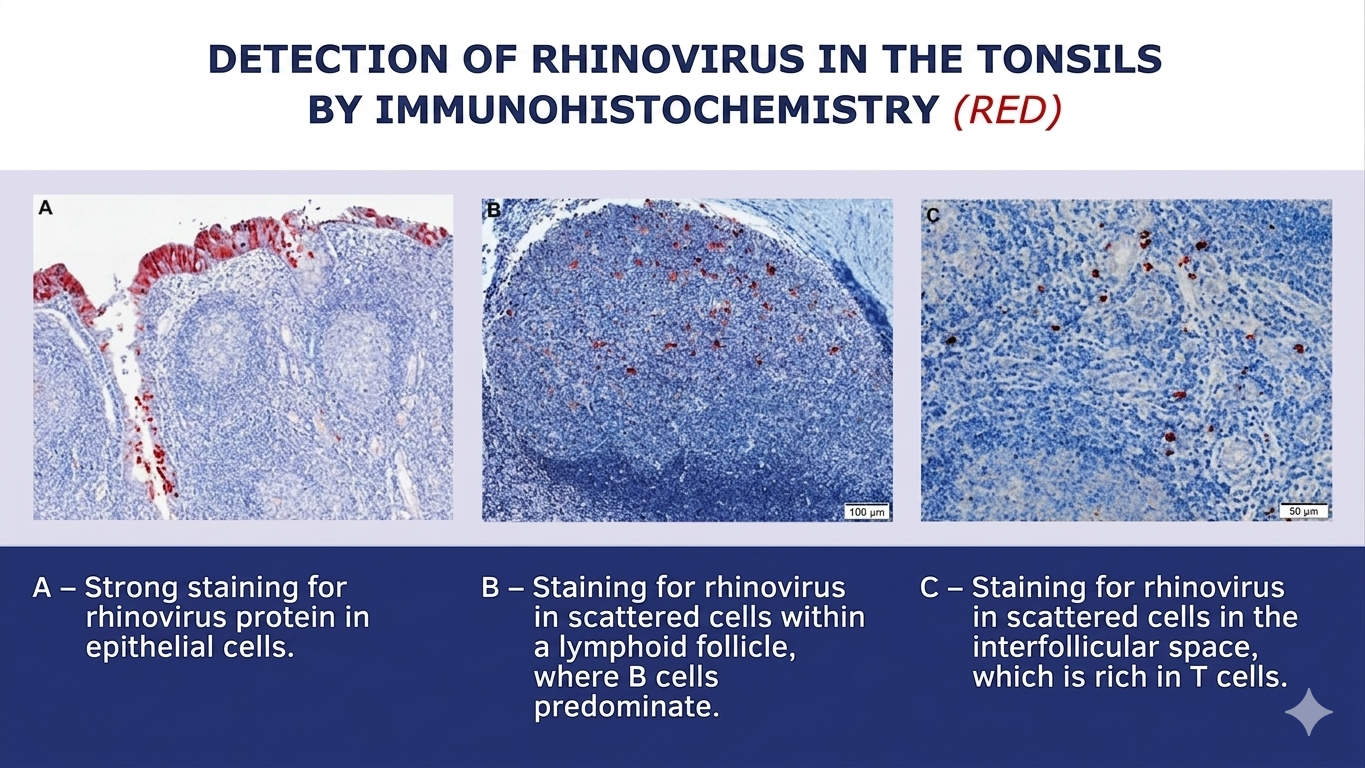
The major finding of the study was that the rhinovirus can reach the deeper layers of tonsil and adenoid tissues in addition to the epithelium. There, it can infect B lymphocytes, which produce antibodies, and CD4 T lymphocytes, which conduct the local immune response. These cells have a long lifespan and store the “memory” of the immune system. Rather than killing them, the rhinovirus remains inside these cells for extended periods, in a state of persistence similar to that seen with herpes viruses, HPV, and cytomegalovirus.
“The samples we analyzed are from children who underwent surgery due to snoring, sleep apnea, or recurrent infections related to tonsillar and adenoid hypertrophy. At the time of surgery, they were necessarily asymptomatic. Nevertheless, we detected the rhinovirus in a large number of participants,” says Arruda.
In addition to the tonsils and adenoids, the children’s nasal secretions were analyzed as well. According to data published in the Journal of Medical Virology, the virus was present in at least one of the three sites (tonsil, adenoid, or secretion) in 46% of the volunteers. Viral proteins and other signs that the rhinovirus was replicating – and therefore capable of infecting another person – were also observed in these tissues.
The research was conducted in collaboration with Ronaldo Martins, a virologist from the Ribeirão Preto School of Pharmaceutical Sciences (FCFRP-USP), as well as professors Wilma Anselmo-Lima, Edwin Tamashiro, and Fabiana Valera from the FMRP-USP.
(image: press release)
Virus garden
In previous studies, Arruda’s team detected adenovirus (another cause of the common cold), influenza A (flu), and SARS-CoV-2 (COVID-19) in samples of tonsils and adenoids from children who had undergone surgery. The latter two are known to cause longer-lasting infections in some patients. In the case of the rhinovirus, however, this came as a surprise.
“I get the impression that no matter what common virus we look for, we’ll find it. And not just in the tonsils and adenoids, but in other lymphoid tissues throughout the body, such as lymph nodes. We already have some preliminary evidence that lymphoid tissues are a sort of ‘garden’ for viruses. And our hypothesis is that this is a good thing. It acts as a booster for immune memory, meaning antibodies continue to be produced even long after initial exposure,” says Arruda.
However, in the case of people with asthma, this can be problematic. One hypothesis raised by the authors of the article is that infectious viruses in tonsil CD4 T lymphocytes may release inflammatory substances that act on the lungs and cause asthma attacks. It is already known that colds and the flu are among the most common causes of asthma attacks, especially in young children.
Additionally, a previous study by the group detected respiratory viruses in normal adenoids (without hypertrophy), which are located next to the Eustachian tube. This may explain why some children suffer from recurrent otitis media.
“This virus can pass from the adenoids to the middle ear and cause inflammation there. The child won’t sneeze or cough, but the ear will become inflamed, closing the narrow Eustachian tube and leading to a buildup of fluid in which the local bacterial flora begins to proliferate,” the researcher explains.
Clinical implications
Based on these findings, Arruda believes that pediatricians should be mindful of the possibility of diagnostic confusion regarding the causes of childhood illnesses.
“For example, a child with hypertrophic tonsils arrives at the emergency room with a respiratory infection and bronchiolitis symptoms caused by respiratory syncytial virus, but the throat swab test detects rhinovirus from a previous infection. In other words, tests performed on secretions may not always reflect what’s actually happening in the lungs,” says the researcher. “We have evidence that this viral persistence can also occur in people with normal-sized tonsils and adenoids.”
Another hypothesis to be investigated, Arruda says, is whether viruses that persist in lymphoid tissues can cause problems for immunosuppressed patients. “Patients who undergo bone marrow transplants, for example, frequently develop lung infections and bronchiolitis. Doctors, nurses, and medical students are usually blamed for bringing the virus into the high-risk ward. But could it be that the virus was already present in the patient’s tonsils or adenoids and has now been reactivated due to low immunity? It doesn’t have to be transmission from outside to inside. That’s what we’ve started to investigate in mice,” he explains.
Two new vaccines to prevent tuberculosis (TB) are safe for use in adults and children, but they do not offer protection against all forms of TB, finds a large trial from India published by The BMJ.
TB remains a major global public health concern. In 2023, an estimated 10.8 million people worldwide were reported to have TB and the rate of new cases increased by 4.6% between 2020 and 2020, highlighting the growing scale of the problem. BCG is currently the only licensed vaccine against TB. Yet although it is effective against severe forms of TB in young children, it does not offer protection for adolescents and adults.
To address this gap, researchers in India conducted a large trial to evaluate whether two new TB vaccines (VPM1002 and Immuvac) can protect against all forms of tuberculosis (pulmonary and extrapulmonary), prevent latent (dormant) infection, and generate an immune response against the TB bacterium.
The study enrolled 12 717 household contacts (aged 6 years and older) of recently diagnosed TB patients across 18 sites in six Indian states between July 2019 and December 2020.
Participants were randomly allocated to receive a first dose of either VPM1002, Immuvac, or a placebo (4 239 in each group) and were followed up for 38 months. A second dose was administered to 11,829 participants one month later. A total of 12 295 participants (96.7% of those enrolled) completed 38 months of follow-up.
While neither vaccine offered general protection against TB or prevented latent TB infection, both demonstrated an ability to prevent the progression to active TB in those who developed latent TB.
The researchers found that although both vaccines did not show effectiveness against all TB and pulmonary TB (PTB), one of the vaccines, VPM1002 showed effectiveness (50.4%) against extrapulmonary TB (EPTB) across all age groups, including those aged 36-60 years (79.5%). These findings suggest a potentially significant public health benefit, because extrapulmonary TB, which affects organs beyond the lungs, is often associated with a higher risk of mortality than pulmonary TB.
A promising key finding was the protection seen against TB in children, whereby VPM1002 provided protection against all TB, PTB and EPTB in the 6 to under 14 year age group, while Immuvac provided protection against EPTB only in the 6 to under 10 year age group.
However, neither vaccine protected children and adults who were underweight. This suggests that nutritional support may be needed along with vaccination, especially for younger children, report the authors.
Both vaccines were found to be safe and induced an immune response.
The researchers acknowledge that the covid-19 pandemic affected the study, leading to the exclusion of some participants who missed the second dose and sometimes delayed follow-ups. Furthermore, the findings may not apply in other countries or ethnicities.
Nevertheless, this was a large, well-designed study that reflects a real world scenario because it included both children and adults, regardless of pre-existing conditions like diabetes and risk factors, as reported by authors. Further research on commonly targeted high-risk groups for TB could be undertaken, they conclude.
Asthma can lead to childhood hospitalisations, missed school days, missed workdays for caregivers, and a lower quality of life for both children and their caregivers. The global prevalence of asthma has increased over the past fifty years. A study published April 9th in the open-access journal PLOS Medicine by Annelise Blomberg at Lund University, Lund, Sweden and colleagues suggests that high prenatal PFAS exposure is associated with a higher incidence of asthma in childhood.
PFAS (Perfluoroalkyl substances) are widespread synthetic chemicals that impact the immune system and may play a role in the development of asthma. Previous epidemiological studies of PFAS and asthma only investigated low exposure levels and had inconclusive results. Due to decades-long contamination of a municipal waterworks in Ronneby, Sweden, researchers were able to study the impacts of high PFAS exposure. They accessed a register-based open cohort of all children born in Blekinge County between 2006 and 2013, including Ronneby. The researchers then linked maternal addresses during the exposure period to water distribution records to estimate prenatal exposure, and used asthma diagnosis data from the National Patient Register to assess individual asthma outcomes and prenatal exposure levels.
The researchers found that very high prenatal PFAS exposure was associated with a higher incidence of asthma in childhood. Future studies are needed to better understand exposure-response relationships and to address potential confounding variables, such as exposure beyond the prenatal period into early-childhood, exposure to other environmental contaminants or smoking among household members.
According to the authors, “PFAS contamination is a major source of high environmental exposure globally, and evidence from Ronneby offers important insights into the potential health effects of such contamination in affected communities. These results point to a substantial and previously unrecognized public health consequence of PFAS contamination.”
Blomberg adds, “We found that children whose mothers were exposed to very high levels of PFAS during pregnancy had a substantially higher incidence of clinically diagnosed asthma. The association was not observed at lower exposure levels, which may help explain why previous studies in general populations have reported mixed results.”
“Most previous research has examined populations exposed only to background levels of PFAS. In Ronneby, drinking water contamination resulted in exposure levels hundreds of times higher than the general population. This allowed us to evaluate potential health effects across a much broader exposure range.”
“Communities around the world have been affected by PFAS contamination from aqueous film-forming foams and other industrial sources. Our findings suggest that very high prenatal exposure may have lasting consequences for children’s respiratory health. At the same time, replication in other highly exposed populations will be important to confirm these results.”
Many regions in the Northern Hemisphere experienced a slightly earlier start to their flu season, driven in some part by a novel variant of influenza A(H3N2). As our flu season also kicks off slightly earlier than usual, Spotlight reports on the detection of this variant in South Africa and what we might expect from this year’s flu season.
As the mercury slowly starts dropping across the country, so does the risk of picking up flu. For many, this might only mean a few days of illness and discomfort, but for some, especially the elderly, it can be life-threatening.
Despite temperatures throughout most of the country remaining moderate so far, this year’s flu season has started, somewhat ahead of schedule. This is according to the National Institute for Communicable Diseases (NICD) in a press release issued on Wednesday.
What we refer to as flu, is commonly caused by one of two types of influenza viruses, influenza A and influenza B. These two are further typed into different lineages, the most common for influenza A is A(H1N1) and A(H3N2) and for influenza B, the B-Victoria and B-Yamagata.
The Yamagata lineage has not been detected since 2020 and is thought to have gone extinct, said Dr Sibongile Walaza. She is a medical epidemiologist and head of epidemiology at the Centre for Respiratory Disease and Meningitis at the NICD.
A key reason why influenza viruses continue to circulate year after year is how fast they mutate and learn to dodge our immune defenses. These mutations eventually result in different subtypes of lineages that are called clades, within which there can be further sub-clades.
It was a sub-clade of the A(H3N2) virus, known as sub-clade K, that led to the flu season starting earlier than usual in some parts of the Northern Hemisphere. The World Health Organization (WHO) reported that the variant was identified in 2025 and spread fast.
“This [sub-clade] contributed to an earlier start to the influenza season in many countries, with several reporting higher‑than‑usual levels of activity. ‘Subclade K’ accounted for the majority of influenza viruses reported across regions,” the WHO stated in a press release.
Sub-clade K was also responsible for an unusual spike in flu cases in South Africa in October and November 2025. Walaza told Spotlight there weren’t enough flu cases detected to cross the seasonal threshold for an additional flu wave, but the increase so late in the year, outside of the typical flu season, was unusual.
Early start
Usually, South Africa’s flu season starts sometime in April or May and spans the winter months, said Walaza, but it is difficult to predict exactly what will happen in any particular year.
This year’s flu season officially started in the second week of March, according to the NICD’s latest report, albeit at a low transmission level for now. 134 samples were tested between 16 and 22 March. Of those, 12 (9%) tested positive for influenza, 12 (9%) were cases of RSV and 3 (2.2%) tested positive for SARS-CoV-2.
In a rather unusual occurrence, the NICD reported that the start of this year’s RSV season coincided with that of the flu season. RSV refers to respiratory illness caused by the Respiratory syncytial virus. The RSV season usually starts before the flu season, but infections can occur all year round.
“The fact that both the flu and RSV seasons are starting at the same time means clinicians could potentially see a high burden of patients with respiratory illness in medical facilities in the coming weeks,” the NICD said in the press release.
Two potential scenarios
Professor Tulio de Oliveira, the director of the Center for Epidemic Response Innovation at Stellenbosch University, said the reality is that we do not know what to expect for this year’s flu season.
“[At]t the moment, we are working with potentially two different scenarios,” he told Spotlight.
The one scenario is that we may be in for a more extreme flu season, he explained, since last year was an unusually mild season and population immunity against the viruses that cause flu may currently be lower. The other scenario, depending on which flu virus circulates, is that South Africa may have some herd immunity because of the unusual spike in flu cases near the end of last year.
In other words, it all comes down to which flu viruses, and their subtypes end up circulating.
“I think this year we’ll have the three influenza lineages [A(H3N2), A(H1N1)pdm09 and influenza B-Victoria] circulating, but in terms of which one is going to be dominant in the season, it’s difficult to tell in advance,” Walaza said.
What we know about sub-clade K
Based on what we’ve seen so far, it does seem that sub-clade K is more transmissible, but it doesn’t appear to cause more severe disease, according to Walaza. De Oliveira added that sub-clade K has between seven and 10 mutations on the surface protein that allow it to bind to a cell’s receptor and enter the body, making it more infectious.
Whether or not it will be the driver of our flu season this year remains to be seen, but Walaza said that within the sporadic cases of flu detected and sequenced so far this year, most of the cases have been sub-clade K. In an NICD report from March, of the 24 influenza samples that were sequenced between 29 December 2025 and 22 March 2026, 11 were confirmed as being sub-clade K.
Experts will be keeping a close eye on circulating flu viruses with real-time genomic surveillance.
“South Africa is considered to be one of the top virus genomic surveillance places in the world,” De Oliveira said. “[A]t the moment, we don’t see a big reason for concern [about the flu season],” he said. “We do genomic surveillance every week, both with public and private laboratories – and if we see anything unusual, that’s going to be highlighted very promptly.”
Trends seen in previous flu seasons
Overall, in the last ten years, influenza A seems to be the driver of the majority of flu cases in South Africa, said De Oliveira, usually causing a big wave of flu cases at the start of the season. This is usually followed by a smaller wave of influenza B cases. In this time period, the influenza A subtype that dominates during the flu season appears to alternate between A(H1N1) one year and A(H3N2) the following year, but it also doesn’t always follow this pattern.
Zooming in more closely, Walaza said that over the last six years, 2020 and 2021 were outliers, with reduced transmission during 2020 due to the measures taken to curb the spread of the SARS-CoV-2 virus and out of season influenza transmission in 2021. Since 2022, the number of people getting flu every year has returned to roughly similar levels as before 2020.
Last year’s flu season was slightly unusual since it had started in late March, according to Walaza, but wasn’t as intense as some of the previous years as transmission remained at a low threshold level. Flu cases peaked in mid-May and then rose again slightly in October and November.
Data on influenza comes from three sentinel monitoring programmes managed by the NICD, which cover both the public and private healthcare sectors, said Walaza. A sample of healthcare facilities in the public sector and doctors in the private sector are asked to supply swabs taken from people with influenza-like illnesses or respiratory illnesses. Some general practitioners in the private sector are also enrolled in a programme called Viral Watch.
She said that the swabs are sent to the NICD laboratory and tested for the presence of different viruses, including SARS-CoV-2, influenza, RSV, parainfluenza, human metapneumovirus and rhinoviruses. If the samples test positive for flu, the sample is further tested to identify the lineage. This data is included in the weekly reports published on their website.
Members of the public can contribute to flu surveillance through an online web platform called CoughWatch. People are invited to enroll and provide weekly information on whether they have symptoms of flu or other respiratory illnesses. This is aimed at picking up trends among people who aren’t necessarily getting sick enough to go to the doctor or clinic, said Walaza and can hopefully serve as an early warning system for increases in respiratory illnesses, including flu.
CoughWatch has already opened for enrollment this year. (More information can be found here).
Flu vaccination uptake in South Africa remains low
Each year, the WHO releases recommendations on what should be in upcoming flu vaccines for the Northern Hemisphere and then later the Southern Hemisphere, usually announced around six months before the start of the respective flu seasons.
This year’s flu shot’s formulation is a trivalent one, said Walaza meaning it contains inactivated strains of all three influenza strains, including coverage for the A(H3N2) sub-clade K. Because it contains an inactivated virus, the vaccine itself cannot give someone the flu.
The level of protection offered by flu shots vary, but generally it ranges in effectiveness against preventing infection from about 30% to 60%. This means the shot will offer most people protection from severe disease and death, but it won’t necessarily prevent them from getting sick with the flu altogether.
One of the things that makes it difficult to predict effectiveness ahead of time is the possibility that a strain might circulate that is not well covered by the flu shot. De Oliveira said this “mismatch” is what we saw play out in some of the regions in the Northern Hemisphere in their last flu season.
Despite the partial mismatch between the vaccine used in the northern hemisphere and sub-clade K, several surveillancereports from the Northern hemisphere show that the vaccine nevertheless provides some protection against severe flu caused by sub-clade K.
The WHO also recently touched on this, saying that: “While current influenza vaccines help reduce the burden of disease, their effectiveness can vary by season, product, and population group. Protection is limited to one season”. The majority of flu vaccines purchased each year are by upper-middle and high-income countries, the WHO noted.
Usually, South Africa’s National Department of Health procures about 1 million flu shots for the public health sector, said Walaza and sometimes not all these doses are used.
While flu shots are made available each year, the uptake of these shots in the private sector appears to be low. Based on data collected through the NICD’s Viral Watch initiative – last year the uptake of the influenza vaccine in the private sector, among those enrolled in the programme, was only around 3.4%. This is based on data collected from 768 people enrolled, of those, 26 had gotten a flu shot. As far as Spotlight could establish, there currently isn’t any routine publicly available data on uptake in the public sector. One study of around a thousand people aged 65 and older, found that just over 32% of them had gotten the flu jab in 2018.
Spotlight asked the National Department of Health how many flu vaccines were procured for this year’s flu season. A response had not been received by the time of publication.
Low flu vaccine uptake can in part be attributed to South Africa having much milder winters and less severe flu seasons than the Northern Hemisphere, said De Oliveira.
Lack of awareness of the flu vaccine can also play a role, according to Walaza. She encourages more education and efforts by healthcare workers to inform at risk groups of the flu shot and when it will be available.
The flu shot is recommended for people who are at risk of severe disease, including older persons, pregnant women, people who are immunocompromised or with chronic medical conditions, as well as healthcare workers. But anyone aged six months and older can get the shot.
“The influenza vaccine will be available in pharmacies from the first week of April. The early start to the season means that this year, the vaccine is only becoming available as the season is getting started, so members of the public who fall into groups at high risk for severe influenza are urged to get their vaccines as soon as possible,” the NICD press release stated.
The potential of next generation flu vaccines
Earlier this year, the WHO released results from an assessment report on the value of having improved flu vaccines. “If improved, next-generation, or universal influenza vaccines are available and widely used between 2025 and 2050, they could prevent up to [an estimated]18 billion cases of influenza and save up to 6.2 million lives globally,” the report stated.
“This assessment makes clear the potential benefits that improved influenza vaccines could offer across different settings,” said Dr Philipp Lambach, WHO technical lead of the project. “It provides all those working on future influenza vaccine investments, policy development and research priorities a common set of evidence to catalyse vaccine development.”
According to the WHO, as of February 2026, there are 46 next-generation influenza vaccines in clinical development.
Dr Jessica Hamuy Blanco, Product and Clinical Risk Executive at Dis-Chem
As the world marks World TB Day on 24 March under the theme “Yes! We can end TB!”, South Africa faces a clear challenge turning awareness into early action.
“TB is all around us,” says Dr Jessica Hamuy Blanco, Product and Clinical Risk Executive at Dis-Chem. “Many people don’t realise that exposure is common. The bacteria can lie dormant for years and only become active when the immune system is compromised.”
Despite widespread awareness, a critical gap remains between what people know about TB and how quickly they act on symptoms. This gap continues to shape outcomes for thousands living with this preventable and curable disease.
According to the World Health Organisation (WHO), approximately 249 000 people in South Africa developed tuberculosis in 2024.
TB remains close to home
Although preventable and curable, TB continues to spread quietly often because symptoms are ignored and treatment is delayed.
“People don’t always recognise the signs early enough or know where to seek help,” says Dr Hamuy Blanco. “This is where informed, trusted healthcare makes the difference.”
South Africa remains one of the countries hardest hit by TB globally. The disease is closely linked to HIV, with weakened immune systems increasing the risk of TB becoming active. At the same time, socio-economic realities such as overcrowding and limited access to healthcare continue to drive transmission.
Delayed diagnosis means individuals remain infectious for longer, placing families and communities at greater risk.
Early detection can change outcomes
Detecting TB early remains one of the most effective ways to reduce its spread and improve recovery. Treatment typically involves a six- to nine-month course of antibiotics, with strong success rates when completed. However early symptoms are often missed.
“The signs can be missed or ignored,” explains Dr Hamuy Blanco. “A persistent cough, fatigue, night sweats or weight loss are easy to dismiss as stress or a lingering illness. That delay gives TB time to spread.”
Creating space for early conversations, whether at a clinic, pharmacy or with a nurse can make the difference between early intervention and prolonged illness.
Finishing treatment is non-negotiable
Another major barrier to ending TB is interrupted treatment. Many patients begin to feel better within weeks and assume they are cured, while others struggle with side effects or the practicalities of repeated clinic visits.
“When treatment is stopped too soon, the bacteria are not fully eliminated,” says Dr Hamuy Blanco. “This is how drug-resistant TB develops, which is far more difficult and costly to treat.”
Supporting patients through the full course of treatment is essential, with clear communication and ongoing support improving adherence.
Bringing care closer to people
“Accessible healthcare is critical in closing the gap between awareness and action”, says Dr Hamuy Blanco. Retail health clinics and digital health platforms are increasingly helping to make care part of people’s everyday lives.
These routine touchpoints create opportunities for people to ask questions, seek advice and act early helping to normalise testing, reduce stigma and support patients throughout their treatment journey.
“Care needs to fit into people’s daily lives,” she adds. “It should be easy to access, easy to understand and supportive from start to finish.”
Turning intent into impact
TB is both preventable and curable, yet it continues to claim lives because of delayed action and incomplete treatment.
“Ending tuberculosis takes more than medicine. It requires a human-centred approach that supports people from early testing through to completed treatment. By breaking down stigma and acting sooner, South Africa can move from awareness to impact,” she concludes.