Researchers at the University of Tsukuba in Japan have discovered that oestrogen receptor (ER) β, expressed in the lateral septum of the limbic system, plays a crucial role in suppressing anxiety-like behaviour by male mice in social situations. Publishing their findings in Neuroscience, they also reported that the distribution and expression region of ERβ differs from that of ERα.
Oestradiol, a sex steroid hormone, plays an essential role in social behaviour, including regulating social anxiety, which is anxiety experienced when unknown individuals are encountered.
In males, testosterone secreted by the testes is converted to oestradiol in the brain, and the oestradiol binds to two types of oestrogen receptors (ERs), ERα and ERβ, to regulate social behaviour. However, its neuroendocrine basis has not been understood. In this study, the role of ERα and ERβ expressed in the lateral septum (LS), which regulates social anxiety, was investigated using male mice.
The researchers first investigated the expression of ERα and ERβ in the LS using genetically modified male mice. ERβ-expressing cells in the mice were labelled with red fluorescent protein, which revealed that the distributions of ERα and ERβ are different.
Furthermore, the researchers investigated the knockdown effects of ERα or ERβ gene expression in the LS of male mice during situations of social and nonsocial anxiety. The results show that social anxiety increases with the inhibition of ERβ expression.
Additionally, ERα- and ERβ-positive cells in the LS projected into different regions of the hypothalamus.
Thus, the researchers concluded that ERα- and ERβ-expressing cells in LS are distinct cell populations with different localisations and neuronal projections, and the ERβ population plays a crucial role in neural circuitry that regulates anxiety-like behaviour in social situations.
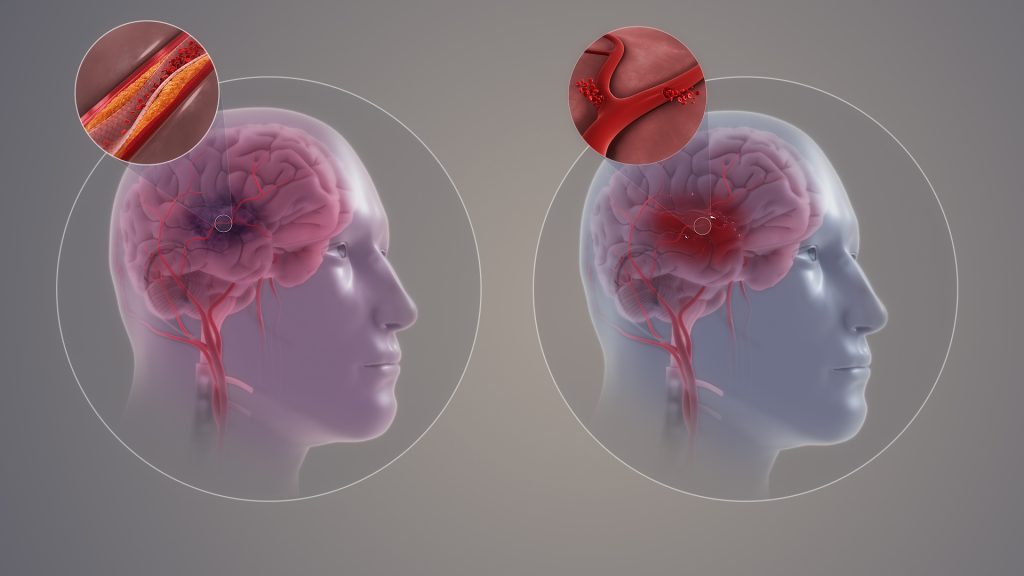
Ischaemic and haemorrhagic stroke. Credit: Scientific Animations CC4.0
Early neurological deterioration (END) within the first 48 hours after acute ischaemic stroke (AIS) onset is relatively common, and is a predictor of poor outcomes. Treatment options are limited and unproven, but but a clinical trial has shown that the anticoagulant argatroban was safe and effective in improving outcomes. The results were published in JAMA Neurology.
Apart from straightforward causes, such as intracerebral haemorrhage and malignant oedema, the mechanism of END remains mostly unclear. Interventions for unexplained END can include plasma volume expansion, induced hypertension, and intensified antithrombotic therapy, but none has been formally proved so far.
The direct thrombin inhibitor argatroban is rapid acting, short acting, and has low bleeding rates, which could help prevent thrombus propagation and provide additional benefit after stroke/TIA. Argatroban has been associated with a reduction in ischaemic stroke damage but the safety and efficacy of argatroban is not well established for AIS treatment, and evidence is lacking for the effect of argatroban in patients with AIS and END.
Researchers conducted a randomised clinical trial that initially included 628 patients, average age 65 and 400 (63.7%) male. Eligible patients were adults with AIS who experienced END, which was defined as an increase of 2 or more points on the National Institutes of Health Stroke Scale within 48 hours from symptom onset.
Patients were randomly assigned to the argatroban group and control group within 48 hours of symptom onset. Both groups received standard therapy based on guidelines, including oral mono or dual antiplatelet therapy. The argatroban group received intravenous argatroban for 7 days (continuous infusion at a dose of 60mg per day for 2 days, followed by 20mg per day for 5 days) in addition to standard therapy.
The results showed that good neurological function at 90 days in those randomised to receive argatroban plus antiplatelet compared with antiplatelet alone was observed in 80.5% vs 73.7%)of participants, a statistically significant difference.
The authors concluded that the trial “shows that the combination of argatroban and antiplatelet therapy resulted in a significantly greater likelihood of good functional outcome at 90 days in patients with END after AIS, with no additional risk of major intracranial or extracranial haemorrhage.”
When 67-year-old Larry Christian suffered a sudden loss of balance, he was diagnosed with a haemorrhagic stroke, and referred to the University of Delaware’s Physical Therapy Clinic for rehabilitation.
“Initially, I had a lot of balance problems that we worked pretty intensely to correct,” Christian said.
He enrolled in a clinical trial at UD, led by co-investigator Darcy Reisman, professor and chair of the Department of Physical Therapy, that sought to explore whether high-intensity interval training (HIIT) aids in improved gait post-stroke. UD was one of three sites selected for the clinical trial led by primary investigator and associate professor Pierce Boyne of the University of Cincinnati. Sandra Billinger, professor and vice chair of stroke translation research at the University of Kansas Medical Center, is also a co-investigator and represents the third site involved in the clinical trial.
Now, seven years later, Christian is walking better.
“Participating in this study got me to a point where I could walk better and even take a walk outside,” Christian said. “I’ve been pretty healthy all my life, and while I can’t play volleyball anymore, walking again made me feel great.”
Christian is among the lucky ones. Among 7 million stroke survivors in the US, fewer than 10% have adequate walking speed and endurance to complete normal daily activities like grocery shopping.
Reisman said the results of the multi-million-dollar, five-year clinical trial showed HIIT helped more people than just Christian. The results, published in JAMA Neurology, show that chronic stroke survivors who engaged in high-intensity exercise with bursts of maximum-speed walking alternated with recovery periods saw a significant difference in their walking capacity over 12 weeks. The improvements were so dramatic Boyne and Reisman have secured a clinical trial grant renewal to triple the size of their study to 165 participants.
She added HIIT looks different for each stroke survivor, and the optimal exercise program for each person with stroke remains unknown.
“We want them to train at the fastest possible speed, which varies from person to person,” Reisman said. “But we don’t want them running.”
For those already walking at a reasonably fast pace, research associate Henry Wright in Reisman’s lab will add an incline or a weighted vest or wrap a bungee cord around their waist to create resistance.
“It’s self-reported data, but participants tell me they have more energy, or they’re able to do more around the house, or they’re not winded when they go shopping,” Wright said. “By the end of the training, I can see their walking is smoother, they’re getting farther on clinical testing, and it’s rewarding to see their gains.”
The results from the initial clinical trial showed Reisman and collaborators that HIIT was feasible and safe in a small group of stroke survivors, who saw sustained gains in walking capacity, more so than patients engaged in moderate-intensity exercise.
However, further study of the intervention in larger populations is crucial to change the standard of care.
“Many physical therapists were trained during a time when patients with neurologic conditions, particularly stroke, were treated with kid gloves, partly because they say stroke is the heart attack of the brain,” Reisman said. “It’s common they also have cardiovascular conditions, so people tend to be extra careful with those patients in terms of pushing them.
“But what we know now is at least moderate-intensity, and likely high-intensity interval training, is essential not only for stroke survivors’ cardiovascular system but also for their brain,” Reisman said. “The evidence shows that intensity is linked to the release of neurotrophins in the brain that help the brain remodel after a stroke.”
Kiersten McCartney, a physical therapist obtaining her doctorate in biomechanics and movement science, worked on the clinical trial with Reisman. She spent the 2022 Winter Session at Magee Rehabilitation Hospital in Philadelphia, helping them implement moderate-to-high-intensity exercise and saw the benefits first-hand.
“I’ll never be able to say there’s no risk of heart attack. Even the fittest people can have a heart attack when exercising,” McCartney said. “Still, the data points to the idea that you’re doing more harm than good by not engaging your patients with stroke in high-intensity exercise when we talk about those longer-term outcomes.”
The HIIT-Stroke Trial 2 will continue to examine dosing to confirm whether a full 12 weeks of vigorous exercise is needed to see significant improvements in walking. Reisman and collaborators will identify whether differences in sex and other factors played a role in rehabilitation. If the five-year study results are similar and show significant gains from high-intensity interval exercise in a larger population, investigators would next work with NIH Strokenet to launch a nationwide clinical trial in people with stroke.
“We’ve known about the value of moderate-intensity exercise for more than a decade, and it’s still not the standard of care,” Reisman said. “If we find that HIIT is the optimal intervention, the next phase would be the knowledge translation phase, where we’d systematically develop a methodology to get HIIT into clinics.”
For HIIT to work as an intervention, Reisman said therapists will need the proper tools. She’s been pushing for commercially available heart rate monitors, placed around the chest during exercise, to be the standard of care in clinics for years.
“They’re already a standard of care for people in the community,” Reisman said. “Getting them into clinics is imperative so PTs can monitor patients’ heart rate the entire time they exercise. That constant monitoring gives therapists data on how a person is responding beyond visible signs and symptoms, and in turn, more peace of mind.”
But beyond tools and training, Reisman said, it comes down to evidence and education.
“If we have hundreds and hundreds of stroke survivors who’ve gone through our high-intensity exercise intervention, and we’ve seen no major adverse events – that will help,” Reisman said. “The more data we have to show therapists, the better we can implement this intervention that will change lives.”
People who have more disrupted sleep in their 30s and 40s may be more likely to have memory and thinking problems a decade later, according to new research published in Neurology. The study does not however prove that sleep quality causes cognitive decline, it only shows an association.
“Given that signs of Alzheimer’s disease start to accumulate in the brain several decades before symptoms begin, understanding the connection between sleep and cognition earlier in life is critical for understanding the role of sleep problems as a risk factor for the disease,” said study author Yue Leng, PhD, of the University of California, San Francisco.
“Our findings indicate that the quality rather than the quantity of sleep matters most for cognitive health in middle age.”
The study involved 526 people, average age of 40, who were followed for 11 years. Researchers looked at participants’ sleep duration and quality, and had them perform cognitive tests.
Participants wore a wrist activity monitor for three consecutive days on two occasions approximately one year apart to calculate their averages. Participants slept for an average of six hours.
Participants also reported bedtimes and wake times in a sleep diary and completed a sleep quality survey with scores ranging from zero to 21, with higher scores indicating poorer sleep quality. A total of 239 people, or 46%, reported poor sleep with a score greater than five. Participants also completed a series of memory and thinking tests.
Researchers also looked at sleep fragmentation, which measures repetitive short interruptions of sleep. They looked at both the percentage of time spent moving and the percentage of time spent not moving for one minute or less during sleep. Added together, participants had an average sleep fragmentation of 19%.
Researchers then divided participants into three groups based on their sleep fragmentation score. Of the 175 people with the most disrupted sleep, 44 had poor cognitive performance 10 years later, compared to 10 of the 176 people with the least disrupted sleep.
After adjusting for age, gender, race, and education, people who had the most disrupted sleep had more than twice the odds of having poor cognitive performance when compared to those with the least disrupted sleep.
There was no difference in cognitive performance at midlife for those in the middle group compared to the group with the least disrupted sleep.
“More research is needed to assess the link between sleep disturbances and cognition at different stages of life and to identify if critical life periods exist when sleep is more strongly associated with cognition,” Leng said.
“Future studies could open up new opportunities for the prevention of Alzheimer’s disease later in life.”
The amount of time people slept and their own reports of the quality of their sleep were not associated with cognition in middle age.
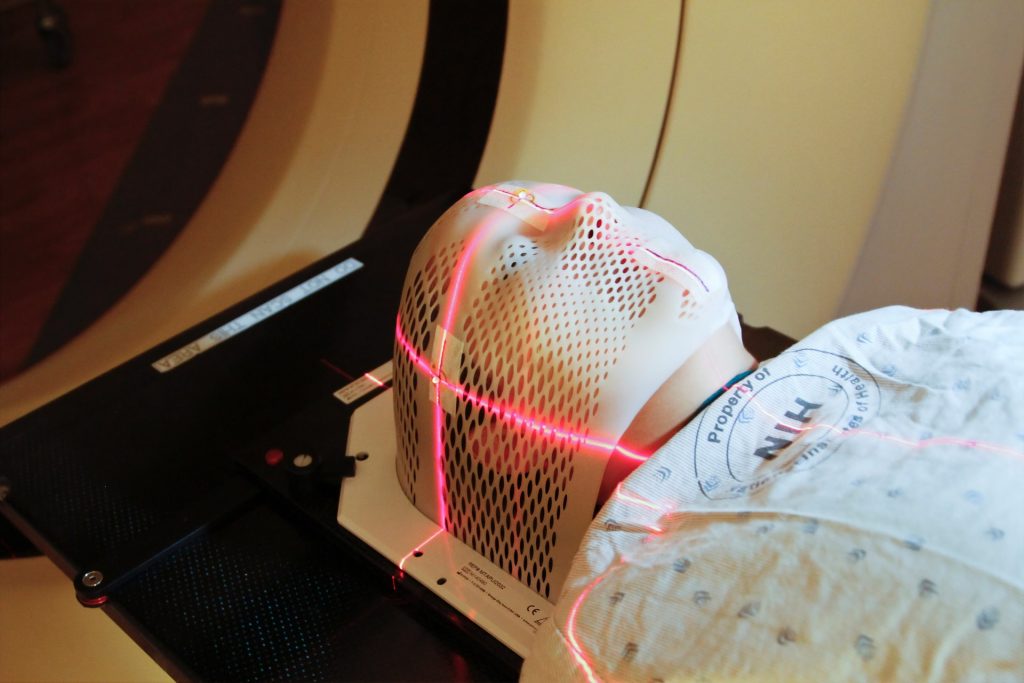
Microglia, the brain’s immune cells, can trigger cognitive deficits after radiation exposure and may be a key target for preventing these symptoms, University of Rochester researchers have found. Their work, published in the International Journal of Radiation Oncology Biology Biophysics, builds on previous research showing that after radiation exposure microglia damage synapses, the connections between neurons that are important for cognitive behaviour and memory.
“Cognitive deficits after radiation treatment are a major problem for cancer survivors,” M. Kerry O’Banion, MD, PhD, professor of Neuroscience, member of the Wilmot Cancer Institute, and senior author of the study said.
“This research gives us a possible target to develop therapies to prevent or mitigate against such deficits in people who need brain radiotherapy.”
Using several behavioural tests, researchers investigated the cognitive function of mice before and after radiation exposure.
Female mice performed the same throughout, indicating a resistance to radiation injury but Male mice could not remember or perform certain tasks after radiation exposure.
This cognitive decline correlates with the loss of synapses and evidence of potentially damaging microglial over-reactivity following the treatment.
Researchers then targeted the pathway in microglia important to synapse removal. Mice with these mutant microglia had no cognitive decline following radiation. And others that were given the drug, Leukadherin-1, which is known to block this same pathway, during radiation treatment, also had no cognitive decline.
“This could be the first step in substantially improving a patient’s quality of life and need for greater care,” said O’Banion. “Moving forward, we are particularly interested in understanding the signals that target synapses for removal and the fundamental signaling mechanisms that drive microglia to remove these synapses. We believe that both avenues of research offer additional targets for developing therapies to help individuals receiving brain radiotherapy.”
O’Banion also believes this work may have broader implications because some of these mechanisms are connected to Alzheimer’s and other neurodegenerative diseases.
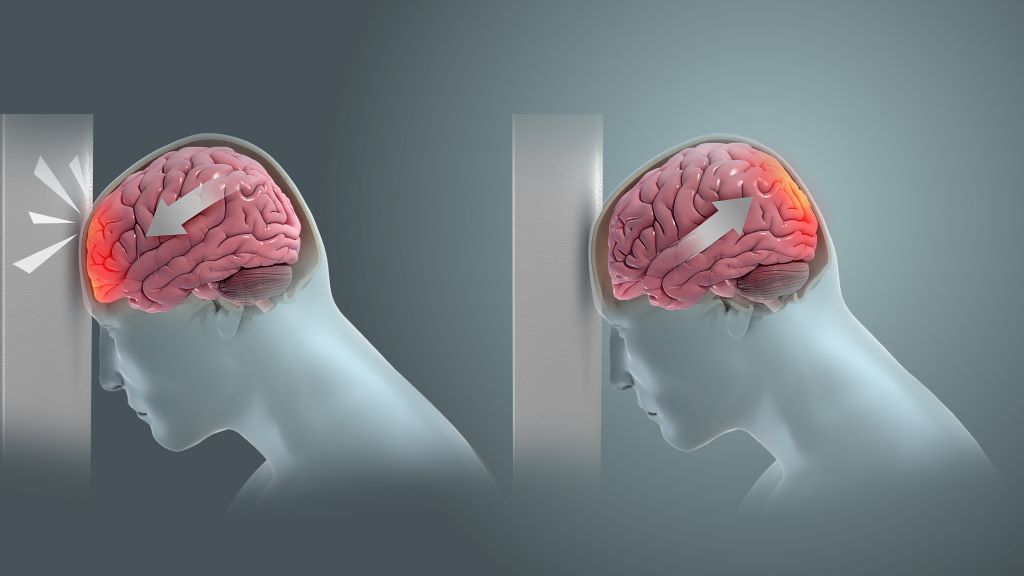
Coup and contrecoup brain injury. Credit: Scientific Animations CC4.0
Researchers have created a new brain imaging method that allows to be diagnosed, even when existing imaging techniques like magnetic resonance imaging (MRI) The technique involves loading gadolinium, a standard MRI contrast agent, into ‘backpacks’ that are attached macrophages. mTBIs cause inflammation, attracting macrophages there. Coupling the gadolinium contrast agent to these cells enables MRI to reveal brain inflammation and increase the number of correctly diagnosed mTBI cases, improving patient care. The method is described in a new paper in Science Translational Medicine.
“70-90% of reported TBI cases are categorised as ‘mild,’ yet as many as 90% of mTBI cases go undiagnosed, even though their effects can last for years and they are known to increase the risk of a host of neurological disorders including depression, dementia, and Parkinson’s disease,” said senior author Samir Mitragotri, PhD, in whose lab the research was performed. “Our cell-based imaging approach exploits immune cells’ innate ability to travel into the brain in response to inflammation, enabling us to identify mTBIs that standard MRI imaging would miss.”
Using immune cells to identify inflammation
Most of us know someone who has had a concussion (another name for an mTBI), sometimes even more than one. But the vast majority of people who experience an mTBI are never properly diagnosed. Without that diagnosis, they can exacerbate their injuries by returning to normal activity before they’re fully recovered, which can lead to further damage. Some studies even suggest that repeated mTBIs can lead to chronic traumatic encephalopathy (CTE), the neurodegenerative disease that has been found to afflict more than 90% of professional American football players.
Because the effects of mTBI are believed to be caused by “invisible” brain inflammation, members of the Mitragotri lab decided to leverage their experience with immune cells to create a better diagnostic. “Our previous projects have focused on controlling the behaviour of immune cells or using them to deliver drugs to a specific tissue. We wanted to exploit another innate ability of immune cells – homing to sites of inflammation in the body – to carry imaging agents into the brain, where they can provide a visible detection signal for mTBI,” said first author Lily Li-Wen Wang, Ph.D.. Wang is a former Research Fellow in the Mitragotri Lab at the Wyss Institute and SEAS who is now a scientist at Landmark Bio.
Gadolinium needs water to show up on MRI
The team planned to use their cellular backpack technology to attach gadolinium molecules to macrophages, known to infiltrate the brain in response to inflammation. But right away, they ran into a problem: in order to function as a contrast agent for MRI scans, gadolinium needs to interact with water. Their original backpack microparticles are made of a hydrophobic polymer called PLGA. So Wang and her co-authors started developing a new backpack made out of a hydrogel material that could be manufactured at a large scale in the lab.
After years of hard work, they finally created a new hydrogel backpack that could produce a strong gadolinium-mediated MRI signal, attach stably to both mouse and pig macrophages, and maintain their cargo for a sustained period of time in vitro. They named their new microparticles M-GLAMs, short for “macrophage-hitchhiking Gd(III)-Loaded Anisotropic Micropatches.” Now, it was time to test them in a more realistic setting, for which they partnered with researchers and clinicians at Boston Children’s Hospital.
First, they injected mouse M-GLAMs macrophages into mice to see if they could visualize them in vivo. They were especially interested to see if they accumulated in the kidney, as existing gadolinium-based contrast agents like Gadavist® can cause health risks for patients with kidney disease. Their M-GLAMs did not accumulate in the mice’s kidneys, but persisted in their bodies for over 24 hours with no negative side effects. In contrast, mice injected with Gadavist® showed substantial accumulation of the contrast agent in their kidneys within 15 minutes of injection, and the substance was fully cleared from their bodies within 24 hours.
Then, they tested porcine M-GLAMs in a pig model of mTBI. They injected the M-GLAMs into the animals’ blood two days after a mock mTBI, then used MRI to evaluate the concentration of gadolinium in the brain. They focused on a small region called the choroid plexus, which is known as a major conduit of immune cells into the brain. Pigs that received the M-GLAMs displayed a significant increase in the intensity of gadolinium present in the choroid plexus, while those injected with Gadavist® did not, despite confirmation of increased inflammation macrophage density in the brains of both groups. The animals showed no toxicity in any of their major organs following administration of the treatments.
“Another important aspect of our M-GLAMs is that we are able to achieve better imaging at a much lower dose of gadolinium than current contrast agents – 500-1000-fold lower in the case of Gadavist®,” said Wang. “This could allow the use of MRI for patients who are currently unable to tolerate existing contrast agents, including those who have existing kidney problems.”
A new study from researchers at the University of Colorado Anschutz Medical Campus finds that older adult drivers who are recently diagnosed with migraines are three times as likely to experience a motor vehicle crash. Older adult drivers who reported having ever had migraines in the past were no more likely to have a motor vehicle crash than those without migraines.
The study, published in the Journal of the American Geriatrics Society, also explored the relationships medications commonly prescribed for migraine management have with increased crash risk.
“Migraine headaches affect more than 7% of US adults over the age of 60,” says Carolyn DiGuiseppi, MPH, PhD, MD, professor with the Colorado School of Public Health and study lead author.
“The US population is aging, which means increasing numbers of older adult drivers could see their driving abilities affected by migraine symptoms previously not experienced. These symptoms include sleepiness, decreased concentration, dizziness, debilitating head pain and more.”
Researchers conducted a five-year longitudinal study of more than 2500 active drivers aged 65-79 in five sites across the United States.
Participants were categorised as having previously been diagnosed with migraine symptoms (12.5%), no previous diagnosis but experienced symptoms during the study timeframe (1.3%) or never migraine respondents.
Results indicate those with previous diagnosis did not have a different likelihood of having crashes after baseline, while those with new onset migraines were three times as likely to experience a crash within one year of diagnosis.
Previously diagnosed drivers nevertheless had experienced more hard braking events compared to adults who had never experienced a migraine.
Additionally, researchers examined the role medications commonly prescribed for migraines have in motor vehicle events and found that there was no impact on the relationship between migraines and either crashes or driving habits.
Few participants in the study sample were using acute migraine medications, however.
“These results have potential implications for the safety of older patients that should be addressed,” says DiGuiseppi. “Patients with a new migraine diagnosis would benefit from talking with their clinicians about driving safety, including being extra careful about other risks, such as distracted driving, alcohol, pain medication and other factors that affect driving.”
A review in the Journal of Internal Medicine explores the potential of non-invasive interventions such as light, sound, and magnets to stimulate gamma brain waves for the treatment of Alzheimer’s disease. Such strategies may be beneficial because Alzheimer’s disease is characterised by reduced fast brain oscillations in the gamma range (30–100Hz).
The authors note that recent studies reveal that it is feasible and safe to induce 40Hz brain activity in patients with Alzheimer’s disease through a range of methods. Also, preliminary evidence suggests that such treatment can yield beneficial effects on brain function, disease pathology, and cognitive function in patients.
Various cells in the brain beyond neurons, including microglial cells, astrocytes and vascular cells, seem to be involved in mediating these effects.
“We found that increased gamma activity elicited by the non-invasive 40Hz sensory stimulation profoundly alters the cellular state of various glial cell types,” said corresponding author Li-Huei Tsai, PhD, of MIT. “We are actively investigating the mechanism by which the 40Hz brain activity recruits diverse cell types in the brain to provide neuroprotective effects.”
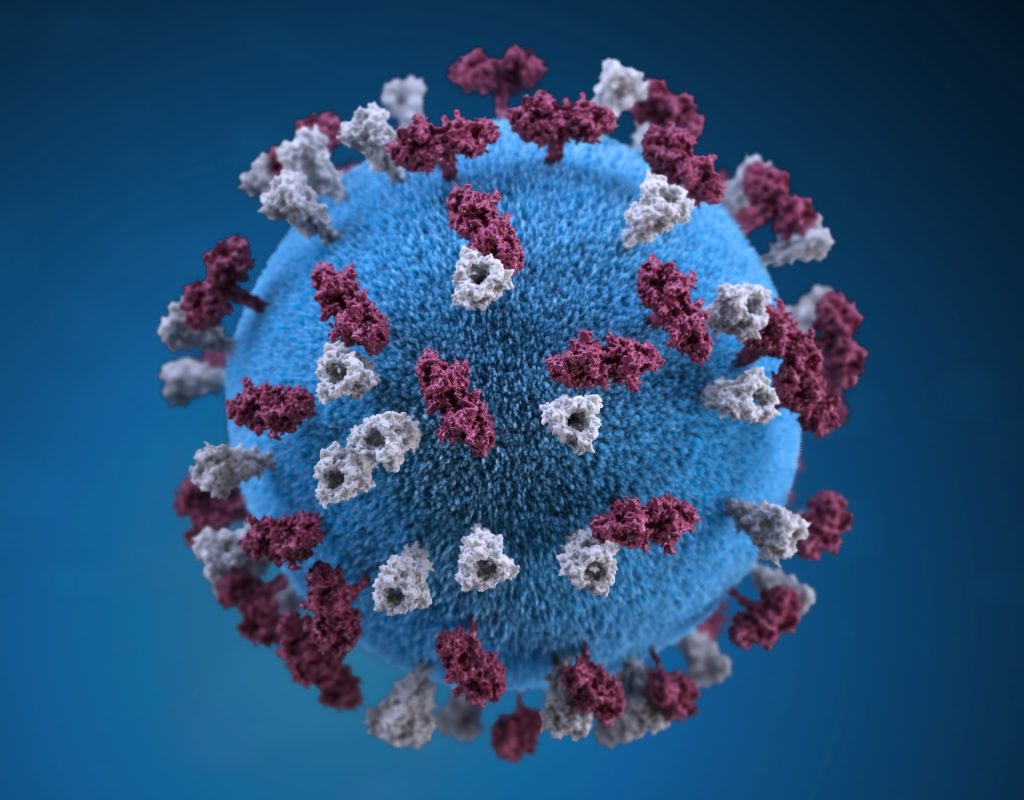
Mayo Clinic researchers mapped how the measles virus mutated and spread in the brain of a person who succumbed to a rare, lethal brain disease. New cases of this disease, which is a complication of the measles virus, may occur as measles re-emerges among the unvaccinated, say researchers.
Using the latest tools in genetic sequencing, researchers at Mayo Clinic reconstructed how a collective of viral genomes colonised a human brain.
The virus acquired distinct mutations that drove the spread of the virus from the frontal cortex outward.
The highly contagious measles virus infects the upper respiratory tract where it uses the trachea as a trampoline to launch and spread through droplets dispersed when an infected person coughs or sneezes.
Dr Cattaneo pioneered studies on how the measles virus spreads throughout the body. He first began to study the measles virus about 40 years ago and was fascinated by the rare, lethal brain disease called subacute sclerosing panencephalitis (SSPE), which occurs in about 1 in every 10 000 measles cases.
It can take about five to 10 years after the initial infection for the measles virus to mutate and spread throughout the brain.
Symptoms of this progressive neurological disease include memory loss, seizures and immobility.
Dr. Cattaneo studied SSPE for several years until the lethal disease nearly disappeared as more people were vaccinated against measles. But now, measles is resurging due to vaccine hesitancy and missed vaccinations.
During the COVID pandemic, millions of children missed receiving their measles vaccinations, which has resulted in an estimated 18% increase in measles cases and 43% increase in death from measles in 2021 compared to 2022 worldwide, according to a recent Centers for Disease Control and Prevention (CDC) report.
“We suspect SSPE cases will rise again as well. This is sad because this horrible disease can be prevented by vaccination. But now we are in the position to study SSPE with modern, genetic sequencing technology and learn more about it,” says Iris Yousaf, co-lead author of the study and a fifth-year Ph.D. candidate at Mayo Clinic Graduate School of Biomedical Sciences.
Dr Cattaneo and Yousaf had a unique research opportunity through a collaboration with the CDC. They studied the brain of a person who had contracted measles as a child and had succumbed to SSPE years later as an adult.
They investigated 15 specimens from different regions of the brain and conducted genetic sequencing on each region to piece together the puzzle of how the measles virus mutated and spread.
The researchers discovered that, after the measles virus entered the brain, its genome began to mutate in harmful ways over successive generations, creating a population of varied genomes.
“In this population, two specific genomes had a combination of characteristics that worked together to promote virus spread from the initial location of the infection – the frontal cortex of the brain – out to colonise the entire organ,” says Dr Cattaneo.
The next steps in this research are to understand how specific mutations favour virus spread in the brain. These studies will be done in cultivated brain cells brain organoids. This knowledge may help in creating effective antiviral drugs to combat virus spread in the brain. However, pharmacological intervention in advanced disease stages is challenging, and preventing SSPE through measles vaccination remains the best method.
Glioblastoma is one of the most treatment-resistant cancers, with those diagnosed surviving for less than two years. In a new study in NPJ Genomic Medicine, researchers at the University of Notre Dame have found that a largely understudied cell could offer new insight into how the aggressive, primary brain cancer is able to resist immunotherapy.
“A decade ago, we didn’t even know perivascular fibroblasts existed within the brain, and not just in the lining of the skull,” said senior author Meenal Datta, assistant professor of aerospace and mechanical engineering at Notre Dame.
“My lab’s expertise is examining tumours from an engineering and systems-based approach and looking at the novel mechanical features in rare cancers that may have been understudied or overlooked.”
Using standard bioinformatics and newer AI-based approaches, Datta’s TIME Lab began analysing different genes expressed in the tumour microenvironment related to the extracellular matrix – or the scaffolding cells create to support future cell adhesion, migration, proliferation and differentiation – and other various cell types.
What they found was a surprising, fairly new cell type: perivascular fibroblasts.
These fibroblasts are typically found in the blood vessels of a healthy brain and deposit collagen to maintain the structural integrity and functionality of brain vessels.
“It was a serendipitous discovery,” said first author Maksym Zarodniuk, graduate student in the TIME Lab and the bioengineering doctorate programme.
“We started in a completely different direction and stumbled upon this population of cells by using a combination of both bulk and single-cell RNA sequencing analyses of patient tumours.”
In their data, researchers were able to identify two groups of patients: those with a higher proportion of perivascular fibroblasts and those with significantly less.
They found that brain cancer patients with more perivascular fibroblasts in their tumours were more likely to respond poorly to immunotherapies and have poor survival outcomes.
Further study revealed that perivascular fibroblasts support the creation of an immunosuppressive tumour microenvironment, allowing the cancer to better evade the immune system.
The fibroblasts may also help the cancer resist therapies such as chemotherapy that targets cell division by promoting stem-like cancer cells that rarely divide, which are believed to be a major source of tumour relapse and metastasis.
“Moving forward, we want to do new experiments to confirm what we found in this paper and provide some good ground to start thinking about how to improve response to immunotherapy,” Zarodniuk said.
Because perivascular fibroblasts are a part of a healthy brain’s vasculature, Datta believes that these cells are breaking off and getting close to or infiltrating the glioblastoma tumour.
However, instead of supporting healthy brain function, these fibroblasts are getting reprogrammed and helping the tumour instead.
“Most people think about the brain as being very soft, with soft cells and a soft matrix. But by putting down these fibroblasts and making these very fibrous proteins, it gives us an entirely different perspective on the structure of the brain and how it can be taken advantage of by cancer cells originating in the same organ,” Datta said.