In a move that will come as a relief for the hundreds of unemployed doctors currently seeking positions within public healthcare, the Department of Health has announced the creation of 1650 new positions for healthcare professionals. The move includes 1200 new positions for doctors – but only 200 for nurses.
Health Minister Dr Aaron Motsoaledi made the announcement at a media briefing on Thursday 10 April.
“We believe we’re in a position to announce today that the council has approved the advertisement of 1200 jobs for doctors, 200 for nurses and 250 for other healthcare professionals,” Motsoaledi stated. This would come with a cost of R1.78 billion – out of a healthcare budget that has not risen in line with inflation.
Jobless doctors picketed earlier this year as more than 1800 were left in limbo without positions – the true number is likely higher. The South African Medical Association (SAMA) had sent an urgent letter to President Cyril Ramaphosa, warning that if the problem was not addressed, doctors would leave for the private sector or emigrate, leading to the collapse of the public healthcare sector.
The road to specialisation had also been made more challenging by the shortage of positions, with junior doctors have been taking unpaid roles. Such unpaid work does not count toward the registrar component of specialisation and largely only serves to bump up the doctor’s CV by, for example, enabling them to apply for diplomas. Hiring freezes also saw GPs unable to move into government positions, and the limited number of registrar positions has also by some accounts become a bottleneck, with no additional registrar positions added for the past 10–15 years.
Regarding the loss of US funding for HIV programmes, he said that there was a buffer of stock for ARVS, and that “no person needing ARVs would lack” those drugs.
But the small number of new nurse positions was not well received. The Democratic Nursing Organisation of South Africa (DENOSA) was particularly unimpressed given the pressure on overburdened nurses.
DENOSA spokesperson Sonia Mabunda-Kaziboni said, “In the face of a nationwide crisis of nurse shortages, this announcement is not only shockingly inadequate but downright insulting to the nursing fraternity.”
Calling it a “slap in the face”, she continued: “The shortage of nurses in South Africa is nothing short of a devastating crisis. The Free State alone faces a 28% vacancy rate, and similar figures are reflected in other provinces such as the Eastern Cape. National projections estimate that South Africa could be short by over 100 000 nurses by 2030 if urgent interventions are not made.”
DENOSA plans to “name and shame” institutions that have become “dangerous to communities” as a result of unresolved poor conditions.
While Australia was busy defending the Pharmaceutical Benefits Scheme against threats from the United States in recent weeks, another issue related to the supply and trade of medicines was flying under the radar.
Buried on page 19 of the Trump’s administration’s allegations of barriers to trade was a single paragraph related to Australia’s access to generic medicines. These are cheaper alternatives to branded medicines that are no longer under patent.
The US is concerned about how much notice their drug companies have that Australia will introduce a generic version of their product. Once a single generic version of a medicine is listed on the PBS, the price drops. The US argues that lack of advance notice is a barrier to trade.
There is pressure for Australia to emulate aspects of the US system, where drug companies can delay generic copies of their medicines by 30 months.
If the US plays hardball on this issue, perhaps in return for other concessions, this could delay Australia’s access to cheaper generic drugs.
It would also mean significant pressure on Australia’s drug budget, as the government could be forced to pay for the more expensive branded versions to ensure supply.
What’s the current process?
Drug companies use patents to protect their intellectual property and prohibit other manufacturers from copying the drug. The standard patent term in Australia is 20 years, but the time a product is protected by patents can be extended in a number of ways. When patents expire, other companies are able to bring generic versions to market.
A generic manufacturer wanting to market its drug in Australia must apply to the Therapeutic Goods Administration (TGA) for regulatory approval. Before approval is granted, the generic company must provide a certificate to the TGA that states either:
a) that the product will not infringe a valid patent, or
b) that it has notified the patent-holder of its intention to market the product.
The certificate can be provided after the TGA has evaluated the generic – before it grants approval.
If the generic company chooses option “a”, the manufacturer of the patented product may not find out the competing product is going to be launched until after the TGA has approved it.
The patent-holder can then apply for a court order to temporarily stop the generic from coming to market, while legal battles are fought over patent-related issues.
However, if the first generic has already launched and been added to the PBS, it triggers an automatic 25% price drop. This affects all versions of the drug, including the patented product.
In Australia, patented drug companies that try to delay generics by taking legal action without good reason can face penalties and be required to pay compensation.
Patented drug companies don’t like this system. They want to know as early as possible that a generic is planning to launch so they can initiate legal action and prevent or delay generic entry and the associated price reductions.
Is Australia’s system consistent with our trade obligations?
Australia introduced its patent notification system at the request of the US, to comply with the Australia-US Free Trade Agreement (AUSFTA). The World Trade Organization doesn’t require patent notification.
The report also mentions US concerns about the potential for penalties and compensation when a patent owner takes legal action against a generic company.
This report reflects long-standing concerns of the US pharmaceutical industry. In March, its drug makers trade association wrote to the US trade representative complaining that “lack of adequate notification” is an unfair trade practice. It argued this creates uncertainty for patent-holders, prevents resolution of patent challenges before generics enter the market, and penalises patented-drug companies for trying to protect their rights.
Medicines Australia, which represents the Australian subsidiaries of many big patented drug makers, echoes these concerns.
What does the US want instead?
The US patent notification system is much more favourable to the patented drug companies than Australia’s.
In the US, the generic company must notify the patented drug company within 20 days of filing an application for approval.
Then, within 45 days of receiving the notification, the patent-holder can ask the regulator to impose a 30-month delay on approval for the generic.
This means there is an automatic 30-month delay on the launch of the generic, unless patents expire in the meantime or the court decides earlier that valid patents aren’t being infringed.
What could happen if Australia bowed to pressure from the US?
Changing Australia’s system to be more like the US would delay generics entering the market in Australia and keep the price of drugs higher for longer.
The quicker generics can be added to the PBS, the less the government pays. When the first generic is listed on the PBS, a 25% price cut is applied to all versions of the product, including the patented version.
Over time, as more generics get added, prices continue to fall. Having plenty of generic competition can eventually result in prices lower than the PBS co-payment, resulting in savings for consumers.
In the longer term, lost savings from timely listing of generics on the PBS would reduce value for money and add cost pressure.
In time, it could also delay savings for consumers from drugs priced below the PBS co-payment.
Both major parties are saying they won’t use the PBS as a bargaining chip in negotiations with the US over tariffs. They also need to resist pressure to slow down access to generic drugs.
The South African Health Products Regulatory Authority (SAHPRA) has joined the Medical Device Single Audit Programme (MDSAP), an international audit programme of medicines and medical device regulators aimed at improving efficiencies in the regulation of medical device manufacturers by engaging in work sharing and collaboration. SAHPRA joins MDSAP as an affiliate member, which expands its ability to monitor the manufacturing of medical devices beyond South Africa’s borders.
The MDSAP membership will result in the improved regulation of medical devices and in-vitro diagnostics (IVDs) as it increases SAHPRA regulatory reach and ensures that SAHPRA can leverage the resources of other regulators that participate in the MDSAP to both audit and monitor adherence to quality standards by medical device manufacturers in several countries globally.
“SAHPRA’s admission into MDSAP signals progress in our strategy to ensure the efficient application of our own resources and those of our peers globally in safeguarding the quality, efficacy and safety of medical devices and in-vitro diagnostics (IVDs) used by the South African public,” says Dr Boitumelo Semete-Makokotlela, SAHPRA Chief Executive Officer.
Dr Semete-Makokotlela says that the admission to MDSAP adds to individual agreements for both monitoring and regulatory reliance that SAHPRA already has in place with several regulators the world over, and would thus improve SAHPRA’s quality assurance abilities and has the potential to increase turnaround times in reviewing and approving key medical devices manufactured elsewhere in the world.
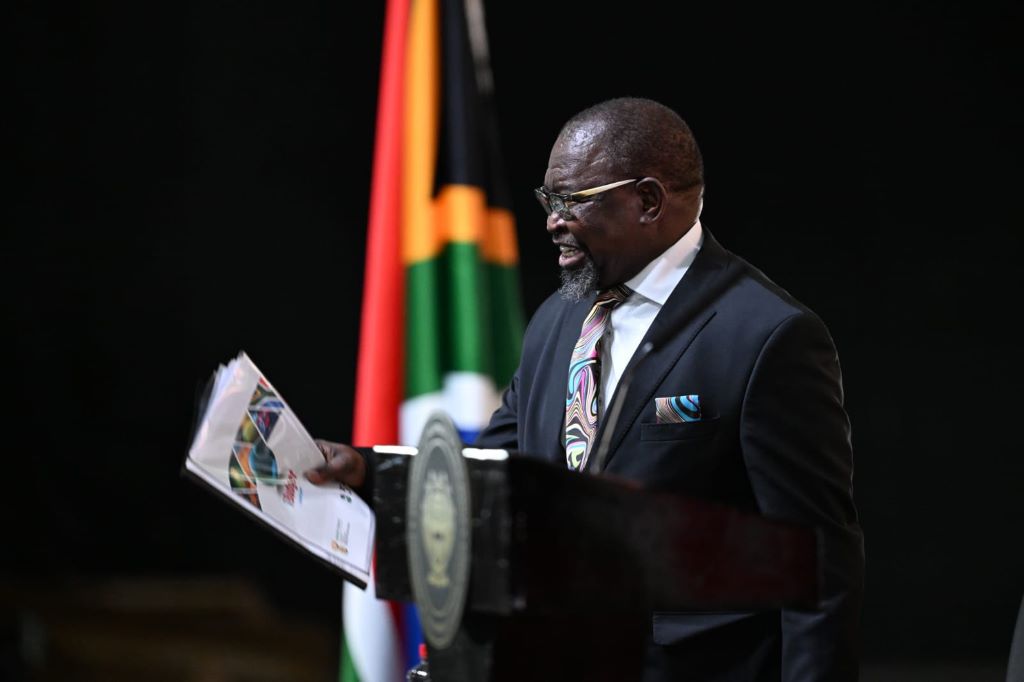
Finance Minister Enoch Godongwana holding a copy of the 2025 Budget Speech. (Photo: Parliament of RSA via X)
The Department of Health’s 2025/26 Budget Vote is expected to focus on addressing the shortfall caused by the withdrawal of international funding from programmes combating communicable diseases such as HIV and TB. But as non-communicable diseases like blood cancer surpass infectious diseases, redirecting resources could further cripple screening, diagnosis, and treatment – putting more lives at risk.
Too Few Resources, Too Many Lives Lost
Palesa Mokomele, Head of Community Engagement and Communications at DKMS Africa, highlights the difficulties faced by blood cancer patients within the country’s healthcare system. “Nearly 80% of South Africans rely on a system already operating at full capacity, with many left with little more than hope due to limited access to care. Even before these new funding shifts, resources for blood cancer detection and treatment were critically scarce, contributing to the loss of more than 4000 lives each year.”
Illustrating how a lack of medical infrastructure creates additional barriers to life-saving care, she says, “The survival rate for a stem cell transplant is up to 50% with a matched unrelated donor and 61% with a matched related donor. Yet many healthcare facilities simply don’t have the resources to perform these procedures. As a result, most patients receive only medical management, which may not be enough to ensure survival. Given our population size, transplant activity remains critically low – only 139 of the required 600 transplants are performed on adults annually, and just 18 of the 250 needed for children.”
Finances Dictate Healthcare Choices
Beyond the overstretched and under-resourced public health sector, the financial burden on patients remains a major obstacle. “One in five South African households delays seeking healthcare simply because they cannot afford it,” notes Mokomele. “While the state covers the cost of a stem cell transplant from a matching donor, other essential expenses such as tissue typing, donor searches, and stem cell procurement are not covered. These out-of-pocket costs place treatment out of reach for many, leading to heartbreaking decisions and poorer outcomes.”
She adds that socio-economic challenges often make accessing care even harder for patients. “Being the sole breadwinner means some individuals struggle to take time off work for necessary treatment. In other cases, mothers face the impossible choice between continuing their own treatment or staying home to care for their children when no other support is available.”
Post-transplant Survival Challenges
Even for patients who manage to undergo a transplant, their survival remains at risk due to conditions in some public healthcare facilities. “Overcrowding and poor sanitation create dangerous environments for these highly immunocompromised patients,” warns Mokomele. “To safeguard their fragile health, they need access to clean water, proper sanitation, isolation, and balanced nutrition.”
She stresses that long recovery periods make it difficult for patients from distant areas to complete their care without proper housing at treating hospitals. “Without these accommodations, many are forced to abandon treatment, putting their survival at risk.”
“No patient should be denied life-saving treatment due to funding constraints. We urge government and the private sector to collaborate in strengthening blood cancer care, and we encourage the public to play their part by supporting fundraising initiatives that help bridge critical gaps in treatment access,” concludes Mokomele.
April 2nd, 2025, Nairobi, Kenya – Africa stands at the forefront of a revolutionary shift in global health, driven by artificial intelligence (AI) and data science, according to a report released today from the Science for Africa Foundation (SFA Foundation), African institutions and research councils. The report is a first of its kind to comprehensively examine national-level perspectives across Africa on AI and data science for global health. The landscape presents an unprecedented view into the potential to improve AI governance in Africa to reduce the risk and stop the perpetuation of inequity.
Titled “Governance of Artificial Intelligence for Global Health in Africa”, the report is produced through the SFA Foundation’s Science Policy Engagement with Africa’s Research (SPEAR) programme as a culmination of a year-long effort involving convenings across Africa’s five regions, policy analysis and extensive surveys to identify policy gaps and opportunities in AI and data science for global health. Grounded in consultations across 43 African countries, the report incorporates insights from over 300 stakeholders, ensuring a comprehensive and inclusive approach to its findings.
“The global AI governance framework remains ill-suited to Africa’s unique needs and priorities,” said Prof. Tom Kariuki, Chief Executive Officer of the SFA Foundation. “Our report on AI in global health and data sciences champions a shift towards frameworks that reflect Africa’s context, ensuring ethical, equitable, and impactful applications of AI not only for our continent’s health challenges, but also to advance global health.”
Key findings and opportunities
The report identifies key trends, gaps, and opportunities in AI and data science for health across Africa:
Increasing national investments: Countries including Mauritius, Nigeria, Malawi, Ethiopia, Ghana, Rwanda, Senegal, and Tunisia have launched national AI programmes, while at least 39 African countries are actively pursuing AI R&D. Initiatives such as Rwanda’s Seed Investment Fund and Nigeria’s National Centre for AI and Robotics illustrate promising investments in AI startups.
Need for health-specific AI governance: Despite growing interest, there is a critical gap in governance frameworks tailored to health AI across Africa. While health is prioritised in AI discussions, specific frameworks for responsible deployment in health are still underdeveloped.
Inclusive AI policy development: Many existing AI policies lack gender and equity considerations. Closing these gaps is essential to prevent inequalities in access to AI advancements and health outcomes.
“Incorporating AI into healthcare is not just about technology—it is about enhancing our policy frameworks to ensure these advancements lead to better health outcomes for all Africans,” added Dr Uzma Alam, Programme Lead of the Science Policy Engagement with Africa’s Research (SPEAR) programme.
There are existing policy frameworks on which to build and/or consolidate governing of responsible AI and data science: At least 35 African countries have national STI and ICT as well as health research and innovation policy frameworks that contain policies applicable to the development and deployment of AI and data science.
There is a surge in African research on health AI and data science (big data): raising the need for equitable North-South R&D partnerships.
Recommendations and way forward
The report is expected to act as a catalyst for integrating AI into health strategies across the continent, marking a significant step forward in Africa’s journey toward leadership in global health innovation by calling for:
Adaptive and Inclusive AI Governance: The report calls for the integration of diverse perspectives spanning gender, urban-rural dynamics, and indigenous knowledge into AI health governance frameworks. It highlights the need for adaptive policies that balance innovation with equitable access, while leveraging regional collaboration and supporting the informal sector.
Innovative Funding and African Representation: Recognising the potential of local knowledge and practices, the report advocates for creative funding models to bolster AI research and development. It emphasises connecting the informal sector to markets and infrastructure to encourage grassroots innovation.
The Reinforcement of Science Diplomacy: To position Africa as a key player in global AI governance, the report recommends investing in programmes that align AI technologies with Africa’s health priorities. It also stresses the importance of amplifying Africa’s voice in shaping international standards and agreements through robust science-policy collaboration.
The Bridging of Gendered digital divide: To bridge the gendered digital divide in Africa. targeted initiatives are needed to address regional disparities and ensure gender inclusivity in the AI ecosystem. It’s essential to focus on programs that build capacity and improve access to resources.
“The report clearly outlines pathways for leveraging AI to bridge gaps and overcome current capacity constraints, while strengthening Africa’s role as a leader in shaping global health policy,” said Dr Evelyn Gitau, Chief Scientific Officer at the SFA Foundation. “This initiative showcases Africa’s potential to lead, innovate, and influence the global health ecosystem through AI.”
“We envision a world where AI advances health outcomes equitably, benefiting communities around the world. The Science for Africa Foundation’s report brings this vision to life by providing clarity on policy frameworks of AI and data science in global health. This empowers African voices to shape AI policy – not only directing healthcare innovation but setting a precedent for inclusive AI governance across sectors.” – Vilas Dhar, President of the Patrick J. McGovern Foundation.
Finance Minister Enoch Godongwana holding a copy of the 2025 Budget Speech. (Photo: Parliament of RSA via X)
By Charles Parry, Funeka Bango, Tamara Kredo, Wanga Zembe, Michelle Galloway, Renee Street and Caradee Wright
While the 2025 national budget boosts health spending, researchers from the South African Medical Research Council stress the need for strong accountability measures. They also raise concerns about rising VAT and omissions related to US funding cuts and climate change.
The 2025 budget speech by Finance Minister Enoch Godongwana saw a welcome boost to the health budget with an increased allocation from R277 billion in 2024/2025 to R329 billion in 2027/2028. This signals a government that is responding to the dire health needs of the public sector, that serves more than 80% of the South African population.
As researchers at the South African Medical Research Council (SAMRC), we listened with interest and share our reflections on some of the critical areas of spend relevant for health and wellbeing.
We note the increase in investment in human resources for health and allocations for early childhood development and social grants. At the same time, we also raise concern about increasing VAT, with knock-on effects for the most vulnerable in our country. There were also worrying omissions in the speech, such as addressing the impact of the United States federal-funding freeze on healthcare services nationally, and a noticeable absence of comment on government’s climate-change plans.
Health and the link with social development: Recognising the importance of early childhood development
Education and specifically early childhood development (ECD) is known to have critical impacts on children’s health and wellbeing, with longstanding effects into youth and adulthood. In South Africa, eight million children go hungry every day, and more than a third of children are reported to live in households below the food poverty line, that is below the income level to meet basic food requirements, not even covering other basic essentials such as clothes.
While the increase in the number of registered ECDs is laudable, many more ECD centres in low-income areas remain unregistered, which means they do not get support from the government in terms of subsidies and oversight.
Social grants
The increase in social grants is welcomed. However, the marginal increase of the Child Support Grant (CSG) by only R30, from R530 to R560, is too little to impact on the high levels of child hunger and malnutrition. The release of the Child Poverty Review in 2023, which highlighted the eight million children going hungry every day, including CSG recipients, proposed the immediate increase of the CSG to at least the Food Poverty Line (R796 in 2024).
Social relief of distress still too small
The Social Relief of Distress (SRD) Grant is an important source of income for low-income, working-age, unemployed adults. Its continuance in 2025 is welcomed. However, it remains too small at R370 per person per month, and the stringent means-test criteria which disrupt continuous receipt from month-to-month, makes it an unreliable, unpredictable source of income for low-income individuals.
Strengthening the healthcare workforce
The Minister stated that “R28.9 billion is added to the health budget, mainly to keep about 9 300 healthcare workers in our hospitals and clinics”. It will also be used to employ 800 post-community service doctors, and to ensure that our pharmacies do not run out of medicines. The speech highlighted the necessary commitment to strengthening the healthcare system, specifically human resources for health.
Considering the pressures on resources, primarily due to the escalating disease burden and challenges within the health workforce, the proposed budget increase from R179 billion to R194 billion – an increase of 8.2% – to maintain the current workforce and employ additional healthcare workers signifies a positive step forward that will aid in addressing staff shortages.
Despite the gains in health spending, the proposed increase in VAT raises substantial concerns to partially negate the potential benefits to the health sector. As the World Bank reports that approximately 60% of people living in South Africa live below the poverty line, increases to VAT will likely drive poverty levels higher.
A focus on other forms of taxation may be better, more evidence-based, and less likely to disproportionately affect those at the highest levels of poverty.
On the issue of alcohol taxes, often mischaracterised as “sin taxes” rather than “health taxes”, the Minister has proposed excise duties of 6.75% on most products for 2025/26. This is 2% above consumer inflation, which stands at 4.75%.
Raising alcohol prices through higher excise taxes is globally recognised as an effective way to address alcohol-related harms. National Treasury is to be commended for adjusting alcohol excise tax rates above CPI in the 2025/26 Budget. This is a move in the right direction, but it does not address the current anomalies in tax rates across different products. This failure to address shortcomings in the excise tax regime is expected, given the release of a discussion document on alcohol excise taxes in December 2024 with a February 2025 response date. The earliest we can expect substantial changes in excise tax rates is in February 2026.
From a public-health perspective, it makes sense to link alcohol excise taxes to the absolute alcohol content of the product to standardise across products. Ethanol is ethanol. The current differential in excise tax rates on different alcohol products is indefensible. Specifically, it makes no sense to tax wine and beer so much less than spirits in terms of absolute alcohol content. Wine, especially bag-in-box wine, is the cheapest product on the market in South Africa, and its affordability increases consumption, leading to more societal harm.
Beer is the most consumed product in the country and is increasingly sold in larger, non-resealable containers. A 2015 SAMRC study in Gauteng found the highest level of heavy episodic drinking with beer products, largely due to their affordability, especially in larger, non-resealable containers. Heavy episodic drinking is a major public-health concern in South Africa, with 43.0% of current drinkers engaging in heavy episodic drinking at least monthly, 50.9% of male and 30.3% of female drinkers. Increasing the excise tax on beer is a powerful tool that the state can use to reduce the level of such behaviour.
Additionally, it makes sense to have lower taxes on alcohol products with lower alcohol content, as this could shift consumption to less harmful products. The current excise tax regimen does not account for this within a single product type like beer or wine, as all products are taxed at the same rate regardless of their alcohol content.
During the COVID-19 pandemic, we saw the benefits of decreased access to alcohol: fewer injuries, fewer unnatural deaths, and communities less disrupted by patrons visiting liquor outlets. While no one advocates for total liquor sales bans, increasing excise taxes on wine and beer would decrease alcohol consumption and reduce harms on drinkers, on others around them, and on society more broadly.
Acute risk to lives with knock on effects due to US federal funding cuts
We believe the South African government has a responsibility to step into the gap left by the sudden US federal funding freeze on HIV and TB services. The US President’s Emergency Plan for AIDS Relief (PEPFAR) funds 17% of HIV and TB services in South Africa and covers salaries for thousands of health workers, including the vital services of community health workers.
The implications for people living with HIV and TB and affected by the externally funded services will be devastating. It will also have ripple effects on the health system as we see inevitable increases in demand for health services to address advancing illness, effects on families caring for ill relatives or losing income.
This area needs to be addressed and clear communication from the National Department of Health is urgently awaited. The US funding cuts clearly impact on essential research funding available to institutions like the SAMRC and no indication has been given in the budget of any plans to augment or replace such funding.
National Health Insurance for South Africa’s public sector
The Minister addressed budget allocations for NHI implementation, specifically, the mid-term indirect and direct conditional grants for NHI were R8.5 billion and R1.4 billion respectively. Although these amounts in themselves are minor compared to other health-budget allocations, allocations for infrastructure (R37.4 billion over the mid-term economic framework period) and additionally allocations for digital patient health information systems, chronic medicine dispensing and distribution systems, and medicine stock surveillance systems are vital for healthcare efficiency and improved outcomes.
Least said not soonest mended: climate change – ‘no comment’?
From a climate-crisis perspective, although the budget speech did not explicitly mention climate change or its related health challenges, there seems to be positive steps being taken to address these issues. Initiatives such as clean energy projects and efforts to improve water management have the potential to benefit all sectors of society, while helping to mitigate the health risks associated with climate change.
Promising spend on health, but who will measure the impact?
Ultimately, increasing health spend is a promising step to increase access to quality health services for South Africa’s population. However, this is not enough, government must seize the opportunity to translate the budget increase into improved health outcomes. The effectiveness of the additional funds must be maximised through efficiency, transparency, and sound governance. The government can reinforce the integrity of public-health services by aligning these increases with robust accountability measures.
Government-academic partnerships represent an opportunity to share knowledge, technical skills and resources to support evidence-informed decision-making for national health decision-making and strengthen monitoring and evaluation mechanisms. There are many examples of this working well, and we trust that the SAMRC, along with the network of higher education institutions are well placed to provide the necessary support.
*Parry, Bango, Kredo, Zembe, Galloway, Street and Wright are researchers with the SAMRC.
Note: Spotlight aims to deepen public understanding of important health issues by publishing a variety of views on its opinion pages. The views expressed in this article are not necessarily shared by the Spotlight editors.
South Africa, March 6, 2025 –The Africa Centres for Disease Control and Prevention (Africa CDC) and Illumina (NASDAQ: ILMN), a global leader in sequencing technology, strengthen their collaboration to advance the Africa Pathogen Genomics Initiative (Africa PGI).
The renewed commitment builds on existing efforts over the last 4 years to address COVID-19 and other infectious disease outbreaks, as well as tackle emerging public health threats and endemic diseases like tuberculosis, malaria, and cholera.
Together, both organisations are focused on broadening access to next-generation sequencing (NGS) tools and expertise and enhancing public health surveillance and laboratory networks across Africa.
“Africa CDC is pleased to continue its collaboration with Illumina and other partners to enhance Africa’s capacity to detect and respond to emerging health threats. Genomics is transforming disease surveillance, and this collaboration will help integrate next-generation sequencing into routine public health systems. Our goal remains clear – by the end of 2025, all 55 National Public Health Institutes (NPHIs) will have operational NGS capacity to better protect Africa’s health.” said H.E. Dr. Jean Kaseya, Director-General, Africa CDC.
Since the inception of this collaboration in March 2021, Illumina has provided significant contributions, including next-generation sequencing (NGS) platforms, reagents, and training support. As a part of this association, additional sequencing instruments and reagents will be provided to around 25 countries.
“At Illumina, we are driven by the power of genomics to positively impact the world and are deeply committed to improving global health. By expanding access to cutting-edge sequencing technologies, we are helping to create a future where every country can rapidly detect and respond to health threats. Our association with Africa CDC brings us closer to a world where genomics is integrated into routine public health surveillance – enabling faster, more effective responses to disease outbreaks and ultimately saving lives.” said Belinda Ngongo, Director Global Health, Illumina.
Launched in October 2020, Africa PGI is a flagship initiative of Africa CDC designed to enhance public health surveillance systems across the continent. The program focuses on integrating pathogen genomics and bioinformatics into routine public health efforts, allowing for rapid responses to infectious disease threats, enhanced control and prevention, and the development of more effective diagnostics, treatments, and vaccines. This work will further Africa PGI’s vision of building a resilient, integrated, proactive, and sustainable molecular diagnostic, genomic surveillance, and epidemiology ecosystem across Africa.
The government took its first steps towards the implementation of the recommendation of Health Market Inquiry into the private healthcare sector.
By Chris Bateman
Medical aid schemes will be given collective power to negotiate prices, according to draft regulations published last week. While some see the move as an important step toward reining in private healthcare prices, others argue that they do not go far enough and are legally unsound. We spoke to several leading experts about the proposed reforms.
Complaints about the high cost of private healthcare services in South Africa are nothing new. For the last two decades, above inflation increases to medical aid scheme premiums have been the norm. Added to this, many of the 16 or so percent of the population who are members of a scheme will have been asked to pay unexpected out-of-pocket co-payments at some point.
To understand why all this is happening, the Competition Commission launched a Health Market Inquiry (HMI) in 2014. The final HMI report, published in 2019, found that government had failed in its duty to regulate the private health sector, which it described as “neither efficient [nor] competitive”.
This failure in regulation has resulted in a private healthcare market that is “highly concentrated”, “characterised by high and rising costs of healthcare and medical scheme cover, and significant over utilisation without stakeholders being able to demonstrate associated improvements in health outcomes”, Justice Sandile Ngcobo, chairperson of the HMI panel, said at the time.
A key regulatory failure identified by the HMI was the absence of any effective mechanisms to keep prices under control. Medical aid schemes would set a price that they would cover – but there is nothing stopping healthcare providers from charging much higher prices. This is particularly a problem for prescribed minimum benefits (PMBs) – a set of healthcare services that schemes have to cover in full.
The HMI recommended the establishment of a supply side regulatory authority (SSRA) that would be independent from both government and the private sector. Among others, the SSRA would set maximum tariffs for PMBs as well as reference tariffs for all other health services.
In September 2020, around a year after the HMI report was released, the Competition Commission published a notice that seemed to set the ball rolling on establishing a new tariff negotiating framework along the lines of the HMI recommendation. Their proposed multilateral negotiating forum would have been governed by the Council for Medical Schemes until the SSRA could be established. But things then largely went silent, until earlier this month.
A new tariff-setting framework
On 14 February 2025, draft regulations published by the Minister of Trade Industry and Competition, Parks Tau, set out a new tariff determination framework for private healthcare in South Africa. At its core are two structures. The Tariffs Governing Body (TGB), consisting mainly of experts responsible for providing oversight in the tariff determination process, and the Multilateral Negotiating Forum (MLNF) made up of multiple stakeholders “which shall serve as the primary forum for collectively determining the maximum tariffs for prescribed and non-prescribed minimum benefits for healthcare services”.
In short, the work of negotiating and determining tariffs will be done by the MLNF, with the TGB providing some oversight and support. The TGB is also empowered to make a tariff determination when the MLNF fails to reach agreement.
The National Department of Health will have substantial control over both structures. Members of the MLNF will be appointed by the Director General of Health, and will include representatives of government, associations representing healthcare practitioners, healthcare funders, civil society, patient and consumer rights organisations, and any other regulatory body within the healthcare sector. The TGB will be located in the National Department of Health and will be chaired by an official of the department.
The regulations came in the form of a draft interim “block exemption” from certain provisions in the Competition Act. Such an exemption is required in order to enable the tariff governing body and the multilateral negotiating forum to function legally. The stated purpose of the exemption is to “contribute to the affordability of quality healthcare services…reduce costs and prevent the overutilization of healthcare services”.
In addition to the “collective determination of healthcare services tariffs”, the exemption also provides for “the collective determination of standardised diagnosis, procedure, medical device and treatment codes”, and “the collective determination of quality measurements/metrics, medicines formularies and treatment protocols/guidelines with the purpose of contributing to affordability of quality healthcare services across both PMBs and non-PMBs, contributing to reducing costs and contributing to the prevention of overutilization of healthcare services”.
The exemption doesn’t apply to everyone in the health sector. While healthcare providers like GPs and specialists are included, hospitals are not included.
Not an independent entity
While generally in favour of implementing the HMI recommendations, several experts Spotlight consulted are critical of how the government is going about it.
One line of criticism has been that the new framework is not sufficiently independent from the health department, as recommended in the HMI report.
Professor Alex van den Heever, Chair of Social Security Systems Administration and Management Studies at the University of the Witwatersrand (Wits), said the regulations deviate from the requirement for independence of any price regulator from political interference – which he points out is expressly addressed by the HMI.
In a media conference on Monday, Health Minister Dr Aaron Motsoaledi cited financial constraints for failing to set up an independent regulatory body. He also said that the department had a “mandate to manage healthcare systems”.
“We’re still looking at various options on an independent regulator, but National Treasury has severe constraints,” he said.
The exemption is for a period of three years and has been described as an interim measure.
Piecemeal implementation?
Another line of criticism is that only some HMI recommendations are being implemented, whereas the HMI stressed the need for an “inter-related” approach. While the tariff-determinations may bring down prices, it will not prevent doctors from, for example, sending people for medically unnecessary scans (a form of overutilisation).
Sharon Fonn, a professor in the School of Public Health at Wits and who was part of the HMI panel, said implementing aspects of the HMI piecemeal will neither foster competition nor protect the consumer.
“Controlling prices achieves little in the absence of the recommended holistic framework, which addresses the incentives of schemes to contract on cost, quality and demand,” she said.
Costs are influenced by both price and demand. The HMI did extensive work to show that supplier-induced demand was a problem – clearly indicating that price controls would achieve nothing in the absence of broader interventions, said Van den Heever.
“You’ll be hard pressed to find tariffs rising much faster than CPI (Consumer Price Index),” said Van den Heever. “Costs rise because of claims volumes, not the tariffs. This is because the frequency of patient consultations or in-patient days can rise in response to a fixing of prices. Providers are in a position to influence this demand. Annually you could have a 3% actual cost increase, with only a third of the increase (one percentage point) due to original price (tariff) changes. This is fully addressed in the HMI,” he added.
In response to criticism over the piecemeal implementation of HMI recommendations, Motsoaledi stressed that the HMI conceded that its recommendations would be implemented in phases.
Questions of scope
Elsabe Klink, an independent healthcare legal consultant and former advisor to the South African Medical Association, said government is mixing up the coding, protocols and Health Technology Assessments (HTA) which, on the HMI recommendations, are not up for negotiation in the MNLF.
“The HMI recommended that those functions be separate. How on earth can people negotiate on how a diabetic patient can be treated. That is a scientific question,” she said.
Klink said the HTA seems to be a veiled attempt at price control, directly for healthcare professionals and indirectly, to bar from the market devices and medications that did not make it onto the protocols or formularies.
“It [the draft regulations] purports to implement Health Market Inquiry recommendations but seems to stray into issues that are integral to NHI implementation as well, notably the HTA Committee,” said Dr Andy Gray, pharmaceutical sciences expert at the University of KwaZulu-Natal and Co-Director of the WHO Collaborating Centre on Pharmaceutical Policy and Evidence Based Practice.
Justifying the HTA measures, Motsoaledi said it was to prevent “the medical arms race” where healthcare practitioners prioritised patient volumes to enable them to beat their opponents in offering the latest technology. “This behaviour ruled by a medical arms race must end,” he said. He did not specifically explain why HTA was included in the exemption and not addressed through other regulations.
Questions of legality
Questions have also been raised over the legality of the regulations and whether or not they’d be vulnerable to litigation.
Van den Heever described the new regulations as “quite strange and extremely untidy, exposing the entire enterprise to legal challenge from the outset”. He said that the exemption bypasses normal legislative processes, that require evidence-based motivations and wide consultation.
He said the exemption went beyond competition concerns by establishing new governance structures that resembled a regulatory framework rather than a competition-related exemption.
“Furthermore, the structures and framework apply to a different minister (Health) – who has the legal authority to establish such a framework – not the Minister of Trade Industry and Competition. The Competition Act provides for exemptions, but only to facilitate competition-related objectives,” he said.
Dr Rajesh Patel, the Head of the Health System Strengthening Department at the Board of Healthcare Funders, had similar concerns. He said he finds it strange that “you need the Department of Trade Industry and Competition to tell the Department of Health to do their work”.
Could providers opt out?
Another contentious, and not entirely clear, aspect of the new framework is whether healthcare providers will be able to charge higher prices than those agreed through the MLNF.
“Perhaps one of the most problematic elements is that to protect patients, there needs to be some system to prevent opting out. It is likely that providers will opt out of this system and pass on additional costs to patients,” warned Fonn.
But, when asked about healthcare providers potentially opting out, Motsoaledi said that if that happened, “we’d be back to square one where everybody can charge whatever they want. I don’t think the HMI wanted that.” He didn’t specifically clarify how the current reforms would prevent healthcare professionals from opting out.
According to the draft regulations, the tariffs determined by the MLNF are “binding on all parties to the agreement”. It does however leave the door open for bilateral negotiations outside of the MLNF, but “only for the purpose of concluding an agreement on reductions, but not increases, on the tariffs for PMBs and non-PMBs as determined by the MLNF process”. There appears to be nothing in the regulations that would prevent healthcare providers from opting out altogether and charging what they like – although it is unclear to what extent, if at all, schemes would reimburse in such instances.
Concerns over timing
On timing, there are both concerns over how long the process has taken so far, and how long it might take going forward. This month’s draft regulations were published roughly five and a half years after the publication of the HMI report. For most of this period, Motsoaledi was not health minister.
Motsoaledi blamed the COVID-19 pandemic and the national elections that followed shortly afterward for the delay.
Health Minister Dr Aaron Motsoaledi. (Photo: Kopano Tlape/GCIS)
Patel expressed serious reservations about the ability of the health department to implement the block exemption process. “If their history is anything to go by, we will see similar delays and consequently, rising healthcare costs,” he said.
Patel said that the quickest solution to render private healthcare more affordable would be if the Competition Commission granted exemptions to allow medical schemes to collectively negotiate tariffs with willing healthcare providers. The health department, he said, need not be involved at all.
“We have serious reservations about the Department of Trade, Industry and Competition putting the power in the Department of Health’s hands to manage the block exemption process. They have actively kept private healthcare expensive and inaccessible to justify the implementation of the NHI,” he claimed.
Spotlight sent written questions to the Department of Health last week and during Monday’s media conference. Though some of our questions were addressed in the media conference, others had not been responded to by the time of publication.
Cuts to United States spending on aid and medical research have caused widespread havoc and anxiety in the last month. Professor Tulio de Oliveira sat down with Spotlight’s Biénne Huisman to talk through what it might mean for health research in South Africa.
As the Trump administration moves to freeze foreign aid, halting vital humanitarian health programmes and medical research trials worldwide – leaving patients cut off from lifesaving medicines and scientists in a bind – Professor Tulio de Oliveira argues that the United States stand to lose far more from this move than its 1% government investment in foreign aid.
The non-partisan Pew Research Center recently released figures showing that of the American government’s total 2023 budget, 1.2% or about $71.9 billion was spent on foreign aid. Of this foreign aid budget, 14.7% or about $10.6 billion was earmarked for the “ongoing battle against HIV/AIDS” and 2% or about $1.5 billion for “combatting pandemic influenza and other emerging public health threats”.
Speaking to Spotlight in a boardroom at the Centre for Epidemic Response and Innovation (CERI) at Stellenbosch University, De Oliveira says: “Spending on biosecurity is an investment in the future – I think the United States benefits much more from our research and our work than what we cost them.” Biosecurity refers to measures designed to protect populations against harmful biological or biochemical substances.
During the height of the COVID-19 pandemic, De Oliveira, a professor in bioinformatics, shot to global attention for leading the South African team credited with discovering the Beta and Omicron variants of SARS-CoV-2. Now, in the face of a new global health upheaval, he insists that cross-border scientific collaboration is critical for combating the global spread of disease.
“Pathogens don’t need passports, they don’t care about nationality,” he says, referencing former World Health Organisation Director-General, Dr Margaret Chan, who first used the phrase at the 2007 World Health Assembly.
Professor Tulio de Oliveira. (Photo: Supplied)
De Oliveira is a native Brazilian who speaks accented English. During his interview with Spotlight, his demeanour is calm and his speech unrushed as he expands: “It’s of great interest to America to keep investing – not as a kind of donation, or because we’re entitled to it – but because of how it helps them. We just came out of a pandemic and America actually had much bigger waves of infection than many of the poor countries.”
He lists recent global population health threats: “Like with Covid, now we have influenza; and the virus is mutating, transmitting through multiple animals. We just had an outbreak of Marburg in Rwanda and another one in Kenya. We had an emergence of mpox in central Africa. We had an emergence in Sudan of a strain of Ebola. In Uganda, a growing rate of malaria drug resistance.
“And in the last year, the US saw the biggest number of TB cases ever. So it’s of critical interest that these pathogens get quickly identified, are quickly controlled, that you treat people so that it doesn’t spread to other countries. In the end, it’s the health of the global population, it doesn’t matter which country we live in or how wealthy people are.”
Major funding cuts
Scores of South African research groups (many who provide affiliated public healthcare services) have in the past received funding from United States government entities – including the National Institutes of Health (NIH), the Centers for Disease Control and Prevention (CDC), USAID, and the President’s Emergency Plan for Aids Relief (PEPFAR).
Many of these funding flows have been paused in recent weeks by the Trump administration. As a result, several important clinical trials have been stopped. The impacts are far-reaching – around 28% of the South African Medical Research Council’s (SAMRC) 2025/2026 budget was set to be funded by US government entities. Professor Ntobeko Ntusi, President of the SAMRC, told Spotlight that it would be catastrophic if the funding is cut.
Adding further uncertainty, prominent vaccine sceptic Robert F. Kennedy has been confirmed as the US’s health secretary under the Trump administration. Kennedy has argued that the NIH should reduce its focus on infectious diseases and dedicate more resources to non-communicable diseases like diabetes. The US government has until now been by far the biggest funder of both HIV and TB research.
De Oliveira appears unflustered. At CERI, of which he is the founding director, he says only 7% of funding is from the NIH – “and we have reason to believe that the current NIH grants that we have will not be discontinued”. One such grant was for R40 million over five years awarded in 2023 to CERI’s Professor Frank Tanser for designing HIV prevention strategies.
In fact, De Oliveira says CERI and the KwaZulu-Natal Research Innovation and Sequencing Platform (KRISP) which he also heads, are expanding. Both centres use state-of-the-art genomics – the study of the DNA of organisms – to identify new variants of pathogens and to prevent disease.
“Yes, the opposite, we’re in an expansion phase,” says De Oliveira.
“Just last week, we advertised five post-doctoral fellowship positions. We hope that we can even absorb some of the great talent that may be lost from groups that were unfortunately more reliant on American funding.”
He stresses the importance of having a diversified funding portfolio, saying the work of CERI and KRISP is funded through 46 active grants with another 9 in the offing. “We have multiple grants from multiple funders from multiple countries. So again, I know it’s easily said, but I think it’s something that we should learn going forward, not to grow too reliant on one funder.”
Filling the gap
If the United States pulls back permanently from its leadership role in providing global aid – and medical research funding in particular – who might fill the gap?
The New Yorker quotes Clemence Landers, vice-president of the think tank Centre for Global Development, suggesting that China might come forward.
In response, De Oliveira says: “China could fill the gap. But people don’t realise the biggest foundation in the world at the moment is called the Novo Nordisk Foundation in Denmark which is linked to the company that had the massive breakthrough with Ozempic. They could easily fill the gap if they wanted. There are others as well. I would not be surprised if a completely unexpected foundation came forward to fill the gap.”
Reflecting further, he expresses hope that “people with noble causes step up”.
In 2022, TIME Magazine named De Oliveira one of the world’s 100 most influential people, and in 2024 he cracked the magazine’s top 100 health list. Has this public recognition made it easier for him to attract funding? He shrugs this off.
“We’re really committed to having a global impact that saves lives. And that commitment is not centralised in the director, but in our vision shared across principal investigators. And this is really important for the sustainability of organisations. I get offered good jobs every couple of weeks, and I mean even though I don’t intend on going anywhere, anything could happen. For example, two weeks ago I was skateboarding and cracked my ribs.”
In a moment of levity, he elaborates: “And this is the fifth time I cracked my ribs. Once was while skateboarding, another while snowboarding, surfing, once while mountain biking and another time falling from a children’s tractor.”
De Oliveira moved to South Africa in 1997, as the AIDS crisis was heading toward its peak. He says he feels “eternally grateful” for the boost PEPFAR brought to South Africa’s HIV-programme, adding that today the country might be in a “better position to absorb the loss of the funding than say five, ten years ago”.
He notes that 17% of South Africa’s HIV/AIDS spending was from PEPFAR, but that this does not include the procurement of antiretrovirals. “So yes, I think as South Africans we might be in a position to come up with solutions, as the programme is very well run.”
De Oliveira’s concern is for more vulnerable African countries – he singles out Mozambique – which are reliant on foreign aid for the procurement of medicines like antiretrovirals.
Needless to say, these recent events are a setback in the quest to develop an HIV vaccine. “When you decrease investment in research and science, you keep further away from developing the solutions,” he says. “But in terms of HIV/AIDS, luckily there are antiretroviral therapies that are very efficient.”
As we wrap up the interview, De Oliveira zooms out to the bigger picture: “Unfortunately, we are destroying the environment, there’s increased globalisation and crazy urbanisation, and this is making it easier for infectious diseases to spread.
“This is a challenging time for scientific and medical research. A time to develop solutions.”
Numerous South African health projects funded by the US President’s Emergency Plan for AIDS Relief (PEPFAR) remain closed. This is despite a federal court judgment which ordered President Donald Trump’s administration to lift the blanket freeze on global aid.
A waiver on life-saving humanitarian services appears to have had little effect. Funding remains frozen for many projects that provided services explicitly covered by the waiver, such as antiretroviral (ARV) medicines for people with HIV.
A spokesperson for one of these projects said that the United States Agency for International Development Aid (USAID) had not provided any communication regarding the waiver, despite requests for information.
A second organisation said USAID instructed it to provide an adapted budget that only covers services included in the waiver. The organisation submitted it, but it has not yet been approved. The organisation supports orphaned children living with HIV.
CDC funding
PEPFAR is a US initiative that provides billions of dollars a year toward combating HIV in different parts of the world. These funds are primarily distributed through two agencies: USAID and the Centers for Disease Control and Prevention (CDC).
In late January USAID issued stop-work orders to the organisations which it funds. A few days later, the CDC did the same. This was after an executive order by Trump which paused foreign development funding for 90 days pending a review. As a result, US-funded health organisations across South Africa were forced to close their doors. In some cases, HIV patients were left without ARVs.
Last week the CDC issued notifications to its recipient organisations rescinding the stop-work orders. The CDC stated that this was because of a temporary restraining order issued by a federal judge in Rhode Island that halted the Trump administration’s ability to freeze congressional funds. Since then, many South African organisations that get money from the CDC have reopened.
But USAID did not send out similar notifications. PEPFAR funds from this agency largely remain frozen.
In a separate judgment on 13 February, a federal judge in Washington DC blocked the implementation of Trump’s executive order to freeze foreign aid. The administration’s lawyers have argued that the US government can continue to freeze aid via other channels unrelated to the executive order.
Dangerous disruption
GroundUp and Spotlight visited three health centres in South Africa funded by USAID, and found all three remained closed. Representatives from a fourth USAID-funded organisation confirmed that its funding has not been restored, and that its partner organisation was in the same boat.
The first centre that we visited is a clinic in Rosebank, Johannesburg, run by OUT LGBT Wellbeing. It provided free HIV testing, ARVs, and the daily HIV-prevention pill (this is referred to as Pre-exposure Prophylaxis or PrEP). It’s one of several US-funded clinics that OUT operates around the country.
Its services are geared toward men who have sex with men. The reason is that rates of HIV are high among this group, and stigma may prevent some from seeking help in general healthcare settings.
When we visited the centre in Rosebank, a note was tied to the gate, stating: “Regrettably our clinic is temporarily closed and consequently no health services are available”. It encouraged patients to go to their nearest health facility.
According to OUT spokesperson Luiz De Barros, the clinics were forced to halt immediately after stop-work orders were issued. This prevented them from making alternative plans, leaving many people without ARVs or PrEP.
He said the centres had a total of 84 staff, who are now “at home without pay”, and about 5000 clients. Without their ARVs, De Barros worries that many clients are at risk of falling ill or developing drug-resistant HIV. Stopping HIV prevention services like PrEP will also “heighten the spread of HIV within communities,” he noted.
De Barros said they had not yet received any communication from USAID about the limited waiver, despite asking for information.
A clause in the waiver says it does not apply to “gender or DEI [diversity, equality and inclusion] ideology programs”. The Trump administration has not spelled out exactly what these terms mean, but it appears that DEI includes any health project which targets particular groups, like LGBTQ people.
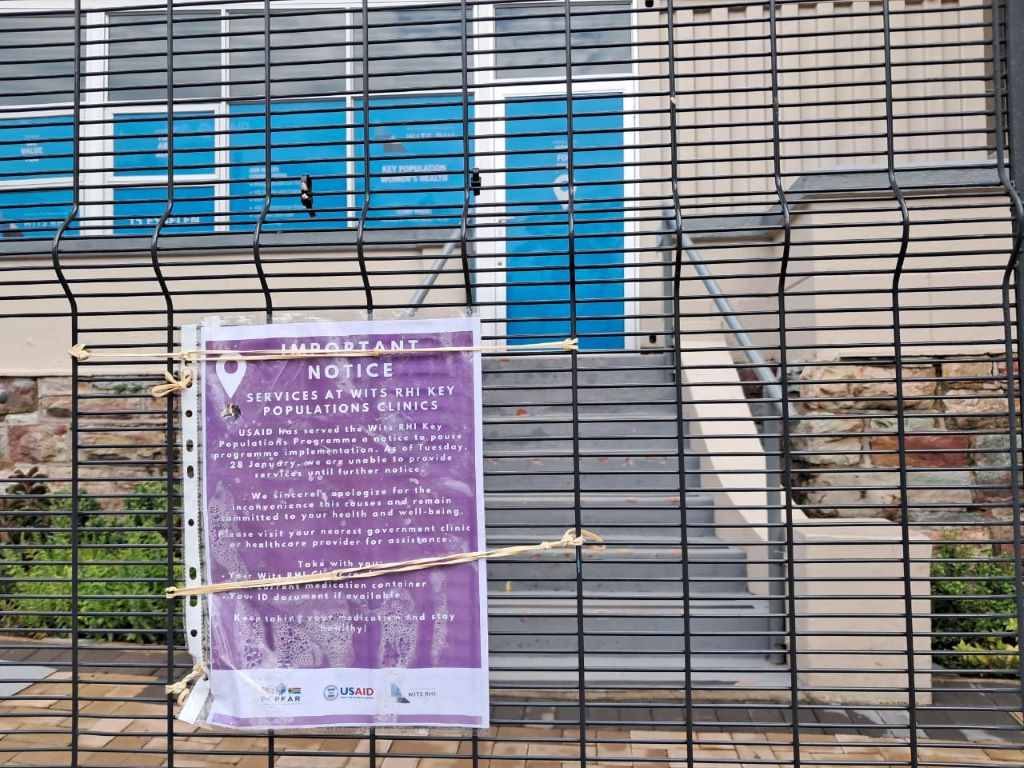
GroundUp and Spotlight visited a second health centre in Hillbrow run by the WITS Reproductive Health Institute (RHI). A sign on the gate stated: “USAID has served the WITS RHI Key Populations Programme a notice to pause programme implementation. As of Tuesday, 28 January, we are unable to provide services until further notice.”
WITS RHI’s annual reports suggest that USAID has previously sponsored its projects to treat and prevent HIV, including among high-risk groups like sex workers and transgender people.
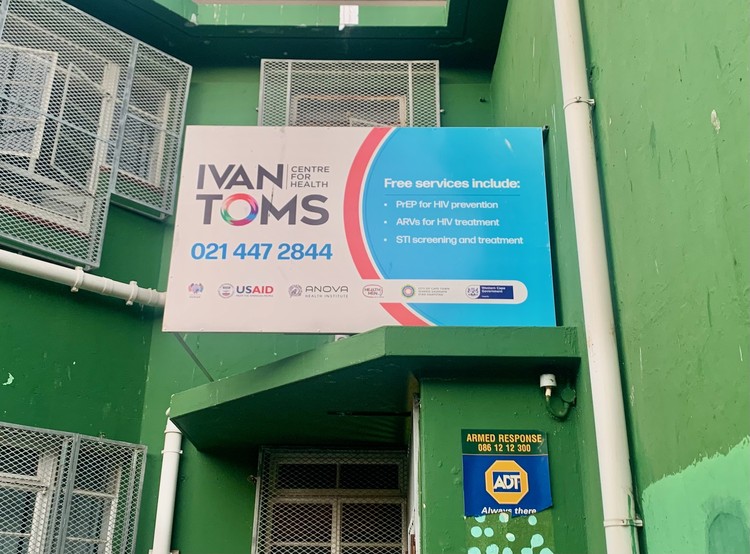
The third health facility that we visited is the Ivan Toms Centre for Health, based in Green Point, Cape Town. A temporary closure notification hung from the door. The centre provided HIV and TB testing, ARVs, PrEP, and counselling services – all focused on men who have sex with men.
Representatives from a fourth organisation, NACOSA, told GroundUp and Spotlight that it had been forced to halt all of its USAID-funded services. Subsequently, USAID instructed the organisation to provide a revised budget which only includes activities listed under the waiver. As part of this limited budget, NACOSA proposed retaining a project which helps orphaned and vulnerable children living with HIV in the Western Cape.
Dr Ntlotleng Mabena, a technical specialist at NACOSA, said the project provides these children with psychological support and connects them to health providers. Clinical workers linked to the ANOVA health institute (which is also US-funded) provide the children with ARV treatment, she said.
NACOSA submitted the revised budget with the hope of restarting this service, but they are still awaiting approval. Mabena stated that ANOVA was also waiting for permission to continue. In the meantime, the service remains closed.
The US embassy in South Africa maintains that Trump’s funding cuts do not affect PEPFAR initiatives that provide life-saving services as defined in the limited waiver.
Yet all of the life-saving PEPFAR services that we investigated on Thursday are closed. The only services which have reopened are those funded by the CDC, which is unrelated to the waiver.
Sign outside a Wits RHI clinic in Johannesburg. Photo: Ihsaan Haffejee