Category: COVID

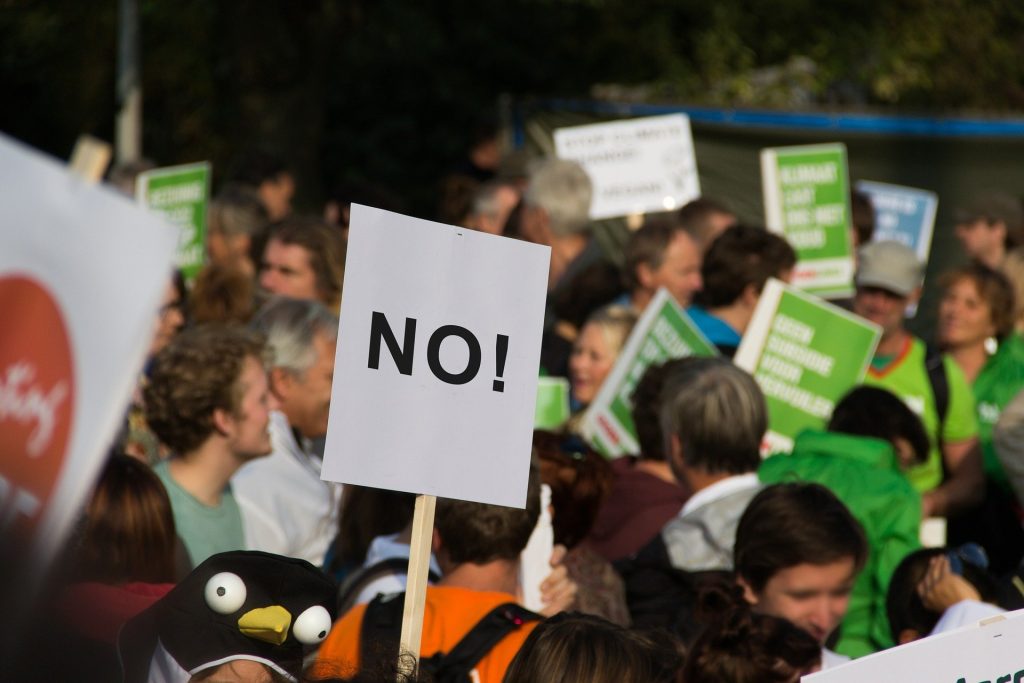
Have COVID Restrictions Eroded The Right to Dissent?

Image by Niek Verlaan from Pixabay

An article in The Guardian explores how the COVID pandemic and its restrictions have also may have caused an erosion in the institutions of democracy around the world.

On Saturday, a vigil at Clapham Common in the UK for Sarah Everard, a woman believed to have been murdered by a police officer, was broken up by police in a heavy-handed manner which drew widespread criticism.
Defending the Metropolitan police’s handling of the situation, assistant commissioner Helen Ball argued the force had to act “because of the overriding need to protect people’s safety” from COVID. In 2020, Black Lives Matter protestors were criticised for their actions in the first waves of the pandemic, but their actions did not cause a spike in infections. Indeed, the protests may have helped deter the spread of COVID due to their deterring people from going to restaurants and other forms of social gatherings.

While the Clapham Common event was not on the same scale, it is possible that even very large and boisterous protests are not ‘super-spreader’ events. And, according to the human rights organisation Liberty, they can be performed safely. For example a socially distanced rally was held in Tel Aviv in April last year against the Israeli prime minister, Benjamin Netanyahu, where thousands of people,   each in their own space, separated by two metres, were able to shout and wave banners.

“Protest is the lifeblood of a healthy democracy, and it’s critical that we can all stand up to those in power, and make our voices heard,” said Lana Adamou, a lawyer at Liberty. “Safe, socially distanced demonstrations are perfectly possible, and it is the duty of the police to facilitate them, not block them. The current restrictions should be interpreted compatibly with our rights enshrined in the Human Rights Act.”

However a report published by Carnegie Europe in January observed that human rights are being eroded in the name of public health, with many governments using the pandemic as a pretext to crack down on dissent.

“While governments have claimed that they were imposing measures to tackle the pandemic, these measures often have been contradictory and have excessively restricted the right to peaceful assembly,” the report said, saying that while economic activities were enabled, large protests were still prohibited. In Sweden large groups were allowed to congregate in restaurants and at sporting events, but public gatherings and protests involving more than eight people were banned. It also noted that police used tactics such as kettling, a controversial tactic where police corral protestors into tight groups before arresting them, which can increase the spread of infection.

These restrictions have forced some campaigners to become creative in their protests. In the Netherlands, climate activists filled a square in front of the Dutch parliament in the Hague with 1000 shoes from all over the country. In Croatia, a civil society movement staged balcony protests against the governance of the mayor of Zagreb.

What campaigners in some countries will be asking is whether or not the pandemic has eroded the right to dissent, and to what extent will mass public protests be allowed to return once the COVID threat has passed.

Source: The Guardian

COVID Vaccination in Immunosuppressed Patients Produces Weak Response

An article by Dorry Segev, MD, PhD for MedPage Today reveals poor results for COVID vaccination in immunosuppressed patients, with concerning implications. 

Dr Segev professor of surgery and epidemiology and associate vice chair of surgery at Johns Hopkins University School of Medicine and Bloomberg School of Public Health.

Dr Segev and colleagues launched a national study of vaccine immune responses in immunosuppressed solid organ transplant recipients. Among 436 COVID-naïve participants who received their first mRNA vaccine dose, only 17% of them mounted detectable antibodies to SARS-CoV-2.  The researchers also found that those taking anti-metabolites (eg, mycophenolate or azathioprine) were less likely to develop antibody responses, with 8.75% with detectable antibody found in those taking anti-metabolites versus 41.4% in those not taking them.

“Naturally, we were disappointed to see these findings, as we were hoping to be able to tell our immunosuppressed patients that the vaccines seemed to work well for them. Given this observation, the CDC should update their new guidelines for vaccinated individuals to warn immunosuppressed people that they still may be susceptible to COVID-19 after vaccination,
Dr Segev wrote. 

The current CDC guidelines are worded in a way that suggests vaccination translates into immunity, Dr Segev pointed out, but the study demonstrates that for most transplant recipients, as well as other immunosuppressed patients that the vaccine does not automatically confer immunity. This could also be a concern for the some 37.9 million people around the world living with HIV, although the effects of achieving viral suppression with antiretroviral therapy have so far not been well investigated in relation to COVID. Vaccine trials so far have not had sufficient numbers of participants living with HIV to draw any conclusions.

Notably, their previous research did show that rates of COVID infection and mortality were not greater for immunosuppressed transplant patients. 
Dr Segev noted that there are some implications for immunosuppressed patients; firstly, that they should at the very least receive the second dose of their vaccination (the current research is only on the effects of the first dose), and secondly, immunosuppressed patients should be aware that they may not necessarily be immunised after receiving a vaccination. They should speak to their provider about an antibody test to determine if the immunisation has been achieved.

The researchers are continuing to investigate other aspects of immune response besides antibodies, such as T and B cells, and are also looking at other vulnerable populations.

Source: MedPage Today

‘3 Feet’ Social Distancing Rule Being Considered by US

Data that suggest a ‘three feet’ social distancing rule is under consideration, according to Dr Anthony Fauci, the foremost infectious disease expert in the US.

To control COVID transmission, the World Health Organization recommends social distancing at one metre (3.3 feet), and a three feet distance used in some schools in the US is based on this. When asked about the new report on a CNN programme on Sunday, Dr Fauci agreed the data appeared to indicate that three feet is sufficient.   

While the Centers for Disease Control and Prevention do not currently recommend a rule change, Dr Fauci said that the report is being reviewed by them.

“What the CDC wants to do is accumulate data, and when data shows ability to be three feet, they will act accordingly,” Dr Fauci said, adding that its director, Dr Rochelle Walensky, was aware of the new research, with the CDC also conducting its own studies. “I don’t want to get ahead of official guidelines,” he added.

The researchers, who controlled for community rates of coronavirus in their analysis, concluded that lower physical distancing policies can safely be adopted in school settings, as long as other measures like universal masking are in place.

The study compared COVID infection rates among staff and students across 242 school districts in the state of Massachusetts, and found that schools with a three feet social distancing rule did not have a significantly different rate of transmission compared to those with the standard six feet rule.

However, there is a limitation to COVID monitoring in school-aged populations. While children may be infected as readily from COVID, they are less likely to develop illness from COVID, and so they are also less likely to get tested.

Source: NY Times

Netherlands and Ireland Suspend AstraZeneca Vaccine Over Blood Clots

In the wake of reports from Norway of blood clots in people shortly after receiving the AstraZeneca vaccine, the Netherlands and Ireland have suspended its use.

The Dutch Health ministry on Sunday said that there was still no evidence of a direct link between the vaccine and possible adverse effects from Norway and Denmark, and there were no reported cases in the Netherlands.

“We can’t allow any doubts about the vaccine,” Dutch health minister Hugo de Jonge said. “We have to make sure everything is right, so it is wise to pause for now.”

Earlier on Sunday Ireland’s deputy chief medical officer, Dr Ronan Glynn, said that deployment of the AstraZeneca vaccine, which makes up 20% of the country’s 570 000 doses given so far, should be “temporarily deferred” with immediate effect as recommended by the country’s National Immunisation Advisory Committee (NIAC). However, he emphasised that there was no proof that blood clots had been caused by the vaccine.

The first blood clots were reported in Austria, and prompted a wave of concern, with Denmark suspending the AstraZeneca vaccine, along with the north of Italy. These latest cases in Norway resulted in three hospitalisations and one death.

The Norwegian Medicines Agency said the four people who had the AstraZeneca injection all had reduced numbers of blood platelets. It added: “People under the age of 50 who have received the AstraZeneca vaccine and feel increasingly unwell more than three days after vaccination, and who notice larger or smaller blue spots in the skin (skin haemorrhages) must consult a doctor or out-of-hours medical service as soon as possible.

“Similar incidents have been reported in other European countries, and the European Medicines Agency (EMA) is considering whether there may be an association with the coronavirus vaccines. So far, no conclusion has been reached.”

Professor Karina Butler, head of NIAC, said it was acting out of an abundance of caution but wanted a better understanding of this unanticipated cluster of “very serious” clotting events in younger people.

There were similarities to other cases reported elsewhere in Europe, she added. It was necessary to know “was there a possibility of a relationship with the vaccine, something which was rare but very serious and could have significant outcomes”, she said to Virgin Media News.

The agency did not yet know whether more blood clots were happening than expected in the population generally. “But they do seem to have clustered together at a level and in younger people – I mean less than 65 – where we wouldn’t necessarily have expected them to happen and thus the question was should we just pause until we get that information, because above all we want to maintain confidence in the vaccine programme so that people can feel that what they are getting is safe, that any serious safety signal is being thoroughly investigated,” she said. 

In a statement, Dr Glynn said: “It has not been concluded that there is any link between the Covid-19 vaccine AstraZeneca and these cases. However, acting on the precautionary principle, and pending receipt of further information, the NIAC has recommended the temporary deferral of the Covid-19 vaccine AstraZeneca vaccination programme in Ireland.”

Source: The Guardian

Bat Coronavirus 94.5% Similar to SARS-CoV-2 Found

Researchers in China and Australia have reported the discovery of novel bat coronaviruses with a similarity of up to 94.5% to SARS-CoV-2. 

This finding further illuminates the diversity and complex evolutionary history of these viruses. A pre-print version of the research paper is available on the bioRxiv server.

Now, Weifeng Shi from Shandong First Medical University & Shandong Academy of Medical Sciences in Taian, China and colleagues have conducted a meta-transcriptomic analysis of samples collected from 23 bat species in Yunnan province in China during 2019 and 2020.  

Using a combination of genome sequencing and sampling studies, researchers identified a number of SARS-CoV-2-related coronaviruses in wildlife species that together pointed to underestimation of the phylogenetic and genomic diversity of coronaviruses.

“Our study highlights both the remarkable diversity of bat viruses at the local scale and that relatives of SARS-CoV-2 and SARS-CoV circulate in wildlife species in a broad geographic region of Southeast Asia and southern China,” said the team.

Bats are hosts to a broad range of viruses that can infect humans, and four of the seven known human coronaviruses have zoonotic origins.  They are also host to many coronaviruses, but sometimes “intermediate” hosts such as dromedary camels (MERS-CoV) are involved in the jump to humans.

Retrospective genome sequencing and sampling studies identified a number of SARS-CoV-2-related coronaviruses in wildlife species. These included the RaTG13 virus, which is the closest known relative of SARS-CoV-2,  found in the Rhinolophus affinis bat. SARS-CoV-2-related viruses have also been identified in various other Rhinolophid bats across Asia.

“Collectively, these studies indicate that bats across a broad swathe of Asia harbour coronaviruses that are closely related to SARS-CoV-2 and that the phylogenetic and genomic diversity of these viruses has likely been underestimated,” said Shi and colleagues.

Notably, one of these novel bat coronaviruses – RpYN06 – exhibited 94.5% sequence identity to SARS-CoV-2 across the whole genome, with key similarities in certain genes. Low genopmic sequence identity in the spike gene made RpYN06 the second closest relative of SARS-CoV-2, next to RaTG13. This is far more similar than seen in other SARS-CoV-2-like viruses identified in wildlife species.

Indeed, while the other three SARS-CoV-2-related viruses identified here were almost identical in sequence, the spike protein sequences formed an independent lineage that was separated from known sarbecoviruses (a  viral subgenus or the coronaviruses that  includesSARS-CoV-2)   by a relatively long branch.

“Collectively, these results highlight the extremely high, and likely underestimated, genetic diversity of the sarbecovirus spike proteins, which likely reflects their adaptive flexibility,” wrote Shi and colleagues.

The researchers say studies have previously shown that host switching of coronaviruses among bats is a frequent occurrence.

Source: News-Medical.Net

Journal information: Shi W, et al. Identification of novel bat coronaviruses sheds light on the evolutionary origins of SARS-CoV-2 and related viruses. bioRxiv. 2021. doi: https://doi.org/10.1101/2021.03.08.434390

Brazil’s Hospitals Are on The Brink of Collapse

Health systems in most of Brazil’s largest cities are close to collapse because of COVID cases, its leading health institute Fiocruz warns.

More than 80% of intensive care unit beds are occupied in the capitals of 25 of Brazil’s 27 states, Fiocruz said.  The highly contagious variant that emerged in Brazil may have serious knock-on effects for the rest of the world, health experts have warned.

In a stark warning, Fiocruz epidemiologist Jesem Orellana told AFP news agency that  “Brazil is a threat to humanity.”

Brazil’s President Jair Bolsonaro had already provoked outrage among his citizens and rebukes from local leaders by telling people to “stop whining” about COVID. The country recorded 1972 COVID deaths on Tuesday, along with a surge to 70 000 cases — a 38% increase on last week’s figure. ICUs at 15 state capitals are at 90% capacity, said Fiocruz, and in two cities, Porto Alegre and Campo Grande, they had exceeded capacity.

“The fight against COVID was lost in 2020 and there is not the slightest chance of reversing this tragic circumstance in the first half of 2021,” Fiocruz’s Jesem Orellana said, as quoted by AFP.

“The best we can do is hope for the miracle of mass vaccination or a radical change in the management of the pandemic. Impunity in management seems to be the rule.”

Of the currently available vaccines, so far Pfizer’s has been confirmed to be effective in lab tests against a specially engineered version of the virus made to mimic the variant.

Source: BBC News

How The COVID Variant Was Discovered in South Africa

The so-called South African variant was identified by an international team of researchers, including biomedical scientists from the University of California, Riverside. They explain the process behind discovering the variants, why they are so concerning, and what the future holds.

“The new COVID variants are the next new frontier,” said Adam Godzik, a professor of biomedical sciences in the UC Riverside School of Medicine. “Of these, the SA and Brazil strains are most worrying. They have mutations that make them resistant to antibodies we generate with existing vaccines. It is commonly believed we are in a tight race: Unless we vaccinate people quickly and squash the pandemic, new variants would dominate to the point that all our COVID vaccines would be ineffective.”

Prof Godzik and Arghavan Alisoltani-Dehkordi, a postdoctoral researcher who joined his lab two years ago, helped characterise the new SA variant by providing its spike protein structure using computer simulations.  

Dr Alisoltani-Dehkordi, who was a postdoctoral fellow at the University of Cape Town before she joined UCR, mentioned that research teams at the University of KwaZulu-Natal  and UCT discovered the new SARS-CoV-2 variant from samples collected between October 15 and November 25, 2020, in three provinces. By early November, this variant rapidly became the dominant variant in samples from two provinces. The researchers suggested that this may be due to increased transmissibility or immune escape.

“Each SARS-CoV-2 variant has specific mutations defining it,” Dr Alisoltani-Dehkordi said. “Professor Godzik and I used computer modeling to suggest possible structural and functional consequences of spike protein mutations in the SA lineage. Our analysis, confirmed also by several other research groups, shows that some of the mutations potentially result in a higher transmissibility of the virus and a weaker immune response.”

The SA variant has been detected in 40 countries, and is quite likely present in more still.

“This variant is probably spreading in areas where it has not been sequenced and is, therefore, not identifiable,” Prof Godzik said. “In the US, sequencing is still a slow process. In many parts of the country, including Riverside, we have no information whatsoever about variants.”

The SA variant prompted concern among scientists because its mutations allowed it to evade antibody protection, and potentially, vaccines. Indeed, the AstraZeneca vaccine rollout was halted in South Africa due to the low level of protection against this new variant.

“That’s when it received a high level of interest,” Prof Godzik said. “Subsequent research confirmed it is resistant to vaccines and is spreading. South Africa is doing a good job, however, at controlling the variant through quarantining and other measures.”

Common mutational signatures can be seen in each of the newly emerged SARS-CoV-2 variants of concern in the UK, SA, Brazil, and California. But each of these variants also has a unique set of mutations; for example, the SA and Brazil variants have two unique mutations on spike proteins K417N and E484K, respectively. But, as Prof Godzik explains, there is no single “SA variant”, rather a branch on an evolutionary tree. And viruses can acquire mutations and escape at any time.

Prof Godzik thinks COVID will become a permanent feature of our lives. “It takes six months to develop a flu vaccine,” he said. “Models predict the evolution of the flu virus and vaccines are produced before the variants show up. If the predictions are good, the vaccines work. If they miss, a heavy flu season follows. This is how COVID will likely behave. A lot of effort will be invested in predicting what will happen the following year, vaccines would then be updated, and people will need to get a booster shot.”

Source: University of Riverdale, California

Restaurants and Not Wearing Masks Increases COVID Transmission, CDC Warns

Fully opening restaurants and not having mask rules in place and the Centers for Disease Control (CDC) warned.

“This report is a critical reminder that with the current levels of COVID-19 in communities and the continued spread of more transmissible virus variants, which have now been detected in 48 states, strictly following prevention measures remains essential for putting an end to this pandemic,” said CDC director Rochelle Walensky, MD, at a White House COVID briefing on Friday. “It also serves as a warning about prematurely lifting these prevention measures.”

Dr Walensky’s comments may have been made with states such as Texas and Mississippi in mind, with their governors announcing that they were dropping mask mandates and allowing full reopening, including businesses such as restaurants at full capacity. Some restaurants that are still enforcing 

Research has already shown that in-person dining and lack of mask regulations contribute to the spread of COVID cases. Taking data from state and local health department websites, COVID cases and deaths were analysed at county level The team compared data from post-implementation time points, ranging from 1-20 days to 81-100 days, to pre-implementation periods.

The researchers also attempted to control for other factors, such as restaurant closures during the mask mandates, mask mandates in the restaurant reopening models, stay-at-home orders, and bans on gatherings of more than 10 people.

Of the three-quarters of surveyed counties with mask mandates, the researchers found that within 1-20 days of mask mandates, there was a 0.5 percentage point drop in COVID case growth rates. Case and death growth rates saw almost a 2.0 percentage point decline 81-100 days after mask mandates came into effect.

Conversely, states allowed restaurants to re-open for in-person dining. While the impact was not immediate, COVID case growth rates increased 1.1 percentage points 81-100 days later. However, counties allowing in-person dining were associated with 2.2 percentage point increases at days 61-80 and a 3.0 percentage point increase at days 81-100 after restrictions were lifted.

The researchers speculated about the cause, such as restaurants potentially delaying reopening even after they were allowed to do so, and that patrons might have been more cautious during initial reopenings but more likely to dine at restaurants as time passed.

Source: MedPage Today

Molnupiravir Performs Well Versus COVID in Early Trials

Pharmaceutical giant announced on Saturday that its antiviral drug molnupiravir significantly reduced viral load in COVID patients.

Delivering the information to infectious disease experts, the company said that the drug caused the drop in viral loads five days after administration to COVID patients.

“At a time where there is unmet need for antiviral treatments against SARS-CoV-2, we are encouraged by these preliminary data,” said Wendy Painter, chief medical officer of the US firm, Ridgeback Biotherapeutics, which developed the drug in concert with Merck.

Merck had stopped development of two vaccine candidates earlier on, but has been pressing ahead with two possible treatments for COVID.

The experimental drug, also known as EIDD-2801, is currently in its Phase 2a trials. It would need to complete the third phase trials to gain approval. Molnupiravir was originally developed to treat influenza viruses, and its mechanism of action is thought to be through inducing RNA transcription errors in viruses, leading to a transcription catastrophe. This mechanism also inherently creates a significant barrier for viral escape from the drug.

The clinical trials enrolled 202 participants with COVID, who were not hospitalised. There were no safety alerts for the drug, and the four serious adverse events that did occur were not considered to be associated with the drug, Ms Painter said.

William Fischer, lead investigator of the study and a professor of medicine at the University of North Carolina said that these were promising results, adding: “If supported by additional studies, (they) could have important public health implications, particularly as the SARS-CoV-2 virus continues to spread and evolve globally.”

The company is testing another drug in clinical trials, MK-711, preliminary results for which have indicated a 50% drop in viral load in mild and severe COVID patients.

Source: Medical Xpress

Bolsonaro Tells Brazilians to ‘Stop Whining’ About COVID

Amidst a surge of COVID cases and deaths in Brazil that have brought its healthcare system to the brink of collapse, President Jair Bolsonaro has told its citizens to “stop whining”, saying that the country must balance economic concerns against controlling the pandemic.

According to Brazil’s health ministry, the country has suffered 260 000 deaths from the virus, the second highest in the world after the United States.

“Stop whining. How long are you going to keep crying about it?” Mr Bolsonaro said at an event. “How much longer will you stay at home and close everything? No one can stand it anymore. We regret the deaths, again, but we need a solution.”

In order to stave off further disaster, a number of local governments have started taking matters into their own hands by imposing their own curfews and other social distancing measures. 

São Paulo’s governor, João Doria, who has been particularly critical of Mr Bolsonaro’s response to the pandemic, called President Bolsonaro “a crazy guy” for attacking “governors and mayors who want to buy vaccines and help the country to end this pandemic”.

“How can we face the problem, seeing people die every day? The health system in Brazil is on the verge of collapse,” Mr Doria said.

This comes as a Duke University scientist, another Bolsonaro critic, warned of the danger of another quarter of a million deaths, and called for an immediate lockdown to help control the situation.

The situation is exacerbated by the emergence of the P.1 variant which emerged in Manaus, and has high transmissibility and the capability to evade immunity, having a 25% to 60% chance of reinfecting an immune individual.

Source: BBC News