Category: COVID

Nurse Recounts His Year on the Frontlines

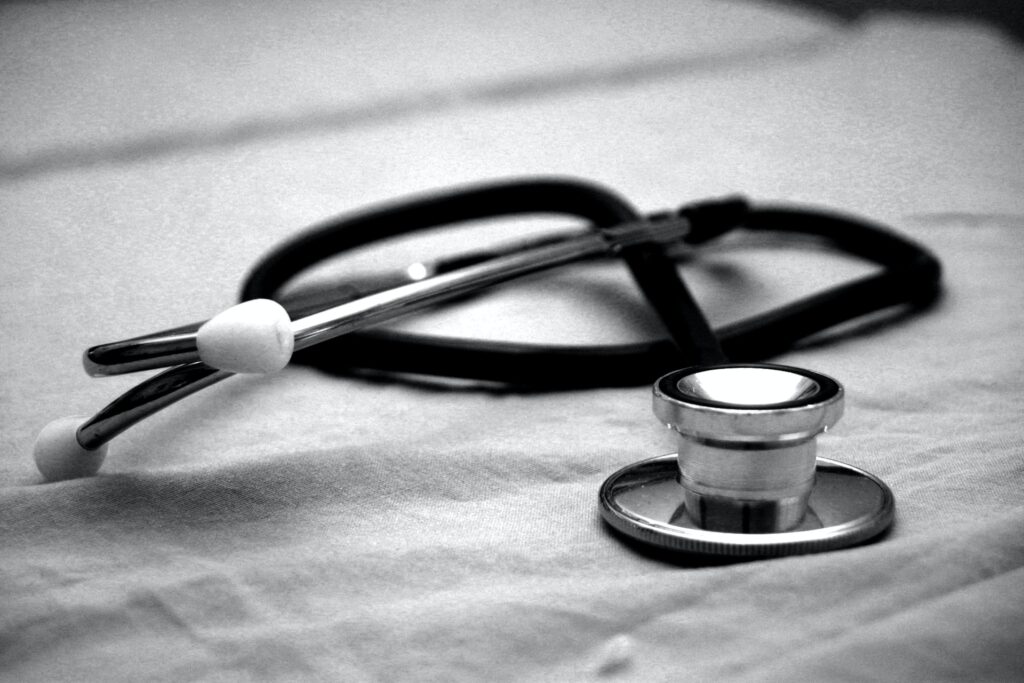
Stethoscope. Photo by Robert Ruggiero on Unsplash

One year into the first case of COVID being detected in South Africa, one nurse recounts the hardships he and other healthcare workers have faced as they battled against the pandemic.

Lebohang Nkoana, a nurse on the frontline at Thelle Mogoerane Hospital in Vosloorus, Ekurhuleni, spoke to IOL of his experiences.

“When Covid-19 came, no one knew what to expect,” said Nkoana, who has been a nurse for eight years and is also a branch secretary for the Democratic Nurses Organisation of SA.

“It was devastating because we were already short-staffed. At first, we were resistant. We did not want to work with Covid-19 patients

“We were just using normal non-sterile gloves. Then we stopped working for two days as we did not want to risk our lives and also because we were not fully informed about the disease.”

Like many in the first days of the pandemic, he was forced to work without adequate PPE. Lack of regulation and price gouging had also worsened the PPE situation during the early days of the pandemic.

“There was no PPE, no increment, nothing. I had to use what I had at my disposal to protect myself and render a service.

“I went into a Covid ward to save lives, but in the process, exposed myself.”

Mr Koana contracted COVID during the course of his duty, and lost 19 of his colleagues to the disease, with little in the way of support for his trauma. He is also stigmatised in his community, as people assume that he has COVID. He also fears for his wife and two children.

“I am not scared for myself, because as a nurse, I took an oath. I am scared for my children. If I bring the virus home and it kills my wife, who will take care of our children?”

Source: IOL

Clinical Trial for Ivermectin Delivers Disappointing Results

A randomised clinical trial in Colombia for ivermectin treatment in mild COVID returned disappointing results.

An anti-parasitic normally used for livestock, ivermectin has gathered considerable attention as a possible COVID treatment in recent months, especially locally, with stocks containing the product depleted in the last month. There are no ivermectin-containing products in South Africa for human use. The South African Health Products Regulatory Authority is of the view that the evidence for ivermectin is currently inconclusive.

“To our knowledge, preliminary reports of other randomized trials of ivermectin as treatment for COVID-19 with positive results have not yet been published in peer-reviewed journals,” the researchers wrote.

  The randomised, double-blind, single-center study took place from July 15 to December 21, 2020. Patients were assigned to either receive an oral dose of 300 μg/kg of body weight per day of ivermectin or placebo, for five days. Follow-up took place on days 2, 5, 8, 11, 15, and 21. The primary trial outcome was resolution of symptoms within 21 days.  

However, the study was not without its share of problems. The initial primary outcome was time from randomisation until worsening of symptoms by two points on an ordinal scale, but few patients reached this endpoint in the expected time. This meant the sample size needed to maintain sufficient power was “unattainable.” To accommodate this, the primary endpoint was changed to time from randomisation to symptom resolution by day 21, retaining the original sample size.

To make matters worse, a labelling error occurred, where ivermectin was mistakenly given to all patients from September 29 to October 15, so the protocol was amended, with these patients excluded from the primary analysis. The researchers then recruited more patients to retain the originally calculated study power.

Despite these problems, the researchers said the findings remained valid within the confines of its other limitations. Limitations to the study, the researchers said, included that it was not conducted or completed according to the original design; that it may have been underpowered to detect a smaller, clinically meaningful reduction in the primary endpoint; and virological assessments were not included, only clinical characteristics.

Larger trials would be needed “to understand the effects of ivermectin on other clinically relevant outcomes,” concluded the researchers.

Source: MedPage Today

Journal information: López-Medina E, et al “Effect of Ivermectin on Time to Resolution of Symptoms Among Adults With Mild COVID-19 — A Randomized Clinical Trial” JAMA 2021; DOI: 10.1001/jama.2031.3071.

Scientist Issues Stark Warning on Brazil’s COVID Response

If Brazil continues to let COVID rage unchecked, it risks deadly new variants emerging to threaten the global community, a Duke University neuroscientist in Brazil told The Guardian.

Miguel Nicolelis urged the international community to put pressure on the Brazilian government, which has made little effort to manage its COVID outbreak which has so far left a quarter of a million Brazilians dead. Brazil’s COVID deaths amount to one tenth of the world’s total.

“The world must vehemently speak out over the risks Brazil is posing to the fight against the pandemic,” said Nicolelis who has spent much of the lockdown in his São Paulo flat.

“What’s the point in sorting the pandemic out in Europe or the United States, if Brazil continues to be a breeding ground for this virus?”

He said: “It’s that if you allow the virus to proliferate at the levels it is currently proliferating here, you open the door to the occurrence of new mutations and the appearance of even more lethal variants.”

Manaus, the largest city in the Brazilian Amazon, has already seen the emergence of a deadly, highly transmissible variant, P1, six cases of which have been detected in the UK already. The new variant with its “unique constellation of mutations” may also evade immunity, scientists have warned.

“Brazil is an open-air laboratory for the virus to proliferate and eventually create more lethal mutations,” Nicolelis said. “This is about the world. It’s global.”

The warning comes as hospitals around Brazil are on the verge of collapse, with a record 1726 daily deaths recorded on Tuesday.

“We’ve now gone past 250 000 deaths, and my expectation is that if nothing is done we could have lost 500 000 people here in Brazil by next March. It’s a horrifying and tragic prospect, but at this point it’s perfectly possible,” he said.

Nicoleis puts the blame squarely upon Brazil’s far right President Jair Bolsonaro. “The policies that he is failing to put into practice jeopardise the fight against the pandemic in the entire planet.”

José Gomes Temporão, who was the health minister during the 2009 swine flu pandemic, said Bolsonaro and others would have to be held accountable for their poor response.

“To this day, Brazil doesn’t have a national plan to combat COVID,” Temporão complained, criticising Bolsonaro’s failure to secure sufficient vaccines for Brazil. 

“I don’t think there is any other leader who is so obtuse, so backward, who has such a mistaken and warped vision of reality as the president of Brazil,” Temporão said. “History will condemn these people.”

Source: The Guardian

Study Shows That COVID Causes Heart Damage

Heart problems in COVID are caused by the virus invading heart cells and causing damage, according to a new study.

Heart problems such as arrhythmia and lack of pumping ability were associated with COVID even at the start of the pandemic. However, it was not clear whether these effects were caused by the virus, or whether it was due to the body’s inflammatory response in mounting a defence against the virus. 

“Early on in the pandemic, we had evidence that this coronavirus can cause heart failure or cardiac injury in generally healthy people, which was alarming to the cardiology community,” said senior author Kory J Lavine, MD, PhD, an associate professor of medicine. “Even some college athletes who had been cleared to go back to competitive athletics after COVID-19 infection later showed scarring in the heart. There has been debate over whether this is due to direct infection of the heart or due to a systemic inflammatory response that occurs because of the lung infection.”

Dr Lavine, along with other researchers from the Washington University School of Medicine, engineered stem-cell derived tissue as a model for how human heart tissue contracts. Studying these heart tissue models, they came to the conclusion that the viral infection kills muscle cells as well as the muscle fibre units involved in heart muscle contraction. This cell death and muscle fibre destruction happened even without inflammation.

“Our study is unique because it definitively shows that, in patients with COVID-19 who developed heart failure, the virus infects the heart, specifically heart muscle cells,”  Dr Lavine said. “Inflammation can be a second hit on top of the damage caused by the virus, but the inflammation itself is not the initial cause of the heart injury.”

While other viral infections have been linked to heart damage, SARS-CoV-2 is unique in that monocytes and dendritic cells dominate the immune response, while other viruses that damage the heart attract T and B cells.

“COVID-19 is causing a different immune response in the heart compared with other viruses, and we don’t know what that means yet,” Dr Lavine said. “In general, the immune cells seen responding to other viruses tend to be associated with a relatively short disease that resolves with supportive care. But the immune cells we see in COVID-19 heart patients tend to be associated with a chronic condition that can have long-term consequences. These are associations, so we will need more research to understand what is happening.”

Source: News-Medical.Net

Journal information: Bailey, A. L., et al. (2021) SARS-CoV-2 Infects Human Engineered Heart Tissues and Models COVID-19 Myocarditis. JACC: Basic to Translational Science. doi.org/10.1016/j.jacbts.2021.01.002.

After Receiving Vaccine, Queen Elizabeth Encourages Others

After receiving her COVID vaccine, Queen Elizabeth encouraged those who were wary to think of others and do the same.

She and Prince Philip received their vaccine in the initial wave of vaccinations for the elderly in the UK. Prince Philip, 99,  is currently in hospital for a non-COVID related illness. There are concerns about the health of her husband Prince Philip, but the palace says that he is responding to treatment, but likely to remain in hospital for a few more days.

“Once you’ve had a vaccine you have a feeling of you know, you’re protected which I think is very important and as far as I could make out it was quite harmless,” the 94-year old monarch queen said in a video call with health officials supervising inoculations across the UK.

“It was very quick, and I’ve had lots of letters from people who have been very surprised by how easy it was to get the vaccine. And the jab – it didn’t hurt at all,” she added, likening the virus to a plague.

Earlier this week, the UK’s vaccine minister said that 11% to 15% of people were hesitant about receiving a vaccine, especially among minority groups.

“It is obviously difficult for people if they’ve never had a vaccine because they ought to think about other people other than themselves,” said the queen.

She praised the “remarkable” Britain’s rollout of the vaccination, one of the world’s fastest. Other members of the royal family including Prince Charles and his son Prince William, have been visiting vaccination centres over the last two weeks to convey their thanks to staff and volunteers for their work.

Data from Public Health England suggest that the vaccines are 80% effective in preventing serious COVID in the elderly.

Source: Reuters

US Rollout of Johnson & Johnson Vaccine As It Gets FDA Approval

Johnson & Johnson’s single shot COVID vaccine is set to roll out in the US after its approval, but concerns linger as to the public’s perception of its relative effectiveness.

The vaccine received an emergency use authorisation (EUA) on Saturday from the FDA, and received approval from the CDC the following day. On Sunday night White House officials stated that distribution of 3.9 million doses of the J&J vaccine would begin immediately, with J&J expecting to deliver some 16 million more doses by the end of March. These vaccines will be allocated proportionally, as per the procedure for Pfizer/BioNTech and Moderna vaccines.

At a Saturday media briefing, acting FDA Commissioner Janet Woodcock, MD, reiterated issues raised by the FDA advisory committee, that the J&J product’s lower efficacy number (70% vs 95%) may cause people to think it is less effective than the alternatives. She said that wasn’t necessarily so, urging Americans to “take the vaccine they are able to access.”

“All these vaccines meet our standards for effectiveness. They were not studied in head-to-head trials, so [they’re] difficult to compare … due to differences in development programs,” she said. (Preventing moderate-to-severe COVID illness was the J&J endpoint, whereas in the Pfizer and Moderna studies the endpoint was all symptomatic COVID.)

“We need to be clear on our messaging regarding comparisons with other vaccines,” said Jason Goldman, MD, of the American College of Physicians. “As a primary care physician, many of us are eager to vaccinate” patients and this vaccine will be “helpful in achieving that goal.”

Macaya Douoguih, MD, of J&J’s Janssen unit where the vaccine was developed, talked about the potential advantages of a one-dose vaccine, referencing the company experience with the Ebola vaccine

“For an outbreak setting, a single dose has a tremendous advantage in terms of being able to rapidly roll out mass vaccination” without the complexity of following up for a second dose, she said.

Dr Douoguih addressed the company’s planned two-dose study, saying that while a two-dose regimen might be “more immunogenic and lead to durable efficacy,” she thought there was room for both options. The two-dose option would be preferable in an ‘everyday’ COVID setting. The company was trying to enroll 16-17 year olds for additional data in a study starting next week, Dr Douoguih said.

The CDC researchers discussed preliminary data on asymptomatic infection, which assessed seroconversion between days 29 and 71. Those data showed vaccine efficacy against seroconversion was 74% (95% CI 48%-87%), but the CDC urged caution as the data was only preliminary.

“Our level of confidence in asymptomatic infection is tempered by low numbers and that is important for us to remember,” said Advisory Committee on Immunization Practices committee member Sarah Long, MD, of Drexel University College of Medicine in Philadelphia. “I appreciate the workgroup concluding the confidence is not that high.”

Source: MedPage Today

Gratitude for Engineer’s ‘Hack’ Website for Vaccination Appointments

Frustrated with the difficulties faced in scheduling a vaccination appointment, a New York software engineer developed a website to make it easier for his fellow New Yorkers to schedule an appointment.

Huge Ma was trying to get a COVID vaccination appointment for his mother. “You had to basically open three tabs, one for each major government vaccine portal, and then refresh all day until you got an appointment,” the 31-year-old told The Guardian. This experience inspired him to create a website, Turbovax, that helped people to book their appointments more easily. After taking a “look under the hood” in January and doing two weeks of coding, he unveiled his website – essentially a bot that trawls relevant New York sites for appointments and shares them on Twitter and on a website.

Almost immediately, the website took off, with one million page views a day, with tens of thousand of people having booked appointments using the bot, Mr Ma estimated. People have even asked him to bring TurboVax to their cities.

“The response has been incredibly overwhelming,” he said. “There’s been so much gratitude. Hundreds, thousands of emails from people who have gotten appointments through TurboVax, which is honestly kind of just mind-blowing, and humbling as well.” 

He was unprepared for the reaction. “I would never have thought that I could have built something that has such tangible impact on other people’s lives.” 

However, running the site is difficult as Mr Ma has to balance this with his day job working at Airbnb, and the Google Docs-based site is buckling under the demand.

“Technically it’s kind of a hack. It’s not built in the way that modern websites are supposed to be built,” said Ma. “These are the shortcuts that we take to put something in the world that we think is useful and I think that’s a trade-off that I would still make.”

Though it is free, Mr Ma accepts donations and has gathered $35 000 so far. TurboVax is one of a number of citizen-led services that have popped up to help Americans deal with the difficulties of vaccine appointment bookings, such as NYC Vaccine List in New York and VaccinateCA in California.

Mr Ma shut down the website over the weekend in protest against a spate of hate crimes targetting Asian Americans, tweeting, “Anti-Asian hate crimes are out of control. I am taking a stand because I fear for my friends and family.” However, local law enforcements said there is no sign that a number of recent assaults against Asian Americans were racially motivated.

Since far more white people have received vaccinations than black or Latino people, Mr Ma said the technology can “help level the playing field”.

“Not everyone has the ability to sit in front of a computer and refresh all day,” he explained. “That said, I know that no system is perfect. This tech can help but it can’t solve other inequities in the system.”

Source: The Guardian

SA Medical Aid Schemes May Not Have to Pay for Public’s Vaccines

Medical aid scheme executives have pointed out that the latest budget means that medical aid schemes may no longer need to contribute for the vaccination of the South African population without medical insurance. 

South Africa’s medical insurance schemes had been in discussions on funding at least part of the government’s vaccine rollout for uninsured members of the public.

The R9 billion allocated in the budget may be enough to cover the vaccine costs of the entire country, said executives from the two leading medical aid schemes.

About 7 million people are covered by medical aid schemes, about a quarter of the country’s population. Discovery Health, Medscheme and Momentum together administer some 80% of private sector medical aid plans.

“I think the government is looking at this and saying this is our role,” said Damian McHugh, executive head of sales and marketing at Momentum Health Solutions. He agreed with the idea that the budget figure implied that schemes may not have to help cover vaccinations for non-members, although it did not remove the discussion of subsidies.

McHugh went on to explain that the costs would depend on which vaccines were procured, and schemes would still have to contribute in case booster shots or new vaccination rounds became necessary.

However, given record additions to their reserves last year due to medical services not being taken or postponed, along with not having to contribute to the vaccination of non-members, medical aid schemes stand to reap even greater benefits.

Source: Reuters

Siemens COVID Antigen Test Kit Receives German Approval

Siemens Healthineers announced on Wednesday that their antigen self-test kit, which uses samples from a nasal swab, has received limited special approval from the Federal Office for Drugs and Medical Devices (BfArM) for self-use by laypeople in Germany. The regular conformity assessment procedure for the standardised ‘CE‘ mark was also initiated for personal use by laypeople.

“With the provision of the COVID-19 antigen rapid test for possible use by laypeople in Germany, we are breaking new ground and are thus continuing to fulfill our social responsibility to support a return to normal social life,” said Bernd Ohnesorge, Head of Europe, Middle East, and Africa Regions, Siemens Healthineers

The practicability of the kit was confirmed by a study in which 50 participants without medical training personally carried out the test by following the instructions for use. The test already has a CE mark for use by specialist groups for taking samples in the nose.

“The CLINITEST COVID-19 Antigen Self-Test offers users a high degree of flexibility in performing the test with very good quality results,” said Christoph Pedain, Head of Point of Care Diagnostics at Siemens Healthineers.

Siemens’ COVID-19 Antigen Self-Test takes 15 minutes to give a result, using samples taken from both nostrils using a swab. The swab is then washed out in a reagent, which detaches a specific protein from the surface of the virus. The resulting liquid is dripped into a recess in the test cassette.

The test liquid migrates into the field of view of the cassette within 15 minutes, becoming visible as a line. The position and number of lines indicate as to whether there is a positive or negative test result, or whether there was a problem, necessitating a repeat of the test.

In the instructions, the tester is shown the steps to achieve a test result, including instructions on how to proceed according to the test result. A negative test result does not exempt the user from any local COVID regulations. Currently, the test kit is also available in the UK.

Source: Siemens

Global COVID Recovery Needs to Address Oxygen Shortages

At the virtual launch of Global Citizen’s Recover Better Together Campaign, access to vaccines and medical resources was highlighted as a key area to address.

“Covid-19 has threatened the lives and livelihoods of everyone on the planet. To respond, we must take several urgent actions. The only way that we will be able to recover better, together is by defeating the virus everywhere through universal access of vaccines, diagnostics, and therapeutics,” said World Health Organization Director-General Dr Tedros Adhanom Ghebreyesus.

To this end, the Recover Better Together Campaign, an initiative organised by the Global Citizen, the European Commission and the WHO, aims to create momentum for global COVID pandemic recovery, with a return to the implementation of global goals.

“To fight the pandemic, we need to pool resources, capabilities, knowledge and intellectual property. That is why we continue to call on world leaders to support the COVAX facility to ensure rapid and equitable access to Covid-19 vaccines for all countries. Another important step is to enable the transfer of medical technology for the duration of the pandemic,” said President Cyril Ramaphosa.

One of key medical resource is oxygen, which is in short supply in many low- and middle-income countries, which have to provide enough for up to half a million COVID patients. WHO data shows that 1.1 million cylinders are needed daily in developing countries, with Africa seeing the biggest surge in demand. Hospitals in Nigeria have reported running out of oxygen, leading to preventable deaths.

According to the WHO, public hospitals across 41 African countries have fewer than 2000 working ventilators. In comparison, the United States has more than 170 000 ventilators. The South African private sector has about 4000 ventilators, and around 2000 in the public sector. The WHO said the launch of the Covid Tools Accelerator Therapeutics pillar, co-led by Unitaid and Wellcome, has improved access to oxygen. On 25 February the Covid-19 Oxygen Emergency Taskforce was also launched by the WHO.

Unitaid Executive Director Dr Philippe Duneton said the Taskforce now needs an additional $90 million US for delivery of oxygen in up to 20 countries including Malawi, Nigeria and Afghanistan.

“This is a global emergency that needs a truly global response, both from international organisations and donors. Many of the countries seeing this demand struggled before the pandemic to meet their daily oxygen needs,” said Duneton. “Now it’s more vital than ever that we come together to build on the work that has already been done, with a firm commitment to helping the worst-affected countries as quickly as possible.”

Source: Health-e News