

Tag: immunosuppressed

New Monthly Infusion Could Replace Daily Immunosuppressants for Kidney Transplants

Monthly infusion could replace daily drug regimen with a less toxic treatment that improves renal function.
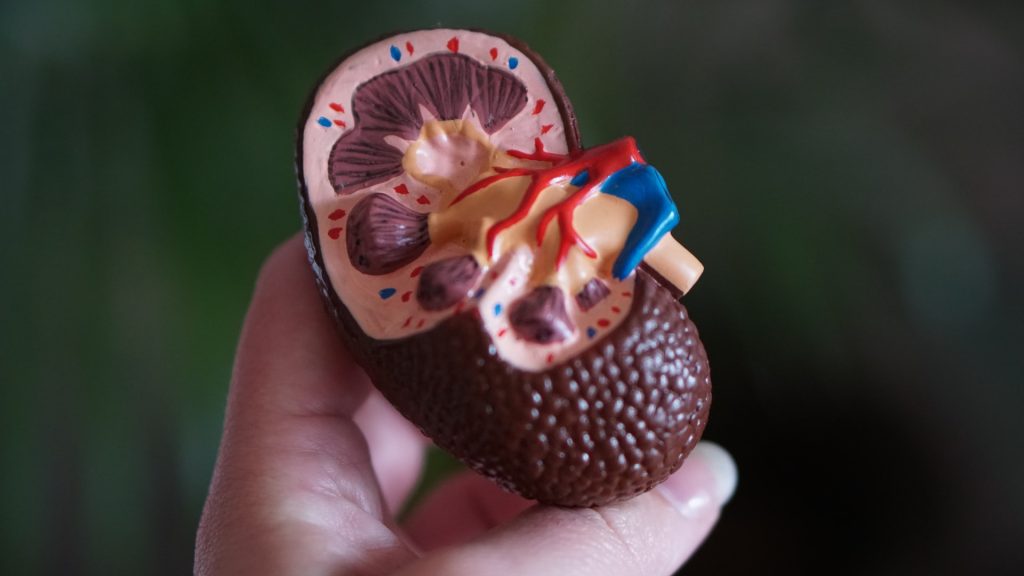
Photo by Robina Weermeijer on Unsplash

Anew study offers hope that kidney transplant patients could one day have a monthly treatment instead of multiple pills every day. The new treatment also may reduce side effects and increase the lifespan of the donor organ.

Currently, patients who have had a kidney transplant must take a cocktail of pills every day for the rest of their lives. These standard immunosuppressants prevent the immune system from attacking the new organ, but over time may damage kidney function and become less effective.

Plus, standard immunosuppressants are also lead to diabetes, hypertension, high cholesterol, and weight gain that can lead to transplant patients skipping doses, noted the study’s first author Flavio Vincenti, MD, professor of medicine and surgery in the Division of Nephrology at UC San Francisco. Other side effects include fatigue, muscle weakness, sexual dysfunction, hair loss, and sleeplessness.

Patients showed improvement

In the phase 2 pilot study, 23 patients received infusions of belatacept and dazodalibep, proteins that disrupt the immune system’s attack on the new organ but that do not affect non-immune cells the way standard treatment does.

Kidney function improved in all patients who completed the study and was similar for those who experienced organ rejection. No patient experienced rejection due to antibodies produced by the immune system, which is a major cause of transplant failure. Results were published Feb. 3 in the American Journal of Transplantation.

“We would hope to see better medication compliance with the new regimen since it does not involve taking multiple medications every day,” Vincenti said.

Study patients received standard immunosuppressants at first, but these were discontinued by day 28 in favour of the infusions for the remainder of the 48-week study.

Two of the first three patients experienced organ rejection, which was effectively treated and the rejection reversed. Drug frequency and dosing were revised in response for the remaining patients, 13 of whom completed the study. Seven patients withdrew due to acute kidney rejection, side effects, or for unspecified reasons.

The next phase of the study will determine if these early findings are replicated in a large patient pool, said senior author Allan D. Kirk, MD, PhD, professor of surgery at Duke University School of Medicine.

“We hope that most patients can be spared the toxic effects of immunosuppressants, which would be reserved for those with certain high-risk factors,” said Kirk.

Source: University of California San Francisco

COVID Vaccination in Immunosuppressed Patients Produces Weak Response

An article by Dorry Segev, MD, PhD for MedPage Today reveals poor results for COVID vaccination in immunosuppressed patients, with concerning implications. 

Dr Segev professor of surgery and epidemiology and associate vice chair of surgery at Johns Hopkins University School of Medicine and Bloomberg School of Public Health.

Dr Segev and colleagues launched a national study of vaccine immune responses in immunosuppressed solid organ transplant recipients. Among 436 COVID-naïve participants who received their first mRNA vaccine dose, only 17% of them mounted detectable antibodies to SARS-CoV-2.  The researchers also found that those taking anti-metabolites (eg, mycophenolate or azathioprine) were less likely to develop antibody responses, with 8.75% with detectable antibody found in those taking anti-metabolites versus 41.4% in those not taking them.

“Naturally, we were disappointed to see these findings, as we were hoping to be able to tell our immunosuppressed patients that the vaccines seemed to work well for them. Given this observation, the CDC should update their new guidelines for vaccinated individuals to warn immunosuppressed people that they still may be susceptible to COVID-19 after vaccination,
Dr Segev wrote. 

The current CDC guidelines are worded in a way that suggests vaccination translates into immunity, Dr Segev pointed out, but the study demonstrates that for most transplant recipients, as well as other immunosuppressed patients that the vaccine does not automatically confer immunity. This could also be a concern for the some 37.9 million people around the world living with HIV, although the effects of achieving viral suppression with antiretroviral therapy have so far not been well investigated in relation to COVID. Vaccine trials so far have not had sufficient numbers of participants living with HIV to draw any conclusions.

Notably, their previous research did show that rates of COVID infection and mortality were not greater for immunosuppressed transplant patients. 
Dr Segev noted that there are some implications for immunosuppressed patients; firstly, that they should at the very least receive the second dose of their vaccination (the current research is only on the effects of the first dose), and secondly, immunosuppressed patients should be aware that they may not necessarily be immunised after receiving a vaccination. They should speak to their provider about an antibody test to determine if the immunisation has been achieved.

The researchers are continuing to investigate other aspects of immune response besides antibodies, such as T and B cells, and are also looking at other vulnerable populations.

Source: MedPage Today