Olfactory dysfunction in COVID patients is common. Researchers recently searched the medical literature for studies reporting changes in olfactory structures detected through imaging tests of patients with COVID, and found that swelling in nasal passages is responsible for some temporary olfactory dysfunction. Their results in were published in The Laryngoscope.
A recent meta-analysis based on 83 studies provided high-quality evidence of a combined prevalence of olfactory dysfunction in 47.9% of COVID patients. Olfactory dysfunction is diagnosed more commonly among female patients and outpatients.
The researchers observed abnormality in olfactory clefts, which provide a crucial channel for airborne molecules to reach sensory olfactory neurons. The rate of abnormalities was nearly 16-fold higher in patients with COVID and olfactory dysfunction (63%) compared with controls (4%).
“Before this study, most scientists thought that the loss of smell in COVID was mainly due to inflammation and damage to the olfactory nerves. Now, we have compiled evidence from medical imaging that COVID loss of smell is also due to swelling and blockage of the passages in the nose that conduct smells,” said senior author Neville Wei Yang Teo, MRCS, MMed, of Singapore General Hospital.
“We think this is good news for patients who want to recover their sense of smell, since these blockages are expected to resolve with time, while nerve damage in comparison would likely be more difficult to recover from,” added lead author Claire Jing-Wen Tan, of the National University of Singapore. “These findings may not fully account for those who suffer from prolonged olfactory dysfunction, however, and further studies that evaluate patients in this group may provide more information.”
In an interview with 702, CSIR senior researcher Dr Ridhwaan Suliman warned that 20% of South Africans still do not have any immunity to COVID, either from vaccination or prior infection. Since the start of the pandemic in South Africa, he has been tweeting his graphs of infections and explaining the science to the public.
Explaining the figure, he said: “It’s an extrapolation of recent research studies that show sero-prevalence levels across the country, up to about 80% currently. That means levels of immunity of people having previous infections, so natural immunity, plus acquired immunity through vaccination. So based on the 80% sero-prevalence levels, it means there’s still 20% that are susceptible… and 20% of South Africa’s population leaves 12 million people who don’t have levels of immunity or sero-prevalence currently.”
This number is however greatly increased from a previous survey conducted in January 2021, which reported a 19.1% rate.
He pointed out that this leave South Africa with a large number of people who are immune-naïve to COVID, who are therefore at risk of more severe consequences such as hospitalisation and death. However, the high levels of immunity means that, as seen in the Omicron wave, outcomes are reduced in severity.
Interviewer Bruce Whitfield asked Dr Suliman his opinion of prospective waves, as evidenced by increasing infections in countries like the US and China, and indeed, his own observations of queues starting to build up outside mobile COVID testing stations.
Dr Suliman replied that although the infections have been driven by the highly transmissible Omicron B.A.2 variant which is also dominant in South Africa, it “hasn’t resulted in a further uptick or resurgence following our fourth wave of the original Omicron strain, and so we’re currently in an ‘inter-wave’ period with low levels of transmission.”
He says that the situation is encouraging, with hospitalisations at their lowest levels seen since before the first wave in May 2020, but that this is still an inter-wave period.
Regarding when the fifth wave would be, Dr Suliman pointed out that each of the previous four waves “have been very cyclical or regular, with three months in between each wave.” Based on this, he said that he expects another wave is likely around the end of April or beginning of May.
However, he said that this should not be looked on with fear “because even with a surge in high levels of infection we do have high levels of population immunity which we hope will continue, and we will have less severe outcomes of hospitalisation and death even with those high levels.”
COVID vaccination during pregnancy is not associated with a higher risk of pregnancy complications, according to a large scale Swedish and Norwegian study published in the journal JAMA.
The study, which comprised almost 160 000 pregnancies, found there to be no increase in the risk of preterm birth, growth retardation, low Apgar scores at birth or the need for neonatal care after vaccination against COVID during pregnancy.
“The results are reassuring and can hopefully make pregnant individuals more willing to get vaccinated,” said co-first author Anne Örtqvist Rosin, researcher at the Department of Medicine, Karolinska Institutet.
Studies have shown that, compared to non-pregnant peers, pregnant women are at risk of serious COVID requiring intensive care with a higher risk of death. Preterm births are also more likely in pregnant women with severe COVID. COVID vaccines have been available in Sweden and Norway since January 2021, and in May 2021 Sweden recommended all pregnant individuals to have a COVID jab, followed in August by Norway.
“We’re still seeing that vaccination rates are lower than in the rest of the population, so it’s likely that there’s some concern about how the vaccines affect the pregnant individual and the foetus,” explained Dr Örtqvist Rosin. “When the vaccines were produced, pregnant women were not included in the large clinical studies, and until now there have been no population-based data about any risk there might be to them.”
The researchers linked Sweden’s Pregnancy Register and Norway’s Medical Birth Register to each country’s vaccination register to obtain data on if and when pregnant individuals were vaccinated and with which vaccine. The study included a total of 157 521 individuals who gave birth between January 2021 and January 2022, of whom 18% had been vaccinated. It was found that vaccinated individuals were at no higher risk than unvaccinated of developing one of the studied complications.
The majority of the pregnant individuals included in the study were vaccinated after week 12 in accordance with current recommendations, and 95% received an mRNA vaccine. This should be factored in when interpreting the results, which were similar for the different mRNA vaccines regardless of whether one or two doses were given. Vaccination during the third trimester and vaccination with the Moderna vaccine was associated with a slightly lower risk of needing neonatal care.
A possible benefit of vaccination during pregnancy is that the antibodies generated pass through the placenta, conferring a certain degree of protection against COVID to the newborn baby.
“We’re now planning to study how long this protection lasts, and if SARS-CoV-2 infection or vaccination during pregnancy has any other lasting effects on the child’s health,” said joint last author Professor Olof Stephansson at the Karolinska Institutet .
At-home monitoring of blood oxygen levels is a safe way for people with COVID to see if their condition is deteriorating, putting them in need emergency and hospital care, according to new research.
Pulse oximeters are readily available, relatively inexpensive devices. Studies have shown that a drop in blood oxygen levels is a critical indicator that a COVID patient’s health is deteriorating.
The study, published in Lancet Digital Health, carried out the first extensive evidence review of pulse oximetry and its potential in home monitoring for people with COVID.
Thirteen studies involving almost 3000 participants across five countries, were analysed, most of which were carried out during the first pandemic wave.
The investigators found that home oxygen monitoring, with medical guidance, was a safe and effective ‘safety net’ for who were ill with COVID at home, picking up early signs of deterioration and escalating care where necessary, thereby reducing the burden on strained clinical resources.
There was however a note of caution due to the lack of research on darker-skinned patients, in whom oximetry may be less accurate than in lighter-skinned people.
The researchers proposed some key recommendations to help standardise the practice of at-home oximetry for COVID monitoring.
The study makes the recommendation the use of a defined cutoff point in blood oxygen levels (92%), which will enable healthcare professionals to determine when a patient needs to go to hospital for treatment, or whether they can rule out the need for further care at the time.
Dr Ahmed Alboksmaty, Research Associate from the Institute of Global Health Innovation, said: “Throughout the pandemic, concern among the public has shifted from ‘Have I got COVID?’ to ‘If I got COVID, do I need to go to hospital?’. Our study shows that people with COVID can safely keep an eye on their blood oxygen levels at home using pulse oximetry. If their oxygen levels drop below a certain point, then this indicates that they need to seek professional medical care.
“Pulse oximetry is easy to self-use, affordable in cost, widely available, and as we have shown, a useful way to identify health deterioration in COVID patients.”
Some smartphones and mobile apps can also measure blood oxygen levels, which the researchers identify as a potentially widely accessible monitoring tool. However, though some studies have shown similar accuracies to conventional oximeters, the researchers say there is not enough evidence to support their use.
Current knowledge gaps also included insufficient data on whether pulse oximetry can improve the health outlook for patients.
Dr Ana Luisa Neves, Advanced Research Fellow from the Institute of Global Health Innovation, said: “Our research has demonstrated how the use of pulse oximetry in remote patient monitoring could help ease the strains on health systems during the COVID pandemic. However, it’s vital to ensure that the current lack of research in racially and ethnically diverse populations is addressed. It’s therefore critical to provide support to ensure this technology reduces, rather than entrenches, existing health inequalities.”
Infected cell covered with SARS-CoV-2 viruses. Source: NIAID
Researchers monitoring SARS-CoV-2 for signs of resistance have found that Pfizer’s COVID drug Paxlovid is still effective against the coronavirus. Published in the journal Cell Research, [PDF] the study is one of the first to explore the full extent of mutations, but also provides evidence that mutations are moving in the direction of developing resistance to the drug.
Researchers concluded that Paxlovid’s mechanism of suppressing SARS-CoV-2 is still effective. The antiviral drug works by jamming the cell machinery of a key protein, known as the ‘main protease’ or Mpro, involved in replicating the virus. A number of antiviral drugs target viral proteases, such as those for HIV and hepatitis C.
With the global spread of Omicron, resulting in recent severe outbreaks in Asian countries which have previously pursued “zero COVID” strategies, the virus has been observed for signs of evolving treatment resistance. With only a few drugs that are available to treat COVID, physicians are counting on treatments like Paxlovid to stem the spread.
However, while the virus is currently not resistant, genetic analysis showed that the virus is starting to evolve in the direction of strains that could evade current treatments.
“There is hope, at least for now,” said study author Jun Wang, an associate professor at Rutgers University. “At this point, Omicron is still new enough so that treatments are still working. But as more people take Paxlovid, we will expect drug resistance to emerge.”
The scientists accessed a public database known as GISAID, studying the Mpro sequences of all strains of COVID detected so far. The protein is central to the reproduction of the virus and the target of the antiviral Paxlovid.
Comparing more recent strains with earlier strains around the world, the scientists searched for mutations in genetic sequences of Mpro that occur when a virus replicates. Mutations can lead to possible new structures of Mpro, which are generally correlated with drug resistance.
“We wanted to pick out if there is a mutation in the protease that’s a ‘red flag,’” A/Prof Wang said. “We did that because, generally speaking, as we have seen in the past, this would be the first sign of the development of resistance.”
The researchers found the top 25 most common new mutations in the main protease of many Omicron strains, a discovery A/Prof Wang characterised as “concerning,” with the most common one called P132H. When they tested Paxlovid against the Mpro with the P132H mutation, the antiviral was still effective. X-ray crystallography confirmed this by showing that the P132H did not change the Mpro structure significantly.
“Although this mutation does not cause drug resistance to Paxlovid, this implies that the virus can still evolve to create additional mutations that might cause drug resistance,” A/Prof Wang stated. “When a drug gets widespread use, it is just a matter of time before resistance appears.”
A/Prof’s Wang’s lab is working to develop new antivirals against COVID by targeting the Mpro and another key protein known as the papain-like protease. The best approach, he said, is to create a “cocktail” containing multiple antivirals to thwart resistance, as with HIV/AIDS and HCV.
The American College of Cardiology has issued an expert consensus decision pathway for the evaluation and management of adults with key cardiovascular consequences of COVID. The document discusses myocarditis and other types of myocardial involvement, patient-centred approaches for long COVID and guidance on resumption of exercise following COVID. The clinical guidance was published today in the Journal of the American College of Cardiology.
“The best means to diagnose and treat myocarditis and long COVID following SARS-CoV-2 infection continues to evolve,” said Ty Gluckman, MD, MHA, co-chair of the expert consensus decision pathway. “This document attempts to provide key recommendations for how to evaluate and manage adults with these conditions, including guidance for safe return to play for both competitive and non-competitive athletes.”
Myocarditis
Myocarditis is a condition defined by the presence of cardiac symptoms such as chest pain, an elevated cardiac troponin, and abnormal ECG, cardiac imaging and/or cardiac biopsy findings.
Although rare, myocarditis with COVID is more commonly seen in men, and since it is associated with a higher risk of cardiac complications, a proactive management plan should be in place. For mild or moderate myocarditis, hospitalisation is recommended to closely monitor for worsening symptoms, while undergoing follow-up testing and treatment. Patients with severe myocarditis should ideally be hospitalised at appropriately equipped centres.
Myocarditis following COVID-19 mRNA vaccination is also rare and the benefits outweigh the risks. It is most commonly seen in younger males (40.6 cases per million for ages 12–29). Although most cases of myocarditis following COVID mRNA vaccination are mild, it should be diagnosed and treated similarly to myocarditis following COVID infection.
Long COVID
Post-acute sequelae of SARS-CoV-2 infection (PASC), or long COVID, is reported by up to 10-30% of infected individuals. It is defined by a constellation of new, returning or persistent health problems experienced by individuals four or more weeks after COVID infection. While individuals with this condition may experience wide-ranging symptoms, tachycardia, exercise intolerance, chest pain and shortness of breath represent some of the symptoms that draw increased attention to the cardiovascular system.
The writing committee has proposed two terms to better understand potential aetiologies for those with cardiovascular symptoms:
PASC-CVD, or PASC-Cardiovascular Disease, refers to a broad group of cardiovascular conditions (including myocarditis) that manifest at least four weeks after COVID infection.
PASC-CVS, or PASC-Cardiovascular Syndrome, includes a wide range of cardiovascular symptoms without objective evidence of cardiovascular disease following standard diagnostic testing.
Generally, patients with long COVID and cardiovascular symptoms should undergo evaluation with laboratory tests, ECG, echocardiogram, ambulatory rhythm monitor and/or additional pulmonary testing based on the clinical presentation. Cardiology consultation is recommended for abnormal test results, with additional evaluation based on the suspected clinical condition (eg, myocarditis).
Because multiple factors likely underlie PASC-CVS, evaluation and management may be best driven by the predominant cardiovascular symptom(s). For those with tachycardia and exercise intolerance, increased bedrest and/or a decline in physical activity may trigger cardiovascular deconditioning with progressive worsening of symptoms.
“There appears to be a ‘downward spiral’ for long COVID patients. Fatigue and decreased exercise capacity lead to diminished activity and bedrest, in turn leading to worsening symptoms and decreased quality of life,” said Nicole Bhave, MD, co-chair of the expert consensus decision pathway. “The writing committee recommends a basic cardiopulmonary evaluation performed upfront to determine if further specialty care and formalized medical therapy is needed for these patients.”
For PASC-CVS patients with tachycardia and exercise intolerance, upright exercise (walking or jogging) should be replaced with recumbent or semi-recumbent exercise (rowing, swimming or cycling) to avoid worsening fatigue. Exercise intensity and duration should be low initially, with gradual increases in exercise duration over time. Transition back to upright exercise can be done as symptoms improve. Additional interventions (increased salt and fluid intake, elevation of the head during sleep, support stockings) and pharmacological treatments (beta-blockers) should be considered on a case-by-case basis.
Return to Play
Concerns arose about return to play for athletes after COVID due to observations of cardiac injury among some hospitalised COVID patients, along with uncertainty around cardiovascular sequelae after mild illness. However, data do not show a low prevalence of clinical myocarditis and no increase of cardiac events.
For athletes recovering from COVID with ongoing cardiopulmonary symptoms or those requiring hospitalisation with increased suspicion for cardiac involvement, further evaluation with triad testing (ECG, cardiac troponin and echocardiogram) should be performed. For those with abnormal test results, further evaluation with cardiac MRI should be considered. Individuals diagnosed with clinical myocarditis should abstain from exercise for three to six months.
Cardiac testing is not recommended for asymptomatic individuals following COVID infection. Individuals should abstain from training for three days to ensure that symptoms do not develop. For those with mild or moderate non-cardiopulmonary symptoms (fever, lethargy, muscle aches), training may resume after symptom resolution. For those with remote infection (≥ three months) without ongoing cardiopulmonary symptoms, a gradual increase in exercise is recommended without the need for cardiac testing.
Based on the low prevalence of myocarditis observed in competitive athletes with COVID-19, the authors note that these recommendations can be reasonably applied to high-school athletes (aged ≥ 14 years) along with adult recreational exercise enthusiasts. Future study is needed, however, to better understand how long cardiac abnormalities persist following COVID infection and the role of exercise training in long COVID.
SARS-CoV-2 virus. Source: Fusion Medical Animation on Unsplash
In a study published in JAMA Network Open, researchers reported that the blood pressure medication losartan is not effective in reducing lung injury in patients with COVID.
This drug was investigated based on early reports suggesting benefit in preclinical models of the 2003 SARS virus, a close family member to the current SARS-CoV-2 virus.
The research team sought to determine if a common blood pressure medication might decrease lung injury in patients hospitalised with COVID. Their results found that losartan treatment did not reduce lung injury in patients admitted with COVID, and had no effect on mortality.
In addition, critically-ill patients treated with losartan needed additional, temporary blood pressure support. However, this did not result in worse outcomes overall.
“Even though this particular drug was not effective for the treatment of COVID-19, repurposing inexpensive and relatively safe medications remains an important approach to contain healthcare costs,” said study co-author Michael Puskarich, MD, an associate professor in emergency medicine.
“Finding effective treatments for COVID that can be widely used across both the developed and developing world remains an important ongoing area of investigation,” Dr Puskarich added.
The researchers noted that more studies of protein and cellular signalling from ALPS-COVID trial participants are ongoing.
“We hope that future study findings of these proteins may show insights into why the body responds the way it does to COVID,” said co-author Christopher Tignanelli, MD, MS, FACS, FAMIA, an assistant professor in surgery. “Critically, this will help us understand why some people develop severe disease following COVID infection and others are asymptomatic.”
With the spread of omicron infections in young children, doctors have observed the rise of a previously unrecognised COVID complication: croup. Published in Pediatrics, physicians at Boston Children’s Hospital reported on 75 children admitted to the emergency department (ED) with croup and COVID.
The children appeared at the ED from from March 1, 2020 through January 15, 2022. Some cases were surprisingly severe, requiring hospitalisation and more medication doses compared to croup caused by other viruses. Just over 80% occurred during the omicron period. The report was published March 8 in a pre-publication in.
“There was a very clear delineation from when omicron became the dominant variant to when we started seeing a rise in the number of croup patients,” said Ryan Brewster, MD, first author of the report.
Laryngotracheitis, commonly known as croup, is a common respiratory illness in babies and young children. It is marked by a distinctive barking cough and sometimes stridor. It happens when viral infections cause swelling around the upper respiratory tract. In severe cases, including some seen at Boston Children’s, it can dangerously constrict breathing.
COVID studies in animals have found that the omicron strain ‘prefers’ the upper airway more than earlier variants, which mainly targeted the lower respiratory tract. This may account for the sudden appearance of croup during the omicron surge, said Dr Brewster.
In keeping with the general pattern of croup, most of the children with COVID and croup were under two years old, and 72% were boys. Except for one child with a common cold virus, none had a viral infection other than SARS-CoV-2.
Although all the children survived, nine of the 75 children with COVID-associated croup (12%) required hospitalisation and four of them (44%, or 5%of the total) required intensive care. (By comparison, before COVID, fewer than 5% of children with croup were hospitalised, and of those, only 1 to 3% required intubation.)
Overall, 97% of the children were treated with dexamethasone, a steroid. All of those who were hospitalised received racemic epinephrine via nebuliser, which is reserved for moderate or severe cases, as did 29% of children treated in the ED. Those who were hospitalised needed a median of six doses of dexamethasone and 8 nebulised epinephrine treatments to control their symptoms.
“Most cases of croup can be managed in the outpatient setting with dexamethasone and supportive care,” said Dr Brewster. “The relatively high hospitalisation rate and the large number of medication doses our COVID croup patients required suggests that COVID might cause more severe croup compared to other viruses. Further research is needed to determine the best treatment options for these children.”
After a staggering increase of R24.9 billion in claims from COVID, South African life insurers are faced with little option but to implement a premium hike on policies for the unvaccinated. Death rates among unvaccinated people could remain elevated even as the pandemic eases, despite the lower severity of Omicron.
The Association for Savings and Investment SA (Asisa) provided death claims data from 1 April 2021 to 30 September 2021, a period which covered the third COVID wave (May to September). Compared to the same pre-pandemic period in 2019, there was a 53% surge in claims was reported, with a more than doubling of value of death claims. There were 565 522 claims, totalling R44.42 billion, compared to the pre-pandemic period’s 369 892 claims of R19.53 billion.
Though deaths were greatly reduced in the fourth wave, with Asisa acknowledging “anecdotal evidence” showing reduced severity from the Omicron variant, there was still “overwhelming evidence” that COVID mortality risks are far higher for the unvaccinated. Asisa’s data reflects that of the South African Medical Research Council (SAMRC), which shows a huge increase in the number of excess deaths over that period.
This information comes as the government debates easing lockdown measures even as various institutions warn of an impending fifth wave, which according to Absa bank could come as early as next month. However, Absa noted that its life claims were much reduced over the fourth wave as compared to the third, and therefore expects the fifth wave to be less severe.
Hennie de Villiers, the deputy chair of Asisa’s life and risk board committee, said that the importance of life insurance cover had been clearly demonstrated. “The reality is that most of us know at least one person who lost his or her life due to COVID. We also know of many more people who lost their income during the pandemic, highlighting the importance of having access to savings.”
He cautioned that, “While the death rate has been lower during the fourth wave than in previous waves due to vaccinations and the emergence of the Omicron variant, death claims rates have not yet returned to pre-pandemic levels. Also, less than 50% of our adult population has been vaccinated.
“There is overwhelming evidence that the risk of severe illness or death is significantly lower in those who are fully vaccinated.”
He added in a later statement that if the situation does not change and vaccinations are not embraced by the country, insurers may have “little choice but to adjust premiums in line with the higher risk presented by someone who is not vaccinated and therefore more likely to die from COVID”.
De Villiers said a “staggering” 1.59-million death claims were received in the 18 months from 1 April 2020 to 30 September, with life insurers paying out benefits of R92 billion.
Group life insurance premiums have already increased for the unvaccinated, De Villiers pointed out. Employers with mandatory vaccination policies are meanwhile benefitting from preferential rates.
When unvaccinated status is combined with age and comorbidities, premium increases, this resulted in premium increases of as much as 100% and in some cases coverage was even declined.
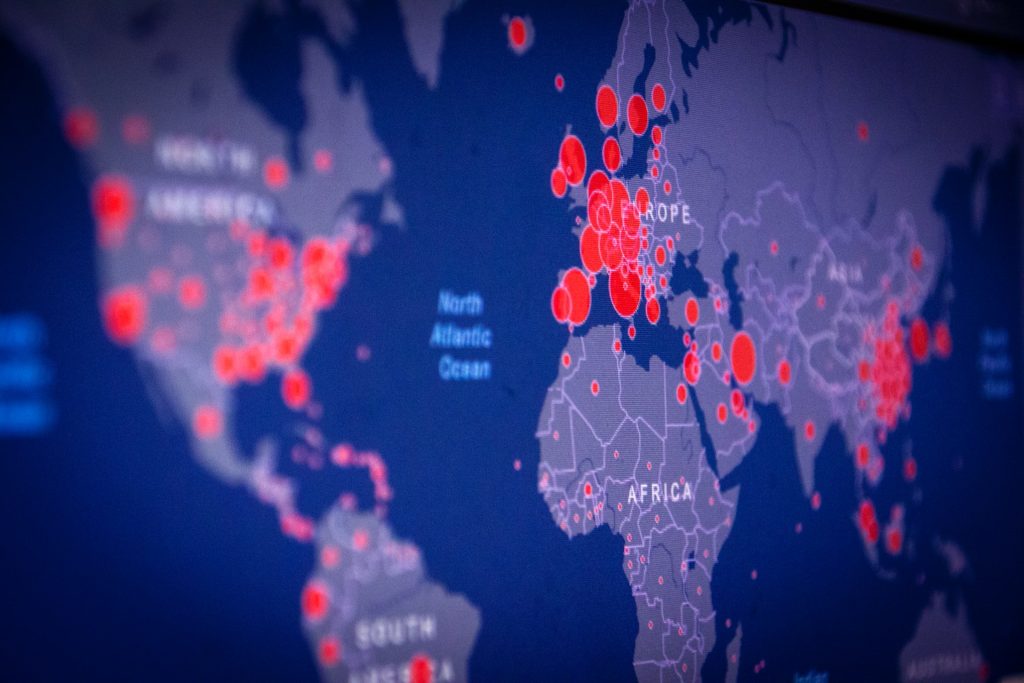
COVID heat map. Photo by Giacomo Carra on Unsplash
According to an analysis of excess mortality published in The Lancet, COVID’s global death toll could be as much as three times higher than official estimates.
From the start of 2020 to the end of 2021, official estimates of the global deaths directly attributed to COVID-19 5.9 million, however this new estimate puts excess deaths at a staggering 18.2 million.
The highest number of excess deaths were reported for India (4.07 million), more than eight times its 489 000 reported COVID deaths, followed by the U.S. (1.13 million), where the official count reached 824,000 by the end of 2021. According to the study, the excess mortality rate in the US (179.3 per 100 000) was about on par with Brazil (186.9 per 100,000). South Africa’s mortality rate was 293·2 per 100 000, just below the rate for Southern Sub-Saharan Africa (308.6 per 100 000). Sub-Saharan Africa’s mortality rate was 101.6 per 100 000, as a result of significant regional variation.
First author Haidong Wang, PhD, of the University of Washington, said in a statement: “Understanding the true death toll from the pandemic is vital for effective public health decision-making. Studies from several countries including Sweden and the Netherlands, suggest COVID-19 was the direct cause of most excess deaths, but we currently don’t have enough evidence for most locations.”
The massive undertaking derived models using all-cause mortality reports for 74 countries and territories and 266 subnational locations, which included 31 locations in low and middle-income countries. These locations reported all-cause death from 2020-2021, and up to 11 years prior. Excess mortality reports were also obtained for the 9 South African provinces 12 Indian states.
Overall, the global rate of estimated excess mortality from COVID was 120.3 deaths per 100 000. A total of 21 countries exceeded 300 per 100 000, with Bolivia having the highest mortality rate at 734.9 per 100 000. Bulgaria, Eswatini, North Macedonia, and Lesotho had the next highest mortality rates. Iceland had the lowest excess mortality rate (-47.8 per 100 000). Australia, Singapore, New Zealand, and Taiwan also had negative excess mortality rates.
Behind India and the U.S. for most excess deaths were Russia (1.07 million), Mexico (798 000), Brazil (792 000), Indonesia (736 000), and Pakistan (664 000). These seven countries were noted to account for more than half of the excess deaths globally during the study period.
Changes in mortality rates also reflected the impact of other diseases suppressed by the same measures that limited the spread of COVID. The researchers wrote: “The most compelling evidence to date of a change in cause-specific mortality in the pandemic period is the decrease, especially in the Northern Hemisphere, in flu and respiratory syncytial virus (RSV) deaths seen in the months of January to March, 2021,” they added. “Given the scarce and inconsistent evidence of the effect of the COVID-19 pandemic on cause-specific deaths, and the extremely scarce high-quality data on causes of death during the pandemic, our excess mortality estimates reflect the full impact of the pandemic on mortality around the world … not just the deaths directly attributable to SARS-CoV-2 infection.”
Limitations included different modelling strategies being used to estimate excess mortality rate, and excess mortality rate by week or month was not estimated.