Category: Cardiovascular Disease

New Scan Could Help Millions with Hard-to-treat High Blood Pressure

A speedy new scan could improve how millions of people with hypertension are treated, suggests a new study

Credit: Pixabay CC0

About a quarter of people with high blood pressure have been estimated to have primary aldosteronism, a problem with their adrenal glands producing too much of the hormone aldosterone, which regulates levels of salt in the body.

This problem is often missed, as the path to diagnosis is complex, involving multiple tests and, to guide treatment, an invasive procedure that is not always reliable.

The new 10-minute scan, developed at University College London and described in a research letter in the New England Journal of Medicine (NEJM), reveals overactivity in adrenal glands that was invisible with conventional tests, showing exactly where too much aldosterone is being made.

This, the researchers say, will make it easier to decide on the best treatment approach – either removal of an adrenal gland that is producing too much aldosterone, or the use of new medications that block aldosterone production, targeting the cause of high blood pressure in many patients.

Professor Bryan Williams, Chair of Medicine at UCL and clinical lead for the study, said: “We have been waiting for a test like this for many decades. This British innovation is going to transform the diagnosis of aldosterone excess as an important and previously hidden cause of hypertension in many of our patients. It offers huge potential to completely change the way we make this diagnosis and enable us to provide better targeted treatment for our patients.”

The over-production of aldosterone, which raises high blood pressure by causing the body to retain too much salt, can result in a condition called primary aldosteronism, which increases the risk of heart disease, stroke and kidney disease. However, many people who do not meet the threshold for this condition are thought to have excess aldosterone raising their blood pressure.

Currently the condition is screened with a blood test and confirmed with a second test*. To decide on treatment, two catheters are inserted in veins on either side of the groin to measure levels of aldosterone on each side of the body. This helps clinicians determine if the problem is only located in one adrenal gland or both – but the test is not always accurate and not often offered as few hospitals have the expertise to perform this complex procedure.

To better detect the condition, researchers at UCL used a PET-CT scan, which creates detailed 3D images of parts of the inside of the body and maps the accumulation of a tiny amount of radioactive tracer injected into a person’s vein.

They built a new tracer compound designed to bind to the aldosterone-producing enzyme, aldosterone synthase. The tracer was highly selectively taken up by the parts of the adrenal gland that were over-producing aldosterone, lighting up these areas on the scan.

In their NEJM research letter, the researchers described how 17 patients were scanned in the world’s first use of this technique at UCLH. The team found the source of over-production of aldosterone in every patient and did not see any side effects.

Professor Williams added: “This is the first time we have been able to visualise this disease. We can see it light up on the scan. The intensity of the signal reflects the level of aldosterone over-production. This might allow us, in future, to more precisely target these over-producing areas.” 

The achievement builds on more than a decade’s work by Professor Erik Arstad (UCL Division of Medicine and UCL Chemistry) and colleagues, who pioneered and patented a new method to make radioactive tracers.

Using this method, they were able to repurpose a drug-like molecule that bound to the aldosterone-producing enzyme for use as a tracer, replacing a single atom with a radioactive version of that atom – meaning this molecule would light up on a PET-CT scan.

Professor Arstad said: “It is very rewarding to be able to bring laboratory innovation into the clinic for the benefit of patients with hard-to-treat hypertension.”

The study was conducted at UCL and UCLH and was funded by the MRC and the NIHR University College London Hospitals Biomedical Research Centre.

The team is now embarking on a phase 2 clinical trial to gather sufficient data for the test to be approved for routine clinical use in the NHS.

In the UK, more than 14 million people are estimated to have high blood pressure (about one in three adults).

*For instance, a salt loading test, where a person increases their intake of salt (sodium), which would be expected to suppress aldosterone levels. If aldosterone levels are still high despite this increase, that confirms a primary hyperaldosteronism diagnosis.

Source: University College London

A Simple Neck Scan Could Detect Men at High Risk of Heart Failure

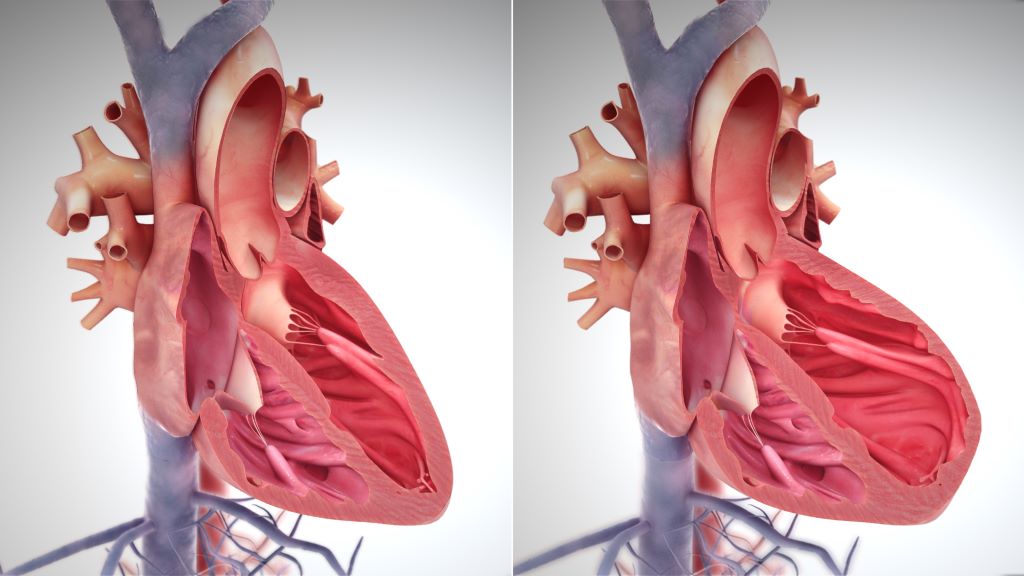
Right side heart failure. Credit: Scientific Animations CC4.0

A simple neck scan can identify men with double the risk of heart failure, according to a new study led by UCL researchers and funded by the British Heart Foundation and the National Institute for Health and Care Research.

A carotid ultrasound, like the ultrasound for pregnant women, is quick and painless, using a small handheld device moved gently over the neck to scan the arteries underneath.

When around 1600 men over the age of 70 received the scan, it showed the ‘flexibility’ of their carotid arteries – how much they stretch and expand with each heartbeat.

Researchers found that the quarter of men with the least flexible carotid arteries were 2.5 times more likely to develop heart failure than those with the most flexible carotid arteries.

These people could be encouraged by doctors to eat more healthily, do more exercise and take medications, if needed, to help reduce their risk of developing heart failure.

GPs do not currently routinely carry out the cheap and easy scan on healthy patients without symptoms. But, where GP surgeries have the capacity, offering a neck scan to older people to measure the flexibility of their arteries could help them better understand their risk of future heart failure, according to the researchers.

Having relied upon data from the British Regional Heart Study, which began in the 1970s and only involved men, researchers highlight that these findings next need to be looked at in women.

Dr Atinuke Akinmolayan (UCL Primary Care & Population Health), who is now a GP, said: “The carotid ultrasound is a safe, cheap and painless investigation, and our findings suggest it may be able to provide an early warning sign for heart failure.

“More research is needed, especially to see if this works for women, but this is something GPs could look at offering to people over the age of 60, where possible and believed needed.

“A patient who gets an ultrasound result indicating they may be at higher risk of future heart failure could have an important conversation with their doctor about lifestyle changes they could make to lower that risk.”

Doctors tend to scan the two carotid arteries, which run up either side of the neck, when someone has had a stroke or is at risk of a stroke following a transient ischaemic attack, known as a ‘mini-stroke’. A scan can identify carotid artery disease – a build-up of fatty material which can cause a stroke by breaking off and travelling into the brain or by narrowing the arteries and stopping blood reaching the brain.

However, the carotid arteries may be a red flag for heart failure also. This is because, when the carotid arteries become less flexible, they do not expand properly to let blood through. This can raise blood pressure, which forces the heart muscle to work harder. Over time, this can lead to heart failure.

The study, published in the Journal of the American Heart Association, looked at 1631 British men, aged 71 to 92, who had a carotid artery ultrasound between 2010 and 2012 as part of the British Regional Heart Study.

A carotid ultrasound, sometimes called a Doppler scan, takes an average of 15 to 30 minutes for most people, although this can vary.

A small handheld sensor is moved back and forth over the neck, generating sound waves which bounce off the arteries. That provides an echo which changes in frequency when blood flow is reduced in the blood vessels because they are narrowed by built-up fatty material.

The narrowing identified by a carotid scan can then be used to calculate the arteries’ flexibility, after factoring in other measures, including blood pressure. Researchers were able to identify the quarter of men with the least flexible carotid arteries, and the quarter of men whose carotid arteries were most flexible.

They then compared the rates of heart failure in each group  over an average of six years after their neck scans.

Even after considering other causes of heart failure, like age, weight, smoking and whether people had previously suffered a heart attack, the quarter of men with the least flexible carotid arteries had 2.5 times the risk of developing heart failure, compared to the quarter with the most flexible carotid arteries.

In a separate finding, looking at the thickness of people’s carotid arteries rather than their flexibility, the study found that men with thicker carotid arteries were more likely to have a heart attack or die from one.

For every ‘unit’ increase in the thickness of the carotid artery wall – with a unit equalling 0.16 millimetres – the risk of having a heart attack increased by about 29 per cent, even after considering other relevant factors like age and weight.

However the thickness of the carotid arteries was not found to be significantly linked to future heart failure in the study.

There are around 200 000 new cases of heart failure diagnosed every year in the UK.

It occurs when the heart is not pumping blood around the body as well as it should, most commonly when the heart muscle has been damaged – for example, after a heart attack.

Heart failure can cause extreme fatigue, shortness of breath and fainting.

Professor Bryan Williams, chief scientific and medical officer at the British Heart Foundation (BHF), who is also Chair of Medicine at UCL Institute of Cardiovascular Science, said: “The findings of this study are interesting and show that stiffening of arteries is associated with increased risk of heart failure, most likely due to the heart having to work harder against the resistance caused by these stiffer arteries.

“It is an important signal that whenever we detect such changes in the carotid arteries, we should also be thinking of the potential impact on the heart and an increased risk of heart failure – which we have treatment strategies to prevent.”

Source: University College London

Polyphenol-rich Diets Linked to Better Long-term Heart Health

Compounds found in tea, coffee, berries and nuts linked to better long-term heart health.

People who regularly consume polyphenol-rich foods and drinks, such as tea, coffee, berries, cocoa, nuts, whole grains and olive oil, may have better long-term heart health.

The research, led by King’s College London, found that those with higher adherence to polyphenol-rich dietary patterns had lower predicted cardiovascular disease (CVD) risk.

Polyphenols are natural compounds found in plants that are linked to various health benefits, including improved heart, brain, and gut health.

The study, published in BMC Medicine, followed more than 3100 adults from the TwinsUK cohort for over a decade, found that diets rich in specific groups of polyphenols were linked to healthier blood pressure and cholesterol profiles, contributing to lower CVD risk scores.

For the first time, the researchers also analysed a large number of metabolites in the urine that are produced when the body breaks down polyphenols.

These biomarkers confirmed that individuals with higher levels of polyphenol metabolites—especially those derived from specific groups of polyphenols, flavonoids and phenolic acids – had lower cardiovascular risk scores. They also had increased HDL cholesterol, also know as ‘good’ cholesterol.

The study used a newly developed polyphenol dietary score (PPS) to capture intake of 20 key polyphenol-rich foods commonly consumed in the UK, ranging from tea and coffee to berries, olive oil, nuts, and whole grains.

This score showed stronger associations with cardiovascular health than estimates of total polyphenol intake, likely because it captures overall dietary patterns rather than individual compounds.

This finding suggests that considering the whole diet provides a more accurate picture of how polyphenol-rich foods work together to support long-term heart health.

Our findings show that long-term adherence to polyphenol-rich diets can substantially slow the rise in cardiovascular risk as people age. Even small, sustained shifts towards foods like berries, tea, coffee, nuts, and whole grains may help protect the heart over time.”

Professor Ana Rodriguez-Mateos, Professor of Human Nutrition at King’s College London

Dr Yong Li, first author of the study, added: “This research provides strong evidence that regularly including polyphenol-rich foods in your diet is a simple and effective way to support heart health. These plant compounds are widely available in everyday foods, making this a practical strategy for most people.”

The researchers note that while cardiovascular risk naturally increases with age, higher polyphenol intake was associated with a slower progression of risk over the 11-year follow-up period. They also emphasise the need for future dietary intervention studies to further validate these associations.

Source: King’s College London

Chronic Pain May Increase Hypertension Risk in Adults

Depression resulting from pain may be a contributing factor in the development of high blood pressure, finds a new study

Credit: Pixabay CC0

Chronic pain in adults may increase their risk of high blood pressure, and the location and extent of pain and if they also had depression were contributing factors, according to new research published in Hypertension, an American Heart Association journal.

An analysis of health data for more than 200 000 adults in the US found that those who reported chronic pain throughout their bodies were more likely to develop high blood pressure than people who reported no pain, short-term pain or pain limited to specific areas.

“The more widespread their pain, the higher their risk of developing high blood pressure,” said lead study author Jill Pell, MD, CBE, Professor of Public Health at the University of Glasgow. “Part of the explanation for this finding was that having chronic pain made people more likely to have depression, and then having depression made people more likely to develop high blood pressure. This suggests that early detection and treatment of depression, among people with pain, may help to reduce their risk of developing high blood pressure.”

High blood pressure and hypertension occurs when the force of blood pushing against the walls of blood vessels is too high, and it increases the risk of heart attack or stroke. High blood pressure as well as stage one or stage two hypertension, which includes blood pressure measures from 130/80mmHg to 140/90mmHg or higher, affects nearly half of all adults in the US, and is the leading cause of death in the US and around the world, according to the 2025 joint American Heart Association/American College of Cardiology guideline endorsed by 11 other organisations.

According to previous research, chronic musculoskeletal pain – pain in the hip, knee, back or neck/shoulder that lasts for at least three months – is the most common type of pain in the general population. This study investigated the associations between the type, location and extent of pain throughout the body and the development of high blood pressure.

Inflammation and depression are both known to raise the risk of high blood pressure; however, no prior studies have examined the extent to which the link between pain and high blood pressure is mediated through inflammation and depression, Pell said.

In this study, participants completed a baseline questionnaire and provided information about whether they had experienced pain in the last month that interfered with their usual activities. They noted if the pain was in their head, face, neck/shoulder, back, stomach/abdomen, hip, knee or all over their body. If they reported pain, they indicated whether pain had persisted for more than three months.

Depression was gauged based on participants’ responses to a questionnaire that asked about the frequency of depressed mood, disinterest, restlessness or lethargy in the previous two weeks. Inflammation was measured with blood tests for C-reactive protein (CRP).

After an average follow-up of 13.5 years, the analysis found:

  • Nearly 10% of all participants developed high blood pressure.
  • Compared to people who did not have pain, people with chronic widespread pain had the highest risk of high blood pressure (75% increased risk), while short-term pain was associated with a 10% higher risk and chronic localized pain was linked with a 20% higher risk.
  • When comparing sites of pain to people without pain, the analysis showed that chronic, widespread pain was associated with a 74% higher risk of developing high blood pressure; chronic abdominal pain with a 43% higher risk; chronic headaches with a 22% higher risk; chronic neck/shoulder pain with a 19% higher risk; chronic hip pain with a 17% higher risk; and chronic back pain with a 16% higher risk.
  • Depression (11.3% of participants) and inflammation (0.4% of participants) accounted for 11.7% of the association between chronic pain and high blood pressure.

“When providing care for people with pain, health care workers need to be aware that they are at higher risk of developing high blood pressure, either directly or via depression. Recognising pain could help detect and treat these additional conditions early,” Pell said.

Daniel W. Jones, MD, FAHA, chair of the 2025 American Heart Association/American College of Cardiology High Blood Pressure Guideline and dean and professor emeritus of the University of Mississippi School of Medicine in Jackson, Mississippi, said, “It is well known that experiencing pain can raise blood pressure in the short term, however, we have known less about how chronic pain affects blood pressure. This study adds to that understanding, finding a correlation between the number of chronic pain sites and that the association may be mediated by inflammation and depression.”

Jones, who was not involved in this research, suggests further exploration of the relationship through randomized controlled trials of approaches to pain management and blood pressure, especially the use of Nonsteroidal Anti-Inflammatory Drugs (NSAIDs) such as ibuprofen, which may also cause an increase in blood pressure.

“Chronic pain needs to be managed within the context of the patients’ blood pressure, especially in consideration of the use of pain medication that may adversely affect blood pressure,” said Jones.

The study’s limitations include that participants were middle- and older-aged adults who were mainly white people of British origin; therefore, the study’s findings may not be generalizable to people from other racial or ethnic groups, living in other countries or adults in other age groups. In addition, the information about levels of pain was self-reported, and the study relied on clinical diagnostic coding, a one-time pain assessment and two blood pressure measurements.

Study details, background and design:

  • The study reviewed data from the UK Biobank, a large population-based study that recruited more than 500 000 adults who were ages 40-69 when they joined the study between 2006 and 2010. Participants lived in England, Scotland and Wales.
  • This analysis included 206,963 adults. The average age of the participants was 54 years; 61.7% were women, and 96.7% were white adults.
  • Among all participants, 35.2% reported experiencing chronic musculoskeletal pain; 62.2% reported chronic pain at one site of the body; 34.9% reported chronic pain at two to three musculoskeletal sites; and 3.2% reported pain at four sites.
  • When compared with participants who reported no pain, participants reporting pain were more likely to be women, have an unhealthy lifestyle, larger waist circumference, higher body mass index (BMI), more long-term health conditions and live in areas with higher unemployment, lower home and car ownership and more overcrowding.
  • The researchers adjusted for factors associated with both pain and high blood pressure, including self-reported smoking status, alcohol consumption, physical activity, total sedentary time, sleep duration, and fruit and vegetable intake.
  • UK Biobank data was collected at the participants’ baseline appointment through a touch-screen questionnaire, interview, physical measurements (height, weight, BMI, waist circumference, blood pressure measurement) and blood samples taken for cholesterol and blood sugar (hemoglobin A1c).
  • The participants’ hospital records identified incidences of high blood pressure, which were defined using the standard International Statistical Classification of Diseases and Related Problems and diagnostic codes (ICD-10 codes).
  • The study’s follow-up duration was determined by measuring the time from the baseline date until one of the following events occurred: a recorded diagnosis of high blood pressure, the participant’s death or censoring due to reaching the end of follow-up records. The earliest of these events marked the end of the follow-up period for each participant.

Co-authors, disclosures and funding sources are listed in the manuscript.

Low-dose Colchicine May Reduce Risk of Heart Attack and Stroke

Researchers found that low-dose colchicine can be used to reduce heart attacks and strokes in high-risk patients

Photo by Towfiqu Barbhuiya on Unsplash

A widely-used, inexpensive gout drug could reduce heart attacks and strokes in people with cardiovascular disease, according to a new Cochrane review.

The review examined the effects of low doses of colchicine, a drug used to treat gout, and found no increase in serious side effects.

Cardiovascular disease is often driven by chronic low-grade inflammation, which contributes to recurrent cardiovascular events such as heart attacks and strokes. Colchicine has anti-inflammatory properties that make it a promising option for people with heart disease. 

A promising effect on cardiovascular risk

The review included 12 randomised controlled trials involving nearly 23 000 people with a history of heart disease, heart attack or stroke. The studies looked at patients who took colchicine for at least six months, with doses of 0.5mg once or twice a day. Most participants were male (~80%) and the mean age was 57 to 74 years old. Half received colchicine, while the other half received either a placebo or no additional treatment alongside their usual care.

Overall, those taking low-dose colchicine were less likely to experience a heart attack or stroke. For every 1000 people treated, there were 9 fewer heart attacks and 8 fewer strokes compared with those not taking the drug. Whilst there were no serious adverse events identified, patients who took colchicine were more likely to have stomach or digestive side effects, but these were usually mild and didn’t last long.

Among 200 people with cardiovascular disease – where we would normally expect around seven heart attacks and four strokes – using low-dose colchicine could prevent about two of each. Reductions like this can make a real difference for patients who live with ongoing, lifelong cardiovascular risk.

– Dr Ramin Ebrahimi, co-lead author from the University Medicine Greifswald, Germany

A new use for a long-established medicine

As cardiovascular diseases are the leading cause of death globally, colchicine presents a promising inexpensive and accessible option for secondary prevention in high-risk patients.

These results come from publicly funded trials repurposing a very old, low-cost drug for an entirely new use. It shows the power of academic research to reveal treatment opportunities that traditional drug development often overlooks.

 – Lars Hemkens, senior author from the University of Bern, Switzerland

The evidence is less clear when it comes to whether colchicine affects overall death rates or the need for procedures like coronary revascularisation. The studies didn’t provide any information to say whether the drug improves quality of life or reduces hospital stays. The authors stress that further research is needed in these areas.

Source: Cochrane

Even Low-intensity Smoking Increases Risk of Heart Attack and Death

Study of 300 000 people finds just two to five cigarettes per day increases risk of death by 60%

Photo by lil artsy

An analysis of data from almost two dozen long-term studies finds that even low-intensity smokers have a substantially higher risk of heart disease and death compared to people who never smoked, even years after they quit. Michael Blaha of the Johns Hopkins Ciccarone Center for Prevention of Cardiovascular Disease, USA, and colleagues report these findings November 18th in the open-access journal PLOS Medicine.

Previous research has shown that smoking cigarettes increases a person’s risk of developing cardiovascular disease, but the exact relationship between how heavily a person smokes and their risks is still unclear, especially for low-intensity smokers. Today, more people are smoking fewer cigarettes, but it’s still important to understand the cardiovascular risks and long-term benefits of quitting, even for individuals who aren’t smoking a pack a day.

Blaha’s team analysed data from more than 300 000 adults enrolled in 22 longitudinal studies – which involve following groups of individuals over time – for up to 19.9 years. In that time, they documented more than 125 000 deaths and 54 000 cardiovascular events, such as heart attacks, strokes and heart failure. The analysis showed that even very low-intensity smoking, defined as two to five cigarettes per day, was associated with a 50% higher risk of heart failure and a 60% higher risk of death from any cause, compared to never smoking. A person’s risk of cardiovascular events dropped most substantially in the first decade after quitting smoking and continued to decrease over time. However, even up to three decades later, former smokers may still exhibit higher risk compared to those who never smoked.

Considering that even occasional or very low-intensity smoking significantly increases a person’s risk of cardiovascular disease and death, the researchers conclude that quitting smoking at younger ages is the best way to decrease your risk, rather than reducing the number of cigarettes smoked each day. These findings reinforce established public health guidelines – that smokers should quit as early as possible instead of just cutting back – and emphasize the importance of smoking prevention programs.

The authors add, “This is one of the largest studies of cigarette smoking to date using the highest quality data in the cardiovascular epidemiology literature. It is remarkable how harmful smoking is – even low doses of smoking confer large cardiovascular risks. As far as behaviour change, it is imperative to quit smoking as early in life as possible, as the among of time passed since complete cessation from cigarettes is more important prolonged exposure to a lower quantity of cigarettes each day.”

Provided by PLOS

Press preview: https://plos.io/4nES58Z

In your coverage, please use this URL to provide access to the freely available paper in PLOS Medicinehttps://plos.io/4nIQAXN

Contact: Michael Blaha, mblaha1@jhmi.edu

Image caption: Researchers assess the impact of when one quits smoking and their health outcomes later on.

Image credit: lil artsy, Pexels (CC0, https://creativecommons.org/publicdomain/zero/1.0/)

High-resolution image link: https://plos.io/3VIPLCA

Citation: Tasdighi E, Yao Z, Dardari ZA, Jha KK, Osuji N, Rajan T, et al. (2025) Association between cigarette smoking status, intensity, and cessation duration with long-term incidence of nine cardiovascular and mortality outcomes: The Cross-Cohort Collaboration (CCC). PLoS Med 22(11): e1004561. https://doi.org/10.1371/journal.pmed.1004561

Old Blood Pressure Drug, New Tumour-fighting Tricks

A Penn-led team has revealed a how hydralazine, one of the world’s oldest blood pressure drugs and a mainstay treatment for preeclampsia, works at the molecular level. In doing so, they made a surprising discovery – it can also halt the growth of aggressive brain tumours.

Reseachers from the Megan Matthews lab at Penn treated human glioblastoma brain tumour cells with hydralazine, one of the oldest-known blood pressure drugs and a first-line treatment for preeclampsia, for three days. At day three (imaged), more cells become enlarged and flattened – a hallmark of senescence. (Image: Courtesy of Kyosuke Shishikura)

Over the last 70 years, hydralazine has been an indispensable tool against life-threatening high blood pressure, especially during pregnancy. But despite its essential role, a fundamental mystery has persisted: No one knows its mechanism of action, which allows for improved efficacy, safety, and what it can treat.

“Hydralazine is one of the earliest vasodilators ever developed, and it’s still a first-line treatment for preeclampsia – a hypertensive disorder that accounts for 5-15% of maternal deaths worldwide,” says Kyosuke Shishikura, a physician-scientist at the University of Pennsylvania. “It came from a ‘pre-target’ era of drug discovery, when researchers relied on what they saw in patients first and only later tried to explain the biology behind it.”

Now Shishikura, his postdoctoral adviser at Penn Megan Matthews, and collaborators have solved this long-standing puzzle.

In a paper published in Science Advances, the team uncovered the method of action of hydralazine, and in doing so, revealed an unexpected biological link between hypertensive disorders and brain cancer. The findings highlight how long-established treatments can reveal new therapeutic potential and could help in the design of safer, more effective drugs for both maternal health and brain cancer.

“Preeclampsia has affected generations of women in my own family and continues to disproportionately impact Black mothers in the United States,” Matthews says. “Understanding how hydralazine works at the molecular level offers a path toward safer, more selective treatments for pregnancy-related hypertension—potentially improving outcomes for patients who are at greatest risk.”

Hydralazine blocks an oxygen-sensing enzyme

The team found that hydralazine blocks an oxygen-sensing enzyme called 2-aminoethanethiol dioxygenase (ADO) – a molecular switch for blood vessels contraction.

“ADO is like an alarm bell that rings the moment oxygen starts to fall,” Matthews says. “Most systems in the body take time; they have to copy DNA, make RNA, and build new proteins. ADO skips all that. It flips a biochemical switch in seconds.”

Hydralazine acts by binding to and blocking ADO – effectively “muting” that oxygen alarm. Once the enzyme was silenced, the signaling proteins it normally degrades – called regulators of G-protein signaling (RGS) – remained stable.

The buildup of RGS proteins, says Shishikura, tells the blood vessels to stop constricting, effectively overriding the “squeeze” signal. This reduces intracellular calcium levels, which he calls the “master regulator of vascular tension.” As calcium levels fall, the smooth muscles in blood vessel walls relax, causing vasodilation and a drop in blood pressure.

From preeclampsia to brain cancer: A common target

Prior to this study, cancer researchers and clinicians had begun to suspect that ADO was important in glioblastoma, where tumours often have to survive in pockets of very low oxygen, Shishikura explains. Elevated levels of ADO and its metabolic products had been linked with more aggressive disease, suggesting that shutting this enzyme down could be a powerful strategy, but no one had a good inhibitor to test that idea.

To see if hydralazine was a contender, Shishikura worked closely with structural biochemists at the University of Texas, who used X-ray crystallography to visualise hydralazine bound to ADO’s metal centre, and with neuroscientists at the University of Florida, who tested the drug’s effects in brain cancer cells.

They found that the ADO pathway that regulates vascular contraction also helps tumour cells survive in low-oxygen environments. Unlike chemotherapy, which aims to kill all cells outright, hydralazine disrupted that oxygen-sensing loop, triggering cellular senescence.

Unlocking the potential for other lifesaving treatments

Their findings highlight how long-established treatments can reveal new therapeutic potential and could help in the design of safer, more effective drugs for both maternal health and brain cancer.

They say the next step is to push the chemistry further building new ADO inhibitors that are more tissue specific and better at crossing, or exploiting weak points in, the blood-brain barrier so they hit tumour tissue hard while sparing the rest of the body.

Matthews is also working to continue engineering the next generation of medical solutions by revealing the mechanics of clinically tested, long-known treatments.

“It’s rare that an old cardiovascular drug ends up teaching us something new about the brain,” Matthews says, “but that’s exactly what we’re hoping to find more of – unusual links that could spell new solutions.”

Source: University of Pennsylvania

Hypertension in Children and Adolescents Nearly Doubled Between 2000 and 2020

Pexels Photo by Thirdman

The rate of children and adolescents experiencing high blood pressure worldwide nearly doubled between 2000 and 2020, according to a new meta-analysis published in The Lancet Child & Adolescent Health journal.

In 2000, approximately 3.2% of children had hypertension, but by 2020, the prevalence had increased to more than 6.2% of children and adolescents under age 19, affecting 114 million young people around the world. The study suggests that obesity is a substantial driver of the increase in childhood hypertension, with nearly 19% of children and adolescents living with obesity affected by hypertension, compared to less than 3% in children and adolescents considered a healthy weight.

“The nearly twofold increase in childhood high blood pressure over 20 years should raise alarm bells for healthcare providers and caregivers,” said study author Prof Igor Rudan, Director of the Centre for Global Health Research at The Usher Institute, University of Edinburgh (UK). “But the good news is that we can take steps now, such as improving screening and prevention efforts, to help control high blood pressure in children and reduce the risks of additional health complications in the future.”

Based on a meta-analysis of data from 96 large studies involving more than 443 000 children across 21 countries, the researchers found that how blood pressure is measured in children and adolescents can affect prevalence estimates. When hypertension is confirmed by a healthcare provider over at least three in-office visits, the prevalence was estimated to be approximately 4.3%. However, when the researchers also included out-of-office assessments such as ambulatory or home blood pressure monitoring, the prevalence of sustained hypertension climbed to about 6.7%. The research highlighted that conditions like masked hypertension – where hypertension is not detected during routine checkups – affect nearly 9.2% of children and adolescents globally, indicating potential underdiagnosis. Simultaneously, the prevalence of white-coat hypertension (a condition where a person’s blood pressure is elevated only when they are in a medical setting, such as a doctor’s office, but is normal at home or when measured with a home blood pressure monitor) was estimated at 5.2%, which suggests that a notable proportion of children might be misclassified.

“Childhood high blood pressure is more common than previously thought, and relying solely on traditional in-office blood pressure readings likely underestimates the true prevalence or leads to misdiagnosis of hypertension in children and adolescents. Early detection and improved access to prevention and treatment options are more critical than ever to identify children experiencing or at-risk for hypertension. Addressing childhood hypertension now is vital to prevent future health complications as children transition to adulthood,” said study author Dr Peige Song, of the Zhejiang University School of Medicine (China).

The analysis suggests that children and adolescents with obesity are at a nearly eight times higher risk of developing high blood pressure, with approximately 19% of children with obesity having hypertension, compared to 2.4% of children and adolescents considered to be within a healthy weight range. This happens because obesity can cause other health problems, such as insulin resistance and changes in blood vessels, which make it harder to keep blood pressure within a healthy range.

The study also suggests that an additional 8.2% of children and adolescents have prehypertension, meaning blood pressure levels are higher than normal but do not yet meet the criteria for hypertension. Prehypertension is especially prevalent during adolescence, with rates reaching around 11.8% among teenagers, compared to about 7% in younger children. Blood pressure levels also tend to increase sharply during early adolescence, peaking around age 14, especially among boys. This pattern emphasises the importance of regular blood pressure screening during these critical years. Children and adolescents with prehypertension are more likely to progress to full hypertension.

The authors acknowledge some limitations of the study, including data variability due to differences in measurement methods, study designs, and regional healthcare practices. Many of the articles included originated from low- and middle-income countries, which may influence the overall estimates’ applicability globally. Additionally, some specific hypertension phenotypes and out-of-office assessments had limited data. Lastly, practical barriers such as lack of access to advanced blood pressure monitoring tools in some areas could hamper widespread adoption of recommended diagnostic procedures.

Writing in a linked Comment, lead author Rahul Chanchlani of McMaster University (Canada), who was not involved in the study, said, “Harmonised diagnostic criteria, expanded out-of-office monitoring, and context-sensitive surveillance are essential next steps. Education of healthcare providers, families, and policymakers is also crucial. The integration and implementation of childhood hypertension into broader non-communicable disease prevention strategies is a priority, recognising that cardiovascular risk begins not in middle age, but in childhood. The task ahead is straightforward: to ensure that no child’s elevated blood pressure goes undetected, unrecognised, or untreated.”

Source: EurekAlert!

Trial Finds Similar Outcomes for TAVR and Surgery

Phase III clinical trial by Cedars-Sinai and other institutions shows no significant differences for mortality, stroke or rehospitalisation at seven years post-treatment

Artificial heart valve. Credit: Scientific Animations CC4.0

People who underwent TAVR, a minimally invasive procedure to have their heart’s aortic valve replaced had similar health outcomes years after treatment as people who had surgery, Cedars-Sinai investigators and colleagues report.

Raj Makkar, MD, an interventional cardiologist in the Department of Cardiology in the Smidt Heart Institute, is senior author of a study published in The New England Journal of Medicine that describes the Phase III clinical trial results.

“These results show that seven years after treatment, health outcomes for patients were similar whether they underwent a minimally invasive procedure or open-heart surgery,” said Makkar.

Aortic valve disease affects about 2% of the US population, and risk rises with age, so the disorder is expected to become increasingly common.

The international PARTNER 3 trial involved 1000 patients at 71 healthcare locations. Study participants had a severe form of aortic valve stenosis, a condition in which the heart’s aortic valve becomes so narrow and stiff that it cannot open fully to allow blood to pass through. The condition can cause heart failure or stroke.

Clinical trial participants were randomly chosen to undergo either open-heart surgery or a procedure called a transcatheter aortic valve replacement, also known as TAVR. All participants received a commercially available bioprosthetic valve called the SAPIEN 3 valve.

During TAVR, an interventional cardiologist threads a catheter through an artery to reach the heart and replace the diseased valve. Previous randomised controlled trials, including an earlier version of PARTNER 3, reported similar outcomes with TAVR and surgery five years after treatment in people with low to high risk for surgical complications.

For this study, investigators limited participation to patients considered to be at low surgical risk. Seven years after treatment, composite rates of death, stroke or rehospitalisation related to treatment were 34.6% for TAVR (496 people) and 37.2% for surgery (454 people), a difference that was not statistically significant. The rates of failure for the bioprosthetic valve were similar: 6.9% for TAVR and 7.3% for surgery. In addition, patients in both groups reported comparable quality of life outcomes.

“These rich data exemplify the vital information clinicians need to guide patient treatment,” said Eduardo Marbán, MD, PhD, executive director of the Smidt Heart Institute and the Mark Siegel Family Foundation Distinguished Chair. “We are proud to offer leading-edge clinical care while also advancing the field of cardiology with groundbreaking research.”

The Smidt Heart Institute is a global leader in treating heart valve disease surgically and with transcatheter procedures. Makkar, vice president of Cardiovascular Innovation and Intervention, leads a team of interventional cardiologists who perform almost 800 TAVRs each year.

The investigators next plan to report patient outcomes and valve durability at 10 years posttreatment.

Source: Cedars-Sinai

Medication Still Better than Procedure for Some Irregular Heartbeat Conditions

Image credit: American Heart Association

For older people with irregular heart rhythms who are at high risk of stroke and bleeding, standard care (including the use of blood thinners when indicated) was found to be the better choice compared to a promising, catheter-based procedure, according to a preliminary late-breaking science presentation today at the American Heart Association’s Scientific Sessions 2025.

The trial, Left Atrial Appendage CLOSURE in Patients with Atrial Fibrillation at High Risk of Stroke and Bleeding Compared to Medical Therapy (CLOSURE-AF), compared a catheter-based procedure to medical therapy among patients with atrial fibrillation (AFib), an irregular heart rhythm.

While blood thinners can be highly effective at reducing the risk of stroke among people with  AFib, the medication may cause severe bleeding in some people. Due to this risk, researchers are exploring alternative treatments including this catheter-based procedure. The procedure, called a left atrial appendage closure, seals a small pouch in the heart called the left atrial appendage, or LAA, where blood clots can form. If these blood clots enter the bloodstream, it increases the risk of stroke. Closing this pouch reduces the risk of stroke. It also can allow people to stop taking blood thinners for clot prevention.

The CLOSURE AF study compared catheter-based left atrial appendage closure with physician-directed standard medical care (including timely anticoagulant blood thinning when eligible) in patients with atrial fibrillation at high risk for stroke and bleeding. The aim of the study was to demonstrate non-inferiority for catheter-based LAA closure regarding risk of stroke, systemic embolism, cardiovascular/unexplained death or major bleeding. However, this was not reached.

“We expected that catheter-based LAA closure would be comparable to physician-directed standard medical care often using blood thinning anticoagulant medications,” said study lead researcher Ulf Landmesser, MD, chairman of the department of cardiology, angiology and intensive care medicine at Deutsche Herzzentrum Charité and professor of cardiology at Charité University Medicine in Berlin. “However, this was not the case in this trial of older patients at very high risk of bleeding and stroke.

“Our findings indicate that standard physician-directed medical care, including blood thinners for eligible patients, remains a valid management option for those older patients with irregular heartbeat who are at very high risk for stroke and bleeding.”

Landmesser said that the results of the procedure are different for lower-risk patients, and studies investigating this are currently underway. Moreover, ongoing studies are comparing LAA closure in addition to blood thinning in very high-risk patients.

Because medical treatments and LAA closure for AFib remain in development  the results of this study may not apply to future research, other techniques or procedures.

Study details, background and design:

  • More than 900 adults with AFib who were at high risk of stroke and major bleeding participated in this study.
  • Participants’ average age was 78 years, and 39% were women.
  • They were enrolled at 42 health care sites in Germany from March 2018 to April 2024, and they were followed for a median of 3 years.
  • Participants were randomly assigned to one of two treatment groups: standard medical care (including anticoagulant blood thinners, if eligible); or LAA closure.
  • Researchers compared the frequency of stroke, life-threatening blood clots, cardiovascular/unexplained death and major bleeding between the two treatment groups.

Source: American Heart Association