Category: Cardiovascular Disease

How Blood Vessel Dysfunction can Worsen Chronic Disease

Source: CC0

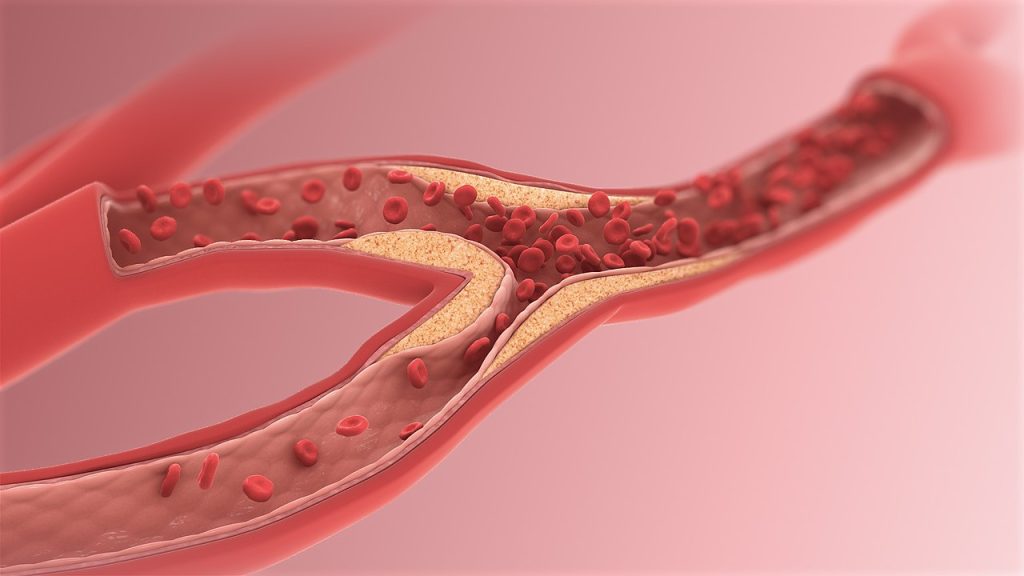
Researchers have uncovered how specialised cells surrounding small blood vessels, known as perivascular cells, contribute to blood vessel dysfunction in chronic diseases such as cancer, diabetes and fibrosis. The findings, published today in Science Advances, could change how these diseases are treated.

This new study from Oregon Health & Science University shows that perivascular cells sense changes in nearby tissues and send signals that disrupt blood vessel function, worsening disease progression. It was led by he study, led by OHSU’s Luiz Bertassoni, DDS, PhD. 

Nearly a decade ago, Bertassoni and his team developed a method to 3D print blood vessels in the lab, a major breakthrough. Since then, they’ve focused on engineering blood vessels that better mimic those in the human body to study more complex diseases.

“Historically, endothelial cells lining blood vessels have been considered the main contributors of vascular disease,” Bertassoni said. “Our findings represent a paradigm shift, showing how perivascular cells, instead, act as important sentinels. They detect changes in tissues and coordinating vascular responses. This opens the door to entirely new treatment strategies.”

Cristiane Miranda Franca, DDS, PhD, the study’s lead author, said: “The applications of this research are wide. We’ve shown for the first time how perivascular cells trigger inflammation and signal blood vessel changes when surrounding tissues are altered.”

The study used an innovative “blood vessel on-a-chip” model developed by Christopher Chen, MD, PhD, and his team from Boston University and the Wyss Institute at Harvard, who are collaborators on this project. By replicating conditions like tissue stiffening and scarring – common in aging, chronic diseases and cancer – the researchers discovered that perivascular cells drive blood vessel leakage and distortion, worsening inflammation and disease.

“When we removed perivascular cells, blood vessels essentially failed to respond to tissue changes,” Franca said.

The findings shed light on the relationship between the extracellular matrix, blood vessel function and disease progression. Perivascular cells could become targets for therapies aimed at restoring normal vascular function and reducing the progression of various diseases such as fibrosis, diabetes and cancer.

Importantly, the research also holds promise for cancer prevention and early intervention. Early detection and treatment of changes in these cells could help stop tumours before they grow.

“If we intervene early, we might prevent precancerous lesions from advancing to full-blown cancer,” Bertassoni said. “This could revolutionise how we approach cancer prevention and treatment.”

Source: Oregon Health & Science University

How Checkpoint Immunotherapy also Increases the Risk of Cardiovascular Disease

Source: Wikimedia CC0

Cancer immunotherapy is known to also make patients more vulnerable to heart attack and stroke. A new study led by researchers at NYU Langone Health points to a possible explanation for this side effect: the treatment interferes with immune regulation in the heart’s largest blood vessels.

This new work focused on immune checkpoint inhibitors, which work by blocking molecules embedded on the surface of cells – immune checkpoints – which normally serve as “brakes” that prevent excess immune activity, or inflammation. Some tumours are known to hijack these checkpoints to weaken the body’s defences, so by blocking the checkpoints, the treatments enable the immune system to kill tumour cells.

Unfortunately, this treatment type may also trigger damaging levels of inflammation in the heart, brain, stomach, and other organs, the researchers say. For example, past studies have shown that about 10% of those with atherosclerosis have a heart attack or stroke following cancer treatment. Until now, the specific mechanisms behind this issue had remained unclear.

To address this question, the research team explored at a cellular level how immune checkpoint inhibitors interact with immune cells within arterial plaques. A genetic analysis by the study authors showed that the same type of immune checkpoints targeted by cancer therapies also appear in arterial immune cells, establishing a link between checkpoint inhibitors and cardiovascular events.

“Our findings provide new insight into how a drug intended to target tumours can also prompt a heightened immune response in arteries and increase risk of heart disease,” said study co-senior author Chiara Giannarelli, MD, PhD. “Cancer patients and their physicians should be aware that they may need to monitor for new heart concerns following cancer treatment,” added Dr Giannarelli.

For the current study, published in Nature Cardiovascular Research, the researchers analysed the genetic activity of thousands of immune cells collected from the plaques of 50 men and women undergoing a surgical procedure to address atherosclerosis.

The investigators also explored how type 2 diabetes, a known risk factor for both cancer and heart disease, may make those with atherosclerosis even more vulnerable to the ill effects of checkpoint inhibitors, adds Dr Giannarelli, also an associate professor in the Department of Pathology at NYU Grossman School of Medicine. As part of the study, the team assessed immune checkpoint activity in arterial tissue collected from eight patients with diabetes and four healthy volunteers. Notably, none had a history of atherosclerosis. The results showed that the diabetes patients had less measurable communication between checkpoints, which in turn can prompt increased inflammation.

Other experiments further revealed that taking immune checkpoint inhibitors might make it harder to combat atherosclerosis. Under normal circumstances, physicians typically prescribe low-fat diets to reduce plaque buildup and inflammation. Indeed, the researchers’ experiments in rodents confirmed that such diets boost communication between immune checkpoints within arteries. However, cancer patients may be at a disadvantage because their therapy, by blocking these same checkpoints, may counteract the anti-inflammatory benefits of fat reduction.

“Our findings highlight how cancer, diabetes, and heart disease do not exist in a vacuum, and that it is critical to consider how targeting one of these conditions can affect the others,” said study co-senior author Kathryn J. Moore, PhD. “Now that experts have a better understanding of the interplay between these diseases, they can begin to explore new strategies to lower the risk of unintended health concerns caused by their treatment,” added Dr Moore. She cautions that the study did not directly assess immune checkpoint behaviour in cancer patients. The team plans to do so in future investigations, she adds.

Source: NYU Langone Health

Study Likely to Change Standard of Care for Deadly Vertebrobasilar Stroke

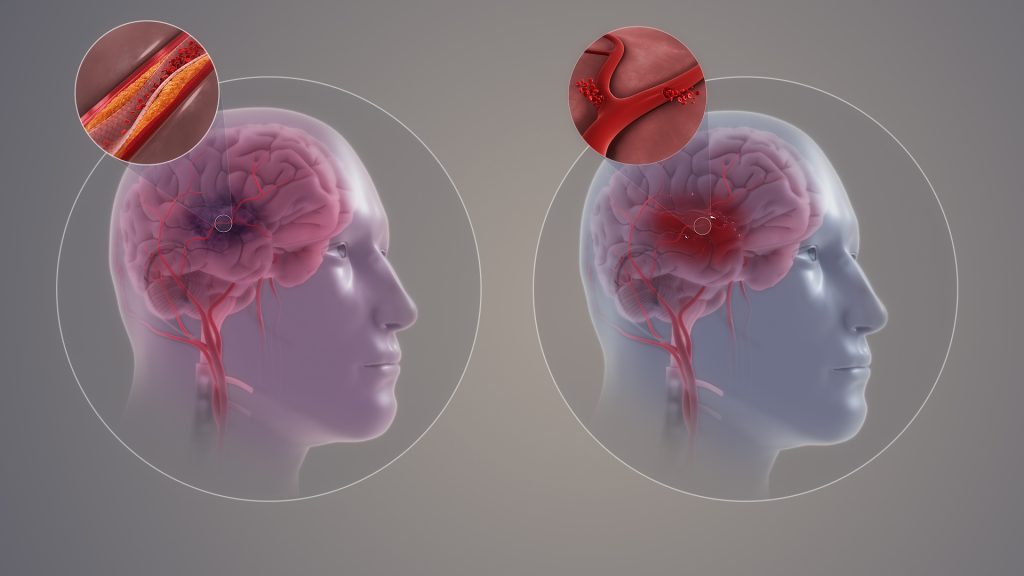
Ischaemic and haemorrhagic stroke. Credit: Scientific Animations CC4.0

Endovascular therapy (EVT), a minimally invasive surgery performed inside the blood vessels, is 2 ½ times more likely than standard medical management to achieve a positive outcome after vertebrobasilar stroke that affects the back of the brain, including the brain stem. A meta-analysis of four randomised clinical trials, published in The Lancet, was led by UPMC Stroke Institute director Raul Nogueira, MD.

Investigators from the US, Netherlands and China formed a multi-centre collaboration of all four randomised trials of EVT in vertebrobasilar occlusion with data that provides the strongest evidence to date of the benefits of EVT over alternative approaches for complicated vessel obstructions in life-sustaining areas of the brain.

Although vertebrobasilar artery occlusions interrupting blood flow in the back of the brain account for only a small fraction of all ischaemic strokes, they are especially deadly. Without an appropriate intervention, vertebrobasilar strokes lead to high rates of severe disability and mortality that may exceed 70%.

“While the overwhelming benefit of EVT for acute ischaemic strokes due to occlusions of large vessels that supply the anterior brain has been well established, the benefit of this therapy for vertebrobasilar artery occlusion, one of the most devastating forms of stroke, has been more controversial,” said Nogueira, endowed professor of neurology and neurosurgery at the University of Pittsburgh.

To address this uncertainty, the consortium of investigators, called VERITAS, focused on providing more precise, comprehensive and statistically powered estimates of the benefits of EVT with a particular focus on specific patient subgroups of clinical interest.

As the primary coordinating centre for the study, the Pitt team established common variables, definitions and trial specifications that laid the groundwork for a core pooled dataset from the four randomised controlled clinical trials ATTENTION, BAOCHE, BASICS and BEST of EVT for stroke due to vertebrobasilar artery occlusion.

Meta-analysis showed that at three months after the surgery, despite higher rates of brain bleeds with the procedure, EVT significantly reduced patient mortality and overall post-stroke disability, increasing patients’ functional independence. Notably, patients who underwent EVT were nearly 2 ½ times more likely to regain their ability to walk independently compared to patients who received the current medical standard of care, including intravenous thrombolytics.

“The results of the VERITAS collaboration are expected to influence treatment guidelines and impact stroke care globally,” Nogueira said. “We hope that this analysis sets the foundation for improved recovery after vertebrobasilar strokes and helps more people regain their independence after this catastrophic medical event.”

Source: University of Pittsburgh

Bursts of Activity could Cut Heart Risk in Women

Photo by Teona Swift on Unsplash

An average of four minutes of incidental vigorous physical activity a day could almost halve the risk of major cardiovascular events, such as heart attacks, for middle-aged women who do not engage in structured exercise, according to new research from the University of Sydney, published in the British Journal of Sports Medicine.

“We found that a minimum of 1.5 minutes to an average of 4 minutes of daily vigorous physical activity, completed in short bursts lasting up to 1 minute, were associated with improved cardiovascular health outcomes in middle-aged women who do no structured exercise,” said lead author Professor Emmanuel Stamatakis, Director of the Mackenzie Wearable Hub at the Charles Perkins Centre and the Faculty of Medicine and Health.

High-intensity physical activity that forms part of a daily routine is known as “vigorous intermittent lifestyle physical activity” (VILPA). Physical activity is incidental such as walking to the shops, vs exercise, which is structured, eg going to the gym. Longer sessions of VILPA are linked to significantly lower cardiovascular disease risk.

The researchers say that, given fewer than 20% of middle-aged or older adults engage in regular structured exercise, engaging in VILPA could be a good alternative.

“Making short bursts of vigorous physical activity a lifestyle habit could be a promising option for women who are not keen on structured exercise or are unable to do it for any reason. As a starting point, it could be as simple as incorporating throughout the day a few minutes of activities like stair climbing, carrying shopping, uphill walking, playing tag with a child or pet, or either uphill or power walking,” said Professor Stamatakis.

The study drew on UK Biobank data from 22 368 participants (13 018 women) aged 40–79 who reported they did not engage in regular structured exercise and who wore physical activity trackers for almost 24 hours a day for 7 days.

Cardiovascular health was monitored through hospital and mortality records, tracking major adverse cardiovascular events (MACE), such as heart attack, stroke, and heart failure, until November 2022.

After adjusting for factors such as lifestyle, socioeconomic position, cardiovascular health, co-existing conditions, and ethnicity, the researchers found that the more VILPA women did, the lower their risk of a major cardiovascular event.

Women who averaged 3.4 minutes of VILPA daily were 45 percent less likely to experience a major cardiovascular event. They were also 51% less likely to have a heart attack and 67 percent less likely to develop heart failure than women who did no VILPA.

Even when amounts of daily VILPA were lower than 3.4 minutes they were still linked to lower cardiovascular event risk. A minimum of 1.2 to 1.6 minutes of VILPA per day was associated with a 30 percent lower risk of total major cardiovascular events, a 33 percent lower risk of heart attack, and a 40 percent lower risk of heart failure.

However, men reaped fewer benefits from tiny bursts of VILPA. Those who averaged 5.6 minutes daily were only 16% less likely to experience a major cardiovascular event compared with men who did none. A minimum of 2.3 minutes per day was associated with only an 11% risk reduction.

Professor Stamatakis said more testing was needed to understand how VILPA may improve cardiovascular health.

“To date, it hasn’t been clear whether short bursts of VILPA lower the risk of specific types of cardiovascular events, like heart attack or stroke. We aimed to identify minimum daily thresholds and feasible amounts for testing in community programs and future trials,” he said.

“Importantly, the beneficial associations we observed were in women who committed to short bursts of VILPA almost daily. This highlights the importance of habit formation, which is not always easy. VILPA should not be seen as a quick fix – there are no magic bullets for health. But our results show that even a little bit higher intensity activity can help and might be just the thing to help people develop a regular physical activity – or even exercise – habit,” he said.

For the purposes of this story, physical activity is incidental, eg carrying shopping or briefly power walking, and exercise is structured, eg going to the gym or playing sport.

Source: University of Sydney

The Heart has a ‘Brain’ of its Own

Human heart. Credit: Scientific Animations CC4.0

New research from Karolinska Institutet and Columbia University shows that the heart has a mini-brain – its own nervous system that controls the heartbeat. A better understanding of this system, which is much more diverse and complex than previously thought, could lead to new treatments for heart diseases. The study, conducted on zebrafish, is published in Nature Communications.

The heart has long been thought to be controlled solely by the autonomic nervous system, which transmits signals from the brain. The heart’s neural network, which is embedded in the superficial layers of the heart wall, has been considered a simple structure that relays the signals from the brain. However, recent research suggests that it has a more advanced function than that.

Controlling the heartbeat

Scientists have now discovered that the heart has its own complex nervous system that is crucial to controlling its rhythm.

“This ‘little brain’ has a key role in maintaining and controlling the heartbeat, similar to how the brain regulates rhythmic functions such as locomotion and breathing,” explains Konstantinos Ampatzis, principal researcher and docent at the Department of Neuroscience, Karolinska Institutet, Sweden, who led the study.

The researchers identified several types of neurons in the heart that have different functions, including a small group of neurons with pacemaker properties. The finding challenges the current view on how the heartbeat is controlled, which may have clinical implications.

Surprising complexity revealed

“We were surprised to see how complex the nervous system within the heart is,” says Konstantinos Ampatzis. “Understanding this system better could lead to new insights into heart diseases and help develop new treatments for diseases such as arrhythmias.” 

The study was conducted on zebrafish, an animal model that exhibits strong similarities to human heart rate and overall cardiac function. The researchers were able to map out the composition, organisation and function of neurons within the heart using a combination of methods such as single-cell RNA sequencing, anatomical studies and electrophysiological techniques.

New therapeutic targets

“We will now continue to investigate how the heart’s brain interacts with the actual brain to regulate heart functions under different conditions such as exercise, stress, or disease,” says Konstantinos Ampatzis. “We aim to identify new therapeutic targets by examining how disruptions in the heart’s neuronal network contribute to different heart disorders.”

Source: Karolinska Institutet

Deep Depletion of Blood Lipoprotein(a) Levels with New Drug

Image by Scientific Animations, CC4.0

In a new study, researchers found that a new drug under development, zerlasiran, depleted levels of lipoprotein(a) by more than 80% in participants with increased cardiovascular risk. The drug was well tolerated and the findings, published in JAMA Network, suggest that this could be the first viable treatment for elevated levels of lipoprotein(a).

Elevated levels of lipoprotein(a) (LPa) – a type of cholesterol – is a genetic risk factor for cardiovascular disease. Present in 20% of the population, it increases the risk of atherosclerotic cardiovascular disease (ASCVD) and aortic stenosis. Currently, there are no interventions which can bring down high LPa levels: it is unresponsive to diet, exercise, and other lifestyle changes and there is no available drug.

Zerlasiran, a small-interfering RNA that targets synthesis of LPa serum concentration, was developed to fill this gap. It is effectively a gene silencer that shuts down LPA, a gene which produces a protein found only in LPa. This in turn is expected to reduce cardiovascular risk.

A phase I clinical trial had shown that zerlasiran was safe and effective.

For the study, researchers enrolled 178 patients (average age 63.7 years, 46 female) with ASCVD and LPa concentrations greater than or equal to 125nmol/L. They were randomised to subcutaneously receive zerlasiran 300mg or 450mg, or a placebo, every 16 or every 24 weeks. The least-squares mean placebo-adjusted time-averaged percent change in LPa serum concentrations was −85.6%, −82.8%, and −81.3% for the 450mg every 24 weeks, 300mg every 16 weeks, and 300 mg every 24 weeks groups, respectively. The most common adverse events were injection site reactions, with mild pain occurring in 2.3% to 7.1% of participants in the first day following drug administration. There were 20 serious adverse events in 17 patients, none considered related to the study drug. For the group receiving a 300mcg dose every 16 weeks, it was found that even at the 60 week follow-up, 28 weeks after the last administration, that lipoprotein(a) serum concentrations were still 60% lower than baseline.

The Risks of Various Menopausal Hormone Treatments Vary

Photo by cottonbro studio:

Researchers have analysed the effects of seven different hormone treatments for menopausal symptoms, and the risk of blood clots, stroke and heart attack. The risks differ depending on the active substance and how the medicine is taken, according to the study findings which appear in the BMJ. In this world’s largest and most comprehensive study of currently prescribed hormonal substances, researchers analysed the risks for one million women aged 50–58.

“There is concern among women that menopausal hormone therapy increases the risk of cardiovascular disease. This concern is based on older studies conducted more than 20 years ago that only looked at one type of treatment. Since then, many new preparations have been introduced and our study shows that the previous conclusions do not apply to all types of treatments,” says Therese Johansson, postdoctoral researcher and lead author of the study, which was part of her thesis at Uppsala University.

To counteract the health effects of menopause, such as hot flashes and osteoporosis, women may be prescribed hormone replacement therapy which consists of hormones or hormone-like substances.

Treatment available since the 1970s

In Sweden alone, hundreds of thousands of women currently use hormone replacement therapy and this type of treatment has been available since the 1970s. At that time, there was only one type of hormone replacement therapy and when a major study in the 1990s showed that it increased the risk of cardiovascular disease, its use rapidly declined. Since then, new preparations have entered the market, and following this, the use of hormone replacement therapy in connection with menopause has increased significantly in recent years.

In the new study, the researchers looked at seven different types of currently used hormone replacement treatments, administered via tablets, hormone patches or hormone-releasing IUDs. The study is based on all prescriptions for hormone replacement therapy in Sweden from 2007 to 2020 and covers nearly one million women aged 50 to 58. The women were monitored for two years after starting hormone replacement therapy. The risk of blood clots and cardiovascular disease was compared between women who had and had not collected a prescription medicine for hormone replacement therapy.

Different therapies, different risks

The results show clearly that the risks of hormone replacement therapy vary depending on the type of treatment.

For example, the synthetic hormone tibolone, which mimics the effects of the body’s natural hormones, was linked to an increased risk of both heart attack and stroke, but not to an increased risk of blood clots. The risk of heart attack or stroke due to tibolone is estimated at one in a thousand women.

Combined preparations containing both oestrogen and progesterone instead increase the risk of blood clots, including deep vein thrombosis and pulmonary embolism. The researchers estimate that the risk of deep vein thrombosis resulting from this combined preparation is about 7000 women per year.

“It is important that both doctors and women are aware of the risks of menopausal hormone therapy and, in particular, that the existing drugs carry different risks of blood clots and cardiovascular disease. Tibolone in particular was associated with an increased risk of stroke and heart attack. Tibolone is used in Europe but is not approved in countries such as the United States. We hope that our study will lead to the drug being withdrawn from use here as well,” says Åsa Johansson, research group leader at Uppsala University and SciLifeLab, and the study’s senior author.

During the period of the study, 2007–2020, a roughly 50% increase hormone patch use was observed, and these preparations were not linked to the same higher risk. The increased use of safer alternatives, such as patches, is an important step forward in reducing the risk of cardiovascular disease among menopausal women.

Identify individual increased risk

“The next step in our research will be to develop strategies to identify which women are at increased risk of certain diseases in connection with using hormonal drugs. In this way, we can guide patients to the most appropriate medicine for each individual and drastically reduce the number of side effects,” Åsa Johansson says.

Source: Uppsala University

An Experimental Drug to Prevent Post-heart Attack Heart Failure

Pexels Photo by Freestocksorg

Scientists at UCLA have developed a first-of-its-kind experimental therapy that has the potential to enhance heart repair following a heart attack, preventing the onset of heart failure. After a heart attack, the heart’s innate ability to regenerate is limited, causing the muscle to develop scars to maintain its structural integrity. This inflexible scar tissue, however, interferes with the heart’s ability to pump blood, leading to heart failure in many patients – 50% of whom do not survive beyond five years.

The new therapeutic approach aims to improve heart function after a heart attack by blocking a protein called ENPP1, which is responsible for increasing the inflammation and scar tissue formation that exacerbate heart damage. The findings, published in Cell Reports Medicine, could represent a major advance in post-heart attack treatment.

The research was led by senior author Dr Arjun Deb, a professor of medicine and molecular, cell and developmental biology at UCLA.

“Despite the prevalence of heart attacks, therapeutic options have stagnated over the last few decades,” said Deb, who is also a member of the UCLA Broad Stem Cell Research Center. “There are currently no medications specifically designed to make the heart heal or repair better after a heart attack.”

The experimental therapy uses a therapeutic monoclonal antibody engineered by Deb and his team. This targeted drug therapy is designed to mimic human antibodies and inhibit the activity of ENPP1, which Deb had previously established increases in the aftermath of a heart attack.

The researchers found that a single dose of the antibody significantly enhanced heart repair in mice, preventing extensive tissue damage, reducing scar tissue formation and improving cardiac function. Four weeks after a simulated heart attack, only 5% of animals that received the antibody developed severe heart failure, compared with 52% of animals in the control group.

This therapeutic approach could become the first to directly enhance tissue repair in the heart following a heart attack; an advantage over current therapies that focus on preventing further damage but not actively promoting healing. This can be attributed to the way the antibody is designed to target cellular cross-talk, benefitting multiple cell types in the heart, including heart muscle cells, the endothelial cells that form blood vessels, and fibroblasts, which contribute to scar formation. 

Initial findings from preclinical studies also show that the antibody therapy safely decreased scar tissue formation without increasing the risk of heart rupture – a common concern after a heart attack. However, Deb acknowledges that more work is needed to understand potential long-term effects of inhibiting ENPP1, including potential adverse effects on bone mass or bone calcification. 

Deb’s team is now preparing to move this therapy into clinical trials. The team plans to submit an Investigational New Drug, or IND, application to the U.S. Food and Drug Administration this winter with the goal of beginning first-in-human studies in early 2025. These studies will be designed to administer a single dose of the drug in eligible individuals soon after a heart attack, helping the heart repair itself in the critical initial days after the cardiac event.

While the current focus is on heart repair after heart attacks, Deb’s team is also exploring the potential for this therapy to aid in the repair of other vital organs.

“The mechanisms of tissue repair are broadly conserved across organs, so we are examining how this therapeutic might help in other instances of tissue injury,” said Deb, who is also the director of the UCLA Cardiovascular Research Theme at the David Geffen School of Medicine. “Based on its effect on heart repair, this could represent a new class of tissue repair-enhancing drugs.”

Standing Time at Work can be Detrimental to Blood Pressure

Photo by Emmanuel Ikwuegbe on Unsplash

A Finnish study found that prolonged standing at work had a negative impact on the research participants’ 24-hour blood pressure. In contrast, spending more time sitting at work was associated with better blood pressure. The study suggests that the type of activity during working hours may be more relevant to 24-hour blood pressure than recreational physical activity.

Regular exercise is important for controlling blood pressure. In particular, more vigorous, aerobic exercise is effective for lowering blood pressure, but also everyday physical activity can have a beneficial impact. Previous studies have shown that exercise in leisure time is more beneficial for the cardiovascular system than physical activity at work, which can even be detrimental to health.

24-hour blood pressure important for cardiovascular health

In the Finnish Retirement and Aging study (FIREA) conducted at the University of Turku, the physical activity of municipal employees approaching retirement age was measured using thigh-worn accelerometers during working hours, leisure time, and days off.

In addition, the research participants used a portable blood pressure monitor that automatically measured their blood pressure every 30 minutes for 24 hours.

“Rather than any single measurement, 24-hour blood pressure is a better indication of how blood pressure stresses the heart and blood vessels throughout the day and night. If blood pressure is slightly high throughout the day and does not fall sufficiently even at night, blood vessels start to stiffen and the heart has to work harder to cope with the increased pressure. Over the years, this can lead to the development of cardiovascular disease,” says Doctoral Researcher Jooa Norha.

Take a break from standing during the workday

The latest results confirm previous findings that physical activity at work can be harmful to the heart and circulatory system.

In particular, prolonged standing can raise blood pressure as the body boosts circulation to the lower limbs by constricting blood vessels and increasing the pumping power of the heart.

“A standing desk can provide a nice change from sitting at the office, but too much standing can be harmful. It’s a good idea to take a break from standing during the work day, either by walking every half an hour or sitting for some parts of the day,” Norha recommends.

Recreational physical activity is also needed

In addition, the results of the study suggest that sedentary work in itself is not necessarily harmful to blood pressure.

Instead, researchers stress the importance of recreational physical activity for both office and construction workers.

“It is good to remember that being physically active at work is not enough on its own. Engaging in diverse physical exercise during leisure time helps to maintain fitness, making work-related strain more manageable. Similarly, employees with predominantly sedentary jobs should ensure that they get enough exercise during their leisure time,” Norha highlights.

Source: University of TYurku

The Factors Behind the Shifting Trends of Ischaemic Heart Disease and Stroke

Incidence of stroke and ischaemic heart disease are declining around the world, except for in a handful of regions, according to research in the open access journal PLOS Global Public Health. Wanghong Xu of Fudan University and colleagues find that in East and West Sub-Saharan Africa, East and Central Asia and Oceania, ischaemic heart disease is increasing, which may be attributed to eight factors that include diet, high BMI, household air pollution and more.

Cardiovascular disease is a leading cause of death and disability worldwide, and ischemic heart disease and stroke accounted for 16% and 11% of total deaths in 2019 respectively. Over time both have decreased in incidence, but the distribution of this decline varies and in some regions there is an upward trend.

The team analysed global data from 1990-2019 for incidence of ischaemic heart disease and stroke and for exposure to 87 potential attributable factors. The authors describe the incidences and trends at a global, regional and national level, and find higher rates of ischaemic heart disease than stroke. Over three decades ischaemic heart disease reduced from 316 to 262 per 100 000 people and stroke declined from 181 to 151 per 100 000. The increases of ischaemic heart disease seen in some regions may be associated with the shifting distribution of eight factors: a diet high in trans-fatty acids; diet low in calcium; high BMI; household air pollution from solid fuels; non-exclusive breastfeeding; occupational ergonomic factors; vitamin A deficiency; and, occupational exposure to particulate matter, gases and fumes, which were determined by the World Bank income levels.

The results indicate how the potential socioeconomic development of some countries is affecting rates of cardiovascular disease and stroke, and that places experiencing rapid economic transitions – and rapidly changing lifestyle changes – may also be experiencing higher rates of disease. This study and provides insight into mechanisms involved and the potential for targeted interventions.

The authors add: “This study profiles the significantly different incidence trends of ischemic heart disease and stroke across countries, identifies eight potential contributors to the disparities, and reveals the pivotal role of socioeconomic development in shaping the country-level associations of the risk factors with the incidences of the two cardiovascular diseases.”

Provided by PLOS