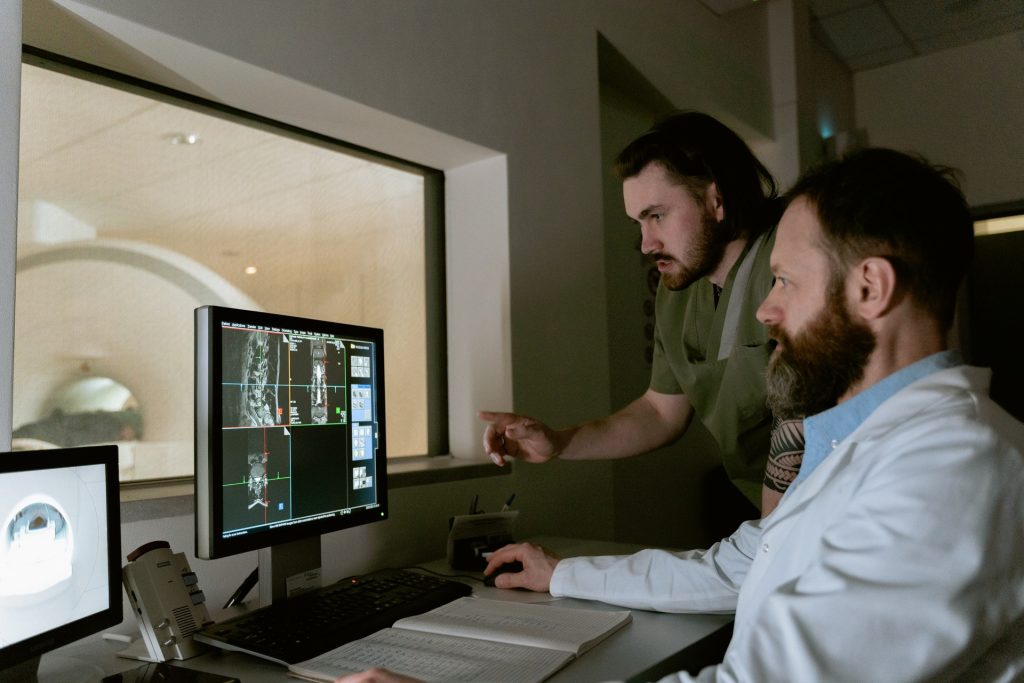
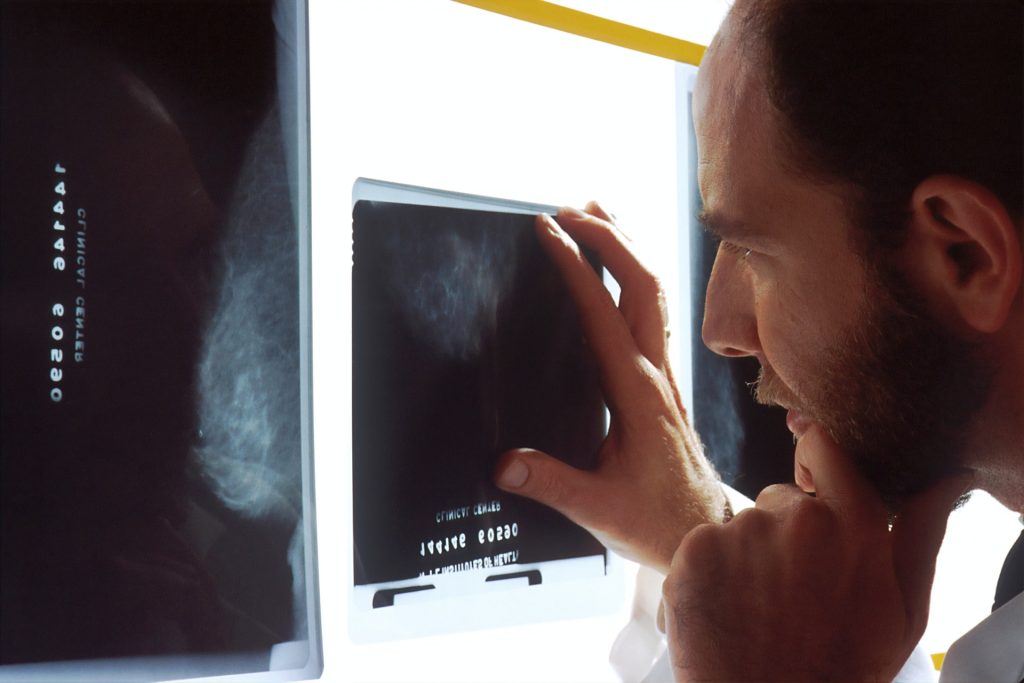
Researchers at the University of Waterloo have developed a new form of magnetic resonance imaging (MRI) that makes cancerous tissue glow in medical images. This innovation could enable more accurate detection and tracking of cancer over time.
“Our studies show this new technology has promising potential to improve cancer screening, prognosis and treatment planning,” said first author Professor Alexander Wong.
Irregular packing of cells leads to differences in the way water molecules move in cancerous tissue compared to healthy tissue. The new technology, called synthetic correlated diffusion imaging, highlights these differences by capturing, synthesising and mixing MRI signals at different gradient pulse strengths and timings.
In the largest study of its kind, the researchers collaborated with medical experts at the Lunenfeld-Tanenbaum Research Institute, several Toronto hospitals and the Ontario Institute for Cancer Research to apply the technology to a cohort of 200 patients with prostate cancer.
The synthetic correlated diffusion imaging was found to be better at delineating significant cancerous tissue than current imaging technique, making it a potentially powerful addition to the toolbox for doctors and radiologists.
“Prostate cancer is the second most common cancer in men worldwide and the most frequently diagnosed cancer among men in more developed countries,” said Prof Wong. “That’s why we targeted it first in our research.
“We also have very promising results for breast cancer screening, detection, and treatment planning. This could be a game-changer for many kinds of cancer imaging and clinical decision support.”
Minimally invasive hysterectomy for patients with early cervical cancer resulted in significantly worse outcomes compared with open surgery, according a clinical trial’s final analysis, a result which confirmed initial findings.
The Laparoscopic Approach to Cervical Cancer (LACC) trial compared disease-free survival (DFS) and overall survival (OS) at 4.5-year follow-up from the initial 631 patients who were randomised to open surgery or to MIS.
In the intention-to-treat population, DFS at 4.5 years – the study’s primary outcome – was 96.0% with the open surgery approach versus 85.0% with minimally invasive surgery (MIS), with similar DFS rates of 97.3% and 86.0% in the per-protocol analysis, reported Pedro T. Ramirez, MD, of the University of Texas MD Anderson Cancer Center in Houston.
“When we presented the data in 2018, the recurrence rate for MIS was four times higher than for open surgery,” Dr Ramirez said at the Society of Gynecologic Oncology annual meeting. “And after completion of 4.5 years follow-up on all of the patients, it still remains the same.”
Since the initial publication of his team’s findings in 2018, said Dr Ramirez, national and international guidelines have changed their recommendations and now consider open radical hysterectomy as the new standard approach for patients with early cervical cancer. This final analysis confirms that patients with early cervical cancer “should not undergo the minimally invasive approach outside of a clinical trial,” he said.
DFS events occurred in 43 patients in the MIS arm versus 11 patients in the open surgery arm/ Additionally, the MIS arm patients had worse disease-specific survival, cumulative local/regional recurrence and overall survival.
Researchers also found that progression-free survival (PFS) was worse for MIS compared with open surgery, with 48 patients in the MIS arm experiencing events compared with 12 in the open surgery arm, consistent with the 2018 findings.
Since the initial publication of his team’s findings in 2018, said Dr Ramirez, national and international guidelines have altered their recommendationsand now consider open radical hysterectomy as the new standard approach for patients with early cervical cancer. This final analysis confirms that patients with early cervical cancer “should not undergo the minimally invasive approach outside of a clinical trial,” he said.
The researchers also assessed outcomes by tumour size, conisation status, and carcinomatosis rates.
They found that 21% of MIS patients with tumours ≥ 2 cm had DFS events compared with about 5% of patients who had open surgery (HR 4.25).
Dr Ramirez emphasised that while the trial was not designed to answer the question of the effect of tumour size on surgical outcomes, “this highlights the fact that for larger tumours, there is clearly a disadvantage to minimally invasive surgery in terms of the difference in recurrence events.”
As for tumours less than 2 cm, the investigators found that no DFS events occurred among 65 patients who underwent open surgery versus seven DFS events among 75 MIS patients.
“It is important to highlight this because comments have been made that if patients have tumours less than 2cm, then perhaps it is appropriate to proceed with minimally invasive surgery,” Dr Ramirez pointed out.
Among those patients who did not have previous conisation, there were worse outcomes for those who underwent MIS. Among patients who did have a previous cone, there was no difference between the two arms.
When there were recurrences in the open surgery arm, no patients manifested with carcinomatosis versus 24% of patients in the MIS arm.
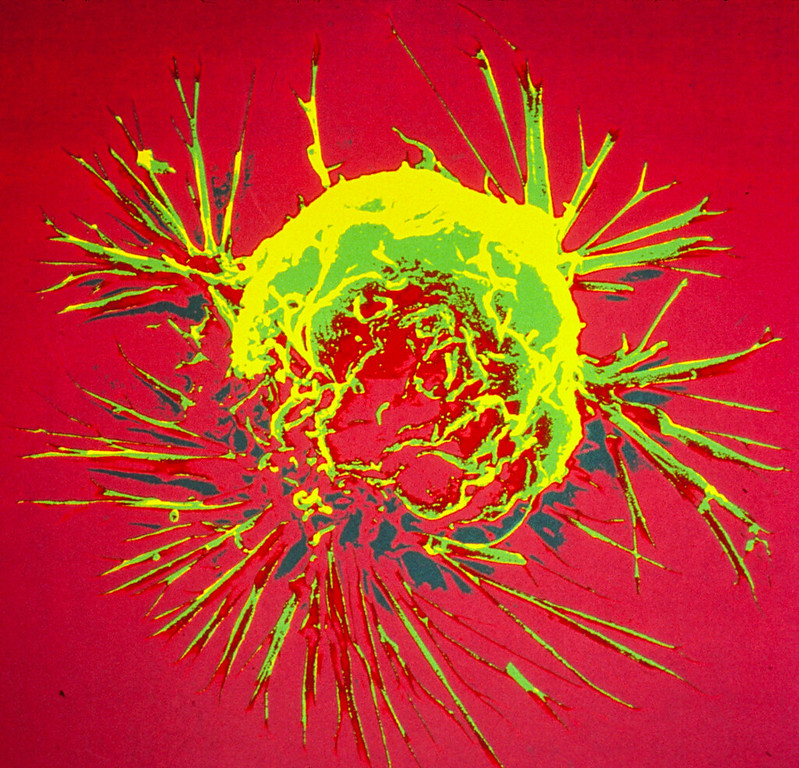
A scanning electron microscope image of a breast cancer cell. Credit: Bruce Wetzel and Harry Schaefer, National Cancer Institute, National Institutes of Health
Squeezing through tight spaces makes cancer cells more aggressive and helps them evade cell death, a study published in eLife shows.
The researchers’ findings reveal how mechanical stress makes cancer cells more likely to metastasise. While metastasis is the cause of most cancer deaths, there are currently no available cures. However, the new results may help scientists develop novel approaches to treat or prevent metastasis.
When cancer cells escape their tumour or enter called capillaries to spread throughout the body, it can be tight squeeze. The cells have to collapse and change shape – a process called confined migration. The cells must also evade the immune system as they spread outwards.
“Mechanical stress can cause cancer cell mutations, as well as an uncontrolled increase in cell numbers and greater tissue invasion,” explained first author Deborah Fanfone, Postdoctoral Fellow at the Cancer Research Center of Lyon. “We wanted to know if the mechanical stress of confined migration makes cancer cells more likely to metastasise, and how this happens.”
To find out, the researchers forced human breast cancer cells through a membrane with 3µm-sized holes to simulate a confined migration environment. After passing through the membrane just once, the cells became more mobile and resistant to anoikis –a form of programmed cell death that occurs when cells become detached from the extracellular matrix. The cells were also able to escape destruction by immune natural killer cells.
More testing showed that expression of inhibitory-of-apoptosis proteins (IAPs) increased the resistance of cancer cells to anoikis. A new type of cancer drug which degrades IAPs (called a SMAC mimetic), removed this protection in the cancer cells.
The team then examined how these squeezed cells behave when administered to immune-suppressed mice. They found these mice developed more lung metastases than mice that were administered with breast cancer cells that had not been exposed to confined migration.
“By mimicking confined migration, we’ve been able to explore its multifaceted effects on cancer aggressiveness,” says senior author Gabriel Ichim, who leads the Cancer Cell Death team at the Cancer Research Center of Lyon. “We’ve shown how the process boosts survival in cancer cells and makes them more prone to forming deadly metastases.”
The authors add that these results may lead to additional studies of potential metastasis treatments, such as therapies that soften tumours to reduce mechanical stress on cancer cells, or that block IAPs. These include SMAC mimetics, which are currently being tested in clinical trials as a possible new treatment approach.
Colon cancer cells. Source: National Cancer Institute on Unsplash
Emodin, an active compound found in Chinese herbal medicine, can prevent colon cancer in mice, according to researchers, and may be applicable in humans as well, a study has found. The mechanism behind this is likely emodin’s ability to reduce the number of pro-tumour macrophages.
Emodin, a major bioactive anthraquinone derivative extracted from rhubarb, represents multiple health benefits in the treatment of a host of diseases, such as immune-inflammatory abnormality, tumor progression, bacterial or viral infections, and metabolic syndrome. Emerging evidence has made great strides in clarifying the multi-targeting therapeutic mechanisms underlying the therapeutic efficacy of emodin, including anti-inflammatory, immunomodulatory, anti-fibrosis, anti-tumor, anti-viral, anti-bacterial, and anti-diabetic properties.
Besides investigating if emodin could prevent colon cancer, the study’s researchers especially wanted to know whether its anti-cancer properties “could be attributed to its actions on immune cells and particularly macrophages,” said Angela Murphy, PhD, co-author of the study. In this murine model, emodin was shown to reduce both polyp count and size. Also, mice treated with emodin “exhibited lower protumorigenic M2-like macrophages in the colon,” researchers wrote in the study.
Roughly 70% of colon cancer cases can be attributed to diet or other lifestyle factors, said Dr Murphy. Because emodin is also found in some fresh fruits and vegetables, it is hoped that consuming these emodin-containing foods could prevent colon cancer in humans.
Research into how the body’s DNA repair process works has made a discovery into how the process works, and by understanding how cancer cells repair their DNA so rapidly may lead to potent new chemotherapy treatments.
One of the great mysteries of medical science is the ability of DNA to be repaired after damage, but complicating the study of this is how different pathways are involved in the repair process over the cell’s life cycle. In one of the repair pathways known as base excision repair (BER), the damaged material is removed, and proteins and enzymes work together to create DNA to fill in and then seal the gaps.
In a study appearing in Proceedings of the National Academy of Sciences, Eminent Professor Zucai Suo led a team that discovered that BER has a built-in mechanism to increase its effectiveness: it just needs to be captured at a very precise point in the cell life cycle.
In BER, an enzyme called polymerase beta (PolyB) fulfils two functions: It creates DNA, and it initiates a reaction to clean up the leftover ‘chemical junk’. Through five years of study, Prof Suo’s team learned that by capturing PolyB when it is naturally cross-linked with DNA, the enzyme will produce new genetic material 17 times faster than when the two are not cross-linked. This suggests that the two functions of PolyB are interlocked, not independent, during BER.
The research improves the understanding of cellular genomic stability, drug efficacy and resistance associated with chemotherapy.
“Cancer cells replicate at high speed, and their DNA endures a lot of damage,” Prof Suo said. “When a doctor uses certain drugs to attack cancer cells’ DNA, the cancer cells must cope with additional DNA damage. If the cancer cells cannot rapidly fix DNA damage, they will die. Otherwise, the cancer cells survive, and drug resistance appears.”
This research examined naturally cross-linked PolyB and DNA, unlike previous research that mimicked the process. Studies had previously identified the enzymes involved in BER but did not fully grasp how they work together.
“When we have nicks in DNA, bad things can happen, like the double strand breaking in DNA,” said Thomas Spratt, a professor of biochemistry and molecular biology at Penn State University College of Medicine who was not a part of the research team. “What Zucai found provides us with something we didn’t understand before, and he used many different methods to reach his findings.”
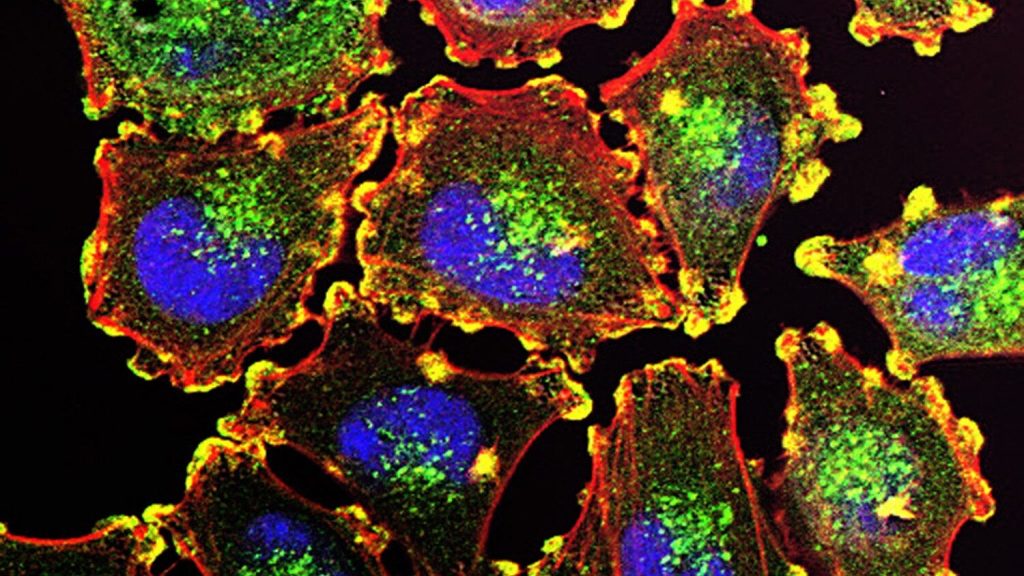
Melanoma cells. Source: National Cancer Institute.
A review of data, published in Annals of Surgical Oncology, shows that completion lymph node dissection surgery for patients with stage III melanoma confers no benefit. This is especially true given that immunotherapy has shown success in treating metastases.
For years, surgery for patients with stage III melanoma, where the cancer had metastasised into lymph nodes, involved removing them along with the primary tumour. Known as completion lymph node dissection (CLND), the surgery was meant to ensure that no cancer remained after surgery.
More recently, however, cancer surgeons have discovered that CLND has the potential to cause more problems than it solves. In most cases, patients do better on immunotherapy alone than they do when their surgery involves removal of the lymph nodes, due to potential complications from lymph node surgery.
To address this, researchers reviewed their patient data to determine if immunotherapy alone resulted in better outcomes than CLND.
“In the few years prior to immunotherapy being available, some surgical trials were done asking if regional node dissection by itself improves overall survival for the patients,” said Martin McCarter, MD, a professor of surgical oncology at the University of Colorado (CU). “And the answer came back: no, it did not improve survival. That had been the standard forever, because we didn’t have other effective therapies, but once the definitive trials were done, we learned that CLND wasn’t helping, it wasn’t improving survival. Subsequent trials demonstrated that immunotherapy can improve survival in metastatic melanoma.”
For the study, the researchers looked at data on 90 patients who underwent sentinel lymph node biopsy (a procedure to determine if a skin melanoma has spread microscopically) only for stage III melanoma but did not undergo CLND. Of those patients, 56 received immunotherapy and 34 did not. Those who received immunotherapy had better rates of distant metastasis-free survival, meaning their cancer was less likely to come back.
“As treatments for melanoma have evolved, the standard of care may be evolving as well,” Prof McCarter said. “This study took a look at the patients who had a sentinel lymph node biopsy, so we knew the patient had a positive melanoma metastasis to their regional node. Those folks historically used to go on and get the completion lymph node dissection, but recently, people started to forego doing that lymph node dissection, which did not improve survival, and instead moved directly to immunotherapy, which did improve survival in other clinical trials. We proved that this is acceptable, that we’re not causing more harm to patients by doing it, and that those who do go on to get the immunotherapy seem to benefit from it.”
Forgoing CLND is part of a recent movement in cancer treatment known as de-escalation (or de-implementation) — performing only absolutely needed surgery. It’s especially important when it comes to lymph node surgery, Prof McCarter said, as in addition to the usual surgical risks, CLND has a 20% to 30% risk of permanent lymphoedema.
“If you could avoid that complication and not compromise a patient’s survival, that would be beneficial,” McCarter said. “That’s what we guessed was happening outside of definitive clinical trial evidence, and that’s what we were able to show. We know that we often overtreat patients, and this fits in that paradigm of finding ways to de-escalate unnecessary therapies, which has been done in breast cancer and other cancers as well.”
The researchers hope the findings will sway surgeons for whom CLND is still routine, despite the earlier studies showing that the additional surgery was not improving survival.
“Previous clinical trials with the use of adjuvant immunotherapy for melanoma had required a CLND,” Prof McCarter explained. “This study used real-world data from our stage III melanoma patients who were treated with immunotherapy without having a prior CLND.
“It takes years to change people’s practice patterns. I still have conversations with community surgeons who treat melanoma, asking me, ‘Should I be doing these regional node dissections?’ even though this data has been out for five to 10 years now,” Prof McCarter continued. “They’re afraid to give up what they used to do, and they’re afraid that they are doing a disservice to the patients or not giving them the best chance, when in reality, our understanding of cancer biology has evolved. We now have effective immunotherapy, which is overcoming some of the limitations of surgery while improving outcomes.”
Taller adults may be more likely than shorter ones to develop colorectal cancer or precancerous colon polyps, according to a new meta-analysis published inCancer Epidemiology, Biomarkers & Prevention. While the association between taller height and colorectal cancer has been previously investigated, the researchers say those studies offered conflicting results, used inconsistent measures of height and did not include the risk of adenomas.
“This is the largest study of its kind to date. It builds on evidence that taller height is an overlooked risk factor, and should be considered when evaluating and recommending patients for colorectal cancer screenings,” said Associate Professor Gerard Mullin, MD. Greater height is still not proven to be causative, nor is it a great a risk factor as genetics, he and his team cautioned. However, it does add tolong-standing evidence linking height to colorectal cancer risk.
“One possible reason for this link is that adult height correlates with body organ size. More active proliferation in organs of taller people could increase the possibility of mutations leading to malignant transformation,” said co-first author Elinor Zhou, MD.
The researchers first identified 47 international, observational studies involving 280 660 cases of colorectal cancer and 14 139 cases of colorectal adenoma. They also included original data from the Johns Hopkins Colon Biofilm study, which recruited 1459 adult patients undergoing outpatient colonoscopies to investigate the relationship between cancer and biofilm on the colon.
Because the definition of tallness differs around the world, the researchers compared the highest versus the lowest height percentile of various study groups. “The findings suggest that, overall, the tallest individuals within the highest percentile of height had a 24% higher risk of developing colorectal cancer than the shortest within the lowest percentile. Every 10-centimeter increase (about 4 inches) in height was found to be associated with a 14% increased risk of developing colorectal cancer and 6% increased odds of having adenomas,” said A/Prof Mullin.
In the US, the average height for men is 175.3cm, and for women it is 162.6 inches. This means men who are 185.4cm and women who are 172.7cm (10cm above the average US height) or taller are at a 14% increased risk of colorectal cancer and a 6% increased risk of adenomas.
The percentage results were adjusted for known risk factors of colorectal cancer, including non-modifiable factors such as age, familial colorectal cancer history and a personal history of chronic inflammatory bowel disease. Though not directly comparable due to differences in measurement scale, tallness may impart an order of magnitude of colorectal cancer risk similar to better-known modifiable factors such as cigarette smoking, moderate alcohol consumption and high processed red meat intake. At present, gastroenterologists focus on genetic and age-related risks for colorectal cancer screenings recommendations.
While colorectal cancer is the third most common cancer in both men and women in the US, fewer people are diagnosed with colorectal cancer each year has dropped overall since the mid-1980s, mainly due to prevention and screening. However, the downward trend is mostly in older adults. Among adults under 50, colorectal cancer deaths have increased 2% per year from 2007 to 2016, an as yet unexplained phenomenon.
“Greater awareness by the public and government will help promote more interest and funding for more research, which ultimately could change guidelines for physicians to consider height as a risk for cancer,” said A/Prof Mullin. “There are well-known modifiable dietary associations for colorectal cancer, such as processed red meats and smoking, but guidelines currently are fixated on family history, and height is clinically neglected when it comes to risk screening.”
Dr Zhou says more research is needed to define particular taller populations at risk for colon cancer. “For instance, tall athletes and individuals with inherited tallness, such as those with Marfan syndrome, could be screened earlier and the impact of height further explored,” she said. “We need more studies before we can definitively say at what height you would need earlier colorectal cancer screening.”
Melanoma cells. Source: National Cancer Institute.
By screening various drugs to inhibit a cancer-driving gene, researchers have hit upon a familiar drug – statins.
Cancer patients rarely die from the primary tumour, but rather from the metastases – even after successful tumour surgery. This is because cancer cells sometimes metastasise when the tumour is still very small and may not have even been discovered yet. To do this, they must break away from the extracellular matrix and migrate into neighbouring lymphatic vessels or blood vessels that transport them to new tissue, where they settle and proliferate.
Understanding the molecular mechanisms of metastasis is therefore a key piece of the puzzle in the fight against cancer. More than a decade ago, Professor Ulrike Stein and her lab discovered an important driver of this process in human colorectal cancer: the metastasis-associated in colon cancer 1 (MACC1) gene.
When cancer cells express MACC1, their ability to proliferate, move around the body, and invade other tissues is enhanced. “Many types of cancers spread only in patients with high MACC1 expression,” Prof Stein explained. MACC1’s role as a key factor and biomarker of tumour growth and metastasis – in many solid tumours beside colorectal cancer – has since been studied by many other researchers worldwide and confirmed in more than 300 publications. Now together with Dr Robert Preißner of Charité, Stein has discovered what could disrupt metastatic progression in such cases: statins, normally prescribed for lowering cholesterol, can inhibit MACC1 expression in tumour cells. The scientists are presenting their findings in the journal Clinical and Translational Medicine.
In their search for MACC1 inhibitors, the researchers conducted high-throughput drug screening, and independently arrived at statins. Tests on various tumour cell lines were favourable: All seven drugs tested reduced MACC1 expression in the cells, but to varying degrees. The scientists then administered the cholesterol inhibitors to genetically modified mice with increased MACC1 expression. This almost completely suppressed the formation of tumours and metastases in the animals. “What is particularly remarkable is that the benefits continued in the animals even after we reduced the animal dose to a human equivalent dose,” Stein said.
Dr Preißner and collaborators also examined data from a total of 300 000 patients who had been prescribed statins. This analysis found a correlation: “Patients taking statins had only half the incidence of cancer compared to the general population,” Preißner explains.
Prof Stein warned against taking statins as a preventive measure without consulting a doctor and having their lipid levels checked.
“We are still at the very beginning,” Dr Stein cautioned. “Cell lines and mice are not human beings, so we cannot directly transfer the results.” The experimental studies and retrospective data analysis will now be followed up by a clinical trial, she said. Only after that will it be possible to say with certainty whether statins actually prevent or reduce metastasis in patients with high MACC1 expression.
By making computer simulations of drugs, researchers have found that doctors need to be wary of prescribing metformin for all types of cancer and patients. Their findings are published in BioMed Central Cancer.
The diabetes drug metformin has been used in clinical settings as a cancer treatment in recent years. The researchers say while metformin shows great promise, it also has negative consequences for some types of cancers.
“Metformin is a wonder drug, and we are just beginning to understand all its possible benefits,” said Mehrshad Sadria, a PhD candidate in applied mathematics at the University of Waterloo. “Doctors need to examine the value of the drug on a case-by-case basis, because for some cancers and some patient profiles, it may actually have the opposite of the intended effect by protecting tumour cells against stress.”
The computer-simulated treatments use models that replicate both the drug and the cancerous cells in a virtual environment. Such models can give clinical trials in humans a considerable head-start and can provide insights to medical practitioners that would take much longer to be discovered in the field.
“In clinical settings, drugs can sometimes be prescribed in a trial and error manner,” said Anita Layton, professor of applied mathematics and Canada 150 Research Chair in mathematical biology and medicine at Waterloo. “Our mathematical models help accelerate clinical trials and remove some of the guesswork. What we see with this drug is that it can do a lot of good but needs more study.”
The researchers say their work shows the importance of precision medicine when considering the use of metformin for cancer and other diseases. Precision medicine is an approach that assumes each patient requires individualised medical assessment and treatment.
“Diseases and treatments are complicated,” Sadria said. “Everything about the patient matters, and even small differences can have a big impact on the effect of a drug, such as age, gender, genetic and epigenetic profiles. All these things are important and can affect a patient’s drug outcome. In addition, no one drug works for everyone, so doctors need to take a close look at each patient when considering treatments like metformin.”
In their recently released Middle East and Africa regional report on cancer, the Swedish Institute for Health Economics (IHE) highlighted challenges for the country’s under-resourced healthcare system. It also highlighted the need to provide training for South African GPs in early detection of cancer.
Cancer is a growing challenge for South Africa. The incidence of cancer cases in South Africa is predicted to double over the next two decades, from 110 per 100 000 in 2018 to 226 per 100 000 in 2040. It is also gradually becoming one of the leading causes of death, from 9% in 2000 to 10% in 2016, even as the share of deaths from cardiovascular diseases and diabetes grows as well. Prostate cancer is the most common (31%) in men by far, while in women breast cancer (27%) was closely followed by cervical cancer (22%).
The COVID pandemic has largely overshadowed the Department of Health’s 207-2022 cancer plan, though successes with HIV have allowed it to move up in priority. A major challenge will be getting it moved up in priority.
The direct costs to the healthcare system from cancer are USD11 (R165) per capita and USD19 (R285) per capita in indirect costs to society (premature death, early retirement, sick leave etc). Yet South Africa’s public healthcare spending is only 4% of GDP, below the World Health Organization informal target of 5%.
In terms of prevention, anti-smoking campaigns have had some effect, though more work needs to be done on tackling obesity. The HPV vaccination campaign is a step in the right direction, the report says, though the hepatitis B vaccination programme is flagging.
In early detection, GPs need better training in recognising the early signs of cancer. Public health literacy is also a priority, along with expanding breast and cervical cancer screening. Given rising incidence, colorectal cancer screening should also be considered, the IHE recommended.
Universal health care continues to be a priority, with the proportion of the population covered by medical schemes remaining static at 17% from 2012 to 2019. Public healthcare, which only offers a defined set of services, suffers from a lack of resources and personnel.
As far as cancer treatment in South Africa goes, public healthcare resembles global standards 20 years ago. Though radiation machines adequately serve the population on a national level, there are significant disparities with long waiting times and machines that can provide modern radiation techniques are limited and not listed in prescribed minimum benefits. Targeted drugs and immunotherapy remain almost exclusively the province of private healthcare, with a lengthy procedure to get drugs listed on the EML. Streamlining this should be a priority, the report recommends.