Author: ModernMedia

EDITORIAL | The Rot Runs Deep: Gauteng Health’s Dance of Impunity Betrays the People It Is Meant to Serve

Photo by Tingey Injury Law Firm on Unsplash

Spotlight Editors

The courts have spoken. The health ombud has issued devastating reports. The Auditor-General has again put damning evidence on the table. Civil society has protested. Yet, the devastating crisis in Gauteng’s health system shows no sign of improvement.

The rot in Gauteng appears to be deepening. Nowhere is this more evident than in the province’s health department, which remains trapped in a cycle of institutional decay and administrative failure.

The consequences are catastrophic, with real and devastating impacts on lives and the delivery of essential health services.

A case in point is the department’s failure to provide life-saving treatment to cancer patients. In a stunning rebuke, a high court found this failure unlawful and unconstitutional. Rather than comply with its constitutional obligations, Health MEC Nomantu Nkomo-Ralehoko and the health department chose to appeal the judgment to the Supreme Court of Appeal.

Making matters worse, a second high court ruling ordered the department to implement the original judgment. And yet again the department is appealing.

Jack Bloom, a DA MP in Gauteng, suggests that the MEC and the department is fighting so hard because they may eventually be held accountable in a case he says evokes the horrors of the Life Esidimeni tragedy. Bloom may have a point.

The background is dismaying.

Prior to the recent court rulings on cancer care, sustained pressure from activists had helped the department secure a R784 million budget for outsourcing radiation oncology services. But the department returned the first tranche of R250 million to Treasury unspent.

At last count in 2022, more than 3 000 patients were on a waiting list for treatment. Many of them would by now have lost their lives. Others may still be alive, but the optimal time for them to get radiation therapy may have passed and their chances of survival are thus substantially diminished.

That R250 million meant to help these desperate people and families simply went unspent boggles the mind.

It is no doubt too late for many, but there are at least some limited signs of progress. While the department has not been answering Spotlight’s questions, Nkomo-Ralehoko has indicated in the Gauteng legislature that a significant number of cancer patients are being treated with the help of private sector facilities. That the MEC and the department is nevertheless challenging the high court ruling, much of which is a demand for greater transparency, suggests that they know they have at best taken several more steps back than they have taken forward.

Unfortunately, none of this feels new.

For well over a decade, Spotlight and other media have reported on a persistent pattern of institutional breakdown and failed leadership in Gauteng’s public healthcare system. Among the most shocking examples are the Life Esidimeni tragedy, the assassination of whistleblower Babita Deokaran, and the state’s sluggish response to the corruption she exposed. Questions continue to swirl around an impasse over a critical agreement with Wits to bolster healthcare servicessenior appointments in the department and the selection of hospital CEOs. The fire at Charlotte Maxeke Johannesburg Academic Hospital and the lack of urgency in restoring services there further underscores the dysfunction. So does the persecution of whistleblowers like Dr Tim de Maayer, and the damning Health Ombud report into conditions at Rahima Moosa Mother and Child Hospital.

And that’s just the tip of the iceberg. Years of chaos in hospital security contracts, questionable food procurement practices, and the department’s failure to supply adequate colostomy bags to patients — the list goes on and on.

Add it all up and it is clear the rot runs very deep.

The reason for this is no mystery. The Gauteng health department has an annual budget of around R67 billion. This is more than 20% of the South African government’s entire spending on health. For the corrupt, the Gauteng health department is an obvious target.

And that it has been systematically targeted is not in doubt. Human rights activist Mark Heywood and Wits University Professor Alex van den Heever reckon that close to R20 billion has been stolen from the Gauteng health department over the past decade. “The scale of this theft makes former President Jacob Zuma look like a clumsy shoplifter,” Heywood writes in the Daily Maverick.

Perhaps the clearest dissection of how deep the rot goes is to be found in investigative journalist Jeff Wicks’ excellent  book The Shadow State: Why Babita Deokaran Had to Die. In it, he unpacks the industrial-scale corruption at Tembisa Hospital where R830 million was siphoned off in just four months by a network of ruthless, well-connected looters. Allegedly, one of the key beneficiaries was Vusimusi “Cat” Matlala, a businessman with a criminal record and close ties not only to ANC bigwigs but also to senior police officials.

Meanwhile, the department is also failing to pay its creditors on time. Recently, City Press reported that Gauteng’s health department was the only provincial department flagged for noncompliance across all audit areas — despite having received a clean audit opinion. Accruals now exceed R8 billion, consuming 12% of the department’s R67 billion budget. “The problems are huge,” admitted Lebogang Maile, Gauteng’s MEC for Treasury and Economic Development.

Whichever way you slice it, the harsh truth is that even in 2025, the devastating crisis in Gauteng’s health system shows no sign of improvement. Corruption still plagues the department just as severely as it did a decade ago, if not more so. In the end, it is the province’s many committed healthcare workers and the people who depend on the public healthcare system who pay the price – whether a cancer patient or someone with a stoma and in need of a reliable supply of colostomy bags.

Where to from here?

Ultimately, the person responsible for fixing all this is Gauteng Premier Panyaza Lesufi. As Premier, he appoints both the province’s MEC for health and the head of its health department. It is because of Lesufi that Nkomo-Ralehoko and head of department Lesiba Malotana are still in place, despite the havoc around them.

From one perspective, it is hard to fathom why an ambitious politician like Lesufi would stand for such gross incompetence. His party, the ANC, has after all already been severely punished at the polls – in 2024 they got just under 35% of the votes in the province. Letting the province’s already eroded health services decay further can only lead to further electoral decline.

It is of course also possible that Lesufi and those around him are being misled, or intentionally not paying much attention, to just how bad things really are. Zuma too insisted that “we have a good story to tell” even as the state capture looters were in full stride. Maybe reality will similarly catch up with Lesufi if he continues faffing about while Rome burns.

After all, the courts have spoken. The health ombud has issued devastating reports. The Auditor-General has again put damning evidence on the table. Civil society has protested time and time again and spoken out in the media. Doctors and nurses have tried to raise issues through the correct channels and have been ignored. Expert help has been offered and declined. Most damningly, whistleblowers have paid with their lives.

Disclosure: SECTION27 is involved in the cancer court case proceedings as well as ongoing efforts seeking justice for the Life Esidimeni tragedy. Spotlight is published by SECTION27, but is editorially independent – an independence that the editors guard jealously. Spotlight is a member of the South African Press Council.

Republished from Spotlight under a Creative Commons licence.

Read the original article.

What Students Eat: I Conducted a Survey at a South African University’s Cafes – the Results Are Scary

Photo by Jonathan Borba

Tinashe P. Kanosvamhira, University of Cape Town

University students have limited spending money and their schedules are packed. Many are adapting to new lifestyles on campus. Eating a healthy diet is crucial: a poor diet leads to reduced concentration, lower grades and increased stress.

Campus cafés, especially at universities that are some distance from supermarkets, often sell mainly fast food such as white bread sandwiches, hot chips and doughnuts. It’s easy to eat on the go, but places nutritious choices out of reach.

I’m an urban geographer who researches the relationship between food, health and place. My work examines how urban agriculture, informal food systems and everyday urban infrastructures shape well-being, sustainability and spatial justice in African cities.

Research has already found that through pricing, menu design and information provision, campus cafés play a decisive role in shaping dietary behaviours among young adults. I wanted to find out how students at the University of the Western Cape in South Africa choose what to eat when they’re on campus, what they see as healthy food and what stands in the way of them buying nutritious meals.

The university is one that was underfunded during apartheid. Until 1994 it primarily taught students who were Black and people of Colour. Today, it serves about 23 000 students, many of whom are drawn from low-income backgrounds, and has few supermarkets within walking distance. The campus cafés are a key food supply area for students.

My research found that at the University of the Western Cape, only 32% of the food offered at the student café was healthy. It also cost more than the fast food. The students I surveyed knew healthy food was important. But only a small minority consistently chose nutritious meals. Nearly 40% of the group reported that the healthy options were too expensive.

When students face the twin challenges of financial hardship and inadequate access to affordable, nutritious food, this deepens inequality. It also undermines their efforts to succeed. Even worse, it can cause students to develop long term, unhealthy eating habits that damage their health.

Unless affordability, availability and awareness of healthy food choices are addressed together, students will struggle to eat well and to perform at their best.

Universities must implement targeted food subsidies, introduce clearer nutritional labelling, and expand healthy menu options to make nutritious eating more accessible and appealing to students.

Students speak out about their food choices

I conducted a survey that sampled 112 students in five campus cafés at the university. These cafés are mainly used by students in the 18-24 age group.

My survey revealed that 75.9% of students considered healthy offerings at least “somewhat important” when choosing where to eat. Yet only 6.3% always selected nutritious options; 28.6% rarely or never did so. Meanwhile, 38.4% of students described nutritious meals as “expensive” and another 8% found the healthy options “very expensive”.

My research also found that University of the Western Cape students ate very little fruit and vegetables. Just 41% of the students I surveyed ate two or more servings a day and 9.8% admitted they ate none.

I also did a detailed menu audit at one café to see what was on the menu. I found that only 32.6% of 46 distinct items met basic “healthy” criteria (they were low in saturated fats and made up of whole-grains or vegetables).

The majority of students (55.4%) had not noticed any campus healthy-eating campaigns, but agreed (57.1%) that balanced meals boosted academic performance and overall well-being:

I feel much more focused and energetic when I eat well, which helps me do better in my studies and feel healthier overall.

Only a small handful of the students said they could afford healthy campus café meals:

I choose cafés based on food quality. If the food is fresh and tasty, I’ll pay more, but it needs to be worth it.

What needs to happen next

High prices for nutritious items, narrow menu selections and barely visible information about nutrition are preventing students from eating healthy foods on campus.

Campus café offerings tend to mirror the broader inequities of national and global food systems. Food environments of big institutions like universities can prop up food inequality, even if these universities are committed to social justice.

Universities should adopt these steps to make healthy food available to students:

  1. Subsidised meal plans and discounts: Introducing a tiered subsidy for students from low-income backgrounds would directly reduce costs. For example, meal vouchers could make salads, whole-grain sandwiches and fruit bowls as affordable as a pastry or soft drink.
  2. A wider range of food on the menu and smaller portions: Partnerships between university caterers and local cooperatives or farmers could expand the range of fresh produce. Smaller portions or “light” meal options could be sold at lower prices to suit tighter budgets. Regularly rotating healthy specials and clearly labelling ingredients and calories would help students become accustomed to choosing healthy meals.
  3. Visible nutrition campaigns: Digital and printed standout posters about healthy foods could be placed around campus. Universities could hold social-media challenges and pop-up tasting events. Integrating simple tips into lecture slides or student newsletters would also help by repeatedly exposing students to healthy food tips.
  4. Peer-led workshops and cooking classes: These should be arranged to empower students to take ownership of their diets and learn about budgeting, meal planning and quick, nutritious cooking skills. Peer facilitators can demystify healthy eating and create a supportive healthy eating community.
  5. Seeking feedback: To see if their healthy food campaigns are working, universities should survey students, and analyse sales data from the cafés to see what’s being eaten. They should get feedback from students through focus groups that identify emerging needs and ensure that campaigns and projects reflect the realities of students’ lives.

My research suggests that by tackling cost, choice and communication together, universities can transform their cafés from sites of compromise into engines of student well-being. Such interventions would unlock academic potential and set young people on healthier life paths. This is an outcome as enriching as any degree.

Tinashe P. Kanosvamhira, Postdoctoral fellow, University of Cape Town

This article is republished from The Conversation under a Creative Commons license. Read the original article.

Is Physical Frailty a Cause of Dementia?

Photo by Kampus Production on Pexels

A new study suggests that physical frailty may contribute to the development of dementia. The study was published on September 17, 2025, in Neurology®, the medical journal of the American Academy of Neurology.

Physical frailty is defined as having three or more of these five symptoms: often feeling tired; little or no physical activity; slow walking speed; low grip strength; and unintentional weight loss.

“We’ve known that frailty is associated with a higher risk of dementia, but our study provides evidence that frailty may be an actual cause of dementia,” said study author Yacong Bo, PhD, of Zhengzhou University in China. “On the other hand, despite this new evidence, we can’t rule out the possibility that frailty is instead a marker of the early changes in the disease process.”

The study involved 489 573 people with an average age of 57 who were followed for an average of 14 years. A total of 4.6% of the participants met the definition for frailty, with three or more of the symptoms. Another 43.9% who had one or two symptoms were categorised as pre-frailty and 51.5% had no symptoms and were categorised as not frail.

During the study, 8900 people developed dementia. A total of 4.6% of those with frailty developed dementia, compared to 2.2% of those with pre-frailty and 1.3% of those without frailty. After researchers adjusted for other factors that could affect the risk of dementia, such as age, education level and physical activity, they found that the people who met the definition for frailty were nearly three times more likely to develop dementia than those who had no symptoms of frailty.

Those categorised as pre-frailty were 50% more likely to develop dementia. People with frailty who also had genes linked to dementia were nearly four times more likely to develop dementia than those without frailty or the genetic risk. The researchers also analysed the data and found evidence suggesting that frailty may potentially be a factor in causing dementia.

“These findings reinforce the importance of identifying and managing frailty as a strategy for preventing dementia,” Bo said.

Looking at the data from the other direction, the researchers found that dementia is unlikely to increase the risk of frailty. The researchers also looked at brain imaging and biological biomarkers and found that people with frailty were more likely to have changes in their brain structure related to dementia.

“These biomarkers may be a mechanism underlying the pathway from frailty to dementia,” said Bo. A limitation of the study was that four of the five symptoms of frailty were reported by the participants, so they may not have provided accurate information.

Source: American Academy of Neurology

Lymph Nodes Found to be Key to Successful Cancer Immunotherapy

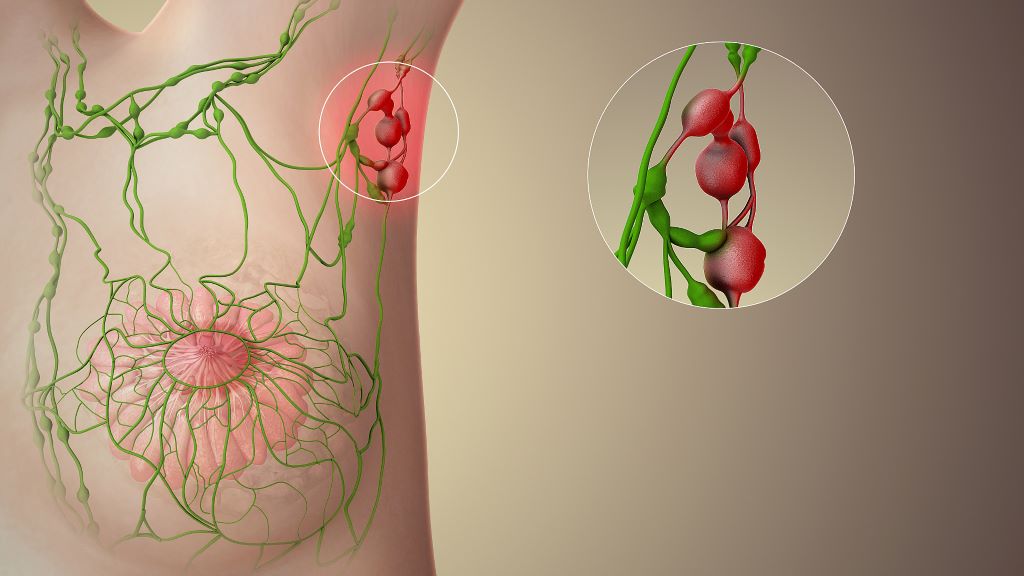
Swollen lymph nodes. Credit: Scientific Animations CC0

New research has shown why preserving lymph nodes, often removed near tumours to prevent cancer spread, could improve patient outcomes and make immunotherapies more effective.

A team of researchers, led by the Peter Doherty Institute for Infection and Immunity (Doherty Institute), explored the cellular and molecular interactions revealing how lymph nodes play a crucial role in the fight against chronic infection and cancer.

The research, published across two papers in Nature Immunology (references and links below), showed that lymph nodes provide the right environment for stem-like T cells, an important type of immune cell, to survive, multiply and produce killer cells that can fight cancer or viruses. In other immune organs, such as the spleen, these cells don’t develop or proliferate as effectively, making lymph nodes essential for a strong immune response and successful immunotherapy.

The University of Melbourne’s Professor Axel Kallies, Laboratory Head at the Doherty Institute and senior author of both papers, said the findings have important implications for cancer therapy.

“Lymph nodes aren’t just passive waiting rooms for immune cells, they actively train and educate T cells, and send them off to do their job,” said Professor Kallies.

“Our research suggests that removing lymph nodes during cancer surgery, a common practice to prevent tumour spread, may inadvertently reduce the effectiveness of treatments, such as checkpoint blockade and CAR T cell therapies. Preserving lymph nodes could strengthen immune responses and increase the effectiveness of immunotherapy.”

This work may also help explain why some patients respond better to immunotherapy than others. The state and function of lymph nodes influence how well the immune system can produce cancer-fighting T cells, directly impacting the success of immunotherapy.

The University of Melbourne’s Dr Carlson Tsui, Postdoctoral Researcher at the Doherty Institute and first author of one of the papers, said the findings could help to develop new strategies to make immunotherapy more effective.

“Our research identifies molecular signals that are involved in the regulation of stem-like cells and in their capacity to produce effective killer cells. These findings could guide the development and refinement of immune-based treatments for cancer and chronic infection,” said Dr Tsui.

“Furthermore, our research shows that rather than only focusing on the tumour itself, therapies should also be designed to preserve and enhance lymph node function. By targeting these critical immune hubs, we could boost the body’s natural ability to fight cancer, increase the effectiveness of existing immunotherapies and help more patients respond to treatment.”

Together, the two peer-reviewed papers provide a deeper understanding of how lymph nodes shape immune responses. While they are based on work with animal models, they will guide future treatment strategies for chronic infection and cancer treatment.

Professor Shahneen Sandhu, Research Lead for the Melanoma Medical Oncology Service at the Peter MacCallum Cancer Centre, commented on the clinical implications of this work.

“While this research was done in the laboratory with pre-clinical models, we’re excited to study these findings in clinical samples from patients receiving immune checkpoint inhibitors, as part of an ongoing Melanoma Research Victoria collaboration with Professor Kallies,” Professor Sandhu said.

“Combining clinical and preclinical studies will help us translate these discoveries from bench to bedside and back, ultimately improving outcomes for cancer patients.”

  1. Tsui C, Heyden L, et al. Lymph nodes fuel KLF2-dependent effector CD8+ T cell differentiation during chronic infection and checkpoint blockade. Nature Immunology (2025). DOI: https://doi.org/10.1038/s41590-025-02276-7  
  2. Wijesinghe SKM, Rausch L, et al. Lymph-node-derived stem-like but not tumor-tissue-resident CD8+ T cells fuel anticancer immunity. Nature Immunology (2025). DOI: https://doi.org/10.1038/s41590-025-02219-2  

Source: Doherty Institute

Researchers Identify New Method to Protect Against Sepsis

Photo by Furkan İnce

Sepsis is the No.1 cause of death in the intensive care unit of hospitals worldwide and a major concern for health scientists and medical professionals alike.

Dr Scott Widenmaier (PhD), an associate professor in the Department of Anatomy, Physiology and Pharmacology in USask’s College of Medicine, has zeroed in on a specific protein that might be key to helping the body fight back against the potentially life-threatening condition.

By manipulating this protein, researchers believe there is a new avenue to protect patients against sepsis. Widenmaier and his team have had their research recently published in Cellular and Molecular Gastroenterology and Hepatology.

“Sepsis is the largest cause of death in the intensive care unit globally,” Widenmaier said. “Sepsis can cause damage to organs like the heart, kidney, and lungs. It can also cause liver dysfunction, and when this occurs, the liver is not able to properly perform its functions that are useful in helping the body deal with an infection.”

Sepsis is caused by the body’s immune system response to infection causing damage to the body itself. As Widenmaier puts it, many people believe that bacteria or a virus they acquire are what causes people to get sick. However, it’s the body’s response to the infection that results in severe sickness and can escalate to sepsis – what Widenmaier identified as “a dysregulated immune response that leads to life-threatening complications.”

“The immune system releases cytokines and various factors that are trying to kill the bacteria or the virus, but the process of doing it actually dramatically changes our physiology and leads to us being really sick,” Widenmaier said.

While conventional methods for treating sepsis have been targeted at mitigating the infections that might lead to sepsis, Widenmaier said more recent studies have recognised that the body itself has built-in disease tolerance mechanism that could be harnessed to protect itself from the potential damage. In other words, when disease tolerance is working well, the process of killing the infection won’t cause the person to get nearly as sick and preserve healthy organ function.

Widenmaier and his team identified a “transcription factor” protein in the liver called NRF1, which acts as a “molecular switch” to help control the body’s own disease tolerance response. In experimental models infected with E. coli, over-expressing the NRF1 protein led to better overall responses to infection and protection against sepsis.

When over-expressed, the protein enables the liver to secrete more very low-density lipoprotein (VLDL) particles, which better protects organs against damage caused by sepsis. It’s this connection between the NRF1 “switch” and the liver’s production of VLDL that Widenmaier says may be a promising approach to improve the outcomes of patients with sepsis.

“Our lab is very interested in finding ways to either pharmacologically or genetically manipulate NRF1 to promote health,” he said.

Widenmaier credited his team – including colleagues, students and trainees – for their work in identifying this potential target for sepsis treatments and for the resulting research paper.

The next step for this research would be to see how feasible this pathway might be for treatment and whether it is still active in conditions when sepsis is very common – and while they aren’t at the stage of human trials yet, Widenmaier said he wants to delve deeply into this new area in the search for better sepsis care.

“We want to explore this quite intensively,” he said. “There’s a lot of clinical investigators across the country … I’m interested in continuing those connections and trying to strengthen them, and hopefully we can find a place where clinicians and our lab can benefit from the science.”

Source: University of Saskatchewan

New Swedish Study Challenges Early Surgery for Crohn’s Disease

Photo by cottonbro studio

A new study from Karolinska Institutet challenges previous findings that suggested early surgery is more beneficial in the long term than medical treatment for patients with Crohn’s disease. The study replicates a Danish registry study using Swedish data and finds that the results are not comparable. The study was published in Clinical Gastroenterology and Hepatology.

A few years ago, a randomised controlled trial showed that early ileocecal resection – removal of the junction between the small and large intestine – could be a reasonable alternative to advanced drug therapy for patients with Crohn’s disease. This study gained significant attention and was widely discussed around the world. Recently, a Danish research group published a registry-based study in the journal Gastroenterology, concluding that real-world data showed that early ileocecal resection was clearly superior to medical treatment in the long term.

In the new Swedish study, researchers attempted to replicate the Danish study using nationwide  Swedish registry data. They found that it is impossible to identify comparable populations in current observational data, as patients who underwent surgery or received medication during the study period differ according to existing treatment guidelines.

“It’s a comparison of apples and oranges,” says Ola Olén, professor at the Department of Medicine, Solna, Karolinska Institutet, who led the study.

The Danish researchers made several design choices that further reduced the comparability between the groups. When the Swedish researchers applied the same definitions as the Danish study, they obtained similar results. However, when they used stricter definitions that more closely resembled the original randomized study, they no longer found a significant difference between the groups.

“We argue that the Danish study cannot be interpreted as proof that early surgery is better. That may very well be the case, but the data we currently have simply cannot answer that question,” says Ola Olén.

Source: Karolinska Institutet

Oxytocin Shines a Light into Parental Attachment and Sex Differences

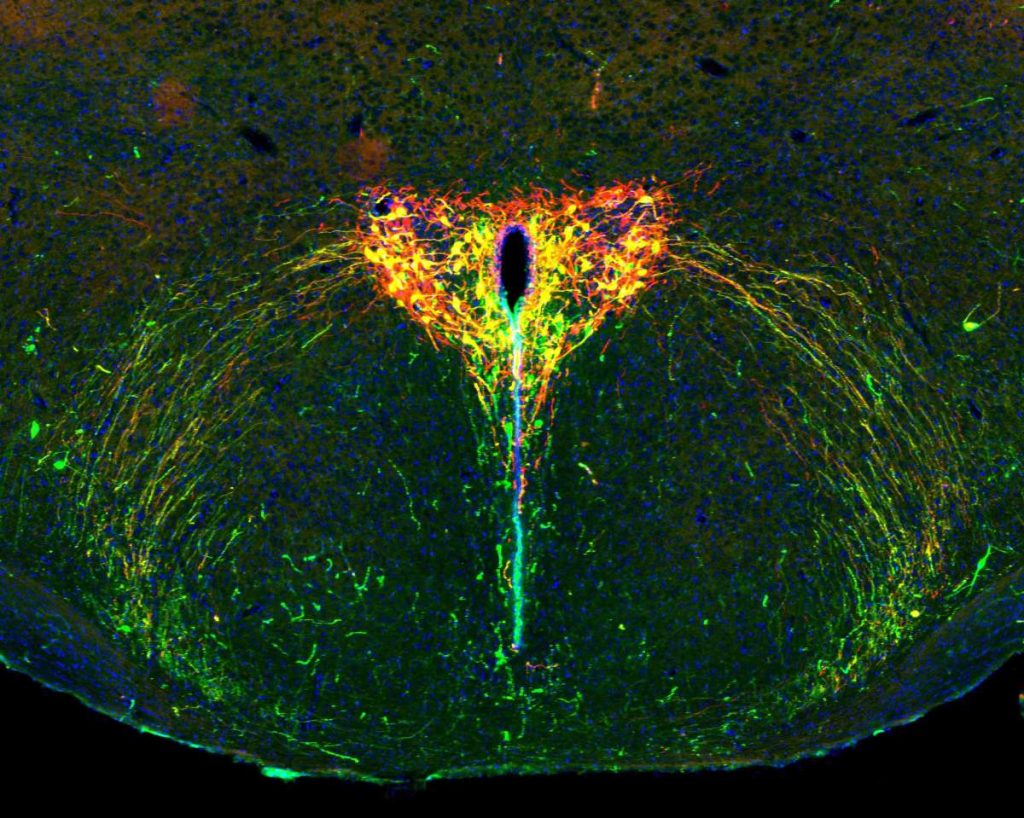
The developing brain of a two-week-old mouse pup under the microscope. The oxytocin system appears in green, the light-sensitive protein in red and cells that carry both show up in yellow. Cell nuclei are in blue. Credit: Weizmann Institute of Science

According to attachment theory, the attachment between an infant and a primary caregiver shapes the baby’s future social ties. Yet little is known about the biological mechanisms underlying childhood attachment, mainly because it is so difficult to study the young brain in natural conditions.

Now, scientists in Prof Ofer Yizhar’s laboratory at the Weizmann Institute of Science have developed a new, noninvasive research method that makes it possible to silence selected nerve cells deep within the brains of mouse pups without disrupting their natural behaviour. Using this method, the researchers investigated the role of oxytocin, a short protein released from nerve cells in the brain. While most oxytocin research has focused on adults, the new findings, published in Science, show that oxytocin also shapes the social behaviour of pups and may underlie emotional differences between males and females that emerge early in life.

Oxytocin, sometimes referred to as the “love hormone,” was once thought to simply promote sociability in adults. Over time, however, it became clear that its role is far more complex: In some circumstances, it intensifies behaviors and emotions far removed from love, such as anxiety or aggression. Recent research has also shown that young mammalian brains – including those of human children – are especially sensitive to oxytocin. In brain regions responsible for sensory processing, emotional regulation and social behavior, the number of oxytocin receptors peaks during early childhood: around ages two to three in humans, and two to three weeks in mice. Some studies have even linked oxytocin deficiency to childhood autism. Still, without sufficiently precise tools to examine neural activity deep within the developing brain, many aspects of the role of oxytocin in early life have remained a mystery.

“The findings may offer a clue as to why males and females diverge in their social behaviors and emotional worlds long before puberty”

To shed light on the subject, a team led by Dr Daniel Zelmanoff, a physician-scientist in Yizhar’s lab, developed a noninvasive technique to probe specific nerve cells in the young brain. The group, pioneers in the field of optogenetics – a technology that uses light to switch individual cells on or off – devised a method in which the targeted brain cells of mouse pups are infected with an engineered virus. This otherwise harmless virus introduces a foreign gene of mosquito origin that encodes a light-sensitive protein; when exposed to light, the protein “turns off” the nerve cell. In fact, the protein is so light-sensitive that the researchers could silence selected nerve cells deep inside the brain simply by shining red light on the pups’ heads.

“This new method allows us to peek inside the brain without disturbing the pups’ everyday lives, making it a powerful tool for studying nervous system development,” Yizhar explains. “It is especially useful for studying oxytocin because this hormone’s effects depend on social context – and our method lets us switch off the oxytocin system on demand, only during the exact situation we want to study.”

The researchers focused on oxytocin’s role during the temporary separation of a mouse pup from its mother and their reunion a few hours later – a situation familiar to every parent of a young child. The scientists observed increased oxytocin activity in the pup’s brain during separation, which returned to normal after reunion with the mother. Pups with an active oxytocin system during the separation gradually adapted to being alone in an unfamiliar environment, producing fewer ultrasonic vocalizations – the mouse equivalent of a baby’s cry. In contrast, pups whose oxytocin system was silenced did not adapt; they continued emitting distress calls at the same rate until reunited with their mothers. These findings show that the so-called “love hormone” also plays a critical role in coping with loneliness.

Attachment theory holds that children who are securely attached to their parents show distress when separated from them but are able to calm down over time, feeling free to explore their surroundings. “We discovered that mouse pups need an active oxytocin system in order to adapt to separation from their mothers,” says Yizhar. “This suggests that the oxytocin system plays a role not only in the brain of the parent, which was already known, but also in that of the infant. In addition, since oxytocin receptors are present in the sensory processing centers of the young brain, we hypothesize that this hormone also helps sharpen a pup’s senses when it is alone.”

Children do not quickly forget the experience of being separated from their parents, and this separation shapes how they behave when reunited. For example, a securely attached child separated from a parent for a few hours will seek contact upon reunion, and is quickly calmed. The researchers found that activation of the oxytocin system in mouse pups during separation not only strengthened them in the moment but also determined how they behaved when their mothers returned. These pups emitted more ultrasonic calls than usual, and the frequency of the calls grew as they got closer to their mothers. Using artificial intelligence, the team identified a distinct vocal pattern: Before attaching to the mother’s nipple, the pups made high-pitched, frequent calls; afterwards, their calls dropped in pitch and slowed in tempo.

“Activating the oxytocin system during separation increases the pup’s motivation to regain closeness to the mother when reunited,” Yizhar explains. “This is reflected in the heightened rate and unique pattern of their calls. We now understand that these ultrasonic vocalizations are much more than just crying: The high-pitched, rapid calls appear to signal a request for closeness, while the lower-pitched, slower-paced calls likely express a quick return to calm and a wish to remain attached. Of course, more research is needed to pin down the exact meaning of each vocalization type.”

In the next stage, the researchers explored whether oxytocin’s role in pups differs between the sexes, as it does in older animals. They found that female pups with an active oxytocin system emitted many more ultrasonic calls when reunited with their mothers than females with silenced oxytocin systems, whereas the calls of male pups were unaffected by the status of their oxytocin systems. “This is the first sex difference observed in oxytocin system activity at such an early stage of development,” Yizhar notes. “It may offer a clue as to why males and females diverge in their social behaviours and emotional worlds long before puberty.”

“Most known functions of oxytocin are shared by all mammals,” Yizhar concludes. “Still, future studies must check whether the hormone affects the development of social behaviour, emotional maturity and maternal attachment in the brains of children. If so, this could help us better understand what can go wrong in emotional and social development – as in autism spectrum disorder, for example – and how to intervene at an early stage.”

Source: Weizmann Institute of Science

Study Finds that Even Healthy Children Are Vulnerable to RSV

Photo by William Fortunato

It is not only premature babies and children with underlying diseases who suffer from serious respiratory syncytial virus (RSV) infections. Even healthy, full-term babies are at significant risk of intensive care or prolonged hospitalisation – especially during the first three months of life. This is according to a comprehensive registry study from Karolinska Institutet published in The Lancet Regional Health – Europe.

RSV is a common cause of respiratory infections in young children and accounts for around 245,000 hospital admissions annually in Europe. Researchers have now analysed data from over 2.3 million children born in Sweden between 2001 and 2022 to find out who is at greatest risk of suffering serious complications or dying from an RSV infection.

Preventive treatment available

It is well-known that premature babies and children with chronic diseases are at increased risk of developing severe illness when infected with RSV. It is also known that children under three months of age are particularly vulnerable, but it has not been entirely clear how common severe disease is among previously healthy children. The study shows that the largest group among the children who needed intensive care or were hospitalised for a long period of time were under three months of age, previously healthy and born at full term.

“When shaping treatment strategies, it is important to take into account that even healthy infants can be severely affected by RSV,” says the study’s first author, Giulia Dallagiacoma, a physician and doctoral student at the Department of Medical Epidemiology and Biostatistics, Karolinska Institutet. “The good news is that there is now preventive treatment that can be given to newborns, and a vaccine that can be given to pregnant women.”

Starting September 10, 2025, all newborns in Sweden are being offered preventive treatment with antibodies during the RSV season. The drug works much like a vaccine and protects against severe RSV infection for about six months.

Several risk factors identified

A total of 1.7 per cent of the children in the study were diagnosed with RSV infection. Among those, just under 12 per cent (4,621 children) had a severe course of illness. The median age of children who needed intensive care was just under two months, and the majority of them had no underlying disease.

The researchers identified several factors that were linked to an increased risk of needing intensive care or dying. Children who were born in the winter, or had siblings aged 0–3 years or a twin, had approximately a threefold increased risk, while children who were small at birth had an almost fourfold increased risk. Children with underlying medical conditions had more than a fourfold increased risk of severe illness or death.

“We know that several underlying diseases increase the risk of severe RSV infection, and it is these children who have so far been targeted for protection with the preventive treatment that has been available,” says the study’s last author, Samuel Rhedin, resident physician at Sachs’ Children and Youth Hospital and associate professor at the Department of Medical Epidemiology and Biostatistics, Karolinska Institutet. “However, the study highlights that a large proportion of children who require intensive care due to their RSV infection were previously healthy. Now that better preventive medicines are available, it is therefore positive that the definition of risk groups is being broadened to offer protection during the RSV season to previously healthy infants as well.”

Source: Karolinska Institutet

Publication

“Risk factors for severe outcomes of respiratory syncytial virus infection in children: a nationwide cohort study in Sweden”, Giulia Dallagiacoma, Cecilia Lundholm, Awad I Smew, Emma Caffrey Osvald, Pekka Vartiainen, Santtu Heinonen, Tobias Alfvén, Catarina Almqvist, Samuel Rhedin, The Lancet Regional Health – Europe, online 10 September 2025, doi: 10.1016/j.lanepe.2025.101447.

ADHD Drugs Are Being Prescribed Too Quickly to Preschool Children

Photo by Annie Spratt on Unsplash

A Stanford University-led study has found that young children with attention deficit/hyperactivity disorder (ADHD) often receive medication just after being diagnosed, which contravenes treatment guidelines endorsed by the American Academy of Pediatrics.

The findings, from published JAMA Network Open, highlight a gap in medical care for 4- and 5-year-olds with ADHD. Treatment guidelines recommend that these young children and their families try six months of behaviour therapy before starting ADHD medication.

But paediatricians often prescribe medication immediately upon diagnosis, according to an analysis of medical records from nearly 10 000 young children with ADHD who received care in eight paediatric health networks in the United States.

“We found that many young children are being prescribed medications very soon after their diagnosis of ADHD is documented,” said the study’s lead author, Yair Bannett, MD, assistant professor of paediatrics. “That’s concerning, because we know starting ADHD treatment with a behavioural approach is beneficial; it has a big positive effect on the child as well as on the family.”

Medications not appropriate to under-6s

In addition, stimulant medications prescribed for the condition cause more side effects in young patients than they do in older children, Bannett said. Before age 6, children’s bodies don’t fully metabolise the drugs.

“We don’t have concerns about the toxicity of the medications for 4- and 5-year-olds, but we do know that there is a high likelihood of treatment failure, because many families decide the side effects outweigh the benefits,” he said. Stimulant medication can make young children more irritable, emotional, and aggressive.

ADHD is a developmental disorder characterised by hyperactivity, difficulty paying attention, and impulsive behaviour.

“It’s important to catch it early because we know these kids are at higher risk for having academic problems and not completing school,” Bannett said. Early identification and effective treatment for ADHD improve children’s academic performance. Research has shown that good treatment also helps prepare individuals with ADHD for many aspects of adulthood, such as maintaining employment, having successful relationships, and avoiding trouble with the law.

Complementary treatments

Behavioral therapy and medication, the two mainstays of ADHD treatment, have different purposes.

“Behavioral treatment works on the child’s surroundings: the parents’ actions and the routine the child has,” Bannett said. The therapy helps parents and kids build skills and establish habits compatible with how the child’s brain works.

The evidence-based behavioral treatment recommended by the American Academy of Pediatrics is called parent training in behavior management. The training helps parents build strong, positive relationships with their children; offers guidance in rewarding a child’s good behaviors and ignoring negative behaviors; and recommends tools that help kids with ADHD, such as making visual schedules to help them stay organized.

In contrast, medication relieves ADHD symptoms such as hyperactivity and inattentiveness, with effects that wear off as the body breaks down each dose of the drug.

Both approaches are needed for most kids with ADHD to do well. But previous studies of preschoolers diagnosed at age 4 or 5 show that it’s best to start with six months of behavioural treatment before prescribing any medication.

Rapid prescriptions

The researchers analysed data from electronic health records for children seen at primary care practices affiliated with eight US academic medical centres. They began with 712 478 records from children aged 3, 4, or 5 years old and were seen by their primary care physician at least twice, over a period of at least six months, between 2016 and 2023.

From these records, the scientists identified 9708 children who received an ADHD diagnosis, representing 1.4% of the children in the initial sample. They found that 42.2% were prescribed medication within a month of their ADHD diagnosis. Only 14.1% of children with ADHD first received medication more than six months after diagnosis. The researchers did not have access to data on referrals to behavioural therapy, but since young children are supposed to try the therapy alone for six months before receiving medication, any who were prescribed medication sooner were likely not being treated according to academy guidelines. A smaller study of recommendations for behaviour therapy, published in 2021, found only 11% of families got the therapy in line with guidelines.

Children who were initially given a formal diagnosis of ADHD were more likely to get medication within the first 30 days than those whose medical charts initially noted some ADHD symptoms, with a diagnosis at a later time. But even among preschoolers who did not initially meet full criteria for the condition, 22.9% received medication within 30 days.

Barriers to behavioural treatment?

Because the study was based on an analysis of electronic medical records, the researchers could not ask why physicians made the treatment decisions they did. But in informal conversations with physicians, outside the scope of the study, the researchers asked why they prescribed medication.

“One important point that always comes up is access to behavioural treatment,” Bannett said. Some locales have few or no therapists who offer the treatment, or patients’ insurance may not cover it. “Doctors tell us, ‘We don’t have anywhere to send these families for behavioural management training, so, weighing the benefits and risks, we think it’s better to give medication than not to offer any treatment at all.’”

Bannett said he hopes to educate primary care paediatricians on how to bridge this gap. For example, free or low-cost online resources are available for parents who want to learn principles of the behavioural approach.

And while the study focused on the youngest ADHD patients, behavioural management therapy also helps older children with the diagnosis.

“For kids six and above, the recommendation is both treatments, because behavioural therapy teaches the child and family long-term skills that will help them in life,” Bannett said. “Medication will not do that, so we never think of medication as the only solution for ADHD.”

Source: Stanford University

Aspirin Found to Halve Recurrence for Certain Colorectal Cancers

Photo by cottonbro studio

A Swedish-led research team at Karolinska Institutet and Karolinska University Hospital has shown in a new randomised clinical trial that a low dose of the well-known medicine aspirin halves the risk of recurrence after surgery in patients with colon and rectal cancer with a certain type of genetic alteration in the tumour.

Every year, nearly two million people worldwide are diagnosed with colorectal cancer, and 20–40% develop metastases.

Previous observational studies have suggested that aspirin may reduce the risk of certain cancers and possibly also the risk of recurrence after surgery in patients with colorectal cancer harbouring mutations in genes within the PIK3 signaling pathway. These genes regulate key cellular processes such as growth and division. When mutated, these processes can become dysregulated, leading to uncontrolled cell proliferation and cancer development.

Randomised clinical trials were lacking

Prior findings have been inconsistent and no randomised clinical trials had previously confirmed the association. To address this gap, the ALASCCA trial was initiated, with the results now been published in The New England Journal of Medicine.

The current study included more than 3500 patients with colon and rectal cancer from 33 hospitals in Sweden, Norway, Denmark, and Finland. Patients whose tumours showed a specific genetic mutation in the PIK3 signalling pathway – a mutation found in approximately 40% of patients – were randomised to receive either 160mg of aspirin daily or a placebo for three years after surgery.

For patients with the genetic mutation in PIK3, the risk of recurrence was reduced by 55% in those who received aspirin compared with the placebo group.

“Aspirin is being tested here in a completely new context as a precision medicine treatment. This is a clear example of how we can use genetic information to personalise treatment and at the same time save both resources and suffering,” says first author Anna Martling, professor at the Department of Molecular Medicine and Surgery, Karolinska Institutet, and senior consultant surgeon at Karolinska University Hospital.

Less favourable environment for cancer

So how does aspirin reduce the risk of recurrence of colon and rectal cancer? The researchers believe that the effect is likely due to aspirin acting through several parallel mechanisms – it reduces inflammation, inhibits platelet function and tumour growth. This combination makes the environment less favourable for cancer.

“Although we do not yet fully understand all the molecular links, the findings strongly support the biological rationale and suggest that the treatment may be particularly effective in genetically defined subgroups of patients,” says Anna Martling.

The researchers believe that the results could have global significance and influence treatment guidelines for colon and rectal cancer worldwide. Anna Martling sees the fact that the drug is well established as a major advantage.

“Aspirin is a drug that is readily available globally and extremely inexpensive compared to many modern cancer drugs, which is very positive,” says Anna Martling.

Source: Karolinska Institutet