By James White, Director: Sales and Marketing at Turnberry Management Risk Solutions
Medical aid remains essential for accessing private healthcare in South Africa, but it is no longer safe to assume it will cover the full cost of treatment. In 2026, industry regulators recommended that scheme contribution increases be capped at around 6-7% (CPI plus 3%), roughly in line with inflation, yet several major schemes have raised contributions well beyond that, with healthcare cost inflation broadly running at 9 – 11% against consumer inflation of about 3%. Medical aid options have also introduced growing numbers of co-payments, sub-limits, penalties and benefit restrictions. As a result, the role of gap cover has changed. What was once seen as an optional extra has become a critical safeguard against medical expense shortfalls, and it is now imperative that advisers and clients understand where medical aid cover may fall short and how those risks can be managed.
Healthcare cover is not what it used to be
The biggest change over the past decade is that medical aid has become far more complex. In the past, it was fairly simple to understand, and many routine healthcare costs were covered. Today, most day-to-day expenses are paid from medical savings or out of a client’s own pocket, and members must weigh up co-payments, sub-limits, designated service providers, network restrictions and benefit limits, all of which affect what a scheme will ultimately pay. At the same time, healthcare costs have continued to climb, and specialists often charge well above scheme rates. This means that having medical aid and being fully financially protected are no longer the same thing.
Every registered medical scheme is still required to cover Prescribed Minimum Benefits (PMBs) in full, a defined list of around 270 conditions, the Chronic Disease List, and emergency care, regardless of a member’s savings or threshold status. But PMBs are a floor, not a ceiling: outside of them, members are far more exposed than many realise.
Despite this, many people still believe they are adequately protected, without fully understanding the limitations of their medical aid. The reality often only becomes apparent when they need treatment. A claim subject to a co-payment, a specialist charging above the scheme rate, or a treatment subject to benefit limits can result in significant and unanticipated out-of-pocket costs.
Advice needs to evolve with the healthcare system
As the healthcare landscape has changed, the role of the adviser has changed with it. Recommending a medical aid option is no longer enough. Advisers also need to help clients understand how that option works, what it covers, where medical expense shortfalls may still arise, and how concepts such as co-payments, penalties, and designated service providers could affect them.
Advice also needs to be more personalised than in the past. Medical scheme options differ significantly, and the right level of cover depends on a client’s healthcare needs, affordability and family circumstances. A younger family with children, for example, may require very different cover from someone approaching retirement, even if both belong to the same medical scheme.
It’s also worth noting that gap cover itself isn’t unlimited. Under the Demarcation Regulations, gap cover claims are capped at an aggregate annual limit per beneficiary, a figure adjusted each year for inflation. Most claims fall comfortably within it, but very large shortfalls can still exceed the cap, which is one more reason the underlying medical aid plan needs to be right in the first place, not just the gap cover sitting on top of it.
This advice is no longer a once-off conversation either. Medical scheme benefits change, family circumstances shift over time, and healthcare needs evolve. Regular reviews help ensure that both medical aid and gap cover continue to provide the level of protection clients need.
A critical part of healthcare planning
The healthcare system has changed significantly over the past decade, and the way advisers approach healthcare cover needs to change with it. Medical aid remains essential, but it no longer provides the level of protection many people still expect. As a result, gap cover has evolved from an optional extra to a core part of protecting against medical expense shortfalls. Helping clients understand how their medical aid works, where shortfalls may arise, and how gap cover can address them has become an important part of modern healthcare advice.
As medical aid benefits, healthcare costs, and client needs continue to change, regular reviews are essential. By ensuring cover continues to reflect a client’s circumstances, and by explaining potential shortfalls before they arise, advisers can help clients make informed decisions and avoid unexpected medical expenses. Clients should speak to their broker or financial adviser regularly, to make sure their medical aid and gap cover continue to meet their healthcare needs.
Turnberry Management Risk Solutions (Pty) Ltd is an authorised Financial Services Provider (FSP no. 36571). Underwritten by Lombard Insurance Company, an Authorised Financial Services Provider (FSP 1596) and Insurer conducting non-life insurance business.
Eczema is a chronic inflammatory skin condition, while shingles presents as a painful rash when the virus that causes chicken pox reactivates in the nervous system, particularly later in life or in immunosuppressed individuals.
When researchers analysed 1997–2023 primary care information pertaining to 113 426 267 people listed in a UK database, they found that individuals with eczema had a 28% higher risk of developing shingles after adjusting for other influencing factors such as age, sex, comorbidities, cigarette smoking, and alcohol use. Use of immunosuppressant medications had a minimal effect on shingles risk. Also, shingles risk increased with the severity of eczema.
Mechanistically, an altered skin immune response in people with eczema may put them at risk of developing shingles.
“These findings may inform vaccination guidelines,” the authors wrote.
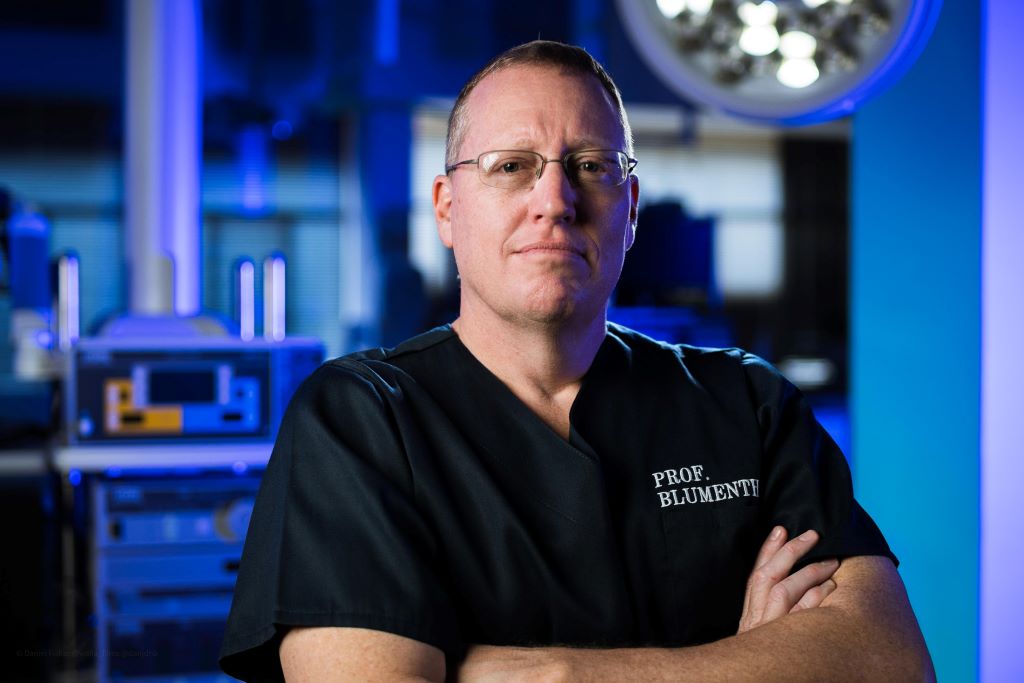
Prof Ryan Blumenthal, senior forensic pathologist at the University of Pretoria, delivered his inaugural professorial address, exploring how forensic pathology helps advance justice, public health and prevention.
Every day, forensic pathologists are called upon to answer one of society’s most difficult questions: how did this person die?
Reflecting on three decades of forensic practice, Prof Blumenthal’s inaugural professorial address explored how forensic pathology extends beyond determining the cause of death. As this address, titled ‘The Dead Teach the Living: Advancing Forensic Pathology for Justice, Prevention, and Public Health’, took place during National Science Month in July, Prof Blumenthal highlighted the vital role that science plays in advancing justice, protecting public health and improving society.
Drawing on his career as a forensic pathologist, researcher, educator, science communicator and lifelong student driven by an insatiable curiosity, his address examined how lessons learnt during autopsies have influenced courts, healthcare, public policy and scientific understanding. Prof Blumenthal explained that forensic pathology is a discipline that strengthens justice, informs public health, guides prevention strategies and generates evidence that can help prevent future deaths.
“Our work lies at the intersection of medicine, science, law, and public engagement, driven by a simple belief: the dead have much to teach the living,” he said. “Whether investigating deaths, advancing forensic pathology, researching lightning injuries, teaching students or communicating science to the public, our mission has always been to pursue the truth, serve justice and leave the profession stronger than we found it.”
Prof Blumenthal is recognised internationally for his contributions to forensic pathology. He has published extensively on electrocution, lightning injuries, suicide and the pathology of trauma, contributed chapters to nine international textbooks, and is an NRF C2-rated scientist.
His work has also reached audiences well beyond academia through bestselling books, documentaries and public engagement initiatives that have helped make forensic science more accessible. His book Autopsy – Life in the trenches with a forensic pathologist from Africa (Jonathan Ball Publishers), launched in August 2020, became a non-fiction bestseller in South Africa. It has since been translated into Afrikaans and Russian. His latest book, Trace (Tafelberg Publishers), was launched in April 2026 and explores real forensic case studies, demonstrating how autopsies can help create a better world by advancing science, justice and public health.
Research with impact beyond the courtroom
While forensic pathology is often associated with criminal investigations, Prof Blumenthal’s research highlights its much broader contribution to society. He argues that forensic pathologists could also be regarded as public health pathologists, as autopsies do more than determine the cause of death; they identify preventable risks, guide public health measures, improve safety and help prevent future deaths.
One of his research focus areas is suicide; he has studied forensic data from Pretoria to examine how suicide patterns have changed over 30 years.
A study of 1,820 possible and probable suicide cases in Pretoria between 2015 and 2021 found that the year after the start of the COVID-19 pandemic, recorded the highest number of suicides during the study period. Suicide cases increased from 9.74% to 13.32% of all medico-legal admissions. The study identified important shifts in demographic patterns and methods of suicide, providing evidence to inform mental health policy and suicide prevention strategies in South Africa.
Another area of Prof Blumenthal’s internationally recognised expertise is lightning and electrical injuries. His research has advanced the understanding of the pathology and epidemiology of lightning injuries, explained how lightning causes injury and death, identified patterns unique to South Africa, and informed practical guidance for forensic practitioners, clinicians and emergency responders.
“I have devoted my career to understanding one of the deadliest forces of nature – lightning – transforming this phenomenon into forensic knowledge. It really is science in service of society.”
His work has also helped establish the fields of lightning medicine (keraunomedicine) and lightning pathology (keraunopathology) as recognised interdisciplinary areas of research spanning forensic science, engineering, clinical medicine and disaster medicine.
His research has also advanced the field of electropathology through studies of electrocution, strengthening forensic investigations by improving approaches to death scene investigations and autopsies involving electrical fatalities. By integrating the study of natural and man-made electrical injuries, his work has helped shape international reference texts used by forensic practitioners around the world.
During his address, Prof Blumenthal also highlighted research into toxicology, exploring how forensic investigations help interpret deaths involving substances such as methanol, fentanyl and ethanol.
He also spoke about his research into weapons and how forensic pathology helps explain the effects of different weapons on the human body. “Our research into weapons reminds us that the distinction between lethal and nonlethal is often misleading. From full-metal jacket mild steel core ammunition with its unpredictable wounding potential to so-called less-than-lethal weapons that can still prove fatal, our work as forensic pathologists reveals the gap between design intent and biological reality,” he said.
The future of forensic pathology
Prof Blumenthal described how advances in forensic radiology, molecular autopsy, toxicology, artificial intelligence, robotics and digital innovation are creating new opportunities to improve the accuracy, efficiency and safety of forensic investigations. He emphasised that these technological advances must be accompanied by stronger, more streamlined forensic systems, effective leadership, sound policy development and sustained investment if they are to benefit countries facing high burdens of trauma and violence.
He also highlighted the growing role of technology in forensic pathology. One example is the use of agile quadruped robots to assist with forensic death scene investigations in hazardous environments. His recent interdisciplinary research showed how these robots could help investigators safely document scenes and collect evidence while reducing risks to personnel, offering a glimpse into the future of forensic practice.
Prof Blumenthal concluded by outlining a vision for a more modern, resilient and technologically enabled forensic pathology service that delivers better justice, strengthens public health and serves all South Africans.
ADAR1 inhibitor researched in outer space holds promise for AML and myelofibrosis now – and possibly cancers like glioblastoma multiforme in the future
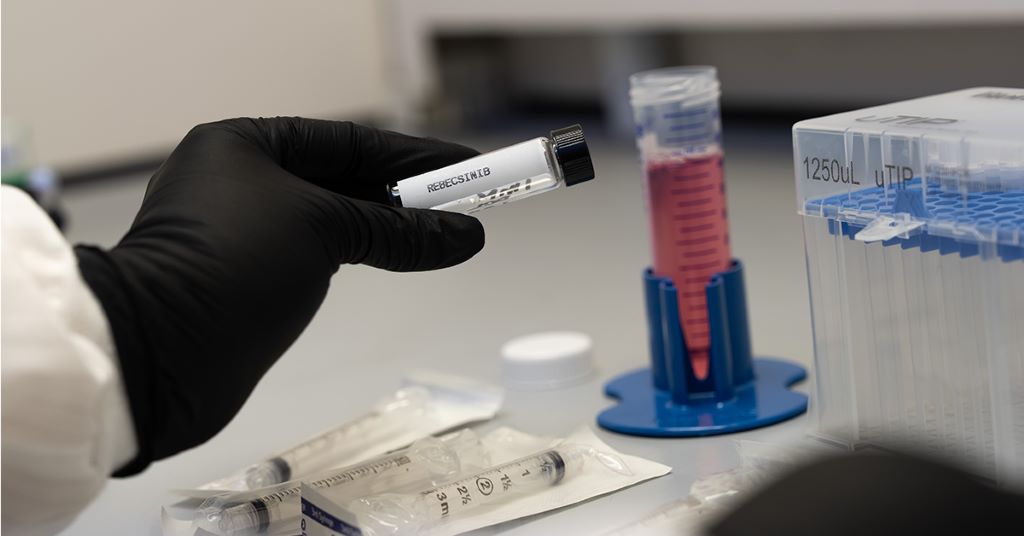
A member of the lab of Catriona Jamieson, MD, PhD, prepares a vial of investigational new drug rebecsinib ahead of the launch of Axiom 4 in July 2025. The drug – which inhibits the gene ADAR1, implicated in the growth of more than 20 cancers – is now available via clinical trial at UC San Diego for patients 18 years of age and older who have secondary acute myeloid leukaemia (AML) that has either recurred or not responded to treatment, or higher-risk myelofibrosis.
A clinical trial of rebecsinib – a first-in-class investigational drug that inhibits the ADAR1 gene involved in the proliferation of more than 20 cancers – is underway at UC San Diego.
The first patient was treated July 6, according to principal investigator James Mangan, MD, PhD, professor of medicine at UC San Diego School of Medicine and a haematologist and oncologist at UC San Diego Health. He called the drug “promising.”
“This trial has great science behind it,” Mangan said. “It uses a totally novel mechanism and really is for patients who have a desperate, unmet need.”
The Phase 1 clinical trial, sponsored by Aspera Biomedicines, is open to adults 18 years of age and older who have secondary acute myeloid leukaemia (AML) that has either recurred or not responded to treatment. It’s also open to patients with higher-risk myelofibrosis. Both are rare blood cancers for which few treatment options exist initially – and no good options if they return.
For AML and myelofibrosis patients, the rebecsinib clinical trial means hope, Mangan said: “If this works, it’s a good option for those who don’t otherwise have targeted agents available to them.”
UC San Diego Sanford Stem Cell Institute Director Catriona Jamieson, MD, PhD, a haematologist and researcher who discovered the drug, said she is “thrilled to take it from bench – and a bench on the International Space Station (ISS), no less – to the bedside of patients who need it most.”
“Rebecsinib shows all the promise in the world not only to halt the progression of multiple cancers, but to shrink them, as well as prevent their spread to multiple sites in the body,” she added.
One of the First Drugs Tested in Space
The U.S. Food and Drug Administration green-lit rebecsinib for clinical trial in March of last year, making it the first and only ADAR1 inhibitor with an investigational new drug application.
It’s one of the very first drugs studied in the cosmos. Jamieson, who is also a professor of medicine at UC San Diego School of Medicine and chief of its Division of Regenerative Medicine, has sent multiple research payloads to the ISS, testing the drug on various types of highly lethal cancers with ADAR1 involvement like ovarian cancer, metastatic breast cancer, AML and glioblastoma multiforme – experiments made possible by millions in grants from NASA’s In-Space Production Applications program.
In fact, in the summer of 2024, Jamieson received the prestigious ISS National Laboratory Compelling Results Award in Biology and Medicine for her discovery that the drug blocks the activation of ADAR1 in cancer – in space.
“Seeing Dr Jamieson’s cancer stem cell research launch on SpaceX CRS-34 – mere weeks before the first patient received rebecsinib in clinical trial – was nothing short of extraordinary,” said donor Rebecca Moores, whose funding of Jamieson’s lab made possible the drug’s development. “Hope is literally on the horizon for patients with blood cancer – and, hopefully, soon, those with other types of cancer as well.”
Scientists are still learning about the distinctive properties of space that threaten human health, including microgravity and galactic cosmic radiation. Such conditions create a uniquely stressful environment that mimics an accelerated version of aging and disease progression on Earth. Depending on the experiment, one month in microgravity can give researchers a preview of a few years, if not more than a decade, of maturation on Earth. This allows them to quickly see how a patient’s cells might age or how a medical condition like cancer might manifest in extended time. It also gives them a quick preview of how a drug might work long-term on a patient’s cells, whether a tumour or a miniature organ created from stem cells.
The landmark NASA Twins Study of 2015-2016 found that space can affect the immune system, gut bacteria, body weight, serum metabolites, immune system, gene expression and cognition of astronauts, among other health factors. Jameison’s research found that space also activates ADAR1, which, in turn, produces ADAR1p150, a protein that promotes tumor growth by hiding cancer from the immune system.
“Space gives Dr Jamieson a tremendous chance to see a lot of changes in stem cell DNA in a short period of time,” Mangan said.
Rebecsinib, he added, could be “a therapeutic mechanism to restore stem cell function after space travel” for astronauts. “If that’s true, it could also be very applicable to an analogous situation that occurs not in a two-week space journey, but over the course of 60 years of life as a human being, over which we accumulate similar stresses to, and mutations in, stem cells.”
‘Every Patient Needs Hope’
Rebecsinib’s June clinical trial launch is only the beginning. The trial may eventually expand to other ADAR1-involved cancers, including lymphoma, glioblastoma multiforme and metastatic breast cancer.
Among those hopeful for the impact of rebecsinib is patient advocate Andrew Schorr, 75, who has lived with myelofibrosis and chronic lymphocytic leukemia (CLL), another blood cancer, for decades.
His myelofibrosis is relatively stable at the moment, he said. If that were to change, however, rebecsinib “might be another option – and I would be grateful.”
Schorr is no stranger to clinical trials. He has participated in two over the years – one for CLL and another for deep vein thrombosis – and has covered many over his career as a medical journalist.
“Every patient needs hope for what could be their next treatment, because these drugs peter out,” he said. “Cancer finds a way around them. They’re not as effective over time, as your disease progresses. You’re always left wondering what the next option is. The fact that there could be a next option gives me a lot of hope.”
Sudy finds early treatment was associated with a 31% lower likelihood of ICU admission
Photo by Andrea Piacquadio on Unsplash
A new US study finds antiviral treatment is linked to fewer intensive care unit (ICU) admissions and shorter hospital stays for children hospitalised with influenza. The study, published in JAMA Pediatrics and led by experts at the University of Colorado Anschutz, is one of the most comprehensive real-world evaluations of antiviral treatment in paediatric influenza to date.
The research found that children who received early treatment with antiviral treatment, in this case oseltamivir, were 31% less likely to be admitted to an ICU and had shorter hospital stays than those who did not receive the antiviral.
The findings come as use of antiviral medications among hospitalised children with influenza has declined despite national guidelines recommending treatment for suspected or confirmed cases.
“After one of the most severe influenza seasons in the past two decades, these findings reinforce the importance of treating children with influenza who are hospitalised. Our findings show that oseltamivir treatment can decrease the risk of needing critical care, even if started beyond the first two days of the start of the illness,” said the paper’s senior author Suchitra Rao, MD, professor in the department of paediatrics at the University of Colorado Anschutz School of Medicine and infectious disease specialist at Children’s Hospital Colorado.
One of the largest and most rigorous real-world evaluations
The researchers looked at data from more than 7000 paediatric hospitalisations captured through a FluSurv-NET, a CDC-supported surveillance network that captures laboratory-confirmed influenza hospitalisations. The data spanned 13 states and eight influenza seasons.
Unlike many earlier observational studies, this research accounted for when symptoms began and when antiviral treatment started, providing stronger real-world evidence on the effectiveness of oseltamivir in hospitalised children.
“Earlier studies were often missing key information about when children became sick or whether they started antiviral treatment before being hospitalised, making it harder to evaluate the medication’s effectiveness. By capturing those details and using advanced statistical methods, we were able to produce stronger real-world evidence to inform the care of children hospitalised with influenza,” adds Rao.
The findings reinforce current national recommendations that children hospitalised with suspected or confirmed influenza receive an antiviral medication as soon as possible.
A single blood test could in future provide a more comprehensive picture of cancer than current methods. In a review article published in the journal Genome Medicine, researchers at Karolinska Institutet describe how several different biological signals can be analysed simultaneously from the same blood sample to detect and monitor cancer diseases.
Researchers and clinicians currently use so-called liquid biopsies, in which material from tumours can be detected in the blood. The method is less invasive than traditional tissue samples and can be used to monitor disease progression over time. In the current review article, researchers summarise developments in a growing field of research in which several different molecular signals are combined in the same analysis. These signals may come, among other things, from free DNA and RNA in the blood, as well as from changes in the structure of the genome and chemical markers.
The researchers call the approach ‘multifeature sequencing-based liquid biopsy’ (MSLB). The idea is not only to look for a single change linked to cancer, but to combine several types of information to provide a broader picture of the tumour’s characteristics.
“By analysing several biological signals simultaneously from the same blood sample, we can potentially gain a more complete picture of the biology of cancer than by studying each signal separately,” says Mariano A. Molina Beitia, researcher at the Department of Laboratory Medicine, Karolinska Institutet.
The article describes several research studies in which combinations of different signals have been used to detect cancer or monitor the disease over time. For example, analyses of DNA methylation, fragment size and chromosomal changes in blood have shown promising results for the early detection of several types of cancer. The researchers also describe how advanced bioinformatics methods and machine learning are used to interpret the large amounts of data generated.
Challenges remain
At the same time, the researchers emphasise that the technology still faces several challenges. Many studies have been carried out in limited patient groups, and the results need to be confirmed in larger prospective studies. In addition, the methods are technically complex, and there are still no common standards for how the analyses should be performed and quality-assured across different healthcare centres.
“For the technology to be widely used in healthcare, standardised workflows, independent validation and studies demonstrating the benefits of the analyses for patients are needed,” says Daniel Hagey at the Department of Laboratory Medicine and senior researcher in the study.
The researchers believe that the first clinical applications will most likely be in monitoring cancer patients, assessing treatment effects and situations where repeated tissue samples are difficult to obtain. In the longer term, the method could contribute to a more integrated and dynamic picture of cancer development based on a simple blood sample.
Findings from clinical practice will help inform shared decision making
Human heart. Credit: Scientific Animations CC4.0
Adding the GLP-1 receptor agonist drug tirzepatide to standard care for patients with type 2 diabetes and heart disease is associated with a lower risk of a major cardiovascular event, such as a heart attack or stroke, finds a study published by The BMJ today.
Randomised trials and observational studies have shown non-inferior effects of tirzepatide compared to another GLP-1 receptor agonist, dulaglutide, for major adverse cardiovascular events (MACE) – a combined measure of heart attack, stroke, and death from any cause. But evidence on the effects of adding tirzepatide to standard care is more limited, resulting in uncertainty for both regulators and clinicians.
To address this, researchers analysed clinical practice data from two US health insurance claims databases between May 2022 and May 2025. They aimed to estimate the cardiovascular effects of adding tirzepatide to standard care for patients with type 2 diabetes, a body mass index of at least 25, and established heart disease by comparing the outcomes to sitagliptin, another diabetes drug.
Sitagliptin was chosen as a neutral placebo proxy based on several studies showing no effect on cardiovascular outcomes.
The main outcome of interest was a reduction in MACE, which was monitored from the first day of treatment up to one year, or until the individual stopped or switched treatment, or disenrolled from the health plan.
Factors including age, sex, race, body mass index, previous heart problems, other chronic conditions, and medication use were taken into account, and a technique called propensity score overlap weighting was used to balance out differences between the two groups to draw more reliable conclusions.
A total of 52,971 individuals were included in the analysis (average age 70 years; 51% female), of whom 35,353 started tirzepatide and 17,618 started sitagliptin.
At one year, the risk of MACE was 2.9% in the tirzepatide group and 4.4% in the sitagliptin group (a 32% relative reduction), and the researchers estimate that for every 70 patients starting tirzepatide, one case of MACE would be prevented.
For individual MACE components, tirzepatide was associated with a 33% lower risk of heart attack compared with sitagliptin, whereas ischaemic stroke showed no meaningful difference.
Infections requiring hospital admission were also lower with tirzepatide (one admission prevented for every 48 patients), as was infection related death (one death prevented for every 200 patients) and death from any cause (one death prevented for every 122 patients).
This is an observational study, but the researchers previously benchmarked their design, data, and analytics infrastructure against a randomised controlled trial before drawing conclusions about cause and effect.
They also acknowledge several limitations including a relatively short follow-up period, which may underestimate long term cardiovascular and safety effects, possible misclassification of treatment duration or outcomes, and findings may not apply to other healthcare systems or patients without established cardiovascular disease.
However, they conclude: “This study shows how trial-anchored evidence from clinical practice can estimate the expected cardiovascular benefit of initiating tirzepatide beyond standard background treatment and inform shared decision making.”
A linked editorial notes that while this study provides an important, transparent estimate of what initiating tirzepatide might achieve in routine care, it does not establish a mortality indication or define the best sequence for cardiometabolic therapy.
The authors say longer follow-up, randomised and pragmatic comparisons, and more studies of additive benefit on contemporary background treatment are needed. Furthermore, cardiovascular efficacy cannot benefit a population if cost, authorisation barriers, supply, and discontinuation prevent sustained treatment, they add.
As such, they conclude: “The signal is compelling; the causal and clinical placement questions remain open.”
Environmental Health Practitioners regularly test drinking and recreational water to detect contamination and help prevent diseases such as cholera and typhoid. (Photo: Unsplash)
By Christina Pitt for Spotlight
From inspecting spaza shops to monitoring water quality, Environmental Health Practitioners help prevent disease before outbreaks occur. A Public Protector investigation reveals why Gauteng municipalities are struggling to deliver these essential public health services. The investigation also helps clarify what is at stake in South Africa’s local government elections in November.
Environmental Health Practitioners (EHPs) operate as the public health system’s early warning system. They are responsible for identifying and managing environmental health risks before they become public health emergencies.
Whether inspecting food premises, monitoring water quality or investigating environmental health hazards, their work is designed to avert illness. These preventative functions form part of the municipal health services that local governments are required by law to provide and what will be at stake in the local government elections in November.
The importance of these largely invisible health services came into sharp focus when Public Protector Advocate Kholeka Gcaleka released preliminary findings of an investigation into Gauteng’s food safety system on 17 July 2026.
The probe followed a series of food poisoning incidents involving children in 2024. Among the most high-profile was the death of six children who allegedly consumed contaminated food bought from a spaza shop in Naledi, Soweto.
Rather than focusing only on the poisoning incidents themselves, the Public Protector’s office examined whether Gauteng’s municipalities were adequately delivering the municipal health services responsible for regulating food safety and hygiene standards in the informal business sector.
As the local government elections draw closer, we unpack how municipalities use environmental health services to prevent harm and protect public health, and find out what happens when that system comes under strain.
To start with, we need to understand what municipal health services are, the responsibilities assigned to municipalities by law, and how those services are intended to function.
What are municipal health services?
Food safety is just one of many municipal health services.
Professor Jaap de Visser, National Research Chair in Multilevel Government, Law and Development at the Dullah Omar Institute at the University of the Western Cape, points to the National Health Act for the full list.
The Act defines municipal health services by naming nine preventative functions, including food control, water quality monitoring, waste management, vector control, and environmental pollution control.
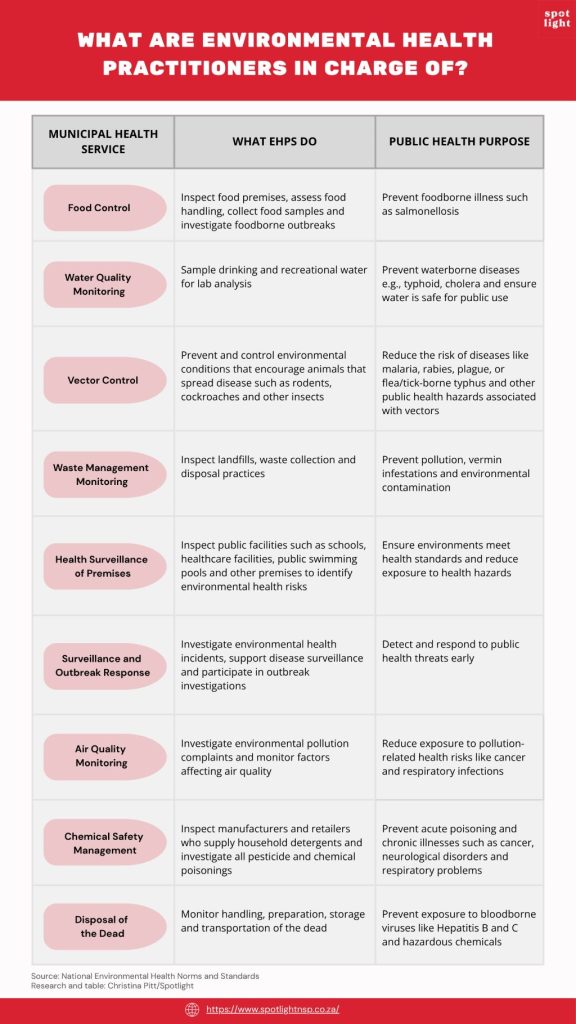
For example, EHPs routinely collect drinking and recreational water samples for laboratory testing to detect contamination and reduce the risk of waterborne diseases such as cholera and typhoid.
This table below illustrates the key functions they perform to prevent disease before people become ill.
The National Environmental Health Norms and Standards requires EHPs to adopt a preventative, risk-management approach. In practice, this means rather than inspecting every premises equally, they prioritise activities and facilities that pose the greatest risk to public health.
“Higher-risk premises, for example, those handling high-risk foods, with a history of non-compliance, would be inspected more frequently and receive more intensive oversight,” explained National Department of Health spokesperson Foster Mohale. “Conversely, lower-risk premises with a strong record of compliance may be inspected less frequently, allowing EHP resources to be directed where they are most needed.”
EHPs also have enforcement powers when they identify breaches of prescribed health standards. They can issue compliance notices, requiring owners or operators to correct a problem within a specified period.
Their work also includes routine inspections, environmental health surveillance, investigating complaints, and educating communities and businesses.
Which municipality is responsible for delivering these services depends on where you live.
In metropolitan municipalities such as Johannesburg, Tshwane and Ekurhuleni, the municipality is responsible for providing municipal health services within its boundaries.
In non-metropolitan areas, the Municipal Structures Act provides that district municipalities are generally responsible, while local municipalities perform the function only where they have been authorised to do so in terms of the Act.
Although municipalities deliver these services, the National Health Act requires them to work as part of a coordinated health system. It establishes District Health Councils to support coordination between national, provincial and local government.
According to Mohale, municipal health services are intended to function as an integrated three-tier system in which national, provincial and district environmental health units work together to deliver municipal health services.
“Working together, these structures are intended to create a coordinated system in which national government sets the policy and regulatory framework, provinces provide oversight and technical support, and district structures coordinate and strengthen implementation at municipal level,” he said.
Food safety provides a useful example of how that system operates in practice.
From farm to fork
Food microbiologist and food safety expert Professor Lucia Anelich says South Africa follows a “farm to fork” approach, with different institutions responsible for different stages of the food chain.
The Department of Agriculture oversees food safety at the production stage by regulating agricultural pesticides and veterinary medicines as well as food safety in abattoirs.
Once food enters the retail environment, the Department of Health, through municipal EHPs, is responsible for inspecting food premises, checking how food is prepared and enforcing food safety requirements.
The Department of Trade, Industry and Competition provides an additional layer of oversight by inspecting certain imported food products at ports of entry, overseeing product recalls and investigating consumer complaints.
When food contamination is suspected, those responsibilities overlap as the relevant authorities work together to trace the source, remove contaminated products, and prevent further illness. The agencies involved depend on where the suspected source lies within the food chain.
The Public Protector’s Gauteng food safety investigation examined whether the preventative systems intended to identify and manage these risks before outbreaks occurred were functioning as intended.
A break in the chain
The level of coordination required for food safety is not the type of thing that happens by chance.
That is why District Health Councils are tasked with strengthening planning, oversight and coordination between national, provincial and local government.
According to Mohale, these structures are intended to provide a forum for regular engagement between stakeholders, monitor the implementation of environmental health programmes and “ensure that food safety risks are identified and managed proactively.”
Yet, the Public Protector identified a significant weakness in Gauteng’s food safety system with the absence of functioning District Health Councils.
Without them, coordination between different spheres of government becomes more difficult, weakening oversight, planning, and the implementation of municipal health services.
Delivering these services also depends on whether municipalities have enough EHPs to carry out routine inspections.
EHP employment gaps
One of the Public Protector’s clearest findings was that Gauteng municipalities lack sufficient EHPs to carry out their statutory functions.
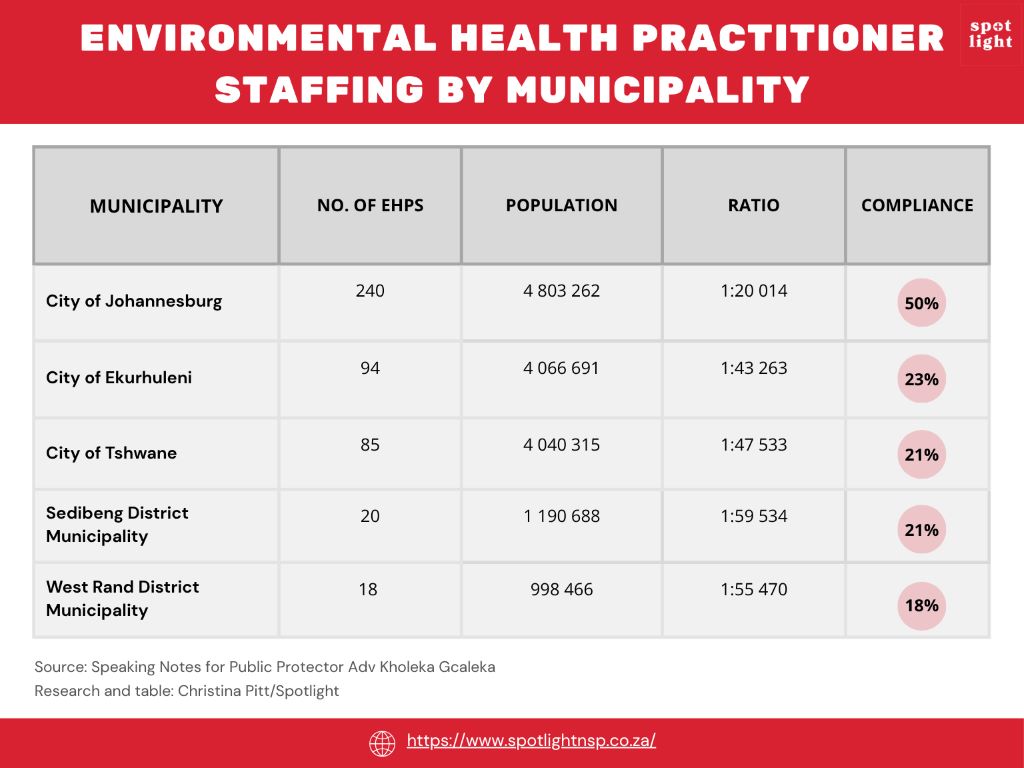
As of October 2025, every municipality fell short of the World Health Organisation (WHO) and the National Environmental Health Norms and Standards benchmark of one EHP for every 10 000 people.
Johannesburg had the largest absolute number of EHPs, with 240 practitioners serving a population of 4.8 million people. This gave it a ratio of one EHP for every 20 000 people, or 50% of the recommended benchmark.
Meanwhile, Ekurhuleni and Tshwane had fewer than one-quarter of the recommended number of EHPs.
According to City of Johannesburg spokesperson Nthatisi Modingoane, its current staffing complement is 213 EHPs, with eight funded vacancies. Despite ongoing recruitment, the City estimates that each EHP is still responsible for about 28 000 residents — almost three times the benchmark.
City of Ekurhuleni spokesperson Zweli Dlamini said the municipality now employs 98 EHPs, up from 94 during the Public Protector’s investigation. However, he acknowledged that the municipality still has a shortage of 309 EHP posts, leaving it well below the recommended staffing benchmark.
The City of Tshwane did not respond to Spotlight’s requests for updated staffing figures.
“The entire province is functioning at less than a third of the required EHP staffing capacity,” Gcaleka said about her findings, warning that the shortage threatens equitable access to environmental health services.
Anelich explained that staffing shortages are compounded by the breadth of EHPs’ responsibilities.
“EHPs are trained broadly, including water quality control and pollution monitoring — not only food,” she said.
“These people have multiple roles to play, which makes it very difficult for the system. We should have EHPs dedicated to food safety so municipalities can regulate food safety more effectively, particularly in the informal sector.”
The National Environmental Health Norms and Standards require EHPs to inspect high-risk food premises at least once every quarter. Maintaining those inspection frequencies becomes increasingly difficult when each practitioner is responsible for far more people than the recommended benchmark.
The capacity constraints extended beyond municipalities. The Public Protector found that the Department of Agriculture had filled only 27 inspector posts, which it described as insufficient to regulate agricultural pesticides effectively, weakening another part of the food safety chain.
But increasing staffing capacity depends on whether municipalities have the financial resources to create and sustain these posts.
Money troubles
The Public Protector also found that municipalities were not allocating enough funding to municipal health services, limiting their ability to recruit and retain EHPs.
Municipal health services are funded primarily through the local government equitable share. This is money allocated by National Treasury and transferred to municipalities to help provide basic services. Municipalities also use revenue from rates and taxes.
Because the equitable share is an unconditional grant, municipal councils decide how much funding is allocated to environmental health alongside their other constitutional responsibilities.
Although the National Department of Health is not responsible for funding municipal health services or employing EHPs, Mohale said it continues to support initiatives aimed at helping municipalities recruit, retain and train EHPs.
He also said the department engages with National Treasury and the Department of Cooperative Governance and Traditional Affairs to prioritise the appointment of EHPs and address staffing shortages.
The human cost
These system weaknesses had visible consequences on the ground. During blitz inspections cited by the Public Protector, EHPs repeatedly identified expired food, unlabelled products, poor hygiene, rodent infestations, and unsafe storage practices.
The Public Protector also found low levels of compliance with spaza shop licensing requirements.
Only 5% of spaza shops in Ekurhuleni were licensed or permitted, compared with 14% in Johannesburg and 30% in Tshwane, according to Gcaleka’s speaking notes. Across Gauteng, the compliance rate was 28%, meaning that for every licensed spaza shop, almost three were operating without the required license or permit.
“So many spaza shops aren’t licensed, so EHPs don’t even know where to look,” Anelich said.
“We can send EHPs into informal settlements to look for them, but that’s not a great use of resources that are already stretched.”
She also said the deaths highlighted what can happen when food safety systems fail. Adding that South Africa’s burden of foodborne disease remains poorly documented, making it difficult to understand the full scale of the problem.
A systemic failure
The Public Protector found that the problems extended beyond individual incidents.
In her speaking notes, Gcaleka says that the underlying governance weaknesses, severe staffing shortages, inadequate funding for municipal health services and capacity constraints in other parts of the food safety system were “not incidental, but systemic and far-reaching”.
She therefore made the preliminary finding that Johannesburg, Ekurhuleni, Tshwane, Sedibeng and West Rand had failed to properly enforce food safety and hygiene standards in the informal food sector.
As voters prepare to elect new local governments in November, the findings highlight a core municipal responsibility: preventing public health risks before they become public health crises.
Replacing 15 minutes of sleep or sedentary behaviour with 15 minutes of movement are each linked to a two per cent reduced risk of cancer, new research from University College London has found.
The new study, published in BMC Medicine, analysed the records of 59218 people (55% female) with an average age of 61.7 from the UK Biobank, a database of half a million volunteers taking part in medical research.
Smartwatches were used to track the movement of the daily movements of those people and, over an eight-year follow-up, some 2,385 cancers occurred in the group. Modelling was used to see how differences in daily movement was linked to cancer risk.
Previous research by other researchers has found strong evidence that higher levels of activity are linked to a lower risk of several cancers – including of the bladder, breast, bowel, kidney and stomach.
The UCL study, led by Dr John Mitchell (UCL Division of Surgery and Interventional Science), looked at areas such as how long people spent sleeping, sedentary behaviour such as watching TV, standing and then any movement and at what intensity.
They found that the more people moved, the lower their risk of cancer.
For example, replacing 15 minutes of sleep or sedentary behaviour with 15 minutes of movement were each linked to a 2% reduced risk of cancer.
Conversely, swapping 30 minutes of movement for 30 minutes of sedentary behaviour increased the risk by 8%, while swapping it for sleep increased the risk by 7%.
This was not just about doing more exercise, Dr Mitchell said, but how everyday activities like running for a bus or carrying home heavy bags of groceries can help maintain a healthy lifestyle which reduce your risk of getting cancer.
Dr Mitchell said: “We are tending towards what we call 24-hour movement guidelines where individuals have a menu of possible options which they can adapt to their lifestyle in order to help them mitigate their risk of disease over time.
“Our study showed that there’s an increased risk of cancer for those who spend a lot of time sitting down.
“We also explored what might happen if people leading active lives reduced their levels of physical activity and found that they also face a higher cancer risk.
“Based on theoretical modelling, our study showed even losing two to three minutes per day of vigorous activity, such as running for a bus, and replacing it with sitting down, sleep or light activity increased their cancer risk.
“Other examples of vigorous activity – that is, anything which elevates your heart rate and makes you sweat – include sport, rushing up the stairs and carrying home heavy grocery bags.
“The take-home message is that for people already leading physically active lives, it’s really important to maintain that level of activity as you get older.
Current NHS guidelines say adults should aim for at least 150 minutes of moderate intensity activity a week or 75 minutes of vigorous intensity activity a week.
They should also do strength activities that work all the major muscle groups (legs, hips, back, abdomen, chest, shoulders and arms) on at least two days per week.
Examples of moderate activity include very brisk walking (4mph or faster), cycling at 10mph-12mph, or badminton. Vigorous activity also includes hiking, jogging at 6mph or faster, fast cycling, basketball or tennis.
Doctors may think they’re saying “Don’t panic.” But many patients hear “Don’t bother” instead.
A new study from the University of California San Diego Rady School of Management suggests that when physicians try to reassure patients by saying their symptoms are ‘normal’, patients may actually infer that treatment isn’t necessary – and become less inclined to seek it.
Published in Nature Human Behaviour, the findings held across 14 experiments involving 9371 participants and a wide range of health conditions, from menopause and migraines to dental pain, seasonal allergies and elevated blood glucose levels.
Why ‘normal’ can send the wrong message
The idea for the research grew from first author Seyi Lawal’s interest in communication around menopause, where patients sometimes report feeling dismissed after being told disruptive symptoms are simply a normal part of aging. Could it be, she wondered, that doctors and patients were interpreting the same conversations differently?
To find out, the researchers conducted 14 studies involving members of the public and healthcare providers. Participants read realistic medical scenarios in which healthcare providers either described symptoms as ‘normal’ or did not. The researchers then measured the participants’ willingness to pursue treatment and compared it with what providers expected patients would do.
“Providers expected that normalising a patient’s symptoms would increase their treatment likelihood, or at worst have no impact, but patients actually reacted in the opposite way,” said Lawal, a doctoral student at the UC San Diego Rady School of Management.
Doctors use ‘normal’, it seems, to mean common and well understood. Patients often interpret it as meaning acceptable – or not worth treating.
Fixing the communication gap, making reassurance work
The findings come amid broader conversations about patients feeling dismissed in healthcare settings, sometimes described as “medical gaslighting.” The study identifies a communication gap that may contribute to those experiences, even when doctors are trying to help.
The good news is that miscommunication isn’t inevitable. The researchers also tested two simple ways to reduce it: pairing normalising language with an explicit recommendation for treatment, and explaining that “normal” was meant in a statistical, not normative or prescriptive, sense.
Both approaches helped close the communication gap.
“Doctors usually have a noble goal. They mean to ease anxiety, but somehow it backfires,” said senior author On Amir, professor of marketing and holder of the Wolfe Family Presidential Endowed Chair in Life Sciences Innovation and Entrepreneurship at the UC San Diego Rady School of Management. “Doctors shouldn’t stop reassuring patients. But they should make their meaning unmistakable.”
Co-author Brianna Chew, a doctoral student at the Rady School, said the same lesson applies to patients. Hearing that symptoms are “normal,” she said, shouldn’t be taken to mean they are any less serious.
The key takeaway for patients: If you’re unsure what your doctor means when they say a symptom is “normal,” don’t assume it means treatment isn’t recommended and you should just live with it. Ask.
Common symptoms can still deserve attention – and treatment.