Tag: arthritis

Abatacept Trumps Hydroxychloroquine in Cutting Risk of Rheumatoid Arthritis
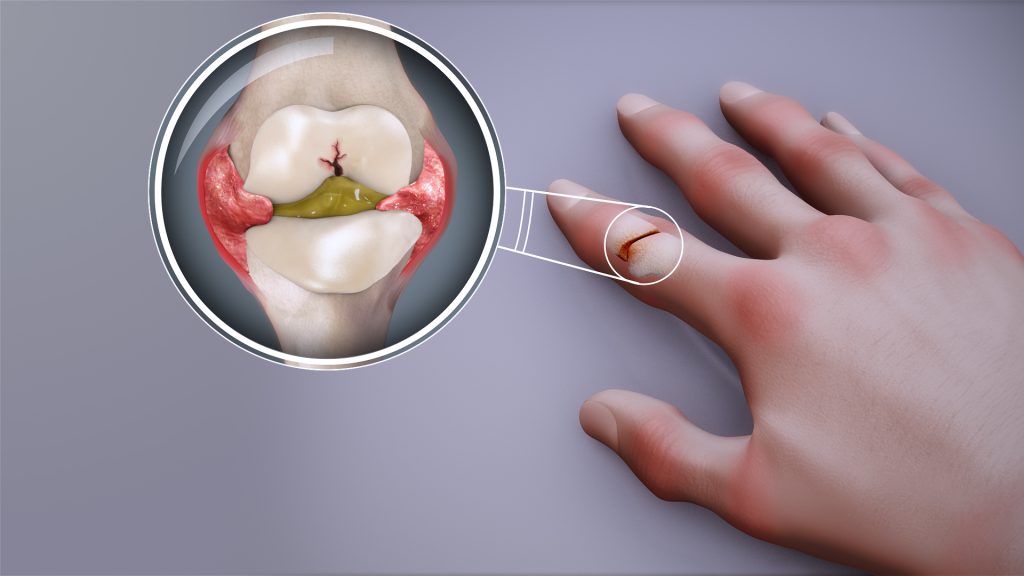
Rheumatoid arthritis. Credit: Scientific Animations CC4.0

A clinical trial led by researchers from Hospital Clínic de Barcelona, the August Pi i Sunyer Biomedical Research Institute (IDIBAPS) and the Institute of Advanced Chemistry of Catalonia (IQAC-CSIC) has compared the effectiveness of abatacept and hydroxychloroquine in preventing the development of rheumatoid arthritis in patients with palindromic rheumatism, an autoimmune disease that progresses to arthritis in approximately half of all patients. The trial was conducted over two years across 14 hospitals throughout Spain and involved 70 patients with palindromic rheumatism. The findings, published in Nature Medicine, indicate that abatacept is significantly more effective than hydroxychloroquine in preventing the onset of arthritis.

Palindromic rheumatism is characterised by intermittent episodes of joint inflammation, with acute flare-ups lasting a few days and resolving spontaneously. However, around half of patients eventually develop rheumatoid arthritis, a chronic disease that causes irreversible joint damage. This risk is particularly high in individuals with biomarkers such as rheumatoid factor and anti-citrullinated peptide antibodies. The presence of these two autoantibodies is used in the diagnosis of the disease.

Until now, in the absence of clinical trial evidence, the standard approach has been to treat patients with palindromic rheumatism using hydroxychloroquine, a drug with anti-inflammatory and immunosuppressive properties aimed at improving disease symptoms. In this context, the team led by Raimon Sanmartí, head of the Inflammatory Arthropathies Research Group at IDIBAPS, conducted a two-year clinical trial involving 70 patients with palindromic rheumatism. The objective was to compare the effectiveness of hydroxychloroquine with abatacept, a lymphocyte inhibitor – a type of white blood cell that attacks the joints after mistakenly identifying them as a threat – in reducing progression from palindromic rheumatism to rheumatoid arthritis

The results show that treatment with abatacept significantly reduces progression to rheumatoid arthritis. Only 20% of patients receiving abatacept developed arthritis, compared with 50% of those treated with hydroxychloroquine. Furthermore, patients treated with abatacept not only avoided progression to rheumatoid arthritis in most cases, but also experienced a significant improvement in palindromic rheumatism symptoms. “The study shows that patients treated with abatacept are more likely to achieve complete remission of attacks associated with acute pain and joint swelling, and that their inflammatory episodes are less severe,” explains Isabel Haro, Head of the Peptide Synthesis and Biomedical Applications Unit at IQAC-CSIC. The research team also highlights that both drugs proved safe and well tolerated throughout the trial.

Early intervention

“The results of this study indicate that we can intervene at an early stage to modify the natural course of the disease and reduce the risk of patients developing more severe and irreversible conditions,” says Sanmartí. “This opens the door to a paradigm shift in the treatment of these patients.”

The study, which involved several national research centres, also analysed the evolution of a number of biomarkers (autoantibodies) developed by the CSIC research group during patient follow-up. “Although no significant differences were observed between abatacept and hydroxychloroquine in terms of autoantibody responses, this work demonstrates the value of immunomodulatory approaches in the early stages of disease, when it is still possible to prevent progression to more severe and chronic forms,” notes Haro.

Source: Spanish National Research Council 

Study Links OTC Joint Pain Supplement to Accelerating Dementia

Photo by cottonbro studio

New research has found an association between taking glucosamine, a popular over-the-counter supplement used for joint pain, and a higher likelihood of progressing from mild cognitive impairment to Alzheimer’s disease.

The finding by researchers at University of Florida’s McKnight Brain Institute is based on a large retrospective analysis of patients’ records as well as supporting data from advanced imaging technology used to scan human brain specimens and Alzheimer’s disease mouse models.

While the results are preliminary and require validation in a human clinical trial, they provide yet another piece of a much bigger mechanistic picture involving metabolic dysregulation and neurodegeneration, according to the study published in Nature Metabolism.

“In the United States, there are about 7 million people living with Alzheimer’s and millions more with related dementias such as Lewy body or frontotemporal dementia,” said senior author Ramon Sun, PhD, director of the Center for Advanced Spatial Biomolecule Research and associate director for innovation of UF’s McKnight Brain Institute. “A lot of these people actively take an over-the-counter supplement that could be making their disease progression worse.”

The team used artificial intelligence to comb deidentified UF Health records from 2012 to 2024 for patients diagnosed with either ADRD or mild cognitive impairment, or MCI. They found that a significant proportion (8%) of both types of patients reported taking glucosamine: 1896 with ADRD and 2750 with MCI.

After controlling for age, sex and demographics, the analysis showed that glucosamine use was associated with a 25% higher likelihood of progression from mild cognitive impairment to dementia.

In addition, researchers found that taking glucosamine was associated with a 25% increase in mortality risk, or the likelihood of death within a specified time frame, among ADRD patients. For the MCI group, there was no such impact, suggesting the impact of glucosamine may be greater in patients with established dementia.

Notably, said Sun, researchers revealed that a metabolic process in which a protein and sugar-tagging pathway is overactive in Alzheimer’s could be a new target for intervention.

“Our results suggest that altered metabolism is a significant contributor to Alzheimer’s progression and, in addition, addressing the metabolic defect could be an important complement to approaches focused on Alzheimer’s plaques and tangles,” Sun said.

By Michelle Jaffee

Source: McKnight Brain Institute, University of Florida

Study Finds People on Colchicine Less Likely to Need Joint Replacement

Photo by Towfiqu barbhuiya: https://www.pexels.com/photo/person-feeling-pain-in-the-knee-11349880/

Gout is the most common form of inflammatory arthritis, with worldwide prevalence of approximately 4%.  The accumulation of monosodium urate crystals in gout leads to the clinical manifestations of the disease and if left inadequately treated, leads to chronic arthritis with joint damage. Due to its anti-inflammatory properties, colchicine, an alkaloid drug derived from the autumn crocus plant, is commonly used in the management of gout for both prophylaxis and treatment of gout flares.

A recent study on colchicine’s potential benefit for cardiovascular disease noted that participants who were taking the drug had fewer joint replacements than those taking a placebo. Since colchicine is commonly used in gout, researchers wondered if colchicine would lower risk of joint replacement in those with gout as well. Further, because osteoarthritis is the most common reason for joint replacement, and because osteoarthritis and gout can occur together, researchers wondered if colchicine could lower the risk of joint replacement in those with both gout and osteoarthritis. 

A new study from Boston University Chobanian & Avedisian School of Medicine has found that people with gout who were prescribed colchicine had a modest 12% risk of joint replacement compared to those who did not receive the drug. Additionally, those with both gout and osteoarthritis who took colchicine had a 23% lower risk of needing joint replacement. 

While it would have been ideal for a clinical trial to address the question of whether colchicine reduces the need for joint replacement in gout, it was not readily feasible to conduct such a trial of adequate sample size and duration. Therefore, the researchers used real-world evidence from a UK population-based database in which they identified people with gout, and then divided that pool into those who were newly prescribed colchicine and those who were not. They then assessed the frequency of knee and hip replacement in both groups. 

According to the researchers, these findings suggest that colchicine may have benefits beyond symptom relief alone. “This observation could have broad implications for duration of colchicine use in gout, which is often limited to just the first six months of getting started on a urate-lowering therapy or limited to treatment of flares,” explains corresponding author Tuhina Neogi, MD, PhD, Professor of Rheumatology and professor of medicine at the school. 

Additionally, Neogi believes these findings have implications for potential benefits of colchicine for osteoarthritis irrespective of gout, which is the most common form of arthritis and a leading reason for joint replacement surgery. “Prior trials of colchicine in osteoarthritis have been largely negative, but they likely have been too small and had too short a duration to detect potential effects,” adds Neogi who also is chief of rheumatology at Boston Medical Center.

These findings appear online in the journal Arthritis & Rheumatology.

Source: Boston University

Virtual Reality Nature Walks and “Magic” Hands: A New Era in Pain Management

Photo by Matteo Vistocco on Unsplash

What if arthritis sufferers could take an immersive walk through a forest filled with soothing birdsong and then, with some help from hypnosis, come to experience their pain as separate from their body – and expel it?

That’s the goal of research led by David Ogez, a professor in the Department of Anesthesiology and Pain Medicine at Université de Montréal and a clinical researcher at the Maisonneuve-Rosemont Hospital Research Centre.

Together with postdoctoral researcher Valentyn Fournier, Ogez is testing an approach that combines medical hypnosis and virtual reality (VR) to help seniors manage chronic arthritis pain in the hands, a common and debilitating condition.

Their research was published online last month in BMJ Open.

“Chronic pain is a major public-health issue that affects about one in five people in Canada and as many as one in three over the age of 60,” said Ogez. “It significantly impacts quality of life, mobility and mental health.  But apart from pharmacological treatments, solutions are few.”

The problem lies in the limitations of drug treatments, including the risk of addiction to painkillers. This led Ogez and his team to explore complementary, non-invasive methods to help patients better manage their pain.

A powerful duo

Medical hypnosis is already recognized as an effective pain management tool, particularly in palliative care and post-operative settings. It relies on hypnotic suggestion—guided phrases that help patients alter their sensory and emotional perception of pain.

For example, patients may be asked to imagine submerging their sore hand in cold water, or be guided through controlled breathing techniques to synchronize their heartbeat and breathing to induce relaxation.

Ogez’s team wanted to take it one step further by combining the power of hypnosis with immersive virtual experiences.

Wearing a headset, the patient is transported to a Quebec landscape—a forest, mountains, a beach—accompanied by music and the sounds of nature. Developed in Quebec, this application was originally designed to give end-of-life patients the opportunity to “visit” places they never had the chance to see in real life.

Pairing hypnosis and VR makes it possible to visualize and manipulate pain, allowing patients to reclaim control of their bodies and their pain, research has shown.

One intervention being tested is the “magic hand.” In virtual reality, patients look at their hand and put little sparkles on the painful area to alleviate the pain. Another intervention involves guiding patients to “objectify” their pain: to make it visible on their hand and then remove it. 

“The pain is still there, but…”

The researchers are also interested in the physiological mechanisms responsible for the pain relief provided by these techniques, which may resemble those associated with mindfulness.

One hypothesis is that VR distracts the brain. By intensely engaging vision, hearing and concentration, VR redirects mental resources that would otherwise be mobilized by pain. Hypnosis then reinforces this diversion of attention by guiding the patient toward pleasant sensations and gradual relief.

Neuroscience research has shown that these techniques modulate the activity of the anterior cingulate cortex and primary somatosensory cortex, two brain regions involved in the emotional and perceptual processing of pain.

“The pain is still there, but its unpleasantness and intensity are reduced,” explained Ogez.

Exposure to nature also provides psychological benefits. “Nature refreshes attention, directing the mind away from negative stimuli and restoring our ability to focus on positive ones,” said Fournier.

Promising preliminary results

Beyond the immediate calming or distracting effects of a treatment session combining hypnosis and VR, the new research aims to help patients develop self-hypnosis skills they can use at home. 

The team is also working on developing a neurofeedback tool that patients can use to track and regulate their brain activity in real time in order to help them modulate their physiological responses during immersive VR experiences. 

While the study is presently in the randomized clinical trial phase, the preliminary feedback from participants is encouraging, said Ogez.

“We’re seeing good patient satisfaction, although we mustn’t confuse satisfaction with effectiveness,” he cautioned. “Still, we’re hopeful, since pain is partly a subjective experience.” 

Hand-held Medical Scanner could Transform Cancer and Arthritis Diagnosis

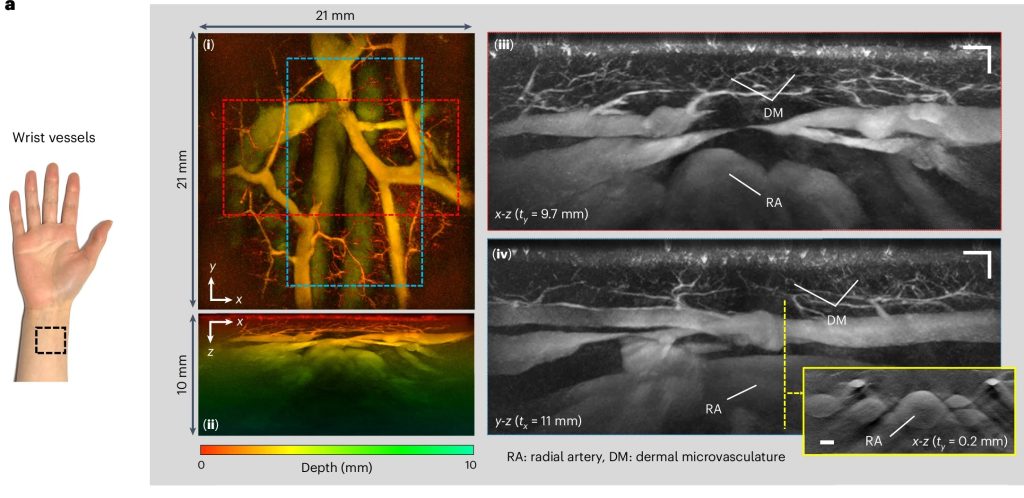
PAT images of wrist vasculature acquired in high-resolution scan mode. Wrist region, (i) x-y and (ii) x-z depth-to-colour encoded MIPs, (iii) x-z and (iv) y-z greyscale MIP slices of regions indicated by dashed red and blue rectangles in (i) showing fine dermal microvasculature (DM), radial artery (RA) and large wrist veins. Inset: x-z greyscale MIP showing cross-sectional view of the radial artery and adjacent veins in the plane indicated by the dashed yellow line in (iv). Huynh et al., Nature Communications, 2024.

A new hand-held scanner developed by UCL researchers and tested in a series of clinical trials on UCLH patients can generate highly detailed 3D photoacoustic images in just seconds, paving the way for their use in a clinical setting for the first time and offering the potential for earlier disease diagnosis.

In the study, published in Nature Biomedical Engineering, the UCL and UCLH team show their technology can deliver photoacoustic tomography (PAT) imaging scans to doctors in real time, providing them with accurate and intricate images of blood vessels, helping inform patient care.

Photoacoustic tomography imaging uses laser-generated ultrasound waves to visualise subtle changes (an early marker of disease) in the sub-millimetre-scale veins and arteries up to 15mm deep in human tissues.

However, up until now, existing PAT technology has been too slow to produce high-enough quality 3D images for use by clinicians.

The older PAT scanners took more than five minutes to take an image – by reducing that time to a few seconds or less, image quality is much improved and far more suitable for people who are frail or poorly.

The researchers say the new scanner could help to diagnose cancer, cardiovascular disease and arthritis in three to five years’ time, subject to further testing.

In this study, the team tested the scanner during pre-clinical tests on 10 UCLH patients with type-2 diabetes, rheumatoid arthritis or breast cancer, along with seven healthy volunteers. They also compared the PAT scans to regular clinical scans taken at UCLH. Larger scale trials of the device are ongoing at UCLH and UCL.

In three patients with type-2 diabetes, the scanner was able to produce detailed 3D images of the microvasculature in the feet, highlighting deformities and structural changes in the vessels. The scanner was also used to visualise the skin inflammation linked to breast cancer.

UCLH consultant radiologist Andrew Plumb, a senior author of the study and Chief Investigator of the clinical PAT studies, said: “One of the complications often suffered by people with diabetes is low blood flow in the extremities, such as the feet and lower legs, due to damage to the tiny blood vessels in these areas. But until now we haven’t been able to see exactly what is happening to cause this damage or characterise how it develops.

“In one of our patients, we could see smooth, uniform vessels in the left foot and deformed, squiggly vessels in the same region of the right foot, indicative of problems that may lead to tissue damage in future. Photoacoustic imaging could give us much more detailed information to facilitate early diagnosis, as well as better understand disease progression more generally.” Dr Plumb is also Associate Professor of Medical Imaging at UCL.

Patients were identified and recruited from a number of clinics at UCLH, including consultant rheumatologist Madhura Castelino, consultant interventional radiologist Conrad von Stempel and research staff Katerina Soteriou and Antonia Yeung who co-ordinated safe, timely scanning at UCLH and UCL on the new PAT scanner.

UCL Professor of Biomedical Photoacoustics Paul Beard, corresponding author, said: “We’ve come a long way with photoacoustic imaging in recent years, but there were still barriers to using it in the clinic.

“The breakthrough in this study is the acceleration in the time it takes to acquire images, which is between 100 and 1000 times faster than previous scanners.

“This speed avoids motion-induced blurring, providing highly-detailed images of a quality that no other scanner can provide. It also means that rather than taking five minutes or longer, images can be acquired in real time, making it possible to visualise dynamic physiological events.

“These technical advances make the system suitable for clinical use for the first time, allowing us to look at aspects of human biology and disease that we haven’t been able to before.

“Now more research is needed with larger groups of patients to confirm our findings.”

Professor Beard added that a key potential use for the new scanner was to assess inflammatory arthritis, which requires scanning all 20 finger joints in both hands. With the new scanner, this can be done in a few minutes – older PAT scanners take nearly an hour, which is too long for elderly, frail patients, he said.

Source: University College London Hospitals

Macrophage Discovery Could Lead to Treatments for Diseases Such as Lupus and COVID

A macrophage engulfing a yeast cell. Source: CC0

Scientistshave made an important breakthrough in understanding failures during the progression of inflammatory diseases and in doing so unearthed a potential new therapeutic target. The scientists report in Nature that an enzyme called Fumarate Hydratase is repressed in macrophages. These immune cells are already implicated in a range of diseases including Lupus, arthritis, sepsis and COVID.

Lead author Luke O’Neill, Professor of Biochemistry at Trinity said: “No-one has made a link from Fumarate Hydratase to inflammatory macrophages before and we feel that this process might be targetable to treat debilitating diseases like Lupus, which is a nasty autoimmune disease that damages several parts of the body including the skin, kidneys and joints.”

Joint first-author Christian Peace added: “We have made an important link between Fumarate Hydratase and immune proteins called cytokines that mediate inflammatory diseases. We found that when Fumarate Hydratase is repressed, RNA is released from mitochondria which can bind to key proteins ‘MDA5’ and ‘TLR7’ and trigger the release of cytokines, thereby worsening inflammation. This process could potentially be targeted therapeutically.”

Fumarate Hydratase was shown to be repressed in a model of sepsis, an often-fatal systemic inflammatory condition that can happen during bacterial and viral infections. Similarly, in blood samples from patients with Lupus, Fumarate Hydratase was dramatically decreased.

“Restoring Fumarate Hydratase in these diseases or targeting MDA5 or TLR7 therefore presents an exciting prospect for badly needed new anti-inflammatory therapies,” said Prof O’Neill.

Excitingly, this newly published work is accompanied by another publication by a group led by Professor Christian Frezza, now at the University of Cologne, and Dr Julien Prudent at the MRC Mitochondrial Biology Unit (MBU), who have made similar findings in the context of kidney cancer.

“Because the system can go wrong in certain types of cancer, the scope of any potential therapeutic target could be widened beyond inflammation,” added Prof O’Neill.

Source: Trinity College Dublin

Axial Spondyloarthritis Association of South Africa wins Excellence Award at EULAR PARE Assembly 2022

Maranda Van Dam, Chairperson of ASASA (left) accepting award, with Souzi Makri President of PARE (middle) and Nikos Sleeks, ELEANA Greece (right)

Maranda van Dam, Chairman of the Axial Spondyloarthritis Association of South Africa (ASASA) won an award of excellence at the EULAR PARE (People with Arthritis/Rheumatism across Europe) Congress 2022, for work performed by ASASA around axial spondyloarthritis (AxSpA) in South Africa. The PARE congress took place from 20 – 22 October 2022, in Brussels, and included a Representation Committee consisting of members of the PARE, of which van Dam is an associate.

The award was based on strides made by ASASA towards improving the quality of life of people living with AxSpa, as well as training done to build awareness in the medical fraternity around AxSpA in the country. With 36 posters entered into the awards by organisations across the globe, ASASA came out tops.

When asked about the award, van Dam said, “This was a real honour to represent South Africa at PARE. 2022 is also the first year that an African country was invited to attend PARE. Winning this award sheds light on our country and our unique problems. The delay to diagnosis of 10.8 years is just unacceptable. The access to the correct medication in both the private and public sector is also not sufficient for a debilitating, progressive disease that can lead to disability if left untreated.”

ASASA estimates that there are approximately 160 000 people suffering from the AxSpA in South Africa, with many of these sufferers undiagnosed. ASASA has made significant strides this year in the training of over 100 General Practitioners and over 250 optometrists around AxSpA diagnosis and the effects it can have on other parts of the body, like the eyes. In addition, ASASA, along with other partners, assisted in gathering data from South African respondents in the first ever live patient survey, called the International Map of Axial Spondyloarthritis (IMAS) survey, which is run by the Axial Spondyloarthritis International Federation that surveys people diagnosed with AxSpA and assesses the impact and burden that AxSpA has on the lives of patients, from their perspective.

Van Dam concluded, “There is still a lot we can do in South Africa and ASASA is busy growing its team of volunteers to help to build awareness around AxSpA in the country. We aim to continue to build support structures for patients in the country, as well as continually working with the medical fraternity, assisting with early diagnosis and access to treatment.”

New Drug Relieves Rheumatoid Arthritis Pain

A new drug, otilimab, has shown effectiveness in treating rheumatoid arthritis (RA). Otilimab is a human monoclonal antibody which inhibits granulocyte-macrophage colony-stimulating factor (GM-CSF). GM-CSF is a large driver of immune-mediated inflammatory conditions.

The drug is currently being tested on its ability to suppress inflammation, tissue damage and pain in RA sufferers.

A multicentre, dose-ranging trial conducted with the drug. Participants were administered subcutaneous injections with one of five different dosages of otilimab (22.5 mg, 45 mg, 90 mg, 135 mg, or 180 mg) or placebo weekly for five weeks. Thereafter, they received injections once every two weeks for one year. The results showed a rapid reduction in tenderness and swelling, and a very high reduction in pain.

The study was unusual in that it offered an escape arm. It is often difficult to recruit participants when they know they may be receiving a dummy injection, and so if, after 12 weeks the participants  on the placebo arm derived no benefit, they were transferred to the highest dose arm of 180mg.

Source: Medical Xpress

Journal information: Christopher D Buckley et al, Efficacy, patient-reported outcomes, and safety of the anti-granulocyte macrophage colony-stimulating factor antibody otilimab (GSK3196165) in patients with rheumatoid arthritis: a randomised, phase 2b, dose-ranging study, The Lancet Rheumatology (2020). DOI: 10.1016/S2665-9913(20)30229-0