Author: ModernMedia

‘Push to Failure’ Works for Bigger Muscles, but not Strength

Photo by Jonathan Borba on Unsplash

When performing resistance training such as lifting weights, there’s a lot of interest in how close you push yourself to failure – the point where you can’t do another rep – and how it affects your results. While research has looked at this concept in different ways, to date, no meta-analysis has explored the pattern (ie, linear or non-linear) of how the distance from failure (measured by repetitions in reserve) affects changes in muscle strength and size.

As such, it’s still unclear how close to failure one needs to go to maximise muscle growth and strength.

Researchers from Florida Atlantic University and collaborators analyzed how training close to failure or not impacts muscle growth and strength. The study primarily looked at how training close to failure affects muscle growth in the main muscles used in an exercise. For example, if an individual was doing leg presses, the focus was on how training close to failure affects the quadriceps.

Researchers estimated the number of repetitions in reserve, which means how many more reps you could have done before reaching failure. They collected data from 55 various studies and ran detailed statistical analyses to see how different reps in reserve levels affected strength and muscle growth.

Results of the study, published in the journal Sports Medicine, found that how close you train to failure doesn’t have a clear impact on strength gains. Whether you stop far from failure or very close to it, your strength improvement appears to be similar. On the other hand, muscle size (hypertrophy) does seem to benefit from training closer to failure. The closer you are to failure when you stop your sets, the more muscle growth you tend to see.

“If you’re aiming for muscle growth, training closer to failure might be more effective. In other words, it doesn’t matter if you adjust training volume by changing sets or reps; the relationship between how close you train to failure and muscle growth remains the same,” said Michael C. Zourdos, Ph.D., senior author and professor and chair of the Department of Exercise Science and Health Promotion within FAU’s Charles E. Schmidt College of Science. “For strength, how close you push to failure doesn’t seem to matter as much.”

The researchers suggest that individuals who aim to build muscle should work within a desired range of 0-5 reps short of failure for optimized muscle growth or while minimizing injury risk. For strength training, they suggest individuals should work toward heavier loads instead of pushing their muscles to failure. As such, they recommend that to train to gain strength, individuals should stop about 3-5 reps short of failure without applying additional physical strain on the body.

“Training closer to failure enhances the accuracy of self-reported repetitions in reserve,” said Zac P. Robinson, Ph.D., first author and a Ph.D. graduate of FAU’s Department of Exercise Science and Health Promotion. “When people estimate how many reps they have left, this perception influences the weights they choose. If the estimation is off, they might use lighter weights than needed, which could limit strength gains. On the flip side, our meta-analysis shows that training closer to failure also leads to greater muscle growth. So, for the average individual, training close to failure may be the best option – as it seems to improve the accuracy of our perception of effort as well as gains in muscle size.”

Findings help underscore the difficulties of training close to failure, which can be tough and harder to recover from, potentially impacting long-term performance negatively. In addition, the researchers say that training closer to failure might better simulate the conditions and experiences of a maximal strength test, commonly used in strength training programs, rehabilitation and athletic performance assessments to gauge an individual’s strength capabilities and track progress over time. 

“As the load increases, motor patterns change, which means performing sets closer to failure can more closely mimic the demands of max strength assessments,” said Zourdos. “This approach aligns with the principle of specificity by exposing you to similar motor patterns and psychological challenges. Moreover, training near failure may also improve psychological factors like visualisation, which are important for achieving maximal strength.”

Results from the study could help guide future research and provide valuable insights for trainers on how proximity to failure affects muscle growth and strength. However, researchers say the exact numerical relationship between training close to failure and strength gain remains unclear and future studies should be deliberately designed to explore the continuous nature of the effects in larger samples. 

Source: Florida Atlantic University

Routine Bloods can Improve Cancer Screening in Patients with Abdominal Symptoms

Risk of cancer by specific site based on blood test abnormalities in symptomatic patients can help guide referral strategies

Photo by National Cancer Institute on Unsplash

Incorporating information from common blood tests can enhance cancer risk assessment in patients with abdominal symptoms, according to a study publishing July 30th in the open-access journal PLOS Medicine by Meena Rafiq from University College London, UK, and colleagues.

Early cancer detection is key to successful treatment. However, many undiagnosed cancer patients present to their primary care provider with non-specific symptoms that can be a result of several other benign causes, making it difficult to determine who warrants additional diagnostic testing or referral. Most guidelines focus on “alarm” symptoms specific to a given type of cancer to guide referrals. There is limited guidance on non-specific symptoms to guide cancer assessment and referral decisions across different cancer types.

In this study, researchers used data from the UK Clinical Practice Research Datalink to identify more than 470 000 patients aged 30 years or older who had visited a general practitioner due to abdominal pain or bloating. Within a year of that visit, approximately 9000 patients with abdominal pain and 1000 patients with bloating were diagnosed with cancer. The researchers looked at 19 abnormal blood test results collected during the initial primary care visit to see if they could predict who was more likely to be diagnosed with cancer.

Several blood abnormalities were predictive of cancer risk across sex and age groups. For example, in patients aged 30–59 years with abdominal symptoms, anaemia, low albumin, raised platelets, abnormal ferritin, and increased inflammatory markers strongly predicted a risk of undiagnosed cancer. Among older patients (aged 60 years and above), the presence of abdominal pain or bloating alone was enough to warrant a cancer referral.

The study also showed which types of cancer were most common based on age, sex, and blood test abnormality. For example, among women aged 50–59 years with anaemia and abdominal bloating, the most common types of cancer were bowel and ovarian cancer. This level of granularity can help guide providers on which diagnostic strategies to prioritise.

The study shows that common, routine blood test results can provide additional context in patients with non-specific abdominal symptoms to improve cancer risk assessment and identify patients who warrant additional testing and/or referral to a specialist.

The authors add, “Using existing blood tests can be an effective and affordable way to improve early diagnosis of cancer in people who see their GP with vague symptoms. Our study identified several commonly used GP blood tests where abnormal results increase a patient’s risk of having cancer and these can be used to diagnose cancer earlier.”

Provided by PLOS

A Brain Fingerprint: Study Uncovers Unique Brain Plasticity in People Born Blind

Image: Pixabay CC0

A study led by Georgetown University neuroscientists reveals that the part of the brain that receives and processes visual information in sighted people develops a unique connectivity pattern in people born blind. They say this pattern in the primary visual cortex is unique to each person, akin to a fingerprint.

The findings, published in PNAS, have profound implications for understanding brain development and could help launch personalised rehabilitation and sight restoration strategies.

For decades, scientists have known that the visual cortex in people born blind responds to a myriad of stimuli, including touch, smell, sound localization, memory recall and response to language. However, the lack of a common thread linking the tasks that activate primary areas in the visual cortex has perplexed researchers. The new study, led by Lenia Amaral, PhD, a postdoctoral researcher; and Ella Striem-Amit, PhD, the Edwin H. Richard and Elisabeth Richard von Matsch Assistant Professor of Neuroscience at Georgetown University’s School of Medicine, offers a compelling explanation: differences in how each individual’s brain organizes itself.

“We don’t see this level of variation in the visual cortex connectivity among individuals who can see – the connectivity of the visual cortex is usually fairly consistent,” said Striem-Amit, who leads the Sensory and Motor Plasticity Lab at Georgetown. “The connectivity pattern in people born blind is more different across people, like an individual fingerprint, and is stable over time – so much so that the individual person can be identified from the connectivity pattern.”

The study included a small sample of people born blind who underwent repeated functional MRI scans over two years. The researchers used a neuroimaging technique to analyze neural connectivity across the brain.

“The visual cortex in people born blind showed remarkable stability in its connectivity patterns over time,” Amaral explained. “Our study found that these patterns did not change significantly based on the task at hand , whether participants were localising sounds, identifying shapes, or simply resting. Instead, the connectivity patterns were unique to each individual and remained stable over the two-year study period.”

Striem-Amit said these findings tell us how the brain develops. “Our findings suggest that experiences after birth shape the diverse ways our brains can develop, especially if growing up without sight. Brain plasticity in these cases frees the brain to develop, possibly even for different possible uses for the visual cortex among different people born blind,” Striem-Amit said.

The researchers posit that understanding each person’s individual connectivity may be important to better tailor solutions for rehabilitation and sight restoration to individuals with blindness, each based on their own individual brain connectivity pattern.

Source: Georgetown University Medical Centre

Childhood Vaccine Coverage in SA Declined in 2023, Finds WHO Report

A marker used to measure immunisation coverage is to look at whether children received three doses of the vaccine against diphtheria, tetanus and pertussis. Photo by Mufid Majnun on Unsplash

By Elri Voigt

New data from the World Health Organization (WHO) and UNICEF show that globally childhood immunisation coverage stalled in 2023, while in South Africa it decreased. Elri Voigt unpacks the new data and asks local experts to put it in context.

A new report found that vaccination coverage rates around the world have not yet returned to levels seen in 2019, before the COVID-19 pandemic disrupted immunisation programmes.

There has been no meaningful change in immunisation coverage between 2022 and 2023, according to the WHO and UNICEF report published in July. It means progress in immunisation coverage has effectively stalled, leaving 2.7 million additional children who are either unvaccinated or under-vaccinated compared to pre-pandemic levels in 2019.

A marker used to measure immunisation coverage is to look at whether children received three doses of the vaccine against diphtheria, tetanus and pertussis – referred to as DTP3. Global coverage for DTP3 stalled at 84% in 2023, according to the report.

At the same time, the number of children worldwide who have not received any vaccinations has increased. We refer to these kids as zero-dose children. Ten countries account for 59% of all zero-dose children, with the global number in 2023 rising to 14.5 million compared to 13.9 million in 2022, according to the report.

Coverage slightly down in SA

Data from the report showed a slight decrease for a number of outcome measures in South Africa between 2022 and 2023. It was one of 14 countries in the African region that saw a decrease in coverage for DTP1 (the first dose of the vaccine for diphtheria, tetanus and pertussis), slipping from 87% in 2022 to 81% in 2023. Coverage for DTP3 also decreased, falling from 85% in 2022 to 79% in 2023.

South Africa was also one of 10 countries in the African region that saw a decrease in coverage for the first dose of the measles vaccine, and was singled out by the report as having the sharpest decline in coverage in the region between 2022 and 2023. Measles coverage dropped from 86% in 2022 to 80% in 2023.

Commenting on the accuracy of the new data, Professor Shabir Madhi, Dean at the Faculty of Health Sciences at the University of Witwatersrand (Wits), said it used administrative data, which can bias the estimates. He explained that the report bases vaccine coverage on the number of vaccines procured by government and deployed to facilities. For example, if a facility gets 100 doses of the measles vaccine and ends up discarding 50 doses, that doesn’t necessarily get reported.

The WHO acknowledges the potential for data inaccuracies. It stated that they calculate the estimated percentage of immunisation coverage by dividing the number of doses administered to a target population by the estimated number of people in that target population.

Madhi said a more accurate picture of childhood immunisation coverage in the country can be found in National Vaccine coverage surveys, like the Expanded Programme on Immunisation (EPI) National Coverage survey. Spotlight previously reported on results from the most recent EPI survey conducted in 2019.

Madhi said it appears the new report did not incorporate data from the EPI survey. However, even without this data, he said the WHO estimates are not too far off the local data. He remarked that he doesn’t feel “too strongly either way” about the accuracy of the WHO data since the bottom line is vaccine coverage in the country is lagging.

“Fluctuations in immunisation coverage are not uncommon,” Dr Haroon Saloojee, a professor of Child Health at Wits University told Spotlight. “One should not make too much of a fall or increase in coverage rates over one year, unless it is drastic.”

Data from the WHO report for vaccine coverage in South Africa between 2018 and 2022 had actually showed an overall upward trend, which was “promising”, according to Saloojee. However, he said the latest data from the report “holds no good news for South Africa” because the dip in coverage in 2023 was noteworthy.

How does SA compare?

“South Africa’s performance is moderate when compared globally, and poor compared to other high-middle income countries,” said Saloojee. “Considering that South Africa is a high-middle-income country, we should be performing much better in all our health indicators.”

He pointed out that countries in a similar bracket like Cuba and Uruguay have achieved high immunisation coverage through robust healthcare systems and effective public health policies.

Regarding zero-dose children, the report ranked South Africa 6th worst in the African region. In 2022, the country ranked 13th. With a total of 220 000 zero-dose children, the country accounted for 3% of all zero-dose children in the African region. Nigeria had the highest percentage at 32% of all zero-dosed children in the region, followed by Ethiopia with 14%.

‘Dysfunctionality of primary healthcare’

Apart from the international comparisons, Madhi pointed out that South Africa is not meeting its own targets of having at least 90% of children in each district fully vaccinated.

The EPI survey found that only seven of the 52 districts in the country were able to achieve the national target of 90% of children fully vaccinated under one year of age. Together, the data from the survey and the WHO clearly shows that childhood immunisation targets are not being met in the country.

For Madhi, the results from the EPI survey “speaks to dysfunctionality of primary health care in the country”. He said the immunisation of children, which is the bedrock of primary healthcare when it comes to children, acts as a “canary in the mine with regards to how well primary healthcare is working”.

He said South Africa is a leader in the field when it comes to evaluating and introducing vaccines to the public immunisation programme. But when it comes to implementation, for the vast majority of districts we “are falling completely flat on our face and coming short in terms of reaching our own targets”.

Implications for children

The health implications for children who are not unvaccinated or only partially vaccinated are significant.

“They are less protected against what can be life threatening diseases. And those life-threatening diseases include diseases such as measles, but also other life-threatening diseases such as pneumonia,” Madhi said.

“We’re selling ourselves short as a country in addition to actually compromising the health of children by not ensuring that we’re doing everything that’s possible to actually get children to be vaccinated,” Madhi added. “It also comes with other consequences, so it sort of lends South Africa to be more prone to outbreaks.”

Saloojee added that it is also likely that children who are not fully vaccinated are “not receiving many of the other health, education and social development services all children require and that is being provided by government, such as early childhood development services and child support grants”.

The reasons for immunisation coverage lagging are complex and the responsibility for fixing the problem lies with more than just one entity. Spotlight previously reported on some of the reasons children are remaining unvaccinated or under-immunised as identified by the EPI survey.

Madhi said there needs to be a fundamental relook at the country’s immunisation programme. Proper governance structures need to be put in place and the programme will need to be implemented all the way down to the sub-districts. There is also a need for real-time data and monitoring of that data so interventions can be done when children are missing their immunisations. He also suggested ring-fencing funds for vaccines, at either a national or provincial level, to ensure that money earmarked for vaccines are used for that purpose so as to ensure less stock-outs.

“The immunisation programme hasn’t changed much from what I can gather over the past 20 years, let alone the past 10 years. So we can’t expect a different outcome if the strategy that we’re using which has failed is the strategy that you continue pursuing,” Madhi said.

Saloojee said the National Department of Health can play a pivotal role in strengthening the immunisation programme by “providing leadership, resources, and policy support”. He said that to his knowledge the health department is currently preparing a national immunisation strategy to take us to 2030, but the draft is not up to scratch. The strategy, he says, will need to offer clear objectives, establish realistic indicators of, and targets for, measuring success, and attract a fully funded mandate.

Spotlight asked the National Department of Health for comment on the new WHO report and how it plans to respond to improve immunisation coverage. While the department acknowledged our questions, they did not provide comment by the time this article was first published.

Republished from Spotlight under a Creative Commons licence.

Read the original article

Daily Physical Activity not Sufficient to Protect Against Stroke

Photo by Emmanuel Ikwuegbe on Unsplash

Research conducted at the University of Gothenburg shows that daily physical activities, at work or in the home, are not sufficient to protect against stroke. Fortunately, the findings, published in JAMA Network Open, suggest that exercising in free time and using active modes of transport are associated with a decreased risk of stroke.

“Physical activity during leisure time and as transportation is becoming increasingly important now that many jobs and domestic activities are becoming more sedentary,” says lead author of the study Adam Viktorisson, researcher at Sahlgrenska Academy at the University of Gothenburg, Sweden.

Twenty year follow-up

The research study covers 3614 people from the region of Västra Götaland, 269 of whom suffered a stroke in the twenty years spanned by the study. Three months after the stroke, 120 of these had died or were dependent on help to carry out activities of daily living.

Physical activity data was gathered from surveys. Some participants were also given a pedometer to wear. Physical activity during leisure time or for transportation showed a link to the objective measurements from the pedometers, while physical activity at work did not.

Occupational physical activity not protective

The health benefits of physical activity are well known, but earlier studies tend to mainly focus on physical activity during leisure time. Research in recent years has shown that physical activity at work can instead have negative health impacts, increasing the risk of cardiovascular disease.

“How and when we carry out physical activity seems to play a crucial role in determining its health benefits. In our study leisure time and transport related physical activities were associated with a lower risk of stroke, whereas activities during work time or in the household were not” Adam Viktorisson points out.

“Physically demanding jobs are often linked to stress, little opportunity for recovery, air pollution and generally poorer socioeconomic conditions, which can counteract the positive effects of physical activity.”

Promote public health

The study used data from the INTERGENE cohort at the University of Gothenburg. Study participants were surveyed and data was collected from 2001 to 2004, consisting of both clinical and questionnaire data. The researchers hope that these results will bring greater awareness and lead to changes in public health policy to encourage physical activity in society.

“Encouraging people to be physically active in their daily lives, for example by walking, cycling and doing other types of exercise, can be an important strategy in reducing the number of strokes and improving the prognosis of people who suffer a stroke,” says Adam Viktorisson.

Source: University of Gothenburg

Patients with Osteoarthritis are Often Prescribed NSAIDs Despite Contraindications

Photo by Towfiqu barbhuiya

A new study published in the journal Osteoarthritis and Cartilage has found that people with newly diagnosed osteoarthritis (OA) of the knee or hip with contraindications to or precautions for NSAIDs still continue to be prescribed these drugs. Additionally they had higher use of opioids and slightly lower physical therapy (PT) use within the first year of OA diagnosis, both of which are not consistent with treatment guidelines for OA.

“We found individuals with contraindications to NSAIDs were still commonly prescribed them, placing them at risk for NSAID-related adverse events,” explains corresponding author Tuhina Neogi, MD, PhD, the Alan S. Cohen Professor of Rheumatology and professor of medicine at the school. “Additionally, they were not more likely to receive safer alternatives like PT despite its widespread recommendation as first-line intervention.”

The researchers used population-based register data to identify adults residing in Sweden (between 2004-13) without a previous knee or hip OA diagnosis. Among this group, between 2014-18, they identified people with knee or hip OA diagnosis and presence of contraindications to or precautions for oral NSAIDs at the time of OA diagnosis. They then estimated the risk of: 1) regular oral NSAID use; 2) regular opioid use; 3) PT during the first year after diagnosis among those with versus without contraindications or precautions.

Despite having contraindications to NSAIDs, 21% of those in the study were regular users of NSAIDs within the first year of their OA diagnosis. Similarly, 21% of those with precautions for using NSAIDs were also regular users. They also found a higher proportion of persons with contraindications were regular users of opioids than those without a contraindication or precaution, while a slightly lower proportion received PT.

Neogi stresses that more options for effective and safe management of OA symptoms are urgently needed, and greater work is required in narrowing and ultimately closing the evidence-knowledge-practice gap.

Source: Boston University

Introducing the Future of Personalised Healthcare: Ajuda

Dr Liza Street and Taryn Uhlmann, Co-founders of Ajuda

As technology continues to shrink the world, migration is becoming easier. According to Statista, nearly a million South Africans emigrated in 2020, and the semigration trend in recent years has seen hundreds of thousands of South Africans relocating between provinces. While belongings can go into a truck or shipping container, something even more important is slipping through the cracks: personal health records.

Two highly-motivated, entrepreneurial women are looking to change that with an innovative, user-friendly solution – a secure digital health vault called Ajuda, where anyone and everyone can store their health information and get quick access to it anytime, anywhere, using a secure login from their digital device.

Designed With You In Mind

Ajuda (which means ‘help’ in Portuguese) was founded and developed by both Dr Liza Street, a paediatrician, and Taryn Uhlmann, a technology and marketing business executive.

The two – both moms of three – met when Street began treating Uhlmann’s children. After COVID-19, with all the disruptions and innovations that arose during that time, they got chatting about how disempowering it was for moms not to have easy access to their children’s medical records and thus having to rely on memory when it came to their children’s developmental milestones, doctor consults and medication names. “We don’t realise how often we need to recall this information – for new schools, at doctors’ visits and even when relocating. This frustration, especially for busy parents, is where it all started,” says Uhlmann.

That conversation, three years ago, was the seed for what has blossomed into Ajuda. Uhlmann and Street recently welcomed a third member, Allan Sweidan, as an investor and advisor. Sweidan, a clinical psychologist, brings his experience from co-founding Akeso, Netcare’s mental healthcare clinics, and more recently the mental health app, October Health (Panda), to Ajuda.

Why a Central Health Information Vault?

While the idea may have been born out of a conversation about time-strapped moms managing their kids’ health, Uhlmann and Street soon realised that not having the means to securely and conveniently store one’s health information and have access to one’s medical history was a challenge faced by everyone.

Accurate medical records are necessary in emergency situations, anytime you’re having new medication prescribed, for insurance applications, school applications, visa applications, and in many other instances.

What’s more, not having access to personal health information makes it difficult for people to take control of their own health. Having accurate information on hand helps people keep track of which medications to take, in what dosages and when. It also helps healthcare providers make informed decisions around treatments and prescriptions, based on their patients’ health histories, and can lower the risk of adverse drug interactions. In an age of the ‘sandwich generation’, where adults today often take care of both their children and their parents, a centralised repository of their family’s health information is game-changing.

“We looked at all the challenges,” says Uhlmann. “Memory is a big challenge; migration and movement is a big challenge; and the fact that medical care is fragmented – you might have a scan at one hospital and a blood test at another, or maybe you take your child to a GP while you’re on holiday, and in the end, because you don’t have access to all those records in one place, it means no doctor has all the information required to ever look at you holistically. There are many separate medical apps for various healthcare organisations, but no centralised, consumer facing solution pulling it all together. ” 

Everything In One Place

Ajuda addresses these concerns with a secure, easy-to use digital storage vault that users can access anywhere, anytime, free of charge.

A second time-saving feature of Ajuda is the ‘One Time Form.’  When signing up, a new user creates a profile for themselves and/or their children, which generates a ‘One Time Form’ and they’re set for life. Creating a profile is simple and interactive, and Ajuda users are guided through the process of completing and uploading their personal and health details, step by step, with user-friendly prompts and explanations.

“This is the same core information that you fill in every time you see a new doctor, have a blood test, or do any medical procedure, which becomes frustrating and time consuming,” says Street. “Now you just need to complete it once, unpressurised, in the comfort of your home, with the correct information at hand, and then take it each time you go to a healthcare provider. It’s a win-win for doctors and patients.”

If users don’t have all their information on hand, no problem – they can fill in the gaps later. Once they’ve completed their profile, they can then enjoy the peace of mind that their personal health information is safely, conveniently and accurately stored.

“For healthcare providers, it provides a comprehensive record of a patient’s health history, not only at their own practice but anywhere the patient has received treatment,” says Street.

Free and Independent

Ajuda is free to use, and you don’t need to be a member of a particular medical scheme or use a particular healthcare provider to access it. By making it free to use, Uhlmann and Street hope to empower everyone with the means to take control of their own health information.

For more information on Ajuda or to sign up, visit Ajuda.co.za 

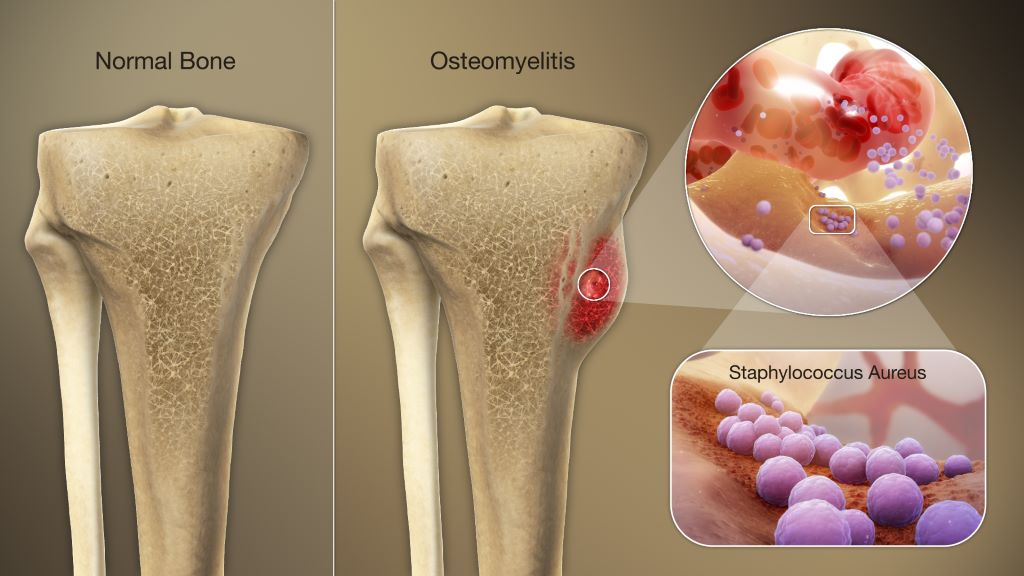
Common Skin Bacteria in Increasing Cases of Implant-associated Osteomyelitis

Osteomyelitis from Staphylococcus Aureus infection. Credit: Scientific Animations CC0

In patients who have undergone knee or hip replacement surgery, clinicians are noticing increasing numbers of chronic bone infections linked to a bacterial strain commonly found on the skin. A new study published in the Journal of Orthopaedic Research provides insights into the mechanisms involved, and how the bacteria lingers in bone reservoirs.

Utilising mouse models of bone infection and systematic electron microscopy studies, scientists found that the common skin bacteria Cutibacterium acnes can persist as layers of biofilms for weeks on contaminated titanium or stainless-steel implants. In mice, C. acnes could persist for 28 days in the tibia, and the researchers also observed C. acnes spreading to internal organs. compared to Staphylococcus aureus infections, C. acnes chronic osteomyelitis revealed markedly reduced bone osteolysis and abscess formation.

C. acnes can also invade deep pockets of the bone called osteocyte lacuno-canalicular networks and persist there.

“Our study highlights that osteocyte lacuno-canalicular networks can be a major reservoir for this bacterium and potentially provides a novel mechanism of why Cutibacterium acnes chronic bone infections are difficult to treat in the clinic,” said corresponding author Gowrishankar Muthukrishnan, PhD, of the University of Rochester Medical Center.

Source: Wiley

Specific Type of Dietary Fibre Could Stimulate GLP-1 Release

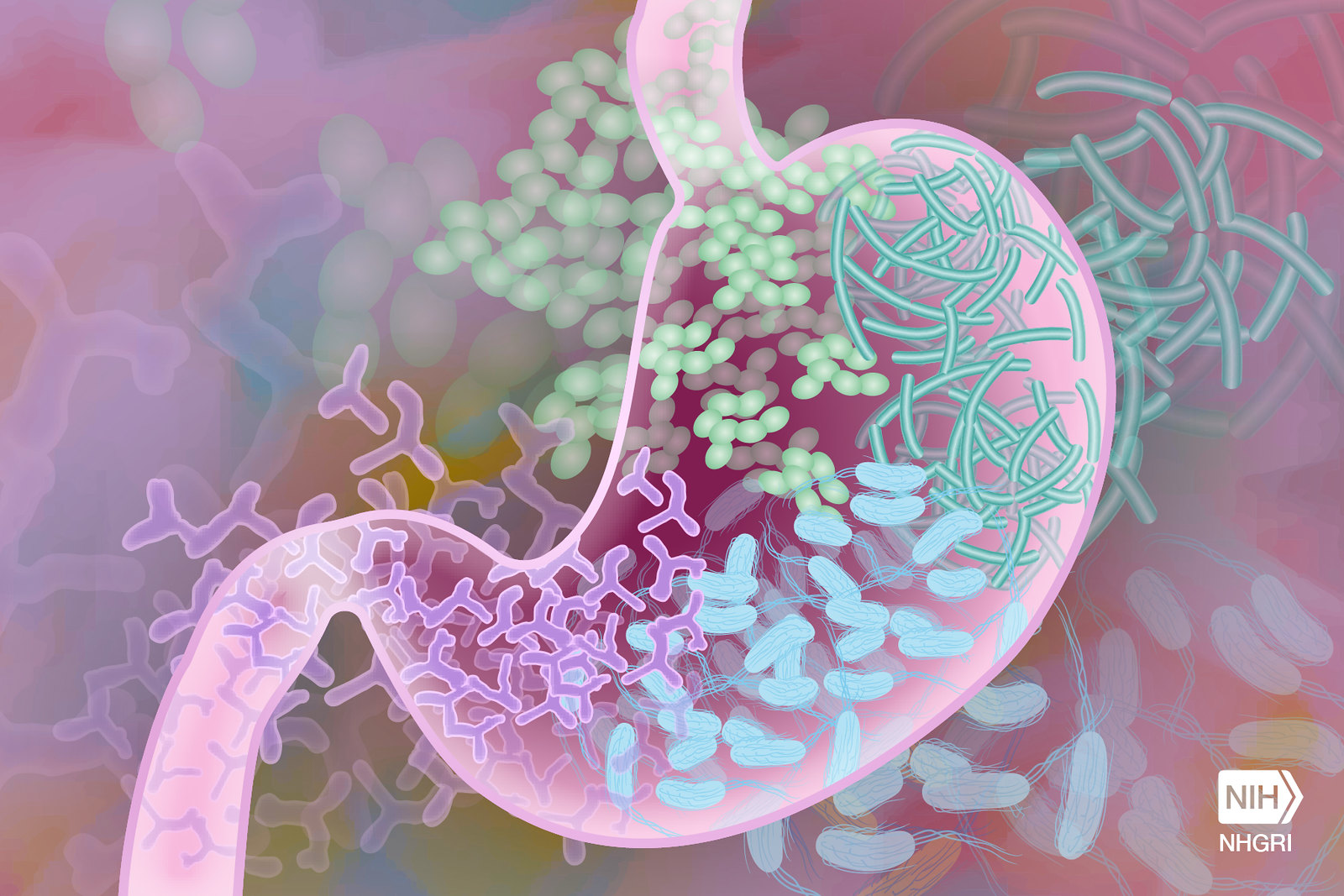
Gut Microbiome. Credit Darryl Leja National Human Genome Research Institute National Institutes Of Health

New research led by Frank Duca, associate professor at the University of Arizona, suggests that consuming foods rich in beta-glucan, a type of fibre found in oats and barley, can reduce body weight and obesity by stimulating the release of glucagon-like peptide-1 (GLP-1). The study, published in The Journal of Nutrition, analysed the impact of different fibres on gut microbiota.

“We know that fibre is important and beneficial; the problem is that there are so many different types of fibre,” Duca said. “We wanted to know what kind of fibre would be most beneficial for weight loss and improvements in glucose homeostasis so that we can inform the community, the consumer and then also inform the agricultural industry.”

Not all fibre is created equal

The researchers looked at the effect of five different plant-based fibres in rodent diets: pectin, beta-glucan, wheat dextrin, starch and cellulose. Only beta-glucan resulted in reduction of body weight and fat, as well as improvements in glucose homeostasis. Beta-glucan is a unique fibre that is found in many foods, including oats, barley, mushrooms and yeasts, and future studies will examine how different sources of beta-glucan could differ in their effectiveness.

Changes in metabolites – the molecules produced when gut bacteria interact with fibre – seemed to be responsible for the weight-loss effects,  particularly a specific metabolite called butyrate. Butyrate is a key fuel source for colon cells, promoting a healthy gut barrier to reduce systemic inflammation. Butyrate also induces the release of gut peptides, or messengers that regulate the functions of the gut, such GLP-1.

Drugs like semaglutide are synthetic versions of GLP-1, which stimulate insulin and can also help people feel full. One key difference of naturally occurring GLP-1 is its rapid degradation near the intestine, whereas semaglutide is made to last longer and target the brain.

“Part of the benefits of consuming dietary fibre is through the release of GLP-1 and other gut peptides that regulate appetite and body weight,” Duca said. “However, we don’t think that’s all of the effect. We think that there are other beneficial things that butyrate could be doing that are not gut peptide related, such as improving gut barrier health and targeting peripheral organs like the liver.”

Duca is researching other types of fibre that can be beneficial for weight reduction. In a previous study, the Duca Lab discovered that barley flour was the most effective in promoting weight loss compared to several other commercially available flours. Other studies involving oligofructose have also demonstrated beneficial effects. In the future, Duca hopes to collaborate with other researchers to develop enhanced fibres that can optimise the release of butyrate.

Source: University of Arizona

Researchers Delve into the Roots of Chronic Pain

Source: Pixabay CC0

A team of researcher have identified a new function for the PIEZO2 protein – in mediating chronic pain hypersensitivity. The research suggests a new target for analgesics and potentially explains why pain medications that target voltage gated sodium channels have been disappointing as clinical targets. The study, led by Oscar Sánchez-Carranza in Professor Gary Lewin’s lab at the Max Delbrück Center, was published in the journal Brain.

“There’s a good correlation between chronic pain and the sensitisation of pain receptors, called nociceptors, in humans,” says Lewin. “This study implicates the PIEZO2 channel as a critical mediator of sensory signals that maintain chronic pain.”

PIEZO2 protein forms an ion channel in human sensory receptors. Previous studies have shown that the ion channel is involved in communicating the sense of touch to the brain. People with “loss-of-function” mutations in the PIEZO2 gene are hypo-sensitive to gentle touch or vibration. By contrast, patients with “gain-of-function mutations” in PIEZO are often diagnosed with complex developmental disorders. But whether gain-of-function mutations are responsible for mechanical hypersensitivity had never been proven.

Mutation dramatically sensitises nociceptors

To study the connection, Sánchez-Carranza created two strains of so called “gain-of-function” mice, each carrying a different version of a mutated PIEZO2 gene. He expected to find the touch receptors of these mice to be highly sensitive. In cell biology experiments his team has found that PIEZO2 mutations have a powerful effect on the activity of the ion channel. One mutation, for example, causes the channel to open with 10 times less force compared to normal non-mutated channels.

Using electrophysiological methods developed in the Lewin lab, Sánchez-Carranza and his colleagues measured electrical activity in sensory neurons isolated from the transgenic mice. They found that in addition to sensitising touch receptors as expected, the mutations made nociceptive receptors – neurons that detect painful mechanical stimuli – dramatically more sensitive to mechanical stimuli.

Moreover, the researchers found that the nociceptors were activated by mechanical stimuli that would normally be experienced as light touch.

“You pretty much need to crush the skin to activate nociceptors,” Sánchez-Carranza explains. But the nociceptors from the transgenic mice were triggered by levels of mechanical force that would normally be perceived as a touch. They were incredibly sensitive.”

That a single mutation in PIEZO2 was enough to change the physiology of the nociceptors from one type of neuron to another, was especially surprising, says Lewin. More significantly, when the stimulus was removed, the neurons kept firing. The study is the first time that anyone has linked gain-of-function mutations in the PIEZO2 gene to pain receptors.

PIEZO2 might be involved in pain syndromes like fibromyalgia

Clinical studies have shown that in patients with chronic pain syndromes such as fibromyalgia and small fibre neuropathies, C-fibre nociceptors, which are the sensory receptors that initiate pain, are hyperactive. When researchers have recorded the activity of nociceptors in such people, they found that the they were active in the absence of any mechanical stimulus. But the mechanism was not clear.

“We show that just by changing one amino acid in PIEZO2, we can actually mimic a lot of what happens in chronic pain in the C-fibres,” says Lewin. In humans, “PIEZO2 might be involved in many of these pathologies.” Nociceptive neurons are the largest population of sensory neurons that innervate the skin – humans have four times more pain receptors in the skin than touch receptors.

Up to 20% of the adult population suffers from chronic pain, according to a 2023 study by the U.S. National Institutes of Health, which is poorly treated with existing medications. The same NIH study found that two thirds of people who reported chronic pain in 2019 were still suffering one year later.

The findings suggest that a particular aspect of the PIEZO2 channels mechanism of opening could be targeted by new pain medications. Much effort on developing new analgesics has focused on voltage gated sodium channels with limited success, says Lewin. “By addressing the root cause of nociceptor sensitisation, new drugs could provide better relief for chronic pain sufferers.”

Source: Max Delbrück Center