Year: 2023

New Radiotherapy Technique Hits The Bullseye on Tumours

Photo by National Cancer Institute on Unsplash

Researchers in Japan have developed a new radiotherapy technique that has the potential to treat several kinds of cancer, with fewer negative side effects than currently available methods. Published in Chemical Science, the proof-of-concept study showed that tumours in mice grew almost three times less and survival was 100% after just one injection of an alpha-particle emitting radioisotope inside of cancer cells, killing them but sparing healthy tissue.

The side effects of standard chemotherapy and radiation treatment can be devastating, and the eradication of all cancer cells is not guaranteed, especially when the cancer has already metastasised and spread throughout the body. Therefore, the goal of most research these days is to find a way to specifically target cancer cells so that treatments only affect tumours. Some targeted treatments do exist, but they cannot be applied to all cancers. Researchers led by Katsunori Tanaka at the RIKEN Cluster for Pioneering Research (CPR) in Japan and Hiromitsu Haba at the RIKEN Nishina Center for Accelerator-Based Science (RNC) developed this new approach.

“One of the greatest advantages of our new method,” says Tanaka, “is that it can be used to treat many kinds of cancer without any targeting vectors, such as antibodies or peptides.”

The new technique relies on basic chemistry and the fact that a compound called acrolein accumulates in cancer cells. A few years ago, Tanaka’s team used a similar technique to detect individual breast cancer cells. They attached a fluorescent compound to a specific type of azide – an organic molecule with a group of three nitrogen atoms (N3) at the end. When the azide and acrolein meet inside a cancer cell, they react, and the fluorescent compound becomes anchored to structures inside the cancer cell. Because acrolein is almost absent from healthy cells, this technique acted like a probe to light up cancer cells in the body.

In the new study, rather than simply detecting cancer cells, the team targeted those cells for destruction. The logic was fairly simple. Instead of attaching the azide to a fluorescent compound, they attached it to something that can kill a cell without harming surrounding cells. The chose to work with astatine-211, a radionuclide that emits a small amount of radiation in the form of an alpha particle as it decays. Compared to other forms of radiation therapy, alpha particles are a little more deadly, but they can only travel about one twentieth of a millimetre and can be stopped by a piece of paper. In theory, when astatine-211 is anchored to the inside a cancer cell, the emitted alpha particles should damage the cancer cell, but not much beyond.

Once the team figured out the best way to attach astatine-211 to the azide probe, they were able to perform a proof-of-concept experiment to test their theory. They implanted human lung-tumour cells into mice and tested the treatment under three conditions: simply injecting astatine-211 into the tumour, injecting the astatine-211-azide probe into the tumour, and injecting the astatine-211-azide probe into the bloodstream. The found that without targeting, tumours continued to grow, and mice did not survive. As expected, when the azide probe was used, tumours grew almost three times less and many more mice survived – 100% when it was injected into the tumour and 80% when injected into the blood.

“We found that just one tumour injection with only 70kBq of radioactivity was extremely effective at targeting and eliminating tumour cells,” says Tanaka. “Even when injecting the treatment compound into the bloodstream, we were able to achieve similar results. This means we can use this method to treat very early-stage cancer even if we don’t know where the tumour is.” The fluorescent probe version of this technique is already being tested in clinical trials as a way of visualising and diagnosing cancer at the cellular level. The next step is to find a partner and begin clinical trials using this new method to treat cancer in humans.

Source: RIKEN

National Health Insurance: Finding a Healthcare Solution that Serves All South Africans

Photo by Hush Naidoo Jade Photography on Unsplash

The Passing of the National Health Insurance Bill on 12 June 2023 by parliament has many stakeholders in the healthcare industry concerned as to what the implications are.  The reality is that there is a long and challenging process ahead, and the NHI Bill has many years to go before all of its provisions could be implemented.  

Putting all the challenges and debate aside, Jacqui Nel, business unit head of healthcare at Aon South Africa, highlights the salient points that are at the heart of the matter. “First and foremost, I would like to affirm that the private healthcare sector needs to focus all its efforts on objectively collaborating with all parties concerned to achieve a stronger and affordable healthcare solution for all South Africans. The concept and ideals of providing universal health coverage should not be in dispute.”

“The overarching principle of the NHI bill is to provide universal health coverage and social solidarity, providing all citizens with access to the same essential health care benefits, regardless of their financial means,” she adds.

However, the road to successfully implementing NHI is a long and costly one, with many experts saying it can take up to 15 years to achieve, if not more. Purely from a legislative point of view, there are no less than 11 pieces of legislation that will need to be amended to align with NHI objectives, and this is an onerous process. 

This includes:

  • National Health Act
  • Mental Health Care Act
  • Occupational Diseases in Mines and Works Act
  • Health Professions Act
  • Traditional Health Practitioners Act
  • Allied Health Professions Act
  • Dental Technicians Act
  • Medical Schemes Act
  • Medicines and Related Substances Act
  • Nursing Act
  • And various Provincial Health Acts.

The first of many court cases are already making headlines. “On the constitutional front, one of the 11 pieces of legislation requiring amendment is the National Health Act, which governs the ‘Certificate-of-Need’ (CoN), a piece of legislation that would dictate to private sector doctors where they are permitted to practice and what services they may provide. This ‘CON’ is essential to government to control doctors under the NHI plans and is being challenged by trade union Solidarity and six other parties,” says Nel.

About the NHI Bill

The NHI Bill lays out the duties and functions of the NHI Fund, which are primarily to strategically purchase health care services based on the principles of social solidarity. All permanent residents and citizens will be eligible as beneficiaries of the “Fund” as it is referred to; and temporary residents and foreigners will have access to emergency medical treatment and access to other health services as determined through a mandatory travel insurance.

“The Bill states that eligible beneficiaries will be able to access health services through registering as a user of the “Fund”. Each member will have a number that is unique to them and their dependents. The Fund will then reimburse health care providers directly for services rendered, provided they have met the accreditation requirements. It is envisaged that comprehensive health services benefits must be made available and these services will be determined by the Benefits Advisory Committee,” explains Nel.

The Bill also refers to the establishment of the ‘Board of the Fund’, and the remuneration and reimbursement of the members of the Board which will be determined by the Minister of Health in consultation with the Minister of Finance.  “There are various other functions of the fund for which further administrative departments will need to be set up to address planning, benefits design, price determination, accreditation, purchasing and contracting, payments, procurements, performance monitoring and a risk and fraud prevention unit,” says Nel.

However, there are major points of concern that remain and will need to be addressed to facilitate any implementation of the NHI into South African society, which include:

  • Ministerial powers, good governance and accountability.
  • Role of the different spheres of government.
  • Role of medical schemes.
  • Tax implications for taxpayers, both from an employee and employer perspective.
  • NHI funding models – increased taxes?
  • Health financing expertise.
  • Training of healthcare providers – consequence management.
  • Service delivery at state facilities and healthcare facilities.
  • Infringement on the right of choice.
  • Lack of detail around major parts of the NHI Bill.

In summary, this Bill is the roadmap to NHI, but many other pieces of legislation will have to be amended, and a crucial element is currently still missing which is the cost of NHI and what the basket of services will include.  “To enable the NHI will require an appropriation bill from National Treasury to detail how the NHI is going to be funded. However, detail on this has been slim, while government’s finances are heavily constrained and look likely to worsen in the future with various global and local factors coming into play,” says Nel.

“We fully expect that there are going to be significant challenges to the many technical and restrictive provisions contained within the NHI Bill, and these challenges may well alter its entire substance, and there is also the prospect of political shifts that could have a material impact on health policy going forward.  We simply do not see any material shifts to the private healthcare sector anytime soon,” Nel explains.

What is certain is that the Bill in its current shape and format is unlikely to remain as it is today.  “While the NHI Bill raises serious concerns, there is no disputing the need for structural change. There will be much debate and negotiation in the years ahead in unpacking the strengths and weaknesses of current public and private healthcare systems, and we look forward to a rational and workable solution to the achievement of better healthcare and to assist in a workable solution for all South Africans,” Nel concludes.

Five Years of High-dose Vitamin D Reduced Atrial Fibrillation Risk

Photo by Michele Blackwell on Unsplash

Taking higher-than-recommended doses of vitamin D for five years reduced the risk of atrial fibrillation in older adults, according to a randomised controlled study conducted in Finland and published in the American Heart Journal.

Atrial fibrillation is the most common arrhythmia, the risk of which increases with age, and which is associated with an increased risk of stroke, heart failure and mortality. Vitamin D has been shown to have an effect, for example, on the atrial structure and the electrical function of the heart, suggesting that vitamin D might prevent atrial fibrillation.

Conducted at the University of Eastern Finland in 2012–2018, the main objective of the Finnish Vitamin D Trial (FIND) was to explore the associations of vitamin D supplementation with the incidence of cardiovascular diseases and cancers. The five-year study involved 2 495 participants, men aged 60 and older, and women aged 65 and older, who were randomised into three groups: one placebo group and two vitamin D3 supplementation groups, with one of the groups taking a supplement of 40µg (1600 IU) per day, and the other a supplement of 80µg (3200 IU) per day. All participants were also allowed to take their personal vitamin D supplement, up to 20µg (800 IU) per day, which at the beginning of the study was the recommended dose for this age group. Participants had no diagnoses of cardiovascular disease or cancer at baseline, and they completed comprehensive health-related questionnaires, both at the beginning. Data on the occurrence of diseases and deaths were also obtained from Finnish nationwide health registers. Approximately 20% of participants were randomly selected for more detailed examinations and blood samples.

During the five-year study, 190 participants were diagnosed with atrial fibrillation: 76 in the placebo group, 59 in the 40µg group, and 55 in the 80 micrograms group. The risk of atrial fibrillation was 27% lower in the 40µg group, and 32% lower in the 80 micrograms group, when compared to the placebo group. In the sub-cohort selected for more detailed examinations, the mean baseline serum calcidiol concentration, which is a marker of the body’s vitamin D concentration, was relatively high, 75nmol/l. After one year, the mean calcidiol concentration was 100nmol/L in the 40µg group, and 120nmol/l in the 80µg group. No significant change in the calcidiol concentration was observed in the placebo group.

Only two randomised trials tried to test whether vitamin D supplementation reduces AF risk in healthy adults, and they did not observe an effect when using doses of 10µg (400 IU) or 50µg (2000 IU) per day. Further confirmation of the present results from the FIND study is therefore needed before doses of vitamin D that significantly exceed current recommendations can be recommended for preventing atrial fibrillation. The FIND study has previously published findings showing no association with the incidence of other cardiovascular events or cancers.

Source: University of Eastern Finland

Researchers Discover an Anti-tumour Regulator on B Cells

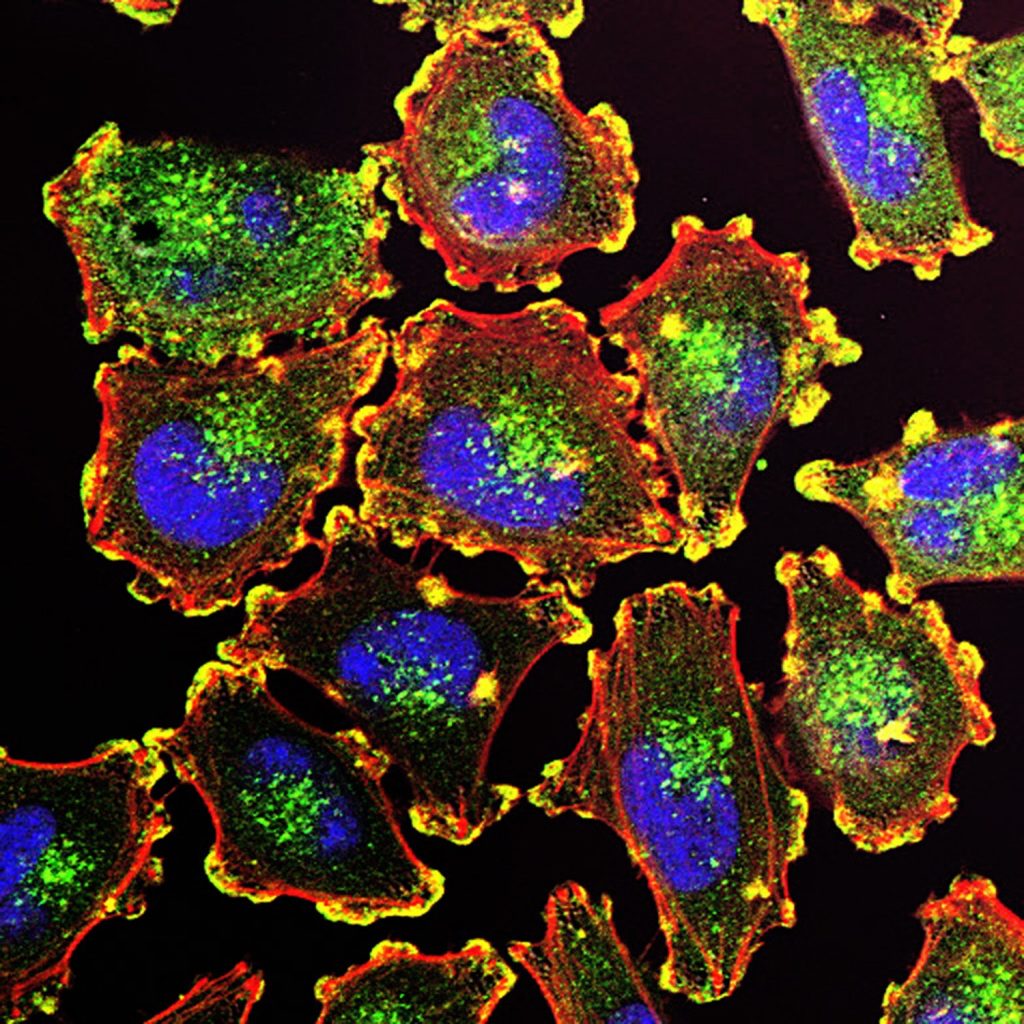
Melanoma Cells. Credit: National Cancer Institute

B cells are thought to play a critical role in innate and adaptive immunity, but their exact role in anti-tumour immunity remains unknown. Looking at B cells with a technique called single-cell profiling, which looks at all the genes in the cell, researchers found a protein that – when deleted – reduced tumour growth. The researchers write in Nature that this regulator could be a target for new cancer treatments.

The team, consisting of immunologists at Brigham and Women’s Hospital and dermatologists from Massachusetts General Hospital, identified a subset of B cells that expands specifically in the draining lymph node over time in mice with melanoma tumours.

They found a cell surface receptor called TIM-1 expressed on these B cells during melanoma growth. They also characterised multiple accompanying cell surface proteins that were involved in the B cell’s immune function. Interestingly, they found that deleting a molecule TIM-1, but not any of the other accompanying proteins, dramatically decreased tumour growth. The researchers concluded that TIM-1 controls B cell activation and immune response that combats cancer, including activating another type of the killer tumour-specific T cells for inhibiting tumour growth.

“The collaboration across institutions was extremely fruitful as we combined our immunology expertise at the Brigham with work at David Fisher’s MGH laboratory where seminal discoveries in skin malignancies have been made,” said lead author Lloyd Bod, PhD, of the Department of Neurology at the Brigham, who conducted this work while completing his postdoctoral fellowship at the Brigham. “The collaboration allowed us to test and demonstrate the therapeutic potential of targeting TIM-1 in melanoma models.”

Source: Mass General Brigham

Alzheimer’s Patients have an Altered Perception of Pain

Photo by Kampus Production on Pexels

New research published in Nature Communications has found that in a mouse model mimicking Alzheimer’s Disease (AD) pain signals are not processed in the same way as in healthy mice. The research, from King’s College London, suggests that the perception of pain in people with Alzheimer’s Disease may be altered, and asks whether changes in management of pain in people with AD could improve their quality of life.

While chronic musculoskeletal pain is common in individuals with AD, it remains largely untreated as it can go unreported due to the cognitive deficits attached to the disease.

In this study, the researchers sought to explore whether there is also an alteration in the body’s response to pain by the nervous system in people with AD.

In healthy mice, pain signals are transmitted from the point of origin to the central nervous system to initiate an immune response. The protein Galectin-3 has been demonstrated to be responsible for pain signal transmission to the spinal cord. Upon reaching the spinal cord, it binds to another protein, TLR4, to initiate the immune response.

In this study, researchers used an AD mice model and gave them rheumatoid arthritis, a type of chronic inflammatory disease, through blood transfer. They observed an increase in allodynia, pain caused by a stimulus that doesn’t normally provoke pain, as a response to the inflammation. They also saw increased activation of a microglia in the spinal cord. They determined that these effects were regulated by TLR4.

Researchers found that the mice with AD lacked TLR4 in the immune cells of their central nervous system and were therefore unable to respond to pain in the typical way as the signals were not being perceived.

This resulted in the mice with AD developing less joint inflammation related pain, and a less powerful immune cell response to the pain signals received by the central nervous system.

Professor Marzia Malcangio, Professor of Neuropharmacology at King’s IoPPN and the study’s senior author said, “Nociceptive pain – pain which is the result of tissue damage – is the second most prevalent comorbidity in individuals with Alzheimer’s disease. Our study has shown that, in mice with Alzheimer’s, the body’s ability to process that pain is altered due to the lack of TLR4; a protein vital to the immune response process in the central nervous system.

“These are important findings, as untreated pain can contribute to the psychiatric symptoms of the disease. Increasing our understanding of this area could, with more research, lead to more effective treatments and ultimately improve people’s quality of life.”

George Sideris-Lampretsas, a PhD student at King’s IoPPN and the study’s first author said, “The results of this study have the potential to make an impact, not only by identifying Galectin-3/TLR4 as a potential therapeutic target for chronic pain, but most importantly by raising awareness around the underreported and untreated pain experienced by patients with AD.”

Source: King’s College London

New Analysis Strengthens Evidence Linking Autism and the Microbiome

Photo by Peter Burdon on Unsplash

In spite of burgeoning studies, the biological roots of autism remain elusive. Microbial approaches however have shown some promise, and now a study published in Nature Neuroscience has uncovered a microbial signature associated with autism, which clearly overlaps with metabolic pathways.

The study re-analysed of dozens of previously published datasets and found that they align with a recent, long-term study of autistic individuals that used a microbiome-focused intervention. These findings also underscore the importance of longitudinal studies in elucidating the interplay between the microbiome and complex conditions such as autism.

“We were able to harmonise seemingly disparate data from different studies and find a common language with which to unite them. With this, we were able to identify a microbial signature that distinguishes autistic from neurotypical individuals across many studies,” says Jamie Morton, one of the study’s corresponding authors. “But the bigger point is that going forward, we need robust long-term studies that look at as many datasets as possible and understand how they change when there is a [therapeutic] intervention.”

With 43 authors, this study brought together leaders in computational biology, engineering, medicine, autism and the microbiome who hailed from institutions in North America, South America, Europe and Asia. “The sheer number of fields and areas of expertise in this large-scale collaboration is noteworthy and necessary to get a new and consistent picture of autism,” says Rob Knight, the director of the Center for Microbiome Innovation at the University of California San Diego and a study co-author.

Autism is inherently complex, and studies that attempt to pinpoint specific gut microbes involved in the condition have been confounded by this complexity. First, autism presents in heterogeneous ways – autistic individuals differ from each other genetically, physiologically and behaviourally. Second, the microbiome presents unique difficulties. Microbiome studies typically report simply the relative proportions of specific microbes, requiring sophisticated statistics to understand which microbial population changes are relevant to a condition of interest.

This makes it challenging to find the signal amongst the noise. Making matters more complicated, most studies to date have been one-time snapshots of the microbial populations present in autistic individuals. “A single time point is only so powerful; it could be very different tomorrow or next week,” says study co-author Brittany Needham, assistant professor of anatomy, cell biology and physiology at the Indiana University School of Medicine.

“We wanted to address the constantly evolving question of how the microbiome is associated with autism, and thought, ‘let’s go back to existing datasets and see how much information we may be able to get out of them,'” says co-corresponding author Gaspar Taroncher-Oldenburg, director of Therapeutics Alliances at New York University, who initiated the work with Morton while he was a consultant-in-residence for SFARI.

In the new study, the research team developed an algorithm to re-analyse 25 previously published datasets containing microbiome and other “omic” information, such as gene expression, immune system response and diet, from both autistic and neurotypical cohorts. Within each dataset, the algorithm found the best matched pairs of autistic and neurotypical individuals in terms of age and sex, two factors that can typically confound autism studies.

Novel computational methodologies

“Rather than comparing average cohort results within studies, we treated each pair as a single data point, and thus were able to simultaneously analyse over 600 ASD-control pairs corresponding to a de facto cohort of over 1200 children,” says Taroncher-Oldenburg. “From a technical standpoint, this required the development of novel computational methodologies altogether,” he adds. Their new computational approach enabled them to reliably identify microbes that have differing abundances between ASD and neurotypical individuals.

The analysis identified autism-specific metabolic pathways associated with particular human gut microbes. Importantly, these pathways were also seen elsewhere in autistic individuals, from their brain-associated gene expression profiles to their diets. “We hadn’t seen this kind of clear overlap between gut microbial and human metabolic pathways in autism before,” says Morton.

Even more striking was an overlap between microbes associated with autism, and those identified in a recent long-term faecal microbiota transplant study led by James Adams and Rosa Krajmalnik-Brown at Arizona State University. “Another set of eyes looked at this, from a different lens, and they validated our findings,” says Krajmalnik-Brown, who was not involved in this study.

“What’s significant about this work is not only the identification of major signatures, but also the computational analysis that identified the need for future studies to include longitudinal, carefully designed measurements and controls to enable robust interpretation,” says Kelsey Martin, executive vice president of SFARI and the Simons Foundation Neuroscience Collaborations, who was not involved in the study.

“Going forward, we need more long-term studies that involve interventions, so we can get at cause-and-effect,” says Morton. Taroncher-Oldenburg, who cites the compliance issues often faced by traditional long-term studies, suggests that study designs could more effectively take into account the realities of long-term microbiome sampling of autistic individuals. “Practical, clinical restrictions must inform the statistics, and that will inform the study design,” he says. Further, he points out that long-term studies can reveal insights about both the group and the individual, as well as how that individual responds to specific interventions over time.

Importantly, researchers say these findings go beyond autism. The approach set forth here could also be employed across other areas of biomedicine that have long proved challenging. “Before this, we had smoke indicating the microbiome was involved in autism, and now we have fire. We can apply this approach to many other areas, from depression to Parkinson’s to cancer, where we think the microbiome plays a role, but where we don’t yet know exactly what the role is,” says Knight.

Source: EurekAlert!

Neuroscientists Identify a New Subtype of Depression that Resists SSRIs

Photo by Sydney Sims on Unsplash

In a new study, scientists at Stanford Medicine have described a new category of depression, the cognitive biotype, which accounts for 27% of depressed patients and is not effectively treated by commonly prescribed antidepressants. The findings were reported in JAMA Network.

For these patients, cognitive tasks showed difficulty in planning ahead, self-control, sustaining focus despite distractions and suppressing inappropriate behaviour; imaging showed decreased activity in two brain regions responsible for those tasks.

Because depression has traditionally been defined as a mood disorder, doctors commonly prescribe selective serotonin reuptake inhibitors (SSRIs), but these are less effective for patients with cognitive dysfunction. Researchers said that targeting these cognitive dysfunctions with less commonly used antidepressants or other treatments may alleviate symptoms and help restore social and occupational abilities.

The study is part of a broader effort by neuroscientists to find treatments that target depression biotypes, according to the study’s senior author, Leanne Williams, PhD, professor of psychiatry and behavioural sciences.

“One of the big challenges is to find a new way to address what is currently a trial-and-error process so that more people can get better sooner,” Williams said. “Bringing in these objective cognitive measures like imaging will make sure we’re not using the same treatment on every patient.”

Finding the biotype

In the study, 1008 adults with previously unmedicated major depressive disorder were randomly given one of three widely prescribed typical antidepressants: escitalopram (Lexapro) or sertraline (Zoloft), which act on serotonin, or venlafaxine-XR (Effexor), which acts on both serotonin and norepinephrine. Seven hundred and twelve of the participants completed the eight-week regimen.

Before and after treatment with the antidepressants, the participants’ depressive symptoms were measured using two surveys – one, clinician-administered, and the other, a self-assessment, which included questions related to changes in sleep and eating. Measures on social and occupational functioning, as well as quality of life, were tracked as well.

The participants also completed a series of cognitive tests, before and after treatment, measuring verbal memory, working memory, decision speed and sustained attention, among other tasks.

Before treatment, scientists scanned 96 of the participants using functional magnetic resonance imaging as they engaged in a task called the “GoNoGo” that requires participants to press a button as quickly as possible when they see “Go” in green and to not press when they see “NoGo” in red. The fMRI tracked neuronal activity by measuring changes in blood oxygen levels, which showed levels of activity in different brain regions corresponding to Go or NoGo responses. Researchers then compared the participants’ images with those of individuals without depression.

The researchers found that 27% of the participants had more prominent symptoms of cognitive slowing and insomnia, impaired cognitive function on behavioural tests, as well as reduced activity in certain frontal brain regions – a profile they labelled the ‘cognitive biotype’.

“This study is crucial because psychiatrists have few measurement tools for depression to help make treatment decisions,” said Laura Hack, MD, PhD, the lead author of the study and an assistant professor of psychiatry and behavioural sciences. “It’s mostly making observations and self-report measures. Imaging while performing cognitive tasks is rather novel in depression treatment studies.”

Pre-treatment fMRI showed those with the cognitive biotype had significantly reduced activity in the dorsolateral prefrontal cortex and dorsal anterior cingulate regions during the GoNoGo task compared with the activity levels in participants who did not have the cognitive biotype. Together, the two regions form the cognitive control circuit, which is responsible for limiting unwanted or irrelevant thoughts and responses and improving goal selection, among other tasks.

After treatment, the researchers found that for the three antidepressants administered, the overall remission rates were 38.8% for participants with the newly discovered biotype and 47.7% for those without it. This difference was most prominent for sertraline, for which the remission rates were 35.9% and 50% for those with the biotype and those without, respectively.

“Depression presents in different ways in different people, but finding commonalities – like similar profiles of brain function – helps medical professionals effectively treat participants by individualising care,” Williams said.

Depression isn’t one size fits all

Williams and Hack propose that behaviour measurement and imaging could help diagnose depression biotypes and lead to better treatment. A patient could complete a survey on their own computer or in the doctor’s office, and if they are found to display a certain biotype, they might be referred to imaging for confirmation before undergoing treatment.

Researchers under Williams and Hack are studying another drug, guanfacine, that specifically targets the dorsolateral prefrontal cortex region. They believe this treatment could be more effective for patients with the cognitive subtype.

Williams and Hack hope to conduct studies with participants who have the cognitive biotype, comparing different types of medication with treatments such as transcranial magnetic stimulation (TMS) and cognitive behavioural therapy.

“I regularly witness the suffering, the loss of hope and the increase in suicidality that occurs when people are going through our trial-and-error process,” Hack said. “And it’s because we start with medications that have the same mechanism of action for everyone with depression, even though depression is quite heterogeneous. I think this study could help change that.”

Source: Stanford Medicine

Drug Slows Down Development of Antibiotic Resistance

Methicillin resistant Staphylococcus aureus (MRSA) – Credit: CDC

As reported in the journal Science Advances, researchers at Baylor College of Medicine have come across a drug that, in laboratory cultures and animal models, significantly slows the development of antibiotic resistance in bacteira. The drug, called dequalinium chloride (DEQ), is a proof-of-concept for evolution-slowing drugs.

In this study, corresponding author Dr Susan M. Rosenberg and her colleagues looked for drugs that could prevent or slow down E. coli bacteria from developing resistance to two antibiotics when exposed to a third antibiotic, ciprofloxacin (cipro), the second most prescribed antibiotic in the US and one associated with high bacterial resistance rates.

The resistance is caused by new gene mutations that occur in the bacteria during infection. The drug DEQ reduces the speed at which new mutations are formed in bacteria, the team finds.

Previous work from the Rosenberg lab had shown that bacterial cultures in the lab exposed to cipro turn up mutation rate. They found a mutational “program” that is switched on by bacterial stress responses. Stress responses are genetic programs that instruct cells to increase production of protective molecules during stress, including stress from low concentrations of cipro. Low concentrations occur at the beginning and end of antibiotic therapies and if doses are missed.

The same stress responses also increase the ability to make genetic mutations, the Rosenberg group, then many other labs, have shown. Some of the mutations can confer resistance to cipro, while other mutations can allow resistance to antibiotics not yet encountered. Mutation-generating processes that are turned on by stress responses are called stress-induced mutation mechanisms.

Bacteria with antibiotic resistance mutations can then sustain an infection in the presence of cipro. This study is the first to show that in animal infections treated with cipro, the bacteria activate a known stress-induced genetic mutational process. Cipro resistance occurs mostly by the bacteria developing new mutations, both clinically and in the laboratory, rather than by acquiring genes that confer antibiotic resistance from other bacteria.

Looking to prevent the development of antibiotic resistance, the researchers screened 1120 drugs approved for human use for their ability to dial down the master bacterial stress response, which they showed counters the emergence of resistance mutations. In addition, and counterintuitively, they wanted “stealth” drugs that would not slow bacterial proliferation, which would confer a growth advantage to any bacterial mutants that resist the mutation-slowing drug itself. That is, drugs that are not antibiotics themselves.

“We found that DEQ fulfilled both requirements. Given together with cipro, DEQ reduced the development of mutations that confer antibiotic resistance, both in laboratory cultures and in animal models of infection, and bacteria did not develop resistance to DEQ,” said first author Yin Zhai, a postdoctoral associate in the Rosenberg lab. “In addition, we achieved this mutation-slowing effect at low DEQ concentrations, which is promising for patients. Future clinical trials are needed to evaluate the ability of DEQ to decelerate bacterial antibiotic resistance in patients.”

Source: Baylor College of Medicine

Women’s Lean Body Mass and Age Speed up Blood Alcohol Elimination

Photo from Pixabay CC0

The rate at which women eliminate alcohol from their bloodstream is largely predicted by their lean body mass, although age plays a role, too, scientists found in a new study published in the journal Alcohol Clinical and Experimental Research. Since women with obesity also have more lean body mass, older women with obesity clear alcohol from their systems 52% faster than younger women of healthy weights, the study found.

“We believe the strong relationship we found between participants’ lean body mass and their alcohol elimination rate is due to the association that exists between lean body mass and lean liver tissue – the part of the liver responsible for metabolising alcohol,” said research group leader M. Yanina Pepino, a professor of food science and human nutrition at the University of Illinois Urbana-Champaign.

To explore links between body composition and alcohol elimination rates, the team conducted a secondary analysis of data from a study performed at and another at Indiana University, Indianapolis. Both projects used similar methods to estimate the rate at which alcohol is broken down in the body.

The combined sample from the studies used in the analysis included 143 women who ranged in age from 21 to 64 and represented a wide range of body mass indices – from healthy weights to severe obesity. Among these were 19 women who had undergone different types of bariatric surgery. Lean body mass is total body weight minus fat.

In a subsample of 102 of these women, the researchers had measured the proportions of lean and fat tissue in their bodies and calculated their body mass indices. Based on their BMI, those in the subsample were divided into three groups: normal weight (BMI of 18.5–24.9), overweight BMI (25–29.9) and obese (BMI 30+).

As the researchers expected, women with higher BMI had not only more fat mass than women of healthy weights, they also had more lean mass. On average, the group with obesity had 52.3 kg of lean mass, compared with 47.5 kg for the normal weight group.

The two studies both used an alcohol clamp technique, where participants received an intravenous infusion of alcohol at a rate controlled by a computer-assisted system. The system calculated personalised infusion rates based upon each participant’s age, height, weight and gender and was programmed so they would reach a target blood alcohol concentration of .06% within 15 minutes and maintain that level for about two hours

Using a breathalyser, breath samples were collected at regular intervals throughout the experiments to estimate participants’ blood alcohol concentration and provide feedback to the system.

“We found that having a higher fat-free body mass was associated with a faster alcohol elimination rate, particularly in women in the oldest subgroups,” said Neda Seyedsadjadi, a postdoctoral fellow at the university and the first author of the study.

“The average alcohol elimination rates were 6 grams per hour for the healthy weight group, 7 grams for the overweight group, and 9 grams for the group with obesity,” she said. “To put this in perspective, one standard drink is 14 grams of pure alcohol, which is found in 12 ounces of beer, 5 ounces of table wine or 1.5 ounces shot of distilled spirits.”

The interaction between participants’ age and lean body mass accounted for 72% of the variance in the time required to eliminate the alcohol from their system, the team found.

Pepino, who also holds an appointment as a health innovation professor at Carle Illinois College of Medicine, has conducted several studies on alcohol response in bariatric surgery patients.

The findings also shed light on alcohol metabolism and body composition in women who have undergone weight loss surgery. Researchers have long known that bariatric surgery alters women’s response to alcohol but were uncertain if it affected how quickly they cleared alcohol from their systems.

Some prior studies found that these patients metabolised alcohol more slowly after they had weight loss surgery. The new study’s findings indicate that these participants’ slower alcohol elimination rates can be explained by surgery-induced reductions in their lean body mass. Weight loss surgery itself had no independent effects on patients’ alcohol elimination rates, the team found.

Source: University of Illinois at Urbana-Champaign

Treatment-resistant Hypertension Affects 1 in 10 Hypertensive Patients

Pexels Photo by Thirdman

In apparent resistant hypertension (aRH), more medication and medical management is needed than for normal hypertension. Novel research published in Hypertension found that aRH prevalence was lower in a real-world sample than previously reported, but still relatively frequent – affecting nearly 1 in 10 hypertensive patients. The researchers stressed the need for clinicians to be on the lookout for the condition.

In their analysis, the Cedars-Sinai investigators also learned that patients with well-managed aRH were more likely to be treated with mineralocorticoid receptor antagonist (MRA). These MRA treatments were used in 34% of patients with controlled aRH, but only 11% of patients with uncontrolled aRH.

“Apparent resistant hypertension is more common than many would anticipate,” said Joseph Ebinger, MD, assistant professor of Cardiology in the Smidt Heart Institute and corresponding author of the study. “We also learned that within this high-risk population, there are large differences in how providers treat high blood pressure, exemplifying a need to standardise care.”

Study findings were based on a unique design, which used clinically generated data from the electronic health records of three large, geographically diverse healthcare organisations. Of the 2 420 468 patients analysed in the study, 55% were hypertensive. Of these hypertension patients, 8.5%, or 113 992 individuals, met criteria for aRH.

According to Ebinger, treating aRH can be just as tricky as diagnosing it.

In fact, the “apparent” in apparent resistant hypertension stems from the fact that before diagnosis, medical professionals must first rule out other potential reasons for a patient’s blood pressure to be high.

These reasons might include medication non-adherence, inappropriate medication selection, or white coat hypertension from measurement in the doctor’s office.

“Large amounts of data tell us that patients with aRH, compared to those with non-resistant forms of hypertension, are at greatest risk for adverse cardiovascular events,” said Ebinger, director of Clinical Analytics in the Smidt Heart Institute. “Identifying these patients and possible causes for their elevated blood pressure is increasingly important.”

The takeaway, Ebinger says, is awareness – for both medical professionals and patients. He says providers should be mindful that if it’s taking four or more antihypertensive medications to control a patient’s blood pressure, they should consider evaluation for alternative causes of hypertension, or refer patients to a specialist.

Similarly, patients should press their healthcare providers to help them navigate the complex disease, including talking about strategies for remembering to take their medication and addressing possible treatment side effects.

Source: Cedars-Sinai Medical Center