Year: 2023

Five-year Survival Rates for Women with Early Stage Invasive Breast Cancer Have Tripled

Photo by National Cancer Institute on Unsplash

Significant advances in breast cancer treatment have improved care to the point where most women with an early invasive breast cancer diagnosis can expect to be survivors. A new study involved half a million women in England has found that in England, the cumulative mortality within five years of an early invasive breast cancer diagnosis has fallen from roughly 14% in the 1990s to just under 5% for women diagnosed in 2010–2015. The findings, published in The BMJ, also serve to identify the cases with the greatest risks, and point to the need for progressively larger study sizes for new treatments.

Annually, more than 2 million patients receive a diagnosis of invasive breast cancer around the world. For most, it is their first cancer. Most have early stage disease and receive surgery as their first treatment. Post-treatment outcomes vary widely across patient characteristics and countries. In order to inform treatment, follow-up and likely outcomes, more detailed mortality estimates were needed.

To address this, the researchers conducted a retrospective population based cohort study of 512 447 women, looking at diagnoses made within four time periods: 1993–99, 2000–04, 2005–09, and 2010–15. They examined annual breast cancer mortality rates and cumulative risks by time since diagnosis, calendar period of diagnosis, and nine characteristics of patients and tumours.

Across all time periods, the crude annual breast cancer mortality rate was highest during the five years after diagnosis and then declined. For any given time since diagnosis, crude annual breast cancer mortality rates and risks decreased with increasing calendar period. Crude five year breast cancer mortality risk was 14.4% for women with a diagnosis made during 1993-99 and 4.9% for women with a diagnosis made during 2010-15.

Adjusted annual breast cancer mortality rates also decreased with increasing calendar period in nearly every patient group, by a factor of about three in oestrogen receptor positive disease and about two in oestrogen receptor negative disease. Mortality rates were highest during the five years after diagnosis before declining with each following five-year period.

There was still significant difference in mortality according to individual characteristics: <3% for 62.8% of women but taking into account age, oestrogen receptor type, and the number of lymph nodes involved, among other factors, for 4.6% the risk was ≥20%.

“[O]ur findings can be used to reassure most women treated for early breast cancer that they are likely to become long term survivors” as well as to identify cases with high mortality risk, the researchers wrote in The BMJ. They also note that the reduced mortality means that future randomised controlled trials, such as for new interventions, will need to be larger in order to have sufficient statistical power.


Depressed Patients with ICDs More Likely to Stop Taking their Cardiac Medications

Photo by Karolina Grabowska on Pexels

Patients with implanted cardiac devices are more likely to stop taking their heart medications if they are feeling depressed or anxious, according to research presented at ACNAP 2023, a scientific congress of the European Society of Cardiology (ESC).

The study author, psychologist Ole Skov at the University of Southern Denmark, said: “Medications help to control symptoms and prevent further heart problems so adherence is important. Patients with an implantable cardioverter defibrillator (ICD) who feel depressed or anxious should be encouraged to express their concerns, thoughts, and feelings and contact a health care professional who can screen them for distress to explore the best course of action. This could be referral to a psychologist or other measures.”

An ICD implantation is recommended for people at high risk of a life-threatening arrhythmia and for those who have had a sudden cardiac arrest. It is estimated that one in five patients with an ICD are affected by depression or anxiety, something which has been linked to increased mortality risk for those patients. Most patients with an ICD are prescribed medication to manage their heart disease. It is therefore crucial to identify patients at risk of stopping their medication so that support measures can be initiated.

This study examined whether anxiety and depression at the time of ICD implantation are associated with medication adherence one year after receiving the device. The study was a secondary analysis of the ACQUIRE-ICD randomised controlled trial of an eHealth intervention. Of 478 patients in the trial with an ICD or an ICD with cardiac resynchronisation therapy (CRT-D), 433 (91%) were taking at least one heart medication when their device was implanted. These included beta-blockers, ACE inhibitors, statins and diuretics. Of the 433 patients, 322 patients (74%) completed assessments of medication adherence at both baseline (implantation) and 12 months after implantation and were included in the current analyses.

Medication adherence was measured by self-report using the Morisky Medication Adherence Scale (MMAS) which is scored from 0 to 8. Low, medium and high adherence were defined as scores below 6, 6 to <8, and 8, respectively. Depression and anxiety were assessed at baseline with the Patient Health Questionnaire 9 (PHQ-9; scores 0–27) and the Generalised Anxiety Disorder (GAD-7; scores 0–21) scale, with higher scores indicating more symptoms. Both were used as continuous measures, and patients were not categorized as depressed/not depressed or anxious/not anxious.

The average age of participants was 60 years and 84% were men. Medication adherence was generally medium to high at baseline (6.8% low adherence, 40.1% medium adherence, 53.1% high adherence; average MMAS score 7.31) and at 12 months (8.1% low adherence, 37.3% medium adherence, 54.6% high adherence; average MMAS score 7.33).

The researchers analysed the association between mental health scores and medication adherence after adjusting for baseline MMAS score, sex, trial intervention group, heart failure severity and implantation centre. Depression scores at baseline were negatively associated with medication adherence at 12 months (p=0.02). The association with anxiety was not statistically significant.

Mr. Skov said: “Patients with higher levels of depressive symptoms at the time of ICD implantation were less likely to be taking their heart medications one year later. The effect of depression was statistically significant but small, which is not surprising given the complexity and multitude of factors involved in medication adherence.”

He concluded: “These results highlight the importance of considering the psychological status of people receiving an ICD. Those with symptoms of depression at the time of implantation could be at risk of discontinuing their heart medications, even if they are taking them initially, and may need extra support.”

Source: European Society of Cardiology

European COVID Lockdowns Cost Heart Attack Patients up to Two Years of Life

Photo by Camilo Jimenez on Unsplash

Patients who had heart attacks during the first COVID lockdown in the UK and Spain are predicted to live 1.5 and 2 years less, respectively, than their pre-COVID counterparts. That’s the finding of a study just published in European Heart Journal – Quality of Care and Clinical Outcomes.

“Restrictions to treatment of life-threatening conditions have immediate and long-term negative consequences for individuals and society as a whole,” said study author Professor William Wijns of the Lambe Institute for Translational Medicine, University of Galway, Ireland. “Back-up plans must be in place so that emergency services can be retained even during natural or health catastrophes.”

Research has shown that during the first wave of the pandemic, about 40% fewer heart attack patients went to hospital as governments told people to stay at home, fear of catching the virus, and the stopping of some routine emergency care. Compared to receiving timely treatment, heart attack patients who stayed at home were more than twice as likely to die, while those who delayed going to the hospital were nearly twice as likely to have serious complications that could have been avoided.

Heart attacks require urgent treatment with stents (called percutaneous coronary intervention or PCI) to open the blocked artery and restore blood flow. Delays, and the resulting lack of oxygen, lead to irreversible damage of the heart muscle and can cause heart failure or other complications. When a large amount of heart tissue is damaged, potentially fatal cardiac arrest results.

This study estimated the long-term clinical and economic implications of reduced heart attack treatment during the pandemic in the UK and Spain. The researchers compared the predicted life expectancy of patients who had a heart attack during the first lockdown with those who had a heart attack at the same time in the previous year. The study focused on ST-elevation myocardial infarction (STEMI), where a coronary artery is completely blocked. The researchers also compared the cost of STEMIs during lockdown with the equivalent period the year before.

A model was developed to estimate long-term survival, quality of life and costs related to STEMI. The UK analysis compared the period 23 March (when lockdown began) to 22 April 2020 with the equivalent time in 2019. The Spanish analysis compared March 2019 with March 2020 (lockdown began on 14 March 2020). Survival projections considered age, hospitalisation status and time to treatment using published data for each country. For example, using published data, it was estimated that 77% of STEMI patients in the UK were hospitalised prior to the pandemic compared with 44% during lockdown. The equivalent rates for Spain were 74% and 57%. The researchers also compared how many years in perfect health were lost for patients with a STEMI before versus during the pandemic.

The analysis predicted that patients who had a STEMI during the first UK lockdown would lose an average of 1.55 years of life compared to patients presenting with a STEMI before the pandemic. In addition, while alive, those with a STEMI during lockdown were predicted to lose approximately one year and two months of life in perfect health. The equivalent figures for Spain were 2.03 years of life lost and around one year and seven months of life in perfect health lost.

The cost analysis focused on initial hospitalisation and treatment, follow-up treatment, management of heart failure and productivity loss in patients unable to return to work. For example, the cost applied to a STEMI admission with PCI was £2837 in the UK and €8780 in Spain. Heart failure costs were estimated at £6086 in year one and £3882 in all subsequent years for the UK. The equivalent figures for Spain were €3815 (year one) and €2930 (each subsequent year).

Professor Wijns said: “The findings illustrate the repercussions of delayed or missed care. Patients and societies will pay the price of reduced heart attack treatment during just one month of lockdown for years to come. Health services need a list of lifesaving therapies that should always be delivered, and resilient healthcare systems must be established that can switch to emergency plans without delay. Public awareness campaigns should emphasise the benefits of timely care, even during a pandemic or other crisis.”

Source: European Society of Cardiology

Can We Use Light Instead of Shocks to Treat Atrial Fibrillation?

Photo by Olivier Collet on Unsplash

New research published in the Journal of Internal Medicine demonstrates that optogenetics, a technique which uses light-sensitive proteins to control the activity of targeted cells. is a promising shock-free approach to treating atrial fibrillation (AF), or an irregular, often rapid heart rate, for immediate restoration of regular rhythm.

Current treatments for AF, which include medications and shocks to restore a regular heart rhythm, come with low success rates and/or serious side effects. In this new study, rats’ hearts were optogenetically modified to express light-gated ion channels. After AF was induced, the animals’ chests were illuminated resulting in acute restoration of regulation rhythm. This shows that sufficient light penetrated the chest wall, which suggests that full penetration of the human atrial wall may be feasible as well, if deemed necessary for clinical translation.

“Shock-free cardioversion of AF would allow restoration of regular rhythm at any place and time, which may improve the prognosis and quality of life of patients suffering from AF. We hope that our paper will contribute to the realization of this much desired option in clinical practice,” said corresponding author Daniël A. Pijnappels, PhD, of Leiden University Medical Center, in The Netherlands.

Source: Wiley

Gauteng Hospitals’ Food Woes Continue and Health Dept Outsources Cancer Care

Photo by Thought Catalog on Unsplash

A number of service providers have voluntarily ended their contracts with the Gauteng Department of Health to provide food to hospitals. In response, Gauteng Health is looking at a multi-vendor approach to tackle the problem which it blames on vendors being unable to fulfil their orders.

Meanwhile, Gauteng continues to battle with surgical and cancer treatment backlogs. R784 million has been allocated to this end, with a portion allocated to cancer treatment services, some of which will be outsourced to the private sector and some of which is going to new radiotherapy equipment.

This year has seen a number of Gauteng hospitals battling to secure their food supplies. Responding to SA parliamentary questions, Gauteng Health MEC Nomantu Nkomo-Ralehoko wrote that 26 out of 34 Gauteng public hospitals have been affected by food shortages.

“The shortages were mostly due to suppliers not being paid, contracts expiring, or companies not delivering. It was so bad for two hospitals, Bronkhorstspruit and Lenasia South, they had to borrow food from other hospitals!” said DA Shadow MEC for Health, Jack Bloom, who posed the questions.

Hospitals have being going through long stretches of not being able to provide full meals: at George Mukhari Hospital, chicken, fish and frozen vegetables were unavailable for four months, and there was no milk from February to May. The petty cash budgets are woefully insufficient to cover the gap: Kalafong hospital can only spend R2000 a day, not nearly enough to feed its 700 patients, reports SA People.

According to News24, Gauteeng Health spokesperson, Motalatale Modiba, said that the main problem was down to vendors struggling to fulfil their orders on time.

Currently, Gauteng health is running a tender to outsource oncology services for the Charlotte Maxeke and Steve Biko hospitals. The outsourcing programme should be able to ensure that patients who are currently awaiting treatment in the public sector will be able to access private sector treatment instead.

In their announcement, Gauteng Health stated: “We recognise the urgency of the situation and want to assure the public that we are committed to handling the outsourcing of radiation oncology sources diligently and are nearing implementation.”

The open tendering process will last 14 days, and is divided into categories for oncology specialists, treatment services and radiation planning services.

The department has already procured 4 Llinac machines, and has recently closed a tender for a Brachytherapy, and have advertised a tender for another Linac machine for Charlotte Maxeke. Ongoing investigations by Spotlight have also revealed that the oncology procurement process is lagging behind. The GDoH aims to have the first treatments under the outsourcing programme to start in August 2023.

A New Way to Vaccinate Against Diarrhoeal Diseases: ‘Bribe’ the Bacteria

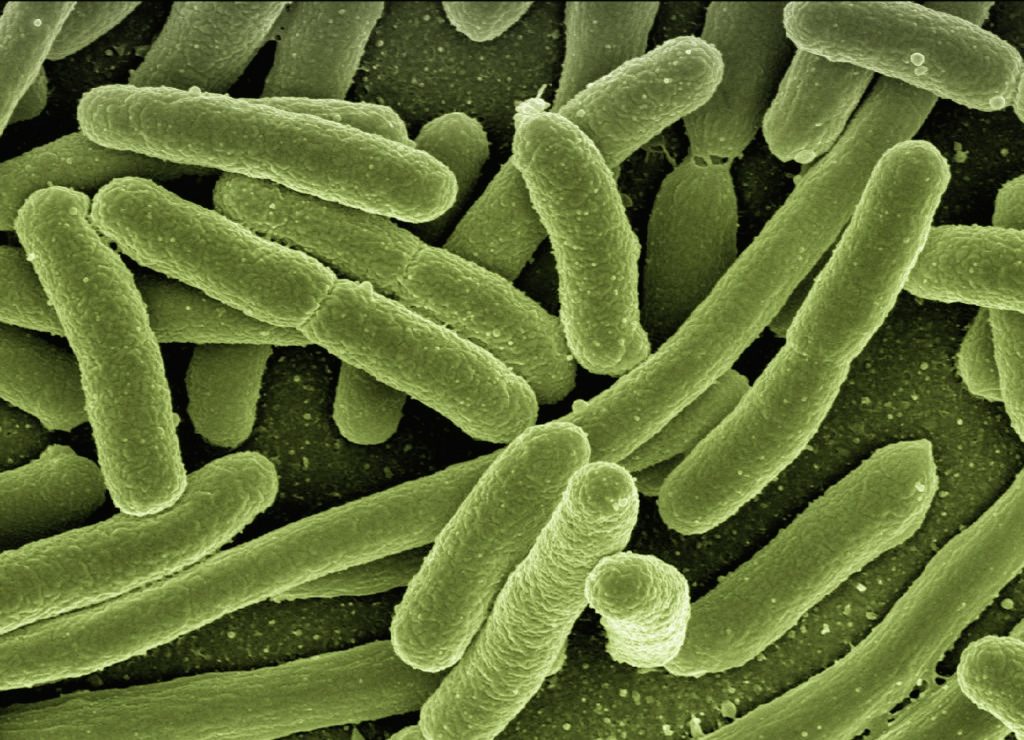
Scanning electron micrograph image of E. Coli bacteria. Credit: NIH

Scientists have found that pairing specific diets with disease-causing bacteria can create lasting immunity in mice without the costs of developing sickness, revealing a new potential vaccination strategy. Their findings, published in Science Advances, may lead to new vaccines that could promote immunity for those with diarrhoeal diseases and possibly other infections.

The body takes one of two defence strategies against bacterial infections: kill the intruders or impair the intruders but keep them around. If the body chooses to impair the bacteria, then the disease can occur without the diarrhoea, but the infection can still be transmitted – also known as asymptomatic carriage.

“We discovered that immunisation against diarrhoeal infections is possible if we allow the bacteria to retain some of its disease-causing behaviour,” says senior author Professor Janelle Ayres at Salk Institute. “This insight could lead to the development of vaccines that could reduce symptoms and mortality, as well as protect against future infections.”

In 2018, Ayres’ lab looked at how dietary interventions can create an asymptomatic infection, which Ayres calls a cooperative, asymptomatic relationship between bacteria and host. They discovered that an iron-rich diet enabled mice to survive a normally lethal bacterial infection without ever developing signs of sickness or disease. The high-iron diet increased unabsorbed glucose in the mice’s intestines, which the bacteria could feast on. The excess glucose served as a ‘bribe’ for the bacteria, keeping them full and incentivised to not attack the host.

This process produced long-term asymptomatic infection with the bacteria, leading the researchers to believe that the adaptive immune system (which ‘remembers’ infections) may be involved.

“Being able to generate lasting immunity against bacteria like C. rodentium or E. coli has not been possible using established vaccination strategies. We wanted to figure out what mechanism was sustaining this lasting immunity, so we could use that mechanism to create an impactful solution to these diarrheal diseases,” says first author Grischa Chen, a former postdoctoral researcher in Ayres’ lab.

The researchers moved to figure out how the body suppresses infection symptoms, whether infection without symptoms can create long-term immunity, and whether that immunity is reproducible as a vaccination strategy.

The team compared mice with iron-rich and normal diets after C. rodentium infection to find whether the diet impacted symptomless infection. Immediately after infection, mice fed an iron-rich diet had no symptoms whereas mice fed a normal diet did have symptoms. All mice were then put on a normal diet to see whether the asymptomatic infection would last.

Mice without functional adaptive immune systems, regardless of whether they had ever been on an iron-rich diet, could not continue maintaining a cooperative relationship with the bacteria. Although the iron-rich diet suppressed symptoms immediately after infection, the adaptive immune system was required for lasting cooperation. Importantly, the mice with functional adaptive immune systems had the disease without any symptoms, with lasting immunity, as demonstrated by survival upon reinfection after a month.

Ayres and team concluded that an iron-rich diet alone can prevent bacteria from creating deadly symptoms in mice during active infection. But a functional adaptive immune system is required for immunity against future infection in the absence of dietary supplementation.

Some bacterial strains, if mutated enough, don’t cause symptoms. To test whether such bacteria could produce lasting immunity, the team repeated their iron-diet versus normal-diet experiment in mice, but this time using bacteria that could cause disease and bacteria that could not cause disease. They found that only mice that received disease-causing, unmutated bacteria were able to support immunity upon reinfection.

The scientists note that this is only a preliminary study and people shouldn’t consume large amounts of iron after reading it. They also hope their insights will provide a basis for future research in humans and the creation of a vaccination regiment that protects and prevents against diarrhoeal illness.

Source: Salk Institute

‘Indian Hedgehog’ – a Protein That Drives Chronic Kidney Disease

Photo by Robina Weermeijer on Unsplash

Researchers studying mice to investigate scarring in kidneys and hearts have found that it is driven by a protein called Indian Hedgehog (IHH), which is produced and released by a subset of cells in aged and injured kidneys. They published their findings in the journal Science Translational Medicine.  

The researchers believe that IHH could become a potential target for therapies to treat chronic kidney disease (CKD) – a condition that affects 10% of the world’s population.  

Risk factor

CKD is a term used to cover any form of kidney disease that continues for more than a few months. It can affect people of any age, but older people are more likely to experience some level of CKD.  

While CKD primarily causes damage to kidneys, it is also a major risk factor for accelerated cardiovascular disease and premature death.  

Progressive fibrosis – scarring of the kidneys – is a common feature in all CKD, but the mechanism underlying this connection is not fully understood.  

Reduced scarring

A team from the University of Edinburgh identified a subset of epithelial cells that produce IHH and are only present within aged or injured mouse kidneys. They showed that these cells produced IHH in response to being activated by the protein TNF – a well-recognised driver of inflammation.   

When blocking the actions of TNF or IHH in mouse models of kidney scarring, the team found that scar production in the kidney was reduced and kidney function was also better preserved. Increased levels of scarring in the heart also returned to normal levels.   

Blocking pathway

In humans, the team showed that circulating IHH levels were significantly raised in patients with CKD. Patients with cardiovascular disease also had higher levels of IHH than those without cardiac problems. 

The findings offer hope that blocking the TNF/IHH signalling pathway could improve both kidney and heart fibrosis problems – the leading cause of morbidity and mortality in patients with CKD. 

There is a major unmet need for better treatments to halt the progressive kidney scarring and cardiovascular problems which affect so many patients with CKD. I’m excited at the potential of this work, and the new insights to be gained into the role of IHH as a major driver of multi-organ fibrosis, which we hope can be a first step on the road towards better treatments for patients.

Dr David Ferenbach, MRC Senior Clinical Fellow at the University of Edinburgh

Source: University of Edinburgh

One in Five Women Conceive Naturally after IVF Treatment

Source: Pixabay CC0

Around 20% of women who needed fertility treatment, such as IVF, to conceive their first child are likely to get pregnant naturally in the future, finds a new study published in Human Reproduction. University College London researchers analysed data from 11 studies of over 5000 women around the world between 1980 and 2021, to evaluate how common it is to get pregnant naturally after delivering a baby conceived by fertility treatment.

They found that at least one in five women conceived naturally after having had a baby using fertility treatment such as IVF mostly within three years. This figure remained unchanged, even when taking into account the different types and outcome of fertility treatment – alongside length of follow up.

Infertility is defined by the failure to achieve a pregnancy after 12 months or more of regular unprotected sexual intercourse, and it is estimated to affect one in seven heterosexual couples.

However, not all women seeking and undergoing fertility treatment are absolutely or permanently infertile. And half of couples who struggle to conceive naturally in the first year of trying will go on to do so in the second year.

Not so rare an occurrence

Although it is typically considered ‘rare’ for a woman to get pregnant naturally, if she has previously had fertility treatment, the researchers want to highlight how it is not in fact an unusual event.

The team consider the findings to be particularly important, as many women may not realise that they could conceive naturally following fertility treatment. This could lead to them becoming pregnant again quickly or when they aren’t ready – which could be problematic for both the health of the mother and child.

Lead author, Dr Annette Thwaites (UCL EGA Institute for Women’s Health) said: “Our findings suggest that natural pregnancy after having a baby by IVF is far from rare. This is in contrast with widely held views – by women and health professionals – and those commonly expressed in the media, that it is a highly unlikely event.”

Much has changed since the early days of IVF and it is now used for a wide range of causes of infertility, including cases where no cause is ever found.

In addition, some women may not have experienced infertility at all but used treatment for other reasons. This could include single women using donor sperm, women in same sex relationships, surrogates or those seeking to screen for serious genetic conditions.

So, it is important for those who have had successful IVF to know how likely they are to conceive naturally afterwards.

IVF was first used in 1978 and now, more than 10 million babies worldwide have been born using the treatment – equating to between 1% and 6% of all babies born per year in the developed world by 2020.

In order to track the data more accurately and analyse which factors make natural pregnancy after having a baby by fertility treatment more likely, the researchers are calling for linked national data sets.

They hope that this information could then be used to counsel people considering their options after successful fertility treatment.

Dr Thwaites said: “Knowing what is possible would empower women to plan their families and make informed choices regarding further fertility treatment and/or contraception.”

Study limitations

Some limitations were the included studies being mostly of moderate quality with wide variation in geography, cause of subfertility, type and outcome of fertility treatment and length of follow up making direct comparisons difficult.

Source: University College London

Antihypertensive Drug Prazosin could Relieve Posttraumatic Headaches

Photo by Usman Yousaf on Unsplash

Researchers have shown that the antihypertensive drug prazosin can prevent posttraumatic headaches, such as those caused by a concussion suffered by members of the military. Their findings were published in Headache: The Journal of Head and Face Pain.

Senior study author Dr Murray Raskind explained that few treatment options exist for this type of headache: “Persistent posttraumatic headaches are the most common long-term consequence of mild traumatic brain injuries (concussions) in Veterans and active-duty service members, causing substantial distress and disability at home and work. Although these headaches usually resemble migraine headaches symptomatically, they often fail to respond to the prevention treatments useful for migraines.”

The FDA approved prazosin to treat hypertension in 1976. It has been widely used off-label to treat conditions such as PTSD-associated nightmares and enlarged prostate. An earlier study by members of the research group suggested that prazosin could reduce the frequency and severity of headaches caused by traumatic brain injury (TBI).

To test this effect, researchers led by VA Puget Sound Health Care System conducted a pilot study with 48 Veterans and service members with headaches caused by mild TBI, also known as a concussion. Participants took gradually increasing doses of prazosin for five weeks before receiving the maximum dose for 12 weeks. The study showed that the drug was well-tolerated, and researchers reported that morning drowsiness was the only adverse effect.

Before the trial began, study participants had an average of 18 headache days each month. By the end of the 12-week period, those taking prazosin only had headaches for an average of six days a month. Participants receiving a placebo reported some reduction in headaches, but still had headaches about 12 days a month. Significantly more participants in the prazosin group had at least 50% fewer headaches during the 12 weeks of taking a full dose of medication.

Participants taking prazosin also saw significant decreases in how much headaches impacted their quality of life. By the end of the trial, those taking prazosin reported that headaches had “some impact” on their daily ability to function, while participants given a placebo continued to report “severe impact” of headaches.

Larger clinical trials are needed to confirm the extent of these promising results, according to the researchers, but these initial findings offer a potential relief for a common ailment faced by many Veterans.

“This study is the only clinical trial of an oral medication to demonstrate efficacy for posttraumatic headache. Because prazosin is widely used across VA and the Department of Defense to treat PTSD trauma nightmares and sleep disruption, many VA and DOD prescribers are familiar with prescribing this generically available, inexpensive medication,” said Raskind. “Prazosin now offers an evidence-based approach to alleviate the suffering of Veterans and service members who have struggled for years with frequent posttraumatic headaches.”

Source: Veterans Affair Research Communications

Optical Illusions Originate in the Retina, not the Brain

The bar in the middle is all one grey level, but it appears lighter on the left and darker on the right due to the background. Credit Jolyon Troscianko

Numerous visual illusions are caused by limits in the way our eyes and visual neurones work – rather than more complex psychological processes, as demonstrated by new research published in PLOS Computational Biology.

Researchers examined illusions in which an object’s surroundings affect the way we see its colour or pattern. Scientists and philosophers have long debated whether these illusions are caused by neural processing in the eye and low-level visual centres in the brain, or involve higher-level mental processes such as context and prior knowledge.

In the new study Dr Jolyon Troscianko, from the University of Exeter, co-developed a model that suggests simple limits to neural responses – not deeper psychological processes – explain these illusions.

“Our eyes send messages to the brain by making neurones fire faster or slower,” said Dr Troscianko. “However, there’s a limit to how quickly they can fire, and previous research hasn’t considered how the limit might affect the ways we see colour.”

The model combines this “limited bandwidth” with information on how humans perceive patterns at different scales, together with an assumption that our vision performs best when we are looking at natural scenes.

The model was developed by researchers from the Universities of Exeter and Sussex to predict how animals see colour, but it was also found to correctly predict many visual illusions seen by humans.

“This throws into the air a lot of long-held assumptions about how visual illusions work,” Dr Troscianko said.

He said the findings also shed light on the popularity of high-definition televisions.

“Modern high dynamic range televisions create bright white regions that are over 10 000 times brighter than their darkest black, approaching the contrast levels of natural scenes,” Dr Troscianko added.

“How our eyes and brains can handle this contrast is a puzzle because tests show that the highest contrasts we humans can see at a single spatial scale is around 200:1.

“Even more confusingly, the neurones connecting our eyes to our brains can only handle contrasts of about 10:1.

“Our model shows how neurones with such limited contrast bandwidth can combine their signals to allow us to see these enormous contrasts, but the information is ‘compressed’ – resulting in visual illusions.

“The model shows how our neurones are precisely evolved to use of every bit of capacity.

“For example, some neurones are sensitive to very tiny differences in grey levels at medium-sized scales, but are easily overwhelmed by high contrasts.

“Meanwhile, neurones coding for contrasts at larger or smaller scales are much less sensitive, but can work over a much wider range of contrasts, giving deep black-and-white differences.

“Ultimately this shows how a system with a severely limited neural bandwidth and sensitivity can perceive contrasts larger than 10 000:1.”

Source: University of Exeter