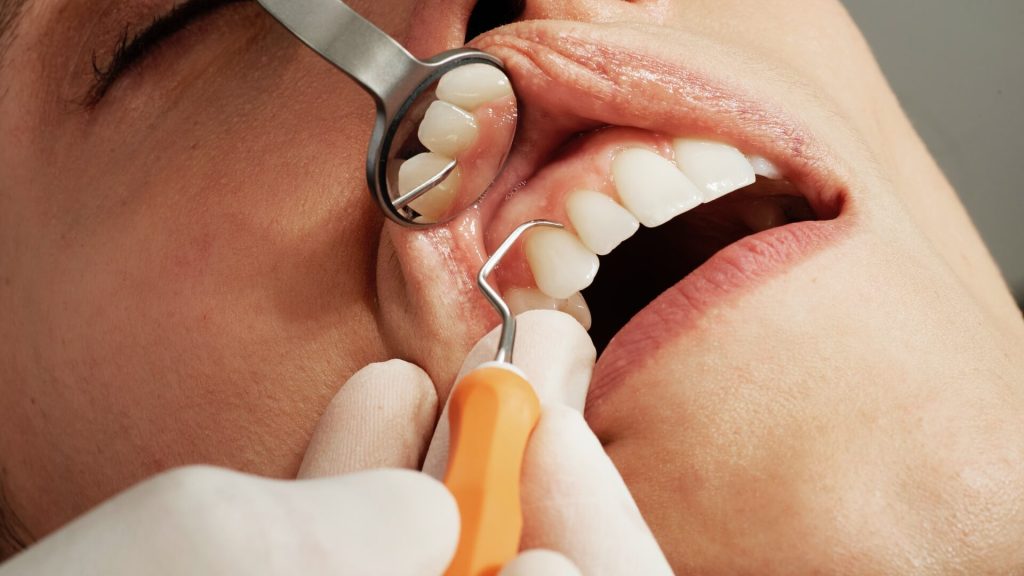
Dentures could potentially worsen a person’s nutritional intake, according to new research in the Journal of Prosthodontics. The research team examined electronic dental and health records to gain a better understanding of how oral health treatments affect individuals’ overall health over time.
This is first known study to link lab values of nutritional biomarkers to dental records.
Thankam Thyvalikakath, DMD, MDS, PhD, senior author, explained the impact of dentures. “Dentures are a significant change for a person. They do not provide the same chewing efficiency, which may alter eating habits. Dentists need to be aware of this and provide advice or a referral for nutrition counselling. These patients need support during the transition and possible continued monitoring.”
The researchers matched the dental records of more than 10 000 patients which included lab test data, including malnutrition markers. The data included complete blood count, basic metabolic profile and lipid and thyroid panel tests. Comparing the lab results from two years before a patient received dentures to the two years after, the researchers found that people with dentures had a significant decline in certain nutrition markers over those two years.
People who did not wear dentures did not experience this decline. While marker levels were still within normal range, but the levels could potentially fall as more time passes, and the researchers urged dentists to be aware of this possibility.
Future research will look at other factors that may influence nutrition, including insurance status and dental clinic characteristics.
Displaying the highway death toll on message boards (eg, “1669 deaths this year on Texas roads”) is a common awareness campaign, but new research published in Science shows that it actually leads to more crashes.
Their study focuses on Texas, where officials chose to display these messages only one week each month. The researchers compared crash data from before the campaign to after it started as well as examined the weekly differences within each month during the campaign. They found:
There were more crashes during the week with fatality messaging compared to weeks without.
Displaying a fatality message caused a 4.5% in crashes in the 10km after the message boards. This increase is comparable to raising the speed limit 5–8kph or reducing highway police by 6–14%, according to previous research.
The researchers suggest this “in-your-face” messaging approach weighs down drivers’ “cognitive loads,” temporarily impacting their ability to respond to changes in traffic conditions.
“Driving on a busy highway [and] having to navigate lane changes is more cognitively demanding than driving down a straight stretch of empty highway,” said Assistant Professor Joshua Madsen. “People have limited attention. When a driver’s cognitive load is already maxed out, adding on an attention-grabbing, sobering reminder of highway deaths [can] become a dangerous distraction.”
Another finding was that the higher the number in the fatality message, the more harmful the effects. The number of additional crashes each month increased as the death toll accumulated throughout the year, with the most additional crashes occurring in January when the message stated the year’s total. Crashes were also found to increase in areas where drivers experienced higher cognitive loads, such as heavy traffic or driving past multiple message boards.
“The messages also increased the number of multi-vehicle crashes, but not single-vehicle crashes,” said Hall. “This is in line with drivers with increased cognitive loads making smaller errors due to distraction, like drifting out of a lane, rather than driving off the road.”
However, crashes were reduced when the displayed death tolls were low and when the message appeared where the highways were less complex. Madsen said this suggests that at times the messaging was not as taxing on drivers’ attention. However, alternative campaigns should be considered.
“Distracted driving is dangerous driving,” said Madsen. “Perhaps these campaigns can be reimagined to reach drivers in a safer way, such as when they are stopped at an intersection, so that their attention while driving remains focused on the roads.”
Having to cope with the strain of COVID on an already fragile healthcare system, a few hospitals in the Western Cape have been introducing robotics for specialised tasks – but are they worth the hype?
Robotics was able to fill an unprecedented need during the COVID pandemic – the ability to remotely conduct ward rounds from remote locations. Tygerberg Hospital made use of ‘Quintin’, a robot that is essentially a tablet on a mobile stand that allows users to remotely communicate and inspect the area, but it can’t physically interact with its environment.
Robotics offers greater surgical precision, which may translate into reduced healthcare load. IOL reported that the provincial Department of Health plans to use a pair of new robotic surgery machines installed at the Groote Schuur and Tygerberg hospitals to fast-track surgeries and address the province’s surgical backlogs caused by COVID. These robotic surgery units will be used for procedures on colorectal, liver, prostate, kidney and bladder cancers, and women with severe endometriosis. In the province’s private sector, Netcare Christiaan Barnard Memorial Hospital also makes use of robotic-assisted surgery.
Robotic surgery has a number of advantages. The small robotic arms allow for smaller incisions and faster recovery times, reducing the strain on hospitals. A liver resection that would have a patient in hospital for a week can be reduced to one or two days with robotic surgery. More complex surgery becomes possible, eg in difficult to access areas or in patients with obesity. Robotic surgery allows surgeons to be off their feet, easing an extremely fatiguing job, and the software automatically compensates for any tremor in the surgeon’s hands.
However, robotic surgery still has drawbacks – chief among them is cost and the need to have trained personnel to operate them. There is also some latency between the surgeon’s hands movements and the corresponding movement of the robot, leading to possible errors. Shorting of the electrical current running through the robotic arms can also cause burns to the patient’s tissue, and there is also the possibility of nerve compression injuries due to the positioning of the patient. Furthermore, operator errors, especially when operators are inexperienced or robotic surgery is performed in lower volumes, is always a possibility.
Robotics have promising applications in sanitation – they can easily disinfect areas using UV light, for example – and can also assist nurses with certain tasks, such as making a 3D vein map prior to a venipuncture. Some robots can even assist the elderly, conversing with them and can perform simple tasks like calling a nurse. Other applications include the much simpler technology of exoskeletons, a wearable frame which amplify users’ strength (though nowhere near that of the fictional Iron Man) and are useful in rehabilitation and for enhancing mobility in the elderly. Other applications include increasing strength of care staff for assisting patients, freeing up other staff.
Some exoskeletons are even purely mechanical, merely readjusting loads without any sophisticated electronics or motors. Yet even these are prohibitively expensive: the Phoenix Medical Exoskeleton goes for about US$30 000 each.
While promising, robotic systems are at present still hugely expensive, limited in function and can only assist with a small fraction of the tasks that healthcare workers perform. Even if the cost could be reduced enough to help ease healthcare worker burden in South Africa to help, that still leaves the problem of enough experienced and motivated healthcare workers, beds and neglected rural areas.
Revealing another benefit of exercise for weight loss, results from a study published in Obesity showed that rats on a 30-day diet who exercised intensely were better able to resist cues for favoured, high-fat food pellets.
The experiment was designed to investigate a phenomenon called “incubation of craving”, where the longer a desired substance is denied, the harder it is to resist cue for it. The findings suggest that exercise modulated how hard the rats were willing to work for cues associated with the pellets, reflecting how much they craved them.
Though more researcher is needed, these findings show that exercise may shore up restraint when it comes to certain foods, explained corresponding author Travis Brown, a physiology and neuroscience researcher at Washington State University.
“A really important part of maintaining a diet is to have some brain power – the ability to say ‘no, I may be craving that, but I’m going to abstain,'” said Brown. “Exercise could not only be beneficial physically for weight loss but also mentally to gain control over cravings for unhealthy foods.”
The researchers trained 28 rats to press a lever that turned on a light and made a tone before dispensing a high-fat pellet. After the training period, they tested to see how many times the rats would press the lever just to get the light and tone cue.
The rats where then split up into two groups. One underwent a regime of high-intensity treadmill running while the other had no additional exercise outside of their regular activity. Both sets of rats were denied access to the high-fat pellets for 30 days. At the end of that period, the researchers gave the rats access to the levers that once dispensed the pellets again, but this time the levers only gave the light and tone cue when pressed. The animals that did not get exercise pressed the levers significantly more than rats that had exercised, indicating that exercise lessened the craving for the pellets.
In future studies, the research team plans to investigate the effect of different levels of exercise on this type of craving as well as how exactly exercise works in the brain to curb the desire for unhealthy foods.
Though this is a novel study, Brown said it builds on earlier work that first defined the term “incubation of craving“. Brown also gave credit to research showing that exercise can blunt cravings for cocaine.
Whether food can be addictive in the same way as drugs can is a still a question for research. Not all foods have the same effect – as Brown pointed out, “no one binge eats broccoli.” However, people do seem to respond to cues, such as fast-food ads, encouraging them to eat foods high in fat or sugar, and those cues may be harder to resist the longer they diet.
Being able to disregard these signals could be yet another way exercise enhances health, Brown said.
“Exercise is beneficial from a number of perspectives: it helps with cardiac disease, obesity and diabetes; it might also help with the ability to avoid some of these maladaptive foods,” he said. “We’re always looking for this magic pill in some ways, and exercise is right in front of us with all these benefits.”
A report by IOL revealed mixed reviews by experts and patients for the Western Cape’s healthcare system, which, while providing mostly excellent service in certain hospitals, is seen to be especially lacking in rural areas, infrastructure and handling of patients.
Award-winning service
Along with receiving the highest marks for efficiency, Western Cape healthcare has earned recognition such as through the Batho Pele Excellence Awards, with a silver medal going to Dr Barry Smith who worked in frontline COVID hospitals in Cape Town, where as medical manager he organised efforts to deal with devastating COVID waves.
A total of R29.4 billion has been allocated to the province’s 2022–2023 budget to deal with a serious backlog of unmet TB, HIV and other medical care put off during the COVID waves, along with a new surge in mental health issues.
A critical view
The ANC’s Rachel Windvogel said that while Western Cape is said have the country’s ‘most efficient’ health-care system, it is deteriorating and “nearing collapse”.
Dilapidated infrastructure in hospitals such as Groote Schuur and Tygerberg Hospitals is a challenged, with “sections that are cordoned off and not functioning.”
The knock-on service pressure across all district hospitals has resulted in patients having to sleep in chairs or on the floor.
Windvogel said that the Khayelitsha District Hospital is a prime example, with R150 million allocated for upgrades by the hospital but with no provincial government funding forthcoming.
She said that the provincial government’s boasts about a leading healthcare system does not match the situation. This can be seen in rural communities where people wait days for an ambulance transfer to city hospitals, she said, and doctors only visiting rural clinics to issue prescriptions without examining patients.
From the wards
Speaking to IOL, on the condition of anonymity, a nurse with over 15 years of experience currently working at a local government hospital said that while they try their best to deliver a service to residents, the sector has so much lacking.
The quality of new nurses has been steadily declining, she said. “As nurses, we are inundated with work but we manage, however, as an experienced nurse seeing how the ‘latest intakes’ have no feeling towards patients is sad.”
There have been deaths from “incorrect triages” as well as problems with nurses not knowing how to speak to the community, resulting in “pissing off the very community we took an oath to serve,” she said.
While she believes nursing is her calling, she is considering moving over to the private sector, driven by a high workload, crime, poor pay and lack of experienced assistance.
A patient’s experience
Candice van der Rheede, director of the Western Cape Missing Persons Unit (WCMPU) has been through a string of hospitals since 2020 following a collapsed lung, and her experiences reflected problems with staffing and gender segregation.
She first stayed at Mitchells Plain District Hospital, and her ward was “spotless” with security “always there”. “If help was needed and you buzzed for help, nurses came immediately,” she told IOL.
The thoracic ward at Groote Schuur Hospital was also praiseworthy – except that her ward was in the middle of the men’s section.
“One night I woke up and saw one of the men standing and watching us ladies with no nurses on the inside,” Van der Rheede said.
However, entering the ICU ward after theatre, her experience took a turn for the worse, being roughly handled when check for bed sores, despite her having a large surgical wound.
In November, Van der Rheede had to overnight in the trauma section at Tygerberg Hospital due to a check-up. While she was generally satisified with the hospital and its staff, there was a major sticking point for her – in the trauma section, “we were men and women sleeping in one room which I had a big problem with. Using one toilet. I could not sleep that night.”
While she has her reservations about the state of hospitals in the province, Van der Rheede told IOL she commended the Mitchells Plain District Hospital for its impeccable service, and the Symphony Clinic in Delft which she currently attends is of the highest standard of service and cleanliness.
Pfizer’s oral antiviral Paxlovid (nirmatrelvir/ritonavir) is strongly recommended for patients with non-severe COVID with greater hospitalisation risk, such as unvaccinated, older, or immunosuppressed patients, according to a WHO Guideline Development Group writing in The BMJ.
The experts explained that Pfizer’s Paxlovid, a comnbination of nirmatrelvir and ritonavir tablets, is likely a better choice for these patients because it may prevent more hospitalisations than the alternatives, is safer than molnupiravir, and is easier to administer than intravenous options such as remdesivir and antibody treatments.
Use in low-risk patients is not recommended due to trivial benefits. It is also not recommended for patients with severe or critical COVID, as there are currently no trial data on nirmatrelvir/ritonavir for this group.
Their recommendation is based on new data from two randomised controlled trials with 3100 patients.
In these trials, moderate certainty evidence showed that nirmatrelvir/ritonavir reduced hospital admission (84 fewer admissions per 1000 patients), low certainty evidence suggested no important difference in mortality, and high certainty evidence suggested little or no risk of adverse effects leading to drug discontinuation.
Additionally, WHO also makes a conditional (weak) recommendation to use the antiviral drug remdesivir for patients with non-severe COVID at highest risk of hospitalisation.
This is based on new data from five randomised controlled trials involving 2700 patients and replaces a previous recommendation against treatment with remdesivir in all patients with covid-19 regardless of disease severity.
Antiviral drugs should be administered as early as possible, but this may be challenging in low- and middle-income countries, the panel noted, and also that access to these drugs is tied to COVID tests.
The emergence of resistance is also an uncertain risk, they add.
This guidance adds to previous conditional recommendations for the use of molnupiravir for high-risk patients with non-severe COVID and for the use of sotrovimab or casirivimab-imdevimab (monoclonal antibody treatments) in selected patients; and against the use of convalescent plasma, ivermectin and hydroxychloroquine in patients with COVID regardless of disease severity. For patients with severe COVID, WHO strongly recommends corticosteroids, with the addition of IL-6 receptor blockers or baricitinib.
Scanning Electron Micrograph of a breast cancer cell. Credit: NIH
A team of biologists has discovered a factor that increases cellular plasticity can explain why, in breast cancer, metastases spread to the bones. Their findings appear in the journal Nature Communications.
The organs affected by cancer metastases depend in part on their tissue of origin – in the case of breast cancer, they usually form in the bones. No cure for metastatic breast cancer exists yet, and it is associated with a poor prognosis with a 5-year survival rate of 26%. However, treatments can improve and extend the lives of patients.
From the primary site of a tumour, cancer cells can invade their microenvironment and then circulate via blood and lymphatic vessels to distant healthy tissue to form metastases. In the case of metastatic breast cancer, the cancer cells primarily colonise the bones, but can also be found in other organs such as the liver, lungs or brain.
Plasticity of tumour cells
Although the mechanisms behind the different stages of the metastatic process are not yet fully understood, cellular plasticity plays an important role: tumour cells that become metastatic change their shape and become mobile.
Using mice, the researchers investigated the potential role of the protein ZEB1, known to increase cell plasticity, in breast cancer cell migration.
“Unlike in women, mice transplanted with human breast cancer cells develop metastasis to the lungs, not the bones. We therefore sought to identify factors capable of inducing metastasis in bone tissue and in particular tested the effect of the factor ZEB1.,” explained researcher Nastaran Mohammadi Ghahhari, first author of the study
Directing metastasis to bone
In in vitro migration and invasion experiments, the scientists found that cancer cells expressing ZEB1 moved to bone tissue, unlike cancer cells that did not express it. These results were later confirmed when human breast cancer cells were transplanted into the mammary glands of mice. If the cancer cells did not express ZEB1, metastasis occurred primarily in the lungs. In contrast, when ZEB1 was present, metastases also developed in the bones, as is the case in women.
‘‘We can therefore assume that this factor is expressed during tumour formation and that it directs cells that have acquired metastatic characteristics to the bones,’’ explained Didier Picard, the study’s last author. These findings confirm the importance of plasticity in metastases, and could help lead to new therapies.
A treatment for retinal vein occlusion yields long-lasting vision gains, with visual acuity remaining significantly above baseline at five years – though many patients still require ongoing treatment, according to a report published in the American Journal of Ophthalmology. The report marked the five-year outcomes of the Study of Comparative Treatments for Retinal Vein Occlusion 2 (SCORE2).
Retinal vein occlusion (RVO) is caused by a blockage of the veins carrying blood away from the retina, causing macular oedema where fluid becomes trapped within and under the retina, leading to rapid and severe loss of visual acuity. Central retinal vein occlusion (CRVO) is an occlusion of the main retinal vein posterior to the lamina cribrosa of the optic nerve. CRVO has a better prognosis in younger patients. One-third of older patients improve without treatment, one-third stay the same, and one-third get worse.
The leading treatment for RVO is injections of anti-vascular endothelial growth factor (VEGF) drugs, helping to control blood vessel leakage and swelling.
“While anti-VEGF therapy is associated with significant improvement in both retinal swelling and visual acuity in patients with central or hemi-retinal vein occlusion, our findings show that most of the patients followed still required treatment to control the macular oedema for at least five years,” said the chair of the study, Ingrid U. Scott, MD, MPH, at the Penn State College of Medicine. “This demonstrates the importance of continued monitoring of these patients.”
In 2017, SCORE2 clinical trial investigators reported that two types of anti-VEGF treatment were equally effective at improving visual acuity in people with macular oedema due to CRVO or hemi-retinal vein occlusion (HRVO). CRVO affects the entire retina, while HRVO generally affects about half of the retina. Half of the study participants had received bevacizumab while the other half received aflibercept. Participants received monthly injections over six months. At the six-month mark, the vision of participants in both groups had, on average, improved over three lines on an eye chart.
The researchers followed SCORE2 participants for five years, collecting information about their visual acuity, treatments, and whether their macular oedema had resolved. After the initial 12-month study period, participants were treated at their physician’s discretion, most reducing the frequency of anti-VEGF injections and some switching their patients to the other anti-VEGF drug. At five years, many participants had lost some visual acuity compared to the 12-month mark, but they retained on average three lines of improvement compared to baseline.
“It was surprising to us that despite many participants still needing treatment after five years, their visual acuity outcome remained very good,” said Dr Michael Ip, MD, co-chair of the study from the University of California Los Angeles. “In comparison to this treatment for wet age-related macular degeneration, where initial vision improvements fade over time, these results are quite favourable.”
“This five-year study tells us a lot about what’s happening with retinal vein occlusion patients in the real world,” said Dr Scott. “Prior to this study, retinal vein occlusion was widely considered an acute illness. This study shows that RVO is a chronic disease. It also underscores the importance of disease monitoring and individualised treatment to achieve the best possible vision.”
The existing children of a woman who agrees to a surrogate pregnancy must be psychologically assessed before an agreement can be sanctioned. This is according to a recent ruling by Judge Brenda Neukircher at the High Court in Pretoria.
In her ruling, Judge Neukircher laid down further guidelines to be followed in surrogacy agreements which come before courts for approval. Some of the guidelines are in terms of the Constitutionally-entrenched principle of the “best interest of the child”.
Judge Neukircher ruled that, “Were it to be found that the surrogacy may have a harmful effect on their psychological well-being, this would be a factor that a court would be able to weigh up in the consideration of whether the agreement should be confirmed or not.”
Setting out the history of surrogacy laws in South Africa, Neukircher said that one provision was that a surrogate mother must have a documented history of at least one pregnancy, a “viable delivery”, and a living child of her own.
Neukircher noted the importance for the courts to consider the impact a surrogate pregnancy would have on the woman’s existing child or children. “How does a surrogate pregnancy affect the surrogate mother’s own child/children? Bearing in mind that they watch her pregnancy for nine months, know she is carrying a child and see her going to hospital to deliver a baby and then comes home without a baby in her arms. Is it important that the interest of these children be protected and, if so, how does a court do that?” she stated.
The applicants in the matter before Neukircher were financially stable. They already had a ten-month-old baby born through a previous surrogate arrangement with the same surrogate mother. The surrogate mother had previously been a surrogate for other couples and had once given birth to twins.
Neukircher said the couple had one frozen egg left and now wanted another child with the surrogate mother. “In all respects, they function as a stable family unit and I’m satisfied that they are able to care for a second child financially, emotionally, physically and educationally. Any child that will be born of this surrogacy will have his/her best interests catered to in every aspect of the (Children’s Act),” the Judge said.
Turning to the surrogate mother, Judge Neukircher said she was married and had two children of her own aged ten and seven years old. “At the time of the first surrogacy, they were six and three. Each time their mother carries a child as a surrogate, they are confronted by her pregnancy which does not end in a child being brought home to join their family. My concern was how healthy, psychologically, it is for children to go through this process?”
Neukircher said she had ordered that expert reports be compiled on the surrogate’s physical suitability to have another child, and the effect, if any, of her surrogate pregnancies on her own children.
She said the report revealed that both the surrogate’s children did not want her to have more children of her own. “Both were proud of the fact that she was helping others have a family and it seems both have adjusted to the fact that she acts as a surrogate….they do not see [the babies] as being part of their own family….they do not want their mother to bring baby home”.
She said the “invaluable report” highlighted the importance that the children of surrogate mothers needed to be prepared for the pregnancy “which goes a long way to alleviating any possible anxiety”.
The Judge said lawyers for both the commissioning parents and the surrogate mother and her husband had agreed that in not requiring such expert reports, the legislature had overlooked the “best interests” principle when it came to existing children. She said the Act laid down compliance factors for surrogacy agreements, including that a court must consider the personal circumstances and family situation of all concerned.
Going forward, Neukircher said, this must include an assessment of children already born. In this matter, she granted an order confirming the agreement.
Portable MRI machines, an emerging technology that makes medical imaging accessible even in remote locations, detected ischaemic strokes in 90% of patients scanned, according to a study appearing in the journal Science Advances.
In previous studies, portable MRI devices have demonstrated they can also detect haemorrhagic as well as ischaemic strokes, helping clinicians make crucial life-saving treatment decisions quickly in remote areas for patients who lack ready access to major hospitals with expensive stationary MRI machines, the authors say.
“This is the first systematic evidence you can detect ischaemic strokes using portable, bedside devices,” noted Kevin Sheth, professor of neurology and neurosurgery at Yale School of Medicine and co-corresponding author of the study.
Outcomes for stroke patients improve dramatically the quicker they receive treatment. But access to stationary MRI machines is limited for those who live far away from major hospitals or in developing countries. And even stroke patients who have access to major hospitals often have to wait for scans with stationary MRIs because of heavy demand for the equipment. Portable scans can be used at a patient’s bedside, in ambulances, or in remote clinics, Dr Sheth said.
In addition, quickly differentiating between different types of stroke is crucial for determining proper treatment, the researchers say. Ischaemic strokes are usually treated with blood thinners. But that course of treatment is dangerous for those who experience haemorrhagic strokes or strokes in which there is bleeding in the brain.
Analysing portable MRI scans from 50 patients at Yale New Haven Hospital, the Yale and Harvard researchers found that the results largely confirmed ischaemic stroke diagnoses made by stationary MRIs. For 45 of those patients, the portable MRI detected blood clots as small as 4mm in size.