Credit: Darryl Leja / National Human Genome Research Institute / National Institutes of Health
Practice-changing research published in The Lancet shows that a new combined therapy involving androgen deprivation therapy plus pelvic lymph node radiation kept nearly 90% of clinical trial patients’ prostate cancer at bay for five years.
The study also shows that patients with prostate cancer who didn’t receive androgen deprivation therapy — and who did not receive pelvic lymph node radiation — had a five-year survival of 70%.
“We can now confirm that pelvic lymph node treatment used together with androgen deprivation therapy, or even used as a stand-alone treatment option, greatly improves outcomes in patients with postoperative prostate cancer,” said Howard Sandler, MD, of Cedar Sinai Medical Center, senior author of the study. “These findings are an encouraging step forward, both for the medical community and for the patients and their loved ones seeking curative treatment options.”
The trial enrolled 1716 patients between March 31, 2008, and March 30, 2015. Enrollees were separated into three groups.
Group one received salvage prostate bed radiotherapy — a standard radiation targeted to the area in which the prostate used to exist before its surgical removal. Median five-year survival was 71% in these patients.
The second group received the standard radiation treatment, in combination with androgen deprivation therapy. Median five-year survival was 81%.
The third group received salvage prostate bed radiotherapy, androgen deprivation therapy and pelvic lymph node radiation. These patients had a five-year freedom from progression of just over 87%.
“The combined treatment approach proved to be the most beneficial approach,” said Dr Sandler.
Prostate cancer is the most common non-skin cancer in the US, affecting 1 in every 6 to 7 men. Though early warning signs are rare for prostate cancer, screening tests can catch it early. Diagnosis usually accompanies an elevated level of PSA, an acronym for prostate-specific antigen.
After prostatectomy, a man’s PSA level should be near zero. However, some men start to see their PSA levels rise several years after surgery. This is typically an indication that radiation therapy is needed.
Dr Sandler says men with postoperative prostate cancer can have excellent outcomes, especially if radiation is given early — when PSA levels are at their lowest — and in combination with proven therapies, as suggested in this new research.
A study published in Annals of Internal Medicine has suggested that the new SGLT-2 inhibitors may be viable as a first-line treatment in patients with type 2 diabetes, with reduced odds of hospitalisation for heart failure compared to those receiving metformin.
In cardiovascular outcome trials among adults with type 2 diabetes (T2D), sodium-glucose co-transporter 2 inhibitors (SGLT-2i) have shown therapeutic promise, including reduced risk of hospitalisation for heart failure compared to placebo. However, SGLT-2i have mainly been evaluated as a second-line treatment – metformin is generally given as a first-line, antidiabetic treatment.
In this new study, researchers from the Brigham and Women’s Hospital compared cardiovascular outcomes among adults with T2D who initiated first-line treatment with either metformin or SGLT-2i. For the study, 8613 patients receiving SGLT-2i were matched to 17 226 patients receiving metformin.
The researchers reported that that patients receiving SGLT-2i showed a similar risk for myocardial infarction, stroke, and all-cause mortality, and a lower risk for hospitalisation for heart failure compared with patients who received metformin. The risk for adverse events was similar except for an increased risk for genital infections compared with those receiving metformin.
“Our results suggest that SGLT-2i may be considered as first-line treatment for patients with T2D and cardiovascular disease or who are at increased risk for cardiovascular events,” said lead author HoJin Shin, BPharm, PhD, of the Division of Pharmacoepidemiology and Pharmacoeconomics. “However, more evidence from randomised clinical trials or observational studies will help us to identify patients who would benefit most from using SGLT-2i as first-line type 2 diabetes treatment.”
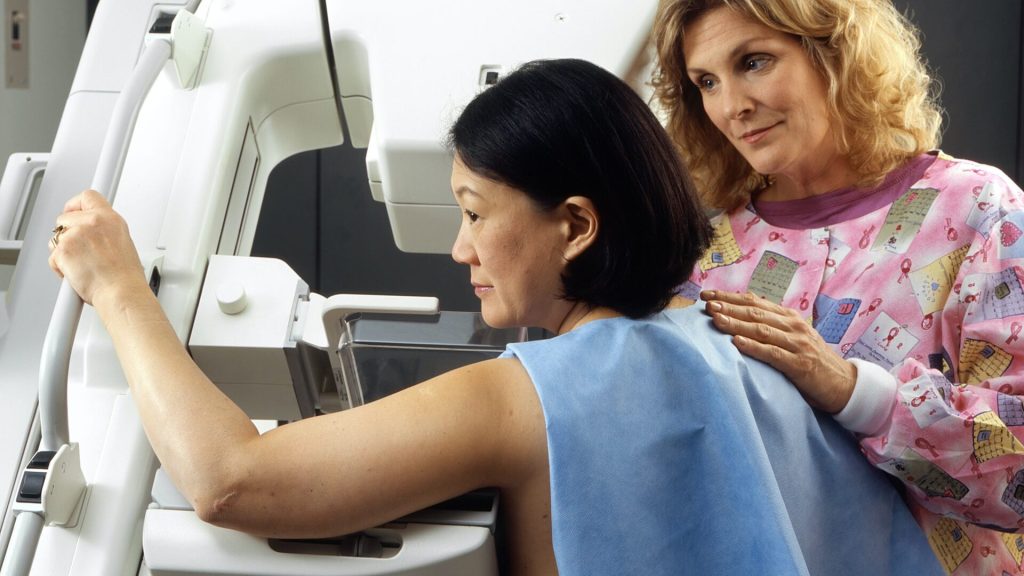
A woman receiving a mammogram, Source: National Cancer Institute
For women with large breast sizes, receiving radiotherapy with prone positioning is less toxic than while supine, according to a study published in JAMA Oncology.
Patients treated in the supine position had significantly higher rates of moist desquamation anywhere in the breast compared with those treated in the prone position (39.6% vs 26.9%).
“Treatment in the prone position has several dosimetric advantages for these patients,” the researchers explained. “It allows for more homogeneous dose distribution owing to the smaller separation when compared with the supine position, which decreases deposition of higher doses in the inframammary fold and axilla.”
Fewer toxic effects of the skin were seen when patients were treated with hypofractionated radiotherapy compared with extended fractionation, they added.
“Prone radiotherapy appears to be an excellent option for patients with large breast size and right-sided breast cancer, and may benefit many women with left-sided breast cancer with large breast size if acceptable cardiac avoidance is feasible,” observed Mayo Clinic’s Dean Shumway, MD, and Cedars-Sinai Medical Center’s Katelyn Atkins, MD, PhD, in an accompanying editorial. “In summary, prone positioning for whole-breast radiotherapy represents a valuable addition to the armamentarium of treatment techniques to reduce the adverse effects associated with whole-breast radiotherapy.”
Of the 357 women (mean age 61 years) included, 182 were treated in the supine position and 175 were treated in the prone position.
From April 2013 until June 2016, 167 patients received 50 Gy in 25 fractions (extended fractionation) with or without boost (range 10-16 Gy). After the trial was amended in June 2016, the majority of patients (93.2%) received the hypofractionation regimen of 42.5 Gy in 16 fractions.
The researchers also found that the supine position was associated with more grade 3 desquamation compared with the prone position (15.4% vs 8.0%; OR 2.09, 95% CI 1.62-2.69, P<0.001).
In addition, when broken down by treatment with either extended fractionation or hypofractionation, extended fractionation was associated with more:
Toxic effects (43.3% vs 23.2%)
Grade 3 desquamation (17.2% vs 6.3%)
Pain (9.4% vs 3.4%)
“These differences were primarily driven by the rates of toxic effects in patients treated in the supine position,” the authors noted.
Specifically, in patients treated in the supine position, extended fractionation was associated with increased desquamation compared with hypofractionation (51.1% vs 27.8%), and grade 3 desquamation (23.9% vs 6.7%).
Extended fractionation was also associated with increased toxicity in patients treated in the prone position, although the link was less pronounced. Desquamation occurred in 35.2% of patients treated with extended fractionation versus 18.4% of patients treated with hypofractionation (OR 2.41), while grade 3 desquamation occurred in 10.2% versus 5.7% of patients (OR 1.87).
No differences in quality of life as measured by global health status, breast symptoms, or pain scales between the supine and prone groups were seen, the researchers noted.
New research published in the journal Behavioural Processes demonstrates that by killing essential gut bacteria, antibiotics ravage athletes’ motivation and endurance. This study, which examined mice, suggests there is a big difference in the gut microbiome of athletes and couch potatoes.
Much research has been done on how exercise impacts the gut microbiome, but this study is one of few to examine the reverse – how gut bacteria also impact voluntary exercise behaviours. Engaging in voluntary exercise involves both motivation and athletic ability.
“We believed an animal’s collection of gut bacteria, its microbiome, would affect digestive processes and muscle function, as well as motivation for various behaviours, including exercise,” said Theodore Garland, UCR evolutionary physiologist in whose lab the research was conducted. “Our study reinforces this belief.”
Researchers confirmed through faecal samples that after 10 days of antibiotics, gut bacteria were reduced both in a group of ‘athletic’ mice bred for running on wheels and those that were not. Since no sickness behaviour was seen in the mice, exercise changes were ascribed solely to changes in antibiotic-induced changes in the gut bacteria.
Wheel running in the athletic mice was reduced by 21%, and the high runner mice did not recover their running behaviour even 12 days after the antibiotic treatment stopped.
Meanwhile, for the normal mice, antibiotics caused no difference in the running behaviour.
“A casual exerciser with a minor injury wouldn’t be affected much. But on a world-class athlete, a small setback can be much more magnified,” said Monica McNamara, UCR evolutionary biology doctoral student and the paper’s first author. “That’s why we wanted to compare the two types of mice.” Knocking out the normal gut microbiome might be compared with an injury.
One way the microbiome might affect exercise in mice or in humans is how carbohydrate metabolites are used by the muscles.
“Metabolic end products from bacteria in the gut can be reabsorbed and used as fuel,” Garland said. “Fewer good bacteria means less available fuel.”
The researchers would next like to identify the gut bacteria contributing to increased athletic performance. “If we can pinpoint the right microbes, there exists the possibility of using them as a therapeutic to help average people exercise more,” Garland said.
Lack of exercise is a risk factor for many diseases, and researchers would like to find ways of encouraging it more.
“Though we are studying mice, their physiology is very similar to humans. The more we learn from them, the better our chances of improving our own health,” Garland said.
Research into foods that can increase desirable gut bacteria is ongoing, and Garland recommends a balanced diet in addition to regular exercise to promote health.
According to the Centers for Disease Control and Prevention, men, on average, die five years earlier than women and die at higher rates from three leading causes of death – heart disease, cancer, unintentional injuries – and, more recently, from COVID. During Men’s Health Month, we encourage men to take control of their health and for families to teach young boys healthy habits throughout childhood.
In June every year, we pay special attention to men’s health. Men’s Health Month aims to heighten the awareness of preventable health problems and encourage early detection and treatment of disease among men and boys. This month allows health care providers, public policymakers, the media, and individuals to encourage men and boys to seek regular medical advice and early treatment for disease and injury.
Men are more reluctant to seek healthcare
A health gap exists – men die younger than women, and they are more burdened by illness during life. They fall ill at a younger age and have more chronic conditions than women. Research by Harvard Health Publishing shows that men are more than three times more likely than women to develop kidney stones, become alcoholics, or have bladder cancer. They are about twice as likely to suffer from emphysema or a duodenal ulcer. Although women see doctors more often than men, the healthcare investment required for caring for men amounts to much more, especially beyond the age of 65.
However, society expects men to be seen as tough, push through pain, and rarely show signs of weakness. This mindset subconsciously trains men to believe that seeking help of any kind – including going to the doctor – exhibits weakness. But it is not only society’s influence that plays a part. Further research shows that 21% of men tend to avoid the doctor because of fear. They worry about an adverse diagnosis or a bad outcome. This same research finds that only 40% of men go to the doctor only when they have a severe health issue and never go for routine check-ups. It is far lower than women’s frequency of doctor visits, and it is a concerning figure.
Unfortunately, mental health is also one of the most stigmatised issues affecting men. The American Psychological Association reports that 30.6% of men have suffered from depression in their lifetime, and their hesitation to seek care may be worsening this issue. As a trend, men are notorious for not talking about their feelings. Psychologists have documented that discussing emotions is just another form of vulnerability that can lead to discomfort for men. It can be scary for many men to begin sharing their feelings. But the payoff is worth it: men who express their feelings verbally are less likely to express them violently.
How Medshield supports men
Medshield offers a variety of plans that suit members of every age and budget. Our Managed Care Programmes assist our members with managing chronic conditions in collaboration with the member’s respective treating practitioners. We encourage men to utilise our Wellness Benefits which include cover for annual tests e.g. cholesterol and PSA Screening, for early diagnosis and treatment. Our benefit plans allow you the freedom to visit your doctor for a general appointment at any time to monitor your overall health, and our plans have robust mental health benefits to ensure holistic care.
Many people feel that medical aid schemes cost too much, but having the right planmeans you won’t need to rely on state clinics and hospitals for care. It also means you can have tests, screenings, and procedures done early without waiting to save enough cash for it (and potentially worsening your condition). Healthcare does not always just require hospital stays, either – sometimes other expenses appear in physiotherapy, dental visits, and even costly chronic medication that most would struggle to cover each month. Nobody can predict what the future holds, and unfortunately, sometimes the sudden onset of illness or an accident are common aspects of life.
We encourage men to take charge of their health!
Let’s work together to turn these trends around. This June, we invite all men to take that step toward a healthier lifestyle and to get screened for any potential illnesses. You may be resistant at first, but persistence is powerful, and you’ll be doing your part to improve your health.
Here are ten tips to start on your new health journey:
Avoid tobacco in all its forms.
Eat well. That means eating more healthful foods and fewer harmful foods.
Get at least 30 minutes of moderate exercise nearly every day.
Stay lean. It’s equally hard for men and women, but partial success will help.
If you choose to drink, limit yourself to one to two drinks a day, counting 150ml of wine, 375ml of beer, and 30 ml of spirits as one drink.
Reduce stress by getting enough sleep and building social ties and community support.
Avoid risky behaviour, including drug abuse, unsafe sex, dangerous driving, unsafe firearm use, and living in hazardous household conditions.
Get regular medical check-ups, screening tests, and immunisations.
Seek joy and share it with others – laughter is good medicine. Fun and optimism improve health as well as happiness.
People with both Type 1 and Type 2 diabetes are prone to tooth decay, and a new study published in Archives of Oral Biology may explain why: reduced strength and durability of enamel and dentin, the hard substance under enamel that gives structure to teeth.
Researchers induced Type 1 diabetes in 35 mice and used a Vickers microhardness tester to compare their teeth with those of 35 healthy controls over 28 weeks. Although the two groups started with comparable teeth, enamel grew significantly softer in the diabetic mice after 12 weeks, and the gap continued to widen throughout the study. Significant differences in dentin microhardness arose by week 28.
“We’ve long seen elevated rates of cavity formation and tooth loss in patients with diabetes, and we’ve long known that treatments such as fillings do not last as long in such patients, but we did not know exactly why,” said Mohammad Ali Saghiri, an assistant professor of restorative dentistry at the Rutgers School of Dental Medicine.
The study advances a multiyear effort by Assistant Prof Saghiri and other researchers to understand how diabetes affects dental health and to develop treatments that counter its negative impact. Previous studies have established that people with both types of diabetes have significantly elevated rates of most oral health issues, both in the teeth and the soft tissues that surround them. Assistant Prof Saghiri and other researchers also have demonstrated that diabetes can interfere with the ongoing process of adding minerals to teeth as they wear away from normal usage.
“This is a particular focus of mine because the population of people with diabetes continues to grow rapidly,” Assistant Prof Saghiri said. “There is a great need for treatments that will allow patients to keep their teeth healthy, but it has not been a major area for research.”
The delivery of the primary healthcare approach and the achievement of any semblance of universal health coverage are moot if South Africa does not rapidly address the critical skills shortages and working conditions of nurses, especially those with specialised skills, including midwives.
“The pandemic very clearly highlighted the crucial role that nurses play in the frontline of healthcare, and how important they are in ensuring that patients have access to quality health services and disease prevention, management and education. However, a combination of factors is stymieing attempts to grow our nursing capabilities and skills – from changes in the nurse training curriculum, limitations of and delays in the accreditation of training facilities, poor working conditions and workplace safety, lack of equipment and resources, low remuneration by global standards, the regulatory uncertainty around NHI, changing social dynamics which has seen declining nursing recruits, as well as the significant mental health deterioration that nurses have battled for two years of being on the frontline of the pandemic. Add to this the fact that we have a significant number of experienced nurses heading for retirement age without the commensurate follow through of new nursing talent coming through, and we have the makings of a serious crisis,” warns Paul Cox, Managing Director at the Essential Group of Companies including health insurance provider, EssentialMED.
“Making matters worse, South Africa’s nurses are in huge demand in many first world countries that suffer the same skills shortages. These countries offer significantly higher pay and better working and living conditions to attract talent to their shores. This is a significant risk as South Africa is losing some of its most experienced nurses and healthcare workers to emigration, and with it we lose vast amounts of institutional knowledge, specialisation, experience, training investment and mentoring and training skills,” he adds.
Data published by the South African Nursing Council (SANC) in 2021 shows that the country has a nursing staff contingent of one nurse to 213 patients – the World Health Organisation recommends a ratio of 1 nurse to 5 patients in a general hospital. While there are currently around 280,000 nurses in active employment and a further 21 000 nurses in training, the 2030 Human Resources for Health Strategy projects a shortage of 34 000 nurses in primary healthcare by 2025 if nothing is done to attract new talent to the nursing sector. According to SANC’s 2020 statistics, the ageing population of South Africa’s nursing population is another looming crisis. Its statistics show that less than a third of the registered nurses and midwives are under the age of 40, while 47% of registered nurses will have retired within the next 15 years. Primary healthcare will take a big hit given the important role of nurses in primary healthcare delivery, and TB, HIV and diabetes management programmes are likely to falter, with patients in remote and rural areas impacted the most.
Perplexingly, despite these serious skills shortages and looming crisis, nurses never made it onto the Critical Skills List released by the Department of Home Affairs at the end of February 2022, despite the huge demands that Government’s drive to NHI will make on already stretched and overburdened healthcare human resources.
“The implications of the current skills shortages and deteriorating working and safety conditions, notably in the public sector which takes care of more than 80% of the population, are plain to see. We already have a situation where healthcare facilities are struggling to fill posts – there are some 21,000 specialist medical personnel posts vacant across all provinces and which the Department of Health has thus far been unable to fill. What more then will the implications be for healthcare delivery under the proposed universal healthcare system of NHI? The Department of Health has acknowledged that the NHI will need skilled personnel to function not only across healthcare professionals, but general skilled human resources to underpin the health system. Right now, even the most fundamental of primary care delivery is in crisis due to skills shortages, exacerbated by the deleterious state of many public healthcare facilities and regular medicine stock-outs. More skilled and experienced nursing professionals are heading offshore, and at the same time, the sector is struggling to attract and train new nursing recruits to a profession and working environment that are increasingly unattractive to young South Africans. The planned introduction of the National Health Insurance scheme adds further grist to the wheel, with industry experts warning of a mass exodus of healthcare skills due to the valid concerns around the lack of financial and operational clarity of the plan,” adds Cox.
The current and future dwindling nurse staffing levels are a serious threat to patient health, safety and quality of care. Equally so to the health and safety of nurses due to increasing pressure on the remaining workforce to meet ever growing healthcare needs, fatigue and burnout, mental health issues and deteriorating work conditions. Poor resource allocation and poor maintenance of healthcare facilities need to be urgently addressed, and there needs to be the political will to dramatically improve the working conditions of the nurses who form the backbone of healthcare delivery. It is crucial that both public and private sector stakeholders collaborate to help bridge the skills challenges. A major acceleration of training is needed, and to do this it’s essential to fast-track the new education requirements and processes and accredit more nurse training colleges, allowing the private sector to contribute to closing the skills gap.
“Nurses are the single largest group of healthcare providers in our country representing 56% of all healthcare providers. The performance of our healthcare system – both public and private – is dependent on the quality of care provided by these professionals. Nurses are central to addressing the complex burden of disease, achieving the primary healthcare (PHC) approach as purported under universal health coverage, as well as improving health system performance across both the public and private healthcare sectors. The pandemic has shown unequivocally the need to value our nurses, to invest in nursing, resolve the nursing education challenges as a matter of priority, as well as address their working conditions, remuneration, practice environment, resources, management and leadership. Without a strong, skilled and growing nursing profession, any semblance of NHI and universal health coverage success in South Africa is questionable,” concludes Cox.
As falling infection rates are beginning to indicate the end of the fifth wave, a paper in the South African Journal of Sciences asks the question – how was it ever feasible for marginalised South Africans to be able to engage in social distancing?
According to a recent seroprevalence study, the vast majority of people in South Africa now have antibodies against COVID in their blood, many acquired through infection and not immunity. The editorial review by Professors Jonathan Jansen and Shabir Madhi, at Stellenbosch University and Wits University, explores the realities of the majority of the population as they struggled under the lockdown.
Just over two years ago, SA garnered praise for instituting one of the harshest lockdowns in the world. In late 2021, while the world panicked over emergence of the Omicron variant, SA led the way with a sharp change in thinking: there was no way now to practically contain COVID with social distancing measures, so it was best to return to as close to normal as possible. This came with an admission that lockdown in SA had failed, and was it doomed from the start with its structural inequalities. SA’s lauded lockdown came with the grotesque spectacle of soldiers forcing people back into their shacks, after all.
Jansen and Madhi considered that a joint UK–SA study found that difficulty adhering to lockdowns or outright noncompliance was largely reported by black Africans in temporary housing. Such conditions entailed lack of savings and access to basic amenities such as private toilets, making lockdown adherence virtually impossible.
Jansen and Madhi observed that inequities were readily apparent, with in-hospital COVID mortality rates being 1.2- to 1.3-fold higher in black African patients, coloured patients and patients of Indian descent compared to white patients. Patients were also 1.5 times more likely to die in public healthcare as opposed to private healthcare, with greater likelihood of ICU admission and mechanical ventilation.
Looking at the impact of gender, voices of experts were mostly (70%) male, Jansen and Madhi noted, and researchers found that COVID had disproportionate impacts on female academics.
The pandemic also brought the ethical question of vaccine mandates, where it was argued that it was permissible for the greater good. But there was a stumbling block of how would consent for enrolment be gained? The SISONKE trial showed that, even among healthcare professionals, informed consent was a problem. Most (71.5%) participated for access to the vaccine, but nearly a third (32%) did not realise that breakthrough infections and adverse events had to be reported two years on.
“Despite the numerous lockdowns and restrictions in South Africa, the benefits thereof are questionable.”
Overall, studies challenged the benefit of the lockdown. Jansen and Madhi argue that, “Despite the numerous lockdowns and restrictions in South Africa, the benefits thereof are questionable.” Even before the Omicron wave, 73% of South Africans were estimated to have been infected at least once.
SA nevertheless was able to leverage its skills and resources to enter into COVID vaccine manufacture and knowledge sharing, but sustainability ultimately depends on commitment to vaccine programmes in Africa.
Jansen and Madhi stress that the economic costs of the lockdown are ongoing, an by 2021 only 42% of the working population remained employed in SA. Modelling shows that employment might only return to 2018 levels by around 2024 to 2026.
“Consequently, the full societal impact of the COVID-19 pandemic is yet to materialise; and imposing and retaining ongoing regulations under the pretence of trying to prevent SARS-CoV-2 infections, when all indications are that they have failed dismally in the South African context, warrant immediate abandonment.”
Looking at this image, do you perceive that the central black hole is expanding, as if you’re moving into a dark environment, or falling into a hole? If so, you’re not alone: a new study published in Frontiers in Human Neuroscience shows that this ‘expanding hole’ illusion, which is new to science, is perceived by approximately 86% of people.
The study’s first author, Professor Bruno Laeng at the University of Oslo, explained: “The ‘expanding hole’ is a highly dynamic illusion: The circular smear or shadow gradient of the central black hole evokes a marked impression of optic flow, as if the observer were heading forward into a hole or tunnel.”
Optical illusions aren’t simple curiosities: researchers study them to better understand the complex processes our visual system uses to anticipate and make sense of the visual world.
In the new study, Prof Laeng and colleagues demonstrated that the ‘expanding hole’ illusion deceives the brain so well that it even prompts a dilation reflex of the pupils to let in more light, just as if the observer was entering a dark area.
“Here we show based on the new ‘expanding hole’ illusion that that the pupil reacts to how we perceive light – even if this ‘light’ is imaginary like in the illusion – and not just to the amount of light energy that actually enters the eye. The illusion of the expanding hole prompts a corresponding dilation of the pupil, as it would happen if darkness really increased,” said Prof Laeng.
Prof Laeng and colleagues explored how the colour of the hole (besides black: blue, cyan, green, magenta, red, yellow, or white) and of the surrounding dots affect how strongly we mentally and physiologically react to the illusion. On a screen they presented variations of the “expanding hole” image to 50 women and men with normal vision, asking them to rate subjectively how strongly they perceived the illusion. While participants gazed at the image, the researchers measured their eye movements and their pupils’ unconscious constrictions and dilations. As controls, the participants were shown “scrambled” versions of the expanding hole image, with equal luminance and colours, but without any pattern.
The illusion appeared most effective when the hole was black. Fourteen percent of participants didn’t perceive any illusory expansion when the hole was black, while 20% didn’t if the hole was in color. Among those who did perceive an expansion, the subjective strength of the illusion differed markedly.
The researchers also found that black holes promoted strong reflex dilations of the participants’ pupils, while coloured holes prompted pupil to constriction. For black holes, but not for coloured holes, the stronger participants rated their perception of the illusion, the more their pupil diameter tended to change.
Minority not susceptible
Just why a minority seem unsusceptible to the “expanding hole” illusion is still unclear. It is also not known whether other vertebrate species, or even nonvertebrate animals with camera eyes such as octopuses, might perceive the same illusion as we do.
“Our results show that pupils’ dilation or contraction reflex is not a closed-loop mechanism, like a photocell opening a door, impervious to any other information than the actual amount of light stimulating the photoreceptor. Rather, the eye adjusts to perceived and even imagined light, not simply to physical energy. Future studies could reveal other types of physiological or bodily changes that can ‘throw light’ onto how illusions work,” concluded Prof Laeng.
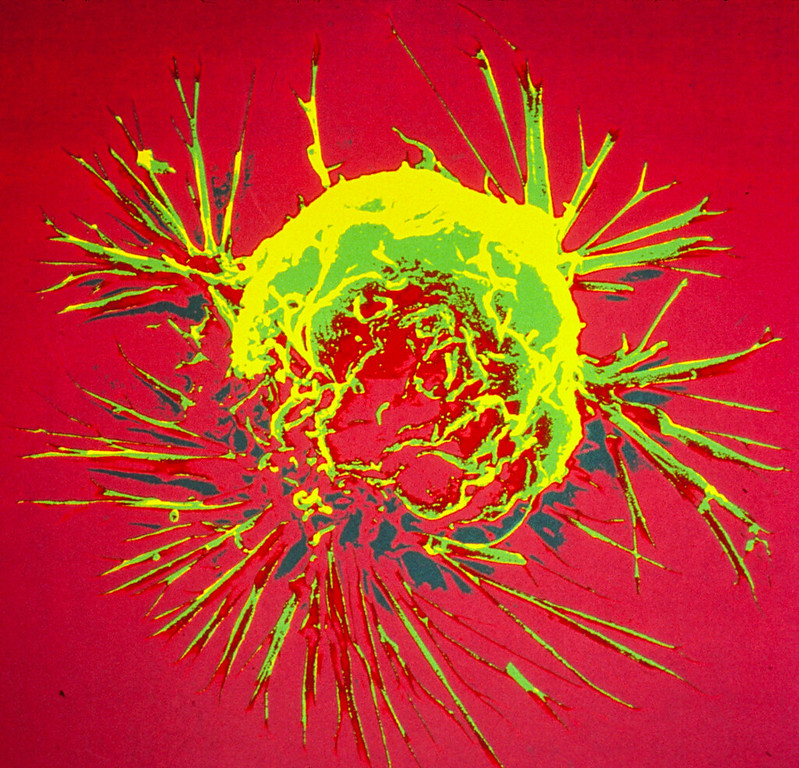
Scanning Electron Micrograph of a breast cancer cell. Credit: NIH
Breast cancer and diabetes have long been suspected to have some kind of relationship, but now new research in Nature Cell Biology reveals how breast cancer cells sabotage insulin production to fuel their own cravings for glucose.
Diabetes risk begins to increase two years after a breast cancer diagnosis, and by 10 years post-diagnosis, the risk is 20% higher in breast cancer survivors than in age-matched women without breast cancer.
But these epidemiological linkages are not clear-cut or definitive, and some studies have found no associations at all. In the paper, a research team describe a possible biological mechanism connecting the two diseases, in which breast cancer suppresses the production of insulin, resulting in diabetes, and the impairment of blood sugar control promotes tumour growth.
“No disease is an island because no cell lives alone,” said corresponding study author Shizhen Emily Wang, PhD, professor of pathology at UC San Diego School of Medicine. “In this study, we describe how breast cancer cells impair the function of pancreatic islets to make them produce less insulin than needed, leading to higher blood glucose levels in breast cancer patients compared to females without cancer.”
The researchers name the culprit as extracellular vesicles (EV), which carry DNA, RNA, proteins, fats and other materials between cells, a sort of cargo communication system.
The cancer cells were found to be secreting microRNA-122 into the vesicles. When vesicles reach the pancreas, Prof Wang said, they can enter the islet cells, offload their miR-122 cargo and damage the islets’ critical function in maintaining a normal blood glucose level.
“Cancer cells have a sweet tooth,” Prof Wang said. “They use more glucose than healthy cells in order to fuel tumor growth, and this has been the basis for PET scans in cancer detection. By increasing blood glucose that can be easily used by cancer cells, breast tumors make their own favorite food and, meanwhile, deprive this essential nutrient from normal cells.”
Feeding mice slow-releasing insulin pellets or an SGLT2 inhibitor restored normal control of glucose in the presence of a breast tumour, in turn suppressed the tumour’s growth.
“These findings support a greater need for diabetes screening and prevention among breast cancer patients and survivors,” remarked Prof Wang, noting that a miR-122 inhibitor is currently in clinical trial as a potential treatment for chronic hepatitis C. It has been found to be effective in restoring normal insulin production and suppressing tumour growth in mouse models of breast cancer.
“These miR-122 inhibitors, which happen to be the first miRNA-based drugs to enter clinical trials, might have a new use in breast cancer therapy,” Prof Wang posited.