Day: November 11, 2021

WHO Predicts Shortfall in Syringe Production
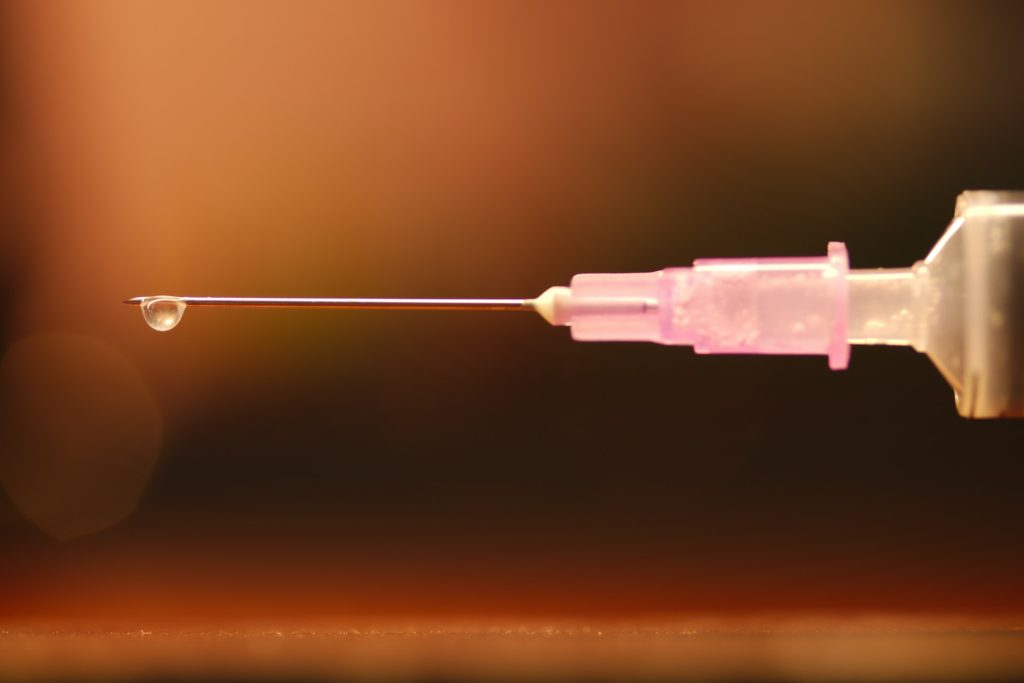
Source: Raghavendra V Konkathi on Unsplash

The World Health Organization has said that with the goal of two COVID vaccine doses for seven billion people between now and 2023, a shortage of at least one billion syringes “could occur”, if manufacturing does not increase. This could endanger other immunisation programmes.

Lisa Hedman, WHO Senior Advisor, from the Access to Medicines and Health Products division, warned that there could be a generation of children who miss scheduled immunisation jabs unless manufacturers come up with a way to make more single-use disposable syringes.

“When you think about the magnitude of the number of injections being given to respond to the pandemic, this is not a place where we can afford shortcuts, shortages or anything short of full safety for patients and healthcare staff,” said the WHO expert.

She told media that more than 6.8 billion doses of COVID vaccines are being administered globally per year – nearly twice the yearly number for routine inoculations.

“A shortage of syringes is unfortunately a real possibility and here’s some more numbers. That [given] the global manufacturing capacity of around six billion a year for immunisation syringes it’s pretty clear that a deficit in 2022 of over a billion could happen if we continue with business as usual.”

Reuse of syringes was inadvisable, also noting that syringes were particularly prone to transport delays because they took up 10 times the space of a vaccine.

Meanwhile, the heads of the International Monetary Fund (IMF), World Bank Group, WHO and the World Trade Organization (WTO) held a follow up session of High-Level Consultations with the CEOs of leading COVID vaccine manufacturing companies on Tuesday.

All participants at the meeting agreed on the urgency of increased vaccine dose delivery to low-income countries, where less than 2.5% of the population has been fully vaccinated.

The meeting’s aim was to identify how to ensure more equitable distribution of vaccines and all participants pledged to continue working together to clarify donations, vaccine swaps and delivery schedules, so that distribution of the life-saving vaccines can be more effectively targeted towards needy countries.

The meeting of the Multilateral Leaders Task Force on COVID-19 built on technical work undertaken by multidisciplinary teams during the months of September and October.

During the consultations, the leaders of the four organisations and the CEOs also examined how best to tackle trade-related bottlenecks; how to improve the donation process; what additional steps are needed to reach the vaccination target of 40% of people in all countries by the end of the year; and how to improve transparency and data sharing with the IMF-WHO Vaccine Supply Forecast Dashboard and the Multilateral Leaders Task Force.

The effort will require close collaboration between manufacturers, governments and the international COVAX initiative, on enhanced delivery schedules, especially for doses that are being donated.

Source: UN News

Why Some Drugs Have Side Effects

Photo by Myriam Zilles on Unsplash

Researchers have discovered how unwanted side effects can result from how some drugs affect various membrane-spanning proteins in addition to their intended target. The findings, published in PNAS, illuminate one of the main problems of drug discovery and point to new strategies to overcome it.

Any class of drug can have side effects, but those that interact directly with cellular membranes have been especially problematic. “Those drugs tend to affect many membrane proteins, and we suspected that there’s some kind of non-specific mechanism at work,” said first author Dr Radda Rusinova, assistant professor of research in physiology and biophysics at Weill Cornell Medicine. “We wanted to see whether it could be linked to the cell membrane.”

Dr Rusinova and her colleagues used sensitive assays that allowed them to compare how different drugs affected the activities of two channel proteins that span membranes: the gramicidin ion channel and a potassium channel called KcsA. Gramicidin was used to measure the magnitude of drugs’ effect on the membrane while KcsA reflected effects these drugs could have on typical membrane proteins.  They found that membrane-associated drugs can affect KcsA in at least three ways: by interacting directly with the proteins, by interfering with the proteins’ structural connections to the membrane, or by causing broad changes in membrane characteristics such as thickness or elasticity.

Changes in membrane characteristics have well-known effects on the gramicidin ion channel, an antibiotic isolated from bacteria that has long been used as a standard tool for studying such changes. “Gramicidin is a probe essentially for changes in bilayer and membrane properties, and will report on the magnitude of the changes,” said Dr. Rusinova.

“But we needed to go further to see how a more typical cell membrane protein would react,” Dr. Rusinova said. KcsA belongs to a class of proteins – potassium channels – that drive many aspects of cell physiology in everything from bacteria to humans, making it a good comparative probe.

The comparative assay results revealed a more nuanced process than the  straightforward model currently used to explain how membrane-binding drugs can affect membrane-spanning proteins.

“The more data that Dr Rusinova got, the more it became apparent that this simple model did not actually cover the full spectrum of effects that we saw,” said senior author Dr Olaf Andersen, professor of physiology and biophysics.

“The investigators who are looking into molecules that can move into the cell membrane need to worry about at least three mechanisms for off-target effects,” Dr Rusinova said.

However, not all is bad news: in some cases, off-target effects at the cellular level cause no trouble to the organism, and in a few instances they can even be beneficial. Dr Rusinova points to two of the drugs her team tested as an example: amiodarone, a heart medication whose membrane-mediated effects actually boost its efficacy, and troglitazone, an anti-diabetic drug whose side effects included liver toxicity, ultimately forcing regulators to pull it from the market.

The investigators hope to develop more predictive models for such off-target effects. “We would like to determine the structural characteristics of a membrane protein that would make it more or less sensitive to bilayer effects,” Dr Rusinova said.

Source: Weill Cornell Medicine

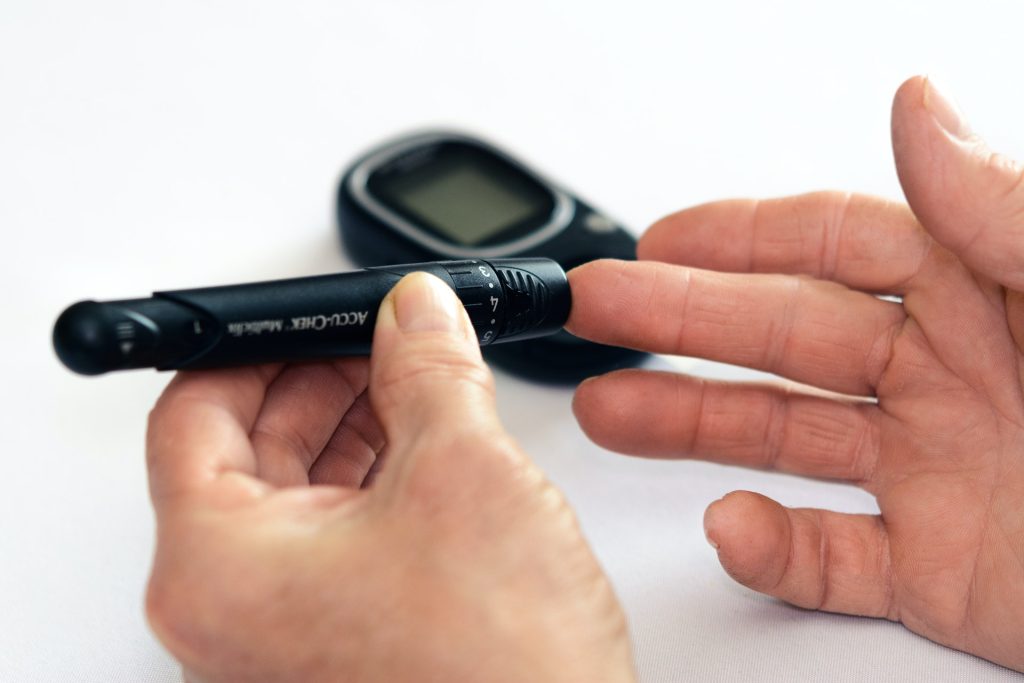
A Needle-free Way of Blood Glucose Monitoring

Photo by Photomix Company from Pexels

In order to find an alternative to lancets for blood glucose monitoring, researchers applied needle-free jet injection, an emerging but well-developed technique in which a drug is delivered directly with a high-speed narrow jet of fluid.

The study, led by ABI researchers Jiali Xu and James McKeage, demonstrated for the first time that a jet injector could also be used to collect blood samples from humans – that is, release enough blood for glucose sampling, sans needles. The findings appear in the Journal of Diabetes Science and Technology.

Fingertips are the preferred site for blood sampling because they have a high density of blood vessels, they are also sensitive, and pain, skin damage, bruising and risk of infection from regular ‘pricking’ has spurred increasing efforts to develop needle-free methods of blood testing for people with diabetes.

Jet injection, which does not rely on a needle, is an appealing alternative. Jiali Xu of the Auckland Bionengineering Institute (ABI) and her team demonstrated that the technology, using electric motors rather than the standard mechanical spring, could also be used to pierce the skin with a small volume of harmless saline solution, releasing enough blood for glucose concentration measurement.

The study involved 20 healthy participants, each of which received a lancet prick and jet injection on four fingertips through three differently shaped and sized nozzles. “Which were designed to mimic the wound left from a lancet prick, in the anticipation that it might release blood in a way similar to a lancet prick,” said Ms Xu.

Some nozzle shapes performing better than others – a ‘slot’ shaped nozzle released more blood than a circle-shaped nozzle, for instance.

Most of the different jet injection nozzles were generally perceived by the participants, who were unable to see the injections, as no more painful than a standard lancet, and in some cases, less so. A questionnaire was given 24 hours later to assess pain, swelling and bleeding.

People with diabetes may find jet injection more acceptable than using a needle, but the researchers caution against jumping to conclusions. “When you know there’s not a device that is pricking your skin, you could speculate that people will find jet injection more acceptable,” says Professor Andrew Taberner, head of the Bioinstrumentation Lab at the ABI, and Ms Xu’s supervisor. “But we don’t have evidence to back that up. That wasn’t part of this study. We were first trying to find out if it worked, and it did.”

He was pleased, but not surprised. “Diesel mechanics have known for years that you should never put your finger in front of a fuel injector, because it will inject fuel into your finger. They found this out the hard way. But we’re taking advantage of what diesel mechanics discovered accidentally years ago, with a very small amount of harmless liquid, to deliberately release blood.”

The team is now trying to see if they can also extract blood with this technology, allowing for the design of an even smaller nozzle.

Moreover, “our technology has the capability to both deliver and withdraw fluid. No other jet projection technology has that capacity,” said Dr Taberner.

Development and commercialisation of the technology will take time but he believes Ms Xu’s research will contribute to the ultimate aim, of the development of a single lancet-free reversible technology that will allow for both blood sampling and insulin delivery based on the glucose measurement in one device.

“I hope that this research will contribute to that, and the improvement in human healthcare, especially in the management of diabetes,” said Ms Xu.

Source: University of Auckland

Scientists Identify A New Recessive Neurodevelopmental Disorder

Image source: Pixabay

In the Journal of Clinical Investigation, researchers have reported a rare neurodevelopmental condition characterised by intellectual disability, ataxia with cerebellar hypoplasia and delayed puberty with hypogonadotropic hypogonadism (HH).

Patients with this unusual combination of conditions were referred to Mehul Dattani (UCL), and affected individuals were found to carry the same homozygous mutation in the PRDM13 gene, which encodes a chromatin modifying factor that contributes to regulating cell fate. Intriguingly, an unaffected heterozygous carrier of this mutation was identified by screening 42 unaffected individuals in the Maltese population, suggesting that this mutation is present at low levels in the population.

The researchers set out to model this condition and identify the underlying causes using a PRDM13-deficient mouse model. The researchers found evidence that both the cerebellar hypoplasia and reproductive phenotypes resulted from defects in the specification of specific populations of GABAergic neuronal progenitors in the developing cerebellum and hypothalamus, respectively.

The results indicate that this condition results from abnormal cell fate specification during development. Consequently, the hypoplastic cerebellum is deficient in molecular layer interneurons, which play critical roles in regulating cerebellar circuits. In the hypothalamus, fewer Kisspeptin neurons, which are important regulators of gonadotropin releasing hormone and puberty, were present in PRDM13 mutant mice.

Together, these findings identify PRDM13 as a critical regulator of neuronal cell fate in the cerebellum and hypothalamus, providing a mechanistic explanation for the co-occurrence of hypogonadism and cerebellar hypoplasia in this syndrome.

Source: King’s College London

Guidelines for Percutaneous Coronary Intervention May Need Changing

Photo by Piron Guillaume on Unsplash

Percutaneous coronary intervention (PCI) is often performed after a heart attack, or to alleviate symptoms of chest pressure, but a new study published in Nature questions the efficacy of the current guidelines. 

Current American Heart Association guidelines recommend that patients who undergo PCI, a minimally invasive procedure to open clogged arteries, be prescribed dual antiplatelet therapy (DAPT) to prevent blood clots, and that they continue using the combination of aspirin and a second antiplatelet medication for at least one year after the procedure with continuation of DAPT beyond one year for patients with acceptable bleeding risk.

The current guidelines are based on previous research, including the DAPT Study, a large clinical trial 10 years ago of patients undergoing PCI with a stent, that found using DAPT beyond one year after PCI decreased ischaemic events but posed a higher risk of bleeding. Since then, questions have arisen as to whether the evidence is representative of real-world populations and changing practice patterns.

To better understand whether the results of prior trials of DAPT duration are applicable today, researchers at Beth Israel Deaconess Medical Center (BIDMC) developed new analytic methods to update a previously conducted trial to better reflect contemporary practice. The findings, published in Circulation, suggest that because of improvements in stent technology and changes in the types of patients receiving stents, the risks of DAPT may now outweigh the benefits for the average patient.

“Clinical research can become outdated as practices and technologies evolve,” said corresponding author Robert W. Yeh, MD, MSc, an interventional cardiologist at BIDMC. “By extrapolating what an older trial might have shown had it been conducted today, we found that many patients who’ve received stents and are currently on combination antiplatelet therapy may actually benefit from stopping one of those antiplatelet drugs – adding to growing evidence that aspirin and drugs like it may be less useful than previously thought.”

Yeh and colleagues extrapolated the results of 5743 DAPT Study participants to national data from 568 540 patients undergoing PCI with a stent. Using new analytic methods, the team estimated a contemporary “real-world” treatment effect of 30 months versus 12 months of DAPT after coronary stent procedures. Compared to the previous trial population, contemporary registry patients had more comorbidities and were more likely to present with heart attack and receive second generation drug-eluting stents. After adjustment to represent the registry population, the researchers no longer saw a significant effect of prolonged DAPT on reducing stent thrombosis or heart attack, but increased risk of bleeding persisted.

Additionally, the team used their previously developed risk tool called the DAPT Score to stratify subgroups of patients who may or may not benefit from prolonged DAPT. They found that the projected ischemic benefits of prolonged DAPT in the subgroup of patients with DAPT score less than two disappeared, while the bleeding risk persisted. In contrast, in the subgroup of patients with DAPT score of two or greater, ischemic benefits of prolonged DAPT persisted, though were slightly attenuated, with negligible increase in bleeding.

“While patients at highest risk of ischaemic event, [a] small group of patients should likely remain on these medications, longer duration DAPT may have more limited benefits and greater harms for most,” said lead author Neel M. Butala, MD, MBA, a research fellow in the Smith Center. “These results illustrate the importance of a nuanced interpretation of clinical trials to guide clinical decision-making. The methods may be applicable across various cardiovascular conditions to help ensure that evidence is up-to-date and appropriate for real world populations.”

Source: Beth Israel Deaconess Medical Center

Human Neurons Differ From Animal Ones in a Surprising Way

A healthy neuron. Credit: National Institutes of Health

Human Neurons Differ From Animal Ones in a Surprising WayIn a surprising new finding published in Nature, neuroscientists have shown that human neurons have a much smaller number of ion channels than expected, compared to the neurons of other mammals.

Ion channels are integral membrane proteins that contain pathways through which ions can flow. By shifting between closed and open conformational states (‘gating’ process), they control passive ion flow through the plasma membrane. 

The researchers hypothesise that lower channel density may have helped the human brain evolve energy efficiency, letting it divert resources elsewhere.

“If the brain can save energy by reducing the density of ion channels, it can spend that energy on other neuronal or circuit processes,” said senior author Mark Harnett, an associate professor of brain and cognitive sciences.

Analysing neurons from 10 different mammals, the researchers identified a “building plan” that holds true for every examined species — save humans. They found that as the size of neurons increases, the density of channels found in the neurons also increases.

However, human neurons proved to be a striking exception to this rule.

“Previous comparative studies established that the human brain is built like other mammalian brains, so we were surprised to find strong evidence that human neurons are special,” said lead author and former MIT graduate student Lou Beaulieu-Laroche.

Neurons in the mammalian brain can receive electrical signals from thousands of other cells, and that input determines whether or not they will fire an electrical impulse called an action potential. In 2018, Prof Harnett and Beaulieu-Laroche discovered that human and rat neurons differ in some of their electrical properties, primarily in dendrites.

One of the findings from that study was that human neurons had a lower density of ion channels than neurons in the rat brain. The researchers were surprised by this observation, as ion channel density was generally assumed to be constant across species. In their new study, Harnett and Beaulieu-Laroche decided to compare neurons from several different mammalian species to see if they could find any patterns that governed the expression of ion channels. They studied two types of voltage-gated potassium channels and the HCN channel, which conducts both potassium and sodium, in layer 5 pyramidal neurons, a type of excitatory neurons found in the brain’s cortex.

They were able to obtain brain tissue from a range of 10 mammalian species, including human tissue removed from patients with epilepsy during brain surgery. This variety allowed the researchers to cover a range of cortical thicknesses and neuron sizes across the mammalian kingdom.

In nearly every mammalian species the researchers examined, the density of ion channels increased as the size of the neurons went up. Human neurons bucked this trend, having a much lower density of ion channels than expected.

The increase in channel density across species was a surprise, Prof Harnett explained, because the more channels there are, the more energy is required to pump ions in and out of the cell. However, it started to make sense once the researchers began thinking about the number of channels in the overall volume of the cortex, he said.

In the tiny brain of the Etruscan shrew, which is packed with very small neurons, there are more neurons in a given volume of tissue than in the same volume of tissue from the rabbit brain, which has much larger neurons. But because the rabbit neurons have a higher density of ion channels, the density of channels in a given volume of tissue is the same in both species, or any of the nonhuman species the researchers analysed.

“This building plan is consistent across nine different mammalian species,” Prof Harnett said. “What it looks like the cortex is trying to do is keep the numbers of ion channels per unit volume the same across all the species. This means that for a given volume of cortex, the energetic cost is the same, at least for ion channels.”

The human brain represents a striking deviation from this building plan, however. Instead of increased density of ion channels, the researchers found a dramatic decrease in the expected density of ion channels for a given volume of brain tissue.

The researchers believe this lower density may have evolved as a way to expend less energy on pumping ions, which allows the brain to use that energy for something else, like creating more complicated synaptic connections between neurons or firing action potentials at a higher rate.

“We think that humans have evolved out of this building plan that was previously restricting the size of cortex, and they figured out a way to become more energetically efficient, so you spend less ATP per volume compared to other species,” Prof Harnett said.

He now hopes to study where that extra energy might be going, and whether there are specific gene mutations that help neurons of the human cortex achieve this high efficiency. The researchers are also interested in exploring whether primate species that are more closely related to humans show similar decreases in ion channel density.

Source: Massachusetts Institute of Technology

Major Mechanism for Chronic Inflammation in HIV Uncovered

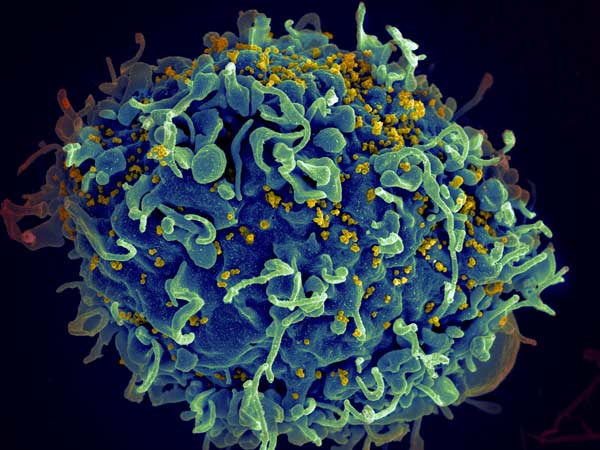
HIV invading a human cell
HIV invading a human cell: Credit NIH

In a groundbreaking study of people living with HIV, scientists found that neutrophils play a role in impaired T cell functions and counts, as well as the associated chronic inflammation that is common with the virus.

Neutrophils make up 60–80% of circulating immune cells in the blood. However, these white blood cells are extremely short-lived and cannot be frozen and thawed like other immune cells, making examining them extremely difficult, said study lead Shokrollah Elahi.

“Neutrophils live for hours to a day or two maximum,” Elahi said. “The body produces a lot of neutrophils, and they do their job and then they die and have to be regenerated in the bone marrow. But despite the fact that neutrophils are the most abundant white blood cells in the blood circulation, their role in the context of HIV has not been very well defined.”

In the study, published in the journal PLOS Biology, researchers examined fresh blood samples of 116 people living with HIV and 60 non-infected individuals. They ran comprehensive sequencing on all the genes expressed in the neutrophils from both groups to determine any differences between them.

“We found that not all HIV-infected individuals have similar types of neutrophils,” said Elahi. “As the HIV disease progresses, neutrophils become more activated and more potent, and in turn activate the body’s T cells, which likely causes some of the problems associated with HIV infection such as inflammation and rapid aging.”

Elahi said neutrophils act like an early alarm system: in response to pathogens, they release proteins to signal other immune cells to the danger. This activation can be high or low, or more or less potent, depending on the severity of the danger and the reaction of other immune cells.

One of these proteins is galectin-9, which Elahi previously linked to severe inflammation and cytokine storms in COVID patients. Elahi’s team reported that when neutrophils sense a danger such as an infection, they become stressed and release the galectin-9. As the protein begins to saturate the blood, it can interact with different immune cells. For example, the team found that galectin-9 reacted strongly with T cells and made them more susceptible to HIV infection, causing a cascading effect that leads to a hyper-immune response and inflammation.

Elahi’s prior work showed that patients with HIV and some forms of cancer had elevated levels of galectin-9 in their blood, but now he was able to identify the major source of the protein.

“We found for the very first time that the neutrophil membrane, through a complex mechanism, is covered like a blanket with galectin-9,” he said. “When neutrophils become highly activated, the secretion of galectin-9 can activate T cells through interaction with another molecule called CD44, which then promotes chronic inflammation in HIV patients.”

This ‘alarm’ reaction of shedding proteins such as galectin-9 was linked to oxidative stress, which is believed to play a role in the development of diseases including Parkinson’s, Alzheimer’s, cancer, heart failure and autism.

Based on his findings, Elahi said preventing galectin-9 shedding might be a powerful tool in reducing many of the negative effects of HIV infection. His team has already made some progress in reducing oxidative stress by using an organic antioxidant compound called phloretin and vitamin C.

“We have been looking at phloretin and vitamin C in the lab and our data are very promising,” Elahi said. “We know that both are good at reducing galectin-9 shedding, so we believe they can prevent the hyper-activation of neutrophils. We hope that our results will spark renewed investigation into the role of neutrophils in T cell activation in other acute and chronic conditions.”

Elahi noted the importance of immediate screening tests for HIV or at-risk people, saying: “If the virus is caught early and they can go on antiretroviral therapy, then it stops disease progression and reduces many of the complications associated with advanced HIV.”

Source: University of Alberta Faculty of Medicine & Dentistry

Biological Research Often Incorrectly Reports Sex Differences

Photo by Tim Mossholder on Unsplash

An analysis of published studies from a range of biological specialties shows that when data are reported by sex, critical statistical analyses are often missing and the findings are likely to be reported in misleading ways.

The analysis was published in the journal eLife.

“We found that when researchers report that males and females respond differently to a manipulation such as a drug treatment, 70% of the time the researchers have not actually compared those responses statistically at all,” said senior author Donna Maney, a professor of neuroscience in Emory’s Department of Psychology. “In other words, an alarming percentage of claims of sex differences are not backed by sufficient evidence.”

In the articles lacking the proper evidence, she added, sex-specific effects were claimed almost 90% of the time. In contrast, authors that tested statistically for sex-specific effects only reported them 63% of the time.

”Our results suggest that researchers are predisposed to finding sex differences and that sex-specific effects are likely over-reported in the literature,” Prof Maney said.

The problem is so pervasive not even her own work was safe. “Once I realised how prevalent it is, I went back and checked my own published articles and there it was,” she said. “I myself have claimed a sex difference without comparing males and females statistically.”

Prof Maney stressed that the problem should not be discounted; it is becoming increasingly serious, she said, because of mounting pressure from funding agencies and journals to study both sexes, and interest from the medical community to develop sex-specific treatments.

Better training and oversight are needed to ensure scientific rigor in research on sex differences, the authors wrote: “We call upon funding agencies, journal editors and our colleagues to raise the bar when it comes to testing for and reporting sex differences.”

Historically, biomedical research has often included just one sex, usually biased toward males. In recent decades, laws have been passed requiring US medical research to include females in clinical trials and report the sex of human participants or animal subjects.

“If you’re trying to model anything relevant to a general population, you should include both sexes,” Prof Maney explained. “There are a lot of ways that animals can vary, and sex is one of them. Leaving out half of the population makes a study less rigorous.”

As more studies consider sex-based differences, Maney adds, it is important to ensure that the methods underlying their analyses are sound.

For the analysis, Prof Maney and co-author Yesenia Garcia-Sifuentes, PhD candidate, looked at 147 studies published in 2019 to see what is used for evidence of sex differences. The studies ranged across nine different biological disciplines, including field studies on giraffes and immune responses in humans.

The studies that were analysed all included both males and females and separated the data by sex. Garcia-Sifuentes and Prof Maney found that the sexes were compared, either statistically or by assertion, in 80% of the articles. Of those articles, sex differences were reported in 70% of them and of those treated as a major finding in about half.

Statistical errors were seen in some studies, with a significant difference for one sex but not the other counted as a difference between them.  The problem with that approach is that the statistical tests conducted on each sex can’t give “yes” or “no” answers about whether the treatment had an effect.

“Comparing the outcome of two independent tests is like comparing a ‘maybe so’ with an ‘I don’t know’ or ‘too soon to tell,'” Maney explains. “You’re just guessing. To show actual evidence that the response to treatment differed between females and males, you need to show statistically that the effect of treatment depended on sex. That is, to claim a ‘sex-specific’ effect, you must demonstrate that the effect in one sex was statistically different from the effect in the other.”

Conversely, their analysis also encountered strategies that could mask sex differences, such as pooling data from males and females without testing for a difference.

“At this moment in history, the stakes are high,” Maney says. “Misreported findings may affect health care decisions in dangerous ways. Particularly in cases where sex-based differences may be used to determine what treatment someone gets for a particular condition, we need to proceed cautiously. We need to hold ourselves to a very high standard when it comes to scientific rigor.”

Source: EurekAlert!