
Tag: sugar sweetened drinks

Study Finds Sugary Drinks Linked to Anxiety in Young People

A new study has identified an association between consumption of drinks containing a high amount of sugar and anxiety symptoms in adolescents. 
Photo by Breakingpic on Pexels

Researchers at Bournemouth University were part of a team involved in reviewing the findings of multiple studies that have investigated people’s diets and their mental health, to establish common findings. 

Their results have been published in the Journal of Human Nutrition and Dietetics.

“With increasing concern about adolescent nutrition, most public health initiatives have emphasised the physical consequences of poor dietary habits, such as obesity and type-2 diabetes,” said Dr Chloe Casey, Lecturer in Nutrition and co-author of the study. “However, the mental health implications of diet have been underexplored by comparison, particularly for drinks that are energy dense but low in nutrients,” she added.

Anxiety disorders are a leading cause of mental distress among young people, in 2023 it was estimated that one in five children and young people had a mental health disorder, with anxiety one of the most reported conditions. 

The studies investigated by the research team measured sugary drink consumption and mental health of the young people through surveys. Beverages with high amounts of sugar can include fizzy drinks, energy drinks, sugary juices, squashes, sweetened tea and coffee, and flavoured milks.

The results consistently found a link between high levels of sugary drink consumption and anxiety.

The researchers emphasise that because of the nature of the studies they investigated, the findings do not provide evidence that drinking more sugary drinks directly causes anxiety. It is also possible that experiencing symptoms of anxiety leads to some young people consuming more sugary drinks. Or there could be other common factors – for example family life and sleeping disorders – that lead to both increased consumption and symptoms of anxiety. 

“Whilst we may not be able to confirm at this stage what the direct cause is, this study has identified an unhealthy connection between consumption of sugary drinks and anxiety disorders in young people,” Dr Casey said. 

“Anxiety disorders in adolescence have risen sharply in recent years so it is important to identify lifestyle habits which can be changed to reduce the risk of this trend continuing,” she concluded. 

The study was led by former Bournemouth University PhD student, Dr Karim Khaled, who now works at Lebanese American University, Beirut. 

Source: Bournemouth University
R23.9 Billion, 72 000 lives, One Budget Speech

Why the Health Promotion Levy can no longer be delayed

Johannesburg, 19 January 2026: When Petrus Cockrell wakes up each morning, the first thing he reaches for is his wheelchair. Diabetes took both his legs before he turned 50. It robbed him of his mobility, his job and the simple joy of walking beside his dog.Petrus is one of millions of South Africans living with a disease that did not need to progress this far. Behind every statistic is someone like him, a parent, a worker, a caregiver whose life has been cut short or forever altered by a preventable illness.

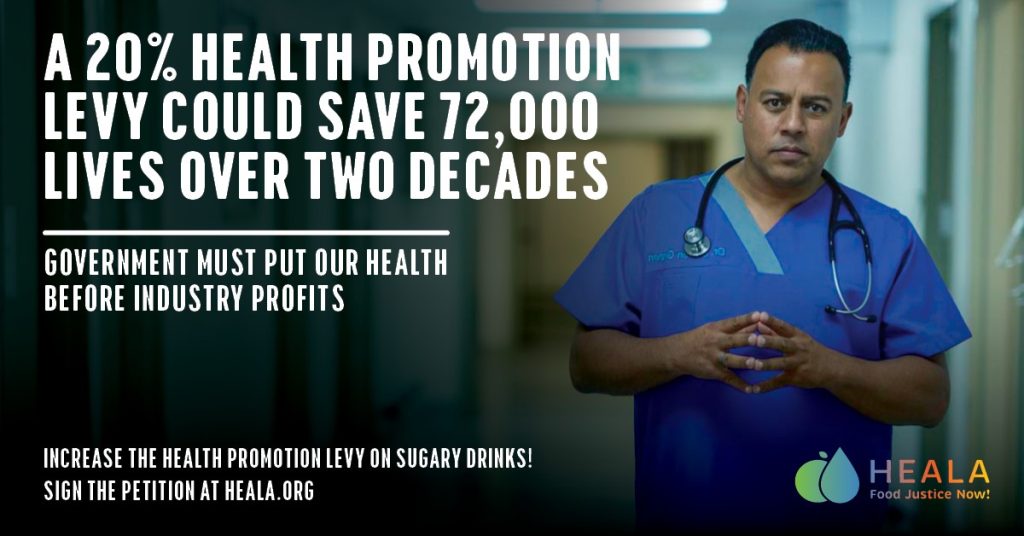
With the National Budget Speech scheduled for February, the Healthy Living Alliance (HEALA) is calling on government to increase the Health Promotion Levy (HPL) on sugary drinks from 11% to 20%, a life-saving decision backed by evidence.

The HPL is part of South Africa’s broader package of health taxes, alongside tobacco and alcohol excise duties, which have long been used to protect the public from preventable harm.

“Every amputation, every blindness diagnosis, every child who loses a parent to diabetes is a reminder that we have waited too long,” says Nzama Mbalati, CEO of HEALA. “The HPL is not a standalone experiment; it is a proven health tax. Government has used health taxes successfully for decades. Strengthening the HPL simply extends that legacy to protect South Africans from excessive sugar consumption.”

The urgency of this demand is underscored by modelling from PRICELESS SA (University of the Witwatersrand).  The data indicates that increasing the HPL to 20% could prevent 619 000 new diabetes cases, save approximately 72 000 lives, prevent 85 000 strokes and save South Africa R23.9 billion in healthcare costs over 25 years.2

“We treat people every day for conditions that should never have progressed this far. The HPL is not just a tax, it is a protective shield for millions of South Africans,” says medical doctor and health advocate Dr Darren Green, featured in HEALA’s upcoming campaign. “Strengthening it means fewer amputations, fewer patients on dialysis and fewer children growing up without parents. Very few interventions deliver such measurable health benefits, especially for communities already carrying the heaviest burden.”

As tariff disputes and import pressures dominate sugar industry news, HEALA emphasises that tariffs and the HPL must not be conflated. Tariffs are trade instruments designed to stabilise industries. The HPL is a public health instrument designed to save lives.

“We cannot allow tariff debates to derail a health tax that works,” Mbalati adds. “Just as we use tobacco and alcohol taxes to protect South Africans from harm, the HPL is a critical part of our national health tax framework. Strengthening it is a public health necessity, not an industry target.”

HEALA’s documentary series continues to reveal the human cost of diabetes. Alphinah, who lost both legs and her eyesight; Mpho, who believed sugar was harmless until he lost his leg at 45 and now Petrus, each offering a powerful reminder that these outcomes were preventable. Their message is clear: if they had known sooner, their lives would look different. Government now has the power to prevent thousands more from walking the same path.

HEALA calls on the public to stand with Petrus and millions of others by demanding decisive government action. As the Budget Speech approaches and the Health Promotion Levy faces growing pressure from industry interference, South Africans are urged to sign the petition supporting the increase of the HPL to 20% before the Minister of Finance takes the podium in February. Sign the petition at www.heala.org.

References:

  1. HEALA Diabetes Documentary Series (2025).
  2. PRICELESS SA. The Cost of Not Setting the Sugar-Sweetened Beverage Tax at 20%. (2025).

The Cost of Inaction: Why South Africa Cannot Afford to Ignore the Diabetes Crisis

Photo by Breakingpic on Pexels

Johannesburg, 11 November 2025: As we approach World Diabetes Day on November 14, civil society organisations warn that the cost of inaction on non-communicable diseases (NCDs) such as diabetes is already being paid for in lives, livelihoods and lost potential. The Healthy Living Alliance (HEALA) is calling on the South African government to increase the Health Promotion Levy (HPL) on sugary drinks from 11% to 20%, to help curb sugary drinks consumption and reduce the financial burden on the health system from rising non-communicable diseases.

“Diabetes is now the second leading cause of death in South Africa,1 yet every year we allow preventable diseases to claim more lives,” says Nzama Mbalati, CEO of HEALA. “Raising the Health Promotion Levy is one of the simplest, most effective steps government can take to protect people’s health, especially children, who are consuming sugar at dangerous levels.”

Since the introduction of the HPL in 2018, beverage companies have reduced the sugar content of their drinks, leading to cuts in average per-capita sugar consumption. But the gains have stalled. HEALA and its partners warn that without further cuts in consumption, the policy’s impact will fade, while rates of diabetes will continue to climb.

South Africa’s obesity rate is already twice the global average, and even one sugary drink a week raises a child’s risk of obesity and diabetes.2,3 One in four diabetes cases in the country is caused by sugary drink consumption.4 These numbers are not just statistics; they represent real people and families forced to navigate lifelong illness and financial hardship.

The economic toll is equally alarming. Treating obesity related conditions such as diabetes already costs South Africa more than R33 billion each year or about 15% of total government health spending.5 Modelling by PRICELESS SA (University of the Witwatersrand) shows that increasing the levy to 20% could save approximately 72 000 lives and prevent 85 000 strokes over two decades while easing the fiscal pressure on a health system already stretched beyond capacity.5

HEALA’s new national campaign, which launched in November, brings this message to the fore in two phases. The first calls for stronger health taxes across sugary drinks, alcohol and tobacco, continuing South Africa’s proven track record of using taxation to advance public health. The second sharpens focus on raising the HPL, calling for its increase as part of a consistent, evidence-based approach to protecting lives.

Through personal stories of South Africans living with diabetes, the campaign reveals the real cost of inaction and unites civil society under the banner #OneVoice, calling on government to put public health before profit.

Alphinah Setumo, a 52-year-old mother from Mathibestad, lost both her legs and her eyesight after years of consuming sugary drinks without understanding the risks. “Back then, drinking two litres of a sugary drink a day was nothing,” she recalls. “If I had known what I know now, my life would be different.”

Mpho Thebe, a maths and science tutor from Kroonstad, tells a similar story. Once a daily consumer of fizzy drinks, he lost his left leg to diabetes at 45. Today, he walks with a prosthetic leg and teaches children about perseverance and prevention. “I thought sugar was harmless,” he says. “Now I know it can take everything from you.”

These stories mirror thousands of others across the country, where diabetes silently devastates families, especially in low-income communities where affordable, healthy food and clean water remain scarce.

The campaign, supported by actress and mother Samela Tyelbooi, urges government to act. “As a parent, I worry about how sugar can make my kids sick,” says Tyelbooi. “We need government to increase the HPL, protect our children’s future, and stop putting profit before people.”

HEALA’s coalition partners, including health advocates, researchers and civil society organisations, are speaking with one voice ahead of the Medium-Term Budget Policy Statement and the 2026 Budget Speech. Their collective message is clear: the HPL is not just another tax, it’s a health tax, like those on alcohol and tobacco, designed to save lives, prevent disease and safeguard South Africa’s future.

“This is not about taking away people’s choices, it’s about giving South Africans the chance to make healthier, more informed choices,” adds Mbalati.

Diabetes and other NCDs already account for over 50% of deaths from preventable diseases in South Africa.5,6 Without decisive fiscal measures, the burden will continue to fall on the households least able to bear it.

Globally, countries from Mexico to the UK have proven that health taxes reduce sugar consumption and improve health outcomes.

HEALA is urging citizens to join the call by signing the petition and demanding that government increase the HPL to 20%.

“We have the evidence, we have the stories, and we have the will,” concludes Tyelbooi. “Now we need action.”

Sugary Drinks May Increase Risk of Metastasis in Advanced Colorectal Cancer

Photo by Breakingpic on Pexels

A new study from researchers at The University of Texas MD Anderson Cancer Center shows that the glucose-fructose mix found in sugary drinks directly fuels metastasis in preclinical models of advanced colorectal cancer. The study was published in Nature Metabolism.

A research team led by Jihye Yun, PhD, assistant professor of Genetics, studied how sugary drinks may affect late-stage colorectal cancer. Using laboratory cancer models, they compared the effects of the glucose-fructose mix found in most sugary drinks with those of glucose or fructose alone. Only the sugar mix made cancer cells more mobile, leading to faster spread to the liver – the most common site of colorectal cancer metastasis.

The sugar mix activated an enzyme called sorbitol dehydrogenase (SORD), which boosts glucose metabolism and triggers the cholesterol pathway, ultimately driving metastasis. This is the same pathway targeted by statins, common heart drugs that inhibit cholesterol production. Blocking SORD slowed metastasis, even with the sugar mix present. These findings suggest that targeting SORD could also offer an opportunity to block metastasis.

“Our findings highlight that daily diet matters not only for cancer risk but also for how the disease progresses once it has developed,” Yun said. “While these findings need further investigation, they suggest that reducing sugary drinks, targeting SORD or repurposing statins may benefit patients with colorectal cancer.”

The Yun Laboratory is interested in studying how diet affects the intestine and cancer development, and they have made important discoveries on the impacts of sugary drinks on colorectal cancer.

Sugar has long been indirectly linked to an increase in cancer risk through obesity. However, a previous study by Yun’s lab challenged that view, showing that even moderate intake of sugary drinks directly fuelled tumour growth in early-stage colorectal cancer, independent of obesity. The current study was done to determine how sugary drinks may impact later-stage disease.

While this study needs further clinical investigation, the results suggest that reducing sugary drinks and targeting the SORD enzyme may offer opportunities to reduce colorectal cancer metastasis. Additional studies are warranted to confirm these results outside of preclinical models.

Further, Yun explained it may be worthwhile to consider revisions to current dietary recommendations to reduce sugary drink consumption in this patient population. To meet nutritional needs, many patients with cancer are encouraged to have nutritional supplement drinks and concentrated juices that contain high glucose and fructose content.

Source: The University of Texas MD Anderson Cancer Center

Gut Microbes may Play a Role Linking Sugary Drinks and Diabetes Risk

Photo by Breakingpic on Pexels

It is well known that consuming sugary drinks increases the risk of diabetes, but the mechanism behind this relationship is unclear. Now, in a paper published in the Cell Press journal Cell Metabolism, researchers show that metabolites produced by gut microbes might play a role.

In a long-term cohort of US Hispanic/Latino adults, the researchers identified differences in the gut microbiota and blood metabolites of individuals with a high intake of sugar-sweetened beverages. The altered metabolite profile seen in sugary beverage drinkers was associated with a higher risk of developing diabetes in the subsequent 10 years. Since some of these metabolites are produced by gut microbes, this suggests that the microbiome might mediate the association between sugary beverages and diabetes.

“Our study suggests a potential mechanism to explain why sugar-sweetened beverages are bad for your metabolism,” says senior author Qibin Qi, an epidemiologist at Albert Einstein College of Medicine. “Although our findings are observational, they provide insights for potential diabetes prevention or management strategies using the gut microbiome.”

Sugar-sweetened beverages are the main source of added sugar in the diets of US adults – in 2017 and 2018, US adults consumed an average of 34.8g of added sugar each day from sugary beverages such as soda and sweetened fruit juice. Compared to added sugars in solid foods, added sugar in beverages “might be more easily absorbed, and they have a really high energy density because they’re just sugar and water,” says Qi.

Previous studies in Europe and China have shown that sugar-sweetened beverages alter gut microbiome composition, but this is the first study to investigate whether this microbial change impacts host metabolism and diabetes risk. It’s also the first study to investigate the issue in US-based Hispanic/Latino population — a group that experiences high rates of diabetes and is known to consume high volumes of sugar-sweetened beverages.

The team used data from the ongoing Hispanic Community Health Study/Study of Latinos (HCHS/SOL), a large-scale cohort study with data from over 16 000 participants living in San Diego, Chicago, Miami, and the Bronx. At an initial visit, participants were asked to recall their diet from the past 24 hours and had blood drawn to characterise their serum metabolites. The researchers collected faecal samples and characterized the gut microbiomes of a subset of the participants (n = 3035) at a follow-up visit and used these data to identify association between sugar-sweetened beverage intake, gut microbiome composition, and serum metabolites.

They found that high sugary beverage intake, defined as two or more sugary beverages per day, was associated with changes in the abundance of nine species of bacteria. Four of these species are known to produce short-chain fatty acids: molecules that are produced when bacteria digest fibre and that are known to positively impact glucose metabolism. In general, bacterial species that were positively associated with sugary beverage intake correlated with worse metabolic traits. Interestingly, these bacteria were not associated with sugar ingested from non-beverage sources.

The researchers also found associations between sugary beverage consumption and 56 serum metabolites, including several metabolites that are produced by gut microbiota or are derivatives of gut-microbiota-produced metabolites. These sugar-associated metabolites were associated with worse metabolic traits, including higher levels of fasting blood glucose and insulin, higher BMIs and waist-to-hip ratios, and lower levels of high-density lipoprotein cholesterol (“good” cholesterol). Notably, individuals with higher levels of these metabolites had a higher likelihood of developing diabetes in the 10 years following their initial visit.

“We found that several microbiota-related metabolites are associated with the risk of diabetes,” says Qi. “In other words, these metabolites may predict future diabetes.”

Because gut microbiome samples were only collected from a subset of the participants, the researchers had an insufficient sample size to determine whether any species of gut microbes were directly associated with diabetes risk, but this is something they plan to study further.

“In the future, we want to test whether the bacteria and metabolites can mediate or at least partially mediate the association between sugar-sweetened beverages and risk of diabetes,” says Qi.

The team plans to validate their findings in other populations and to extend their analysis to investigate whether microbial metabolites are involved in other chronic health issues linked to sugar consumption, such as cardiovascular disease.

Source: Science Direct

Millions of Diabetes and Heart Disease Cases Linked to Sugary Drinks, New Study Finds

Photo by Breakingpic on Pexels

A new study from researchers at Tufts University, which appears in Nature Medicine, estimates that 2.2 million new cases of type 2 diabetes and 1.2 million new cases of cardiovascular disease occur each year globally due to consumption of sugar-sweetened beverages.

In developing countries, the case count is particularly sobering. In Sub-Saharan Africa, the study found that sugar-sweetened beverages contributed to more than 21% of all new diabetes cases. In Latin America and the Caribbean, they contributed to nearly 24% of new diabetes cases and more than 11% of new cases of cardiovascular disease.

Colombia, Mexico, and South Africa are countries that have been particularly hard hit.  More than 48% of all new diabetes cases in Colombia were attributable to consumption of sugary drinks. Nearly one third of all new diabetes cases in Mexico were linked to sugary drink consumption. In South Africa, 27.6% of new diabetes cases and 14.6% of cardiovascular disease cases were attributable to sugary drink consumption.

Sugary beverages are rapidly digested, causing a spike in blood sugar levels with little nutritional value. Regular consumption over time leads to weight gain, insulin resistance, and a host of metabolic issues tied to type 2 diabetes and heart disease, two of the world’s leading causes of death.

“Sugar-sweetened beverages are heavily marketed and sold in low- and middle-income nations. Not only are these communities consuming harmful products, but they are also often less well equipped to deal with the long-term health consequences,” says Dariush Mozaffarian, senior author on the paper and director of the Food is Medicine Institute at the Friedman School.

As countries develop and incomes rise, sugary drinks become more accessible and desirable, the authors say. Men are more likely than women to suffer the consequences of sugary drink consumption, as are younger adults compared to their older counterparts, the researchers say.

“We need urgent, evidence-based interventions to curb consumption of sugar-sweetened beverages globally, before even more lives are shortened by their effects on diabetes and heart disease,” says Laura Lara-Castor, NG24, first author on the paper who earned her PhD at the Friedman School and is now at the University of Washington.

The study’s authors call for a multi-pronged approach, including public health campaigns, regulation of sugary drink advertising, and taxes on sugar-sweetened beverages.  Some countries have already taken steps in this direction. Mexico, which has one of the highest per capita rates of sugary drink consumption in the world, introduced a tax on the beverages in 2014. Early evidence suggests that the tax has been effective in reducing consumption, particularly among lower-income individuals. 

“Much more needs to be done, especially in countries in Latin America and Africa where consumption is high and the health consequence severe,” says Mozaffarian. “As a species, we need to address sugar-sweetened beverage consumption.”

Source: Tufts University

Sugar Intake Decreasing but Still Too High

Further action needed, according to a University of Bonn study on child and adolescent nutrition

Photo by Patrick Fore on Unsplash

University of Bonn researchers have analysed data on sugar intake among children and adolescents in a long-term study, finding that intake has been declining steadily since 2010 – but is still above the level recommended by the World Health Organization (WHO). The results, to be published in the European Journal of Nutrition, are already available online.

“Our study concerns the intake of free sugars,” explains Dr Ines Perrar, who is a research associate at the University of Bonn Institute of Nutritional and Food Science (IEL) and lead author of the study. “There is debate on whether sugar, like salt and fats, is linked to the development of chronic diseases.” The WHO defines “free” sugar as any form of sugar, including honey, syrup and fruit juice concentrates, added by a manufacturer or when preparing food and beverages at home. Free sugar also includes sugar naturally occurring in juices.

For their project, IEL researchers analysed data from the “Dortmund Nutritional and Anthropometric Longitudinally Designed” cohort study (DONALD). The DONALD study has been ongoing since 1985, gathering detailed data on nutrition, metabolism, growth and health of children and adolescents. “Study participants weigh and document everything they eat and drink on three consecutive days every year,” relates Dr Ute Nöthlings, Professor of Nutritional Epidemiology at the IEL. “Referring to our Institute’s in-house nutrient database, we are able to estimate intake of certain nutrients, including free sugars.”

Sugar intake too high among adolescents in particular

The authors evaluated 4218 sets of three-day weighing dietary records by 751 children and adolescents between ages three and 18 in the years 2010–2023. “Our finding is that free sugar intake continues to decline,” Dr Perrar notes, “but average daily intake still exceeds the level recommended by the WHO and the German Nutrition Society (Deutsche Gesellschaft für Ernährung, DGE) of a maximum 10% of total daily energy intake.”

An analysis of DONALD back in 2019 already indicated that free sugar intake has been declining since 2005, then in 2016 a median value of approximately 16% of daily energy intake was determined. That value has subsequently declined further to 11.7%. The researchers surmise this trend may be explained by increased awareness of the health consequences of excessive consumption of sugar-sweetened beverages and certain other sugary foods.

While the decline definitely represents good progress, there are noteworthy age group differences, as Professor Nöthlings points out, who is director of the DONALD study, spokesperson for the Transdisciplinary Research Area (TRA) Sustainable Futures and a member of the Life and Health TRA at the University of Bonn: “During the observation period, we saw a relatively high intake of free sugars around 15 percent of the daily energy intake in some cases, particularly among adolescents aged six to 14. The intake then declines significantly with increasing age.”

Actual sugar intake likely higher

The researchers point out that the actual sugar intake is likely higher than the study data suggests, due in part to potential under-reporting by the study participants self-reporting on what they eat. In addition, the study is not broadly representative of society, as the design of this large study favours participation by families of a rather higher socioeconomic status who are generally more aware regarding nutrition and health issues.

Source: University of Bonn

Each Gram of Sugar Dropped from a Diet Slows Biological Aging

Photo by Sharon Mccutcheon on Unsplash

Researchers at UC San Francisco have found a link between following a diet that is rich in vitamins and minerals, especially one without much added sugar, and having a younger biological age at the cellular level.

They looked at how three different measures of healthy eating affected an “epigenetic clock” – a biochemical test that can approximate both health and lifespan – and found that the better people ate, the younger their cells looked. Even when people ate healthy diets, each gram of added sugar they consumed was associated with an increase in their epigenetic age.

“The diets we examined align with existing recommendations for preventing disease and promoting health, and they highlight the potency of antioxidant and anti-inflammatory nutrients in particular,” said Dorothy Chiu, PhD, a postdoctoral scholar at the UCSF Osher Center for Integrative Health and first author of the study, appearing in JAMA Network Open. “From a lifestyle medicine standpoint, it is empowering to see how heeding these recommendations may promote a younger cellular age relative to chronological age.”

The study is one of the first to show a link between added sugar and epigenetic aging, and the first to examine this link in a heterogenous group of women – both Black and white – in midlife. Most studies on the topic have involved older white participants.

The study helps deepen our understanding of why sugar is so detrimental to health, said study co-senior author Elissa Epel, PhD, a UCSF professor in the Department of Psychiatry and Behavioral Sciences.

“We knew that high levels of added sugars are linked to worsened metabolic health and early disease, possibly more than any other dietary factor,” Epel said. “Now we know that accelerated epigenetic aging is underlying this relationship, and this is likely one of many ways that excessive sugar intake limits healthy longevity.”

Women in the study reported consuming an average of 61.5 grams of added sugar per day, though the range was large: from 2.7 to 316 grams of added sugar daily. A bar of milk chocolate has about 25 grams of added sugar, while a can of cola has about 39 grams. The US Food and Drug Administration recommends adults consume no more than 50 grams of added sugar per day.

A nutrient-based approach

For the cross-sectional study, researchers analysed food records from 342 Black and white women with a mean age of 39 years from Northern California. Then, they compared their diets with epigenetic clock measures, which were derived from saliva samples.

Researchers scored the women’s diets to see how they compared to a Mediterranean-style diet rich in anti-inflammatory and antioxidant foods and then to a diet linked to lower risk for chronic disease.

Finally, they scored the women’s diets against a measure they created called the “Epigenetic Nutrient Index (ENI),” which is based on nutrients (not foods) that have been linked to anti-oxidative or anti-inflammatory processes and DNA maintenance and repair. These include Vitamins A, C, B12 and E, folate, selenium, magnesium, dietary fibre and isoflavones.

Adherence to any of the diets was significantly associated with lower epigenetic age, with the Mediterranean diet having the strongest association.

The researchers examined sugar intake separately and found that consuming foods with added sugar was associated with accelerated biological aging, even in the presence of an otherwise healthy diet.

“Given that epigenetic patterns appear to be reversible, it may be that eliminating 10 grams of added sugar per day is akin to turning back the biological clock by 2.4 months, if sustained over time,” said co-senior author Barbara Laraia, PhD, RD, a UC Berkeley professor in the Food, Nutrition and Population Health program. “Focusing on foods that are high in key nutrients and low in added sugars may be a new way to help motivate people to eat well for longevity.”

Source: University of California San Francisco

Lessons Learned from Combating Smoking and Other Market-driven Epidemics

Researchers share insights from US reduction of cigarette, sugar, and opioid consumption

Photo by Sara Kurfess on Unsplash

A case definition of market-driven epidemics (MDEs) could help address critical barriers to timely, effective prevention and mitigation, according to a study published this week in the open-access journal PLOS Global Public Health by Jonathan Quick from Duke University School of Medicine, US, and colleagues.

The misuse and overconsumption of certain consumer products have become major global risk factors for premature deaths at all ages, with their total costs in trillions of dollars. Progress in reducing such deaths has been difficult, slow, and too often unsuccessful. To address this challenge, Jonathan Quick and colleagues introduced a case definition of MDEs, which arise when companies aggressively market products with proven harms, deny these harms, and actively oppose mitigation efforts. To demonstrate the application of this concept, the researchers selected three MDE products: cigarettes, sugar, and prescription opioids. Based on the histories of these three epidemics, the researchers described five MDE phases: market expansion, evidence of harm, corporate resistance, mitigation, and market adaptation.

From the peak of consumption to the most recent available data, US cigarette sales fell by 82%, sugar consumption by 15%, and prescription opioid prescriptions by 62%. In each case, the consumption tipping point occurred when compelling evidence of harm, professional alarm, and an authoritative public health voice or public mobilisation overcame the impact of corporate marketing and resistance efforts. Among the three epidemics, the gap between suspicion of harm and the consumption tipping point ranged from one to five decades – much of which was attributable to the time required to generate sufficient evidence of harm. Market adaptation to the reduced consumption of target products had both negative impacts (eg, geographical shift of corporate marketing efforts) and positive impacts (eg, consumer shift away from sugar-sweetened beverages).

According to the authors, this is the first comparative analysis of three successful efforts to change the product consumption patterns of millions of people – and, over time, some of the associated adverse health impacts of these products. The MDE epidemiological approach of shortening the latent time between phases provides the global health community with a new method to address existing and emerging potentially harmful products and their health, social, and economic impacts.

While the specific product and circumstances are unique to each MDE, understanding the epidemiology of consumption and health impacts, and epidemic milestones, should help public health leaders combat current MDEs and more swiftly recognise future MDEs. Given the similar patterns among different MDEs, public health leaders, researchers, civil society and others can apply the mitigation strategies presented in the review article to save lives and lessen the impact of continuing and emerging MDEs.

The authors add: “The use of cigarettes and other unhealthy products costs the world millions of lives and trillions of dollars each year.  An analysis of U.S. progress against three such market-driven epidemics demonstrates that we can save lives through earlier, more decisive action by public health leaders, researchers, and public mobilization,” concluding: “The use of cigarettes and other unhealthy products often follow patterns similar to infectious disease epidemics, causing widespread harm before any public health response. We can save lives by recognizing these market-driven epidemics earlier and acting more decisively to control them.”

Provided by PLOS

Giving Fizzy Drinks to Toddlers Increases Adult Obesity Risk

Photo by Breakingpic on Pexels

Consuming sugar-sweetened drinks in the first few years of childhood can be linked to poor diet patterns that increase the risk of obesity in later life, according to a new study by the School of Psychology at Swansea University.

Published in the European Journal of Clinical Nutrition, the study tracked the influence of diet on 14 000 British children from birth to adulthood and is believed to be the longest of its kind ever reported.

Using the Avon Longitudinal Study of Parents and Children, the research team found:

  • Children who drank fizzy drinks such as cola or sugar-sweetened fruit cordials before the age of two gained more weight when they were 24 years old. Girls who had pure fruit juice gained less weight, while the weight of boys remained the same.
  • At three years of age, toddlers who drank cola consumed more calories, fat, protein, and sugar but less fibre. In contrast, those given pure apple juice consumed less fat and sugar but higher amounts of fibre.

The study also highlighted corresponding differences in food choices.

Children who consumed pure apple juice often followed a diet with more fish, fruit, green vegetables, and salad, whereas those drinking cola ate more burgers, sausages, pizza, french fries, meat, chocolate, and sweets.

Additionally, the team discovered a link between sugar-sweetened drinks and social deprivation, with children from affluent backgrounds more likely to have access to pure fruit juice.

Lead researcher Professor David Benton said: “The early diet establishes a food pattern that influences, throughout life, whether weight increases. The important challenge is to ensure that a child develops a good dietary habit: one that offers less fat and sugar, although pure fruit juice, one of your five a day, adds vitamin C, potassium, folate, and plant polyphenols.”

Dr Hayley Young added: “Obesity is a serious health concern, one that increases the risk of many other conditions. Our study shows that the dietary causes of adult obesity begin in early childhood and that if we are to control it, more attention needs to be given to our diet in the first years of life.”

Source: Swansea University