Tag: South Africa

A New Variant, B.1.1.529, Emerges in South Africa
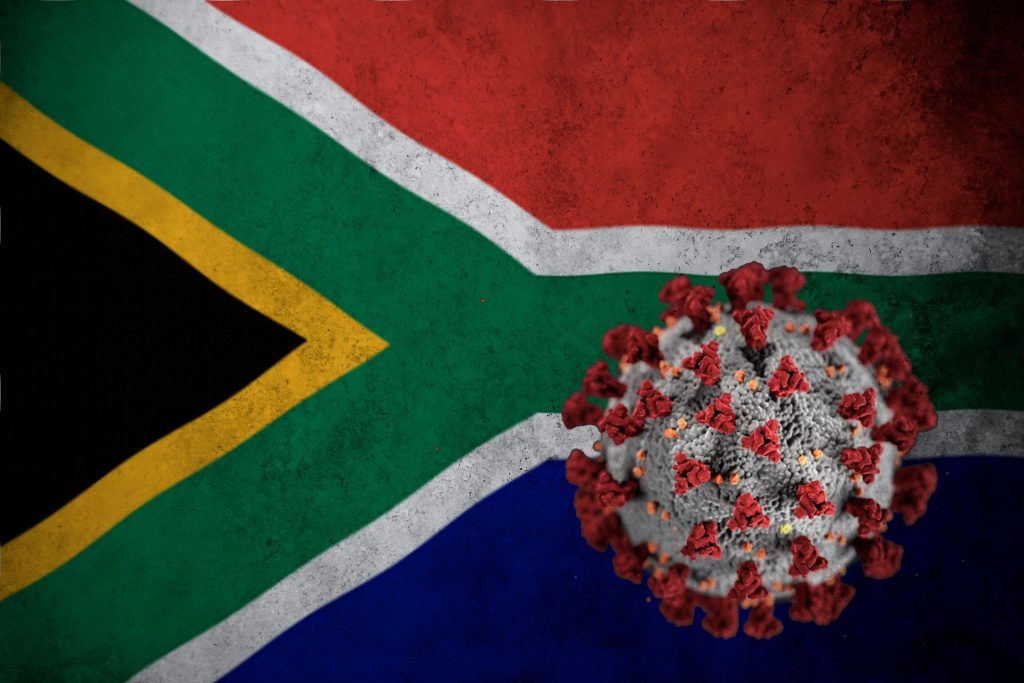
Image by Quicknews

The National Institute for Communicable Diseases (NICD), yesterday confirmed that a new COVID variant, B.1.1.529, has been detected in South Africa. Initially detected in Botswana, 22 cases of variant B.1.1.529 have been recorded in the country following genomic sequencing. More cases are being confirmed as sequencing results come out. 

Detected cases and positivity rates are increasing quickly, particularly in Gauteng, North West and Limpopo. The UK government has acted rapidly to temporarily suspend all inbound flights from South Africa and neighbouring countries, and impose quarantines for recent arrivals.

“It is not surprising that a new variant has been detected in South Africa,” commented Prof Adrian Puren, NICD Acting Executive Director, adding that, “Although the data are limited, our experts are working overtime with all the established surveillance systems to understand the new variant and what the potential implications could be. Developments are occurring at a rapid pace and the public has our assurance that we will keep them up to date.”

‘Warp speed’ effort to track and understand variant
Dr Michelle Groome, Head of the Division of Public Health Surveillance and Response at the NICD said that provincial health authorities remain on high alert and are prioritising the sequencing of COVID positive samples.  A top priority is to track the variant more closely as it spreads: it was first identified in Botswana this month and has turned up in travellers to Hong Kong from South Africa. Scientists are also trying to determine the variant’s properties such as vaccine evasion and disease severity.

“We’re flying at warp speed,” said Penny Moore, Wits University virologist, whose lab is gauging the variant’s immunity evasion ability. While there are anecdotal reports of reinfections and cases in vaccinated individuals, “at this stage it’s too early to tell anything,” Moore cautioned.

“There’s a lot we don’t understand about this variant,” Richard Lessells, an infectious disease physician at the University of KwaZulu-Natal, said at a press briefing organised by South Africa’s health department on 25 November. “The mutation profile gives us concern, but now we need to do the work to understand the significance of this variant and what it means for the response to the pandemic.”

The variant’s apparent sharp rise in Gauteng is cause for alarm. Cases increased rapidly in the province in November, particularly in schools and among young people, according to Lessells. Genome sequencing and other genetic analysis found that the B.1.1.529 variant was responsible for all of 77 of the virus samples they analysed from Gauteng, collected between 12 and 20 November. Analysis of hundreds more samples are in the works. A previous variant, C.1.2, appeared in South Africa and had concerning mutations, but ultimately failed to replace Delta over the winter.

Fortunately, the variant has a spike mutation easily detected by fast genotyping tests as opposed to genome sequencing, according to Lessells. Preliminary data from these tests suggest that B.1.1.529 is spreading much wider than Gauteng. “It gives us concern that this variant may already be circulating quite widely in the country,” Lessells said.

Are vaccines effective against it?
As happened with the Beta variant, a similar effort is starting to study B.1.1.529. Moore’s team, which provided some of the initial data on Beta’s immunity-dodging, has begun work on B.1.1.529. They plan to test the virus’s ability to evade infection-blocking antibodies, as well as other immune responses. The variant harbours a high number of mutations in regions of the spike protein that antibodies recognise, potentially dampening their potency.

“Many mutations we know are problematic, but many more look like they are likely contributing to further evasion,” said Moore. There are even hints from computer modelling that B.1.1.529 could evade immunity conferred by T cells, Moore added. Her team hopes to have its first results in two weeks.

“A burning question is does it reduce vaccine effectiveness, because it has so many changes,” said Aris Katzourakis, who studies virus evolution at the University of Oxford, UK.

Researchers in South Africa will also study the disease severity of B.1.1.529, Lessells said, which is “the really key question”.

Sources: NICD, Nature

South Africa Faces Vaccine Glut as Uptake Slows

Photo by Mat Napo on Unsplash

South Africa has asked Johnson & Johnson and Pfizer to delay delivery of COVID vaccines as it has too much stock now, health ministry officials said, as vaccine hesitancy continues to slow the immunisation campaign.

About 35% of South Africans are fully vaccinated, still only half the government’s target of 70% by year end. In the past 15 days, an average of 106 000 doses a day have been administered. At the beginning of the year, the programme had been beset by a lack of doses for a wide range of reasons, from AstraZeneca’s ineffectiveness against the Beta variant to overseas production delays. 

Deputy director-general of the Health Department, Nicholas Crisp, told Reuters that South Africa had 16.8 million doses in stock and said that deliveries had been deferred.

A spokesman for the Health Ministry said: “We have 158 days’ stock in the country at current use. We have deferred some deliveries.”

Stavros Nicolaou, chief executive of Aspen Pharmacare, which is packaging 25 million doses a month of J&J vaccines in South Africa, said most of the vaccines bound for South Africa would now be diverted to the rest of Africa, and deliveries would likely be deferred until the first quarter of next year.

A Pfizer spokesperson said: “We remain adaptable to individual country’s vaccine requirements whilst continuing to meet our quarterly commitments as per the South Africa supply agreement.”

The government has been trying to boost the rate of daily administered doses, such as with R100 ‘Vooma vouchers’ for registering to vaccinate, but even these have failed to sufficiently stoke uptake.

“There is a fair amount of apathy and hesitancy,” said Wits University’s Professor Shabir Madhi.

On Twitter, he further suggested using the excess stock for booster shots, which would “provide all single dose JJ adult recipients a JJ or Pfizer boost, and  those > 65 or immunosuppressive conditions an additional Pfizer dose if received 2 doses > 5 months ago.” 

Source: U.S. News

NICD Issues COVID Increase Warning

Image by Quicknews

Over the past week, an increase in the 7-day moving average for new COVID cases and the percentage testing positive in Gauteng has been observed by the National Institute for Communicable Diseases (NICD), particularly in Tshwane amongst 10–29 year olds.

Additionally, the NICD has recently identified a cluster amongst the 20–44 age group at an institute of higher education in Tshwane. “We are monitoring these trends to see if these increases persist,” comments NICD Acting Executive Director, Prof Adrian Puren. He continued, “Localised increases in case numbers (clusters) are not unexpected, however, it is hard to say whether the increases indicate the start of a widespread resurgence.”

The emergence of new SARS-CoV-2 variants to a large extent drove previous waves: Beta in the second wave and Delta in the third wave. “Genomic sequencing in South Africa has, to date, not yet detected the emergence of any new variants which are making up an increasing proportion of the sequences,” Dr Puren added. Molecular sequencing has some inherent delays in processing, due to transport of samples and the time taken to process them. In spite of any possible new variants emerging in the future, the importance of non-pharmaceutical interventions remains unchanged and individuals are encouraged to wear masks, practice hand hygiene, maintain social distancing and to gather in well ventilated spaces.

At present the National Department of Health reports that 41% of adults in South Africa have received at least one dose of a COVID vaccine, with 35% fully vaccinated. “It is difficult to predict the magnitude and timing of a potential COVID resurgence, however, we implore the unvaccinated to get the COVID vaccine, especially the elderly and those with comorbidities,” urged Dr Michelle Groome, Head of the Division of Public Health Surveillance and Response. She added that vaccination and prior infection confer good protection against developing severe disease, and while there might be an increase in future case numbers, the number of hospitalisations and deaths are expected to be less severe compared to prior waves.

“As the endemic endures, I would like to reassure the public that the NICD continues to acutely monitor trends in case numbers, positivity rates and hospitalisations,” Dr Puren concluded.

Source: NICD

A Smaller Fourth Wave Predicted for South Africa as Flu Cases Spike

Image by Quicknews

A fourth wave of infections is likely for South Africa but its impact probably won’t be as severe as during earlier surges, as shown by new modelling, according to BusinessTech.

Factoring in sero-prevalence surveys and other data, it appears that an estimated 60% to 70% of the population has already contracted COVID, which along with vaccinations will provide protection from severe disease, the South African COVID-19 Modelling Consortium said in an online presentation on Wednesday.

Even in its worst-case scenario, deaths and hospitalisations during a fourth wave were projected to be substantially lower than during previous surges.

Though current caseload for the country is “incredibly low”, it is still “very hard to commit to say South Africa is over the worst” of the COVID pandemic, said Harry Moultrie, a senior epidemiologist at the National Institute for Communicable Diseases, which coordinated the modelling.

“It’s going to be a bumpy ride,” he said. “We don’t know where this virus is going to take us. We will still be seeing hospital admissions and deaths related to Covid for years to come.”

South Africa;s seven-day rolling average of new infections has fallen below 300, much reduced from a third-wave peak which hit nearly 20 000 in July.

To date, South Africa has had 2.93 million confirmed cases of COVID, with 89 504 deaths, although excess death numbers indicate the true toll may be much higher. About 34% of the nation’s 39.8 million adults have been fully vaccinated.

While some countries in the northern hemisphere such as Germany are seeing severe fourth and even fifth waves of infection driven by the spread of the delta variant, that’s not a good indicator South Africa will follow a similar path because the strain has already spread widely in the country, explained Gesine Meyer-Rath, a member of the modelling consortium.
“We have paid in a way with high deaths and a lot of destruction” during previous waves, Meyer-Rath said. “We don’t think we will have a super-fast case increase again” unless a highly transmissible new variant emerges, she said.

While the outlook for the fourth wave is brighter, the past few weeks has seen a sharp rise of influenza cases, the National Institute for Communicable Diseases (NICD) reported.

A high number of cases had been seen from the beginning of the month, including influenza-like illness and pneumonia hospitalised cases at surveillance sentinel sites.

The NICD added that there had been clusters of influenza cases reported in schools and workplaces.

The NICD’s Cheryl Cohen said: “The increase in influenza this summer, which is not the typical time for the influenza season in South Africa, is likely the result of the relaxation of non-pharmaceutical interventions to control COVID combined with other factors such as reduced immunity because flu has not circulated since 2020 and 2021.”

Sources: Eyewitness News; BusinessTech

NHI Implementation on the Financial Rocks – For Now

Photo by Michael Longmire on Unsplash

South Africa’s National Health Insurance (NHI) implementation continues to flounder, as the National Treasury notes its expenditure will not be a significant cost in the medium term. This scheme, which seeks to address the country’s huge gulf in healthcare inequality, has still made barely any progress since its inception over a decade ago.

In its Medium Term Budget Policy Statement published on Thursday (MTBPS), the Treasury said that the national health insurance policy was estimated to cost R40 billion per year in additional funding in the first five years, and perhaps considerably more over time. Therefore, it dismissed the possibility of any substantial work on it, saying that presently, “there is insufficient capacity in the health sector to work substantively on national health insurance. The national health insurance indirect grant has been underspent, the National Health Insurance Fund has not yet been established, and the National Health Insurance Bill still needs to be passed by Parliament.

“It is therefore unlikely that national health insurance will be a significant cost pressure in the medium term,” it said.

While the Department of Health has time and again reiterated its commitment to the NHI system, several studies highlight the system’s deep unpopularity among healthcare professionals. 

“To fund this, we need taxpayers,” said senior researcher Morné Malan at Solidarity Research Institute, when former Health Minister Dr Zweli Mkhize tabled the NHI Bill in Parliament in August 2019.

“To be a taxpayer you must be employed… only 12% of South Africans pay tax.”

In August 2021, trade union Solidarity published a report drawing on three surveys from 2018 to 2021, with 20.8% of respondents already preparing to leave.

Across the studies, the overarching response from healthcare professionals is one of uncertainty and mistrust around the NHI, with general sentiment towards the system being overwhelmingly negative.

“Almost all the respondents have serious concerns regarding the state’s ability to manage and administer the NHI,” Solidarity said. “The total administration and management of funds and decision-making will be in the hands of the state.

“Most are seriously concerned about the fact that the state can determine and enforce tariffs, place of work, type of diagnostic tests and type of medication and treatment.”

The opinions of those surveyed are likely shaped by the observed mismanagement and maladministration at state institutions such as Eskom, Solidarity noted. The NHI will be considerably larger and more complicated, and will have to manage and execute many contracts, it said.

Source: Businesstech

The Need for an African Genetic Library

Source: Mart Production on Pexels

Earlier this year, UCT professor Ambroise Wonkam published the Three Million African Genomes (3MAG) project in Nature, which he said started with a “crazy idea”. Now, it looks like his vision is starting to take shape.

The idea of creating a huge library of genetic information about the population of Africa emerged from his work on how genetic mutations among Africans contribute to conditions like sickle-cell disease and hearing impairments.

African genes contain great genetic variation, more than that seen outside of Africa. As he explained, “We are all African but only a small fraction of Africans moved out of Africa about 20–40 000 years ago and settled in Europe and in Asia.”

Another concern for Prof Wonkam is equity, saying: “Too little of the knowledge and applications from genomics have benefited the global south because of inequalities in health-care systems, a small local research workforce and lack of funding.”

Thus far only about 2% of genomes mapped are African, a good proportion of which are African American. This stes from a lack of prioritising funding, policies and training infrastructure, he says, but it also means the understanding of genetic medicine as a whole is lopsided. By studying African genomes, injustics can be corrected, such as finding that genetic risk profiles based on Europeans could be misleading for those of African descent.

To address these disparities, Prof Wonkam and other scientists are speaking to governments, companies and professional bodies across Africa and internationally, in order to build up capacity over the next decade to make the vision a reality.

He expects three million is the number needed to accurately map genetic variations across Africa. The project will take a decade, he says, costing around $450m per year, with industry already showing interest. 

Biotech firms welcome prospects of new data
The Centre for Proteomic and Genomic Research (CPGR) in Cape Town works with biotech firm Artisan Biomed on a variety of diagnostic tests. Gaps in the applicability of genetic data to the local population are a challenge for the firm, it said.

A genetic mutation in someone could be found but it would be uncertain if that variation is associated with a disease, especially as a marker for that particular population.

“The more information you have at that level, the better the diagnosis, treatment and eventually care can be for any individual, regardless of your ethnicity,” said Dr Lindsay Petersen, the company’s chief operations officer.

Artisan Biomed says the data it collects feeds back into CPGR’s research – allowing them to design a better diagnostic toolkit that is better suited to African populations, for instance.

Dr Judith Hornby Cuff said that the 3MAG project would help streamline processes and improve research, and one day could provide cheaper, more effective and more accessible health care, particularly in the strained South African system.

Prof Wonkam acknowledged that while the costs are huge, the project will “improve capacity in a whole range of biomedical disciplines that will equip Africa to tackle public-health challenges more equitably”.

“We have to be ambitious when we are in Africa. You have so many challenges you cannot see small, you have to see big – and really big,” he said.

Source: BBC News

Former Health Minister Mkhize Hits Back at SIU

Photo by Bill Oxford on Unsplash

An impending legal battle is on the horizon between former Health Minister Dr Zweli Mkhize, the Special Investigating Unit (SIU) and President Cyril Ramaphosa over the government’s Digital Vibes scandal. Dr Mkhize has accused both of having a predetermined conclusion about his alleged involvement in the embattled government contractor.

Dr Mkhize has approached the North Gauteng Court to review and set aside findings and recommendations made against him by the SIU. He has also sought to declare the conduct of the SIU unlawful and unconstitutional. This comes after the SIU investigated alleged irregularities in a tender contract awarded by the national Department of Health to Digital Vibes.

In SIU supplementary documents dated September 30 and filed in Pretoria, the SIU claimed that Dr Mkhize had directly benefited from Digital Vibes transactions as the company paid for electrical repair work at his homes, and also that Dr Mkhize’s family and some of his close associates benefited from the tender and another contract worth R150 million.

SIU spokesperson Kaizer Kganyago confirmed receipt of 800 pages of court documents on Monday, and stated they were ready to oppose them in court.

Dr Mkhize went through some of the SIU’s key findings. alleging that they were markedly different from those put to him during its interrogation.

Dr Mkhize claims he did not derive any personal benefit from Digital Vibes or persons associated with it, and that the SIU failed to address his version of events and withheld evidence he provided to it. Furthermore, he claims he was “ambushed” during questioning as he had no advance warning of the allegations made. He claims some of the key findings by the SIU, in its referral to President Cyril Ramaphosa, were markedly different from those put to him during its interrogation, saying  the SIU failed to disclose allegations made against him by his subordinate, the former Health Department DG, Dr Sandile Buthelezi, on which the findings were drawn.
Mkhize further said that had his submissions and evidence been taken into account by the SIU, the organisation would have come to a different conclusion regarding his alleged involvement in the appointment of Digital Vibes.

Ramaphosa’s spokesperson, Tyrone Seale, said that the Presidency was aware of the matter, but had not been served with papers.

Source: IOL

Wits Opens Advanced Surgical Skills Lab

Photo by Clodagh da Paixao on Unsplash

To help address the critical shortage of expert medical specialists in the country, including surgeons, Wits University opened the Wits Advanced Surgical Skills Lab. It has been estimated that the country needs double the number of surgeons to meet its needs, a situation worsened by losing many surgical experts to the competitive overseas market due to the lack of sufficient highly specialised facilities, infrastructure, and advanced academic training programmes.

“Wits trains more doctors, surgeons, specialists and sub-specialists than any other university in southern Africa. The new R22-million Wits Advanced Surgical Skills Lab will help to enhance the training of surgeons, across disciplines, in a state-of-the-art environment, with the best equipment available,” said Professor Damon Bizos, Head of Wits Surgical Gastroenterology, and the Clinical Head of Surgery at the Wits Donald Gordon Medical Centre. “We need to replenish these specialised skills and replicate them in adequate measure in order to deliver essential services to South Africans and Africans.”

Located on the ninth floor of the Faculty of Health Sciences building in Parktown, the Wits Advanced Surgical Skills Lab officially opened on Tuesday, 12 October 2021. The state-of-the-art facility is designed in line with international best standards. along with teaching facilities that make the Wits surgical training programme one of the best in the world.

“If we fail to replenish the pool of surgeons in South Africa, both the training of all South African doctors and the delivery of healthcare for all will be compromised. The loss of these skills will result in the loss of services in both the private and public sectors,” said Professor Zeblon Vilakazi, Wits Vice-Chancellor and Principal. “South Africa needs to retain highly skilled and specialised surgeons. By creating opportunities for doctors to undergo highly specialised training locally, rather than abroad, the likelihood of losing these doctors to other countries is lessened.”

The Wits Advanced Surgical Skills Lab will be able to provide the interdisciplinary training needs of surgical disciplines including general surgery; orthopaedics; gynaecology; ear, nose and throat; cardiothoracic; urology; maxillofacial; ophthalmologic; neuro; and plastic surgery. It will also include the training of specialists, doctors, nurses and other allied health practitioners.

“The basic and intermediate courses will help inculcate basic surgical competence and skills development, whilst advanced courses will ensure that experienced practitioners remain at the forefront of advances in the field,” added Prof Bizos. “We will offer access to in-house training as well as industry-sponsored surgical training courses and symposia. Train-the-trainer programmes and research into skills training will also be integral.”

The Wits Advanced Surgical Skills Laboratory boasts a large ‘wet lab’ with eight stations; laparoscopic towers and endoscopy (upper endoscopy and colonoscopy); has facilities available for training on cadavers; lead-lined walls to accommodate imaging; a new lecture room for 35 participants; and full audiovisual and videoconferencing facilities.

“Access to safe, high-quality surgery care remains an ongoing challenge in South Africa and beyond. There is a well-defined unmet need, and the training of surgeons and surgical care providers is an essential component of the strategy to improve surgical care and address the unmet need. Modern day approaches to training require that we must address both the technical competency and non-technical skills of the surgeon. This must be achieved in a standardised and measurable way. To do so has meant that we, as the trainers of the next generation of practitioners, must embrace new technologies and training opportunities,” said Professor Martin Smith, the Head of the Department of Surgery in the Faculty of Health Sciences at Wits University. “We are very grateful that through the support of the University and the contributions of a number of donors we have been able to establish a facility to enhance and improve this training.”

Source: Wits University

Gauteng Vaccination Goals Under Threat

Image by Quicknews

Gauteng Premier David Makhura has stated that the province is not vaccinating enough people, which he acknowledged jeopardises its ambitious plans of having 70% of the population vaccinated by year end.

In a media briefing on Monday regarding the province’s vaccination rollout, he revealed that of Sunday, 5.3 million vaccines have been administered. More than 2.6 million people in Gauteng have been fully vaccinated. Gauteng’s infection rate has stabilised, with the number of active cases having fallen to approximately 1000. 

The Premier said that as things currently stand, there are still 4.4 million people in Gauteng that have to be vaccinated by the end of December. Makhura said that while they are still focussed on the target, it is becoming difficult to achieve, given the low numbers of people coming in for vaccinations.

“We are not retreating on our target of 70%, but the idea that we will meet 70% by mid-December is becoming a target that is elusive. The vaccination rate per day in Gauteng, on average during the week we are just between 52 and 58 000. We have fallen below the mid 60 000 daily vaccination rate. In September, we were doing extremely well. We were getting around 65-75 000.”

Based on last week’s total of 313 790 vaccinations, with 11 weeks in the year that would mean only about 3.5 million vaccinations administered – let alone persons fully vaccinated with a second dose. Concerns had been voiced at the end of September about flagging vaccination rates in South Africa as a whole.

Makhura also highlighted the low turnout of people in the province’s townships.

“Our townships are lagging behind. The substantial vaccinations are happening in more suburban areas, and the townships are lagging behind. Those townships in the south, Orange Farm and Palestine, we have the lowest number of vaccinations in the south of Johannesburg, that’s where we have 11% vaccination in terms of just single doses,” he said. 

Professor Bruce Mellado, of the Gauteng Provincial Command Council, said that, there was still a need to be cautious, especially with big events on the horizon, such as the municipal elections, saying:

“While the situation in the Gauteng Province remains stable and low risk, the risk of a fourth wave is very, very high. In fact, we predict that the fourth wave will hit sometime between November and January as we expect a number of super-spreader events to follow in a row. That’s something we have to have in mind.”

“We should not be confused or misled by the fact that we are currently in a situation of low risk, but that can change quite rapidly,” Prof Mellado cautioned.

Source: The South African

Digital COVID Vaccination Certificates for South Africa are Here

Photo by Priscilla Du Preez on Unsplash

People vaccinated in South Africa can now download their digital COVID vaccination certificates. The service officially went live on Friday, and was announced by the Minister of Health, Dr Joe Phaahla.

Addressing a media briefing, Dr Phaahla said the certificate could be used for travel and tourism, sport and recreation events, music festivals, shops that are providing discounts and prizes for people who are vaccinated.

“Our role is to make this tool available to the nation to provide people with the proof of vaccination so they can have access to the many amenities and activities that some have been missing…

“The vaccination certificate was introduced over the last three days while it was in the testing phase but some people have been able to upload it to their cell phones.

“We are launching the first phase of the certificate – there’s going to be a lot more improvements in the next two months [with regards to] the safety and security of the certificate but it is ready for use,” said the Minister.

The certificate was developed by the Department of Health and the Council for Scientific and Industrial Research (CSIR) and can be found at https://vaccine.certificate.health.gov.za.

The project manager for the National Electronic Vaccination Data System (EVDS), Milani Wolmarans, said the certificate can be downloaded through a web portal by anyone who has received the COVID vaccine in South Africa.

“You’ll need your vaccination code from the SMS you received after your vaccination, South African ID or Foreign Passport number or Asylum or Refugee number. This should be the same document that you presented when you got vaccinated and the cell phone you included on your registration,” she said.

Vaccination codes will be sent via SMS over the next four day, and also be accessed from the COVID call centre on 0800 029 999.

“With regards to the recognition of the digital certificate, most countries around the globe would accept the certificate. It is, however, dependent on the policy of the country that you would be visiting and also what their verification requirements would be.

“Towards the end of the next two months, there will be an app that you can use to download the certificate,” Wolmarans said.

The Minister also welcomed South Africa’s removal from the UK’s red list, which will take effect on Monday 11 October.

“We are also pleased with the UK government announcement that it is taking our country from the red list – meaning more easy travel between people from South Africa and the UK. The UK will be recognising the certificate that we are launching,” Dr Phaahla said.

Importantly, the UK will also now recognise South African COVID vaccination certificates.

Source: SA News.Gov