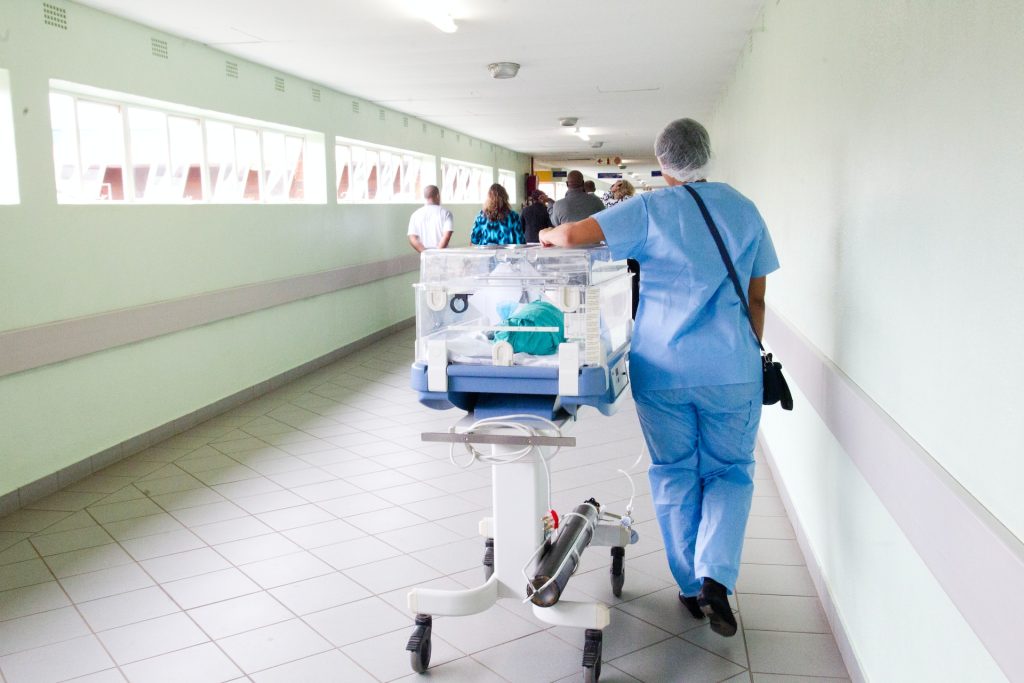
The Department of Health is scrambling to avoid a stand-off with nurses who have threatened to work in their own clothes if a dispute over the provision of uniforms is not resolved.
Since 2005, nurses had received an annual allowance to buy their uniforms. But this ended on 31 March this year, after a new agreement was signed in the Public Health and Social Development Sectoral Bargaining Council in terms of which they would get uniforms instead.
As a result, nurses did not get the usual allowance in April – R2600 a year, according to Spokesperson for the Democratic Nursing Association of SA (DENOSA) Sibongiseni Delihlazo.
Instead, they were supposed to be provided with uniforms by 1 October 2023. The agreement stated that in the first year, government must provide nurses with four sets of uniforms, one pair of shoes, and one jersey. In the second year, government must provide three sets of uniforms, one belt, and one jacket.
The plan was that the procurement process would be centralised. But at another bargaining council meeting, in June 2023, the health department said it would be difficult to provide the uniforms on time.
Then on 12 July, Sandile Buthelezi, director-general for the DOH, issued a circular to all provincial health departments notifying them that the uniforms would be provided from January 2024 to January 2025.
The circular stated that the DOH would use a decentralised approach to providing uniforms by using provincial tenders.
“Provincial heads are responsible for participating and facilitating in tender processes through the bid specification in terms of colour, fabric composition and garment, development, review of the policy and monitoring and evaluation,” Buthelezi wrote.
Until January 2026, the circular said, nurses would be expected to wear the new uniform from Monday to Thursday and wear their old uniform from Friday to Sunday. From January 2026, when they would have both years’ issue, nurses would be expected to wear the new uniforms every day.
DENOSA responded to this a week later, and said the department’s circular went against the bargaining agreement.
Delihlazo said they proposed that if the department is unable to supply the uniform by 1 October, they must pay nurses an allowance as previously.
If the department failed to provide uniforms or pay an allowance, DENOSA said, its 84 000 members would embark on an indefinite protest action by wearing their own clothes to work from 1 October.
Delihlazo said the yearly allowance did not cover the cost of a full uniform. “Their uniforms are tearing and the colour is fading. So how can you expect nurses to wear uniforms if you don’t pay them a uniform allowance?”
He said the tender process meant the colour of the nurses’ uniforms and the quality of the fabrics might differ from one province to the next. The process also “opens a window of opportunity for corruption,” Delihlazo said. “Money may be given for uniforms but the tender process is porous.”.
Then, at a last-minute meeting of the bargaining council last Thursday, the department proposed to put on hold the supply of uniforms until 2024, according to a DENOSA statement. Meanwhile the health department would pay nurses an allowance of R3,153 by 30 November.
DENOSA said the agreement should be signed by the end of the week. If not, the union said, nurses would work in their own clothes.
The health department did not respond to GroundUp’s questions.
By Donald McMillan, Managing Director at Allmed Healthcare Professionals
Donald McMillan
The caregiving workforce plays a crucial role in our society, but their efforts often go unnoticed. These individuals, known as carers, selflessly care for those in need due to factors such as illness, age, or frailty. Unfortunately, they face numerous challenges that can take a toll on their well-being. It’s important to raise awareness of their struggles and provide them with the necessary support. To bring these issues to the fore, communities are coming together between the 2nd – 6th of October 2023 to commemorate Carers Week.
Caregivers have an enormous responsibility that often goes unnoticed by society. The emotional strain that comes with caregiving can have a direct impact on their mental health and often leads to depression. They often devote their time and interests to the role of voluntary caregivers and face many challenges due to the lack of recognition and support from their professional peers and society in general.
Initiatives in place
In response to these issues, governmental efforts have been put forth to assist both caregivers and non-governmental organisations with the aim of alleviating some of the financial burdens associated with their work. A noteworthy instance of this support is exemplified in the community home-based care program run by The Association for the Aged (TAFTA), which secures government funding to informal caregivers. This initiative and others like it, combined with the Carer’s Grant are part of positive strides being made within this space. However, further support is still needed to ensure that caregivers receive adequate support as they strive to provide high-quality care to their patients.
The government alone cannot be the only one providing support to carers as society and the private sector each have to role to play in alleviating the burden that sits on the shoulders of carers, particularly within impoverished and rural communities. The logical progression is for the government and all stakeholders to channel their resources into a comprehensive framework that encompasses financial aid, training, and support services for carers. Additionally, the pursuit of affordable and inventive caregiving solutions cannot be neglected.
Rising to meet growing demands
As South Africa’s population ages and chronic illnesses surge, the demand for caregiving services has swelled to unprecedented levels. To adequately address these escalating requirements, several measures must be adopted. Establishing community-based networks of support can furnish practical assistance and emotional solace. Carers must also receive enhanced training and upskilling to hone their capabilities, all the while being granted the acknowledgement and admiration they rightfully deserve.
It is imperative for entities that offer caregiving employment to invest in training to equip carers with the tools required for high-quality care provision. The integration of emotional counselling facilitated by clinical experts constitutes another crucial component of the caregivers’ support structure.
Strengthening the system
The symbiotic relationship between government bodies, stakeholders, and relevant associations is pivotal in reshaping the caregiving landscape. The collaboration between the Department of Social Development (DSD) and the South African Association of Homes for the aged- (SAAHA), exemplified by their joint registration of care workers both formal and informal, signifies a significant step toward accountability and much-needed assistance. The synergy of corporate involvement and government funding has the potential to revolutionise the lives of caregivers in both formal and informal capacities.
Upskilling the informal carer workforce stands as a cornerstone for improving the quality of caregiving. Creating and running specialised courses tailored for caregivers is essential, as it not only enriches their knowledge and competencies but also bolsters their confidence, employability, and job satisfaction. These comprehensive courses should span various aspects, from personal care to dementia management, empowering caregivers to confront their daily challenges head-on.
Galvanising society
As mentioned, support for carers should transcend the boundaries of governmental programs and corporate ventures. The broader society has a pivotal role in elevating the status of carers. Displaying empathy, extending practical aid, advocating for improved resources, and propagating awareness about the struggles of caregivers all fall within our capability as members of the public. Initiatives rooted in communities, campaigns, and programs can collectively reshape perceptions and extend tangible support.
Carers are one of the important pillars on which our society relies, and more need for recognition of their contributions and tribulations must be given. By advocating for increased support, enhanced financial backing, and inventive solutions, we can uplift carers and ensure their endeavours do not remain obscured. With the collective resolve of government bodies, stakeholders, businesses, and the populace, we can pave the path to a brighter, more nurturing future for carers and their cherished ones.
Netcare well on track with environmental strategy targets
Photo by Sungrow Emea on Unsplash
In a tangible step towards further reducing its carbon footprint, the Netcare Group has successfully agreed commercial terms for a Renewable Energy (RE) Supply Agreement with independent clean energy solutions provider NOA Group Trading (NOA).
Netcare chief executive officer Dr Richard Friedland noted that the development is a significant milestone in realising the Group’s environmental sustainability strategy, which has made considerable strides since its implementation in 2013.
“Improvement of our energy efficiency initiatives remains a key focus area of this strategy. Netcare has also committed to procuring 100% of its purchased electrical energy from renewable energy sources by 2030, supporting the Race to Zero global campaign with targets that exceed the requirements of the Science Based Target initiative (SBTi) aimed at limiting global warming.
“This transaction represents Phase 1 of achieving this aim and includes six of our facilities where RE will be wheeled through the electricity grid from a combination of wind and solar farms, covering up to 100% of energy consumption at these facilities. This represents approximately 11% of the Group’s total energy consumption which is currently being supplied by Eskom’s predominantly coal fired power stations.
“In combination with other initiatives already implemented under Netcare’s sustainability programme, this transaction will increase the proportion of Netcare’s total energy consumption that is derived from RE sources to around 26%,” he says.
Dr Friedland noted that Netcare’s management teams are actively working towards finding viable solutions to supply RE to the remaining municipal-connected sites in the Group while continuing to build on existing renewable energy initiatives. The Group’s environmental sustainability programme also continues to demonstrate an impressive return on investment to date, illustrating the commercial opportunities in environmentally conscious engineering.
According to Karel Cornelissen, chief executive officer of NOA Group, renewable energy will be wheeled through the national grid to the six designated Netcare facilities via the existing Eskom distribution transmission network and delivery of renewable energy to these facilities is expected to commence by the first quarter of 2026. “The agreement represents a significant step towards a clean-energy future by one of South Africa’s healthcare industry leaders, and we are pleased to partner with Netcare on this crucial advancement,” he says.
Netcare joined the Race to Zero global campaign in 2021 and was the first healthcare institution in Africa to do so. The campaign strives to rally leadership and support from businesses, cities, regions and investors for a healthy, resilient, zero carbon recovery that prevents future threats, creates jobs, and unlocks inclusive, sustainable growth.
“The devastation of climate change to the environment and among communities is already resulting in enormous hardship and tragedy not only in South Africa but around the world. We cannot sit idly by while this happens. Urgent action must be taken by implementing innovative solutions,” says Dr Friedland.
“During the past decade, Netcare has actively been engaged in several planned energy, waste and water management initiatives. This meaningful transaction is yet another step towards implementing appropriate green solutions while contributing towards a healthier environment for the people of South Africa in the decades to come and beyond,” he concludes.
As of the 1st of September 2023, the Hospice Palliative Care Association (HPCA) is known as the Association of Palliative Care Centres (APCC).
“This rebranding is not just a visual change,” says Ewa Skowronska, CEO of the APCC. “It is an important message to all medical professionals and the public that our members (many of whom still refer to themselves as hospices) offer quality, specialised and expert palliative care services. Too many people equate hospice with end-of-life only and many medical professionals refer very late. This leads to thousands of patients, and their loved ones, missing out on the holistic support that palliative care provides – support that, ideally, should be from diagnosis of a life-threatening illness and not solely in the last few days of life.”
The rebrand includes a new logo element that reflects that palliative care can be provided alongside curative treatments and into end-of-life care, including bereavement support (if needed).
“Our members adhere to the Standards for Palliative Healthcare Services, 4th edition, 2020 approved by the Council for Health Service Accreditation of South Africa (COHSASA) and the International Society for Quality in Health Care (ISQua),” says Leigh Meinert, Advocacy and Operations Manager of APCC. “This is important as sometimes there is a perception that our members are only servicing patients who do not have private healthcare support and might not be at the same level as private organisations. In reality, they have decades of palliative care experience, and compliance with these Standards ensures an ongoing level of excellence.”
As much as 90% of APCC member’s services are provided to the patient in the comfort of their own home. The patient’s loved ones are also supported by way of an interdisciplinary team. Such a team typically consists of a medical doctor, nurse, social worker, and home-based carers who can work alongside the patient’s healthcare professional and support quality of life.
Palliative care covers conditions such as HIV/AIDS, drug-resistant TB, chronic respiratory diseases, cardiovascular and neuromuscular diseases, MND and more. “Both adults and children are catered for,” says Meinert. “While patients can move in and out of a palliative care service, they may remain beneficiaries of the services for as long as they (or their loved ones) need or wish to. Patients may be discharged from the service if they are doing well and able to function independently. This is always negotiated between the patient, family, and members of the care team. We encourage patients to engage with an APCC member from the point of diagnosis as this helps to dispel fears and provides insight into the holistic services that can be offered. We believe that all patients have benefitted from an improved quality of life through the supportive care received from APCC members.”
“APCC has a cloud-based patient care monitoring, evaluation and reporting system able to report in detail on interventions given to any patient,” says Skowronska. “Our members are comfortable working alongside the primary clinician or specialist. They can provide a supportive extension of care to the patient and their loved ones and, in most cases, the APCC members inter-disciplinary teams collaborate and work alongside the referring doctors who are treating the patient. They also provide supportive care to the patient’s loved ones. This may include advanced healthcare planning, as well as psychosocial and spiritual support.”
“Our palliative care definition says it all,” concludes Meinert. “Palliative care is the physical, psychological, social and spiritual care provided by an interdisciplinary team of experts to anyone with a life-threatening illness and their loved ones. Care is offered from the point of diagnosis and extends to bereavement support if needed. Over 90% of the care that APCC members provide is home-based with a focus on promoting quality of life.
We sincerely hope that this rebranding results in more people receiving the support that they so desperately need during some of the most difficult times in a person’s life.”
The National Treasury’s Cost Containment Letter sent to government departments instructing, among others, the freezing of posts was one of the big themes underlying talks about building South Africa’s healthcare worker capacity during the Public Health Association of South Africa’s (PHASA) conference held recently in Gqeberha.
With Finance Minister Enoch Godongwana expected to deliver the medium-term budget policy statement on 1 November, the freezing of posts will further hamstrung already strained health services, some presenters at the conference warned.
An oversight visit to TB hospitals by members of the provincial legislature (MPLs) in the Eastern Cape in the first week of September (5 to 8 September) showed just how bad the staff shortages are. The only remaining hospital in Nelson Mandela Bay dedicated to TB services, Jose Pearson Hospital in Bethelsdorp, has had staff vacancies hovering around 20% since 2019. The hospital provides dedicated TB services to the western part of the province. MPLs heard that in some other hospitals, vacancy rates are even higher, and non-filling of critical posts in some cases results in further medico-legal claims against the department, as the current staff buckles under massive patient loads.
Last year, in response to a parliamentary question, figures the health department released showed that there were 3 892 vacant healthcare worker posts in the province. In the nursing categories, there was a vacancy rate of 15.3%. For paramedics (EMS) the vacancy rate was 10.7%, medical practitioners 8.4%, and pharmacists 13.7%. By June this year, in another response relating to specialist nurses, the vacancy rate in the province had dropped to 13%.
Dr Prudence Ditlopo Senior Researcher at the University of the Witwatersrand, was presenting her research on the impact of nurse workloads and professional support on healthcare outcomes at the PHASA conference. Ditlopo said nurses already have a huge workload and issues around budget cuts impact morale. “I am sure they are asking themselves what will happen to [them] when we [they’re] already understaffed.
“This is not the first time that this monotonous cycle has been happening. Yes, we understand the economic side of it, but at the very same time, what does it say about the well-being of the nurse practice environment, the patients, and the quality of patient care? If nurses see that they are overwhelmed by the workload, they will make sure to find ways that will enable them to cope.
“Enable them to cope” means nurses will find a way that works for them. If what works for them is only seeing ten patients per day, they will do that and they will be gatekeepers for other patients who are coming to the facility. That alone will influence the quality and standard of care in primary care in South Africa,” said Ditlopo.
‘Will create more problems’
Dr Busisiwe Matiwane of the University of The Witwatersrand’s School of Public Health also weighed in on the implications of the Treasury letter.
“In the current system, health professionals have to work for the government to fulfil their community service obligations. However, it can be challenging for them to be assigned to specific hospitals when it is time for their community service. Additionally, with the government announcing a freeze on posts, many individuals who are not government-funded may be compelled to seek employment outside of the government after completing their community service,” Matiwane told delegates.
“If these posts are indeed frozen, does that mean that the government will also halt the placement of individuals who are required to complete community service? The current structure dictates that if you fail to fulfil your community service, you will not be recognised by the statutory bodies as an independent practitioner.
“The implication of this proposal by the government will create more problems, as we already face the challenge of health professionals’ placement or their community services,” she said. “The main concern is whether the posts will be frozen and what will be done. I think this concern has raised questions for many people, who wonder what it means if they are unable to complete their community service or the internship. Does it mean they cannot work?” she asked.
‘protect what is already there’
Speaking on the sidelines of the three-day conference, director of the Rural Health Advocacy Project, Russell Rensburg, said the wage agreement on a 4.5% increase for the public sector had Treasury’s back against the wall since that was not budgeted for in their February budget.
“Treasury is playing hardball and the provinces must decide what they need. The national government must also decide what they need. If they follow through on this, they won’t be able to sustain the public health system. There is concern that doctors will leave as part of cost containment measures, and you can’t run a healthcare system without healthcare workers. But we will only know the true position of the Treasury when they publish the medium-term budget policy statement,” said Rensburg.
“I believe at the moment they are just testing the market. They are saying we must have one thing, but we can’t have both, so that is the game they are playing. Our position is clear on this issue. Before any salary cuts or job freezes, we need to protect what is already there. We need to retain this year’s cohort of community service doctors, pharmacists, and nurses because these people helped us during COVID-19. Some were interns during COVID-19 and they are the core that can build the health service in the post-COVID-19 era. So, the immediate priority is to retain those posts because we don’t know if there will still be community service going forward,” said Rensburg.
‘working with what we have’
Several speakers and presenters at the PHASA conference raised concerns about the existing scarcity of healthcare workers and urged the Department of Health to take action. The experts, academics, researchers, students, non-governmental organisations, and civil society members all agree that healthcare is a fundamental human right, but that right won’t be fulfilled without healthcare workers, as there cannot be health services without workers. The government’s key policy document on human resources for health warned as far back as 2020 that the country is facing a critical shortage of healthcare workers.
Dr Krish Vallabhjee, former Chief Director of Strategy and Health Support in the Western Cape Health Department, believes that management must use whatever resources are available to achieve good results.
Vallabhjee said, “Budget cuts are a reality, so whatever we talk about here and in many of these conference sessions, we can’t be talking about wanting more and more. We need to work with what we have. How can we repurpose the people we have? Can’t we use them more effectively to achieve the same effect?” he asked.
“Managers need to work with their staff instead of just sitting in some corner and making budget cut decisions. Managers need to engage with staff to address the problem of not having enough budget. How do we work together? What are our priorities? As managers, we must listen to what people are saying on the ground. What are the doctors, nurses, and local managers saying? We must be united. [It should not be a thing that one hospital, clinic, and the district [are] fighting for their own piece. We are one department and we have this problem of a budget. How do we unite and do the best we can?”
Government will clarify
In a cabinet statement issued on 14 September, Minister in the Presidency, Khumbudzo Ntshavheni said that Finance Minister Enoch Godongwana would clarify the cost-containment letter issued on August 31.
“Cabinet appreciates the current fiscal constraints which are not unique to South Africa but have resulted in budget shortfall. Cabinet has iterated that measures to address the budget shortfall must not impact negatively on service delivery. The Minister of Finance will shortly issue guidelines clarifying the unintended misunderstanding arising from the Cost Containment Letter issued on 31 August 2023. In addition, as part of the in-year performance review of progress in implementation priorities agreed to with Ministers, the President, and Deputy President will meet with individual Ministers to ensure that fiscal management does not derail the agreed to priorities.”
Presenting its financial year-end results to investors and analysts, Discovery Group has reported profit increases of 24% across all of its opertaions. CEO Adrian Gore commented, “Discovery’s three business composites – South Africa, United Kingdom and Vitality Global – delivered excellent performances in line with the Group’s strategy and ambition.”
For the reporting period, Discovery posted an increase in normalised profit from operations, up 24% from R9 384 million to R11 661 million. Headline earnings increased by 5% to R5 490 million; normalised headline earnings increased by 32% to R7 678 million; and core new business annual premium income (API) rose 12% to R22 788 million. Embedded value increased to R98 176 million, which represented a 13.2% return on embedded value.
In a year characterised by significant macroeconomic uncertainty, Discovery continued its focus on delivering quality earnings and cashflow with a strong balance sheet; while following a clear growth strategy for each composite (SA, UK and Vitality Global). The Group invested in its proprietary Vitality Shared-value model, and intensified the focus on key initiatives while closing business areas with marginal benefits.
The Group remained financially resilient with high levels of liquidity and the financial leverage ratio (FLR) improving to 20%. Organic cash generation was robust during the year following growth in quality earnings, a significant recovery in Discovery Life’s cash generation following elevated COVID-19-related claims in the previous reporting period, and the reduction in the cost of new initiatives. The robust balance sheet and cash positions support the resumption of dividends, and the directors declared a final gross cash dividend of 110 cents per ordinary share.
Discovery’s saw excellent results for each composite. The SA Composite’s normalised operating profit increased by 22% to R9 096 million and new business by 11% to R16 818 million. Discovery Health showed strong growth across all metrics with prior investment in technology driving efficiencies and continued innovation. Discovery Life had a resilient performance with positive variances, with Group Life returning to profit. Discovery Invest generated significant growth in profit, given higher investment markets and other in-period gains. Discovery Insure delivered on its profit turnaround, following actions taken in previous periods. Discovery Bank continued with excellent progress across all metrics, as acquisition of quality clients accelerated over the year.
Normalised operating profits rose by 14% for the UK Composite and 49% for Vitality Global (US$44 million), driven by especially strong results from China.
Gore concluded, “Discovery’s growth strategy is based on the efficacy, repeatability, and scalability of our Vitality Shared-value model. It is a powerful platform from which to drive new business and enables us to pursue growth through our organic businesses and global partnerships. The Group is now focused on evolving the model into an integrated value chain with bespoke modules to drive growth and market leadership across each of the composites.”
A group of activists for food access and affordability met yesterday (Thursday 21 September 2023) to discuss the worsening food crisis for children. Convened by the Nelson Mandela Children’s Fund and the DG Murray Trust, the meeting sought to identify urgent measures to combat rising rates of severe acute malnutrition and child hunger.
The activist group includes representatives of COSATU, the South African Council of Churches, civil society groups and academics. It endorsed the proposal by the DG Murray Trust and the Grow Great Zero-Stunting Campaign for government and the food industry to contribute equally in making at least one product label of ten highly nutritious foods far more affordable to poorer households. This proposal requests food manufacturers and retailers to ‘double discount’ a list of ten best buy foods, with the amount of profit waived by industry matched by a retail subsidy by government.
“Data from the Department of Health shows that there were over 15 000 cases of severe acute malnutrition requiring hospitalisation in the 2022/3 financial year,” says Dr Linda Ncube Nkomo, CEO of the Nelson Mandela Children’s Fund. “But that is just the tip of the iceberg”, she says. “Malnutrition is the underlying cause of about one-third of all child deaths in South Africa today, this despite Section 28 of the Constitution which guarantees the right of nutrition to every child”.
The problem of acute malnutrition worsens the chronically high levels of food insecurity in South Africa, with over a quarter of children under five nutritionally stunted. Poor physical growth is just one manifestation of much deeper damage being done to the life-long wellbeing of children, not least to their brain development,” says Dr Edzani Mphaphuli, Executive Director of the Grow Great zero-stunting campaign. “If we don’t stop stunting now,” Mphaphuli continues, “we shouldn’t expect learning outcomes to improve or our economy to grow.”
In addition to the double-discounted basket of ten best buys, the group called on the food formula industry to stop extracting massive profits from the poorest mothers, whose own malnutrition makes breastfeeding difficult. Given the high cost of infant formula, desperate mothers water down the milk to make it stretch further, which means that their babies don’t get enough protein and vitamins. It also called on government to ensure that every province has an effective programme in place to identify children at high risk and to provide nutritional supplementation to children failing to thrive.
The group undertook to monitor food prices actively and to challenge the food industry to make the third of young children who live below the food poverty line their responsibility too. “We are heartened that NEDLAC has tasked a multi-sectoral committee to review the viability of proposal to double-discount ten best buy foods”, says Dr David Harrison, CEO of the DG Murray Trust. “No sector of society – not government, not labour, not civil society nor industry – should be able to say that substantive proposals to feed South Africa’s children are too difficult, without putting a better option on the table.”
Fifth-year Bachelor of Medicine and Surgery (MBChB) student Moses Malebana’s stellar academic record has paved the way for a special international elective at the University of Graz – making him the maiden recipient of this golden opportunity – and galvanising ties between the University of Cape Town’s (UCT) Department of Medicine and the Medical University of Graz (Med Uni Graz) in Austria.
Malebana will depart in November and return to UCT’s Faculty of Health Sciences in January 2024. And with just a few short weeks before he boards his flight, he said he is excited for what awaits, and plans to absorb every detail of the experience.
“I plan on becoming a giant sponge while there. I am excited and feel privileged that I’ve been selected for this opportunity. I look forward to learning all there is to learn and flying UCT’s and the Department of Medicine’s flag[s] high at Med Uni Graz,” he said.
Tough grind
But this opportunity didn’t just fall into his lap. To be considered for the elective abroad, the application and selection criteria was clear – the candidate needed to prove an unmatched academic record. Each applicant was also tasked with supplying a motivational letter that highlighted why they felt they deserved the opportunity. It’s safe to say that Malebana passed the test with flying colours.
He said he used the motivational letter to reflect and relay personal anecdotes that focused on the sacrifices that led him to study medicine at UCT, and he enjoyed documenting his story.
“I remember seeing the email and thinking that this is my opportunity to reflect on my journey and to just tell my story. It was interesting because I don’t often reflect on things. But when I started, I realised that my whole life up to this point was about making the most of the opportunities that have come my way,” he said.
First-class motivation
In his motivation, Malebana touched on the events in his life that moulded him into the man he is today. And the list is endless – walking for more than an hour to and from school every day in rural Limpopo, contending with a lack of in-school resources, and a shortage of skilled teachers were just some of the challenges he experienced. These hurdles, he added, provided the impetus he needed to give his high school education and his medical studies his all.
“All of this taught me resilience; it motivated me to work even harder to reap the rewards later in life. I worked very hard to get to UCT, and now that I’m here, I’m working even harder to attain success in my degree,” he said. “I don’t take any opportunities for granted. I’m humbled that I’ve been chosen to represent the faculty and the university in Austria,” he said.
As he prepares for his big trip, Malebana said he’s looking forward to understanding the Austrian health system and gaining some valuable insight into how medical doctors practice medicine in that country and how it compares to South Africa.
A whole new world
The elective will consist of several rotations in different areas of internal medicine and Malebana will be based at a teaching hospital affiliated to Med Uni Graz. He said he is most excited about his oncology rotations after developing a keen interest in this area of medicine.
“I have always enjoyed studying and learning more about the management of different cancers. So, I really look forward to seeing how things are done in Austria. I know each day will be filled with something new to learn, whether it’s in oncology or a different area of medicine. I’m eager to get going,” he said.
But over and above the work, Malebana said he is thrilled to have the opportunity to travel outside of South Africa’s borders for the first time, to experience diverse cultures and cuisines, gain insight into a new way of life, and build new, lasting friendships.
“It’s going to be an adventure, that’s for sure – one that I’ve already embraced with my arms wide open. I’m grateful that it has come my way,” he said.
The percentage of people living with HIV receiving a three to six-month supply of ARVs at a time in the Free State has dropped from 13% last year to 3% this year, making the province the worst performer in multi-month dispensing of ARVs in the country. This while in Mpumalanga, 64% of people living with HIV receive a three to six-month refill as per national guidelines.
This is according to the latest figures from community-led clinic monitoring group, Ritshidze. In its third Free State report, released on 30 August, the group notes several challenges faced by people living with HIV, key populations that include men who have sex with men and sex workers, among others, and other public healthcare users in the province. Among these are a lack of multi-month dispensing of ARVs and long waiting times at clinics, two factors that can make it harder to take treatment as prescribed.
The report notes that multi-month dispensing often allows people living with HIV to collect their treatment at pick-up points situated at healthcare facilities or externally in the community, making it quicker and easier to collect ARVs. Yet the monitoring data shows that 41% of people using facility pick-up points said they still have to collect files, take vitals, and see a clinician before getting their parcel, which adds to unnecessary delays. “Overall, these shortcomings contribute to slow progress towards getting everyone to start and stay on HIV treatment,” the report states.
Monitoring for the new report was done in April and May this year at 21 facilities and included interviews with 1 095 public healthcare users across four districts in the province. Of the public healthcare users interviewed, 47% (516) were people living with HIV (PLHIV) and 16% (180) were younger than 25.
The recommendations
The report stresses that multi-month dispensing of antiretroviral treatment is just one of several ways to help reduce the burden on the healthcare system, and to reduce the pressure manifesting in long waiting times, overcrowded clinics, and overworked clinic staff. Ritshidze recommends – as it did in its two previous Free State reports – that “the department extends and implements refills up to three months by end of December 2023, and six months by end of September 2024”. It is also recommended that the department, “Ensures that all people living with HIV are offered a range of repeat prescription collection strategy options”, “that facility pick-up points are one-stop very quick ART collection-only, that clinic visits are under 30 minutes and there is no need to go to the clinic registry, collect folders, and to see a clinician.
“Multi-month dispensing and repeat prescription collection strategies can simplify and adapt HIV services across the cascade in ways that both serve the needs of people living with HIV better and reduce unnecessary burdens on the health system,” the report notes.
As people living with HIV often report that healthcare workers send them to the back of the queue when they miss appointments, Ritshidze recommends that staff acknowledge and understand the importance of ART continuity, that it is normal to miss appointments, and that no person living with HIV should be sent to the back of the queue if they miss an appointment as per the welcome back campaign strategy. Ritshidze also recommends that clinics must not require transfer letters to restart or continue with ART and any reports where treatment is delayed by healthcare workers requiring a transfer letter should be urgently investigated and disciplinary action taken where appropriate.
The value of multi-month dispensing
The value of multi-month dispensing is well established. Study findings on the HIV programme in Ethiopia released in May this year, for example, stressed that multi-month dispensing of antiretroviral therapy is “an integral component of differentiated HIV service delivery for people living with HIV”. Ethiopia was the first African country to implement six-month dispensing at scale.
The benefits cited by study participants included “time and cost-savings, fewer work disruptions, reduced stigma due to fewer clinic visits, better medication adherence, and improved overall health”. The perceived health system-level benefits included “improved quality of care, decongested facilities, reduced provider workloads, and improved record-keeping”.
According to Clinical Director at the Southern African HIV Clinicians Society, Camilla Wattrus, requiring people to visit healthcare facilities monthly to collect routine medication, can place a huge strain on the available resources in these facilities.
“Multi-month dispensing for eligible, stable patients on chronic medications, including ARVs can help to alleviate some of this burden, easing up the staff’s available time towards those with acute conditions and unstable patients, says Wattrus.
She says multi-month dispensing is also one way to increase access for stable patients to their medication by reducing potential adherence barriers leading to poor health and loss of income due to transport costs and time away from work – all factors identified by Ritshidze through its monitoring. External pick-up points can also help alleviate congestion at facilities and reduce waiting times.
When asked what the Free State health department can do to improve its performance on multi-month dispensing, Wattrus says establishing clear eligibility criteria will work because not all patients may be suitable. She says that patient education is vital so that they understand the importance of adherence.
“Knowing how to take and store medication, knowing where and when to collect medication, when to return for appointments, and understanding that they can return to the facility at any time they feel unwell or in the case of an emergency is very important. Adequate supply chain management to ensure an uninterrupted supply of medication along with accurate record-keeping and communication is vital,” she says. “Pharmacists, prescribers, and other staff members involved must also be adequately trained on how to deliver multi-month dispensing.”
Wattrus says in order for the Free State to do well, there needs to be an improved supply chain management system, adequate training for all involved staff, and a well-functioning pick-up point system implemented.
The reality on the ground
However, founder of the lesbian, gay, bisexual, and transgender (LGBT) organisation, Free State Rainbow Seeds, Thabiso Chaka says the Free State can do better in expanding external pickup points. “Once a person has shown interest and is also adhering to their medication, it is a bonus to say now you don’t have to come to the facility every month and every day. You can come after every three to six months. “I believe it is a good strategy to ensure that people adhere to their treatment. The reason why the Free State is doing poorly is because there is also not enough treatment viral load literacy and this creates a serious challenge and the level of care is often compromised because facilities are congested,” says Chaka.
“As the Free State Rainbow seed, we also want to become a CCMD point where we can be able to issue three to six months because by so doing our people will be comfortable.” CCMD (Central Chronic Medicines Dispensing and Distribution) is a government programme that enables stable patients to collect chronic medicines dispensed centrally from designated pick-up points. Chaka says multi-month dispensing of ARVs “is a good approach to limit issues of defaulting because the stigma attached to HIV-positive people is still there”.
According to Judy Mokoena from the Treatment Action Campaign (TAC) in the Free State, there are many reasons why the provincial department is struggling with multi-month dispensing of ARVs.
“The first one is that most facility managers and pharmacists order medication too late. Another reason is that they do not have an actual database of people living with HIV who come to their facilities. What I have noticed is that most people in the province still receive their medication inside the facilities. As TAC, we have been emphasising the issue of giving patients a supply of three to six months, but they are failing dismally,” she says. “Every year we ask the same questions when it comes to the multi-month dispensing, but there has not been a clear answer from government.”
“ARV shortage and ARV theft also play a role and could be another reason why the government is struggling to provide three to six months’ supply,” says Mokoena. “In the past, we have had challenges of stockouts in the Free State.”
Reporting of gun crime in South Africa is wildly inaccurate, work by the South African Medical Research Council (SAMRC) suggests. This is because the official death notification form does not distinguish between gun deaths from accidents and gun deaths from homicide.
The SAMRC has called on the government to update the country’s official death notification form. In a September 2023 South African Medical Journal (SAMJ) editorial, researchers and scientists Pam Groenewald, Richard Matzopoulos, Estevão Afonso and Debbie Bradshaw, say the form does not comply with international standards. While the World Health Organisation recommends reporting manner of death on the medical certificate for cause of death, South Africa’s form does not allow this, they say.
As a result, South Africa does not have accurate information on injury statistics, says Groenewald, a specialist scientist at SAMRC.
“Given that South Africa has got a really high injury burden, this is really not acceptable,” she said.
The SAMRC has pointed out that accurate, timely mortality data for natural and non-natural deaths is especially important after the Covid pandemic.
In a press release, the SAMRC said natural deaths had spiked during Covid waves, while injuries had fallen during government-imposed lockdowns and alcohol sales bans. “Of particular concern is the significant impact of alcohol bans on injury-related deaths,” the council said.
The release also said the statistics are necessary to develop and monitor programs to reduce injuries and violence, and track Sustainable Development Goals of road traffic injury reduction, gender equality and reducing violence-related death rates.
South Africa’s official mortality statistics overestimate accidental injuries and underestimate homicides, transport and suicide deaths, according to a research report also published in the September 2023 SAMJ.
In official death notification form data from Stats SA for 2017, nearly 99% of firearm deaths were classified as accidental and only 1% as homicide. But the SAMRC’s National Cause-of-Death Validation Project (NCoDV) found more than 88% of firearm deaths were homicide, and its Injury Mortality Survey (IMS) found more than 93%.
Similar differences occurred for suicides. Only 0.3% of firearm deaths were recorded as suicide in the 2017 Stats SA data, but they were recorded as 7% in NCoDV and IMS data.
The research report says NCoDV and IMS provide more detailed and consistent data on causes of injury than the death notification form, but they are costly and time-consuming, and not feasible for routine surveillance.
“It costs a lot of money, when we could be getting this data in with every death certificate that gets completed,” Groenewald says.
She says the SAMRC has been asking for an updated death certificate form since 2012.
No annual mortality report since 2018
Also, Stats SA has not published an updated mortality report since the pandemic. The last official report was released in 2021 for the year 2018.
“We’ve got no cause-of-death data at all, not just injuries, nothing. We haven’t seen a death certificate from during the Covid period; we don’t know what doctors have reported,” she said. “It’s mind boggling.”
Felicia Sithole, deputy director of media relations for Stats SA, said in a statement that the Mortality and Causes of Death report had been delayed by a backlog of processing death notification forms as a result of the Covid lockdown, and because of Census 2022 work.
Sithole said Stats SA is committed to publishing the 2019 and 2020 Mortality and Causes of Death reports by the end of March 2024.
“Stats SA fully comprehends the importance of the Mortality and Causes of Death release, especially during the Covid-19 pandemic, and acknowledges that our data must conform to international standards,” she said.
The SAMRC report also calls for the dormant National Forensic Pathology Services Committee to be reactivated. This would help improve data quality, the report says. The committee, established in 2014, has been inactive since 2018/9.
Foster Mohale, a media officer for the Department of Health, said the Minister of Health is in the process of appointing a new National Forensic Pathology Services Committee.
The Department of Home Affairs had not responded to requests for comment at the time of publication.