

Tag: covid

Young Cancer Researchers Strive On Despite Pandemic
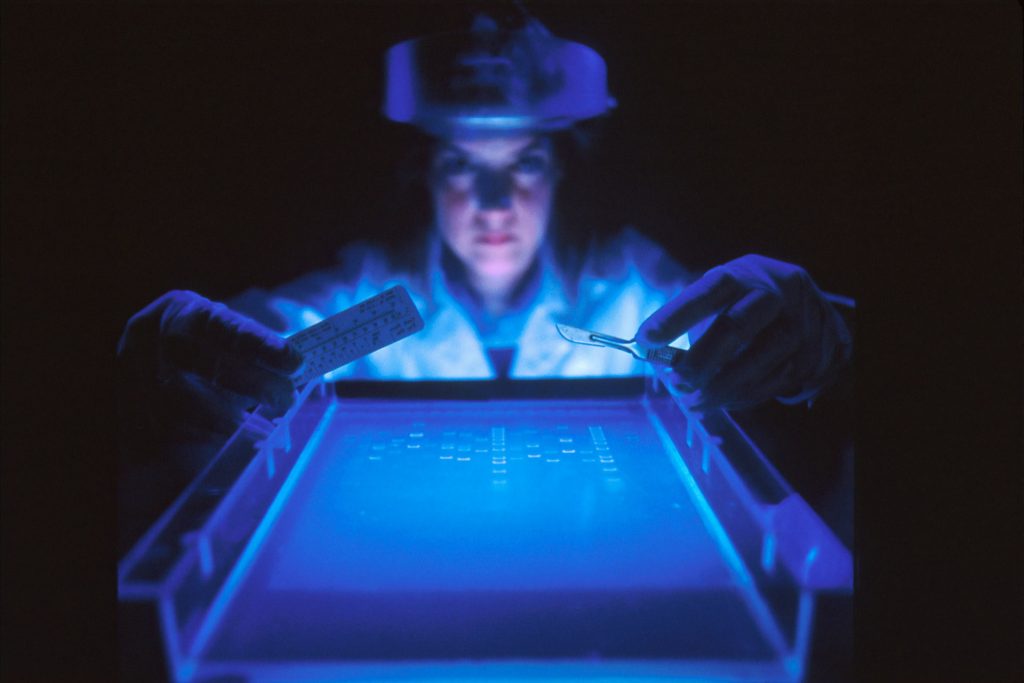
DNA Fragmentation. A dye marker on agarose gel used to separate DNA by a female scientist. The smaller fragments move faster, the larger ones move slower. This separation process is used to analyse the size of DNA fragments, to map DNA, to separate fragments of DNA to create clones. Photo by National Cancer Institute on Unsplash

Although long hours in the lab are standard, some young cancer researchers have told BBC’s Radio 1 Newsbeat that, in order to continue their work, the pandemic is forcing them to work longer, harder days with no pay.

Many relished the easing of COVID rules in the UK at the beginning of the summer months. However Dr Alba Rodriguez-Meira, 28, said that those sunny weeks were like an “extended lockdown”.

At the time, labs had been shut for nearly four months and Dr Rodriguez-Meira worked more than 90 hours a week – equivalent to 13 hours a day, 7 days a week – to catch up her leukaemia research at the University of Oxford.

“That was fine during the first month but it becomes a bit disruptive in terms of life quality if you try to do it for much longer,” Dr Rodriguez-Meira said.

Her weekly hours are slowly returning to her usual 60 a week – but she’s still feeling the pressure.

“I’ve lost a lot of productivity – sometimes I think I’ve not been as happy or as passionate as I used to be.

“Working under these circumstances has made me lose a bit of that. And I am sometimes so, so, absolutely tired.”

Social distancing rules mean that even though labs have reopened, not everyone can be there at the same time.

This is affecting the work of PhD student Laurien van de Weijer, 24, who is studying meningioma, a kind of tumour which makes up over a third of primary central nervous system tumours.

An important experiment she was running at her lab at the University of Plymouth over Easter weekend in April failed because she could not get in to provide nutrients to the tumour cells, which subsequently died. She is apprehensive about the 18 months she has left to finish her doctorate.

“I’ll be so overloaded… because I lost lots of time in the early stage, I really have to catch up, so I probably will do crazy hours.

“I really don’t look forward to being in the lab in the middle of the night.”

Laurien is also concerned that the longer she takes to get her research done, “the longer there won’t be any good drugs” for people with meningiomas.

The Institute of Cancer Research (ICR) says the COVID pandemic will add on an extra two years to the lag time between new treatments being discovered and cancer patients being able to use them.

“We don’t have the luxury of time – that’s the truth – to wait for two extra years,” says Amani Liaquat, 23, who has an aggressive cancerous brain tumour known as a glioblastoma multiforme, and according to doctors has between 12 and 18 months to live.

Amani is now trying a new drug called ONC201 which is still in trials, after chemotherapy and radiotherapy have both failed to shrink the tumour

Amani says she “can’t really put into words” how grateful she is to researchers going into labs during the pandemic, “risking their own health to try and help others”.

“The fact that people are still out there, trying their best in such difficult circumstances is really important,” she says.

Spurred on by stories like Amani’s, some groups of so-called “wet lab” researchers, whose work is experiment-heavy, have come up with shifts that allow them in to labs while observing social distancing.

It’s often after midnight when Beshara Sheehan begins her cycle home from the ICR lab in Sutton, south London.

Beshara Sheehan, 28, whose research is on improving prostate cancer therapy, works a lot of late shifts, often cycling home at midnight. She finds it “difficult to switch off” from work, having to still communicate with on-shift colleagues..

Fiona Want, 25, works at the same site as Beshara, albeit in a different research team, but prefers early morning shifts over late ones.

“It took a bit of getting used to having that real jumble of routine,” said Fiona, who has walked half her day at the lab and half at home.

Her research is on bladder cancer, and works up to 55 hours a week, 10 hours more than pre-COVID. She is driven on by the death of her fiance’s dad from cancer at the end of last year.

“That’s been a real source of motivation for me to keep working hard and a reminder that everyone’s life is, in some way, impacted by cancer,” she said.

“It is so important that we don’t let research slow down and keep pushing forward with discoveries that ultimately save lives.”

Source: BBC News

Treatment of Lingering COVID Pain is Challenging

The treatment of pain in recovered COVID patients poses unique challenges, said a pain expert presenting at the American Academy of Pain Medicine virtual meeting.

“A lot of these patients are going to need rehabilitation” or physical therapy, noted Natalie Strand, MD, of the Mayo Clinic in Scottsdale, Arizona, at the meeting. “There can be quite a bit of deconditioning that occurs, especially after a prolonged ICU stay. Neuropathic pain is also quite common.”

Post-COVID neuropathy may be viral or else possibly related to patient positioning, including prone positioning. Some patients “may need short-term opioids or gabapentinoids and they may experience aggravation of prior underlying pain, either due to direct physical causes or to the increase in anxiety and depression that can accompany a COVID infection,” Dr Strand said.

A study that followed 143 patients two months after acute COVID showed a high proportion reported persistent symptoms — including fatigue (53%), joint pain, (27%) and chest pain (22%) — that often results in patients going to a pain clinic for care, she noted.

Persistent pain remains prevalent, following any ICU admission, ranging from 28% to 77%, according to Dr Strand.

Chronic neuropathic pain after a COVID patient’s ICU stay can include muscle pain related to joint contractures or muscle atrophy, and pain due to critical illness myopathy or polyneuropathy. In addition, peripheral nerve injuries have been associated with prone positioning for COVID–related acute respiratory distress syndrome, Dr Strand added. Complications from traumatic procedures like placement of chest tubes or tracheotomy can also cause chronic neuropathic pain.

Dr Strand noted that pain can persist after discharge of COVID patients, as indicated by follow-ups. In China, three-quarters of patients previously hospitalised with COVID continued to report at least one symptom 6 months later, with fatigue or muscle weakness by far the most common symptoms (63%). “Compared with 2-month follow up, 6 months later we see the same trends,” she pointed out.

In that study, “13% of the patients who did not develop an acute renal injury during their hospital stay and presented with normal renal function exhibited a decline in GFR at follow up,” Dr Strand noted. This may signal caution about using NSAIDS to manage pain in some patients, she said: “Normal renal function at discharge does not necessarily mean it will remain this way 6 months afterwards.”

There may be a relationship with the SARS-CoV-2 virus and chronic neuropathic pain, Strand observed. In a recent article in Pain Reports, “the authors concluded it could be direct or indirect effects of the virus on the nervous system that can cause neuropathic pain,” she noted. “We know that there are neuropathic symptoms involved with the famous loss of taste and loss of smell with presentation,” she continued. “But also in the acute phase, we commonly see headache, dizziness, muscle pain, ataxia, and in hospitalized patients we see stroke, meningitis, encephalitis, and autoimmune disorders like Guillain-Barré syndrome and acute disseminated encephalomyelitis.”

Psychological stressors can also be related to the emergence of chronic pain, added Dr Strand. “Anxiety and depression often follows COVID-19 infection,” she said. “It may be wise to screen our patients for anxiety and depression after infection to see if we can further control these components to help manage their pain overall.”

Source: MedPage Today

Presentation information: Strand NH “Treating the COVID-Recovered Patient: An Evolving Understanding” AAPM 2021.

‘Nanotraps’ Capture COVID Virus and Prevent Infection

Researchers have developed an entirely new treatment for COVID: ‘Nanotraps’ that capture the viruses inside the body, allowing the immune systems to destroy them

The “Nanotraps” mimick the human cells the virus normally attaches to, and bind it to their surface, keeping the virus from reaching other cells and target it for destruction by the immune system. It is possible that Nanotraps could be used on SARS-CoV-2 variants, and could be administered as a nasal spray.

“Since the pandemic began, our research team has been developing this new way to treat COVID-19,” said Assistant Professor Jun Huang, whose lab led the research. “We have done rigorous testing to prove that these Nanotraps work, and we are excited about their potential.”

Postdoc Min Chen and graduate student Jill Rosenberg targeted the spike mechanism that SARS-CoV-2 uses to lock onto ACE2 proteins on human cells.

To create a trap that would bind to the virus in the same way, they designed nanoparticles with a high density of ACE2 proteins on their surface. Other nanoparticles were designed with neutralising antibodies on their surfaces.

ACE2 proteins and neutralising antibodies have both been used in COVID treatments, but by mounting them onto nanoparticles, a much more effective and robust means for trapping the virus was created.

The nanoparticles are smaller than cells, 500 nanometres in diameter, allowing them to reach deep inside tissue and trap the virus.

No evidence of toxicity was seen in tests with mice, and they then tested the Nanotraps against a non-replicating virus called a pseudovirus in human lung cells in tissue culture plates and saw that they completely prevented viral entry into the cells.

 When the nanoparticle binds to the virus (about 10 minutes after injection), it chemically signalled macrophages to engulf and destroy the nanoparticle and the attached virus. Macrophages normally engulf nanoparticles, so this merely sped up the process.

Testing the Nanotraps on a pair of donated lungs kept alive with a ventilator, they found that they completely prevented infection.

They also collaborated with researchers at Argonne National Laboratory to test the Nanotraps with a live virus (rather than a pseudovirus) in an in vitro system. They found a 10 times better performance than with neutralising antibodies or ACE2 inhibitor.

The researchers plan further tests, including live virus and its variants.

“That’s what is so powerful about this Nanotrap,” Rosenberg said. “It’s easily modulated. We can switch out different antibodies or proteins or target different immune cells, based on what we need with new variants.”

Storage is simple, as the Nanotraps can be kept in a standard freezer, and administration is simple, using a nasal spray. The researchers said it is also possible to serve as a vaccine by optimisation of the Nanotrap formulation.

Source: Phys.Org

Journal information: Min Chen et al, Nanotraps for the containment and clearance of SARS-CoV-2, Matter (2021). DOI: 10.1016/j.matt.2021.04.005

NICD Tracking Rise of COVID Cases

Following a steep rise in COVID cases in three provinces, The National Institute for Communicable Diseases (NICD) is working with teams in those areas to monitor the situation.

Increases in the Northern Cape, North West and Free State have been observed by the NICD. The Northern Cape has over 3000 active cases, the North West over 2600 and the Free State over 2200.

The NICD said that it was working with provinces to ascertain whether the rise in cases could be attributed to cluster outbreaks and has recommend increased testing and contact tracing to contain the situation.

Acting executive director of the NICD, Professor Adrian Puren, said: “We want to reassure South Africans that we are actively monitoring the situation in these provinces and will keep the community informed of any new developments.”

The NICD said that with the April school holiday season soon starting and many people making plans for travel and social gatherings, it was still vital to continue to comply with COVID preventative health measures.

Earlier this month, Discovery Health described possible scenarios for COVID in South Africa. Poor social distancing and masking behaviours, superspreader events and a lack of early vaccinations, a third wave could claim as many as 76 000 lives, the insurance company estimated. However, by maintaining good nonpharmaceutical interventions and engaging in a prompt vaccination rollout, deaths would fall to 9000 by the end of the year.

The NICD monitors the number of confirmed COVID-19 cases and tests performed on a daily basis and associated resurgence metrics.

Source: Eyewitness News

Predicting the Next Viral Pandemic

A group of experts has argued that trying to survey all of the viruses in the animal kingdom is a futile effort, and that we should rather focus on those most likely to cross over at the interface of humans and animals.

The observation that most of the viruses that cause human disease come from other animals has led some researchers to attempt “zoonotic risk prediction” to second-guess the next virus to cause a global pandemic. 
Zoonotic viruses, those that cross over from animal species into humans, have caused epidemics and pandemics in humans for centuries. This is exactly what is occurring today with the COVID pandemic: SARS-CoV-2—the coronavirus that causes the disease—emerged from an animal species, albeit which one is not yet known.

An essay published April 20th in the open access journal PLOS Biology, led by Dr Michelle Wille at the University of Sydney, Australia with co-authors Jemma Geoghegan and Edward Holmes outlines the great challenges in zoonotic risk prediction.

The authors argue that these zoonotic risk predictions are of limited value, and will not be able to predict which virus will cause the next great pandemic. Instead, they reason, the human-animal interface should be the target for intensive viral surveillance.

A key question is whether it is possible to predict which animal or which virus group will most likely cause the next pandemic. This has led to “zoonotic risk prediction,” in which researchers attempt to determine which virus families and host groups are most likely to carry potential zoonotic and/or pandemic viruses.

Dr Wille and her colleagues identified several key problems with zoonotic risk prediction attempts.

Firstly, they’re based on very small data sets. Despite decades of work, less than 0.001% of all viruses have likely been identified, even from the mammalian species from which the next pandemic virus is expected to emerge.

Second, these data are also already highly biased in favour of those the most infectious viruses  of humans or agricultural animals, or are already known to be zoonotic. Most animals have in fact not been surveyed for viruses, and that viruses evolve so quickly that any such surveys will soon be out of date and therefore be of limited value.

The authors instead argue that a new approach is needed, not trying to futilely survey all the viruses in the wild but instead undertaking extensive sampling at the animal-human interface. This would enable the detection of novel viruses as soon as they appear in humans. This kind of enhanced surveillance could help us forestall the next pandemic.

Source: Phys.Org

Journal information: Wille M, Geoghegan JL, Holmes EC (2021) How accurately can we assess zoonotic risk? PLoS Biol 19(4): e3001135. doi.org/10.1371/journal.pbio.3001135

Human to Pet Transmission of COVID Virus Common

Girl in a park, wearing mask with two pet dogs. Photo by Helena Lopes from Pexels


A US study uploaded onto the bioRxiv preprint server showed that pets with SARS-CoV-2 likely acquired the virus from humans. 

This suggests that human-animal infection may actually occur much more frequently than previously thought – implying that infected individuals should limit their contact with animals. The paper is currently available on the bioRxiv* preprint server.

Both natural and experimental infections with SARS-CoV-2 have been demonstrated in various species of pets, which includes dogs, cats, hamsters, rabbits, and ferrets. Hamsters, cats and ferrets have been shown to transmit the virus to each other, and dogs are still weakly susceptible to the virus. However, natural infections of pets have almost always resulted from contact with a COVID-infected person.

Since pets share so much space with humans, this is a good use of the One Health approach, a transdisciplinary collaboration aiming for health outcomes through awareness of the interconnectedness between people, animals, plants and their mutual environment.

As part of a COVID household transmission investigation, researchers in the US conducted a One Health appraisal of SARS-CoV-2 infection in pet cohabitants as one of the earliest research endeavours in assessing risk and behavioral factors shared between people and pets.

The study was conducted between April and May of 2020, and mammalian pets from households with at least one individual with confirmed COVID were eligible for inclusion. Detailed descriptions of each animal’s residence were made.

Demographic and exposure information was obtained from all household members. At the same time, the pets were tested with the use of real-time reverse transcription-polymerase chain reaction (rRT-PCR) and neutralisation assays from oropharyngeal, nasal, rectal, fur, faecal, and blood samples.

The small sample size of this study made it difficult to analyse prevention measures in the home, so additional investigations are needed in order to determine the best methods to prevent human-pet COVID transmission.

All oropharyngeal, nasal, and rectal swabs from the tested animals tested negative when rRT-PCR was conducted; however, fur swabs from the one dog tested positive with the use of this molecular method at the first animal sampling. This is actually the first study to detect RNA of a virus from an animal’s fur.

Furthermore, in households where owners withs COVID lived with their pets, 20% had pets with serological evidence of prior SARS-CoV-2 infection, implying some secondary viral transmission. Four dogs and four cats from six households were found to have detectable neutralising antibodies against the virus.

In households with higher rates of human COVID infections, SARS-CoV-2 was more likely to be seen in pets, while much less common when owners limited interactions with their pets after they had developed COVID symptoms.

The authors stressed that it is still important for decision-makers to understand the role of animals in the epidemiology of the pandemic

“Our findings add to the growing body of evidence demonstrating SARS-CoV-2 transmission can occur between people and pets – most often from people to pets – and suggest this transmission may occur more frequently than previously recognized”, wrote the authors of the bioRxiv paper.

Source: News-Medical.Net

Journal information: Goryoka, G.W. et al. (2021). One Health Investigation of SARS-CoV-2 Infection and Seropositivity among Pets in Households with Confirmed Human COVID-19 Cases — Utah and Wisconsin, 2020. bioRxiv. https://doi.org/10.1101/2021.04.11.439379, https://www.biorxiv.org/content/10.1101/2021.04.11.439379v1

Experts Urge a Re-think on Olympic Games

With 100 days remaining until the Tokyo Olympic and Paralympic games, experts urge that the organisers must urgently reconsider plans to hold the games this summer.

Writing in The BMJ, Kazuki Shimizu at the London School of Economics and Political Science and colleagues said that the trajectory of the pandemic is still highly uncertain, warning that international mass gathering events such as Tokyo 2020 “are still neither safe nor secure”.

They say instead that “we must accelerate efforts towards containing and ending the pandemic by maintaining public health and social measures, promoting behavior change, disseminating vaccines widely, and strengthening health systems.”

While considerable scientific advancements have taken place over the past year, they said that vaccine roll-out has been inequitable, with many low and middle income countries having reduced access.

While a special scheme for vaccinating athletes orchestrated by the Olympics Organising Committee may help save lives, they argued that “it could also encourage vaccine diplomacy, undermine global solidarity (including the Covax global access scheme), and promote vaccine nationalism.”

Another concern that they highlighted was the fact that Japan, unlike neighbouring countries in the Asia-Pacific region, still has not achieved COVID containment.

“Even healthcare workers and other high risk populations will not have access to vaccines before Tokyo 2020, to say nothing of the general population,” they write.

In order to effectively protect participants from COVID, “Japan must develop and implement a clear strategy to eliminate community transmission within its borders, as Australia did before the Australian Open tennis tournament.”

Japan and the International Olympic Committee must also agree to operational plans based on robust science and share them with the international community, they added.

Waiving quarantine for incoming athletes, officials, broadcasters, press, and marketing partners “risks importing and spreading covid-19 variants of concern” and while international spectators will be excluded from the games, “cases could rise across Japan and be exported globally because of increased domestic travel – as encouraged by Japan’s official campaigns in 2020.”
However, a recent survey indicated that 70% of Japanese would not want to attend the Olympic Games, due to COVID.

An overwhelmed healthcare system combined with an ineffective test trace and isolate scheme “could seriously undermine Japan’s ability to manage Tokyo 2020 safely and contain any outbreak caused by mass mobilization,” they write.

They also highlight the fact that there has been very little about the Paralympic games through official channels, and how the health and rights of disabled people will be protected during international competition.
“The whole global community recognizes the need to contain the pandemic and save lives. Holding Tokyo 2020 for domestic political and economic purposes – ignoring scientific and moral imperatives – is contradictory to Japan’s commitment to global health and human security,” they argued.

“We must reconsider this summer’s games and instead collaborate internationally to agree a set of global and domestic conditions under which international multisport events can be held in the years ahead. These conditions must embody both Olympic and Paralympic values and adhere to international principles of public health,” they concluded.

Source: News-Medical.Net

Journal information: Shimizu, K., et al. (2021) Reconsider this summer’s Olympic and Paralympic games. BMJ. doi.org/10.1136/bmj.n962.

Department of Health COVID Vaccine Rollout Phase 2 Outlined

The Department of Health’s COVID vaccine rollout has been fleshed out in a presentation, including details on how the vaccines will be distributed, and the jobs earmarked for the shots.

A presentation from the department indicates that the government has secured around 51 million vaccine doses, with 20 million from Pfizer and 30 million from Johnson & Johnson (J&J). However, it is unclear how the current pause in J&J administration in South Africa due to concerns about rare blood clots will affect immunisation schedules.

However, health minister Dr Zweli Mkhize announced that South Africa has secured a further 10 million Pfizer vaccines.

“We can now guarantee that the number of people that will be vaccinated with Pfizer has increased from 10 to 15 million,” he said.

With the 30 million of the single-dose shots from J&J, the current planned rollout will cover about 45 million South Africans.

Dr Mkhize said that both the Pfizer and J&J agreements cost around $10 (R145) per vaccine, with non-refundable clauses.

“The agreements state that down-payments that have been made in advance by the department shall not be refundable by the manufacturer to us in any circumstances. This is another onerous term that we had to settle for,” Dr Mkhize told the committee.

Meanwhile, government was sent an email from J&J, which stated that the company will not sign off the 20 million doses until they receive a letter from the Trade, Industry and Competition Minister, expressing support for the local investment that they made in Aspen Pharmacare.

“We’ve been taken aback by this, as there are clauses in the agreement that express this support and acknowledge that this production will not just be limited to South Africa and the continent, but also targeted for the global market,” said Dr Mkhize.

The department indicated that the Pfizer vaccine will likely go to major metropolitans due to its larger pack size and refrigeration requirements, while the J&J vaccine with its less stringent refrigeration needs would be allocated to rural areas.

South Africa’s Phase 2 of the vaccine rollout is planned to begin in May and run until October, with essential workers over 40 and the elderly to be targeted in the programme. This is to include a focus on old age homes and care facilities, plus identifying those with co-morbidities.

The department provided an overview of occupations covered under the vaccine rollout, to include, among others, the police, army, social and municipal workers, and faith and traditional leaders. Private sectors could include mining, retail, transport, and manufacturing.

Source: BusinessTech

Mental Health and Physical Activity Impacted by Pandemic

A study from McMaster University suggests that mental health has become both a barrier to and a motivator for physical activity.

Surveying over 1600 subjects, the researchers sought to understand the ways mental health, physical activity and sedentary behaviour have changed throughout the course of the pandemic and why. Their findings show that people want to be active to improve their mental health but find exercise difficult because of stress and anxiety. Previous research indicates that physical activity can contribute to the treatment of depression, while sedentary behaviour has a strong negative impact.
“Maintaining a regular exercise program is difficult at the best of times and the conditions surrounding the COVID-19 pandemic may be making it even more difficult,” said lead author Jennifer Heisz, associate professor at the Department of Kinesiology, McMaster University.

“Even though exercise comes with the promise of reducing anxiety, many respondents felt too anxious to exercise. Likewise, although exercise reduces depression, respondents who were more depressed were less motivated to get active, and lack of motivation is a symptom of depression,” she said.

The survey respondents reported higher psychological stress and moderate levels of anxiety and depression due to the pandemic. Their weekly aerobic activity reduced about 20 minutes, strength training down roughly 30 minutes, and sedentary time per day was up about 30 minutes per day compared to six months prior to the pandemic. Physical activity may have exerted a protective effect, as those with the greatest drops in physical activity had the worst mental health outcomes, while those who kept their physical activity levels the same level fared better in terms of mental health. 
Notably, economic disparities played a role, the researchers found, especially among younger adults.

“Just like other aspects of the pandemic, some demographics are hit harder than others and here it is people with lower income who are struggling to meet their physical activity goals,” said co-lead author Maryam Marashi, a graduate student in the Department of Kinesiology. “It is plausible that younger adults who typically work longer hours and earn less are lacking both time and space which is taking a toll.”

After the researchers analysed the data, the researchers produced a guideline to help people become more physically active:

  • Adopt a mindset: Some exercise is better than none.
  • Lower exercise intensity if feeling anxious.
  • Move a little every day.
  • Break up sedentary time with standing or movement breaks.
  • Plan your workouts like appointments by blocking off the time in your calendar.

“Our results point to the need for additional psychological supports to help people maintain their physical activity levels during stressful times in order to minimize the burden of the pandemic and prevent the development of a mental health crisis,” concluded Heisz.

Source: News-Medical.Net

Journal information: Marashi, M. Y., et al. (2021) A mental health paradox: Mental health was both a motivator and barrier to physical activity during the COVID-19 pandemic. PLOS ONE. doi.org/10.1371/journal.pone.0239244.

Smartphone Tracking in COVID Shows Movement Linked to Case Rise

According to a new study which used mobility tracking of cell phone data, a greater movement of people is a strong predictor of increased COVID cases rates.

Until people are widely vaccinated against SARS-CoV-2, the array of nonpharmaceutical public health interventions such as physical distancing and limiting travel and social contacts will remain the most effective means of controlling COVID. Capturing the interrelationship between human behaviour and infectious diseases is one of the hardest problems in epidemiology.

“Mobility measures capturing human activity through anonymized tracking of smartphones are believed to be reasonable proxies of contact rates outside of one’s own home; these measures can provide more timely and reliable sources of information on contact rates compared with time-use surveys or contact tracing,” the authors wrote.

Researchers looked at anonymised smartphone mobility data from nearly 12 months from March 2020 to March 2021, both at a national and provincial level, while controlling for date and temperature. A 10% increase in the mobility of Canadians outside their homes was found to be associated with a 25% increase in subsequent SARS-CoV-2 weekly growth rates. They investigated at the mobility threshold (the level needed to control the virus) and the mobility gap (the difference between the threshold and actual movement).

“The mobility threshold and mobility gap can be used by public health officials and governments to estimate the level of restrictions needed to control the spread of SARS-CoV-2 and guide, in real-time, the implementation and intensity of nonpharmaceutical public health interventions to control the COVID-19 pandemic,” wrote the authors.

Source: News-Medical.Net

Journal information: Brown, K. A., et al. (2021) The mobility gap: estimating mobility thresholds required to control SARS-CoV-2 in Canada. Canadian Medical Association Journal. doi.org/10.1503/cmaj.210132.