

Tag: covid

Sunlight Vulnerability of SARS-CoV-2 not Just from UV-B

A team of researchers have found that the sunlight vulnerability of SARS-CoV-2 cannot be explained by the effect of UV-B rays alone.

Most of the COVID management concepts remain as true as in the first days of the pandemic, such as handwashing with soap and social distancing, though some have changed such as the notion of the virus mainly transmitted through droplets whereas evidence showed it can linger suspended in aerosol.

The researchers, from UC Santa Barbara, Oregon State University, University of Manchester and ETH Zurich. examined the well-known vulnerability of SARS-CoV-2 to sunlight. They concluded that exposure to UV-B radiation doesn’t completely account for its inactivation by sunlight.

The idea that an additional mechanism might be in play came when the team compared data from a July 2020 study that reported rapid sunlight inactivation of SARS-CoV-2 in a lab setting, with a theory of coronavirus inactivation by solar radiation that was published just a month earlier.

“The theory assumes that inactivation works by having UV-B hit the RNA of the virus, damaging it,” said lead author Paolo Luzzatto-Fegiz, UC Santa Barbara mechanical engineering professor. “Judging from the discrepancies between the experimental results and the predictions of the theoretical model, however, the research team felt that RNA inactivation by UV-B “might not be the whole story.”

Experimentation showed 10-20 minutes to reach virus inactivation—much faster than the theory’s predictions. Viruses in simulated saliva were inactivated over eight times faster when irradiated by UV-B lamps than would have been predicted by the theory, while those cultured in a complete growth medium before exposure to UV-B were inactivated over three times faster. In order to match theory, SARS-CoV-2 would then have greater UV-B sensitivity than any currently known virus.

“The theory predicts that inactivation should happen an order of magnitude slower,” Prof Luzzatto-Fegiz said.

There might be another mechanism involved besides UV-B effects on RNA; such as the synergistic effect of the less energetic UV-A rays.

“People think of UV-A as not having much of an effect, but it might be interacting with some of the molecules in the medium,” he said. Such reactive intermediate molecules could be hastening virus inactivation, a concept known in wastewater treatment and other environmental science fields.

“So, scientists don’t yet know what’s going on,” Luzzatto-Fegiz said. “Our analysis points to the need for additional experiments to separately test the effects of specific light wavelengths and medium composition.”

These findings could help develop ways to control the virus with widely available UV-A and UV-B sources. Sources which emit UV-C, which is otherwise blocked by the atmosphere, has proven effective in certain settings such as air filtration but its high energy limits applications and raises safety concerns.

“UV-C is great for hospitals,” said co-author Julie McMurry. “But in other environments—for instance kitchens or subways—UV-C would interact with the particulates to produce harmful ozone.”

Co-author and UCSB mechanical engineering professor Yangying Zhu added that UV-A’s possible effectiveness meant that inexpensive UV-A LEDs many times brighter than UV-A in normal sunlight could be used. UV-A could be used more for air filtration for example, but the specifics of each setting warrant consideration, said co-author Fernando Temprano-Coleto.

Source: Medical Xpress

Journal information: Paolo Luzzatto-Fegiz et al. UVB Radiation Alone May Not Explain Sunlight Inactivation of SARS-CoV-2, The Journal of Infectious Diseases (2021). DOI: 10.1093/infdis/jiab070
CDC Director Fears ‘Impending Doom’ as COVID Cases Rise Again

Rochelle Walensky, MD, the Centers for Disease Control (CDC) Director, says that she fears “impending doom” as COVID deaths in the US edge upwards as people increasingly ignore health restrictions and start to travel.

Beginning her usual COVID status update,  Dr Walensky spoke as she often did of “concerning trends in the data.”

Dr Walensky spoke about the country surpassing 30 million COVID cases; of a 10% increase in the 7-day average of COVID-19 cases over the past week, to slightly below 60 000 cases; and of an uptick in hospitalisations, from a 7-day average of around 4600 per day to around 4800 per day.

“And deaths, which typically lag behind cases and hospitalizations, have now started to rise,” she said, pointing to a nearly 3% increase to a 7-day average of “approximately 1000 deaths per day.”

“I’m going to pause here,” she said. “I’m going to lose the script and I’m going to reflect on the recurring feeling I have of impending doom.”  

At the start of her tenure, Walensky said she had pledged to always tell the truth even if it wasn’t something Americans wanted to hear.

“We have so much to look forward to, so much promise and potential of where we are, and so much reason for hope. But right now I’m scared,” she said.

She recalled her time caring for COVID patients, saying: “I know what it’s like as a physician to stand in that patient room, gowned, gloved, masked, shielded and to be the last person to touch someone else’s loved one because their loved one couldn’t be there.

“I know what it’s like when you’re the physician, when you’re the healthcare provider, and you’re worried that you don’t have the resources to care for the patients in front of you.” 

She also recalled “that feeling of nausea, when you read the ‘Crisis Standards of Care’ and you wonder whether there are going to be enough ventilators to go around and who’s going to make that choice.”

She emphasised that she was speaking “not only as your CDC director, but as a wife, as a mother, as a daughter, to ask you to just please hold on a little while longer.”

She sympathised, she said, with those “wanting to be done” with the pandemic.

“We are just almost there, but not quite yet. And so I’m asking you to just hold on a little longer, to get vaccinated when you can. So that all of those people that we all love will still be here when this pandemic ends.”

Dr Walensky warned that the US pandemic trajectory was looking dangerously similar to that of European countries like Germany that were still struggling to contain the virus.

“We are not powerless. We can change this trajectory of the pandemic,” she said.

“But it will take all of us recommitting to following the public health prevention strategies consistently while we work to get the American public vaccinated.”

According to the New York Times’  COVID vaccination tracker, 146 million vaccinations have been administered in the US to date, with 2.76 million doses being given daily. At this rate, 70% of the adult population will have been vaccinated by June 16.

She urged community and religious leaders, officials, and other influencers to help support the vaccination programme.

“For the health of our country, we must work together now to prevent a fourth surge.”

Source: MedPage Today

Despite COVID, Cancer Screenings in the US Picked Up

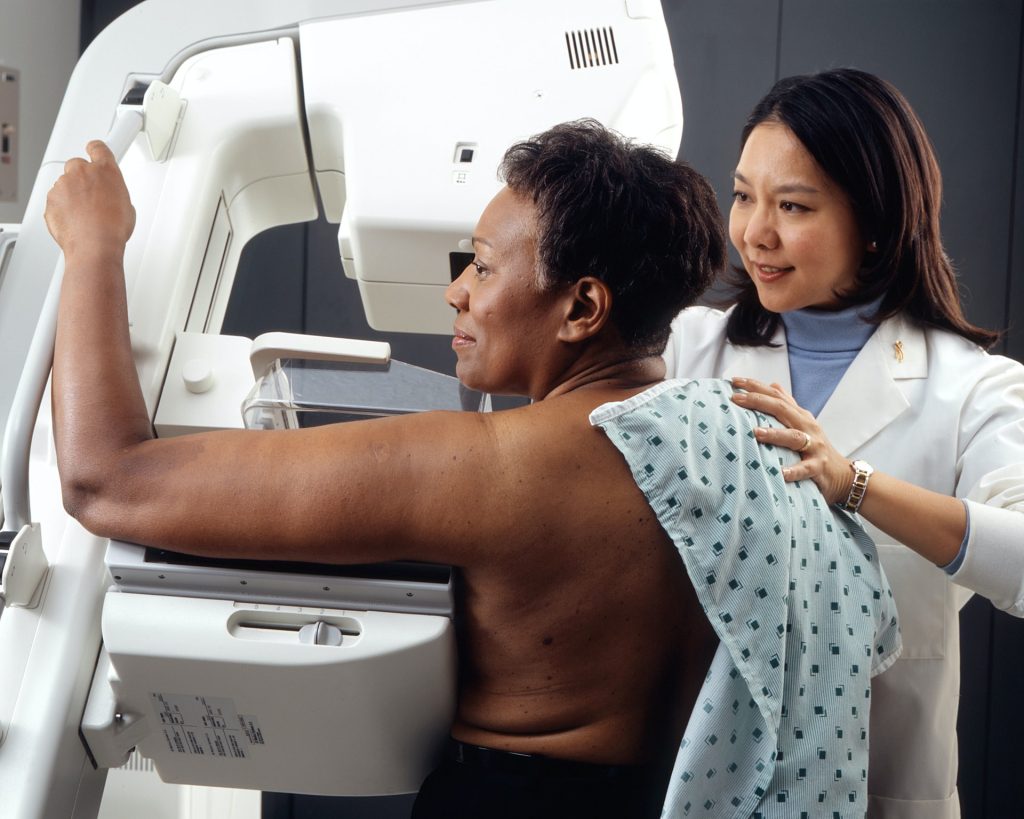
Woman Receives Mammogram. An Asian female technician positions an African-American woman at an imaging machine to receive a mammogram. Creator: Rhoda Baer

In an encouraging sign, the RAND corporation reports that despite COVID, cancer screenings in the United States rebounded in the wake of the first wave.

There has been concern since the COVID pandemic was keeping people from going in for routine cancer screening, resulting in more undetected cancers to progress unchecked and an increase in cancer deaths. As some 600 000 Americans were expected to die of cancer in 2020, any impact on screening is a considerable health concern.

In a statement, Ryan McBain, PhD, of the RAND Corp. in Santa Monica, California, said: “These are the first findings to show that, despite real fears about the consequences of drop off in cancer screens, health facilities figured out how to pick this back up after the initial pandemic restrictions. Our study shows that health systems were able to recalibrate resources and protocols in a relatively short interval to deliver these important services.”

In Spain, cancer diagnoses were down 38% in the first half of 2020, according to one study. The pandemic’s impact on cancer screening that required in-person examinations, such as mammography and colonoscopy, were a particular concern, McBain and co-authors noted. Moreover, little was known about the magnitude of the decline in screening rates or longer-term trends in screen.

Using data on Castlight Health beneficiaries from January 15 to July 31, 2020, the researchers calculated weekly screening rates per 10 000 eligible beneficiaries. Before the declaration of national emergency in the US on March 13, screening mammography weekly rate was 87.8 per 10 000, falling to a low of 6.9 per 10 000 in April. Thereafter, screening rates began a steady recovery, to 88.2 per 10 000 at the end of July.

Over the same time period, weekly colonoscopy screenings fell from 15.1 to 0.9 per 10 000, before rebounding to a weekly median of 12.6 per 10 000 by July 31, 2020.

Multivariable regression analyses confirmed the significant declines in screening mammography and colonoscopy. A larger decline in colonoscopy was observed in high-income counties. Otherwise, the analyses showed no significant demographic variations.

Laura Makaroff, DO, of the American Cancer Society in Atlanta, said that the pandemic’s ultimate impact on cancer screening and cancer care is still largely unknown.

“We have seen similar data showing some rebound in cancer screening rates last summer and fall, but even those turnarounds show an approximate 30% decrease in cancer screening compared with pre-pandemic rates,” she said to MedPage Today in an email. “We also don’t yet know the full impact of the late fall and winter surges on disruptions in cancer screening and diagnosis.”

“The COVID-19 pandemic has had numerous consequences secondary to the disease itself, including reduced access to care for other illnesses,” Dr Makaroff added. “While these measures were necessary, delays in cancer screening, diagnosis, and treatment due to reduced healthcare access will likely result in a short-term drop in cancer diagnoses followed by increases in late-stage diagnoses and preventable cancer deaths.

“The full impact of the COVID-19 pandemic on cancer prevention and early detection will not be known until population-based nationwide data become available in the years to come,” she said.

Source: MedPage Today

Journal information: McBain RK, et al “Decline and rebound in routine cancer screening rates during the COVID-19 pandemic” J Intern Med 2021; DOI: 10.1007/s11606-021-06660-5.

Newly Discovered ‘Goldilocks’ Protein Keeps the Immune System in Check

A newly discovered ‘Goldilocks’ protein may be responsible for helping keep the immune system from running amok, according to researchers at the Lunenfeld-Tanenbaum Research Institute (LTRI).

This protein, known as WAVE2, is expressed in all immune cells and plays a critical role in keeping the immune system in balance. To test its role, researchers knocked out the WAVE2 protein in a subset of immune cells in mice, leading to severe autoimmunity and inflammation, as well as an inability to mount an immune response to a viral infection.

Senior author Dr Kathy Siminovitch, said the team also found that in the absence of WAVE2, another protein, known as mTOR, became overly active, sending the immune system into overdrive and leading to immune cell exhaustion.

“Much like Goldilocks, a proper immune response requires such a delicate balance,” said Dr  Siminovitch. “You have to get it just right. By developing a mouse strain in which T cells, key players in immunity, lack WAVE2, we have shown that this protein is absolutely required for balanced immune responses.”

The question of how to keep the immune system in balance is of key importance in the pandemic, where many deaths occur due to cytokine storms as the immune system overreacts, especially in the elderly. 
As part of her work exploring the mechanisms balancing the immune system, Dr Siminovitch helped trace the complex molecular steps that turn a rare gene mutation into Wiskott-Aldrich syndrome, a potentially lethal disease which impairs the immune system of boys.

Future research would look at how the contribution of the WAVE2-mTOR pathway to specific autoimmune, inflammatory and other conditions, such as Alzheimer’s disease.

Source: News-Medical.Net

Journal information: Liu, M., et al. (2021) WAVE2 suppresses mTOR activation to maintain T cell homeostasis and prevent autoimmunity. Science. doi.org10.1126/science.aaz4544.

Asymptomatic Carriers are the Biggest Barrier to Containing COVID

The lack of testing in asymptomatic carriers makes it harder to control SARS-CoV-2 spread, according to researchers at the Georgetown Center for Global Health Science and Security, Georgetown University in Washington.

Two groups of individuals dominate the transmission of COVID: asymptomatic carriers, who do not develop any symptoms throughout the course of their infection; and presymptomatic carriers, who develop symptoms a few days after being infected.

Transmission without symptoms makes it difficult to estimate the infectious timeline and potential exposures. Asymptomatic cases may likely mingle with others oblivious to their infection, promoting virus spread. They may also not adhere to social distancing, mask wearing etc. Contact tracing is vital to monitor the spread of the disease, and asymptomatic cases makes surveillance to analyse secondary attack rates highly challenging.

Though there is no accurate reporting on the prevalence of asymptomatic cases available, early studies showed that they made up so 30% to 80% of infections. More recent evidence put asymptomatic cases at 17% to 30% of infections.

In COVID cases, the infectious period begins two days before symptom onset and several days thereafter, though viral shedding is reduced in the first week of symptoms.

Viral shedding in asymptomatic cases is poorly understood, however it is known that asymptomatic cases have the same viral load as symptomatic cases, regardless of severity. In asymptomatic individuals, infectious periods are shorter due to reduced titers at peak replication and faster viral clearance.

Some studies have shown that asymptomatic individuals are 42% less likely to infect others and have lower secondary attack rates, while other research indicates that, despite the shorter infectious periods, asymptomatic individuals have similar transmissibility to those who are presymptomatic.
The researchers note that symptomatic individuals were motivated to seek testing, treatment and self-isolate upon feeling COVID symptoms.

“With many contagious people experiencing no symptoms and in the absence of robust surveillance testing for asymptomatic or presymptomatic infections, it is critical to maximising efforts to reduce transmission risk in the community,” noted the researchers.

Source: Medical-News.Net

Journal information: Rasmussen, A., and Popescu, S. (2021). SARS-CoV-2 transmission without symptoms. Science. https://science.sciencemag.org/content/371/6535/1206

Brazil’s ICU Beds Full Amidst ‘Catastrophe’

Brazilian doctors say the situation is “well beyond chaos” even as the country’s COVID-sceptic president refuses to take decisive action against the pandemic.  

An article in The Guardian reports that Brazil is facing the worst medical crisis in its history, as researchers from its leading healthcare institute, Fiocruz, have said the country is entering into a “catastrophe”.

COVID intensive care units in virtually all of the country’s hospitals are either full or almost full, with Fiocruz warning that “The situation is absolutely critical.”

Ricardo Barros, Bolsonaro’s leader in the lower house said on Wednesday: “Our situation isn’t all that critical. Compared to other countries, it’s actually quite comfortable.” This was said on a day in which 2798 fatalities and a record 90 830 new cases were reported.

However, intensive care physicians interviewed by The Guardian tell a different story.

“Things are desperate,” said Dr Hermeto Paschoalick, the head of the critical care unit in the midwestern state of Mato Grosso do Sul, where ICUs are currently 93% full.

Things were worse elsewhere, especially in the state’s capital. “I was told yesterday that there’s a health clinic there with 20 ambulances parked outside. The patients are arriving from small towns in the interior and there’s nowhere to put them – so they just keep them in the ambulances,” said Dr Paschoalick.

Although most in his care were over 60s, Dr Paschoalick said there were young people as well. “Right now, I’ve got three people on ventilators including a 22-year-old woman and another who is 25. Both were pregnant when they arrived. One lost the baby, the other managed to give birth. Both are intubated and in a really bad state,” he said.

Many doctors are forced to choose which patients can receive a bed in ICU.

“People are going around saying Brazil is going to collapse,” said critical care doctor Pedro Carvalho at a university hospital in the riverside town of Petrolina. “But we’ve collapsed already – completely collapsed.” 

Brazil’s President Jair Bolsonaro meanwhile, shows no sign of changing his stance, claiming that there is a “war” against him. 

Source: The Guardian

Burnout is Highly Prevalent in Healthcare Workers in Cape Town

Image by Free-Photos from Pixabay

Among Cape Town healthcare workers, burnout is highly prevalent, and worsened by the fear of infection, said City spokesperson Priya Reddy.

A year after the breakout of COVID in the Western Cape, the provincial department of health also reported significant levels of burnout among its health-care workers, especially in doctors, nurses and support staff.

Reddy said: “Burnout is highly prevalent as a result of exposure to trauma, loss, grief and compassion fatigue, and is exacerbated by the high levels of anxiety for fear of contracting the virus.”

However, she said: “The presence of Covid-19 has not diverted health-care workers from their primary responsibilities, thus the pandemic added additional levels of care and caution to the way they work and required a major adjustment.”

In response, the City has made available a number of employee assistance programmes (EAP) and wellness interventions to all employees, including City health-care workers and those supporting them in their different functions. The City is also providing workshops on burnout, compassion fatigue and resilience, and making proactive interventions to deal with stress and anxiety.

The provincial health department reported that between October and December last year, 2832 employees accessed the employee health and wellness programme. Work related problems, trauma, COVID related challenges, family challenges and relationships issues were the most common problems presented during this time.

In his review of the pandemic ‘s year in the province, provincial department of health head, Dr Keith Cloete said: “The department recognised the immense impact the pandemic has had on its staff and has initiated intentional healing and grieving sessions with our front-line workers and managers.”

“The department also recognised the need for staff to rest and recuperate, and in between the two waves we encouraged and granted staff to take leave so they can spend some time with family members,” Dr Cloete added.

SA Society of Psychiatrists (Sasop) board member Dr Renata Schoeman said: “Because people on the verge of burnout feel the need to keep going even though they are exhausted and in a state of relentless overwork, by the time they consult a health professional, burnout has often already become depression or anxiety disorder.”

She added: “Avoiding burnout is a classic case where prevention is better than cure, and lifestyle is the most effective preventative strategy. Improving your emotional and mental fitness, as well as physical fitness, helps to build resilience which means you can handle stress better and cope with setbacks.”

survey of burnout in India found that 52.8% of respondents reported pandemic-related burnout, compared to 26.9% for work-related burnout. Burnout risk was increased by 1.64 for doctors and by 5 for support staff.

Source: IOL

Bat Coronavirus 94.5% Similar to SARS-CoV-2 Found

Researchers in China and Australia have reported the discovery of novel bat coronaviruses with a similarity of up to 94.5% to SARS-CoV-2. 

This finding further illuminates the diversity and complex evolutionary history of these viruses. A pre-print version of the research paper is available on the bioRxiv server.

Now, Weifeng Shi from Shandong First Medical University & Shandong Academy of Medical Sciences in Taian, China and colleagues have conducted a meta-transcriptomic analysis of samples collected from 23 bat species in Yunnan province in China during 2019 and 2020.  

Using a combination of genome sequencing and sampling studies, researchers identified a number of SARS-CoV-2-related coronaviruses in wildlife species that together pointed to underestimation of the phylogenetic and genomic diversity of coronaviruses.

“Our study highlights both the remarkable diversity of bat viruses at the local scale and that relatives of SARS-CoV-2 and SARS-CoV circulate in wildlife species in a broad geographic region of Southeast Asia and southern China,” said the team.

Bats are hosts to a broad range of viruses that can infect humans, and four of the seven known human coronaviruses have zoonotic origins.  They are also host to many coronaviruses, but sometimes “intermediate” hosts such as dromedary camels (MERS-CoV) are involved in the jump to humans.

Retrospective genome sequencing and sampling studies identified a number of SARS-CoV-2-related coronaviruses in wildlife species. These included the RaTG13 virus, which is the closest known relative of SARS-CoV-2,  found in the Rhinolophus affinis bat. SARS-CoV-2-related viruses have also been identified in various other Rhinolophid bats across Asia.

“Collectively, these studies indicate that bats across a broad swathe of Asia harbour coronaviruses that are closely related to SARS-CoV-2 and that the phylogenetic and genomic diversity of these viruses has likely been underestimated,” said Shi and colleagues.

Notably, one of these novel bat coronaviruses – RpYN06 – exhibited 94.5% sequence identity to SARS-CoV-2 across the whole genome, with key similarities in certain genes. Low genopmic sequence identity in the spike gene made RpYN06 the second closest relative of SARS-CoV-2, next to RaTG13. This is far more similar than seen in other SARS-CoV-2-like viruses identified in wildlife species.

Indeed, while the other three SARS-CoV-2-related viruses identified here were almost identical in sequence, the spike protein sequences formed an independent lineage that was separated from known sarbecoviruses (a  viral subgenus or the coronaviruses that  includesSARS-CoV-2)   by a relatively long branch.

“Collectively, these results highlight the extremely high, and likely underestimated, genetic diversity of the sarbecovirus spike proteins, which likely reflects their adaptive flexibility,” wrote Shi and colleagues.

The researchers say studies have previously shown that host switching of coronaviruses among bats is a frequent occurrence.

Source: News-Medical.Net

Journal information: Shi W, et al. Identification of novel bat coronaviruses sheds light on the evolutionary origins of SARS-CoV-2 and related viruses. bioRxiv. 2021. doi: https://doi.org/10.1101/2021.03.08.434390

Brazil’s Hospitals Are on The Brink of Collapse

Health systems in most of Brazil’s largest cities are close to collapse because of COVID cases, its leading health institute Fiocruz warns.

More than 80% of intensive care unit beds are occupied in the capitals of 25 of Brazil’s 27 states, Fiocruz said.  The highly contagious variant that emerged in Brazil may have serious knock-on effects for the rest of the world, health experts have warned.

In a stark warning, Fiocruz epidemiologist Jesem Orellana told AFP news agency that  “Brazil is a threat to humanity.”

Brazil’s President Jair Bolsonaro had already provoked outrage among his citizens and rebukes from local leaders by telling people to “stop whining” about COVID. The country recorded 1972 COVID deaths on Tuesday, along with a surge to 70 000 cases — a 38% increase on last week’s figure. ICUs at 15 state capitals are at 90% capacity, said Fiocruz, and in two cities, Porto Alegre and Campo Grande, they had exceeded capacity.

“The fight against COVID was lost in 2020 and there is not the slightest chance of reversing this tragic circumstance in the first half of 2021,” Fiocruz’s Jesem Orellana said, as quoted by AFP.

“The best we can do is hope for the miracle of mass vaccination or a radical change in the management of the pandemic. Impunity in management seems to be the rule.”

Of the currently available vaccines, so far Pfizer’s has been confirmed to be effective in lab tests against a specially engineered version of the virus made to mimic the variant.

Source: BBC News

Bolsonaro Tells Brazilians to ‘Stop Whining’ About COVID

Amidst a surge of COVID cases and deaths in Brazil that have brought its healthcare system to the brink of collapse, President Jair Bolsonaro has told its citizens to “stop whining”, saying that the country must balance economic concerns against controlling the pandemic.

According to Brazil’s health ministry, the country has suffered 260 000 deaths from the virus, the second highest in the world after the United States.

“Stop whining. How long are you going to keep crying about it?” Mr Bolsonaro said at an event. “How much longer will you stay at home and close everything? No one can stand it anymore. We regret the deaths, again, but we need a solution.”

In order to stave off further disaster, a number of local governments have started taking matters into their own hands by imposing their own curfews and other social distancing measures. 

São Paulo’s governor, João Doria, who has been particularly critical of Mr Bolsonaro’s response to the pandemic, called President Bolsonaro “a crazy guy” for attacking “governors and mayors who want to buy vaccines and help the country to end this pandemic”.

“How can we face the problem, seeing people die every day? The health system in Brazil is on the verge of collapse,” Mr Doria said.

This comes as a Duke University scientist, another Bolsonaro critic, warned of the danger of another quarter of a million deaths, and called for an immediate lockdown to help control the situation.

The situation is exacerbated by the emergence of the P.1 variant which emerged in Manaus, and has high transmissibility and the capability to evade immunity, having a 25% to 60% chance of reinfecting an immune individual.

Source: BBC News