Tag: covid

SA on The Brink of Third Wave, Says Health Department
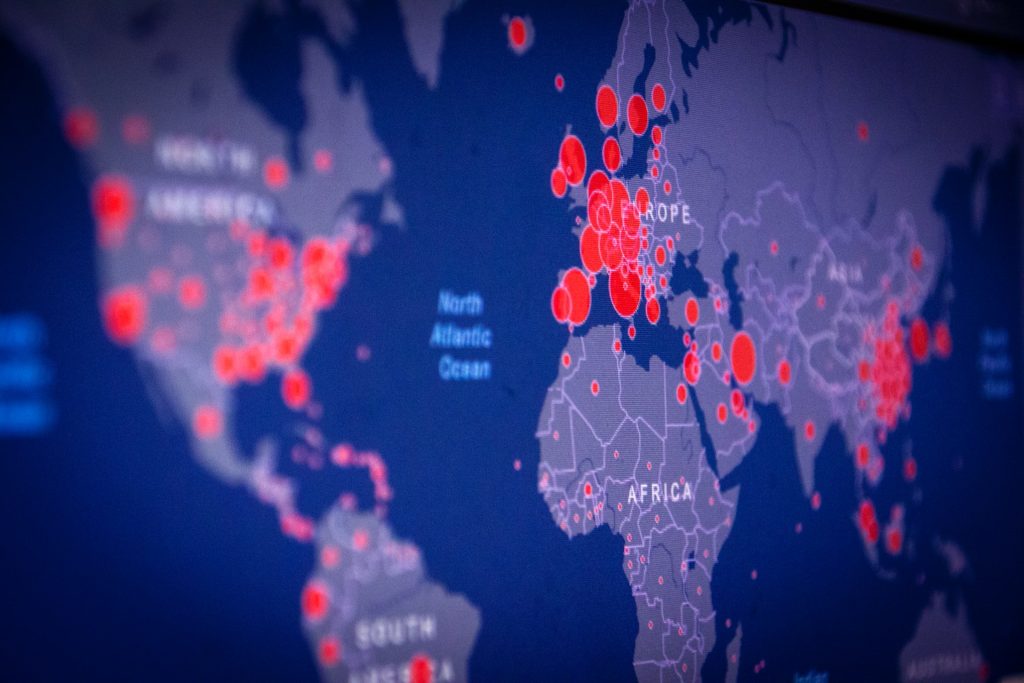
COVID heat map. Photo by Giacomo Carra on Unsplash

The health department called the increasing number of COVID cases across South Africa “worrying” on Wednesday night, adding that although close, the requirements had not yet been met for a third wave.

In a statement, the department said that it had observed an increase in the weekly number of new cases over the past seven and 14 days compared to the previous corresponding periods. Increases have been seen in all provinces — particularly the North West and Gauteng. There was also an increase in the number of COVID-related deaths over the past seven days.

However the department maintained that these increases had not yet met the requirements of the “resurgence threshold”. Dr Zweli Mkhize however said that numbers would not go down unless containment measures were put in place.

“There was an increase in new cases from 8593 cases in the preceding seven days (April 26-May 2) to 12 531 cases in the past seven days (May 3-9), constituting a 46% increase. The 14-day comparisons also showed that the cases increased from 17 017 in the preceding 14 days to 21 124 cases in the past 14 days, an overall 24% increase. All provinces showed a positive percentage increase, with Northern Cape 68% up in the past seven  days followed by Gauteng at 63%, Limpopo at 47%, North West at 42% and Western Cape at 39%.

“The new Covid-19 related deaths increased by 18.22% in the past seven days (May 3-9) to 318 from 269 in the preceding seven days (April 26-May 2). However, the 14-day comparison showed the deaths decreased by 28.93% to 587 in the past 14 days compared to 826 in the preceding 14 days. The cumulative case fatality ratio is 3.43% (54 735 of 1 596 595),” the department said.

Hospital admissions fortunately “have not shown an increase”. As of Wednesday, the detection rate for COVID tests was 7.45%. Adam Lowe, a member of the ASSA COVID working group, said that based on modelling and historical parallels, three scenarios are possible for a third wave: an early, less severe, wave in May driven by school holidays; a later, more severe third wave; or a sudden and severe, but unlikely, third wave.

“As much as these figures are worrying, our resurgence dashboard, which was developed by the South African Covid-19 Modelling Consortium, which is updated thrice a week, still shows that we have not as a country reached a resurgence threshold, though some districts in the country are fast approaching the threshold,” the department said.

The department of health added that it was working with provinces to update their resurgence plans, which mainly focus on case management, contract tracing, oxygen availability, bed capacity, respiratory support equipment and human resources.

It also said that the main drivers of the new wave will be one or both of the resurgence of new variants and growing fatigue to measures such as social distancing and masking. Genomic surveillance is being conducted to catch the emergence of new variants.

“So we want to assure South Africans that we have not yet hit the third wave, however we are at risk and we hence need to be on heightened vigilance,” the department said.

Source: Times Live

HIV Increases Risk of COVID Infection and Mortality

Man with red HIV ribbon on shirt. Photo by Anna Shvets from Pexels

New research shows that individuals living with HIV and AIDS have an increased risk of SARS-CoV-2 infection and death from COVID.

An estimated 38 million people around the world are living with HIV/AIDS, according to the World Health Organization, 7.5 million of whom are in South Africa, according to UNAIDS.

In their review, researchers at  Penn State College of Medicine found that people living with HIV had a 24% higher risk of SARS-CoV-2 infection and a 78% higher risk of death from COVID than people without HIV. They analysed data from 22 prior studies with nearly 21 million participants in North America, Africa, Europe and Asia to determine to what extent people living with HIV/AIDS are susceptible to SARS-CoV-2 infection and death from COVID.

Participants were mostly male (66%) and the median age was 56. The most common comorbidities among the HIV-positive population were hypertension, diabetes, chronic obstructive pulmonary disease and chronic kidney disease. Most patients (96%) were on antiretroviral therapy (ART).

“Previous studies were inconclusive on whether or not HIV is a risk factor for susceptibility to SARS-CoV-2 infection and poor outcomes in populations with COVID-19,” said Dr Paddy Ssentongo, lead researcher and assistant professor at the Penn State Center for Neural Engineering. “This is because a vast majority of people living with HIV/AIDS are on ART, some of which have been used experimentally to treat COVID-19.”

Pre-existing conditions common among people living with HIV/AIDS, may contribute to the severity of their COVID infections, noted the investigators. It remains inconclusive as to whether antiviral drugs, such as tenofovir and protease-inhibitors, reduce the risk of SARS-CoV-2 infection and death from COVID in people with living with HIV/AIDS.

“As the pandemic has evolved, we’ve obtained sufficient information to characterize the epidemiology of HIV/SARS-CoV-2 coinfection, which could not be done at the beginning of the pandemic due to scarcity of data,” said Vernon Chinchilli, fellow researcher and chair of the Department of Public Health Sciences. “Our findings support the current Centers for Disease Control and Prevention guidance to prioritize persons living with HIV to receive a COVID-19 vaccine.”

Source: Penn State University

South African Perfume Expert’s Smell Recovery Breakthrough

A perfume bottle. Image by StockSnap from Pixabay

A South African perfume expert has developed a treatment to help people who have lost their sense of smell due to COVID.

Loss of smell and taste is one of the most prominent symptoms and after-effects of COVID infection. A meta-analysis of 27 studies showed that 48.47% of COVID patients reported loss of sense of smell, and loss of taste was reported in 20 studies with a prevalence of 41.47%.

While some people only experience a minimal loss of smell, others, especially those who have experienced prolonged COVID infection, may wait months for their sense of smell to return, if it all.

For those patients who battle with their sense of smell after recovering from COVID-19, it is a disheartening experience. Luckily Scenterprises Inc founder, Sue Phillips, has found an amazing way to help these patients smell all the wonderful things in life again.

Phillips is a renowned South African fragrance expert and a self-proclaimed ‘scentrepreneur’, with over 40 years’ experience in the fragrance industry. She is a vocal advocate for the amazing qualities of fragrances and is the author of a book, titled The Power of Perfume.

In an interview with Cape Talk, Phillips described her breakthrough discovery – the role perfume can play in helping those who have had COVID regain their sense of smell.

A perfume is made up of a complex blend of notes – the top, middle and base notes, explained Phillips. She said that she met with a woman who had lost her sense of smell for over a year due to COVID. The woman was unable to identify the lighter, or top notes of the perfume. However, the woman was able to pick up on the stronger notes.

“Suddenly we had a breakthrough and she was quite emotional. She finally said, and she was crying, ‘Oh my goodness, I can finally smell something beautiful’,” Phillips told Cape Talk.

Phillips observed that as they continue with the process, more and more fragrances can be identified by patients.

The perfume expert is now offering Zoom sessions educating people about this process and is producing ‘scent kits’ to help patients battling with their sense of smell.

Source: The South African

Indian COVID Variant ‘of Global Concern’ Says WHO

The World Health Organization said on Monday that a SARS-CoV-2 variant circulating in India is of global concern.

“We classify it as a variant of concern at a global level,” Maria Van Kerkhove, WHO technical lead on COVID, told a briefing. “There is some available information to suggest increased transmissibility.”

India’s daily COVID statistics are down slightly but remain high. The health ministry said Monday there were 366 161 new cases and 3754 deaths from the virus in the previous 24-hour period. Public health experts believe the new cases and deaths to be an underestimate of the true picture.

India has 22.6 million COVID cases so far, according to the Johns Hopkins Coronavirus Resource Center. India’s case load is surpassed only by the US, with 32.7 million COVID cases.   

There is also growing concern in India about ‘black fungus’ or mucormycosis, an opportunistic fungal infection which is affecting COVID patients and also those who have recovered from the disease. It typically only appears in immunocompromised patients. COVID patients with diabetes are particularly susceptible to mucormycosis, medical experts said.
 Meanwhile, struggling to contain its own COVID outbreak, Nepal is running short of oxygen and oxygen tanks and has asked Mount Everest climbers and guides not to abandon their oxygen cylinders on the mountain, rather bringing them back down so that medical facilities can fill them to give to COVID patients.  

Kul Bahadur Gurung, a senior official with the Nepal Mountaineering Association, told Reuters, “We appeal to climbers and Sherpas [Himalayan people living around Nepal and Tibet, well known for climbing mountains] to bring back their empty bottles wherever possible as they can be refilled and used for the treatment of the coronavirus patients who are in dire needs.”  

A Nepal health ministry official speaking to Reuters said the country needs 25 000 oxygen tanks immediately.

Source: Voice of America

Severe COVID and Male Balding Gene Linked

Photo by Brett Sayles from Pexels

While COVID has been long known to be more dangerous in men than women, research which is still in its early stages shows that some of this increased risk could be from having a gene for male balding. 

A team of researchers in the US first suspected the link when they noticed that men with a common form of hormone-sensitive hair loss, known as androgenetic alopecia, were also more likely to be hospitalised with COVID.  They presented their findings May 6 at the virtual spring meeting of the European Academy of Dermatology and Venereology (EADV).

“Among hospitalized men with COVID-19, 79% presented with androgenetic alopecia compared to 31%-53% that would be expected in a similar aged match population,” said researchers led by Dr Andy Goren, chief medical officer at Applied Biology Inc in California. 

The researchers noted that androgenetic alopecia is due to the activity of the androgen receptor (AR) gene, which can lead to balding in some men. An enzyme called TMPRSS2, key to COVID infection, is also androgen-sensitive, and might be affected by the AR gene as well, explained Dr Goren’s group.

One key segment on the AR gene seems to affect both COVID severity and male balding.

In the new study, the Irvine group enrolled 65 men hospitalised with COVID, and conducted a genetic analysis on them. The results showed that participants with certain structural differences in the AR gene were at greater risk of developing severe COVID. Speaking in a meeting press release, Goren said the AR gene anomaly “could be used as a biomarker to help identify male COVID-19 patients most at risk for ICU admissions.”

He added that he believes that “the identification of a biomarker connected with the androgen receptor is another piece of evidence highlighting the important role of androgens [male hormones] in COVID-19 disease severity.”

Dr Teresa Murray Amato  has seen many severe cases of COVID. She is chair of emergency medicine at Long Island Jewish Forest Hills in New York City. Though not connected to the new research, but said it “did show a significant correlation between a higher number of androgen receptors and a higher incidence of ICU admissions for patients infected with COVID-19.”

Dr Amato added that, “While the study is small and the exact association is not completely understood, it may show at least one answer to why men were more likely to be admitted to ICU and have overall higher morality with COVID-19 infections.”

According to Amato, further investigations are necessary to determine whether “medications that block androgen receptors will be useful in treating a subset of [COVID-19] patients.”

Since the findings were presented at a medical meeting, they should be considered preliminary until published in a peer-reviewed journal.

Source: Medical Xpress

Why COVID is So Hard to Treat

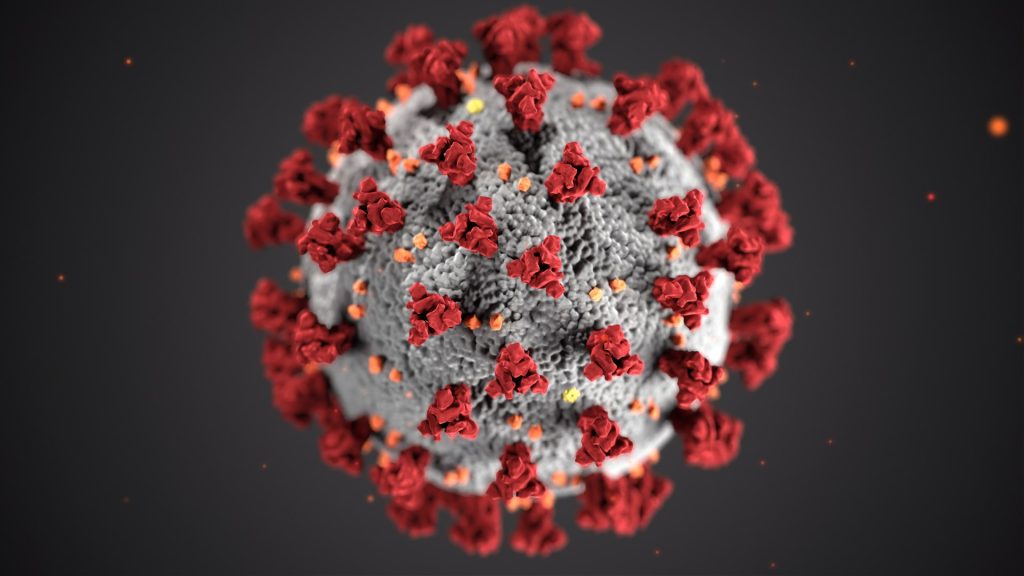
The SARS-CoV-2 coronavirus. Photo by CDC on Unsplash

A comprehensive review of what is so far known about the coronavirus its functions suggests the virus has a unique infectious profile, explaining why COVID is so difficult to treat and often leaves survivors with debilitating ‘long COVID’ symptoms.

In a review recently published in The Lancet Respiratory Medicine, the authors review what is currently known about COVID, and find that it works differently to most pathogens.   

Evidence increasingly points to the virus infecting both the upper and lower respiratory tracts. In contrast, ‘low pathogenic’ human coronavirus sub-species typically settle in the upper respiratory tract, causing cold-like symptoms, while ‘high pathogenic’ viruses, such as those that cause SARS and ARDS, typically settle in the lower respiratory tract.

Additionally, COVID has evolved a uniquely challenging set of characteristics as evidenced by more frequent multi-organ impacts, blood clots, and an unusual immune-inflammatory response not commonly associated with other similar viruses.

While animal and experimental models imply an overly aggressive immune-inflammation response is a key driver, it seems things work differently in humans: Although inflammation is a factor, it is a unique dysregulation of the immune response that causes our bodies to mismanage the way they fight the virus.

This could explain the ‘long COVID’ phenomenon that some people experience after infection, struggling with significant health issues months after infection. Long COVID is characterised by symptoms of fatigue, headache, difficulty breathing and loss of sense of smell. It is more likely with increasing age, body mass index and female sex

“The emergence of severe acute respiratory syndrome coronavirus two (SARS-CoV-2), which causes COVID-19, has resulted in a health crisis not witnessed since the 1918 Spanish flu pandemic. Tragically, millions around the world have died already,” said co-author Ignacio Martin-Loeches, Clinical Professor in Trinity College Dublin’s School of Medicine, and Consultant in Intensive Care Medicine at St James’s Hospital.

“Despite international focus on the virus, we are only just beginning to understand its intricacies. Based on growing evidence we propose that COVID-19 should be perceived as a new entity with a previously unknown infectious profile. It has its own characteristics and distinct pathophysiology and we need to be aware of this when treating people.

“That doesn’t mean we should abandon existing best-practice treatments that are based on our knowledge of other human coronaviruses, but an unbiased, gradual assembly of the key COVID-19 puzzle pieces for different patient cohorts—based on sex, age, ethnicity, pre-existing comorbidities—is what is needed to modify the existing treatment guidelines, subsequently providing the most adequate care to COVID-19 patients.”

Source: Medical Xpress

Journal information: Marcin F Osuchowski et al, The COVID-19 puzzle: deciphering pathophysiology and phenotypes of a new disease entity, The Lancet Respiratory Medicine (2021). DOI: 10.1016/S2213-2600(21)00218-6

COVID Deaths Exceeded Worst Predictions of The Public and Most Experts


Experts such as epidemiologists and statisticians made much more accurate predictions about COVID than the public, but both groups substantially underestimated the true extent of the pandemic, a study from the University of Cambridge has found.

Researchers from the Winton Centre for Risk and Evidence Communication surveyed 140 UK experts and 2086 UK laypersons in April 2020 and asked them to make predictions about the impact of COVID by the end of 2020. Participants were also asked to assign confidence in their predictions by providing upper and lower bounds of where they were 75% sure that the true answer would fall—for example, a participant would say they were 75% sure that the total number of infections would be between 300 000 and 800 000.

While only 44% of predictions from the expert group fell within their own 75% confidence ranges, only 12% of predictions from the non-experts fell within their ranges, though more numerate individuals performed a little better. The results were published in the journal PLOS ONE.

“Experts perhaps didn’t predict as accurately as we hoped they might, but the fact that they were far more accurate than the non-expert group reminds us that they have expertise that’s worth listening to,” said lead author Dr Gabriel Recchia from the Winton Centre for Risk and Evidence Communication,. “Predicting the course of a brand-new disease like COVID-19 just a few months after it had first been identified is incredibly difficult, but the important thing is for experts to be able to acknowledge uncertainty and adapt their predictions as more data become available.”

Expert opinion is important for those making decisions at any level from individual to policy. The quality of expert intuition can vary greatly depending on the field of expertise and the type of judgment required, so it is important to determine how good expert predictions really are, especially in where they could shape public opinion or government policy.

“People mean different things by ‘expert’: these are not necessarily people working on COVID-19 or developing the models to inform the response,” said Dr Recchia. “Many of the people approached to provide comment or make predictions have relevant expertise, but not necessarily the most relevant.” Dr Recchia noted that in the early stages of the pandemic, clinicians, epidemiologists, statisticians, and other individuals seen as experts by the media and the general public, were often asked to give off-the-cuff answers to questions about how bad the pandemic might get. “We wanted to test how accurate some of these predictions from people with this kind of expertise were, and importantly, see how they compared to the public.”

Participants in the survey were asked to predict how many people living in their country would have died and would have been infected by the end of 2020; they were also asked to predict infection fatality rates both for their country and worldwide.

The expert group and the non-expert group both underestimated the total number of deaths and infections in the UK. The official UK death toll at 31 December was 75 346. The median prediction of the expert group was 30 000, while that of the the non-expert group was 25 000.

For COVID fatality rates, the median expert prediction was that 10 out of every 1000 people with the virus worldwide would die from it, and 9.5 out of 1000 people with the virus in the UK would die from it. The median non-expert response to the same questions was 50 out of 1000 and 40 out of 1000. The true infection fatality rate at the end of 2020—as best could be estimated—was nearer to 4.55 out of 1000 worldwide and 11.8 out of 1000 in the UK.

“There’s a temptation to look at any results that says experts are less accurate than we might hope and say we shouldn’t listen to them, but the fact that non-experts did so much worse shows that it remains important to listen to experts, as long as we keep in mind that what happens in the real world can surprise you,” said Dr Recchia.

The researchers cautioned that it is important to differentiate between research on evaluating the forecasts of ‘experts’—individuals involved in relevant fields, such as epidemiologists and statisticians—and research on evaluating specific epidemiological models, though the models may inform experts. Many COVID prediction models have proved accurate in the short term, but rapidly become less accurate for later predictions.

Source: Medical Xpress

Journal information: PLOS ONE (2021). DOI: 10.1371/journal.pone.0250935

Doctor Receives Forbes Magazine Honour for COVID Discovery

Photo by Karolina Grabowska from Pexels

One of the first doctors to warn of COVID’s disproportionate effect  on ethnic minorities has been named on the Forbes 30 Under 30 list.

Dr Daniel Pan in Leicester, UK, was part of a group to treat the first cases in the city and noticed some of the sickest patients were minority ethnic.

The Forbes 30 Under 30 list celebrates young innovators in their respective fields, such as science and healthcare.

Dr Pan, who is a clinical fellow at the National Institute for Health Research (NIHR) at the University of Leicester, said: “It’s a great honour and I think the best thing about it is it helps advertise the research we’ve been doing, because it’s important work.”

He was one of the first to treat COVID patients in Leicester, and noticed the differences among the patients.

Dr Pan said: “Leicester has a very multi-ethnic diverse population so when the pandemic first hit the UK, I was working on the clinical wards.

“It became immediately clear to myself and my colleagues that a lot of these patients were from ethnic minority backgrounds – especially the ones who were very sick.

“We probably noticed that slightly earlier than a lot of other places, for example Italy, and we felt a need to get that out there.”

As part of a group of researchers led by Dr Manish Pareek, he contributed to work that demonstrated that COVID’s disproportionate impact on UK ethnic minority groups was largely a result of a greater risk of being infected, due to societal and health inequalities.

NIHR Leicester Biomedical Research Centre director Professor Melanie Davies remarked that Dr Pan had made a “significant contribution to research efforts”, adding he had “a bright future in clinical research ahead of him”.

He is now working alongside his colleagues on a face mask that could determine whether the wearer has COVID, and possibly how infectious they are.

Dr Pan said: “We can probably find out when a person is most infectious, because we can find the time of day and the period of their illness where they breathe out the most virus.

“If it’s effective it can be rolled out, for example, everyone in A&E could wear a mask while they’re waiting to see a doctor and those who are mask positive can then go into isolation bays.”

Source: BBC News

The Latest Anti-vaxx Disinformation: ‘Vaccine Shedding’

‘Vaccine shedding’ is the new disinformation being circulated among anti-vaxxers.

When a school in Florida, US announced that it wouldn’t allow vaccinated teachers in its classrooms, its founder said “vaccine shedding” was her main concern.

Paediatrician Nicole Baldwin, MD, said the anti-vaxx community is buzzing with this latest bit of disinformation.

“It’s amazing, and sad, what people will believe,” Dr Baldwin told MedPage Today.

This piece of disinformation follows that vaccinated people can somehow shed the spike protein, supposedly causing menstrual cycle irregularities, miscarriages, and sterility in women, merely by being in proximity.

“This is a new low, from the delusional wing of the anti-vaxx cult,” said Zubin Damania, MD, aka ZDoggMD, in a video he recently posted to bust vaccine shedding myths.

Damania explained that the misinformation arises from a previous claim that syncytin, a protein involved in placental formation, has some structural similarity SARS-CoV-2 spike protein, and so vaccination would interfere with women’s reproductive systems. Numerous fact checks have shown that vaccines don’t target the protein.

On injection, mRNA and viral vector vaccines prompt cells to make the spike protein, but it’s usually cleared in 24 to 48 hours, leaving little opportunity for “shedding,” even if it was possible, which it isn’t, underscored Dr Damania.

He pointed out another logical fallacy: “Why, then, wouldn’t natural spike protein do the same thing? Wouldn’t you be more scared of natural coronavirus infection? Oh, but it’s ‘natural.'”

There are legitimate questions about and research on whether the coronavirus itself and vaccines affect women’s menstrual cycles, he added. Since the beginning of the pandemic, women who’ve had COVID reported changes to their menstrual cycle, and Dr Damania said that researchers are examining reports of menstrual cycle changes after vaccination.

Regarding the potential relationship to vaccination, “we don’t understand, first, if it’s true, and if it were true, what is the mechanism?” he said. “Anything that causes stress, inflammation, and an immune response may have an effect on the menstrual cycle. […] Could it be that the vaccine causes a temporary change in menses? Sure, it’s possible, and it’s being looked at.”

Source: MedPage Today

Indian Medical Trainee Exams Postponed to Boost Personnel

Indian flag. Photo by Naveed Ahmed on Unsplash

India postponed exams for trainee doctors and nurses on Monday, freeing them up to fight the world’s biggest surge in COVID infections, as the health system buckles under the weight of new cases, and a lack of beds and oxygen.

The total number of infections so far rose to just short of 20 million, propelled by a 12th straight day of more than 300 000 new cases.

Actual numbers in India could be five to 10 times higher than those reported, according to medical exports.

Hospitals have been overloaded, oxygen has run short, and morgues and crematoriums have struggled with the number of corpses. 
“Every time we have to struggle to get our quota of our oxygen cylinders,” said BH Narayan Rao, a district official in the southern town of Chamarajanagar, where 24 COVID patients died, some suspected from lack of oxygen.

“It’s a day-to-day fight,” added Rao, describing the struggle for supplies.

In many cases, volunteer groups have come to the rescue. Outside a temple in India’s capital, New Delhi, Sikh volunteers provided oxygen to patients lying on benches inside makeshift tents, hooked up to a giant cylinder. A new patient would come in every 20 minutes.

“No one should die because of a lack of oxygen. It’s a small thing otherwise, but nowadays, it is the one thing every one needs,” Gurpreet Singh Rummy, who runs the service, told Reuters.

Offering a glimmer of hope, the country’s health ministry said that positive cases relative to the number of tests fell on Monday for the first time since at least April 15, and modelling shows that the virus could peak on Wednesday.

While 11 states and regions have put movement curbs in place to stem transmissions, Prime Minister Narendra Modi’s government, widely criticised for allowing the crisis to spin out of control, is reluctant to announce a national lockdown, concerned about the economic impact.

“In my opinion, only a national stay at home order and declaring medical emergency will help to address the current healthcare needs,” Bhramar Mukherjee, an epidemiologist with the University of Michigan, said on Twitter.

As medical facilities near collapse, the government postponed an exam for doctors and nurses to free up some to join in the COVID fight, it said in a statement.

Prime Minister Modi has provoked criticism for not acting earlier to limit the spread and for allowing millions of people, mostly without masks, to attend religious festivals and political rallies during March and April.

In early March, a forum of government scientific advisers warned officials of a new and more contagious variant of the coronavirus taking hold, five of its members told Reuters.

Four of the scientists said in spite of the warning, the federal government did not try and impose strict curbs.

Meanwhile, in response to India’s crisis, aid has poured in. On Sunday, the UK government said it will send another 1000 ventilators to India. 

Several nations have shut their borders to Indian arrival as the Indian COVID variant has now reached at least 17 countries including the UK, Iran and Switzerland.

Source: Reuters