Tag: cognitive decline

Vitamin D Supplements may Ward off Dementia

Vitamin D pills
Photo by Michele Blackwell on Unsplash

Taking vitamin D supplements may help ward off dementia, according to a new, large-scale study published in Alzheimer’s & Dementia: Diagnosis, Assessment & Disease Monitoring.

Canadian and UK researchers explored the relationship between vitamin D supplementation and dementia in more than 12 388 participants of the US National Alzheimer’s Coordinating Center, who had a mean age of 71 and were dementia-free when they signed up.

The team found that taking vitamin D was associated with living dementia-free for longer, and they also found 40% fewer dementia diagnoses in the group who took supplements.

Of the group, 2696 participants progressed to dementia over ten years; amongst them, 2017 (75%) had no exposure to vitamin D throughout all visits prior to dementia diagnosis, and 679 (25%) had baseline exposure.

Professor Zahinoor Ismail, of the University of Calgary and University of Exeter, who led the research, said: “We know that vitamin D has some effects in the brain that could have implications for reducing dementia, however so far, research has yielded conflicting results. Our findings give key insights into groups who might be specifically targeted for vitamin D supplementation. Overall, we found evidence to suggest that earlier supplementation might be particularly beneficial, before the onset of cognitive decline.”

While Vitamin D was effective in all groups, the team found that effects were significantly greater in females, compared to males. Similarly, effects were greater in people with normal cognition, compared to those who reported signs of mild cognitive impairment – changes to cognition which have been linked to a higher risk of dementia.

The effects of vitamin D were also significantly greater in people who did not carry the APOEe4 gene, known to present a higher risk for Alzheimer’s dementia, compared to non-carriers. The authors suggest that people who carry the APOEe4 gene absorb vitamin D better from their intestine, which might reduce the vitamin D supplementation effect. However, no blood levels were drawn to test this hypothesis.

Previous research has found that low levels of vitamin D are linked to higher dementia risk. Vitamin D is involved in the clearance of amyloid in the brain, the accumulation of which is one of the hallmarks of Alzheimer’s disease. Studies have also found that vitamin D may provide help to protect the brain against build-up of tau, another protein involved in the development of dementia.

Co-author Dr Byron Creese, at the University of Exeter, said: “Preventing dementia or even delaying its onset is vitally important given the growing numbers of people affected. The link with vitamin D in this study suggests that taking vitamin D supplements may be beneficial in preventing or delaying dementia, but we now need clinical trials to confirm whether this is really the case. The ongoing VitaMIND study at the University of Exeter is exploring this issue further by randomly assigning participants to either take vitamin D or placebo and examining changes in memory and thinking tests over time.”

Source: University of Exeter

Video Games Designed for the Elderly Boost Cognition

Photo by Tima Miroshnichenko on Pexels

Scientists have developed a variety of games designed to boost older adults’ cognitive capacity. Co-creator Professor Adam Gazzaley, MD, PhD, said the games can be an “experiential medicine”. The games adapt to the players’ skill on the fly, and were shown to confer benefits on many important cognitive processes such as short-term memory, attention and long-term memory.

Each game uses adaptive closed-loop algorithms that Dr Gazzaley’s lab pioneered in the widely cited 2013 Neuroracer study published in Nature, which first demonstrated it was possible to restore diminished mental faculties in older people with just four weeks of training on a specially designed video game. The most recent game, which uses drumming, is described in in PNAS.

Watch a short video showing how the games Neuroracer and Body Brain Trainer, developed by the Neuroscape Center, improve cognitive function for multitasking and working memory, and can even be beneficial for conditions like ADHD, Parkinson’s, and multiple sclerosis.

These algorithms get better results than commercial games by automatically adjusting in difficulty according to the players’ skills. The games using these algorithms recreate common activities, such as driving, exercising and playing a drum, and use the skills each can engender to retrain cognitive processes that decline with age.

“All of these are taking experiences and delivering them in a very personalised, fun manner, and our brains respond through a process called plasticity,” said Prof Gazzaley at the UCSF Weill Institute for Neurosciences and who is founder and executive director of Neuroscape. “Experiences are a powerful way of changing our brain, and this form of experience allows us to deliver it in a manner that’s very accessible.”

The lab’s most recent invention is a musical rhythm game, developed in consultation with drummer Mickey Hart, that not only taught the 60 to 79-year-old participants how to drum, but also improved their ability to remember faces.

The eight-week program used visual cues to train people how to play a rhythm on an electronic tablet, with an algorithm matching difficulty to the player’s ability. The cues disappeared over time, forcing the players to memorise the rhythmic pattern.

When the participants were tested at the end to see how well they could recognise unfamiliar faces, electroencephalography (EEG) data showed increased activity in a part of the brain on the right side (the superior parietal lobule) that is involved both in sight reading music and in short-term visual memory for other tasks. The researchers said the data indicate that the training improved how people bring something into memory and then take it back out again when they need it.

A second game, the Body Brain Trainer, published recently in NPJ Aging, improved blood pressure, balance and attention in a group of healthy older adults with eight weeks of training, as well as a key signature of attention that declines with age. The game also included a feedback mechanism.

“We had people wearing a heart rate monitor, and we were getting that heart rate data and feeding it into the game,” said Joaquin A. Anguera, PhD, associate professor of neurology at UCSF and director of the Clinical Division at Neuroscape. “If they weren’t working hard enough, the game got harder.”

Neuroscape published the results of a third study last year in Scientific Reports on a virtual reality spatial navigation game called Labyrinth that improved long-term memory in older adults after four weeks of training.

“These are all targeting cognitive control, an ability that is deficient in older adults and that is critical for their quality of life,” Prof Gazzaley said. “These games all have the same underlying adaptive algorithms and approach, but they are using very, very different types of activity. And in all of them we show that you can improve cognitive abilities in this population.”

Source: University of California – San Francisco

Can Good Dental Health Protect against Dementia?

Dentist checking teeth
Image by Caroline LM on Unsplash

A major analysis of all relevant published studies indicates that poor periodontal health and tooth loss may increase the risk of both cognitive decline and dementia. The finding, published in the Journal of the American Geriatrics Society, affirms a long-suspected connection between dental and cognitive health.

The analysis included 47 studies. Poor periodontal health, reflected by having periodontitis, tooth loss, deep periodontal pockets, or alveolar bone loss, was linked to a 23% increase in risk for cognitive decline and a 21% higher risk of dementia. Tooth loss on its own was associated with a 23% higher odds of cognitive decline and a 13% higher risk of dementia. The overall quality of evidence was low, however.

“From a clinical perspective, our findings emphasise the importance of monitoring and management of periodontal health in the context of dementia prevention, although available evidence is not yet sufficient to point out clear ways for early identification of at-risk individuals, and the most efficient measures to prevent cognitive deterioration,” the authors wrote.

Source: Wiley

Long-term High-fat Diets Shown to Worsen Cognitive Abilities

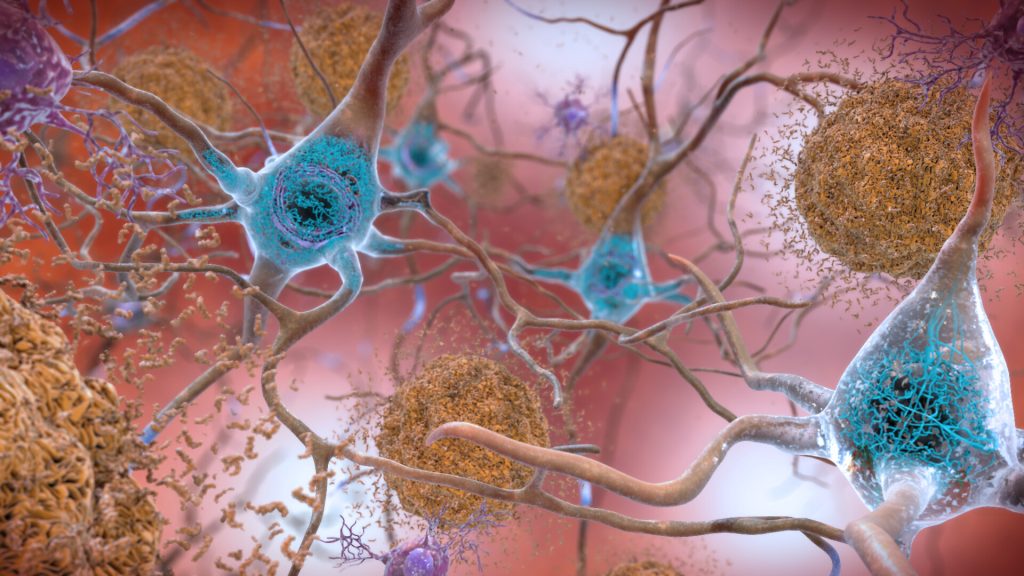
Plaques and neurons. Source: NIAH

A study published in Metabolic Brain Disease has established a clear link between mice being fed a high-fat diet for 30 weeks, resulting in diabetes, and a subsequent worsening of their cognitive abilities. This included developing anxiety, depression and worsening Alzheimer’s disease.

Mice with impaired cognitive function were also more likely to gain excessive weight due to poor metabolism caused by brain changes.

Neuroscientist and biochemist Associate Professor Larisa Bobrovskaya, who co-led the study said that the research adds to the growing body of evidence linking chronic obesity and diabetes with Alzheimer’s disease.

“Obesity and diabetes impair the central nervous system, exacerbating psychiatric disorders and cognitive decline. We demonstrated this in our study with mice,” said Associate Prof Bobrovskaya.

In the study, mice were randomised to a standard diet or a high-fat diet for 30 weeks, starting at eight weeks of age. Food intake, body weight and glucose levels were monitored at different intervals, along with glucose and insulin tolerance tests and cognitive dysfunction.

The mice on the high-fat diet gained significant weight, developed insulin resistance and started behaving abnormally compared to those fed a standard diet.

Genetically modified Alzheimer’s disease mice showed a significant deterioration of cognition and pathological changes in the brain while fed the high fat diet.

“Obese individuals have about a 55 per cent increased risk of developing depression, and diabetes will double that risk,” Assoc Prof Bobrovskaya said.

“Our findings underline the importance of addressing the global obesity epidemic. A combination of obesity, age and diabetes is very likely to lead to a decline in cognitive abilities, Alzheimer’s disease and other mental health disorders.”

Source: University of South Australia

Little to No Link Between Glaucoma and Cognitive Function

Older woman smiling
Photo by Ravi Patel on Unsplasj

Previous studies looking for an association between the neurodegenerative disorder glaucoma and cognitive function have produced mixed results. Now, findings from a large study recently published in the Journal of the American Geriatrics Society suggest that any association, if it exists, will only be small.

Glaucoma, the leading cause of irreversible blindness, is a progressive optic neuropathy with incompletely understood pathogenesis that results in progressive vision loss, often beginning with peripheral visual field defects. As a neurodegenerative process, glaucoma is associated with trans-synaptic degeneration in the brain, specifically in the lateral geniculate nucleus and visual cortex. Some prior studies have suggested that the pathogenesis of primary open angle glaucoma (POAG) and normal tension glaucoma (NTG), specifically, may be part of a broad neurodegenerative mechanism with ocular and non-ocular manifestations. Evidence also suggests that impaired vision is associated with a significant increase in the risk of accelerated cognitive decline and incident dementia. Therefore, there is interest in measuring an association between glaucoma and dementia.

The study included 7073 US adults aged 51 years and older who were interviewed by phone every two years. Those who developed glaucoma tended to have higher cognitive function scores but steeper rates of cognitive score decline over a maximum follow-up time of 18 years. The observed associations between glaucoma and cognitive function were small and unlikely to be clinically meaningful. 

“In this large longitudinal study, a diagnosis of glaucoma was not associated with steeper rates of cognitive decline; however, this study did not have access to clinical data to determine whether glaucoma-related vision loss is a risk factor for cognitive decline and dementia,” said senior author Joshua R. Ehrlich MD, MP, of the University of Michigan Medical School. “This is an important question for future studies to consider.” 

Source: Wiley

For Alzheimer’s, Old Dogs Can Teach Humans New Tricks

Photo by Pauline Loroy on Unsplash

Researchers have found that quantifiable changes can be measured in dogs suspected of suffering from cognitive decline: an approach that could serve as a model for evaluating cognitive decline progression in, and treatments for, humans with Alzheimer’s disease.

In dogs there is a similar condition to similar to Alzheimer’s disease in humans, canine cognitive dysfunction syndrome (CCDS). In CCDS, cognitive decline is associated with the development of amyloid plaques as well as cortical atrophy. CCDS is also challenging to diagnose. Traditionally, CCDS is diagnosed based on ruling out any obvious physical conditions and an owner’s answers to a questionnaire.

“One problem with the current approach is that questionnaires only capture a constellation of home behaviours,” explained Professor Natasha Olby, co-senior author of the paper. “There can be other reasons for what an owner may perceive as cognitive decline – anything from an undiagnosed infection to a brain tumour.”

Olby and co-senior author Assistant Professor Margaret Gruen, wanted to see if cognitive function could be accurately quantified in dogs.

“Our goal was to bring together multiple tools in order to get a more complete picture of how CCDS presents in dogs,” A/Prof Gruen said.

To accomplish this, they recruited 39 dogs from 15 breeds. All of them were in the senior and geriatric age range, but in good health overall. A dog is considered ‘senior’ if it is in the last 25% of its expected life span based on breed and size, and geriatric beyond that.

The dogs underwent physical and orthopaedic exams, as well as lab work that included a blood test that is a marker of neuronal death. Their owners filled out two commonly used diagnostic questionnaires, and then the dogs participated in a series of cognitive tests designed to assess executive function, memory and attention.

“The approach we took isn’t necessarily designed to be diagnostic; instead, we want to use these tools to be able to identify dogs at an early stage and be able to follow them as the disease progresses, quantifying the changes,” Prof Olby said.

The team found that cognitive and blood test results correlated well with the questionnaire scores, suggesting that a multi-dimensional approach can be used to quantify cognitive decline in aging dogs.

“Being able to diagnose and quantify CCDS in a way that is clinically safe and relevant is a good first step toward being able to work with dogs as a model for Alzheimer’s disease in humans,” Prof Olby said. “Many of the current models of Alzheimers disease – in rodents, for example – are good for understanding physiological changes, but not for testing treatments.”

“Dogs live in our homes and develop naturally occurring disease just like we do,” A/Prof Gruen said. “These findings show promise for both dogs and humans in terms of improving our understanding of disease progression as well as for potentially testing treatments.”

Source: North Carolina State University

Seven Hours’ Sleep is Optimal in Middle Age and Older

Sleeping woman
Photo by Cottonbro on Pexels

According to research published in Nature Aging, seven hours is the ideal amount of sleep for people in their middle age and upwards, with too little or too much little sleep associated with poorer cognitive performance and mental health.

Sleep plays an important role in enabling cognitive function and maintaining good psychological health, and also removes waste products from the brain. Alterations in sleep patterns appear during ageing, including difficulty falling asleep and staying asleep, and decreased quantity and quality of sleep. It is thought that these sleep disturbances may contribute to cognitive decline and psychiatric disorders in the ageing population.

Scientists from the UK and China examined data from nearly 500 000 adults aged 38–73 years from the UK Biobank. Participants were asked about their sleeping patterns, mental health and wellbeing, and took part in a series of cognitive tests. Brain imaging and genetic data were available for almost 40 000 of the study participants.

The researchers found in their analysis that both insufficient and excessive sleep duration were associated with impaired cognitive performance, such as processing speed, visual attention, memory and problem-solving skills. The optimal amount of sleep was found to be seven hours per night for cognitive performance and good mental health. More symptoms of anxiety and depression and worse overall wellbeing were associated with sleeping for longer or shorter durations.

The researchers say one possible reason for the association between insufficient sleep and cognitive decline may be due to the disruption of slow-wave — ‘deep’ — sleep. Disruption to this type of sleep has been shown to have a close link with memory consolidation as well as the build-up of amyloid — a key protein which, when it misfolds, can cause ‘tangles’ in the brain characteristic of some forms of dementia. Additionally, lack of sleep may hamper the brain’s ability to rid itself of toxins.

The amount of sleep was also linked differences in the structure of brain regions involved in cognitive processing and memory, again with greater changes associated with greater than or less than seven hours of sleep.

Consistently getting seven hours’ sleep each night was also important to cognitive performance and good mental health and wellbeing. Interrupted sleep patterns have previously been shown to be associated with increased inflammation, indicating a susceptibility to age-related diseases in older people.

Professor Jianfeng Feng from Fudan University in China said: “While we can’t say conclusively that too little or too much sleep causes cognitive problems, our analysis looking at individuals over a longer period of time appears to support this idea. But the reasons why older people have poorer sleep appear to be complex, influenced by a combination of our genetic makeup and the structure of our brains.”

The researchers say the findings suggest that insufficient or excessive sleep duration may be a risk factor for cognitive decline in ageing. This is supported by previous studies that have reported a link between sleep duration and the risk of developing Alzheimer’s disease and dementia, in which cognitive decline is a hallmark symptom.

Professor Barbara Sahakian from the Department of Psychiatry at the University of Cambridge, one of the study’s authors, said: “Getting a good night’s sleep is important at all stages of life, but particularly as we age. Finding ways to improve sleep for older people could be crucial to helping them maintain good mental health and wellbeing and avoiding cognitive decline, particularly for patients with psychiatric disorders and dementias.”

Source: University of Cambridge

An AI ‘Storytelling’ Companion to Assist Dementia Patients

Researchers at the National Robotarium in the UK, are developing an artificial intelligence (AI) ‘storytelling’ companion that will aid memory recollection, boost confidence and combat depression in patients suffering from Alzheimer’s disease and other types of dementia.

The idea for the ground-breaking ‘Agent-based Memory Prosthesis to Encourage Reminiscing’ (AMPER) project came from Dr Mei Yii Lim, a co-investigator of the project and an experienced memory modelling researcher.

In Alzheimer’s patients, memory loss occurs in reverse chronological order, with pockets of long-term memory remaining accessible even as the disease progresses. Rehabilitative care methods currently focus on physical aids and repetitive reminding techniques, but AMPER’s AI-driven user-centred approach will instead focus on personalised storytelling to help bring a patient’s memories back to the surface.

Dr Lim explained the project: “AMPER will explore the potential for AI to help access an individual’s personal memories residing in the still viable regions of the brain by creating natural, relatable stories. These will be tailored to their unique life experiences, age, social context and changing needs to encourage reminiscing.”

Having communication difficulties and decreased confidence are commonly experienced by people living with dementia and can often lead to individuals becoming withdrawn or depressed. By using AI to aid memory recollection, researchers at the National Robotarium hope that an individual’s sense of value, importance and belonging can be restored and quality of life improved.

The project’s long-term vision is to show that AI companions can become more widely used and integrated into domestic, educational, health and assistive-needs settings.

Professor Ruth Aylett from the National Robotarium is leading the research. She said: “One of the most difficult aspects of living with dementia can be changes in behavior caused by confusion or distress. We know that people can experience very different symptoms that require a range of support responses. Current intervention platforms used to aid memory recollection often take a one-size-fits-all approach that isn’t always suitable to an individual’s unique needs.”

“AI technology has the potential to play a pivotal role in improving the lives of people living with cognitive diseases. Our ambition is to develop an AI-driven companion that offers patients and their caregivers a flexible solution to help give an individual a sustained sense of self-worth, social acceptance and independence.

“Through projects like AMPER, we’re able to highlight the many ways AI and robotics can both help and improve life for people now and in the future. At the National Robotarium, we’re working on research that will benefit people in adult care settings as well as across a wide range of other sectors that will make life easier, safer and more supported for people.”

Once developed, the AI technology will be accessed through a tablet-based interface to make it more widely accessible and low-cost. The National Robotarium team will also investigate a using the AI in a desktop robot to see if a physical presence has any benefit.

Source: Heriot Watt University

Selenium Could Help Reverse Cognitive Decline

Photo source: Pixabay

The trace metal selenium could help reverse the cognitive impact of stroke and boost learning and memory in ageing brains, according to a study published in Cell Metabolism.

Previous studies on the impact of exercise on the ageing brain found levels of a protein key to transporting selenium in the blood were elevated by physical activity.

Lead researcher Dr Tara Walker said: “We’ve known for the last 20 years that exercise can create new neurons in the brain, but we didn’t really understand how,” Dr Walker said.

The research team sought to find out whether dietary selenium supplements could replicate the effects of exercise.

“Our models showed that selenium supplementation could increase neuron generation and improve cognition in elderly mice,” Dr Walker said. “The levels of new neuron generation decrease rapidly in aged mice, as they do in humans. When selenium supplements were given to the mice, the production of neurons increased, reversing the cognitive deficits observed in ageing.”

Selenium is an essential trace metal which can play an important role in human health. It is absorbed from soil and water and is found in foods such as grains, meat and nuts, with the highest levels found in Brazil nuts. The researchers also investigated whether selenium would have an impact on post-stroke cognitive decline.

“Young mice are really good at the learning and memory tasks, but after a stroke, they could no longer perform these tasks,” Dr Walker said. “We found that learning and memory deficits of stroke affected mice returned to normal when they were given selenium supplements.”

Dr Walker said the results opened a new therapeutic avenue to boost cognitive function in people who were unable to exercise due to poor health or old age.

“However, selenium supplements shouldn’t be seen as a complete substitute for exercise, and too much can be bad for you,” she said. “A person who is getting a balanced diet of fruits, nuts, veggies and meat usually has good selenium levels. But in older people, particularly those with neurological conditions, selenium supplements could be beneficial.”

Source: University of Queensland

How Many Intervention Sessions to Prevent Cognitive Decline?

Image by Mar Lezhava on Unsplash

Physical activity, diet and cognitive stimulation are all known to be good interventions for the prevention of Alzheimer’s disease and dementia. Now an international team of researchers has determined that only about a dozen intervention sessions are all that were needed to observe an improvement in cognition.

Until now, the number of sessions or “doses” needed for optimal effect has been unknown. Published in Alzheimer’s & Dementia: The Journal of the Alzheimer’s Association, the study led by Université de Montréal psychology professor Sylvie Belleville showed that between 12 and 14 sessions were all that were needed to boost cognitive ability, though the gain observed levelled off with more sessions.

“In pharmacological studies, every effort is made to define an optimal treatment dose needed to observe the expected effects, “ said Prof Belleville,  a neuropsychologist and researcher at the research centre of the UdeM-affiliated Institut universitaire de gériatrie de Montréal. “This is rarely done in non-pharmacological studies, especially those on the prevention of cognitive decline, where little information is available to identify this dose.

“Defining an optimal number of treatment sessions is therefore crucial.,” she continued. “Indeed, proposing too few sessions will produce no noticeable improvement effects, but too many sessions is also undesirable as these interventions are costly. They are costly both for the individual who follows the treatments, in terms of time and involvement, and for the organisation offering these treatments.”

The study is based on a secondary analysis of data from the three-year Multidomain Alzheimer Preventive Trial (MAPT) and examined 749 participants who received a range of interventions aimed at preventing cognitive decline. These interventions included dietary advice, physical activity and cognitive stimulation.

In their research, Prof Belleville’s team noted that people’s individuality should be considered when determining the optimal treatment dose.

In their study, the researchers gauged the effects of the sessions in terms of each participant’s age, gender, education level, and cognitive and physical condition. The relationship between the “dose” each received and their cognitive improvement was then analysed.

The findings revealed an increase with dose followed by a plateau effect after 12 to 14 sessions. However, participants with lower levels of education or more risk factors for frailty did benefit from more sessions.

The researchers concluded that it’s important to pinpoint an optimal dose and to customise the treatment for each individual. Not only is “dosage” an important component of behavioural interventions, it can also provide valuable information in resource-constrained settings, helping public-health agencies develop effective prevention programs and offer guidance to older adults and clinicians.

Source: University of Montreal