Increased risk for autism appears to be linked to the Y chromosome, a Geisinger study found, offering a new explanation for the greater prevalence of autism in males. The results were published in Nature Communications.
Autism spectrum disorder (ASD) is nearly four times more prevalent among males than females, but the reason for this disparity is not well understood. One common hypothesis involves the difference in sex chromosomes between males (XY) and females (XX).
“A leading theory in the field is that protective factors of the X chromosome lower autism risk in females,” said Matthew Oetjens, PhD, assistant professor at Geisinger’s Autism & Developmental Medicine Institute.
The Geisinger research team, led by Dr Oetjens and Alexander Berry, PhD, staff scientist, sought to determine the effects of the X and Y chromosomes on autism risk by examining ASD diagnoses in people with an abnormal number of X or Y chromosomes, a genetic condition known as sex chromosome aneuploidy.
The team analysed genetic and ASD diagnosis data on 177 416 patients enrolled in the Simons Foundation Powering Autism Research (SPARK) study and Geisinger’s MyCode Community Health Initiative.
They found that individuals with an additional X chromosome had no change in ASD risk, but that those with an additional Y chromosome were twice as likely to have an ASD diagnosis.
This suggests a risk factor associated with the Y chromosome instead of a protective factor associated with the X chromosome.
“While these may seem like two sides of the same coin, our results encourage us to look for autism risk factors on the Y chromosome instead of limiting our search to protective factors on the X chromosome,” Dr. Berry said.
“However, further research is needed to identify the specific risk factor associated with the Y chromosome.”
This analysis also confirms prior work by showing that the loss of an X or Y chromosome, known as Turner syndrome, is associated with a large increase in ASD risk. Further research is needed to determine whether the ASD risk factors associated with sex chromosome aneuploidy explains the sex difference in ASD prevalence.
New research published in Developmental Medicine & Child Neurology reveals that children born preterm are more likely to screen positive for autism than full-term children.
For the study, 9725 toddlers were screened at 15-, 18-, or 24-month well child visits using a test called the Modified Checklist for Autism in Toddlers, Revised.
Screening results that were positive for autism were most common among children born extremely preterm (51.35%) and least common among those born full-term (6.95%). Subsequent evaluations after positive screening revealed the following rates of autism diagnoses: 16.05% of extremely preterm, 2.00% of very preterm, 2.89% of moderately preterm, and 1.49% of full-term births.
Utilising the screening test at ages unadjusted for early birth was effective for identifying autism, as only a small number of preterm children (1.90%) who screened positive with the test did not receive a diagnosis of autism or other developmental delay following evaluation.
“With this research, we are hoping to help dissipate doubts that clinicians might have about the utility of screening for autism in toddlers born preterm,” said corresponding author Georgina Perez Liz, MD, of the AJ Drexel Autism Institute. “Low-cost, universal public health strategies such as screening can lead to less disparity in autism detection and help children on the spectrum start specific intervention and supports earlier in life.”
New research published in the journal iSCIENCE has revealed new insights into early sensorimotor features and cognitive abilities of toddlers who are later diagnosed with Autism Spectrum Disorder (ASD). The research, led by Kristina Denisova, a professor of Psychology and Neuroscience at the CUNY Graduate Center and Queens College, takes an important step toward better understanding ASD so that more precise, individually tailored interventions can be developed.
ASD, typically diagnosed around the ages of 4 to 5 years, is a neurodevelopmental disorder with complex and varied presentations, including atypical communication and restrictive and repetitive patterns of behaviour. Moreover, cognitive abilities are often lower in individuals with ASD. Despite the established link between lower intelligence quotient (IQ) in infancy and a future diagnosis of ASD, not all children with ASD exhibit lower cognitive abilities during infancy. The study addresses the critical gap in knowledge regarding the early features that differentiate children with varying cognitive abilities who later develop ASD.
The research team investigated the relationship between movement and cognitive abilities in toddlers before their ASD diagnosis, both during sleep and wakefulness. The study posed two key questions: Do ASD children with lower IQ exhibit altered movement during sleep compared to children with higher IQ? Additionally, are lower motor skills during wakefulness characteristic of lower-IQ children with ASD compared to those of higher-IQ ASD toddlers?
The research was conducted in two stages. In the first sample, the team examined sensorimotor features obtained from sleep functional magnetic resonance imaging (fMRI) in 111 toddlers with ASD. In the second, independent sample, they analysed sensorimotor functioning during wakefulness in over 1000 toddlers with ASD, categorised by lower vs higher cognitive abilities.
The findings revealed that toddlers with ASD and lower IQs have significantly altered sensorimotor features compared to toddlers with ASD and higher IQs. Interestingly, the sensorimotor features of higher-IQ ASD toddlers were nearly indistinguishable from typically developing (TD) toddlers. This suggests that a higher IQ may confer resilience to atypical sensorimotor functioning, and conversely, that poor sensorimotor functioning may be a key marker for lower IQ in childhood autism.
Moreover, the study found that lower-IQ ASD toddlers consistently exhibited lower gross motor skills across various age milestones (6, 12, 18, 24, and 30 months). This disruption in early sensorimotor learning during critical developmental periods indicates a potential vulnerability in the brain’s motor control circuitry, associated with lower cognitive abilities in toddlers who later receive an ASD diagnosis.
“The implications of these findings are far-reaching,” said Denisova. “They underscore the need for more precise, tailored interventions for children with ASD, particularly those with lower cognitive abilities. Interventions for lower-IQ autistic children may need to focus on enhancing both sensorimotor and cognitive skills, while interventions for higher-IQ autistic children might prioritise leveraging their strengths to mitigate potential mental health consequences.”
Denisova emphasised the importance of future research in this area, particularly involving underserved families who face barriers in accessing early intervention services.
Scientists unveil the link between cord blood fatty acid metabolites and autism spectrum disorder symptoms in children
Source: Pixabay CC0
Autism spectrum disorder (ASD) is quite prevalent, but its underlying mechanism is not well understood. In a recent study, researchers from Japan have found a significant link between the levels of specific dihydroxy fatty acids in umbilical cord blood and ASD symptoms. Their findings, published in Psychiatry and Clinical Neurosciences, highlight the role of these metabolites in the developmental trajectory of ASD and could pave the way for early diagnostic techniques and a better understanding of ASD pathophysiology.
Although the exact causes of ASD are unclear, currently available evidence points to neuroinflammation as a major factor. Several studies in mouse models of ASD have hinted at the importance of polyunsaturated fatty acids (PUFA) and their metabolites during pregnancy in playing a key role in ASD development. PUFA metabolites regulated by the cytochrome P450 (CYP) affect foetal development in mice causing impairments closely linked to ASD symptoms. However, it is still unclear if the same is true for humans and needs further investigation.
To address this knowledge gap, a research team led by Professor Hideo Matsuzaki from the Research Center for Child Mental Development, analysed the CYP-PUFA levels in neonatal umbilical cord blood samples. Their study, sheds light on the possible causes of ASD.
Sharing the motivation behind their study, Prof. Matsuzaki explains, “CYP metabolism forms both epoxy fatty acids (EpFAs), which have anti-inflammatory effects, and dihydroxy fatty acids, or ‘diols,’ which have inflammatory properties. We hypothesized that the dynamics of CYP-PUFA metabolites during the fetal period, that is, lower EpFA levels, higher diol levels, and/or increased EpFA metabolic enzymes would influence ASD symptoms and difficulties with daily functioning in children after birth.”
To test this hypothesis, the researchers investigated the link between PUFA metabolites in umbilical cord blood and ASD scores in 200 children. The cord blood samples had been collected immediately after birth and preserved appropriately, whereas ASD symptoms and adaptive functioning were assessed when the same children were six years old, with the help of their mothers.
After careful statistical analyses of the results, the researchers identified one compound in cord blood that may have strong implications for ASD severity, namely 11,12- dihydroxyeicosatrienoic acids (diHETrE), a dihydroxy fatty acid derived from arachidonic acid. This fatty acid is found in poultry, animal organs and meat, fish, seafood, and eggs.
“The levels of diHETrE, an arachidonic acid-derived diol, in cord blood at birth significantly impacted subsequent ASD symptoms in children and were also associated with impaired adaptive functioning. These findings suggest that the dynamics of diHETrE during the foetal period is important in the developmental trajectory of children after birth,” highlights Prof Matsuzaki.
More specifically, the researchers found that higher levels of the molecule 11,12-diHETrE had an impact on social interactions, whereas low levels of 8,9-diHETrE impacted repetitive and restrictive behaviours. Moreover, this correlation was more specific for girls than for boys. This newfound knowledge could be crucial in understanding, diagnosing, and potentially preventing ASD. By measuring diHETrE levels at birth, it may be possible to predict the likelihood of ASD development in children.
“The effectiveness of early intervention for children with ASD is well established and detecting it at birth could enhance intervention and support for children with ASD,” muses Prof Matsuzaki. He also adds that inhibiting diHETrE metabolism during pregnancy might be a promising avenue for preventing ASD traits in children, although more research will be needed in this regard.
In conclusion, these findings open a promising avenue for researchers unravelling the mysteries surrounding ASD. We hope that enhanced understanding and early diagnostics will be able to improve the lives of people with ASD and their families.
Siblings of autistic children have a 20% chance of being autistic themselves – about seven times higher than the rate in infants with no autistic siblings, according to new research published in Pediatrics.
The study, by UC Davis MIND Institute distinguished professor Sally Ozonoff and the Baby Siblings Research Consortium, is based on a large, diverse group of families at research sites across the United States, Canada, and the United Kingdom. It confirms the same research group’s 2011 findings about the likelihood of autism in siblings, and adds news information suggesting it is more common, not less, in historically underrepresented groups.
Increasing autism rates prompt new study
“The rate of autism diagnosis in the general community has been steadily increasing since our previous paper was published,” Ozonoff explained. Ozonoff has studied the recurrence of autism in families for decades.
Ozonoff noted that there have also been changes in autism diagnostic criteria over the past decade. In addition, there is a growing awareness of autism in girls.
“So, it was important to understand if these had any impact on the likelihood of autism recurrence within a family,” she said.
The 2011 paper found a recurrence rate of 18.7%, while the new paper found a rate of 20.2% – a small but not significant increase.
“This should reassure providers who are counseling families and monitoring development. It should also help families plan for and support future children,” Ozonoff said.
A larger, more diverse study
The new study included data from 1605 infants at 18 research sites. All infants had an older autistic sibling.
“This study was much larger than the first and included more racially diverse participants,” Ozonoff said. The original study included 664 children.
Researchers followed the children from as early as six months of age for up to seven visits. Trained clinicians assessed the children for autism at age three using the Autism Diagnostic Observation Schedule (ADOS-2), a well-validated tool. The data were gathered from 2010 to 2019.
Sex of first autistic child, multiple autistic siblings key factors
Researchers found that the sex of the first autistic child influenced the likelihood that autism would recur within a family.
“If a family’s first autistic child was a girl, they were 50% more likely to have another child with autism than if their first autistic child was a boy,” Ozonoff said. “This points to genetic differences that increase recurrence likelihood in families who have an autistic daughter.”
The researchers also found that a child with multiple autistic siblings has a higher chance of autism (37%) than a child with only one sibling on the spectrum (21%).
The sex of the infant was also associated with the likelihood of familial recurrence. If the later-born infant was a boy, they were almost twice as likely as a girl to be diagnosed themselves.
“The familial recurrence rate if the new baby was a boy was 25%, whereas it was 13% if the new baby was a girl,” Ozonoff explained. “This is in line with the fact that boys are diagnosed with autism about four times as often as girls in general.”
The researchers found that race and the mother’s education level were likely factors as well. In non-white families, the recurrence rate was 25%. In white families, the recurrence rate was about 18%. In families where the mother had a high school education or less, recurrence was 32%. With some college, the rate was 25.5%, and with a college degree the rate was 19.7%. When the mother had a graduate degree, it dropped to 16.9%.
“These findings are new – and critical to replicate,” Ozonoff explained. “They do mirror the recent CDC findings that autism is more prevalent in children of historically underrepresented groups.” She noted that this reversed a longtime trend of lower prevalence in those groups.
Most importantly, said Ozonoff, if these findings are replicated, they may indicate that there are social determinants of health that may lead to higher rates of autism in families. She emphasized that this study was not designed to answer those critical questions, and more research is needed.
Tracking outcomes
Unlike the first study, the researchers also tracked families who dropped out of the three-year study to see if their outcomes differed from those who did. “We wondered whether families who stayed in the study may have had children who were more affected — making them more worried about their development,” she explained.
That could have biased the estimates of recurrence to be higher than they really were. The current study showed that was not the case.
“So, now we have two large, independent studies that report familial recurrence in the same range,” Ozonoff said. “This reinforces how important it is that providers closely monitor the siblings of autistic children for delays in social development or communication. This is especially true in families who have reduced access to care, because early diagnosis and intervention are critical.”
A new study led by UC Davis researchers finds widespread differences in brain development between autistic boys and girls ages 2-13. The study, published recently in Molecular Psychiatry, found sex-specific changes in the thickness of the brain’s cortex, or outer layer.
The findings are notable because so few studies have addressed cortical development in autistic girls, who are diagnosed with autism less often than males. Nearly four males are diagnosed with autism for every one female.
“It is clear that this sex bias is due, in part, to underdiagnosis of autism in females,” said Christine Wu Nordahl, a professor in the Department of Psychiatry and Behavioral Sciences and the UC Davis MIND Institute and a senior author on the paper.
“But this study suggests that differences in diagnosis are not the full story – biological differences also exist.”
The cortex is made up of distinct layers comprised of millions of neurons. Until about age 2, the cortex rapidly thickens as new neurons are created. After this peak, the outer cortical layer thins. Previous studies have found that this thinning process is different in autistic children than non-autistic children, but whether autistic boys and girls share the same differences had not been examined.
“It’s important to learn more about how sex differences in brain development may interact with autistic development and lead to different developmental outcomes in boys and girls,” explained Derek Andrews, lead author on the study and an assistant project scientist in the Department of Psychiatry and Behavioral Sciences and at the MIND Institute.
A changing cortex in childhood
The research team studied the brain scans of 290 autistic children – 202 males and 88 females, and 139 non-autistic, typically developing individuals – 79 males and 60 females.
All participants were in the MIND Institute’s Autism Phenome Project (APP), one of the largest longitudinal autism studies in the world.
The project includes the Girls with Autism Imaging of Neurodevelopment (GAIN) study, launched to increase the number of females represented in research.
The researchers took MRI scans at up to four time periods between the ages of 2 and 13.
They found that at age 3, autistic girls had a thicker cortex than non-autistic girls of the same age, comprising about 9% of the total cortical surface. Differences in autistic males when compared to non-autistic males of the same age were much less widespread.
In addition, when compared to males, autistic females had faster rates of cortical thinning into middle childhood. The cortical differences were present across multiple neural networks.
“We found differences in the brain associated with autism across nearly all networks in the brain,” Andrews said.
He noted that it was a surprise at first that the differences were greatest at younger ages. Because autistic girls had a more rapid rate of cortical thinning, by middle childhood, the differences between autistic males and females were much less pronounced.
“We typically think of sex differences as being larger after puberty. However, brain development around the ages of 2-4 is highly dynamic, so small changes in timing of development between the sexes could result in large differences that then converge later,” Andrews explained.
The importance of long-term studies of both sexes
These findings make it clear that longitudinal studies that include both sexes are necessary, Nordahl said.
“If we had only looked at boys at age 3, we may have concluded that there were no differences. If we had both boys and girls, but only investigated differences at 11 years of age, we may have concluded that there were very few sex differences in the cortex. We needed to follow both boys and girls across development to see the full picture,” she explained.
This was why Nordahl, who now directs the APP, launched the GAIN study in 2014. “The APP had a wonderfully large sample of about 150 autistic boys, but only about 30 autistic girls. This was too few autistic girls to really examine how they might be similar or different to boys, so we worked to increase the representation of autistic females in our research,” she said.
GAIN is unique, and Andrews said he hopes other researchers will follow suit in including more autistic girls in autism research. “Autistic females represent about 20% of the autistic population. Any successful effort to understand autism will need to include autistic females.”
Researchers in Japan discovered that a special kind of genetic mutation works differently from typical mutations in how it contributes to autism spectrum disorder (ASD). In essence, because of the three-dimensional structure of the genome, mutations are able to affect neighbouring genes that are linked to ASD, thus explaining why ASD can occur even without direct mutations to ASD-related genes. This study appeared in the scientific journal Cell Genomics.
ASD is a group of conditions characterised in part by repetitive behaviours and difficulties in social interaction. Although it runs in families, the genetics of its heritability are complex and remain only partially understood. Studies have shown that the high degree of heritability cannot be explained simply by looking at the part of the genome that codes for proteins. Rather, the answer could lie in the non-coding regions of the genome, particularly in promoters, the parts of the genome that ultimately control whether or not the proteins are actually produced. The team led by Atsushi Takata at in the RIKEN Center for Brain Science (CBS) examined de novo gene variants (new, non-inherited mutations) in these parts of the genome.
The researchers analysed an extensive dataset of over 5000 families, making this one of the world’s largest genome-wide studies of ASD to date. They focused on TADs – three-dimensional structures in the genome that allow interactions between different nearby genes and their regulatory elements. They found that de novo mutations in promoters heightened the risk of ASD only when the promoters were located in TADs that contained ASD-related genes. Because they are nearby and in the same TAD, these de novo mutations can affect the expression of ASD-related genes. In this way, the new study explains why mutations can increase the risk of ASD even when they aren’t located in protein-coding regions or in the promotors that directly control the expression of ASD-related genes.
“Our most important discovery was that de novo mutations in promoter regions of TADs containing known ASD genes are associated with ASD risk, and this is likely mediated through interactions in the three-dimensional structure of the genome,” says Takata.
To confirm this, the researchers edited the DNA of stem cells using the CRISPR/Cas9 system, making mutations in specific promoters. As expected, they observed that a single genetic change in a promotor caused alterations in an ASD-associated gene within the same TAD. Because numerous genes linked to ASD and neurodevelopment were also affected in the mutant stem cells, Takata likens the process to a genomic “butterfly effect” in which a single mutation dysregulates disease-associated genes that are scattered in distant regions of the genome.
Takata believes that this finding has implications for the development of new diagnostic and therapeutic strategies. “At the very least, when assessing an individual’s risk for ASD, we now know that we need to look beyond ASD-related genes when doing genetic risk assessment, and focus on whole TADs that contain ASD-related genes,” explains Takata. “Further, an intervention that corrects aberrant promoter-enhancer interactions caused by a promotor mutation may also have therapeutic effects on ASD.”
Further research involving more families and patients is crucial for better understanding ASD’s genetic roots. “By expanding our research, we will gain a better understanding of the genetic architecture and biology of ASD, leading to clinical management that enhances the well-being of affected individuals, their families, and society,” says Takata.
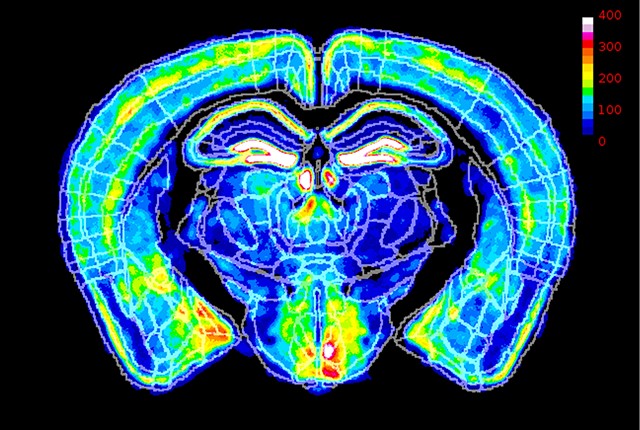
X-chromosome inactivation varies across different areas of brains. Here, fluorescent imaging data from a mouse reveal where the father’s X chromosome is most active (white) and least active (blue). Credit: Eric Szelenyi
A study using mice published in the journal Cell Reports suggests how chromosome inactivation may protect women from autism disorder inherited from their father’s X chromosome.
Because cells do not need two copies of the X chromosome, the cells inactivate one copy early in embryonic development, a well-studied process known as X chromosome inactivation. As a result of this inactivation, every female is made up of a mix of cells, some have an active X chromosome from her father and others from her mother, a phenomenon known as mosaicism.
For many years, it has been thought that this was random and would result, on average, in a roughly 50/50 mix of cells, with 50% having an active paternal X chromosome and 50% an active maternal X chromosome.
Now a new study finds that, in the mouse brain at least, this is not the case. Instead, there appears to be a bias in the process that results in the paternal X chromosome being inactivated in 60% of the cells rather than the expected 50%.
When the X-linked mutation that is the most common cause of autism spectrum disorder is inherited from the father, the pattern of X-chromosome inactivation in the brain circuitry of females can prevent the effects of that mutation, the study found.
“This bias may be a way to reduce the risk of harmful mutations, which occur more frequently in male chromosomes,” said corresponding author Eric Szelenyi, acting assistant professor of biological structure at the University of Washington School of Medicine in Seattle.
The X-chromosome is of particular interest because it carries more genes involved in brain development than any other chromosome. Mutations in the chromosome are linked to more than 130 neurodevelopmental disorders, including fragile X syndrome and autism.
In the study, the researchers first determined the ratio of X chromosome inactivation in healthy mice by analyzing roughly 40 million brain cells per mouse. The scientists did this by using high-throughput volumetric imaging and automated counting. This analysis revealed a systematic 60:40 ratio across all possible anatomical regions.
They then examined what would happen if they genetically added a mouse model for fragile X syndrome. This syndrome is the most common form of inherited intellectual and developmental disability in humans.
They first tested the mice for behaviors thought to be analogous to those impaired in people with fragile X syndrome. These tests evaluate such things as their sensorimotor function, spatial memory and tendencies towards anxiety and sociability.
They found that the mice who inherited the mutation on their mother’s X chromosome, which are less likely to be inactivated in the 60:40 ratio, were more likely to exhibit behaviour analogous to fragile X syndrome. They exhibited more signs of anxiety, less sociability, poor performance in spatial learning, and deficits in sensorimotor function.
But mice that inherited the mutation from one their father’s X chromosomes, which were more likely to be inactivated, did not appear impaired.
“What was most interesting is that using each animal’s behavioural performance was most accurately predicted by X chromosome inactivation in brain circuits, rather than just looking at the brain as a whole, or single brain regions,” said Szelenyi. “This suggests that having more mutant X-active cells due to maternal inheritance increases overall disease risk, but specific mosaic pattern within brain circuitry ultimately decides which behaviors are impacted the most.”
“This suggests that the 20% difference in mutant X-active cells created by the bias can be protective against X mutations from the father, which occur more commonly,” he said.
The findings may also explain why symptoms of X-linked syndromes, like X-linked autism spectrum disorder, vary more in females than males.
Disturbed gut flora during the first years of life is associated with diagnoses such as autism and ADHD later in life. One explanation for this disturbance could be from antibiotic treatment. This is according to a study led by researchers at the University of Florida and Linköping University and published in the journal Cell.
The study is the first prospective study to examine gut flora composition and a large variety of other factors in infants, in relation to the development of the children’s nervous system. The researchers have found many biological markers that seem to be associated with future neurological development disorders, such as autism spectrum disorder, ADHD, communication disorder and intellectual disability.
“The remarkable aspect of the work is that these biomarkers are found at birth in cord blood or in the child’s stool at one year of age over a decade prior to the diagnosis,” says Eric W Triplett, professor at the Department of Microbiology and Cell Science at the University of Florida, USA, one of the study leaders.
Antibiotic treatment could be involved
The study is part of the ABIS (All Babies in Southeast Sweden) study led by Johnny Ludvigsson at Linköping University. More than 16 000 children born in 1997–1999, representing the general population, have been followed from birth into their twenties. Of these, 1197 children (7.3%), have been diagnosed with autism spectrum disorder, ADHD, communication disorder or intellectual disability. Many lifestyle and environmental factors have been identified through surveys conducted on several occasions during the children’s upbringing. For some of the children, the researchers have analysed substances in umbilical cord blood and bacteria in their stool at the age of one.
“We can see in the study that there are clear differences in the intestinal flora already during the first year of life between those who develop autism or ADHD and those who don’t. We’ve found associations with some factors that affect gut bacteria, such as antibiotic treatment during the child’s first year, which is linked to an increased risk of these diseases,” says Johnny Ludvigsson, senior professor at the Department of Biomedical and Clinical Sciences at Linköping University, who led the study together with Eric W. Triplett.
Children who had repeated ear infections before one year of age had a higher risk of a developmental neurological disorder diagnosis later in life. It is probably not the infection itself that is the culprit, but the researchers suspect a link to antibiotic treatment. They found that the presence of Citrobacter bacteria or the absence of Coprococcus bacteria increased the risk of future diagnosis. One possible explanation may be that antibiotic treatment has disturbed the composition of the gut flora in a way that contributes to neurodevelopmental disorders. The risk of antibiotic treatment damaging the gut flora and increasing the risk of diseases linked to the immune system, such as type 1 diabetes and childhood rheumatism, has been shown in previous studies.
“Coprococcus and Akkermansia muciniphila have potential protective effects. These bacteria were correlated with important substances in the stool, such as vitamin B and precursors to neurotransmitters which play vital roles orchestrating signalling in the brain. Overall, we saw deficits in these bacteria in children who later received a developmental neurological diagnosis,” says study first author Angelica Ahrens, Assistant Scientist in Eric Triplett’s research group at the University of Florida.
The present study also confirms that the risk of developmental neurological diagnosis in the child increases if the parents smoke. Conversely, breastfeeding has a protective effect, according to the study.
Differences at birth
In cord blood taken at the birth of children, the researchers measured substances such as fatty acids and amino acids, as well as exogenous ones such as nicotine and environmental toxins. They compared substances in the umbilical cord blood of 27 children diagnosed with autism with the same number of children without a diagnosis.
It turned out that children who were later diagnosed had low levels of several important fats in the umbilical cord blood. One of these was linolenic acid, which is needed for the formation of omega 3 fatty acids with anti-inflammatory properties and other effects in the brain. The same group also had higher levels than the control group of a PFAS substance, used as flame retardants and shown to negatively affect the immune system in several different ways. PFAS substances can enter the body via drinking water, food and the air we breathe.
Opens up new possibilities
As the relationships found in the Swedish children may not be generalisable to other populations, studies in other populations are needed. Another question is whether gut flora imbalance is a triggering factor or whether it has occurred as a result of underlying factors, such as diet or antibiotics. Yet even accounting for risk factors that might affect the gut flora, they found that the link between future diagnosis remained for many of the bacteria.
The research is at an early stage and more studies are needed, but the discovery that many biomarkers for future developmental neurological disorders can be observed at an early age opens up the possibility of developing screening protocols and preventive measures in the long term.
A global collaborative research group has identified brain energy metabolism dysfunction leading to altered pH and lactate levels as common hallmarks in numerous animal models of neuropsychiatric and neurodegenerative disorders. These include models of intellectual disability, autism spectrum disorders, schizophrenia, bipolar disorder, depressive disorders, and Alzheimer’s disease. The findings were published in eLife.
The research group, comprising 131 researchers from 105 laboratories across seven countries, sheds light on altered energy metabolism as a key factor in various neuropsychiatric and neurodegenerative disorders. While considered controversial, an elevated lactate level and the resulting decrease in pH is now also proposed as a potential primary component of these diseases. Unlike previous assumptions associating these changes with external factors like medicationa, the research group’s previous findings suggest that they may be intrinsic to the disorders. This conclusion was drawn from five animal models of schizophrenia/developmental disorders, bipolar disorder, and autism, which are exempt from such confounding factorsb. However, research on brain pH and lactate levels in animal models of other neuropsychiatric and neurological disorders has been limited. Until now, it was unclear whether such changes in the brain were a common phenomenon. Additionally, the relationship between alterations in brain pH and lactate levels and specific behavioural abnormalities had not been clearly established.
This study, encompassing 109 strains/conditions of mice, rats, and chicks, including animal models related to neuropsychiatric conditions, reveals that changes in brain pH and lactate levels are a common feature in a diverse range of animal models of conditions, including schizophrenia/developmental disorders, bipolar disorder, autism, as well as models of depression, epilepsy, and Alzheimer’s disease. This study’s significant insights include:
I. Common Phenomenon Across Disorders: About 30% of the 109 types of animal models exhibited significant changes in brain pH and lactate levels, emphasising the widespread occurrence of energy metabolism changes in the brain across various neuropsychiatric conditions.
II. Environmental Factors as a Cause: Models simulating depression through psychological stress, and those induced to develop diabetes or colitis, which have a high comorbidity risk for depression, showed decreased brain pH and increased lactate levels. Various acquired environmental factors could contribute to these changes.
III. Cognitive Impairment Link: A comprehensive analysis integrating behavioural test data revealed a predominant association between increased brain lactate levels and impaired working memory, illuminating an aspect of cognitive dysfunction.
IV. Confirmation in Independent Cohort: These associations, particularly between higher brain lactate levels and poor working memory performance, were validated in an independent cohort of animal models, reinforcing the initial findings.
V. Autism Spectrum Complexity: Variable responses were noted in autism models, with some showing increased pH and decreased lactate levels, suggesting subpopulations within the autism spectrum with diverse metabolic patterns.
“This is the first and largest systematic study evaluating brain pH and lactate levels across a range of animal models for neuropsychiatric and neurodegenerative disorders. Our findings may lay the groundwork for new approaches to develop the transdiagnostic characterisation of different disorders involving cognitive impairment,” states Dr Hideo Hagihara, the study’s lead author.
Professor Tsuyoshi Miyakawa, the corresponding author, explains, “This research could be a stepping stone towards identifying shared therapeutic targets in various neuropsychiatric disorders. Future studies will centre on uncovering treatment strategies that are effective across diverse animal models with brain pH changes. This could significantly contribute to developing tailored treatments for patient subgroups characterized by specific alterations in brain energy metabolism.”
The exact mechanism behind the reduction in pH and the increase in lactate levels remains elusive. But the authors suggest that, since lactate production increases in response to neural hyperactivity to meet the energy demand, this might be the underlying reason.