Planned birth at term reduces the incidence of pre-eclampsia in women at high risk of the condition, without increasing emergency Caesarean or neonatal unit admission, according to new trial results.
The PREVENT-PE trial, led by researchers from King’s College London and King’s College Hospital NHS Foundation Trust, is the first to find that a strategy of screening for pre-eclampsia risk at 36 weeks of pregnancy, and then offering planned early term delivery according to the mother’s risk, can reduce the incidence of subsequent pre-eclampsia by 30%, compared with usual care.
The trial, funded by the Fetal Medicine Foundation (FMF), also found that the intervention did not increase the rates of birth by emergency Caesarean or neonatal care needs, and there was no evidence of other harms to mother or baby.
Pre-eclampsia is high blood pressure that develops during pregnancy, most commonly at term gestational age. Pre-eclampsia affects 2-8% of pregnancies worldwide and can be life-threatening – there are around 46,000 maternal deaths due to pre-eclampsia each year and around 500,000 foetal or newborn deaths.1
Pre-eclampsia usually develops after 20 weeks of pregnancy, or soon after the baby is born. While aspirin can be taken to significantly reduce the risk of developing pre-eclampsia before 37 weeks of pregnancy, there are no treatments available to reduce risk at term (37-42 weeks).
Building on findings from an earlier data analysis, the PREVENT-PE trial recruited over 8,000 women from King’s College Hospital and Medway NHS Foundation Trusts. Women were randomly allocated into one of two groups: the intervention group (risk assessment for pre-eclampsia, followed by planned early term delivery according to risk) and the control group (usual care at term).
Pre-eclampsia risk was assessed using a model developed by the FMF, which combines maternal demographics and history, with blood pressure, and specific markers in the blood.
Those at high risk of developing pre-eclampsia at term were offered planned birth at 37, 38, 39 or 40 weeks of pregnancy. Women considered to be at low risk received usual care, according to their hospital protocols and UK standards of care.
A 30% reduction in term pre-eclampsia, from 5.6% to 3.9%, is very important. It represents an even greater reduction in the number of pre-eclampsia cases than we can achieve for preterm pre-eclampsia with aspirin.Professor Kypros Nicolaides, founder and chairman of the Fetal Medicine Foundation, and senior author of the paper
This trial took place in busy NHS maternity units serving a highly diverse population, and often socially deprived communities where the burden of pre-eclampsia is greatest. The high level of participation and adherence shows that a personalised, risk-based approach is acceptable, practical, and aligns with what women want from their care. Achieving a 30% reduction in term pre-eclampsia, without increasing emergency Caesarean birth or neonatal admissions, represents a meaningful and reassuring improvement for women, babies, and maternity services.Dr Argyro Syngelaki, Reader in Maternal-Fetal Medicine at King’s College London and co-lead author of the paper
We will soon report on the health economic implications of the trial, as well as the experiences of women and staff who participated, to provide policy-makers with the information that they need to implement the trial intervention within the NHS.Professor Laura A. Magee, Professor of Women’s Health at King’s College London and co-author of the paper
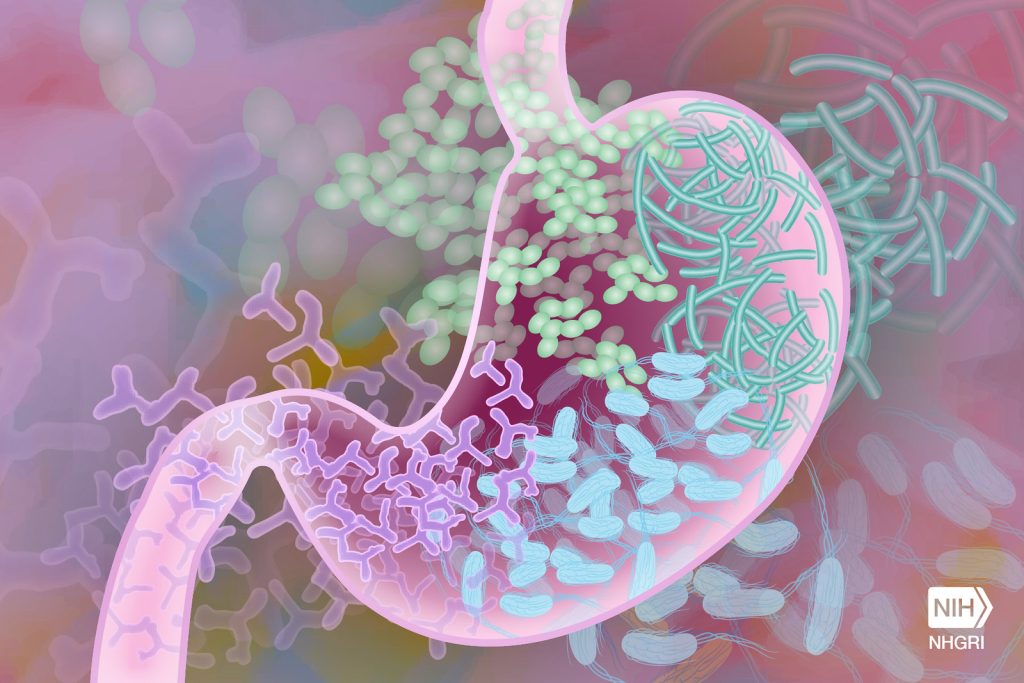
Gut Microbiome. Credit Darryl Leja National Human Genome Research Institute National Institutes Of Health
Nitrogen metabolism of gut bacteria can provide health benefits. Specifically, gut microbes metabolise dietary nitrates and nitrites and prevent the formation of cancer-causing compounds called nitrosamines. New research published in The FEBS Journal sheds light on these processes and pinpoints which types of bacteria are most important.
Investigators found that Escherichia coli – and to a lesser extent, species of the genera Lactobacillus, Bacteroides and Phocaeicola – can efficiently metabolise different forms of nitrogen, thus preventing carcinogenic nitrosamine formation. They also demonstrated that this bacterial processing is critical to enable microorganisms to survive and colonise the intestinal tract, likely preventing harmful changes in the composition of the gut microbiota.
The findings highlight the importance of the gut microbiota in preventing the formation of harmful nitrogen metabolites, potentially decreasing the risk of certain cancers. The study also illustrates how the microbiota facilitates crosstalk between our diet and the gut, thus having important implications for both health and disease.
“The discovery that specific gut bacteria rapidly metabolise nitrite suggests a protective mechanism through which the microbiota contributes to the maintenance of intestinal and systemic health,” said corresponding author Prof Uwe Deppenmeier, of the University of Bonn, in Germany.
Getting to grips with rising diabetes rates is arguably one of the most urgent tasks for South Africa’s public healthcare system, but the setbacks keep coming. While some communities are facing shortages of blood sugar meters and insulin pens, a smaller wave of insulin vial shortages is now on the horizon.
In August, activist Eksoda Mazibuko was sure that years of community organising had finally yielded tangible results for people with diabetes in Hluvukani, a town in Mpumalanga.
The 35-year-old had just received R50 000 from Good Morning Angels, Jacaranda FM’s community upliftment project. It was more than enough for him to buy blood sugar meters and test strips for the fifty-person support group he runs at Tintswalo Hospital in Acornhoek, where stock had run out.
When the body can’t make or use insulin – the hormone that keeps blood sugar in check – people have to watch their levels, so they know how to eat and medicate themselves. It’s a process held together by medicines and an ecosystem of tools such as meters, strips, pens, lancets, needles, syringes, which unravels when one part is missing. Over time, poorly controlled blood sugar causes cumulative damage to one’s body that can result in severe complications such as amputation, blindness, kidney damage, and stroke.
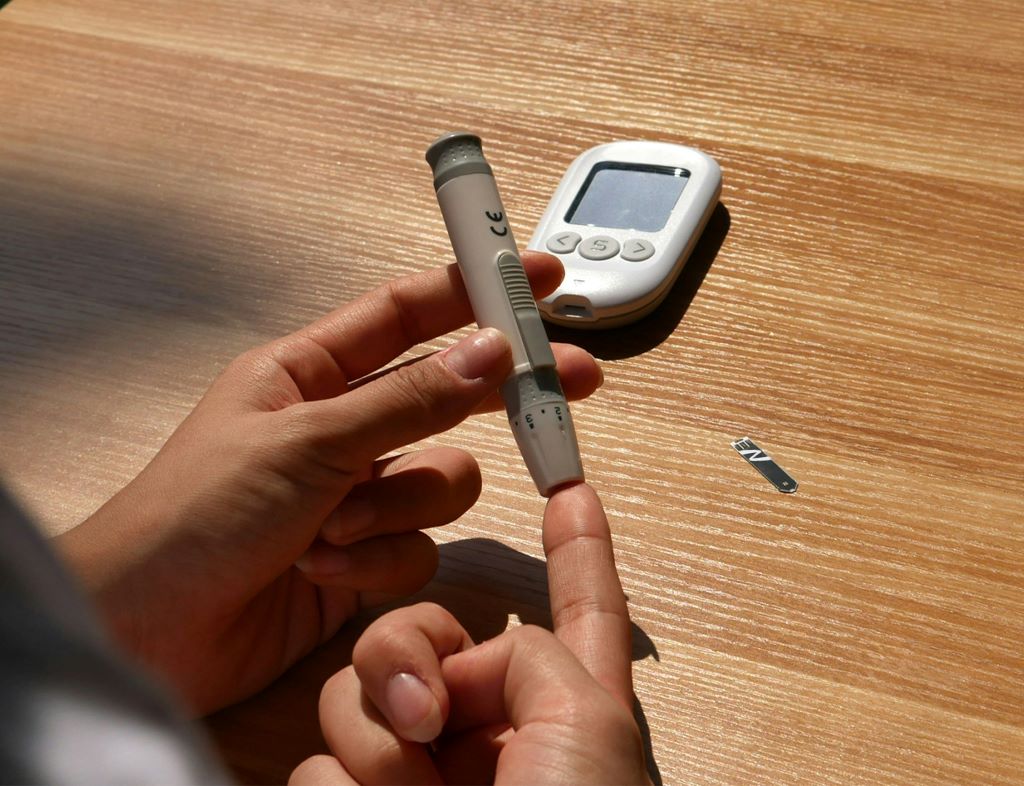
Most people who take pills to treat diabetes need monitoring from time to time, but for the majority of those who are on insulin treatment, it is essential. People with diabetes who are taking insulin must check their blood sugar levels multiple times a day. To do this, they need glucometers – devices that measure the sugar levels in a drop of blood. But access to glucometers is a challenge. Spotlight previously reported that not everyone who needs these home testing devices is given one and those who do receive them rarely get enough test strips and lances to enable proper monitoring of their blood sugar levels.
Without tests and test strips, people in Hluvukani had no way of knowing how to adjust their insulin. Injecting the wrong amount could in extreme cases result in someone going into a coma or dying.
Mazibuko himself, who was diagnosed in 2003 and has always needed insulin, knows how terrifying it can be when monitoring tools are out of reach.
When the devices and test strips finally arrived, he shared a celebratory photo on social media. Excited messages streamed in on WhatsApp, but among them was an upsetting note from a government pharmacist: “You should have asked me before you ordered.”
Unbeknownst to the hospital staff that helped Mazibuko choose the device, the national government’s supplier would be changing, as it does every three years or so when a new tender is awarded. That means state pharmacies would soon stock a different kind of test strip.
Glucometers generally can’t interpret test strips from a different brand or model, so the glucometers that he’d already started to hand out would soon be useless.
“They were already open so I couldn’t send them back. After I worked so hard to get those machines for my community members,” said Mazibuko. “It was heartbreaking.”
According to a report from the Clinton Health Access Initiative, in poorer countries companies make most of their profit on the test strips rather than the glucometers used to read the strips. Spotlight understands that some companies go as far as giving away the devices to lock people into using their specific test strips. According to Cathy Haldane, who leads the non-communicable diseases team at FIND (a global diagnostics alliance), there have been some efforts toward encouraging universal interoperability of test strips, but these efforts haven’t gathered much steam.
Why diabetes is still a national guessing game
South Africa is one of the few countries that buys blood glucose meters and test strips en masse, but there are still lots of people who are treated with insulin who don’t have access to them.
One reason for this is that the national health department buys machines and strips for the public sector but it’s up to provinces to manage stock at pharmacies and clinics, explains Haldane.
A lack of good quality diabetes data could be making harder for health department staff to predict how much they’ll need, she says. Unlike the country’s digital HIV & TB tracking system, there’s no centralised database for diabetes and other chronic diseases such as high blood pressure and cancer. As Spotlight previously reported in-depth, there is a serious lack of reliable diabetes data for South Africa. Haldane says, “that’s how people on insulin treatment who should get a machine and monthly test strips end up going without”.
Not having reliable data leaves national planners, doctors and nurses in the dark about how many people need blood sugar monitors, where the system is failing and how the country is faring against targets outlined in the health department’s action plan for chronic diseases, which lapses in 2027. The plan states that by 2027, the health department wants at least 50% of people receiving care for diabetes to have their blood sugar under control. The available data though, all from pockets of academic research, suggests that we are falling far short of this target.
The diabetes data that is available paints a harrowing picture.
According to a StatsSA report on non-communicable diseases, diabetes was the leading underlying cause of death for women and second biggest underlying cause of death for men in 2018. While other reports suggest that diabetes is lower on the list of top killers, it clearly does claim many lives in the country. The International Diabetes Federation estimates that about half of people with diabetes in South Africa haven’t been diagnosed.
If trends continue, 2018 research suggests the treatment, management and complications of type two diabetes could cost the government as much as R35-billion by 2030.
In rural KZN, insulin pen stockouts persist
Meanwhile, more than 700 kilometers from Hluvukani, in KwaZulu-Natal’s rural King Cetshwayo district, some healthcare staff are using their own money to help keep diabetes services going.
Indira Govender, a doctor affiliated with the Rural Doctors Association of South Africa (Rudasa) who works in the area, says clinic managers are often the ones buying new batteries for blood sugar meters used in the facility and by patients.
The devices use the coin-like batteries also used in some watches, which aren’t easy to find in far flung areas.
Govender worries about the patients on insulin who still have to use a glass vial and syringe to inject themselves. “Not everybody has a fridge to store the insulin in. People struggle to draw up the right amount of insulin, sometimes because they can’t see well,” says Govender.
South Africa ran out of pens in 2024 when the health department’s longtime supplier, Novo Nordisk, stopped manufacturing pens prefilled with the cheapest form of insulin. The news came as global demand surged for one of Novo Nordisk’s long-acting diabetes medicines, semaglutide, because it was shown to also be effective for weight loss. Semaglutide is also provided in pens rather than vials.
In a 2024 letter to Novo Nordisk’s chief executive officer, MSF demanded that the pharma giant either ensure continued supply of the cheapest insulin pens in South Africa or that it offer a newer kind of pen at $1 each. That’s the amount that MSF’s research found would cover production costs, a fair profit margin and an allowance for tax.
The newer pens are filled with a form of insulin that takes effect faster and lasts for longer than previous versions. Novo Nordisk signed a deal in May in which it commits to providing these pens to South Africa until 2027. The department was charged just under $4 (around R75) per pen.
At the government clinic where Govender works in KwaZulu-Natal, however, insulin pens have reportedly not returned to pharmacy shelves.
“We haven’t had pens here since at least 2024,” says Govender.
The KwaZulu-Natal health department did not respond to Spotlight’s queries about the delivery delays.
Local consequences of global disruptions
While some communities are still waiting for insulin pens, a smaller wave of vial shortages is on its way for South Africa, according to an October circular.
Novo Nordisk told the health department to expect six to eight week delays in the delivery of short-acting, medium-acting and longer-acting insulin sold in 10ml vials. The department did not respond to Spotlight’s queries, but the circular listed four alternative prefilled pens that are available and expects stock to stabilise by January 2026.
One of the listed alternatives, Novo Nordisk’s NovoMix30, is also on a list of insulin pens and vials that will be discontinued in 2026, according to a directive issued by the health ministry in New Zealand.
No such directive has been issued by South Africa’s health department. Candice Sehoma, advocacy advisor for MSF Access in Southern Africa, says she would be surprised if the country avoids it.
It’s part of a concerning pattern of shortages of essential medicines worldwide, she says.
“We’re seeing more and more companies deprioritising insulin and discontinuing affordable medicines,” says Sehoma.
When there’s insulin but no food
While his stock of test strips lasts, Mazibuko takes them along when he visits members of his support group in Hluvukani.
They could technically find matching strips in the private sector, but they’re likely to be too expensive. A 2024 study found that for someone earning South Africa’s minimum wage, a single blood-sugar test in the private sector costs more than an hour of work, and a month of basic diabetes supplies can swallow three full days’ wages.
Many of the people on Mazibuko’s route are facing far more serious problems than the loss of glucometers. Those who aren’t working are often not taking their medication well either, Mazibuko says. “They don’t have food so they skip breakfast and also skip their insulin because they’re scared.”
Injecting insulin on an empty stomach can cause a sudden blood sugar crash that could lead to dizziness, confusion or a seizure.
Mazibuko is working on a skills programme to help these people make a living that might also protect them from lapses in basic supplies at government health facilities, which he claims happens often.
“Sometimes you go to the clinic, they tell you that they’ve run out of insulin, or they tell you to buy your own needles and syringes. You will have to do that with borrowed money,” says Mazibuko.
The Mpumalanga health department also did not respond to Spotlight’s requests for comment.
Republished from Spotlight under a Creative Commons licence.
Caffeine may have been unfairly portrayed as the villain in some heart rhythm disorders, according to a new study published in the Journal of the American Medical Association.
Longstanding medical advice has held that patients with atrial fibrillation (AF) should cut back on their caffeine intake – or eliminate it entirely – to improve their condition. Wong et al. conducted an investigation into the relationship between regular caffeinated coffee consumption and the recurrence of atrial fibrillation (AF) or atrial flutter.
The DECAF randomised clinical trial, conducted across five international centres, enrolled 200 patients with persistent AF who were successfully cardioverted and then randomised to either consume caffeinated coffee (averaging one cup daily) or abstain from coffee and caffeine for six months. But contrary to expectations, the caffeine group actually saw an improvement in symptoms.
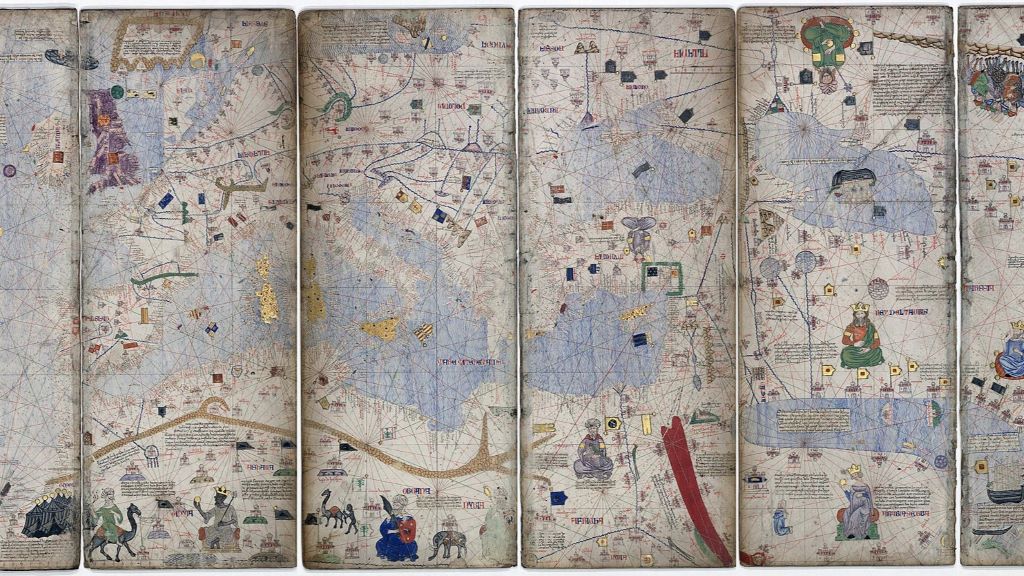
Catalan Atlas, 1375. Credit: Bibliothèque Nationale de France, via Wikimedia Commons
Clues contained in tree rings have identified mid-14th-century volcanic activity as the first domino to fall in a sequence that led to the devastation of the Black Death in Europe.
Researchers from the University of Cambridge and the Leibniz Institute for the History and Culture of Eastern Europe (GWZO) in Leipzig have used a combination of climate data and documentary evidence to paint the most complete picture to date of the ‘perfect storm’ that led to the deaths of tens of millions of people, as well as profound demographic, economic, political, cultural and religious change.
Their evidence suggests that a volcanic eruption – or cluster of eruptions – around 1345 caused annual temperatures to drop for consecutive years due to the haze from volcanic ash and gases, which in turn caused crops to fail across the Mediterranean region. To avoid riots or starvation, Italian city-states used their connections to trade with grain producers around the Black Sea.
This climate-driven change in long-distance trade routes helped avoid famine, but in addition to life-saving food, the ships were carrying the deadly bacterium that ultimately caused the Black Death, enabling the first and deadliest wave of the second plague pandemic to gain a foothold in Europe.
This is the first time that it has been possible to obtain high-quality natural and historical proxy data to draw a direct line between climate, agriculture, trade and the origins of the Black Death. The results are reported in the journal Communications Earth & Environment.
The Black Death was one of the largest disasters in human history. Between 1347 and 1353, it killed millions of people across Europe. In some parts of the continent, the mortality rate was close to 60%.
While it is accepted that the disease was caused by the bacterium Yersinia pestis, which originated from wild rodent populations in central Asia and reached Europe via the Black Sea region, it’s still unclear why the Black Death started precisely when it did, where it did, why it was so deadly, and how it spread so quickly.
“This is something I’ve wanted to understand for a long time,” said Professor Ulf Büntgen from Cambridge’s Department of Geography. “What were the drivers of the onset and transmission of the Black Death, and how unusual were they? Why did it happen at this exact time and place in European history? It’s such an interesting question, but it’s one no one can answer alone.”
Büntgen, whose research group uses information stored in tree rings to reconstruct past climate variability, worked with Dr Martin Bauch, a historian of medieval climate and epidemiology from the Leibniz Institute for the History and Culture of Eastern Europe, on the study.
“We looked into the period before the Black Death with regard to food security systems and recurring famines, which was important to put the situation after 1345 in context,” said Bauch. “We wanted to look at the climate, environmental and economic factors together, so we could more fully understand what triggered the onset of the second plague pandemic in Europe.”
Together, they combined high-resolution climate data and written documentary evidence with conceptual reinterpretations of the connections between humans and climate to show that a volcanic eruption – or series of eruptions – around 1345 was likely the first step in a sequence that ultimately led to the Black Death.
The researchers were able to approximate this eruption through information contained in tree rings from the Spanish Pyrenees, where consecutive ‘Blue Rings’ point to unusually cold and wet summers in 1345, 1346 and 1347 across much of southern Europe. While a single cold year is not uncommon, consecutive cold summers are highly unusual. Documentary evidence from the same period notes unusual cloudiness and dark lunar eclipses, which also suggest volcanic activity.
This volcanically forced climatic downturn led to poor harvests, crop failure and famine. However, the Italian maritime republics of Venice, Genoa and Pisa were able to import grain from the Mongols of the Golden Horde around the Sea of Azov in 1347.
“For more than a century, these powerful Italian city-states had established long-distance trade routes across the Mediterranean and the Black Sea, allowing them to activate a highly efficient system to prevent starvation,” said Bauch. “But ultimately, these would inadvertently lead to a far bigger catastrophe.”
The ships that carried grain from the Black Sea most likely also carried fleas infected with Yersinia pestis, as previous research has already pointed out. But why grain was so urgently needed by the Italians has now become much clearer. It is still unknown exactly where this deadly bacterium originated, but ancient DNA has suggested there may have been a natural reservoir in wild gerbils somewhere in central Asia.
Once the plague-infected fleas arrived in 14th-century Mediterranean ports on grain ships, they became a vector for disease transmission, enabling the bacterium to jump from mammalian hosts – mostly rodents, but potentially including domesticated animals – to humans. It rapidly spread across Europe, devastating the population.
“In so many European towns and cities, you can find some evidence of the Black Death, almost 800 years later,” said Büntgen. “Here in Cambridge, for instance, Corpus Christi College was founded by townspeople after the plague devastated the local community. There are similar examples across much of the continent.”
“And yet, we could also demonstrate that many Italian cities, even large ones like Milan and Rome, were most probably not affected by the Black Death, apparently because they did not need to import grain after 1345,” said Bauch. “The climate-famine-grain connection has potential for explaining other plague waves.”
The researchers say the ‘perfect storm’ of climate, agricultural, societal and economic factors after 1345 that led to the Black Death can also be considered an early example of the consequences of globalisation.
“Although the coincidence of factors that contributed to the Black Death seems rare, the probability of zoonotic diseases emerging under climate change and translating into pandemics is likely to increase in a globalised world,” said Büntgen. “This is especially relevant given our recent experiences with Covid-19.”
The researchers say that resilience to future pandemics requires a holistic approach to address a wide spectrum of health threats. Modern risk assessments should incorporate knowledge from historical examples of the interactions between climate, disease and society.
The research was supported in part by the European Research Council, the Czech Science Foundation and the Volkswagen Foundation.